Sleeping Pads
Best Winter Sleeping Pads: Therm-a-Rest XTherm vs Sea to Summit Ether Light XT Extreme vs Exped DownMat
A three-way comparison of lightweight winter sleeping pads with R-values above 6, covering warmth, comfort, packed size, valves, noise, and value.
Introduction
There is a widely used standard for measuring how warm a sleeping pad is, and on its own it does not tell the whole story. That is the starting point for this comparison. If you are heading out on self-propelled winter camping and backpacking trips, the field narrows quickly: you want an R-value above 6 and a packed weight under 25 ounces.
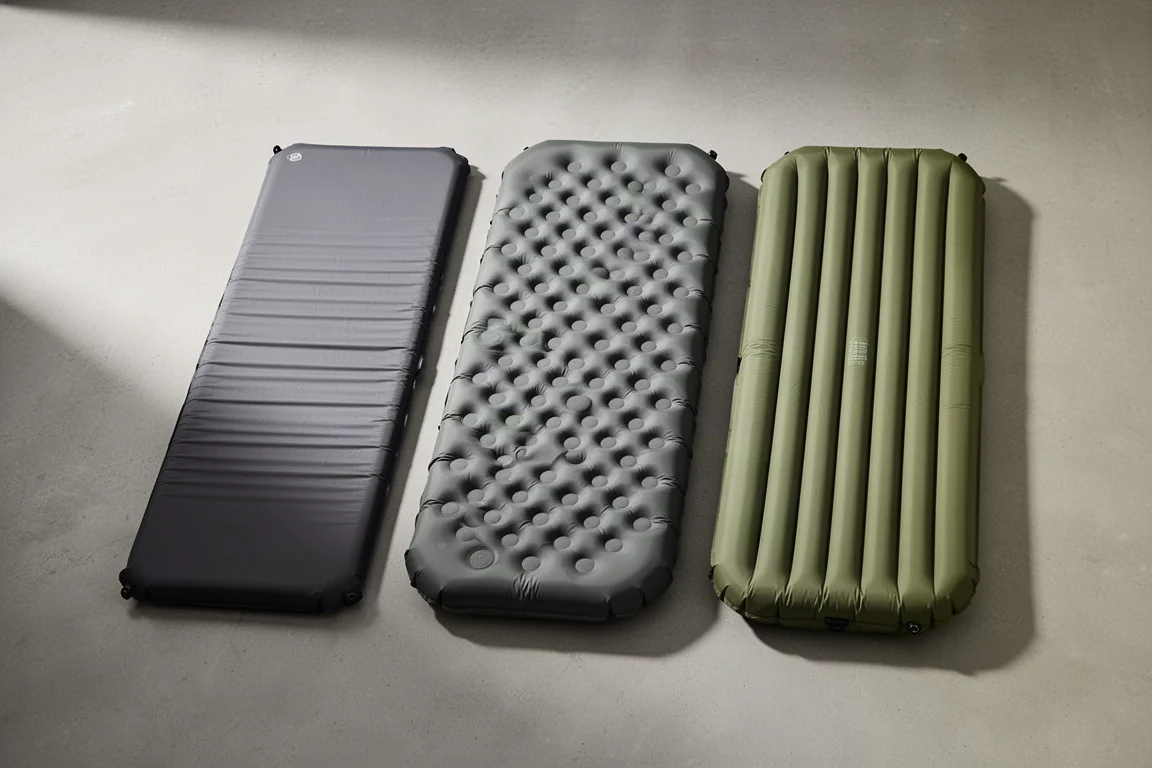
Three pads meet both marks. The Therm-a-Rest XTherm, the Sea to Summit Ether Light XT Extreme, and the Exped DownMat all sit above an R-value of 6 and all come in under 25 ounces. In the Regular size they cost roughly $220, $200, and $230 respectively, and they weigh 420 g, 720 g, and 480 g.
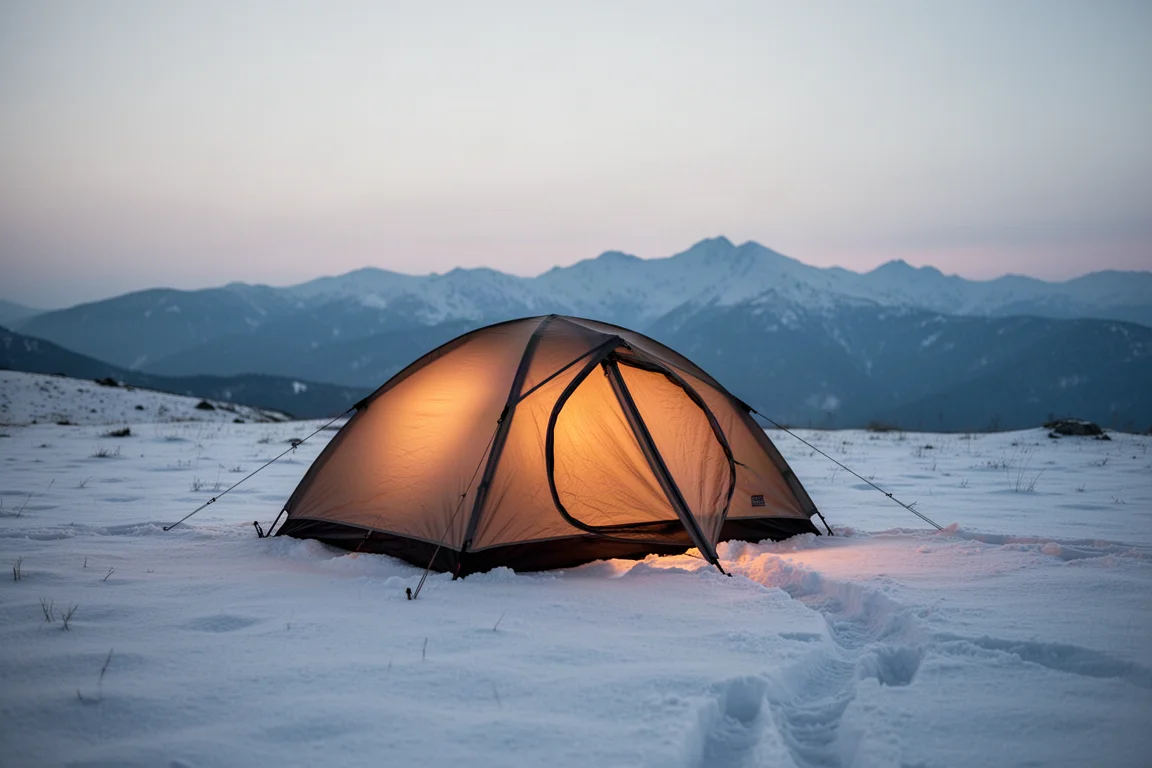
This guide compares them across warmth, comfort, packed size, valve design, fabric durability, noise, and warranty, and it includes thermal imaging results that help explain why the highest R-value does not automatically deliver the warmest night.
How We Evaluated These Pads
Six factors matter most for a winter sleeping pad, and each of these pads was ranked against the others in every one of them: cost, size and weight, warmth, comfort, valve and inflation features, and overall quality including fabric and warranty.
Warmth was assessed two ways. First through real-world cold-weather use, and second through thermal imaging, because R-value alone hides differences in how evenly a pad insulates. Comfort was judged on thickness, baffle design, edge support, and how the pad behaves for side sleepers and heavier users. Valve and inflation features were judged on how quickly a pad inflates and deflates, how well the pump system seals, and how easy it is to fine-tune firmness in a cold tent.
Scores were then totalled to give a simple overview of where each pad gains and loses ground, which is covered in the buying advice section below.
Therm-a-Rest XTherm: The Warmth-to-Weight Benchmark
At 420 g the XTherm is the lightest pad in this group, and it also packs down to the smallest volume of the three, which matters when you are carrying everything yourself in cold conditions. Its R-value is 6.9.
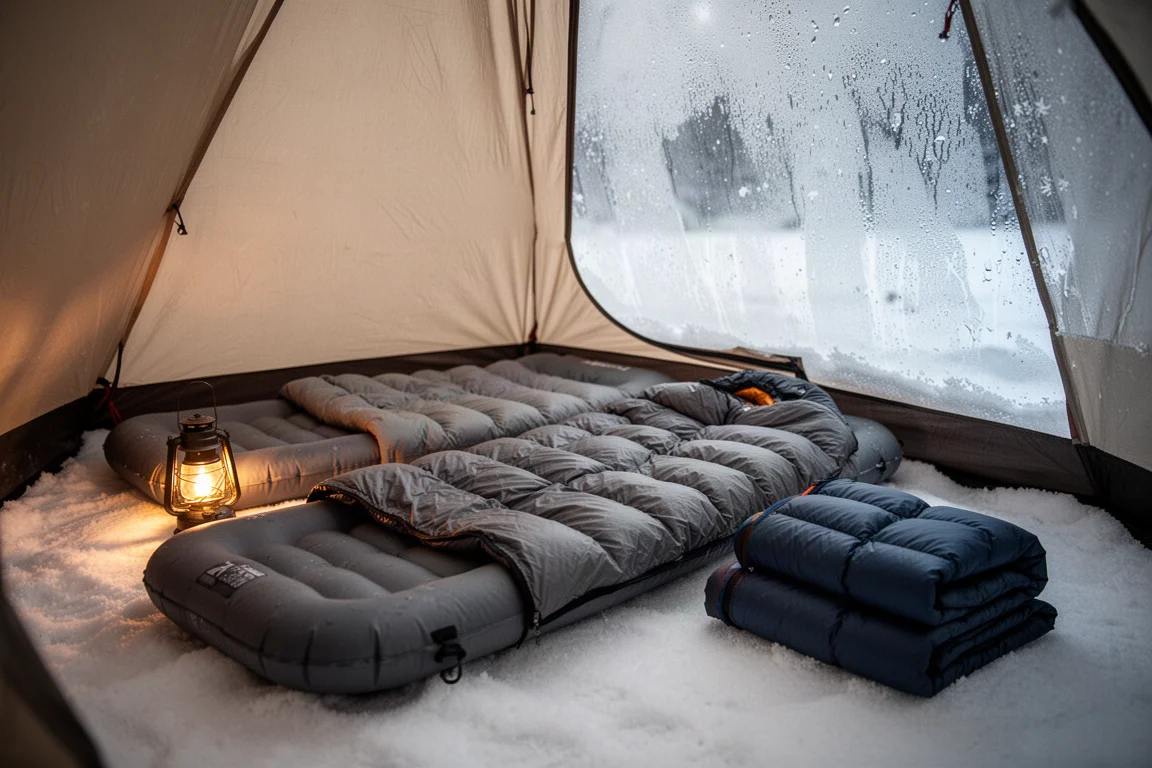
The insulation is a thin reflective film suspended through the pad, reflecting heat back toward you and cold back toward the ground. A triangular core structure inside limits convective heat loss, so warm air does not mix as readily with cold air when you move around at night. That construction is also what gives the pad its high warmth-to-weight ratio, and in field use it proved the warmest of the three, comfortable down to roughly -25°C with the pad alone.
Durability and support are strong points too. The 70-denier bottom fabric is the most durable material in this comparison, and the pad carries a lifetime warranty. The WingLock valve paired with the included inflation bag works well: the opening is easy to seal, air moves into the pad without a fight, and deflation is relatively quick.
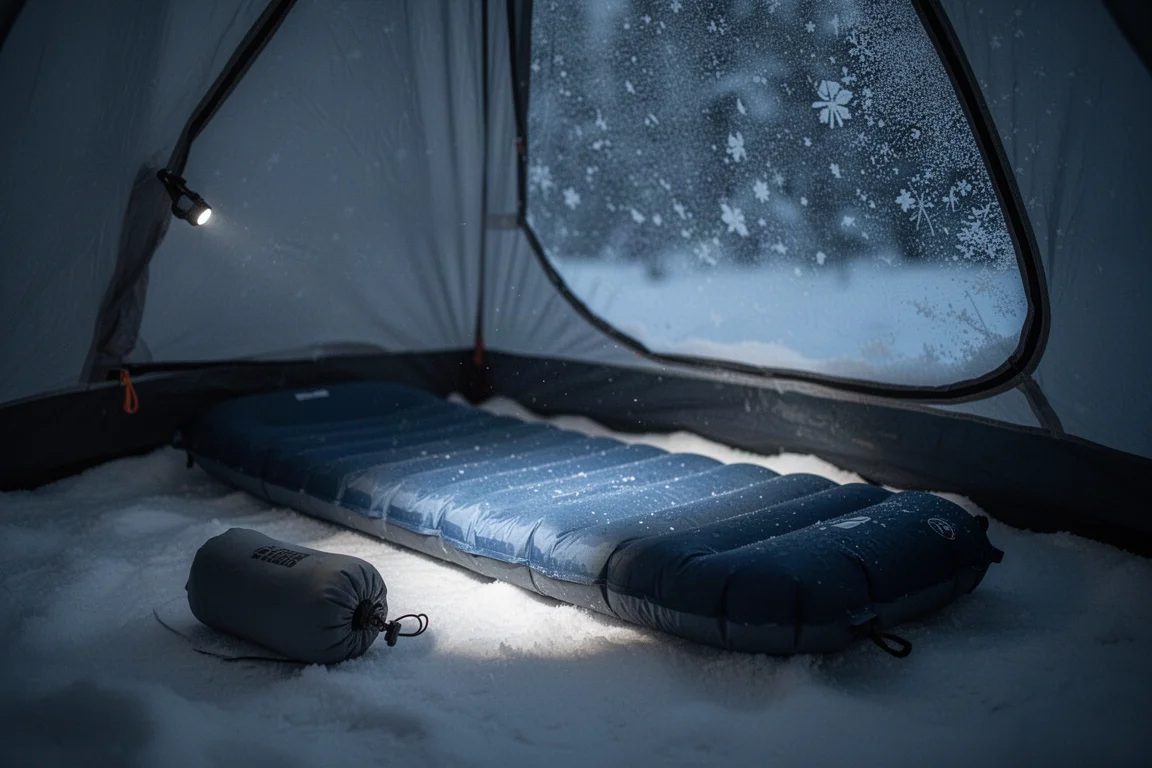
Comfort is where the XTherm gives ground back. It is only 2.5 inches thick and uses a horizontal baffle layout, so heavier sleepers can sink through and contact the ground, and the baffling can create pressure points that leave an arm or leg numb by morning. The reflective interior also has a crinkly, chip-bag quality that some people find distracting, though the exterior fabric is quieter than some other pads in this category.
Sea to Summit Ether Light XT Extreme: The Comfort Pick
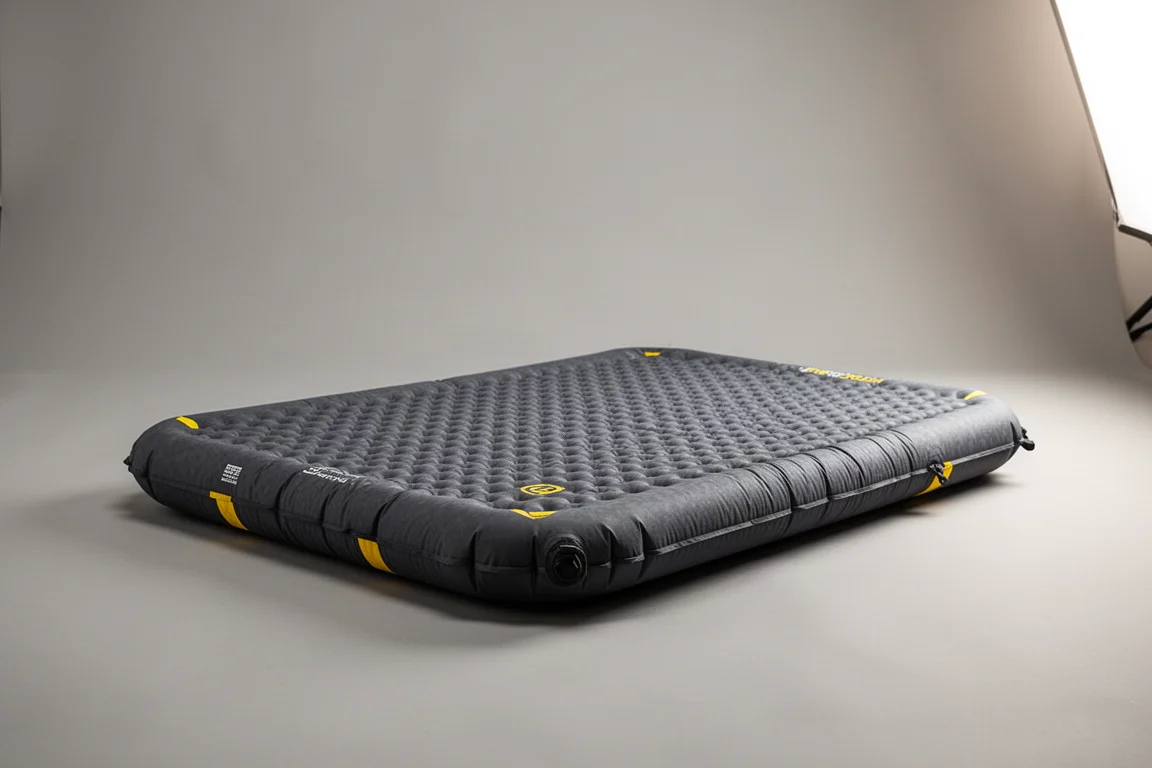
The Ether Light XT Extreme is the heaviest and bulkiest pad here at 720 g, and it is also the least expensive at around $200. Its R-value is 6.2, the lowest of the three, but it is still comfortably above the winter threshold.
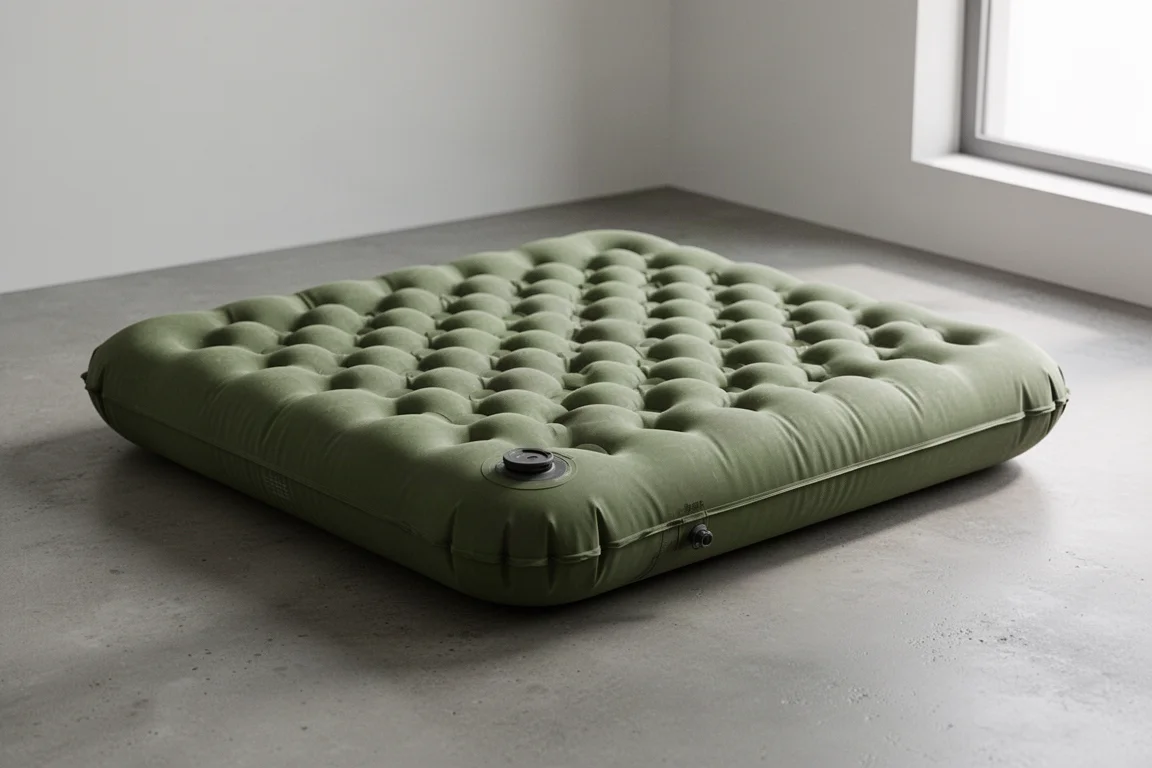
Comfort is the headline. The pad is 4 inches thick, the thickest in this group, and its dimpled baffle pattern spreads pressure away from contact points. Lying on your side with a shoulder pressed into one of those dimples is genuinely comfortable, and the platform is stable with very good edge support, so sleeping near the edge does not feel like a compromise. This is the only pad of the three where a full night of unbroken sleep happened repeatedly.
Exped DownMat: Quiet and Comfortable, but Limited in the Cold
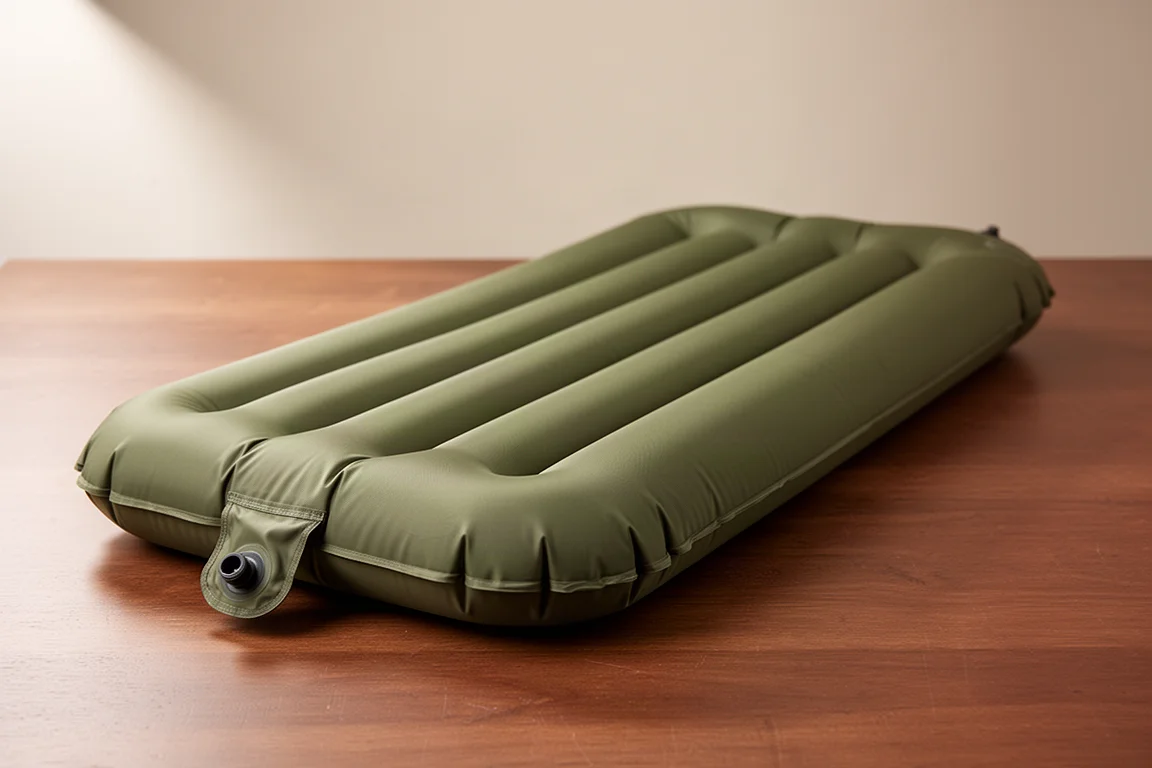
The DownMat is the most expensive pad here at about $230, weighs 480 g, and carries the highest R-value of the group at 7.1. It is 3.5 inches thick, uses vertical baffles that run the length of the pad, and its soft polyester surface feels more comfortable against the skin than the more rubbery nylon used elsewhere. A grippy texture on top helps hold a slippery sleeping bag in place, and the combination of down insulation and polyester fabric makes this the quietest pad of the three by a clear margin.
Real-world warmth is the problem. The 700 fill power down is effective at limiting convective heat loss, but it migrates through the baffles over time, which produces cold spots. More importantly, the two side baffles contain no insulation at all, so side sleeping or using a quilt that wraps around the pad leaves those areas unprotected. In practice this pad stayed comfortable only to around freezing, roughly 0°C, where the XTherm handled far colder nights.
Handling is the second weak point. The valve is an older flap design: you hold the flap open with a finger while pushing air out, which is awkward and slow in a cold tent. The inflation bag has a very large opening that is hard to seal properly. The fabric is a twined polyester that has not held up as well as the materials used on the other two pads, and the warranty runs for five years rather than a lifetime.
Thermal Imaging: What the Heat Test Showed
To look past the R-value numbers, a heating pad was brought to a steady 40°C, left for 10 minutes, then covered with each sleeping pad in turn and allowed to heat for another 10 minutes before being measured with a thermal camera.
Average surface temperatures came out close together: 24°C for the XTherm, 24.3°C for the DownMat, and 25°C for the Ether Light XT Extreme. That ordering matches the published R-values, which makes sense because the method is similar to standard laboratory testing. The more revealing data came from hot spots. The XTherm’s hottest point reached 27°C, the Ether Light XT Extreme reached 28°C, and the DownMat reached 31°C, the closest of the three to the 40°C heat source beneath it. Those hot spots behave like small tunnels where cold travels up through the pad and cools the air you have warmed inside your sleeping bag.
The XTherm showed the fewest hot spots and the most consistent insulation across its surface. The Ether Light XT Extreme showed noticeable heat movement toward the edges, and because the pad is 4 inches thick at the sides, very cold air outside could cool that outer air, which can then migrate back into the middle of the pad. Active sleepers are most likely to notice this. The DownMat showed little heat spread at all, which is the down doing its job, but the migrating fill still leaves isolated weak points.
Buying Advice: Which Winter Sleeping Pad Fits Your Trip
Totalling the category rankings, the XTherm and the Ether Light XT Extreme finished level at 17 points each, with the DownMat behind at 13. The XTherm earned its score on weight, packed size, warmth, and quality. The Ether Light XT Extreme earned its score on cost, features, comfort, and quality.
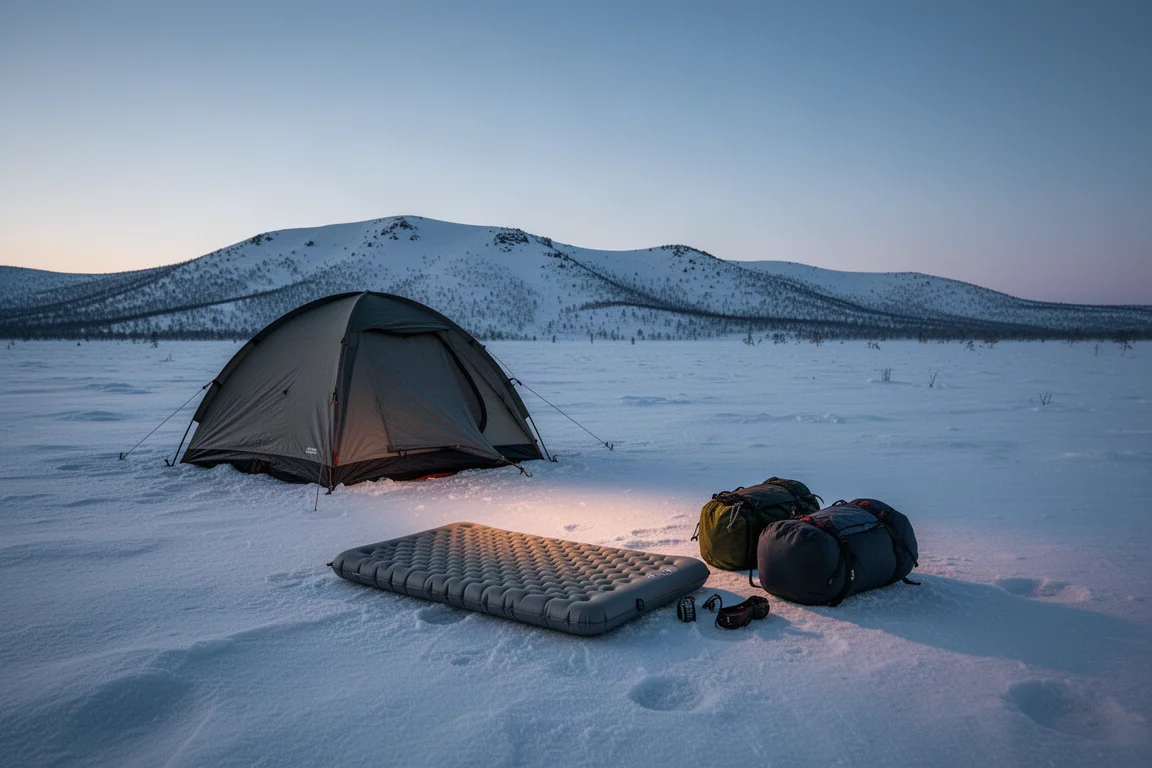
The choice comes down to what you are willing to trade. If you are covering long distances and every gram and every litre of pack space counts, the XTherm is the pad to take: it is the lightest, the smallest packed, and the warmest in genuinely cold conditions. If you sleep on your side, wake up easily, or simply want the most comfortable night available from a winter-rated pad, the Ether Light XT Extreme is the better pick, and it costs the least of the three. Its inflation and deflation system is also the best of the group, with a double flap valve that dumps air quickly and a button for fine-tuning firmness.
The DownMat is the hardest to recommend for serious winter use. It is quiet, thick, and pleasant to lie on, and the highest R-value in the group looks impressive on paper, but the uninsulated side baffles and the migrating down limit how cold a night it can handle, and the old valve design makes it the least pleasant of the three to live with in a tent. Campers who mostly face milder cold and value a silent, soft surface may still find it appealing.
All three pads are workable options for winter camping and for three-season trips when you sleep cold, provided you match the pad to the temperatures you actually expect.
Conclusion
R-value is a useful starting point, not a final answer. The XTherm wins on warmth per gram and packed size, the Ether Light XT Extreme wins on comfort and value, and the DownMat wins on quietness while giving up ground on real-world warmth and handling. Match the pad to the coldest night you realistically expect, and any of the three will serve you well.
Further reading
Related Reviews
Sleeping Pads
Best Backpacking Sleeping Pads 2026: Nine Pads Rated on Price, Comfort, Warmth, and Weight
Nine backpacking sleeping pads compared on price, comfort, warmth, and weight, from a $65 summer pad to a year-round option rated at R-7.3.
Sleeping Pads
Best Backpacking Sleeping Pads: Comfort, Warmth, and Weight Compared
A practical comparison of the Nemo Quasar 3D, Therm-a-Rest NeoAir XTherm Max, and Big Agnes Rapide SL for backpackers choosing between comfort, warmth, and packed weight.
Sleeping Pads
Best Backpacking Sleeping Pads: Ultralight, Winter, Comfort and Budget Picks
A practical roundup of the sleeping pads that stand out for ultralight weight, winter warmth, pressure relief and value, plus three popular pads that fell short.