Outdoor Coffee Gear
Best Ways to Make Coffee Outdoors: Jetboil Mini and VSSL Pour Over Kit Compared
Two very different outdoor coffee setups, from a compact multi-use backpacking stove to a modular hand grinder pour over kit, plus what each one really asks of you.
Introduction
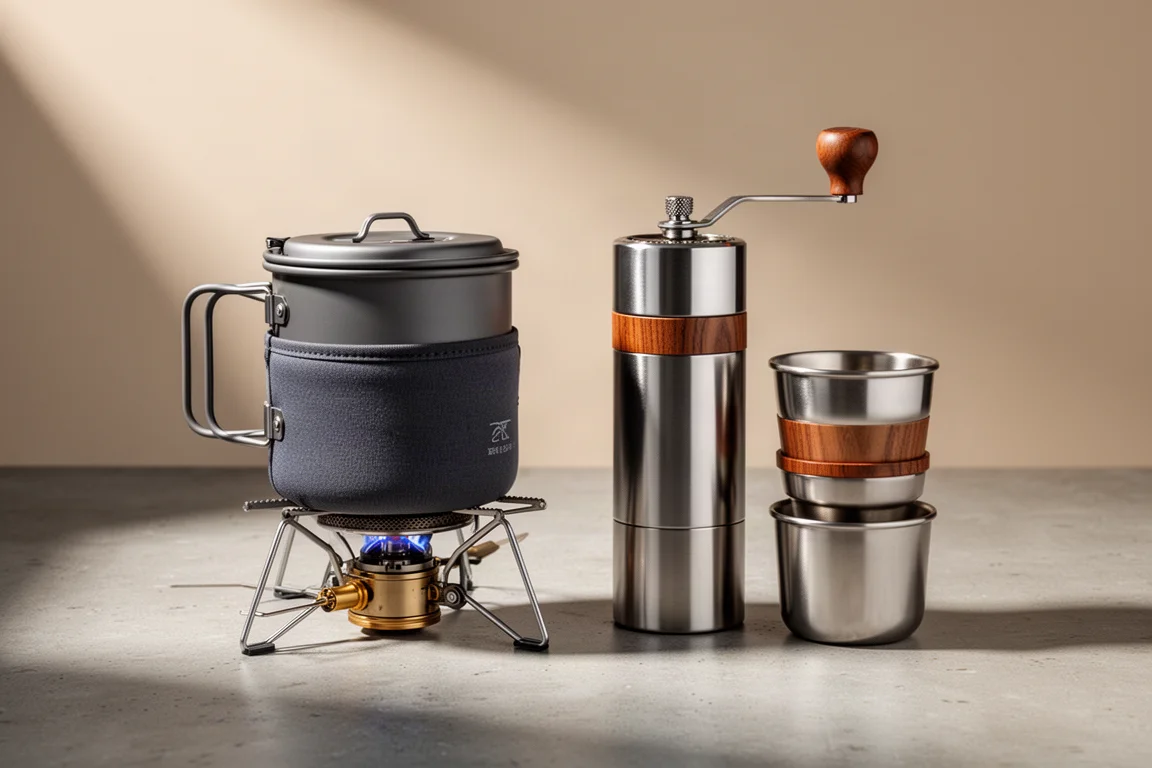
For a lot of people who camp, hike, or travel with a vehicle, the best part of the morning is a cup of coffee somewhere other than the kitchen. The setting changes, and so does the equipment. A backpacker counts grams, a family at a campsite brews for a group, and a traveler may care as much about the ritual as the result.
This guide looks at two very different approaches to brewing outdoors: the Jetboil Mini, a compact stove system that doubles as a coffee maker, and the VSSL Pour Over Kit, a modular hand grinder and pour over set. Both can make a good cup. They ask for very different things in return.
What to Look For in an Outdoor Coffee Setup
The first question is how many separate items you are willing to carry. Every extra piece of kit has to be packed, cleaned, and kept track of, and a setup that brews well but needs three other tools is harder to live with than one that does everything in a single vessel.
Fuel is the second consideration. Some brewers run on a stove burner or a campfire, while others need hot water from somewhere else. If a kit cannot boil its own water, it is not a standalone solution, and that changes the maths on weight and cost.
Then there is control: grind size, water temperature, and how long the coffee steeps. Finally, cleanup and total cost matter more than most buyers expect, especially on trips where water is limited.
Weight and pack size round out the list. A brewer that fits inside its own cup or nests with the rest of your cook kit is easier to justify than one that needs its own pocket in the pack.
Jetboil Mini: The Lightweight Backpacking Option
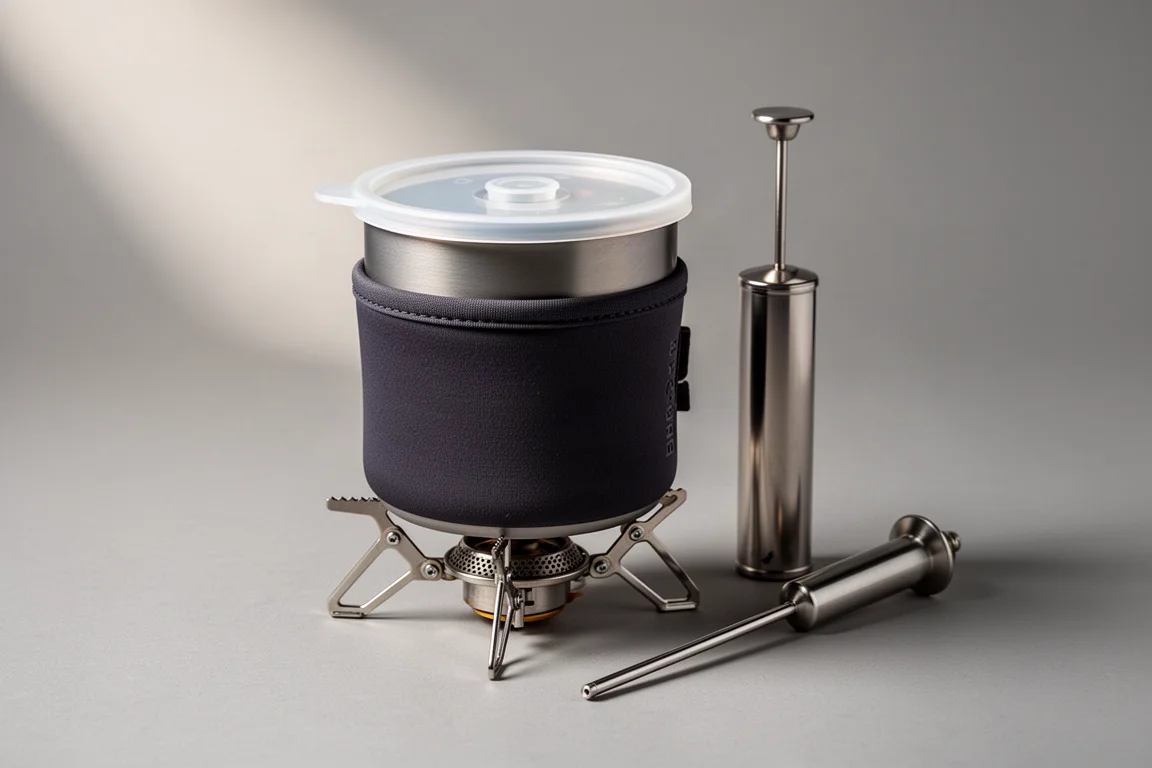
The Jetboil Mini is a small, light stove system built for backpacking. Fuel is not included, so canisters are bought separately, but the appeal is the same as the rest of the range: one compact unit that handles several jobs.
It cooks, it rehydrates food, and with a simple plunger accessory it becomes a French press. The system also serves as your cup, so there is no need to pack a separate mug for coffee. Jetboil offers this stove in several sizes, from this smaller version up to a regular and a larger model, and the smallest one is the easiest to justify on weight alone.
There is no built-in igniter on this burner, so you light it manually with a lighter or a match. For many users that is not a real loss, since push-button igniters tend to fail over time anyway.
The main compromise is the French press accessory, which is made in a single size. In the Mini, the plunger stem sits high enough that it can bump your nose when you drink from the pot. Removing the plunger assembly solves it, and it is not difficult to reattach and pull out again, with the plunger resting at the bottom in the meantime.
VSSL Pour Over Kit: The Traveler’s Kit
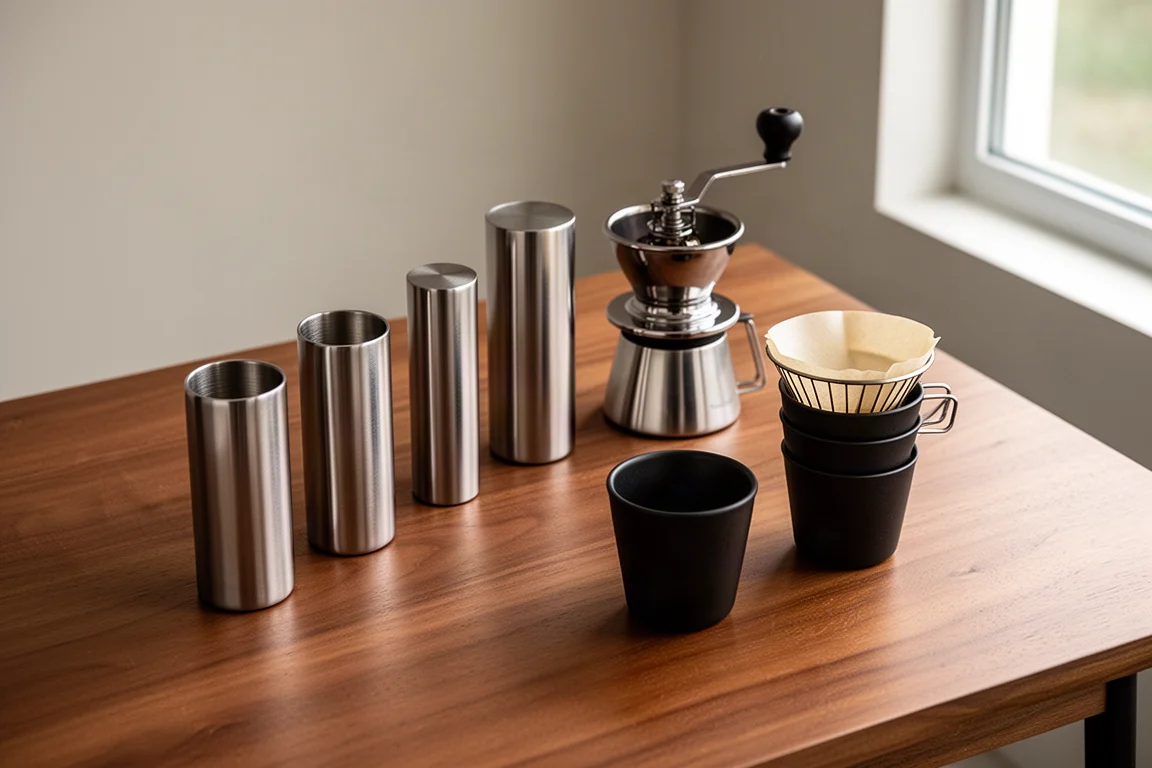
The VSSL Pour Over Kit comes from a Canadian company and is aimed at travelers and people who spend time outside. It is a modular system built around a hand grinder, and it is the most involved way to make coffee in this guide.
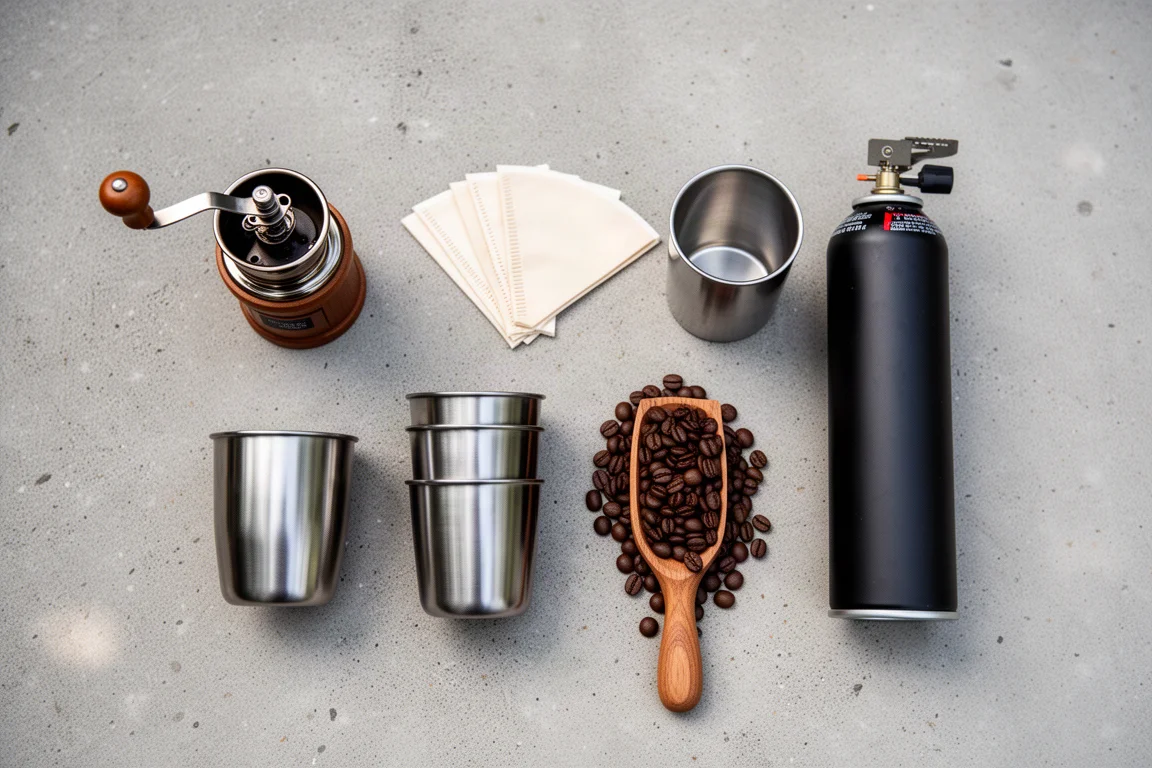
The grinder is the centrepiece. You adjust the grind with a small lever on the bottom, and for pour over a coarser setting, around six, is the usual recommendation. Finer settings suit espresso. Whole beans store in the base of the grinder, so you twist the top off, load the beans, put it back together, and crank by hand. On its own, the grinder costs $160.
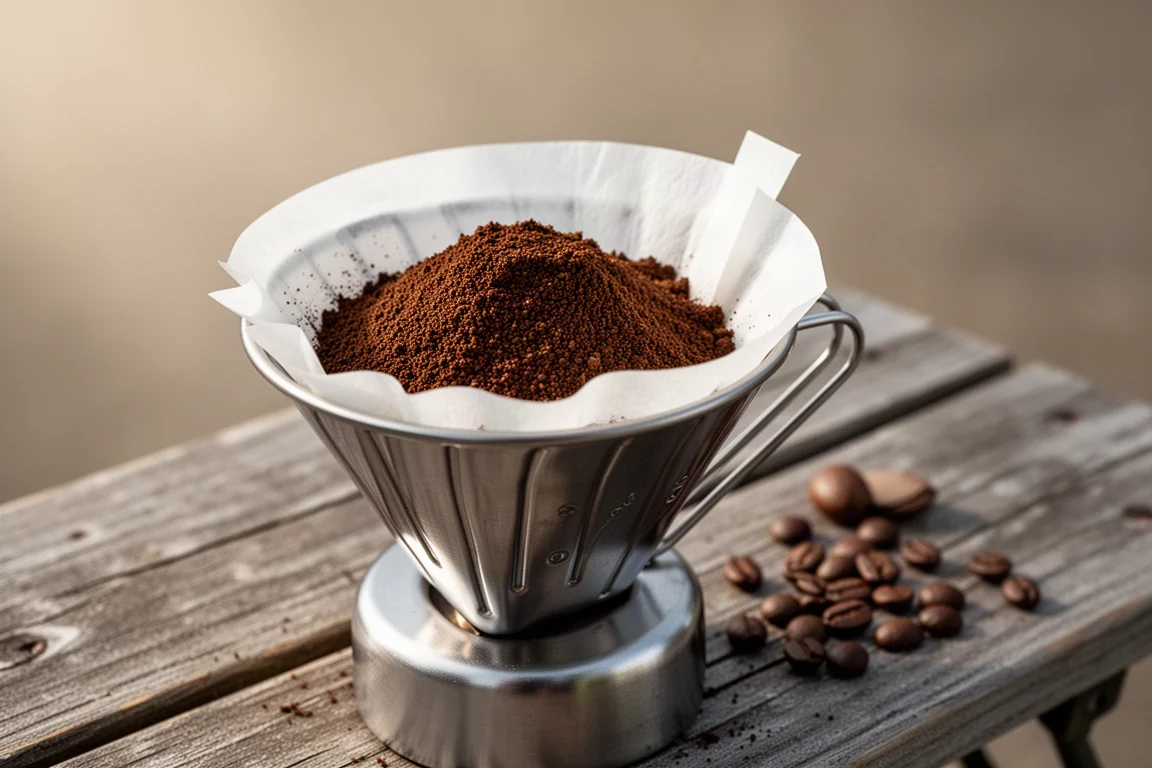
The rest of the kit is a set of tubular modules that twist apart. One section holds beans or the paper filter, and the pour over cone twists onto the cup. There are two cups in the kit but only one lid, which is an odd arrangement for a system this deliberate.
The bigger issue is water. Nothing in the kit boils it, so a stove is still required, which means a Jetboil or similar setup has to come along anyway. A more useful design would turn one of the cups into a pot and pair it with a small stove, since a fuel canister is a lighter thing to carry than a second complete brewing system.
Two habits matter with this kit. After boiling, wait about 30 seconds before pouring, because water straight off the boil is too hot and can burn the coffee. And plan for cleanup: you finish with a filter full of grounds, and a second cup means boiling water all over again.
The complete kit costs $225.
Percolators and Group Brewing at Basecamp
Not every trip is a backpacking trip, and for larger groups a percolator is a practical, inexpensive answer. It is an all-in-one brewer: water goes in the bottom, coffee and a paper filter go in the basket, and the whole thing sits on a heat source. It is ready in roughly 7 to 10 minutes.
Percolators are flexible about fuel. A campfire works, a propane burner works, and they suit RV cooking well because a stovetop is always available. Paper filters are cheap and easy to find.
Timing is the one skill involved. A small glass knob on the lid shows condensation, and once that appears the clock starts. Seven minutes gives a milder cup, ten gives a stronger one, and pushing past ten tends toward bitterness. With filters included, a percolator costs about $29, which makes it the least expensive option here by a wide margin.
Practical Brewing Tips for Better Coffee Outdoors
A few habits improve the cup no matter which setup you carry. Give boiled water about 30 seconds to settle before it touches the coffee, since water at a full boil is too hot and can burn the grounds.
Match the grind to the method. Pour over and French press both want a coarser grind, while espresso needs a fine one. Getting this roughly right matters more than chasing a perfect number.
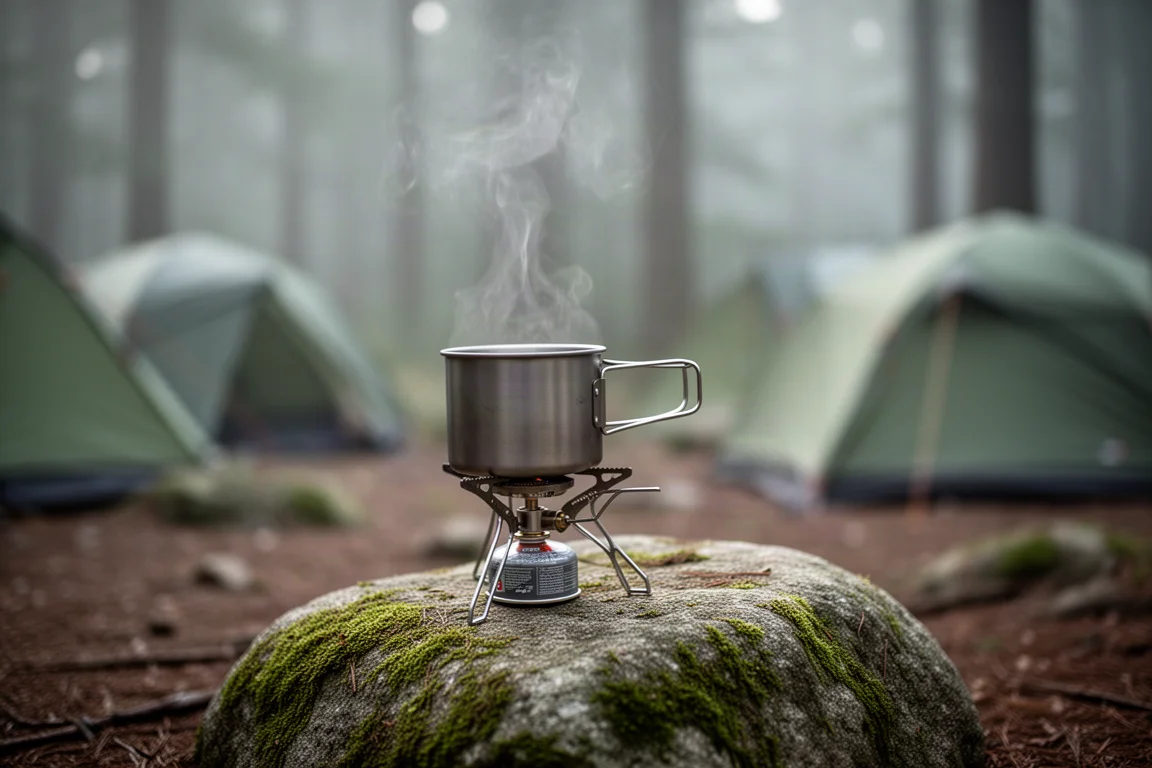
Keep the process to as few vessels as possible. A brewer that also serves as the cup saves packing space and one more thing to wash. Clean the grounds soon after brewing, particularly on trips where water is scarce, because dried grounds are harder to remove.
How to Choose Between the Two Setups
For backpacking, the Jetboil Mini is the straightforward choice. It is compact, it handles cooking and coffee with the same pot, and it does not add a second appliance to the pack.
The VSSL Pour Over Kit suits a different kind of trip. If you travel with a vehicle, stay in places where there is time to spare in the morning, and genuinely enjoy grinding and pouring, the ritual is the point. Just budget for a stove as well, because the kit cannot boil water on its own.
For car camping with family or friends, a percolator covers a crowd for very little money, and its fuel flexibility makes it easy to run on whatever heat source is already at camp.
Buying Advice and Value
Value depends on what you already own. If you carry a canister stove, the Jetboil Mini replaces a pot, a mug, and a coffee maker with one item, and fuel is the only ongoing cost.
The VSSL Pour Over Kit is the most expensive route at $225, with the grinder alone at $160. It is a well-considered piece of gear for the right buyer, but it does not remove the need for a stove, so the real total is higher than the kit price suggests.
A percolator at around $29 with filters is the budget option, and it scales to groups better than either of the other two. If the goal is simply good coffee for several people at a campsite, that is the cheapest path.
Conclusion
These two kits solve the same problem from opposite directions. The Jetboil Mini wins on weight and consolidation, turning one small stove into a cooker, a cup, and a French press. The VSSL Pour Over Kit wins on control and ritual, with an adjustable grinder and a proper pour over, at a higher price and with a stove still required.
Match the setup to the trip and either one can make the morning outside worth getting up for.
Further reading
Related Reviews
Backpacking Gear
8 Ultralight Backpacking Gear Upgrades Worth Carrying
Eight small, affordable backpacking upgrades that solve real trail annoyances, from a pillow that stays put to a fuel valve that rescues leftover canister gas.
Backpacking Gear
Affordable Alternatives to Premium Backpacking Gear: Five Budget Picks Compared
Five premium backpacking items paired with five lower-cost alternatives, compared on weight, materials, weather performance, and price.
Backpacking Gear
Affordable Backpacking Gear: Four Low-Cost Items That Make Trips Better
Four inexpensive backpacking items, from reusable food bags to a sub-100 gram camp pillow, plus the packing habits that keep pack weight honest.