EDC & Everyday Carry
The Best Ways to Carry a Fixed Blade Every Day: Pocket, Clip, Neck, and Belt Compared
Seven practical carry methods for EDC fixed blades, from leather pocket sheaths to titanium clips and neck knives, with honest pros and cons for each.
Introduction
For a long time, the fixed blade was written off as a camp and kitchen tool rather than an everyday carry option. That was never really about the knives themselves. It was about the sheaths. If you cannot carry a knife comfortably and discreetly, it does not matter how good the blade is.
Over the past few years that has changed dramatically. Makers are treating sheaths as a core part of the design, and a wave of pocket clips, ambidextrous kydex, and low-ride leather has made fixed blades genuinely practical for daily carry. After a year of testing nearly every carry method available, these are the approaches that actually work.
Why the Sheath Makes or Breaks Fixed Blade EDC
A fixed blade has real advantages over a folder: no moving parts to fail, easy to clean, and a stronger, simpler tool overall. The historical problem was retention. Many makers produced excellent knives and then treated the sheath as an afterthought, usually a belt-only rig.
The modern fix falls into a few buckets: leather pocket sheaths that let the knife ride low, kydex pocket sheaths with clever clips, modular titanium clips, neck carry, and the classic belt sheath. Each has trade-offs worth understanding before you spend money.
Leather Pocket Sheaths
Leather is what converted the fixed blade from occasional tool into daily carry. The big advantage is ride height: because leather relies on friction rather than a rigid kydex lip, the knife sits deep in the pocket with only enough handle exposed to grab it. Once broken in, drawing and re-sheathing feels natural and quiet.
There are two honest drawbacks. First, the break-in period: new leather can be so tight that the sheath comes out of the pocket with the knife. Second, pocket real estate. Because the knife rides low and the leather is often wider than kydex, these sheaths consume more of your pocket than other options, though some makers do offer genuinely slim versions.
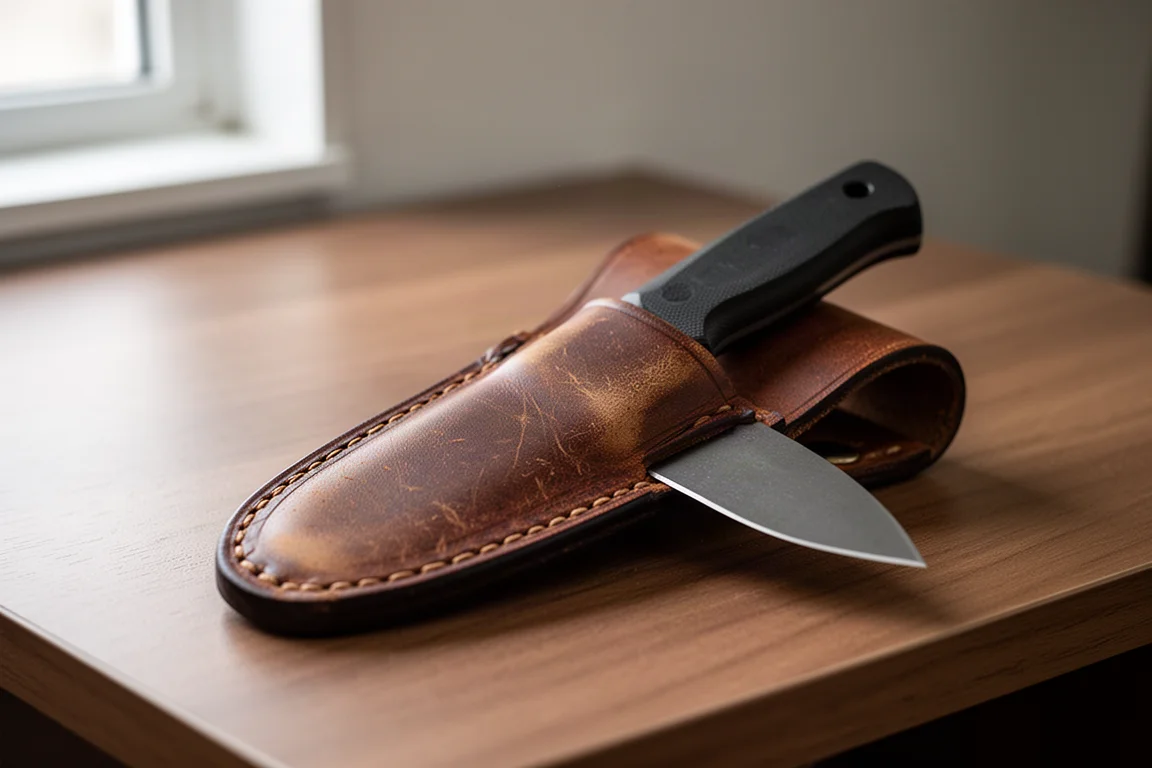
A handful of leather makers are worth knowing by name. Roget Leather supports a set list of specific knives and turns out exceptionally nice work, typically starting around $150 and up. Pair Drop Leather makes what is arguably the best low-ride leather pocket sheath available, listed on the site between $60 and $90. If you own a knife nobody makes a sheath for, Oak City Leather Goods will commission one, with options for thread color, leather color, and an UltiClip so the sheath stays locked in the pocket while the knife comes free. DP Steel also makes a leather clip sheath designed around the AK-1 that works as a semi-universal option for similarly sized knives, molding to the blade over time. Tailored by Cortez rounds out the list with custom work starting around $100, scaling up with leather choice and configuration.
One of the knives that works beautifully in this style of sheath is the Bastionne BMK EDC1, a compact fixed blade sized exactly for this kind of pocket carry.
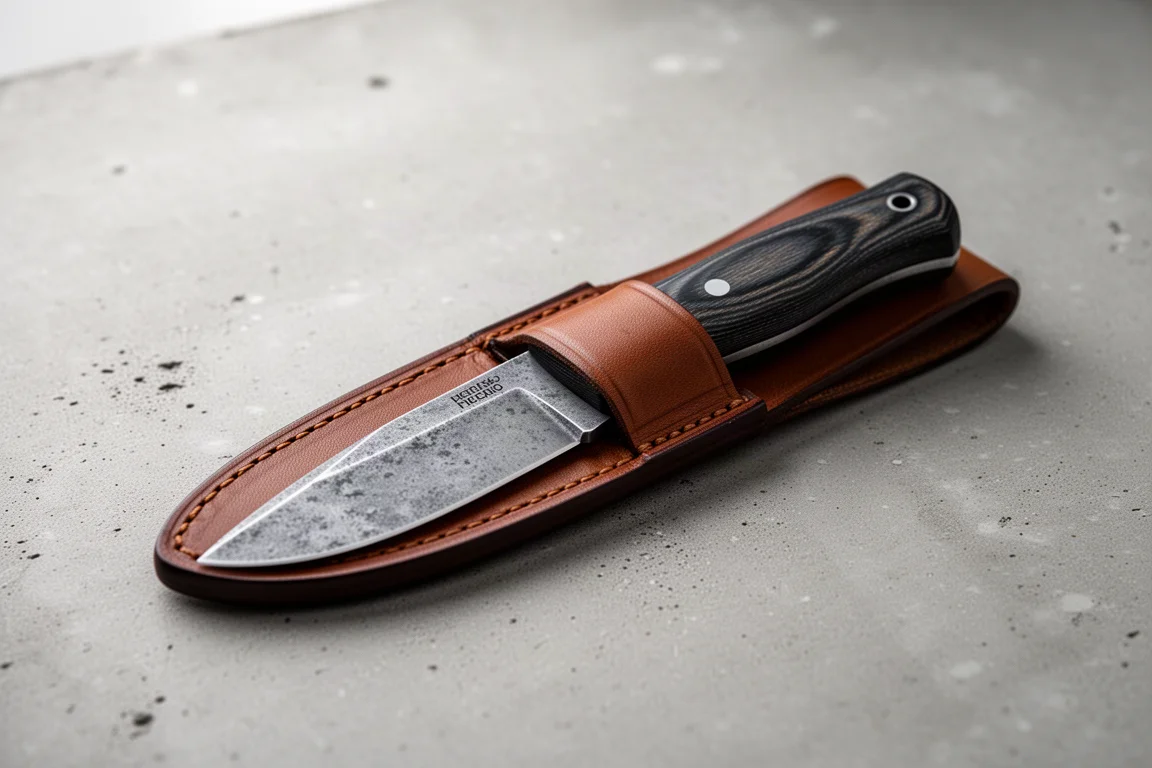
The Bradford Guardian is another natural fit, small enough to ride low and discreet in leather while still offering a serious working blade.
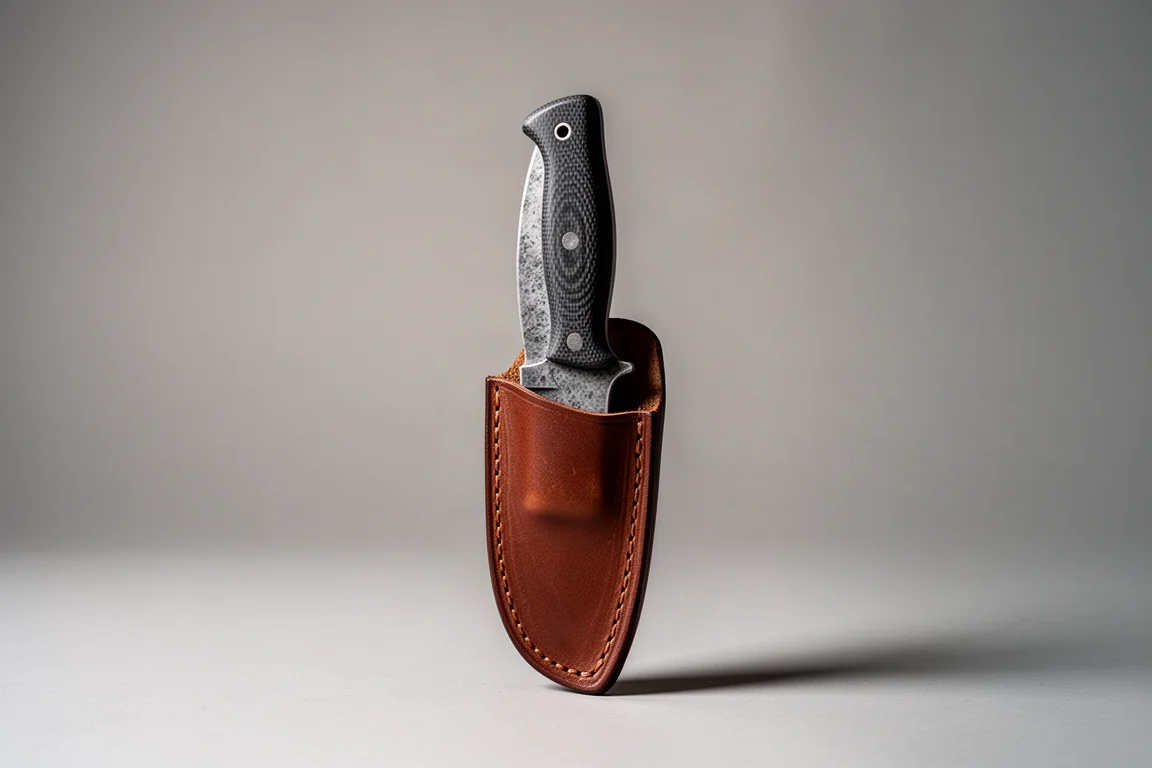
For a more crafted look, the Gryffin Co Scout pairs especially well with Pair Drop’s low-ride leather, and its compact proportions suit deep pocket carry.
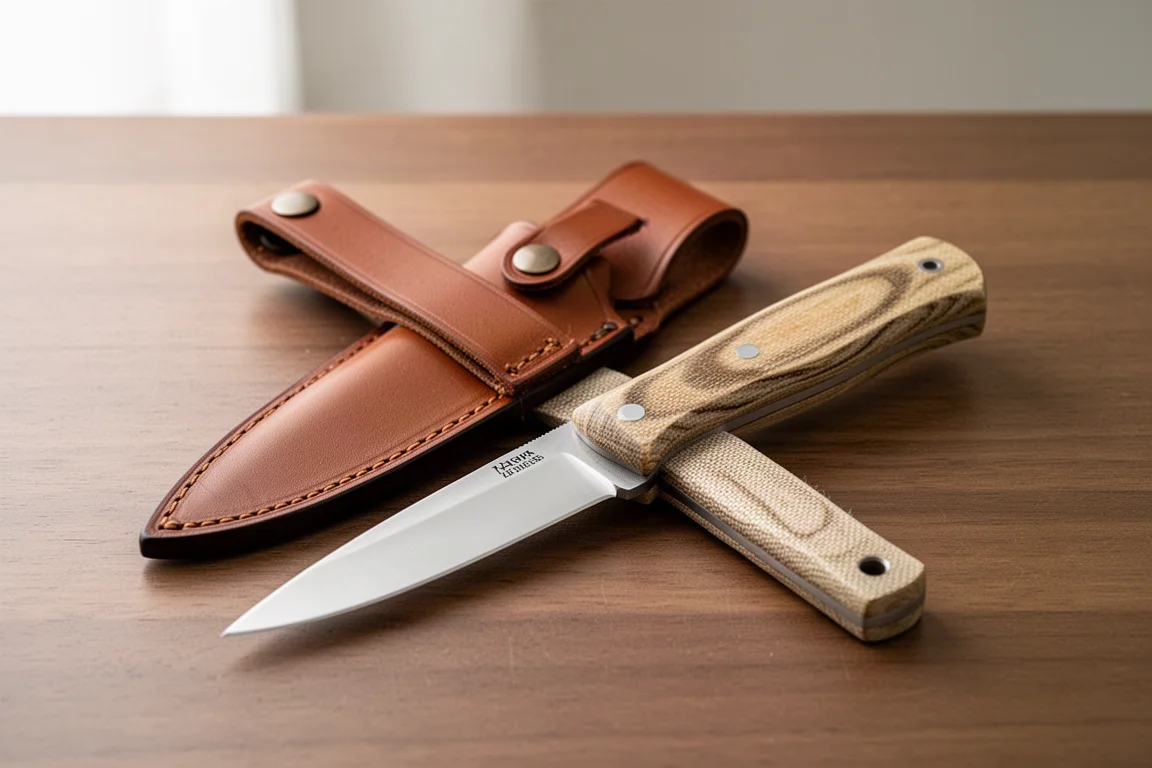
If you prefer something slightly larger, the DP Steel AK-1 has a dedicated leather clip sheath option that makes pocket carry workable even at this size.
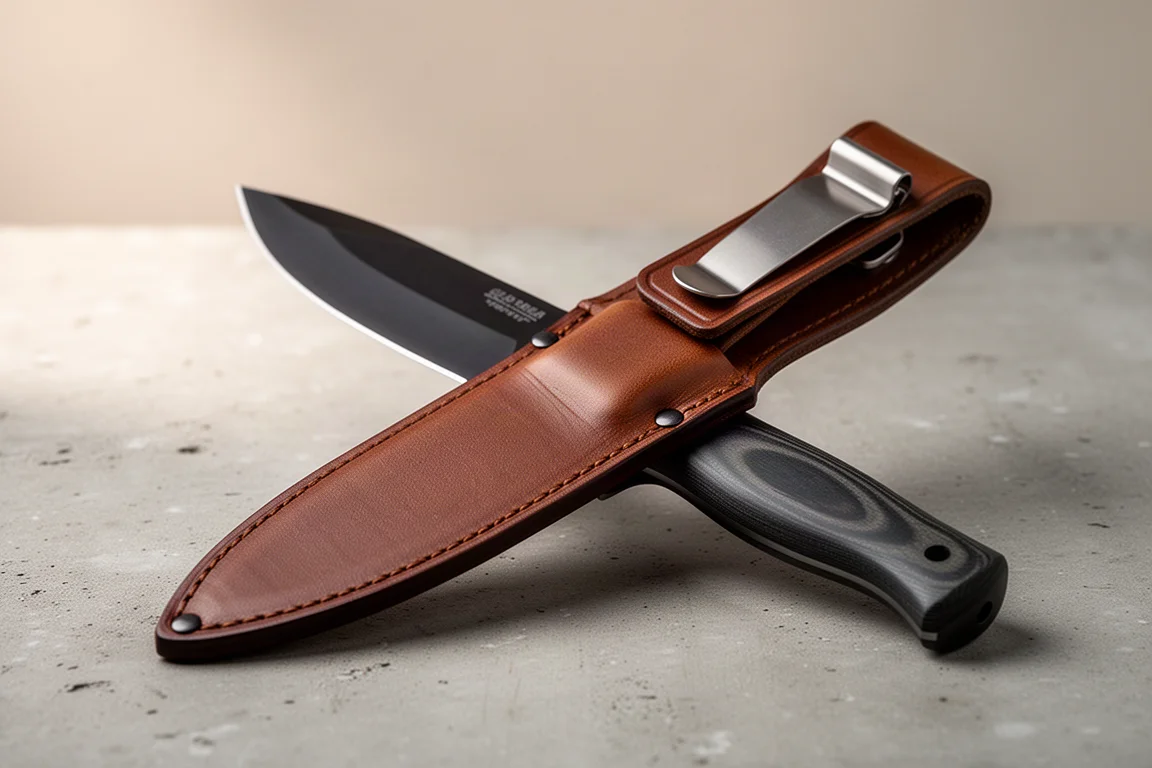
Kydex Pocket Carry: The Offensive Industries Sheath
The Ambi sheath from Offensive Industries takes a different approach: a wide kydex pocket sheath that is fully ambidextrous. The knife can be inserted and drawn either way, so you can move it between pockets without ever sheathing it wrong.
Because the kydex is wide, the knife simply drops into place. No guiding the tip past a leather edge, no fumbling. The sheath uses a Discreet Carry Concepts clip, which means when you pull the knife, the sheath stays put, catching on the pocket lip. You always know exactly what is coming out of your pocket.
The main limitation is that these sheaths are made to the knife. They can tolerate small dimensional differences, but a handle even slightly thinner than intended can be shaken loose, so you want the correct sheath for your specific blade. The upside: Offensive Industries will custom-build one for basically any fixed blade if you send the knife in, priced roughly $85 to $95 depending on materials and pattern.
The Offensive Industries Wicket is the knife this system pairs with most naturally, and some Wicket variants even ship as a combo with one of these sheaths included.
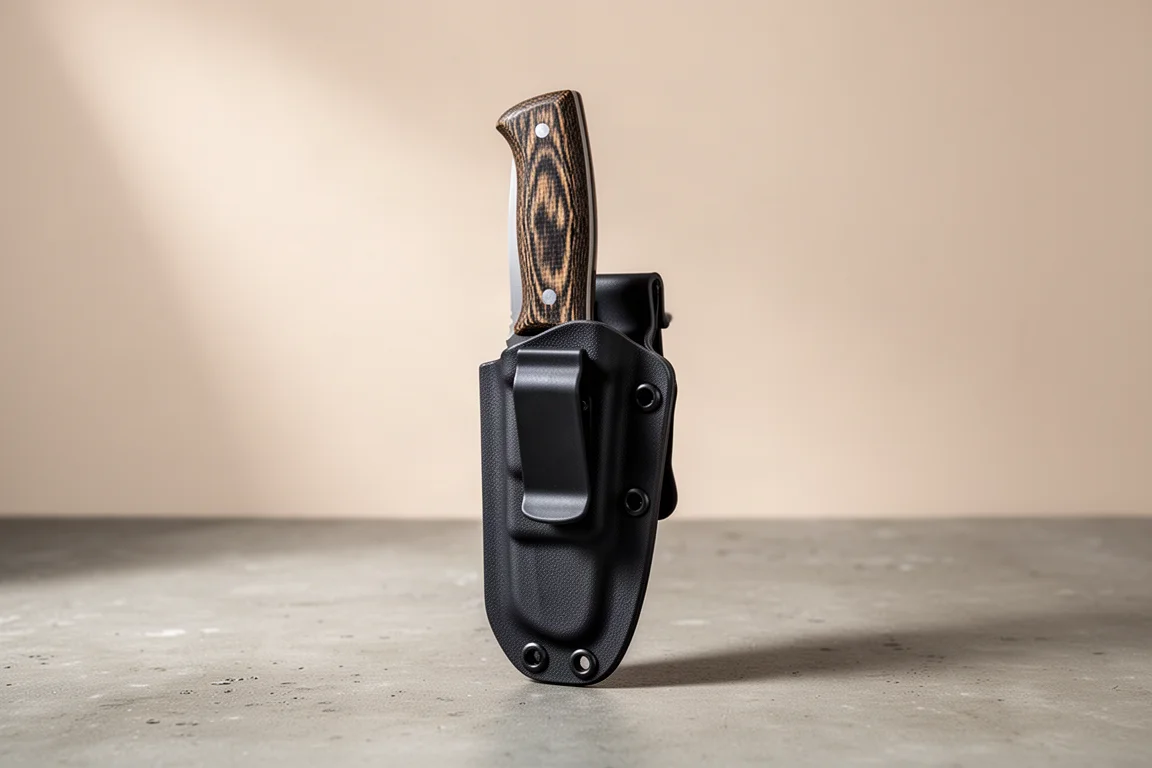
The Clips That Make It Work
Two clips deserve their own mention because they power several of the setups above. The Discreet Carry Concepts clip costs around $12, fits any kydex sheath with standard hole spacing, and clips into the pocket with a simple push-down motion. The barb catches the pocket edge so the knife draws alone; to remove the whole rig you lift the clip so the barb clears the lip. The only real catch is that if your knife’s stock kydex lacks standard spacing, the clip simply cannot be used.
The UltiClip, around $14 to $15 in its small size, locks even harder. Push it down and it double-locks into fabric, letting you yank a high-retention knife free without the sheath budging. Its killer feature is versatility: it clamps onto webbing, backpack straps, and thin fabric, so one sheath can move between pocket, pack, and waistband. The trade-offs are real, though. It can be genuinely hard to unclip, it is the most pocket-shredding clip solution available, and it can snag and stick on thick seams. Of all the clip options, it is the most versatile but not the favorite for daily fixed blade pocket carry.
Titanium Clip Carry: The Vero Approach
The Vero Engineering titanium clip for fixed blades is a different philosophy entirely. Rather than mechanically locking the sheath to the pocket, it is tuned with just enough tension that you choose on the fly: pop the knife free easily, or place a thumb on the sheath and pull the whole rig out together. It bolts onto any standard-spacing kydex sheath.
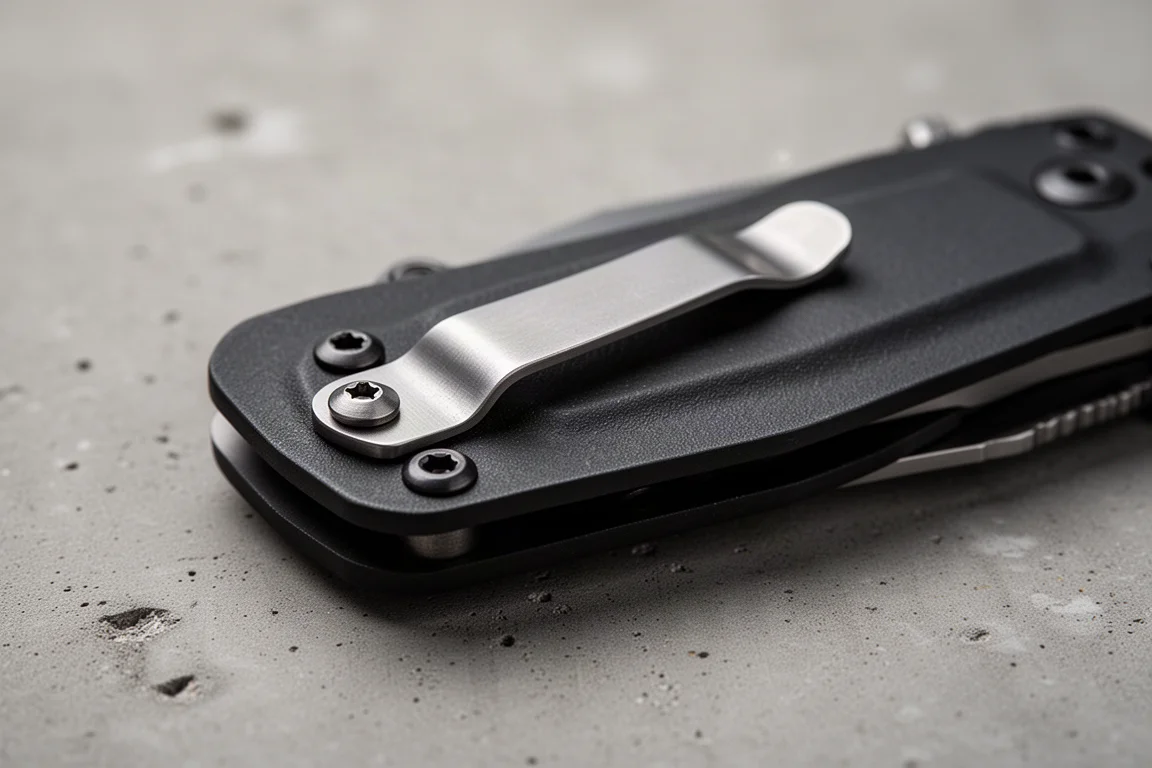
The biggest drawback is the gap between the clip and the handle. Depending on the knife, that interference can make it hard to get your hand around the grip, which is why the clip was shortened on later designs. There is also the price: at $55 in titanium, it is several times the cost of a $12 or $15 polymer clip, though the finish and engineering quality are visibly a step up.
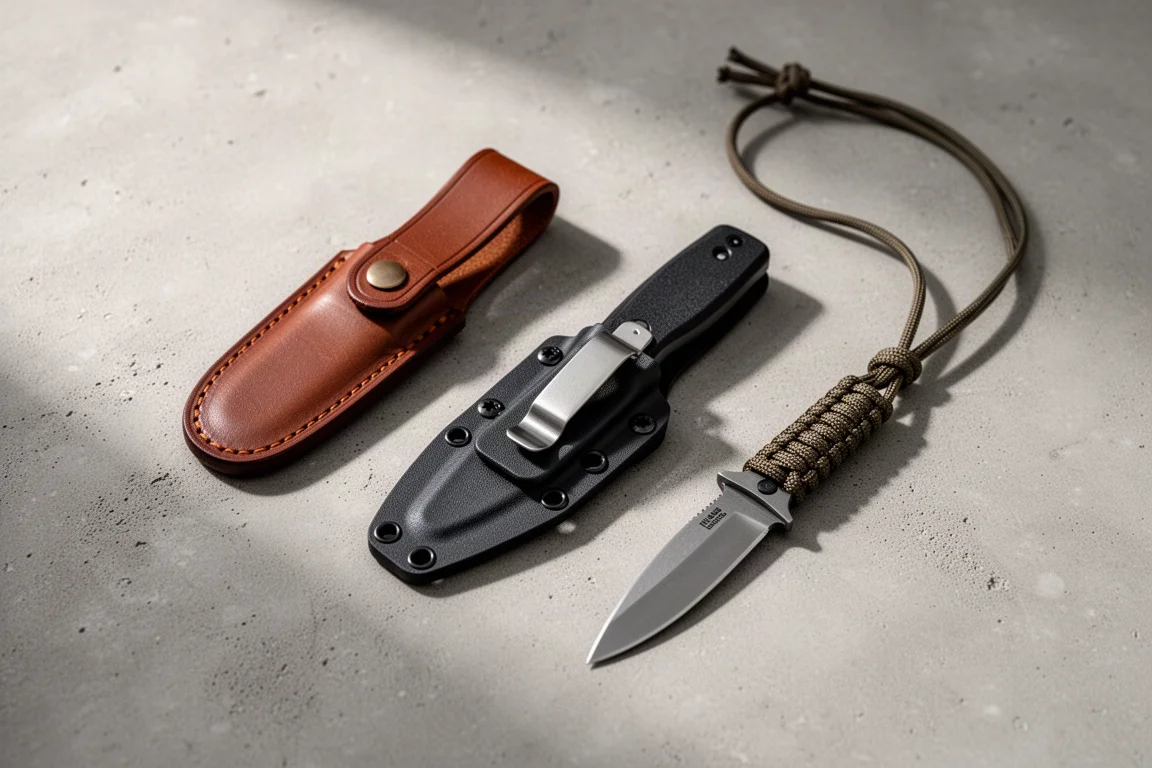
The TPK Raptor is an ideal candidate for this clip. The sheath ships bare, and the standard spacing means the titanium clip bolts straight on with no modification.
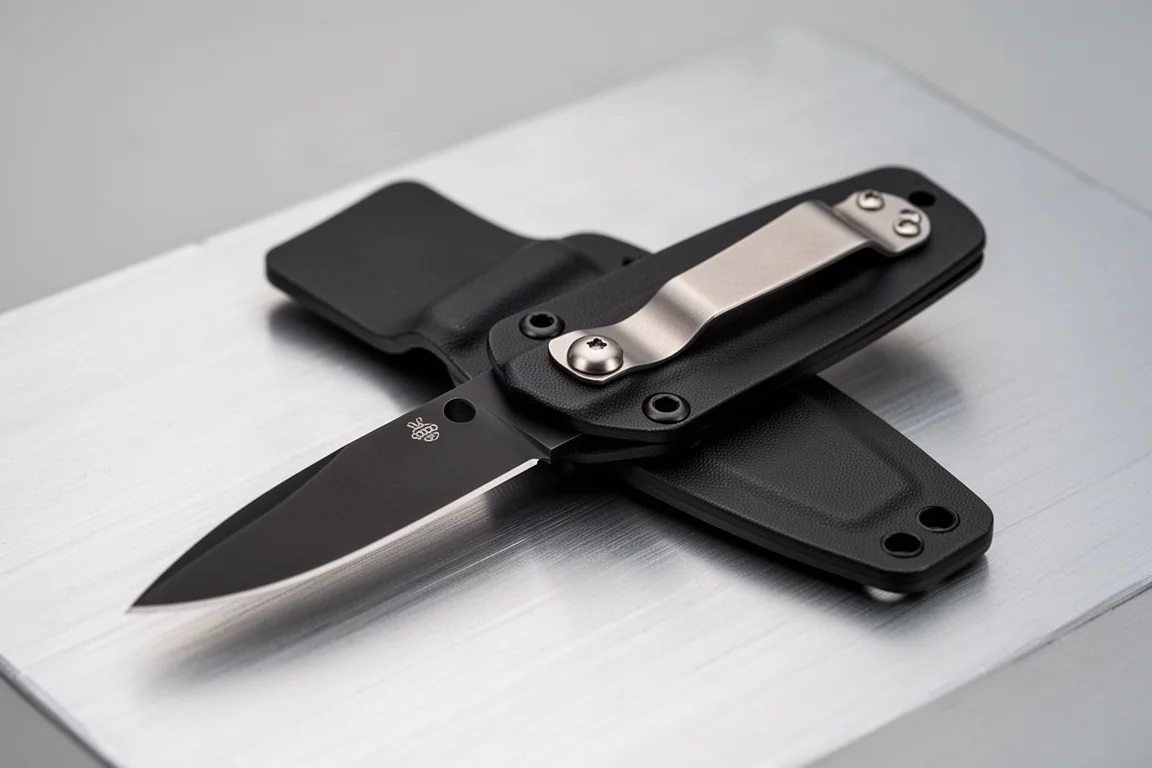
The Vero Axon takes the same idea further with its own longer prototype clip, showing how the company iterates on ride height and access.
Neck Knife Carry
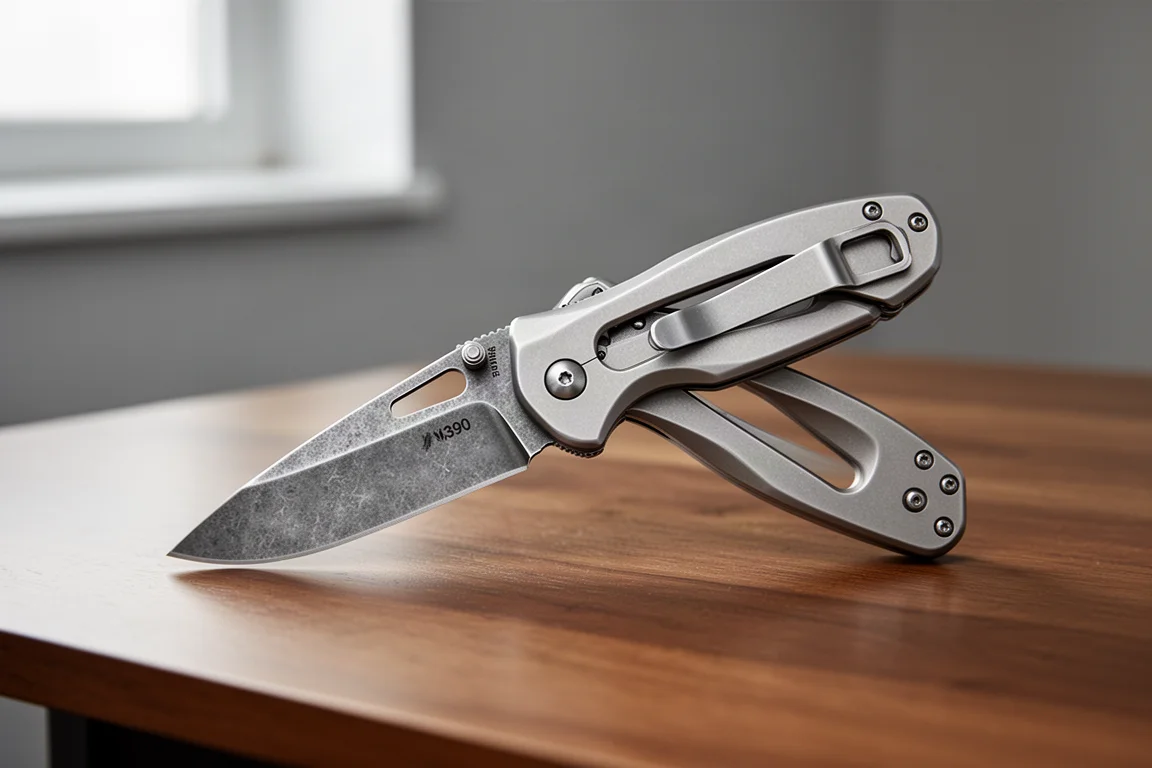
Neck knives were easy to dismiss, until actually trying one. The honest assessment is that it is the least socially acceptable way to carry a fixed blade, since it sits in plain view and draws looks almost everywhere. It is also paradoxically easy to conceal: drop it under a hoodie and it disappears entirely.
The comfort equation depends entirely on layers. With a shirt between the sheath and skin plus a hoodie over the top, it is comfortable and convenient. Against bare skin on a warm day, it is miserable. In the right conditions, though, nothing beats the access: glance down, draw, cut, resheath, all without reaching into a pocket.
Two practical notes make this method more accessible than it sounds. First, it clears your pockets completely. Second, any small knife can become a neck knife. Holes in the tang are a good indicator the maker intended it, and a length of paracord is all you need. The older TPK Raptor had a single tang hole; the current version adds a second specifically for this.
Leather Belt Sheaths
The classic leather belt sheath is the least favorite method for day-to-day carry, but it persists for good reasons. It clears your pockets entirely, and it is the traditional home of larger working knives.
The downsides are access and concealment. You have to move clothing out of the way to draw and again to resheath carefully, which makes it the slowest way to actually use a knife. It is also the least discreet: a fixed blade on the belt is visible to anyone paying attention, which matters depending on where you live. Bushcraft crowds often solve access with drop sheaths, but that is a look most people will not wear to the office.
The saving grace is that some knives are good enough to overcome the sheath. For a knife this well executed, the belt sheath is a compromise most owners accept happily, and it can even be converted to neck carry with a small loop.
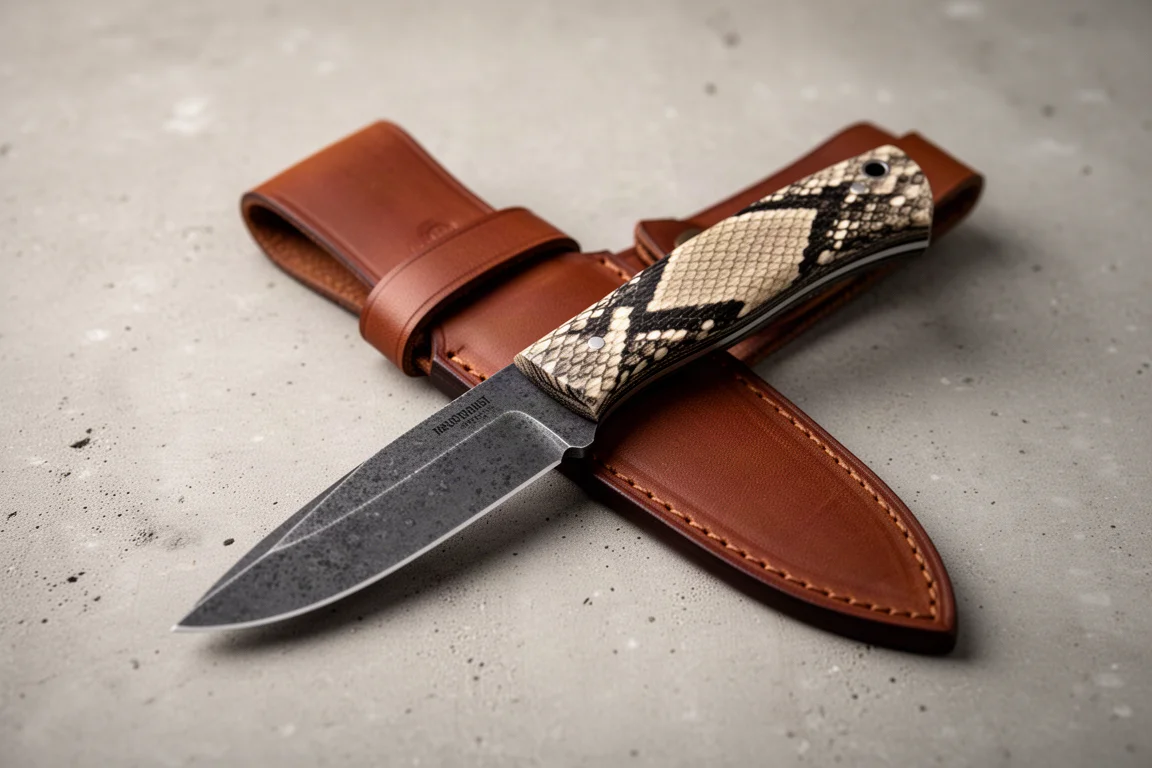
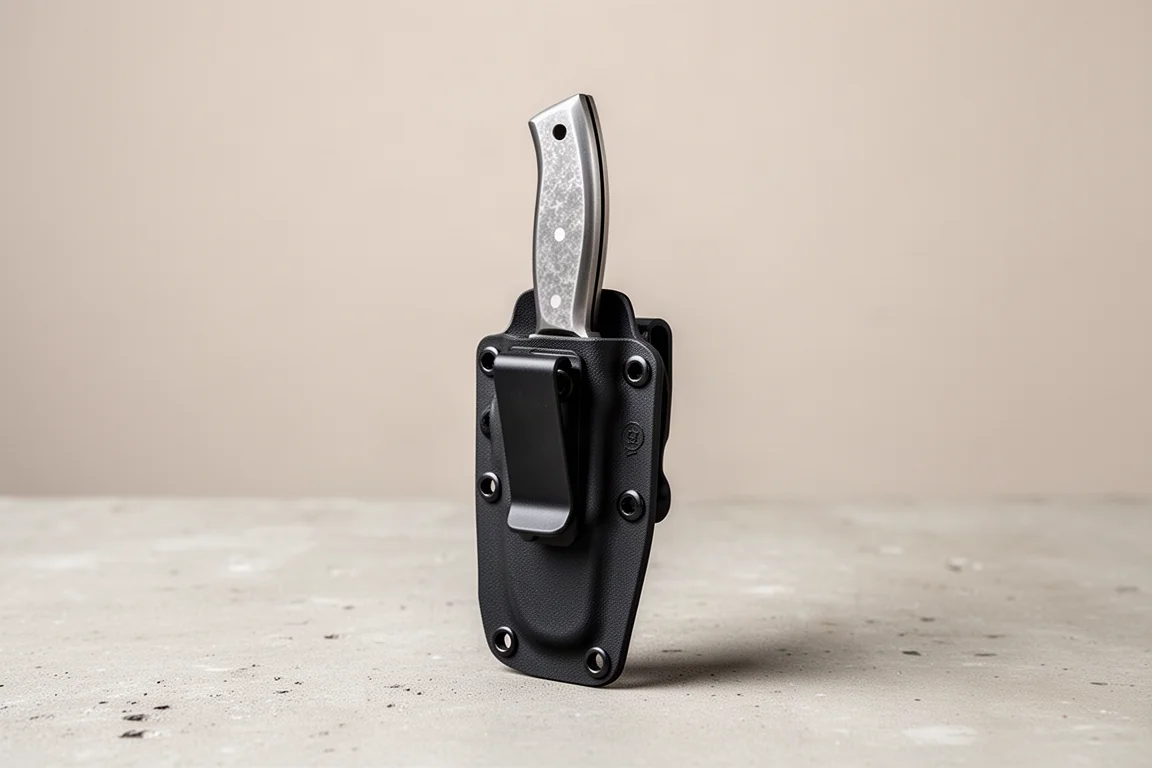
The Big Idea Design Lookout takes yet another path: the production version ships with its own extra sheath plus a high-retention titanium pocket clip designed in-house, making it one of the few fixed blades that arrives with a genuinely usable pocket carry solution out of the box. It is currently available through Kickstarter.
Buying Advice
Choosing between these methods comes down to three questions. How discreet do you need to be? Leather pocket sheaths and clipped kydex win for invisibility. How fast do you need access? Neck knives and clipped kydex are fastest, belt sheaths slowest. And how much pocket space can you sacrifice? Leather eats more room, kydex with a low-profile clip eats less.
If you are starting out, a $12 Discreet Carry Concepts clip on your existing kydex sheath is the cheapest meaningful upgrade. If your favorite knife has no sheath at all, a commissioned leather pocket sheath or a custom Offensive Industries kydex is worth the wait. The UltiClip is the tool to reach for when one sheath needs to do everything, accepting that your pockets will pay the price.
Conclusion
Fixed blade EDC has quietly matured into one of the best categories in everyday carry. Between low-ride leather, ambidextrous kydex, modular clips, and even the rediscovered neck knife, there is now a carry method for nearly every knife and every wardrobe. Pick the one that matches how you actually dress and move, and a fixed blade can earn a permanent pocket spot.
Further reading
Related Reviews

Backpacking Gear
Building a 10 lb Base Weight: An Ultralight Backpacking Gear List
A practical walkthrough of the ultralight pieces behind a 10 lb base weight, from a 765 g pack and a roomy one-person tent to a full camp chair and a dependable water filter.

Road Bikes
10 New Road Bikes Worth Watching: Aero, Titanium, Steel and Endurance Standouts
A practical roundup of 10 new road bikes, from aero flagships chasing single-watt gains to titanium, steel and endurance platforms built for real roads.
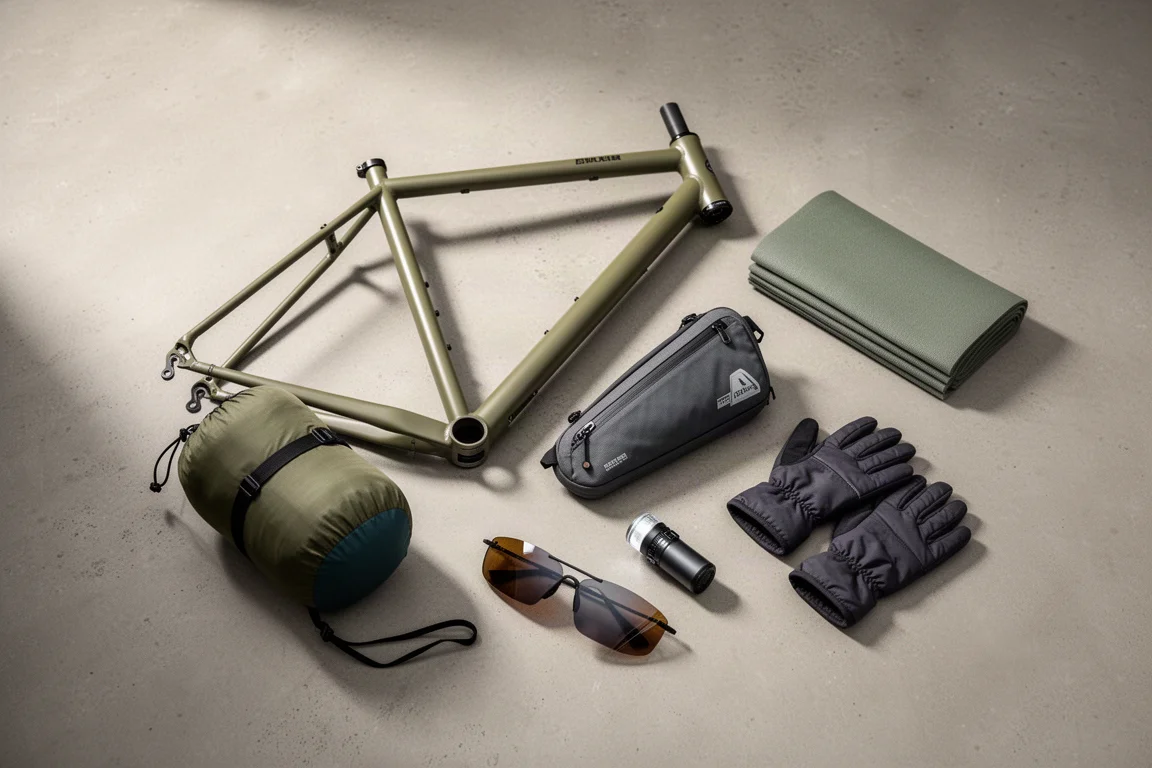
Bikepacking Gear
11 Bikepacking Essentials for Long-Distance Cycling
Eleven bikepacking essentials for long-distance cycling, from a steel gravel frame and a two-person tent to helmet lights, packable gloves, and a frame bag that puts weight in the right place.