Outdoor Water Treatment
Best Water Filters and Purifiers for Backpacking: 7 Options Compared
A practical comparison of seven outdoor water filters, purifiers, and treatment devices, and how to match the right method to your trip.
Introduction
Most outdoor water sources carry microscopic bacteria and parasites, and the consequences of drinking untreated water are not subtle: vomiting and uncontrolled diarrhea, often for about a week. Giardia is the usual culprit, and it can live in even the most pristine mountain streams. That is why nearly everyone who spends time on the trail carries something to clean their water.
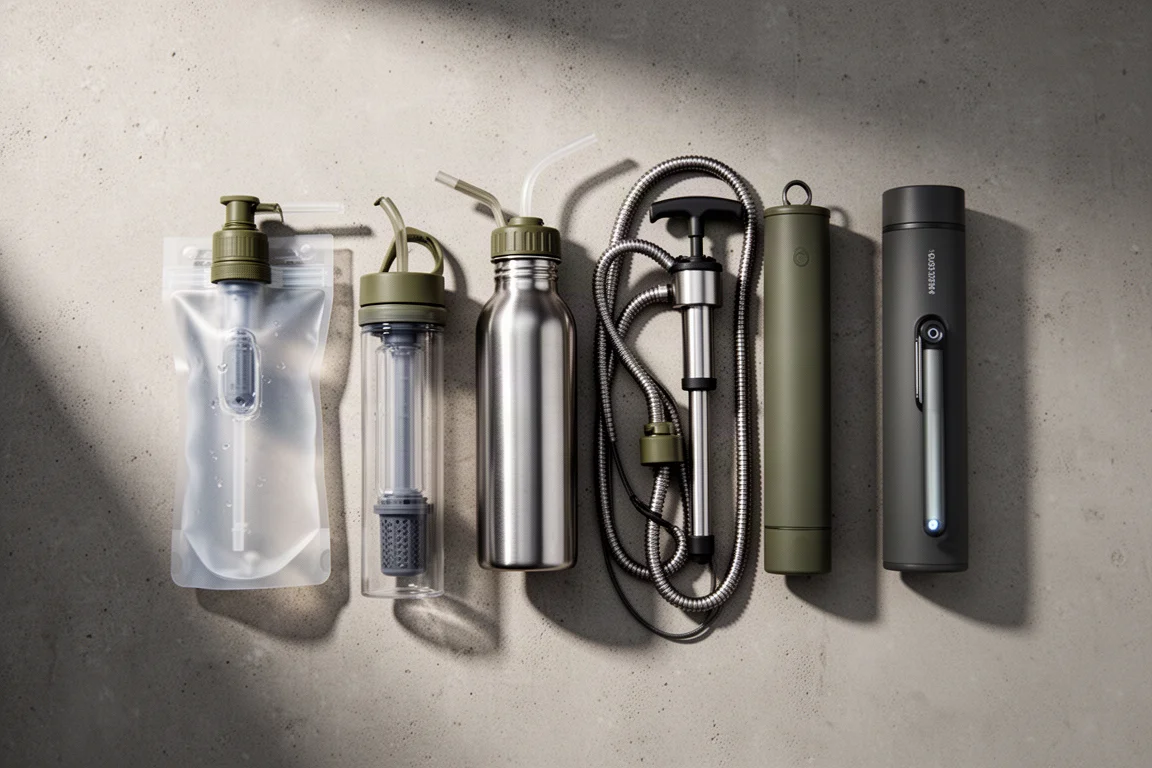
The options fall into three broad families. Filters physically remove parasites and bacteria. Purifiers go further and also handle viruses and dissolved chemicals. Treatments such as boiling, chemical drops, tablets, and UV light do not remove anything at all; they neutralize contaminants so they can no longer make you sick. This guide covers the most practical products in each group and explains where each one makes sense.
What Matters Most When Choosing Water Treatment
Three questions settle most of the decision.
What is in the water? In North America’s wild places, a filter removes most of the parasites and bacteria you will run into. Hike overseas or near farmland, and the water can also contain chemicals and viruses, which means you need a purifier rather than a filter.
How much water do you need, and how fast? Squeeze filters are cheap, light, and easy, which is why they are the most widely used option. Pump filters let you fill a bladder directly. Straw filters let you drink straight from a bottle with almost no setup at all.
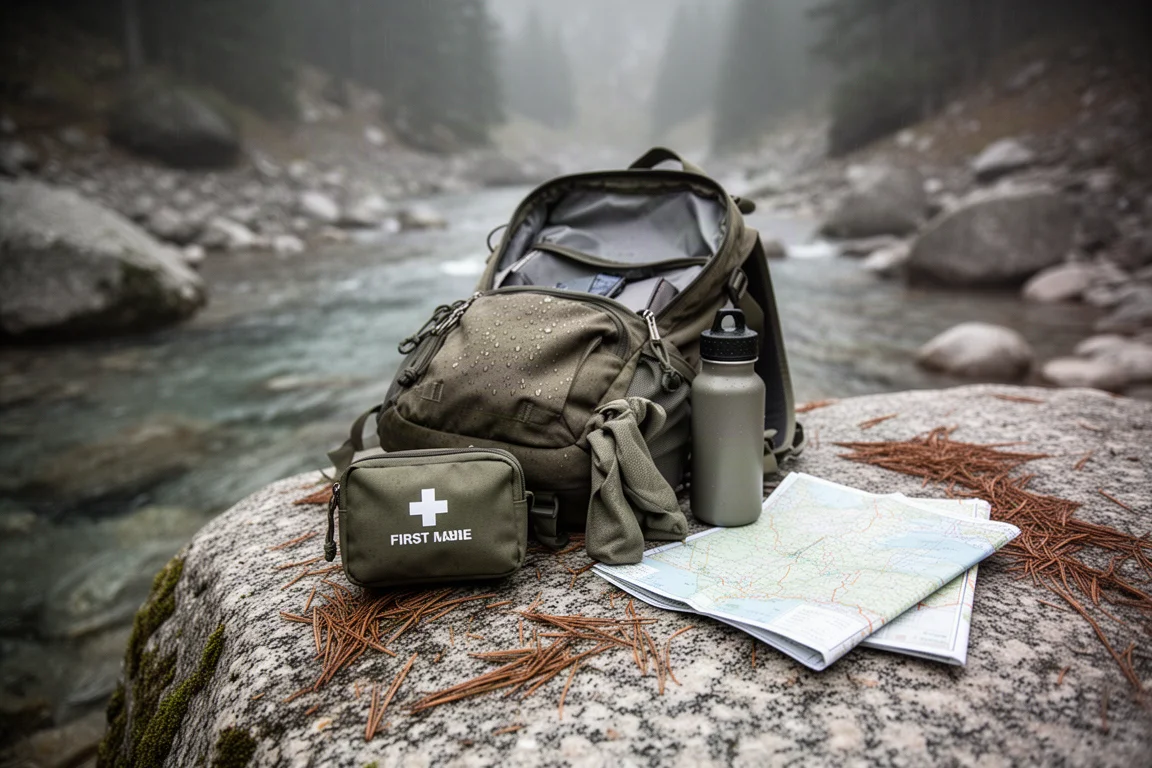
What happens if the main method fails? Treatments are cheap and light enough to carry as a backup, which is why plenty of hikers keep a small supply of tablets or drops in a first aid kit even when they already carry a filter.
Sawyer Squeeze: A Straightforward Squeeze Filter
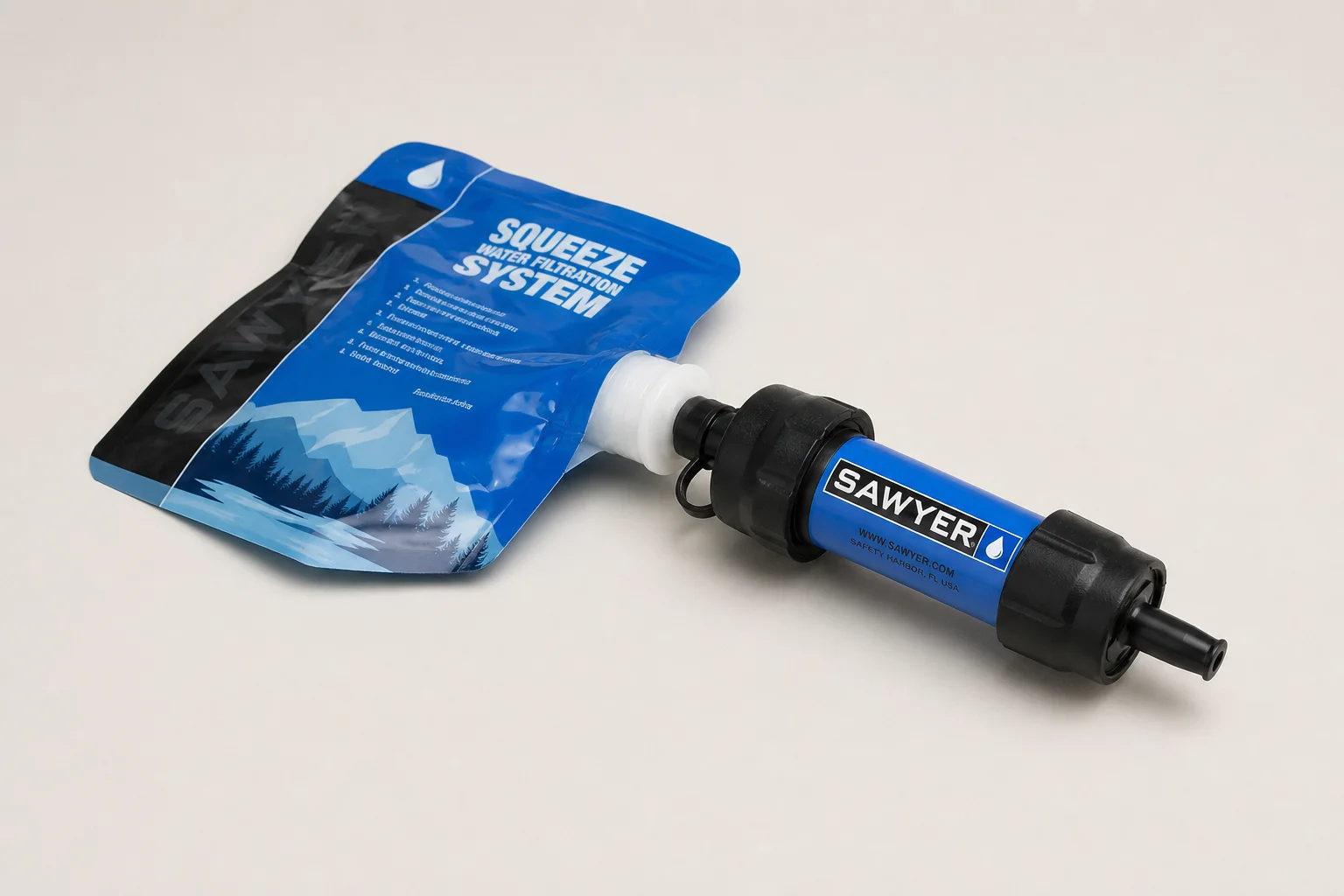
Squeeze filters earn their name from the workflow: fill a dirty water bag, attach the filter, and squeeze the water through it. The Sawyer Squeeze is the reference point for the format. It is inexpensive, simple, and easy to operate, and it does not actually have to be squeezed. With a little rigging, most squeeze filters can be set up as a gravity feed system, letting gravity push water through the filter while you take care of other camp chores.
That flexibility makes it a sensible first filter for day hikes and weekend trips, and a reasonable spare to keep in a larger kit.
Platypus QuickDraw: A Refined Squeeze Filter
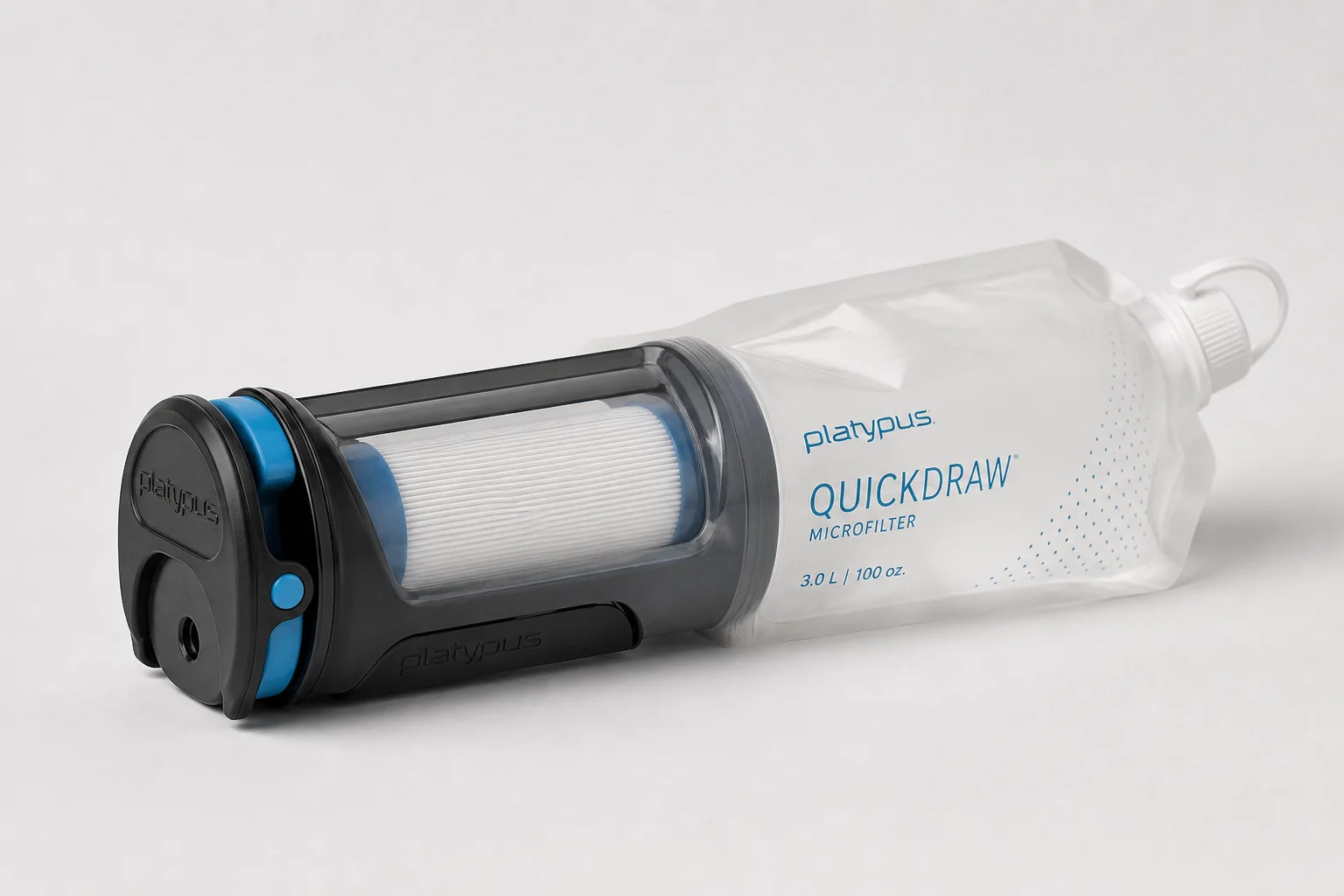
For most hiking in North America and Europe, a squeeze filter is all the treatment you need, and the Platypus QuickDraw is one of the most compelling examples of the category. It keeps the simple fill-and-squeeze workflow that makes squeeze filters so easy to live with, in a package worth a close look if you are comparing options in this class.
LifeStraw Peak Filter: Straw Filtering in a Bottle
Straw filters work by suction instead of pressure. Rather than squeezing or relying on gravity, you drink directly through the filter. Early versions of the idea meant lying on your stomach in the mud to drink straight from a stream, or using the filter like an oversized straw in a cup. Newer designs build the filter into a handheld bottle, and the LifeStraw Peak Filter follows that approach: fill the bottle, drink through the built-in filter, and skip the separate dirty-water bag entirely.
It suits hikers who want the fewest possible steps between a water source and a drink.
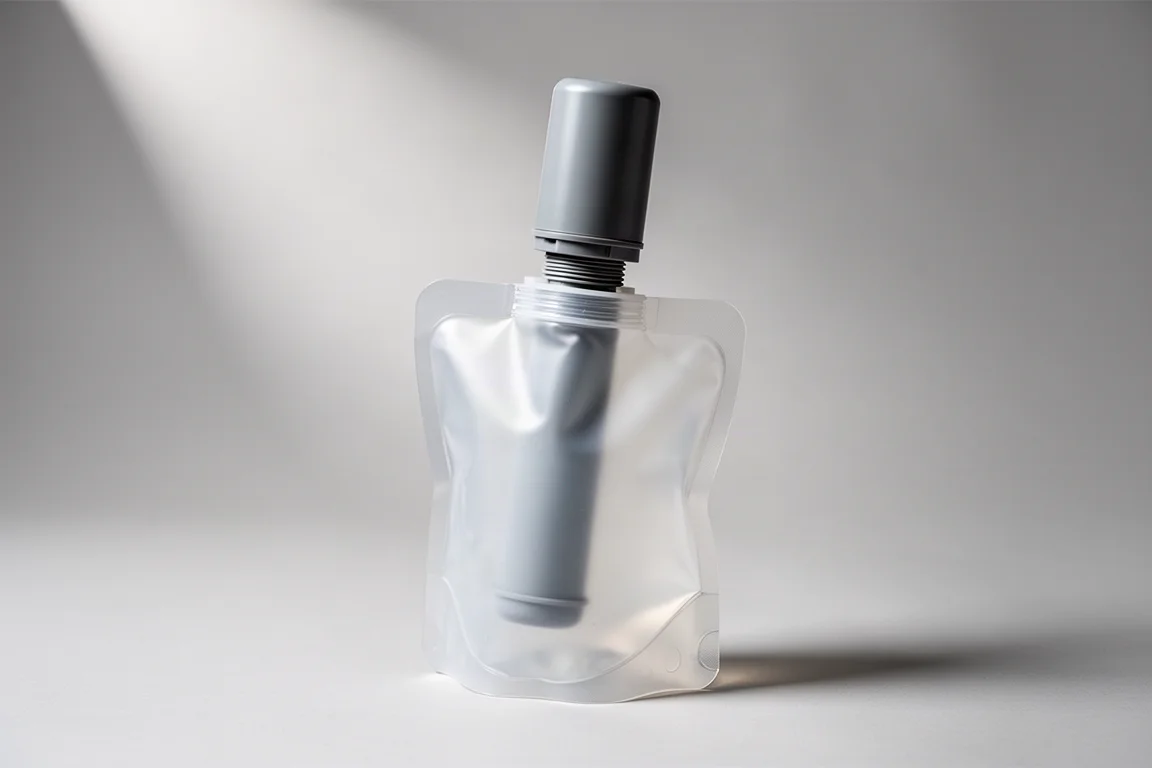
Katadyn Hiker: Pump Filtering With a Carbon Core
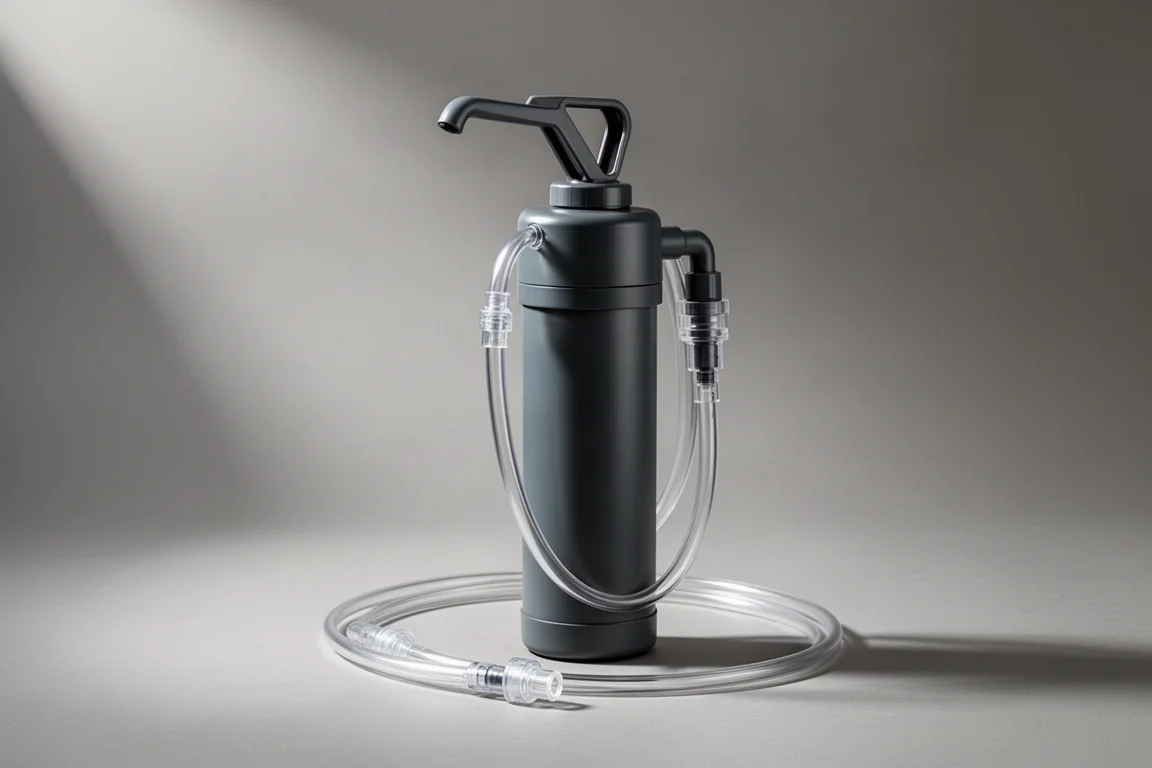
Pump filters move water by hand, and the Katadyn Hiker has long been a popular choice in that style. Its main appeal is convenience: you can filter straight into a water bladder without transferring anything between containers. It also adds a carbon core, which removes bad tastes along with parasites such as Giardia.
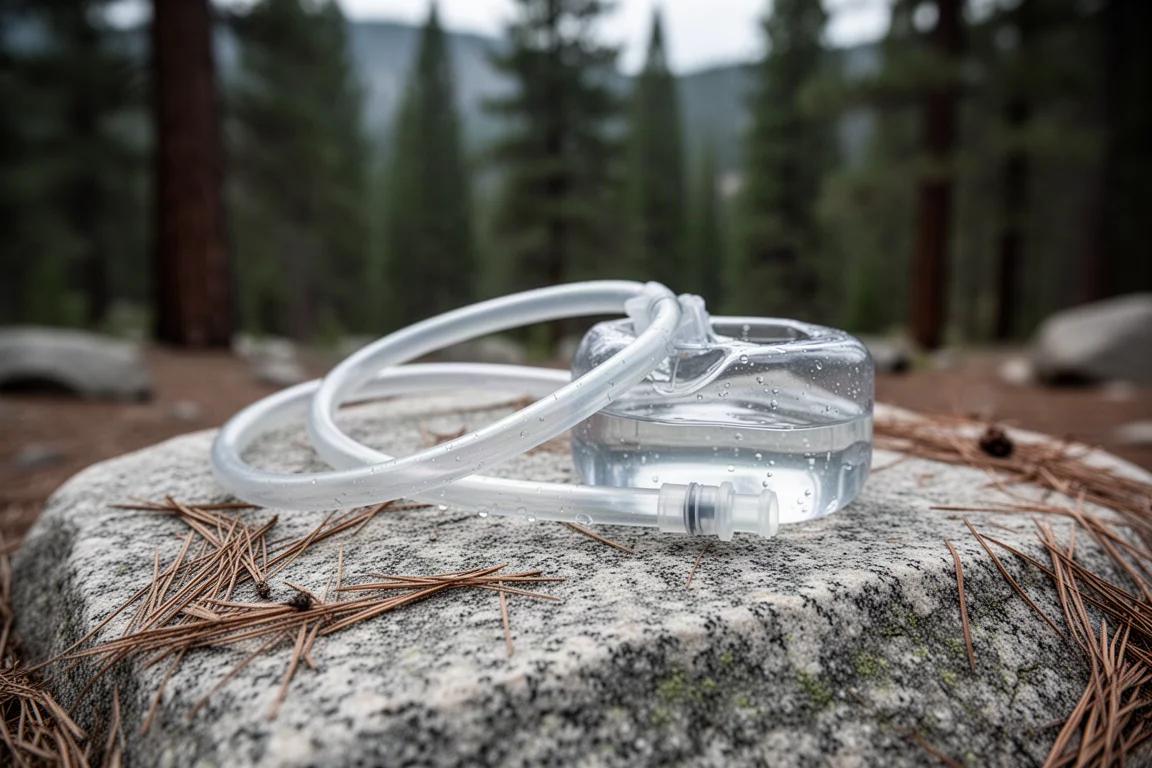
There is a durability angle too. The Katadyn Hiker uses a glass media rather than hollow fiber, which makes it less susceptible to damage from freezing, a useful property on cold-weather trips where a wet filter can otherwise be ruined overnight.
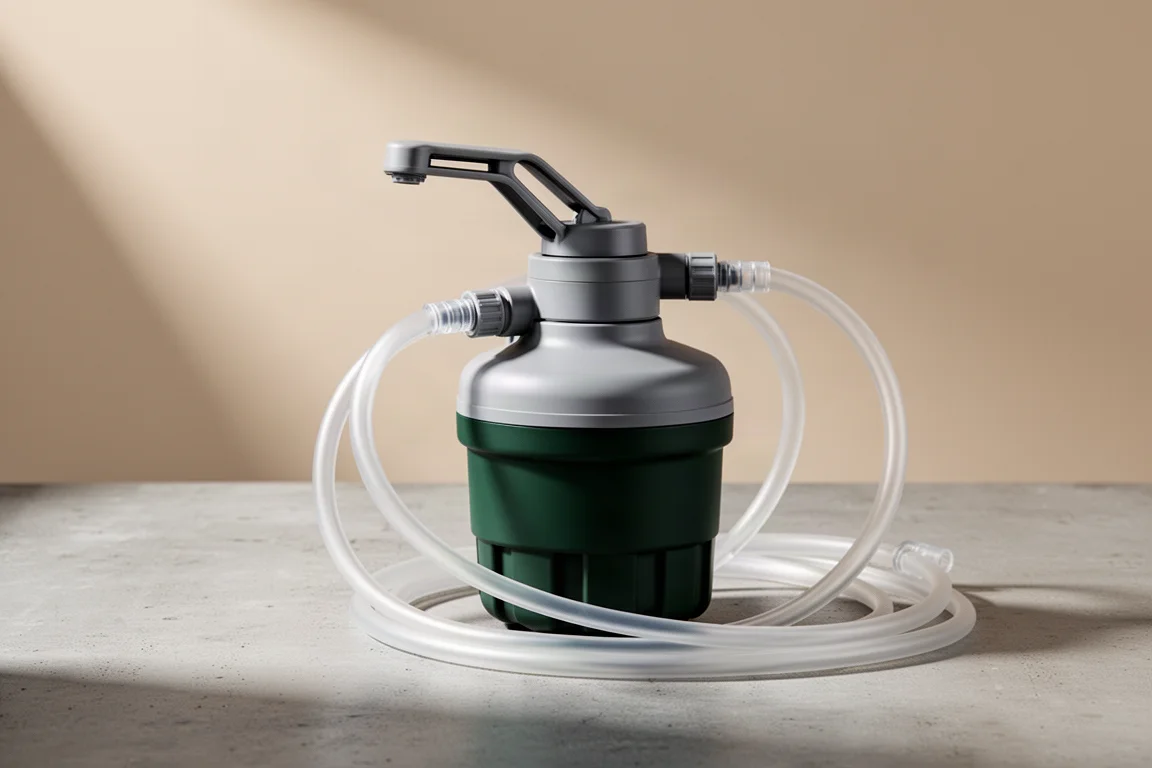
GRAYL: Purification for Travel and Farmland
Filters cover parasites and bacteria, but they cannot remove viruses or dissolved chemicals. Those show up in water overseas and near farmland, which is where purifiers come in. The GRAYL uses a combination of activated carbon and ion exchange technology to remove impurities that are dissolved as ions in the water, covering the viruses and chemicals a standard filter would pass through.
The limitation is capacity. Purification ability lasts for roughly 150 liters or less before it is used up, so it is not the right tool for long trips with heavy water consumption. Within the purifier category, the GRAYL is the most affordable option available.
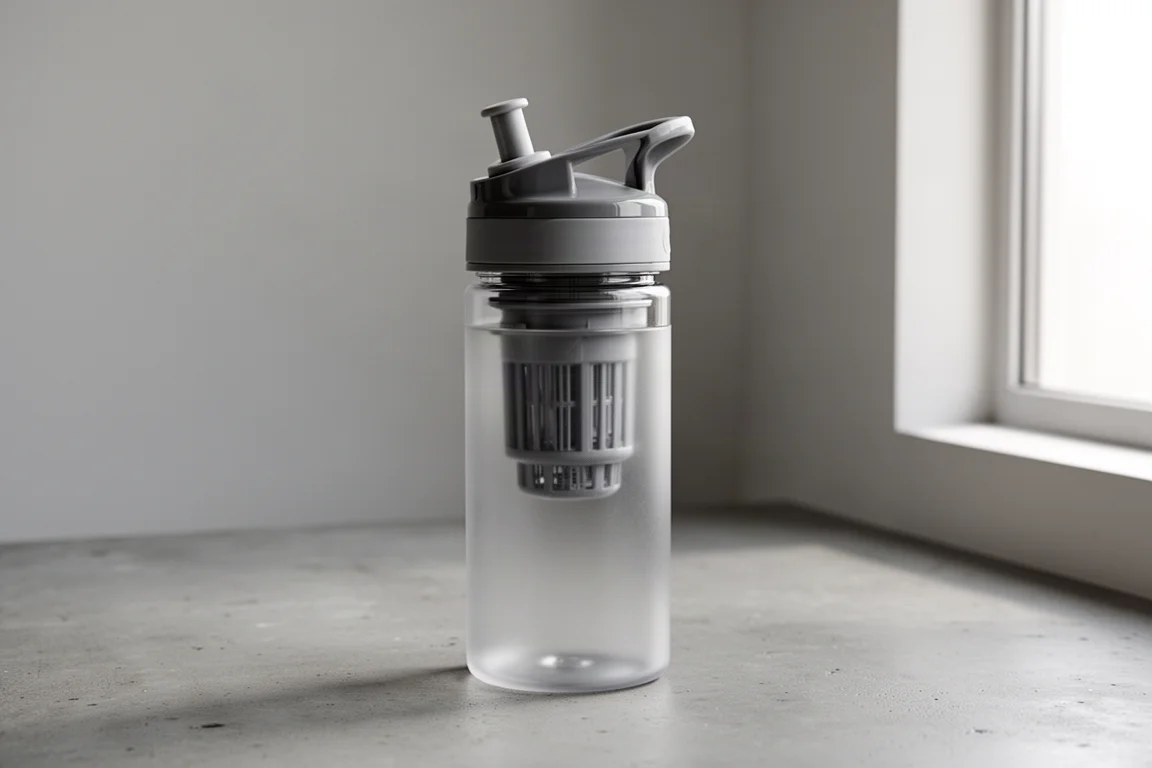
MSR Guardian: A Higher-Investment Purifier
If purifier-level protection matters and budget is less of a constraint, the MSR Guardian is the alternative to look at, at around $300. It is the option to consider when you want purification rather than simple filtration and are prepared to pay for it.
SteriPEN: UV Treatment as a Lightweight Backup
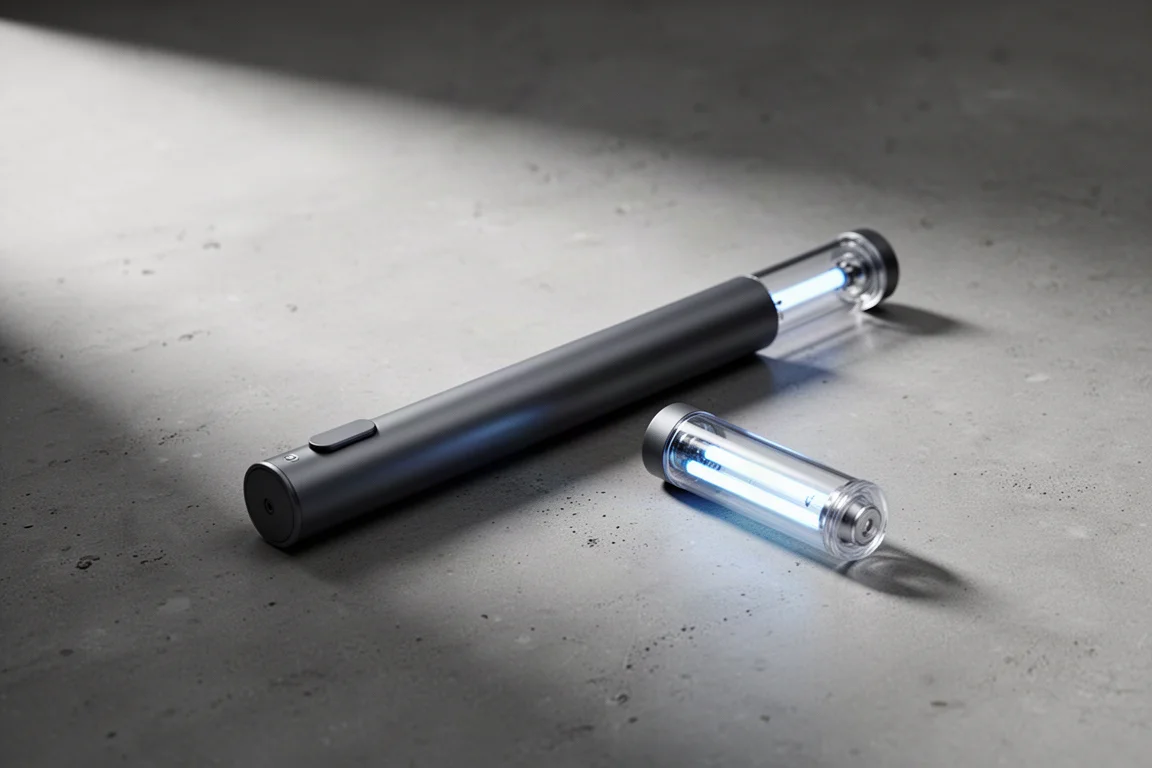
Treatments take a different approach: they do not remove anything, they neutralize contaminants so they cannot harm you. UV light is one of the lightest ways to do that. Devices such as the SteriPEN use a small UV light that you stir into the water, and the light kills parasites and other contaminants.
Because nothing is removed from the water, UV treatment is best treated as a complement to a filter rather than a replacement for one. Its strength is portability: it is easy to keep in a pack as a second line of defense if a filter clogs, freezes, or fails.
Boiling, Bleach, and Tablets: Treatment Methods Worth Knowing
Boiling is the most readily available treatment, since most backpackers already carry a stove and a cook set. A rolling boil for one minute kills parasites, protozoa, and other harmful contaminants. The trade-offs are time and effort: you have to boil the water, then wait for it to cool before you can drink it, and nothing has been removed from the water in the process.
Household bleach works on the same principle. Two to four drops per liter, followed by a wait of about 20 to 30 minutes, is enough for the parasites to die off. If the idea of drinking bleach does not appeal, water treatment tablets do essentially the same job. They are cheap, light, and easy to keep in a first aid kit as a backup if a filter fails. The main drawback is taste, which makes them a better emergency measure than an everyday one.
Buying Advice: Matching the Method to the Trip
The best method depends on the trip. For most hiking in North America and Europe, a squeeze filter such as the Sawyer Squeeze or the Platypus QuickDraw will do everything you need, at a low cost and with very little weight. If you would rather fill a bladder directly, a pump filter like the Katadyn Hiker is more convenient, and its carbon core improves the taste of the water.
For travel overseas, or anywhere the water may carry viruses or chemicals, a purifier is the safer choice, and the GRAYL is the most affordable way into that category. The MSR Guardian is the step up if you want more purifier for the money. Whichever you carry, add a cheap backup treatment: tablets, drops, or a UV device take up almost no space and cover you if the primary method fails.
Conclusion
There is no single best way to clean water outdoors, only the method that matches your water source, your trip length, and your budget. Squeeze filters cover the majority of hiking in North America and Europe. Purifiers are the answer for overseas travel and farmland runoff. Treatments are the inexpensive insurance policy that belongs in every pack. Pick the combination that fits the trip, and you can drink from the trail with confidence.
Further reading
Related Reviews

Backpacking Gear
Building a 10 lb Base Weight: An Ultralight Backpacking Gear List
A practical walkthrough of the ultralight pieces behind a 10 lb base weight, from a 765 g pack and a roomy one-person tent to a full camp chair and a dependable water filter.

Road Bikes
10 New Road Bikes Worth Watching: Aero, Titanium, Steel and Endurance Standouts
A practical roundup of 10 new road bikes, from aero flagships chasing single-watt gains to titanium, steel and endurance platforms built for real roads.
Bikepacking Gear
11 Bikepacking Essentials for Long-Distance Cycling
Eleven bikepacking essentials for long-distance cycling, from a steel gravel frame and a two-person tent to helmet lights, packable gloves, and a frame bag that puts weight in the right place.