Mountain Bikes
Best Value Trail Bikes: Five Affordable Mountain Bikes Worth Considering
Five trail mountain bikes that deliver modern geometry, sensible components, and strong value, from budget hardtails to a fast and composed full suspension build.
Introduction
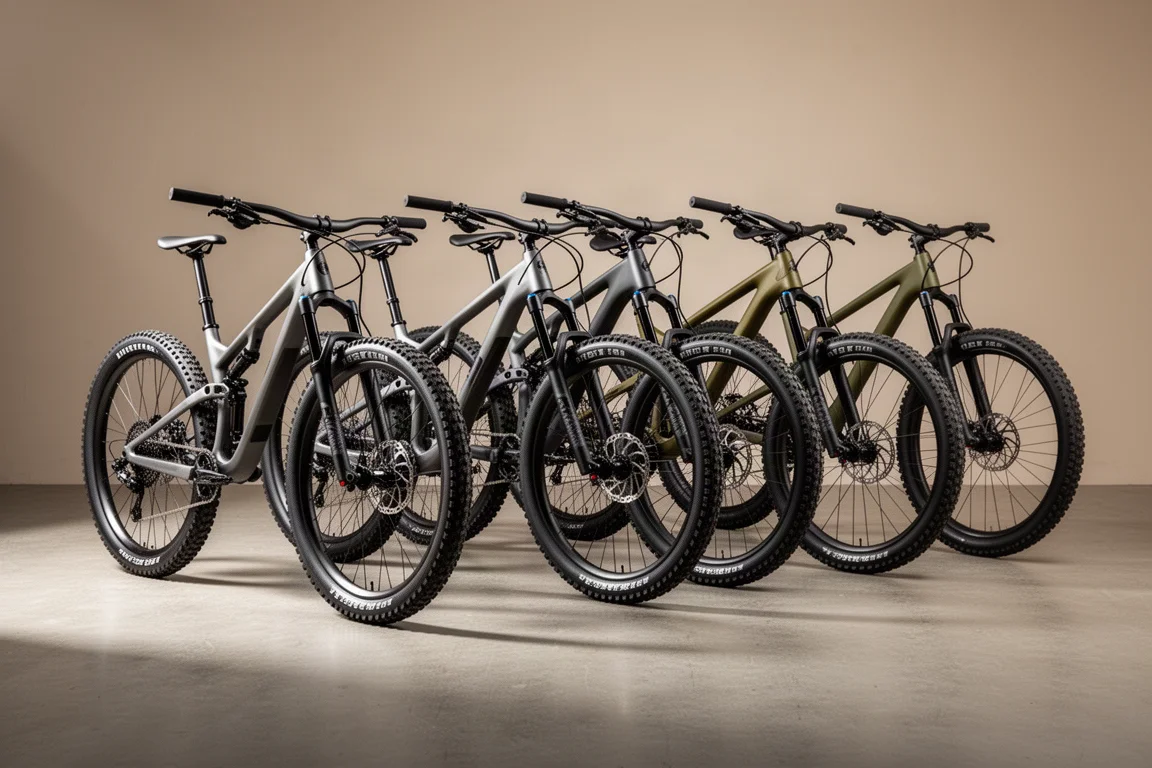
Trail bikes are some of the most versatile mountain bikes you can buy. Most of them sit around 130mm of travel with 29in wheels, and they are quick and capable on almost any terrain. The catch is cost: as top-spec trail bikes become more expensive, mid-range and entry-level models tend to be pulled up along with them. The five bikes below stood out for value, from budget hardtails to a full suspension build that punches well above its price.
How We Chose These Trail Bikes
Value in a trail bike is not simply the lowest price. It is what the money buys in geometry, suspension, drivetrain quality, and how easy the bike will be to upgrade later. Every bike here uses modern trail geometry, and each one has at least some provision for future upgrades, whether that is a tapered head tube, Boost axle spacing, or routing for a dropper post.
Weight, wheel size, and travel vary quite a bit across the list. The hardtails keep costs down by removing rear suspension and spending the savings on parts, while the full suspension bikes trade some weight for more capability on descents.
Trek Marlin 6: The Entry-Level Hardtail
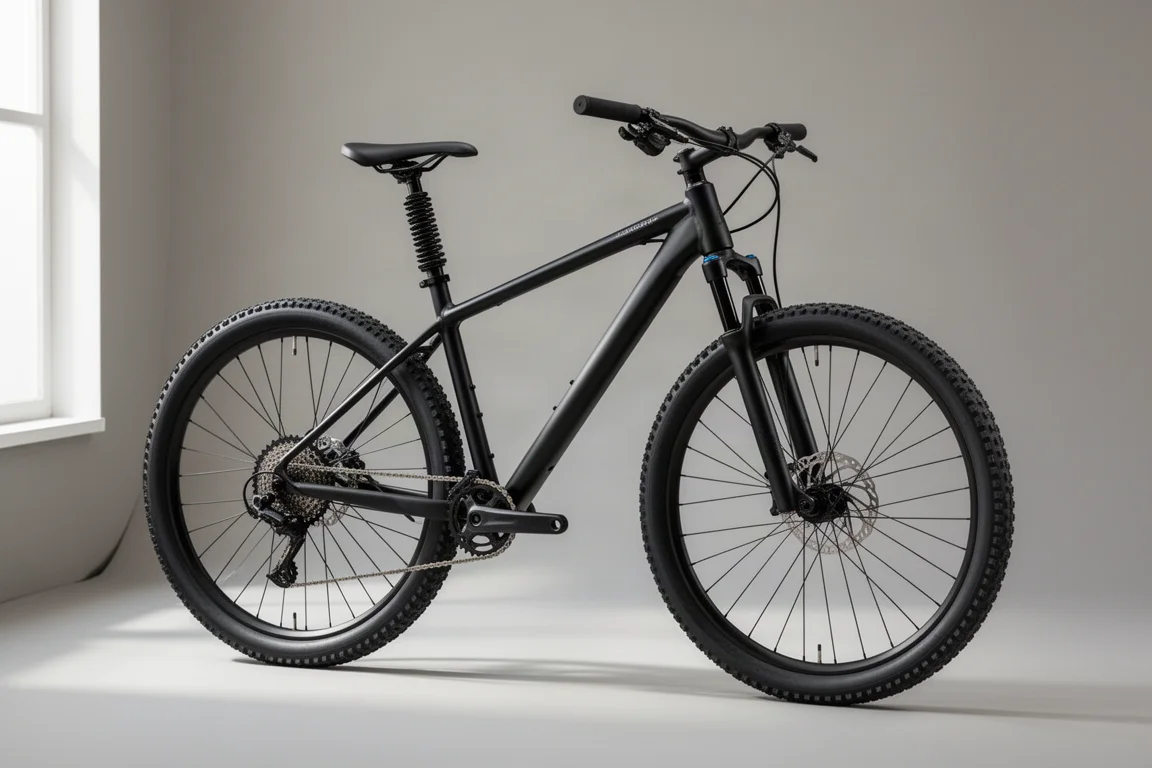
The Trek Marlin 6 costs £850, or just under $900, and it is a versatile machine that offers strong value for the money. You get modern geometry, a claimed weight of just 14.5kg, and a parts package that will stand you in good stead for trail riding.
Trek scales the whole bike to stay in proportion across the size range. The smallest XXS size runs 26in wheels with short-reach levers on the hydraulic disc brakes, the XS and S sizes use 27.5in wheels, and every other size comes with 29in wheels, the most common wheel size for trail bikes.
The frame is built from Alpha Silver aluminium with progressive geometry, including a slack 66.5° head angle and a steep 74° effective seat tube angle. Cables are routed internally, and there is routing for an internally routed dropper post if you want to upgrade later in the bike’s life.
This is a hardtail, so there is no rear suspension, but that lets Trek spend the savings on components instead. You get a full Shimano 1x drivetrain, 10-speed, with a clutch mech and a narrow-wide chainring shifting across a wide-ratio 11-48 cassette. That combination should mean no dropped chains on rough ground.
The RockShox Judy TK fork uses a coil spring with adjustable preload and a lockout, and it offers 100mm of travel, the least on this list. The good news is that the Marlin uses a tapered 1 1/8 to 1.5in head tube, so it is compatible with modern high-spec forks and a wide range of future upgrades are available. Tektro HD-M275 hydraulic disc brakes handle stopping, and the finishing kit comes from Trek’s in-house Bontrager brand. A kickstand or a rack is optional.
Boardman MTR 8.8: Full Suspension Value
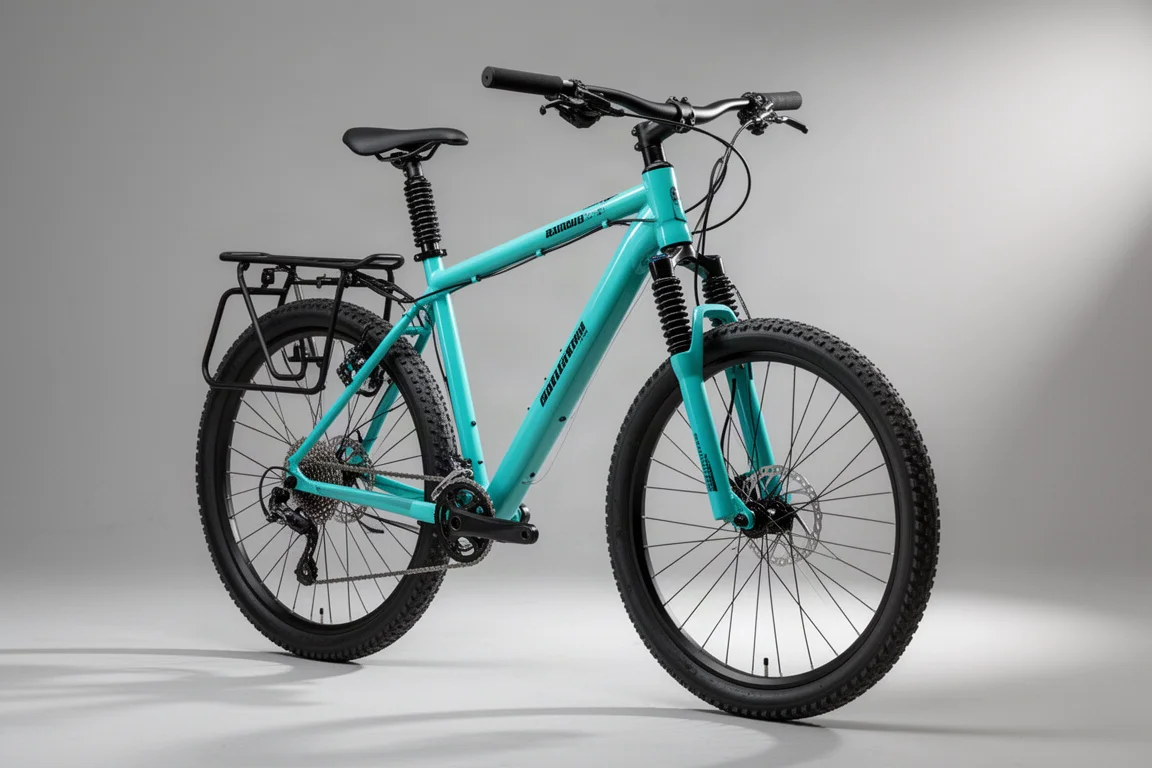
The Boardman MTR 8.8 costs £1,350, which is remarkable value for a full suspension trail bike, although it is not available in the USA. It rolls on 29in wheels and uses a triple-butted 6061 aluminium frame with a 66° head angle and 145mm of rear suspension through a four-bar Horst link.
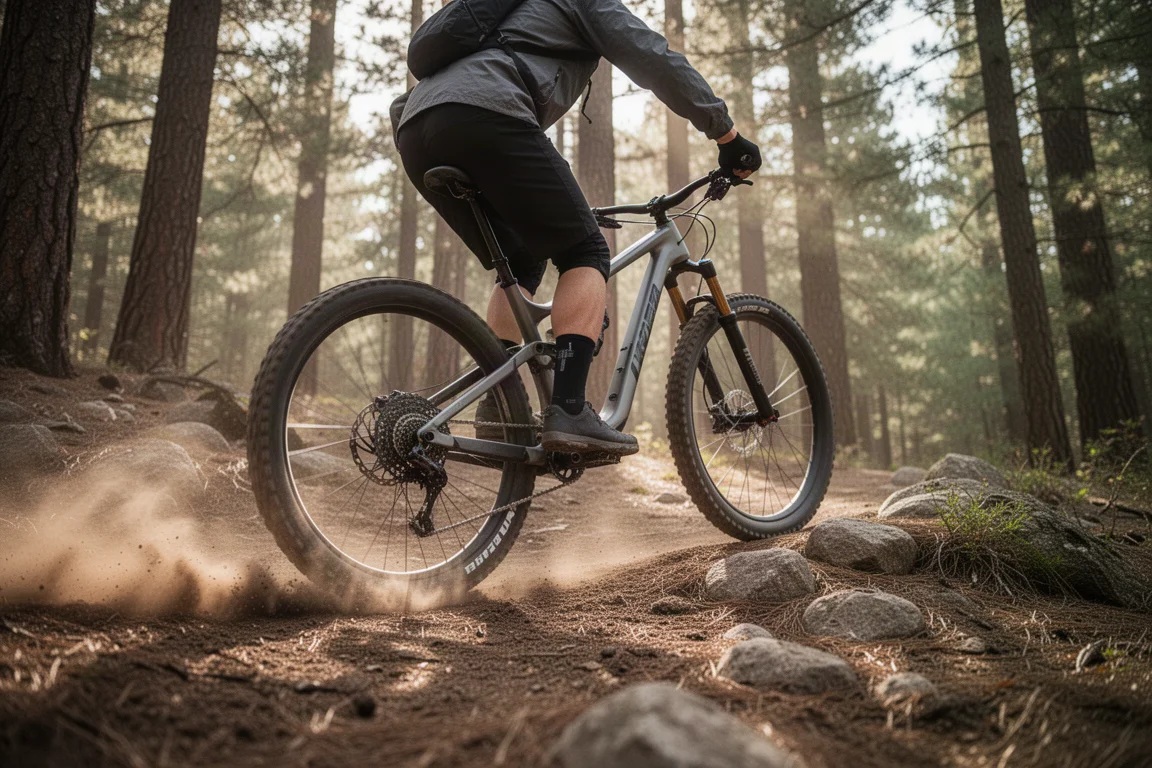
Despite the generous travel, the complete build weighs 15.97kg. Up front there is a RockShox Recon Silver RL fork with 150mm of travel, using a Solo Air spring in the left leg, which is lighter than a coil spring and allows an easily and infinitely adjustable spring rate. The right leg houses a Motion Control damper with externally adjustable rebound and low-speed compression damping. At the rear, the RockShox Deluxe Select shock uses a high-volume DebonAir spring with low-speed rebound and two-position compression adjustment, so the chassis of the bike should not require upgrading any time soon.
The drivetrain is Shimano Deore M5100, with a clutch mech and a wide-range 11-51 11-speed cassette. It is a solid performer that should last a long while, providing crisp shifting while preventing the chain from falling off. Cockpit parts come from Boardman’s own range, including wide 780mm handlebars, a short 45mm stem, and an MTR saddle. A Satori S Pro 2 dropper provides 125mm of drop on the medium-sized frame.
Tektro HD-M285 brakes clamp 180mm rotors, larger than the 160mm size found on cross-country and many trail bikes. Cables are routed externally, which is a genuine plus for maintenance and makes the bike easier to work on, even if it does not look quite as tidy as internal cabling. Tires are Maxxis Minion DHF and DHR II, which is impressive at this price point.
The one compromise is the Boardman wheelset, which uses a quick-release rear axle and looks a little dated. The frame spacing is 141mm, so it is Boost QR compatible, and many modern Boost 148mm rear wheels can be fitted by adding different end caps. Given everything else on the build, the MTR 8.8 still merits a strong place on this list, with a fun and capable feel on descents whether the trail is mellow or rowdy.
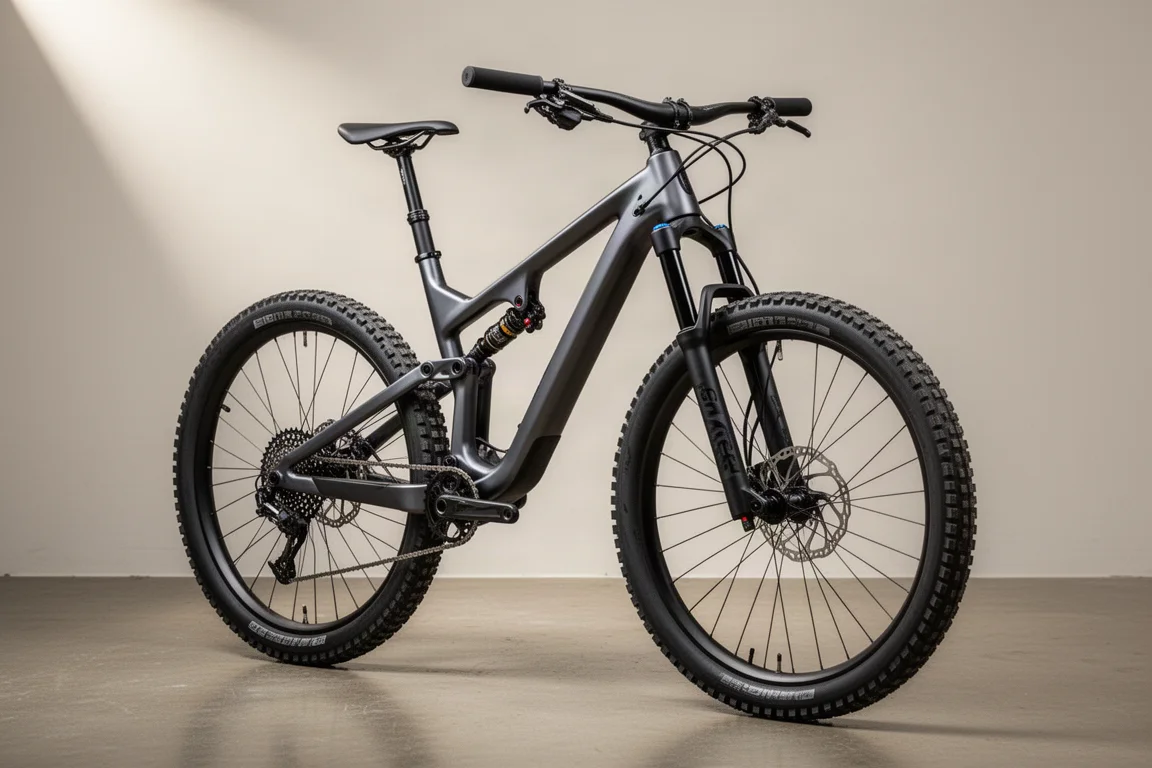
GT Zaskar FS Sport: Short Travel, Aggressive Geometry
The GT Zaskar FS Sport costs £1,300 or $1,450, and it is aimed at riders who want a short-travel 29er for trail riding duties. The Zaskar name conjures up images of iconic GT hardtails, so GT must have been confident in this full suspension bike to put the moniker on it. On paper the geometry looks spot-on, with an aggressively slack 65° head angle and a fashionably steep 78° effective seat tube angle.
Reach is a generous 472mm on the large and a whopping 507mm on the extra large, which makes this a great option for taller riders. There is no extra small sizing for shorter riders. At the heart of the Zaskar FS frame is a Horst link rear suspension design that GT calls LTS, providing 120mm of rear wheel travel. An SR Suntour Raidon R shock has adjustable rebound damping and is paired with a 130mm travel SR Suntour XCR 34 coil fork that features a 15mm Boost through axle, adjustable rebound and preload, and even a lockout.
Partly because of the coil-sprung fork, the Zaskar comes in at a hefty 17.1kg, which will put off some riders, especially those who like to blitz the climbs. If you are a more aggressive trail rider who can get past the weight, the aggressive geometry and robust componentry could serve you well. A Microshift Advent X 1x drivetrain provides 10 speeds and offers a clutch mech to shift the KMC chain across a wide-ratio 48-tooth cassette.
The SRAM UDH hanger and 73mm BSA threaded bottom bracket shell are good to see, and along with Boost fitment at the frame and fork they mean the Zaskar FS should be compatible with future upgrades. The ride is confidence-inspiring, with a reliable drivetrain, though there is some pedal bob in the suspension design.
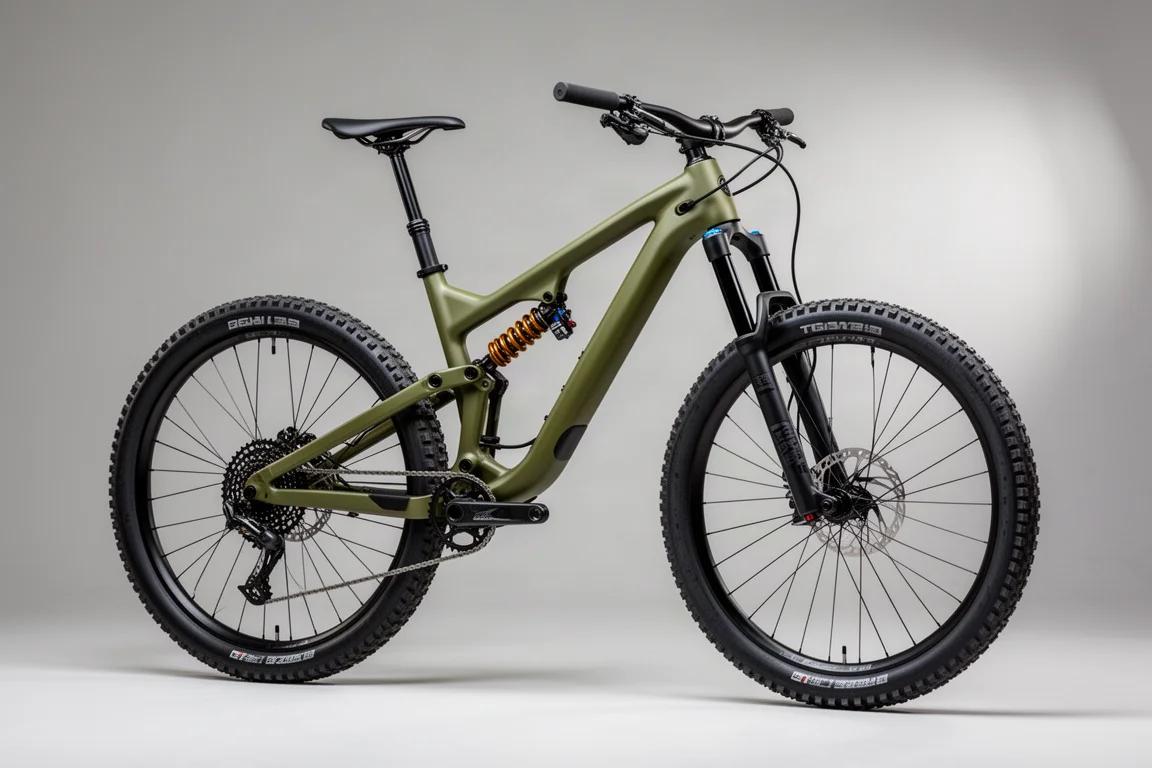
Canyon Neuron 5: Fast and Composed
At £1,849 or $2,229, the Canyon Neuron 5 may not be cheap, and shipping costs sit on top of the listed price, but it offers incredible value for money. Unlike the lighter carbon version, the Neuron 5 uses a more affordable aluminium frame, yet it crucially offers the same geometry and suspension kinematics in a less expensive package, and it is only around 700g heavier.
The Neuron comes with 29in wheels, except the extra small and small sizes, which get 27.5in wheels instead. Geometry is modern, although not as aggressive as the Zaskar FS, with a slack 66° head angle and a steep 76° seat angle. Reach is 455mm on a medium and 480mm on a large, which is spot-on for a modern trail bike. There is 130mm of rear wheel travel through Canyon’s Triple Phase four-bar suspension system, matched to a 140mm travel RockShox Recon Silver SL fork with a 15mm Boost through axle for stiffness.
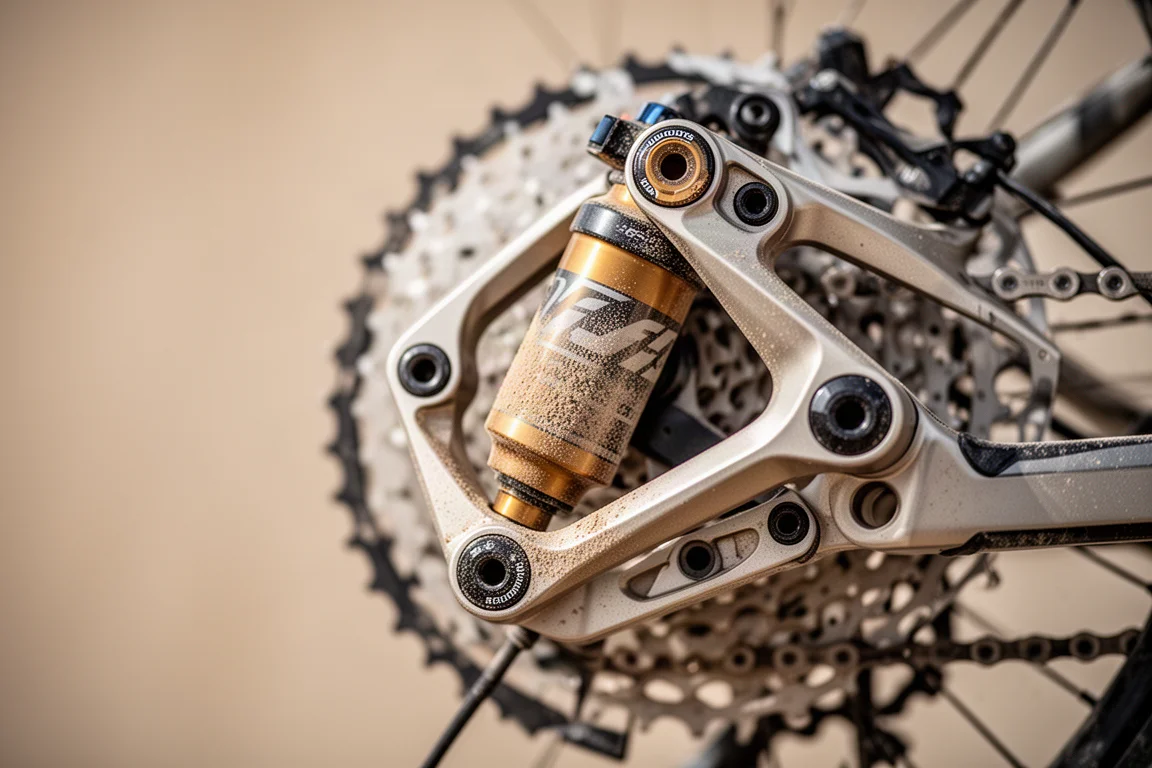
The fork is fairly basic and uses steel stanchions, which is a weight penalty compared with more costly forks, but on a bike as competitively priced as this there has to be some compromise. Shimano MT410 brakes provide the stopping power, and there is plenty of it thanks to large 180mm rotors. The drivetrain is well specified, with a Shimano SLX 11-51 cassette and a 12-speed Deore mech and shifter.
A Canyon-branded Iridium dropper gets the seat out of the way for the descent, while Iridium bar, stem, and grips give you something to hang on to. The tires use a fast-rolling Speed Grip compound and provide adequate grip, wrapped around Canyon’s own-brand Iridium rims. The overall result is a bike that feels fast and efficient, with Canyon nailing the remit for a rapid and composed feeling trail bike.
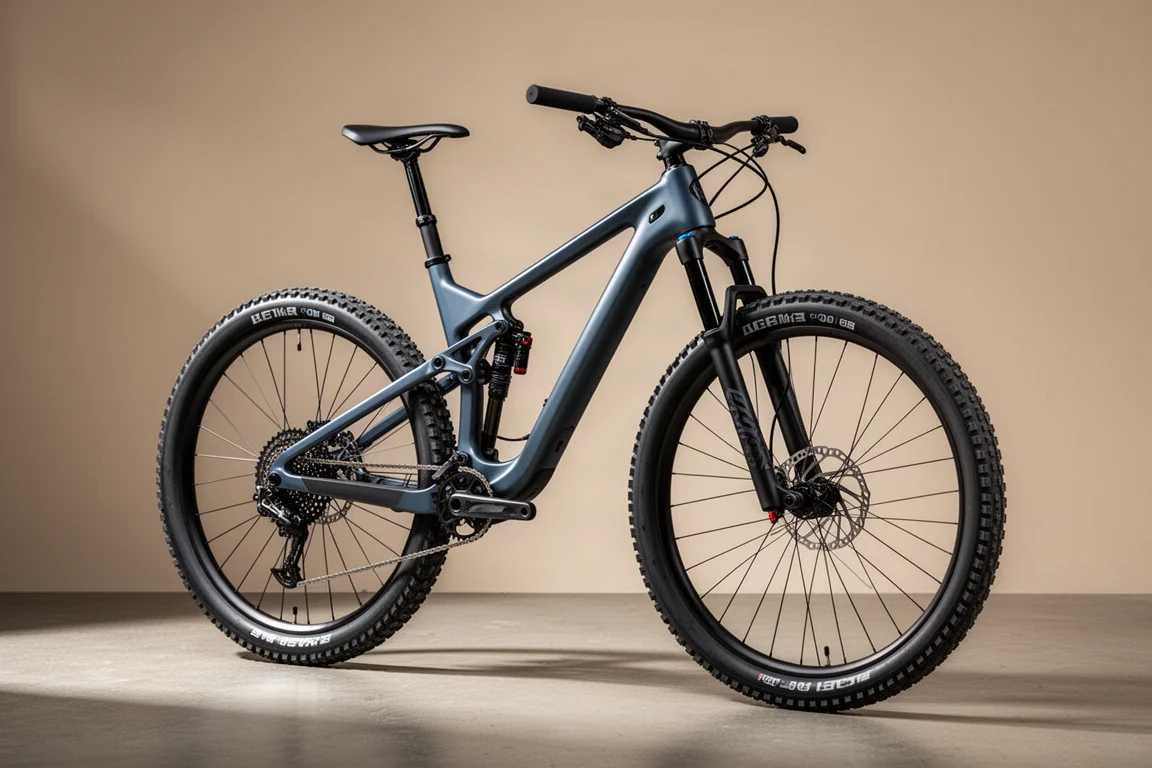
Marin Bobcat Trail 3: Affordable Hardtail Versatility
The Marin Bobcat Trail 3 is an entry-level hardtail costing £725 or $699, and for that you get a lot of bike. Small and medium sizes come with 27.5in wheels, while a separate medium and the large are supplied with bigger 29in wheels. That might sound confusing, but riders in the medium-sized bracket simply get the option of the more playful 27.5in wheels or the more stable 29er hoops.
The geometry looks bang on. The medium frame has a 445mm reach, the large 465mm, and the extra large 480mm, with a 67° head angle and 440mm chainstays. None of that is groundbreaking, but it should not provide any unwelcome surprises on the trail. The small and medium 27.5in wheel bikes get a slightly steeper 67.5° head angle, shorter 425mm chainstays, and correspondingly shorter reaches.
Because there is no rear suspension, the money saved on bearings, linkages, and a shock has been well spent elsewhere on the bike. The frame is made from 6061 aluminium, and all cables are routed internally in the down tube, including routing for a dropper post if you want to upgrade in the future. The 120mm travel coil-sprung Suntour XCM fork has an active feel, with preload adjustment and a hydraulic lockout to help when climbing. Its spindly 9mm QR dropouts do make the fork more flexy under high loads than forks with a beefier 15mm through axle, such as the one on the Trek Marlin 6 featured earlier in this list.
Tektro HD-M275 hydraulic disc brakes slow the lightweight 14.8kg hardtail effectively. The 2x drivetrain pairs 22 and 36 tooth chainrings with an 11-34 Sunrace cassette, giving an ample spread of gears, while Shimano Altus mechs and shifters should offer dependable shifting performance. The wheels are Marin’s own brand offerings, and a host of Marin branded kit finishes off the cockpit with a wide 780mm bar and a short 45mm stem. The unbranded tires roll fast but lack traction, which is one of the few complaints. Apart from these minor moans, this is a seriously well-rounded bike at a very competitive price, and it is fun to ride with a good parts spec for the money.
Overall Buying Advice
Choosing between these five comes down to what you ride and how much you want to spend. If your budget is tight, the two hardtails are the smartest starting points. The Trek Marlin 6 has the more upgrade-friendly frame thanks to its tapered head tube and dropper post routing, while the Marin Bobcat Trail 3 gives you a lot of bike for the lowest outlay, plus the choice of wheel size in a medium.

If you want rear suspension, the Boardman MTR 8.8 is the standout value on paper, with a strong fork and shock package, larger 180mm rotors, and Maxxis tires, though it is not sold in the USA. The GT Zaskar FS Sport suits taller riders who want aggressive geometry and robust componentry, at the cost of a heavier overall package and some pedal bob. The Canyon Neuron 5 is the most expensive option here, but it is also the most efficient and composed, with a 12-speed drivetrain and a well-rounded build.
A few practical points apply across the list. A hardtail makes sense if you mostly ride smoother trails and want lower maintenance, while full suspension pays off when your riding includes rougher descents. If you plan to upgrade over time, check for a tapered head tube, Boost axle spacing, and dropper post routing before you buy.
Conclusion
Good value in a trail bike comes down to getting the fundamentals right. All five of these bikes offer modern geometry, sensible components, and a clear path to upgrades, whether you are spending £725 on an entry-level hardtail or £1,849 on a fast and composed full suspension trail bike.
Further reading
Related Reviews
Mountain Bikes
Atherton AM.130 Review: 3D-Printed Titanium Lugs and a 130mm Trail Bike That Descends Like a Bigger Machine
The Atherton AM.130 pairs 3D-printed titanium lugs with carbon tubes and a DW6 suspension platform. Here is how it rides, what the build delivers, and who it suits.
Mountain Bikes
Beginner Mountain Bike Buying Guide: What to Look For in a Trailworthy Hardtail
A practical framework for evaluating beginner mountain bikes, whether new or used, by examining key components that indicate real trail capability.
Mountain Bikes
Best Aluminum Mountain Bikes 2026: Five Alloy Bikes Worth Your Attention
Five aluminum mountain bikes that show how far alloy has come, from a 120mm trail bike and a versatile machined frame to a 180mm freeride machine.