Audio Amplifiers
Best Value Amplifiers 2026: Four Class D and Class AB Options Compared
A practical look at four stereo amplifiers priced from about $195 to $600, covering power claims, features, sound character, and the support trade-offs of buying imported gear.
Introduction
Import amplifiers have spent the last few years moving in one direction. They have grown more expensive, heavier, better looking, and better equipped, and the gap between them and established domestic brands has narrowed. That raises a fair question: at what point does the value proposition evaporate?
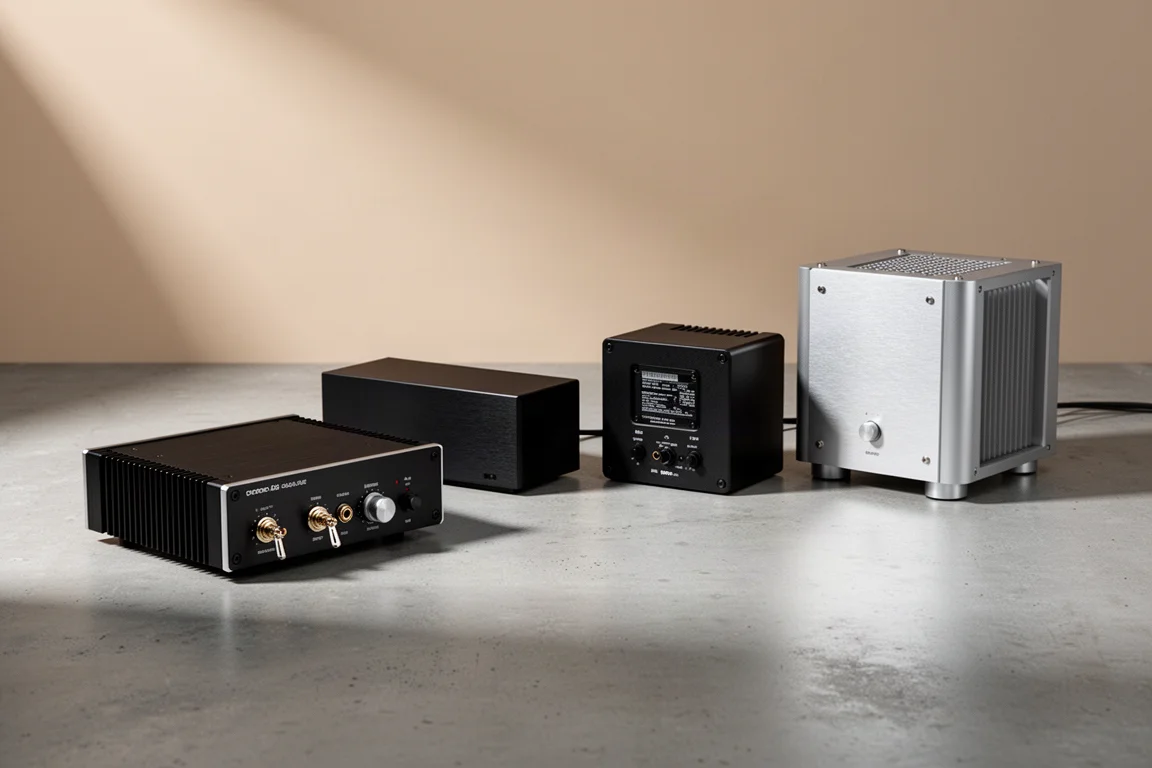
This comparison covers four stereo amplifiers: the AIYIMA A20 10th Anniversary Edition at $195, the WiiM Vibelink at $300, the Emotiva A2L Plus at $349 with regular discounts of around 20 percent, and the Cambridge Audio MXW70 at $600.
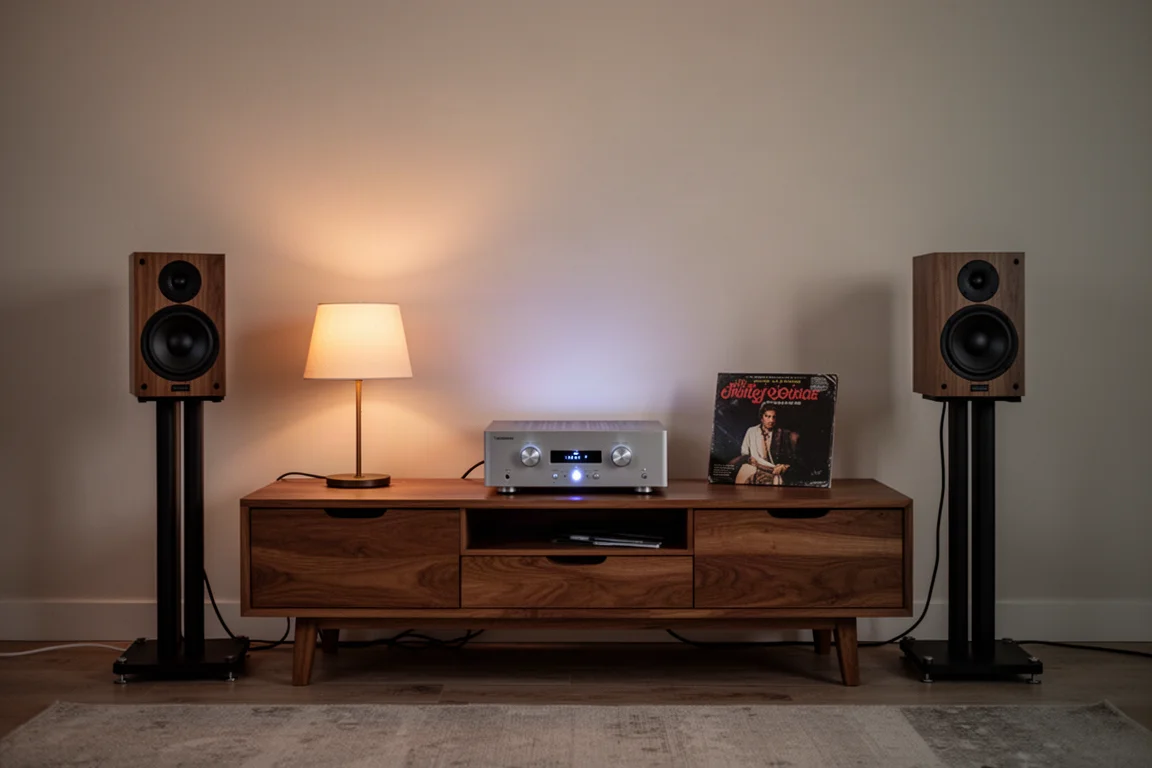
The aim here is practical. Power claims, feature sets, sound character, and the support path you get after the return window closes all matter, and they matter in different proportions depending on what you already own.
How These Amplifiers Compare
Power ratings deserve the first look. A useful shortcut is to multiply the supply voltage by its current rating. A 24 volt, 10 amp supply works out to 240 watts, and a 48 volt, 10 amp supply works out to 480 watts. The AIYIMA A20 accepts supplies from 24 volts all the way up to 48 volts at 10 amps, and either end of that range provides enough usable power for most listeners.
Topology is the second divider. Three of the four amplifiers are class D designs. The AIYIMA A20 and the WiiM Vibelink both use the Texas Instruments 3255 chipset, while the Cambridge Audio MXW70 uses Encore class D modules. The Emotiva A2L Plus is the odd one out, a class AB design with an internal toroidal linear power supply.
Third, power supply placement. The WiiM Vibelink, the Cambridge Audio MXW70, and the Emotiva A2L Plus all use internal power supplies, which means no external brick on the floor. The AIYIMA A20 relies on an external supply.
Then inputs. The AIYIMA A20 offers balanced and single-ended connections alongside a variable high-pass filter and a subwoofer output. The Cambridge Audio MXW70 adds balanced inputs but no volume control. The WiiM Vibelink adds a built-in DAC with optical and coaxial inputs. The Emotiva A2L Plus takes the class AB route and pairs well with a wide range of speakers.
Finally, support. This is the factor that is easiest to overlook and hardest to fix later, and it is covered in the buying advice below.
AIYIMA A20 10th Anniversary Edition: Features First
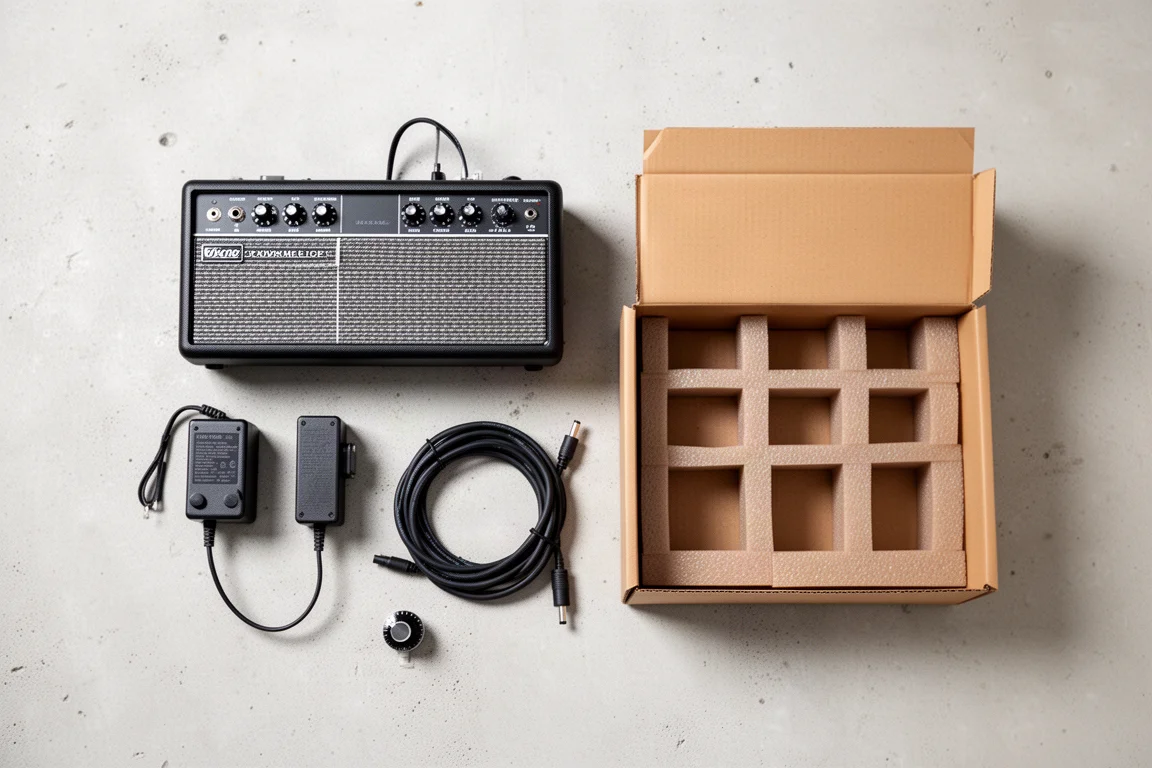
The A20 10th Anniversary Edition is the best-built AIYIMA amplifier in this line so far, and it looks the part, with a cleaner front panel, a small red accent ring, and ventilation slots along the sides. Class D amplifiers have grown well beyond the tiny boards of a few years ago, and the extra chassis volume gives the components more room to breathe, which matters when the goal is pushing real power through a small box.
Under the hood sits the widely used Texas Instruments 3255 chipset. The retail listing advertises 600 watts, while the published specifications with the included 48 volt, 5 amp supply point to considerably more conservative numbers. The amplifier accepts supplies from 24 volts to 48 volts at up to 10 amps, so the achievable output depends heavily on what you feed it.
The rear panel is where the value argument gets interesting. There are balanced inputs and single-ended inputs, a variable high-pass filter adjustable between 60 and 200 Hz, a subwoofer output, a toggle that adds 3 dB to the RCA input, a bypass button that turns the amplifier into a pure power amp, and a 12 volt trigger input. The high-pass filter is the standout feature: it lets small bookshelf speakers play louder by removing low bass and sending it to a subwoofer instead. The trigger input means the amplifier can switch on with the rest of the system.
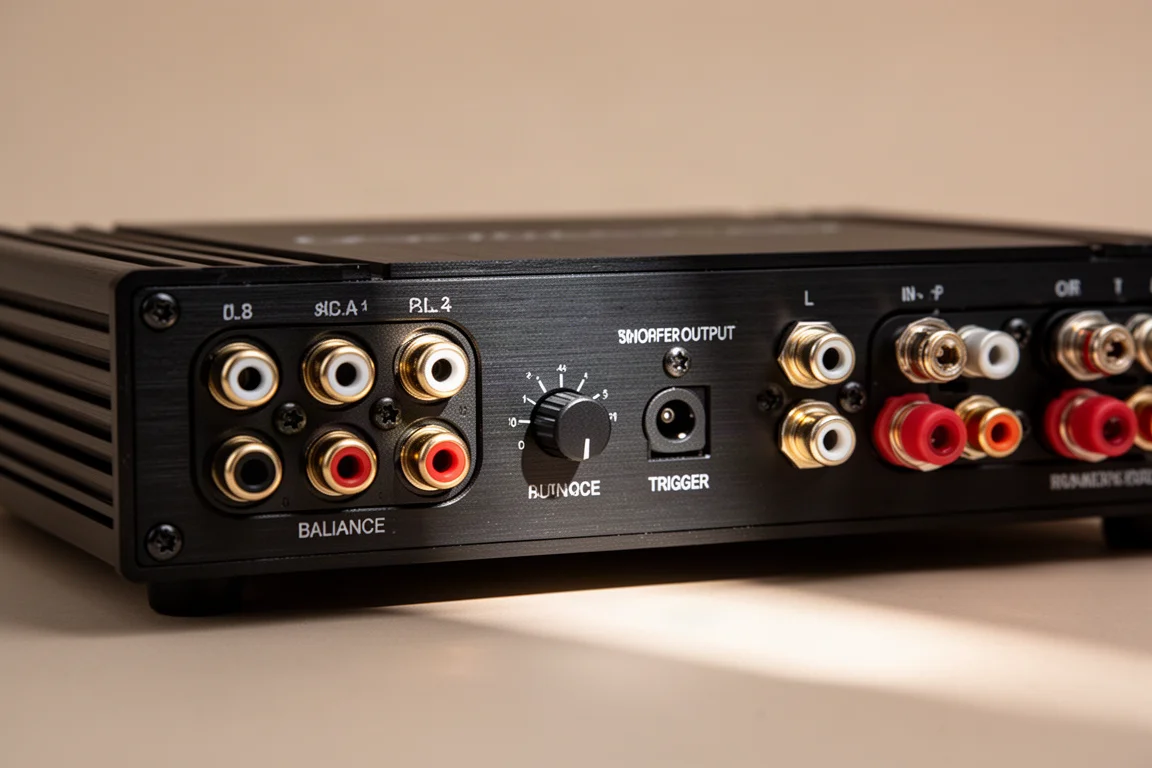
The front panel uses manual toggle switches for power and the high-pass filter, plus a selector that switches between the RCA and balanced inputs. Two inputs in total, which is enough for a straightforward two-source setup.
In use, the A20 sits neutral right down the middle, so it sounds decent with almost any speaker. It handled demanding, bass-heavy material without falling apart at sensible levels. Compared with the WiiM Vibelink and the Emotiva A2L Plus, however, it does not sound quite as dynamic, and when pushed hard it seemed to run out of juice where the other two kept going. Some fine detail in acoustic instruments and female vocals is also less apparent, though the difference is subtle and easier to hear through speakers with a clear top end than through speakers that roll off early. It was less noticeable with male vocals.
Cambridge Audio MXW70: Detail and Refinement
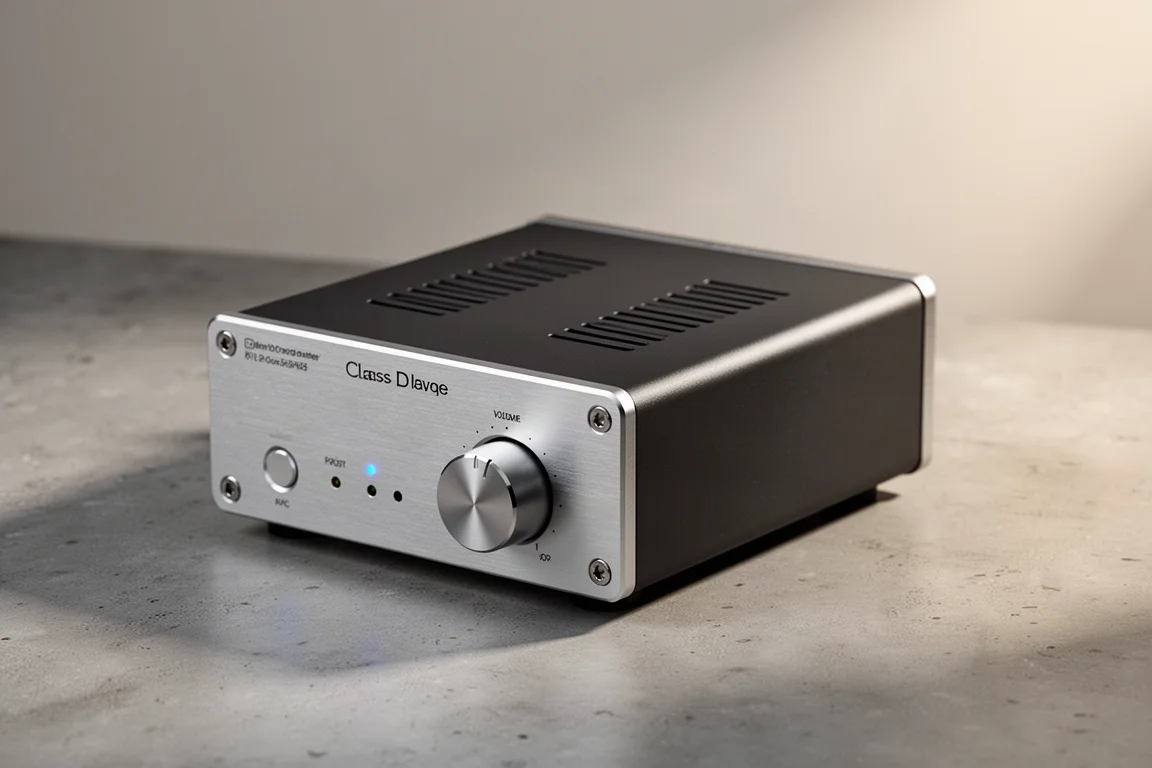
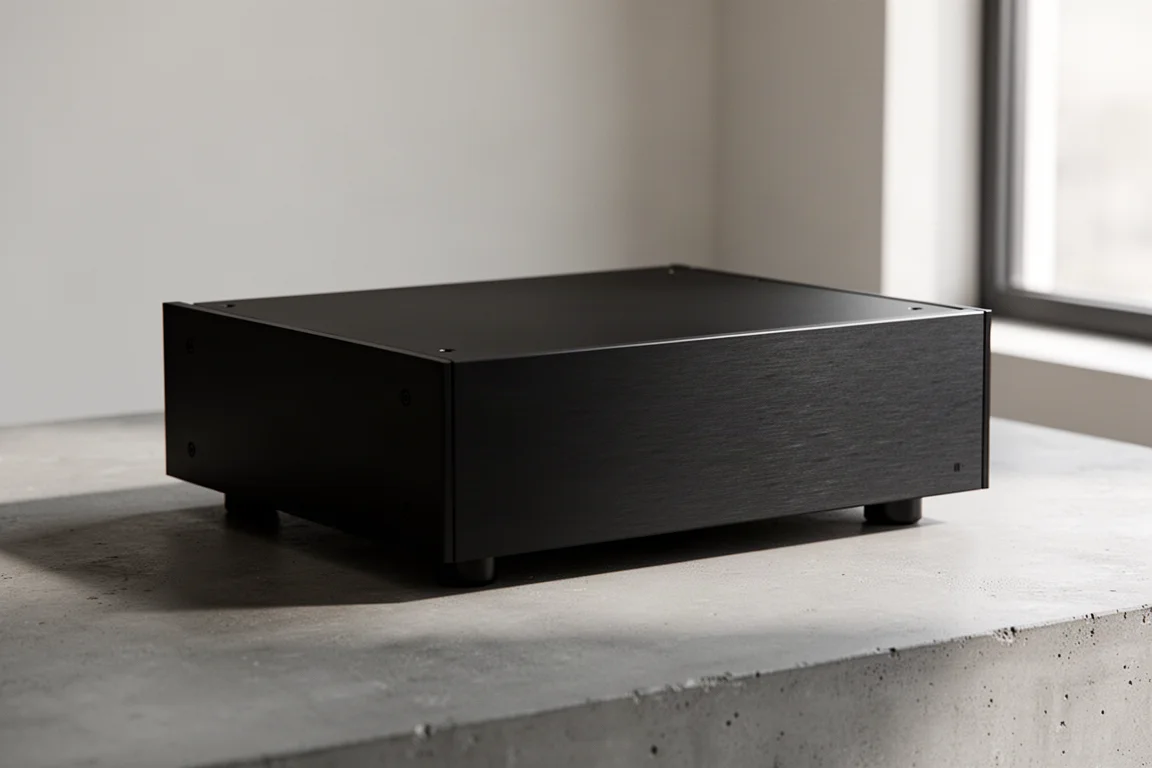
The MXW70 uses Encore class D modules and an internal power supply, and it is rated at 70 watts into 8 ohms and 125 watts into 4 ohms. It offers balanced inputs and a single-ended RCA input, and it can be bridged. It is a power amplifier only, with no volume control, so it needs a preamplifier or a source with its own volume.
Where it separates itself is tonality. The MXW70 has the best mid-range and the best top end of the four. It is not as dynamic as the WiiM Vibelink or the Emotiva A2L Plus, and it lands about level with the AIYIMA A20 on that measure, but the extra clarity in the upper mid-range and treble is easy to appreciate.
Speaker matching shapes the result. Paired with a speaker that is already rolled off on top, the MXW70 advantage is less obvious. Paired with something clearer, it gives the upper mid-range and top end noticeably more definition.
WiiM Vibelink: DAC, Internal Power Supply, and Punch
The Vibelink uses the same Texas Instruments 3255 chipset as the AIYIMA A20, but it takes a different path in two important ways. First, the power supply is internal, so there is no wall wart to hide. Second, there is a DAC inside, with optical, coaxial, and RCA inputs. That means a games console, a DVD player, or a CD player can connect directly and use the amplifier’s own conversion.
It costs about $100 more than the A20, and the sound justifies the step for many listeners. The Vibelink is dynamic and punchy, it does not struggle with bass hits, and it seemed to have a lot of current on tap. That character resembles a small Topping amplifier built around the same chipset, which suggests the implementation goes beyond the reference circuit layout rather than following it exactly.
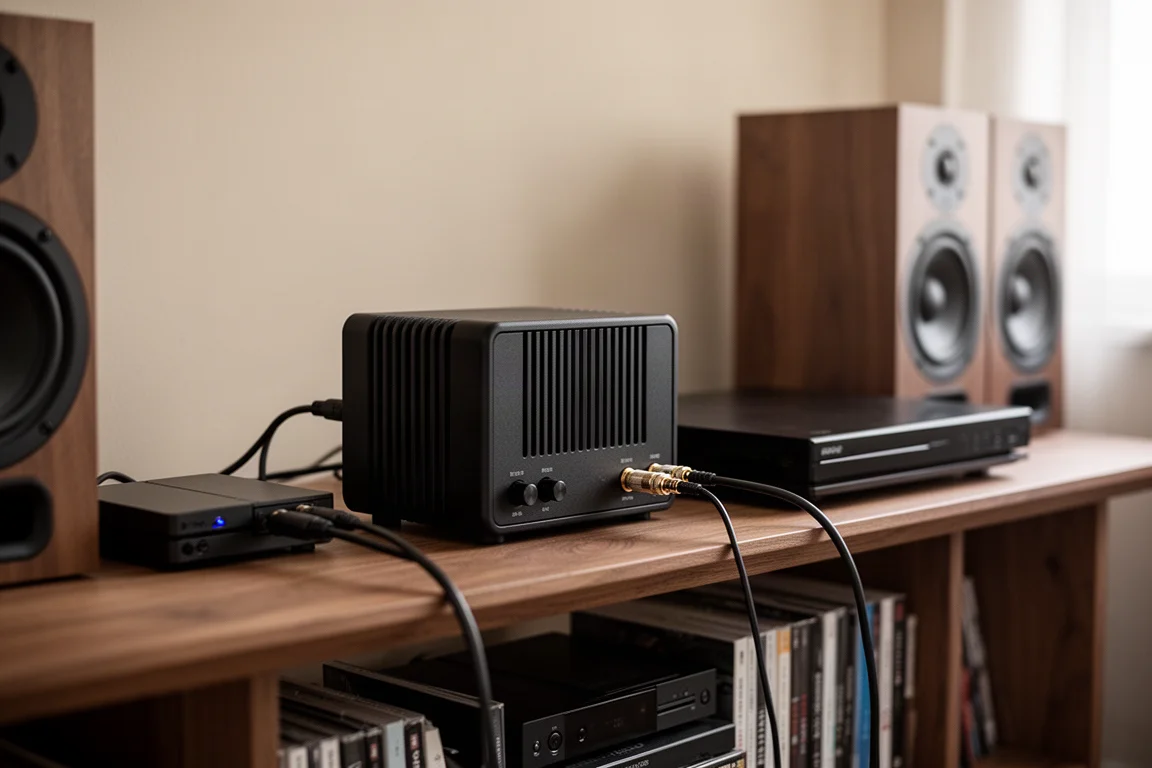
The Vibelink also arrives through established US retail channels, which brings a return policy and domestic customer service into the picture.
Emotiva A2L Plus: Class AB Dynamics
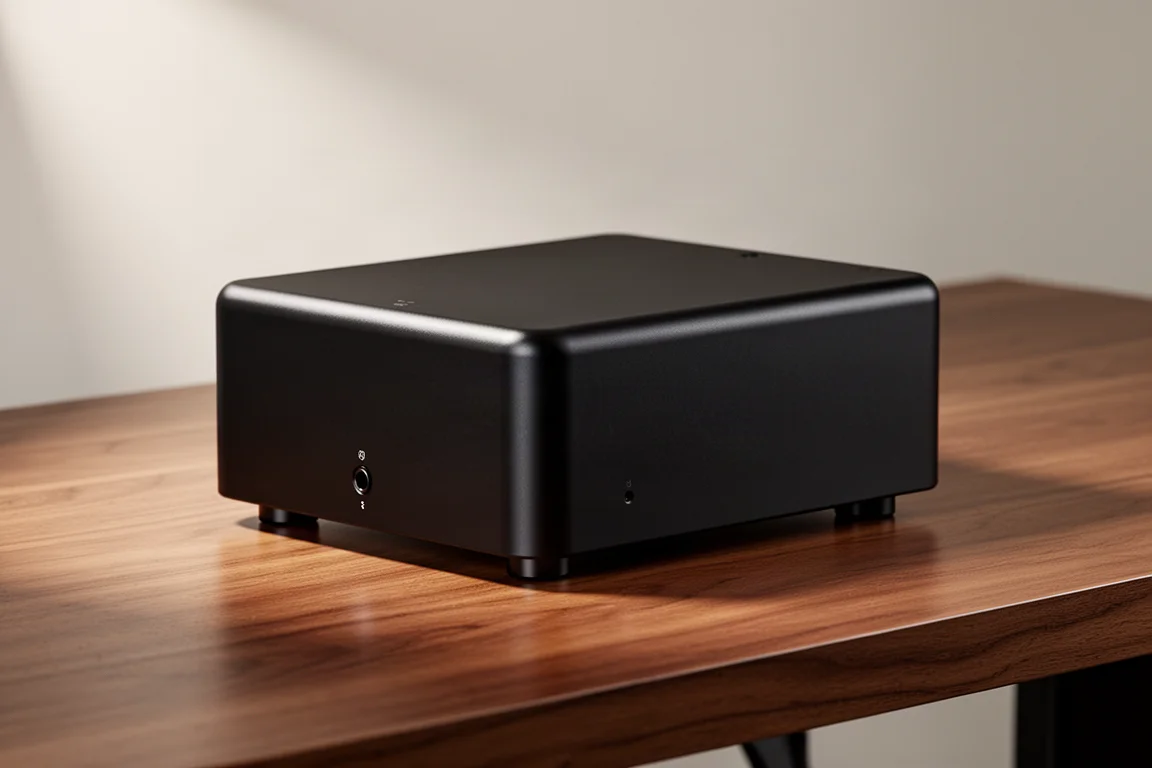
The A2L Plus is the only class AB amplifier in this group, with an internal toroidal linear power supply. It lists at $349 and goes on sale regularly, with discounts of around 20 percent bringing it closer to $280.
On paper, it makes less power than the AIYIMA A20, and in practice that turned out not to matter. The A2L Plus seemed to have the most current of the four, which shows up when a track drops a big bass line: the amplifier does not struggle and it does not distort. Together with the Vibelink, it was one of the two most dynamic amplifiers here.
It also plays well with pretty much every speaker, which makes it an easy recommendation for listeners who change speakers often or simply want a stable foundation. Emotiva backs it with US customer service, a phone number, and a warranty.
Buying Advice: Where the Value Proposition Holds
The arithmetic is what makes this decision interesting. Take 20 percent off the Emotiva A2L Plus and it lands around $280, which puts it within striking distance of the AIYIMA A20 at $195. At that spread, part of what you are paying for is not the amplifier at all. It is the phone number, the customer service, and the warranty.
That distinction matters because of one specific risk. The A20 does carry a warranty, but if something goes wrong outside the return window, service may mean shipping the unit back overseas. A $200 amplifier that has to travel that far for repair quickly stops being a $200 amplifier. If you buy an imported amplifier, buy it from a US distributor so that a return window exists, and use that window hard: play the amplifier as much as possible while you can still send it back.
The A20 still earns a recommendation on its own terms. It is the best-built AIYIMA amplifier in this line, it offers genuine versatility through swappable op amps, and its neutral voicing works with most speakers. The variable high-pass filter is genuinely useful if your source does not have its own DSP, though it matters less if you already run a source that handles bass management. What buyers need to weigh here is risk tolerance, not sound quality.
For listeners whose budget allows it, the Emotiva A2L Plus, the Cambridge Audio MXW70, and the WiiM Vibelink all make the decision easier by removing the overseas support question. The Cambridge is not three times the amplifier that the A20 is, and it does not sound three times better, but it does sound different, and its neutral, detail-oriented character suits listeners who prioritize clarity over punch. The Vibelink is the toughest competitor of the three, since it combines a DAC, an internal power supply, and domestic retail support.
Looking ahead, the next step for imported amplifier brands is US distribution. Whether the margins allow it is an open question, and the honest answer is that the same amplifier could become a $300 or $400 product once a distributor takes a share.
Conclusion
Four amplifiers, four different answers to the same question. The AIYIMA A20 10th Anniversary Edition delivers the most features per dollar and a neutral, easy-going sound, provided the buyer accepts a shorter support path. The WiiM Vibelink adds a DAC, an internal power supply, and a punchier presentation for about $100 more. The Emotiva A2L Plus brings class AB current and domestic support, and its frequent discounts narrow the price gap considerably. The Cambridge Audio MXW70 costs the most and delivers the finest mid-range and top end of the group.
The value proposition for imported amplifiers has not evaporated, but it is thinner than it used to be. Once a discounted domestic amplifier lands within $100 of the import, the warranty and service path become part of the product you are buying, and that is worth factoring into the decision.
Further reading
Related Reviews
Audio Amplifiers
AGD Audion Mark III Review: A Compact Class D Amplifier With Tube-Like Musicality
A gallium nitride Class D amplifier that delivers tube-like midrange warmth, serious bass grip, and a modular upgrade path in a very small chassis.
Audio Amplifiers
Best Class D Amplifiers Under $100: Douk Audio A5 vs Fosi Audio V3
Two sub-$100 Class D amplifiers built on the same 3255 chipset, compared on bass weight, midrange body, treble presence, and real-world speaker matching.
Audio Amplifiers
Best Power Amplifiers Under $500: Six Stereo Amplifiers From $74 to $579
A practical roundup of six stereo power amplifiers under $500, covering real-world power, connectivity, cooling, and which kind of system each one suits.