Water Sports Equipment
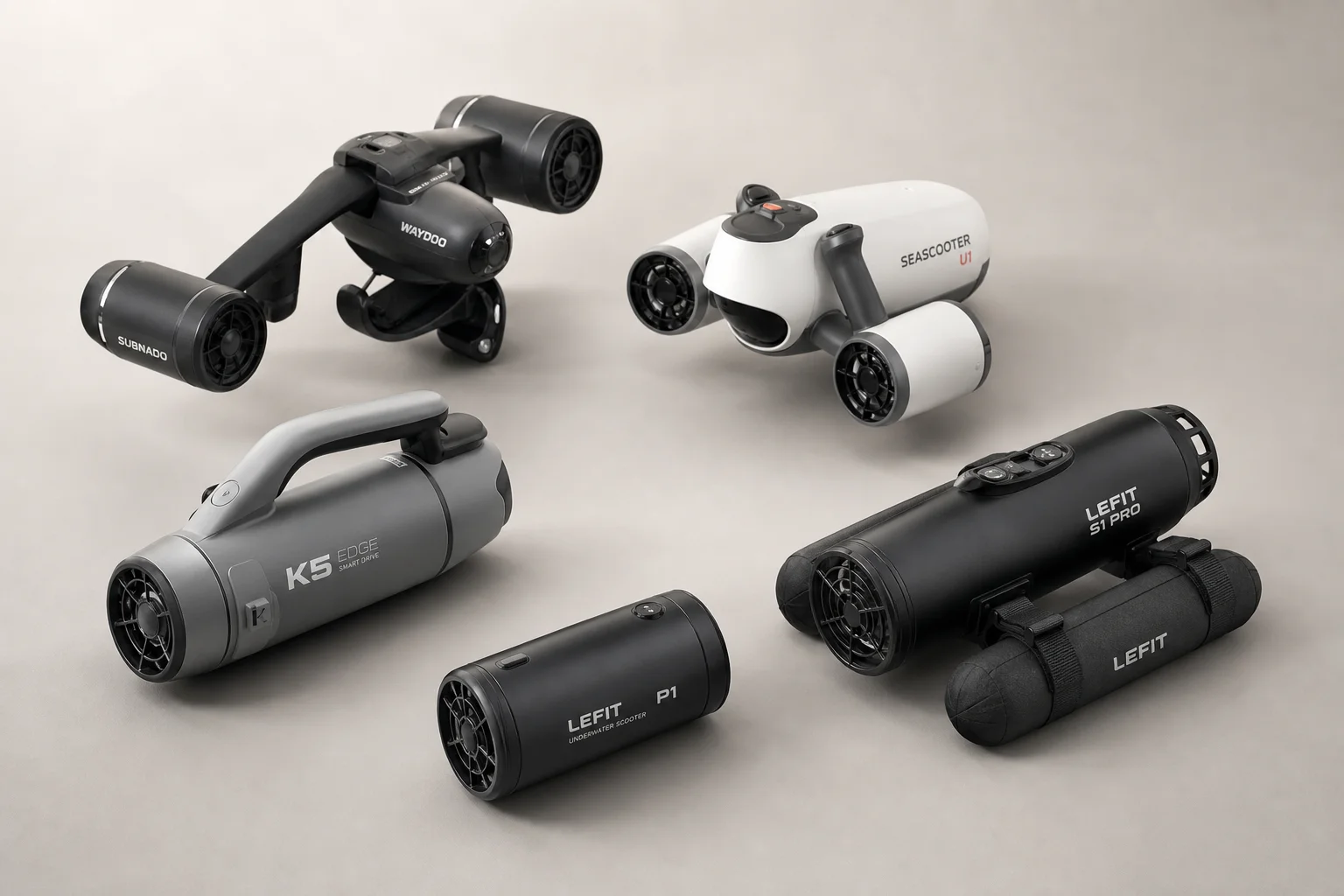
Best Underwater Scooters 2026: Five Top Models Tested in Depth
A comprehensive review of five leading underwater scooters tested in a 25-meter pool across multiple weight classes and use cases, with battery performance and flying tips included.
Introduction
Underwater scooters have evolved from niche diving accessories into versatile water toys suitable for children, snorkelers, and scuba divers alike. Testing six models across different weight classes and use cases reveals significant performance variations, battery trade-offs, and practical considerations for travel.
This review covers five standout models tested in a 25-meter pool with multiple testers at different body weights and in full scuba gear. Battery performance was measured at full speed to reflect real-world usage patterns, and each scooter was evaluated for speed, runtime, modularity, and overall value.
Testing Methodology and Approach
To ensure consistent results, all scooters were tested in a controlled 25-meter swimming pool environment with three test subjects: an adult weighing 95 kilos (210 pounds), a 10-year-old child weighing approximately 40 kilos (88 pounds), and the same adult in full scuba gear with tank and weights.
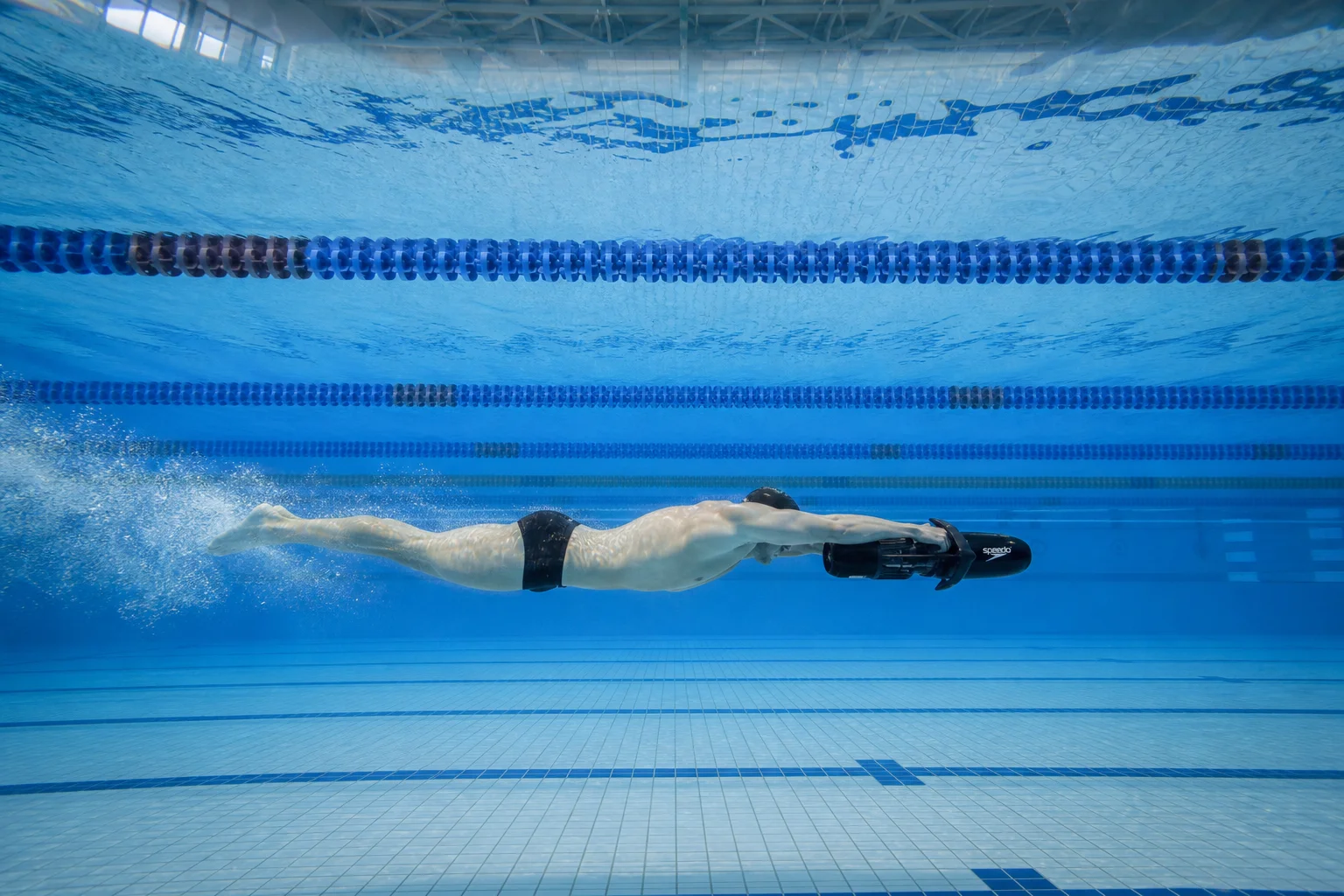
Speed tests began from a standstill with a countdown, and each scooter completed multiple laps to account for timing variations. Battery tests ran all units at full throttle until depletion. Manufacturer claims often list significantly higher runtimes because they test at lower speed settings; our full-speed testing provides a more realistic picture of actual usage time.
Some scooters reach maximum speed instantly, while others require acceleration time. This affects both test results and practical enjoyment, particularly for diving applications where delayed acceleration reduces the pushing sensation.
Lefit P1: Compact Versatility and Modular Design
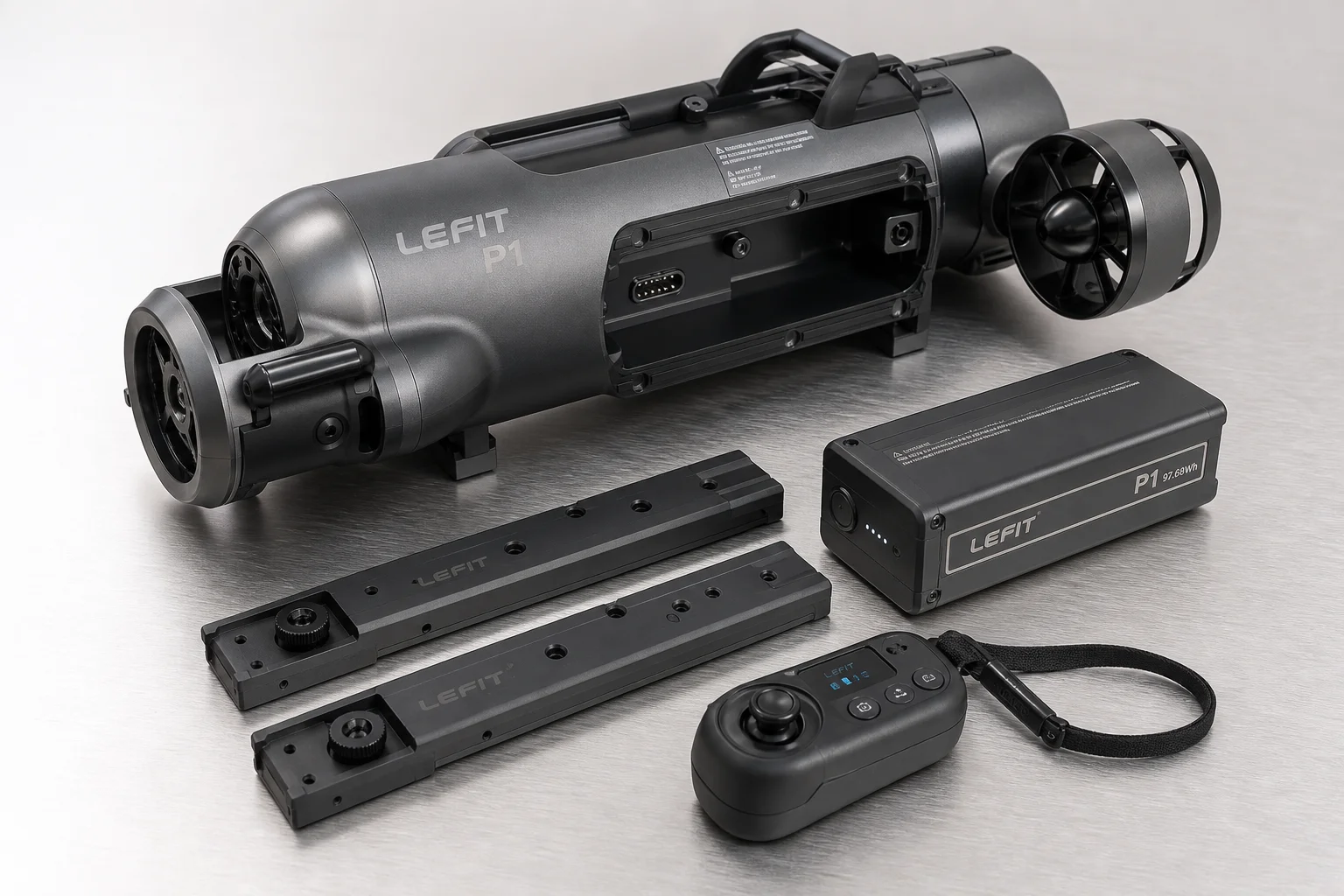
The Lefit P1 is a compact, highly configurable scooter with four speed settings and removable battery, rails, and handles. It can be mounted as a single unit, dual scooter, or configured with leg, one-handed, or kayak mounts.
The wireless controller connects to the unit via index-finger throttle control, with thumb-operated speed settings cycling through four levels. A battery indicator mimics smartphone display conventions. The entire system packs down significantly: battery, unit, and rails all separate for travel.
In testing, the P1 achieved 3.8 km/h (adult), 4.6 km/h (child), and 2.3 km/h (scuba gear). Battery runtime reached just over 24 minutes at full speed, substantially less than the claimed 60 minutes but still practical for extended pool sessions. The scooter continued running for an additional 6 minutes in reserve mode.
The P1 stands out for its balance of speed, runtime, and customization options. It remains one of the fastest single-unit scooters tested and offers the most mounting flexibility for different use cases.
Lefit P1 Extended Battery: Enhanced Speed and Runtime
The same P1 platform with an extended battery adds a fifth speed setting called “S gear,” delivering noticeably faster performance. The extended battery measures 106 watt-hours compared to just under 100 for the standard version.
Testing showed 5.2 km/h (adult), 5.9 km/h (child), and 3.3 km/h (scuba gear)—a meaningful speed increase. Runtime reached just under 30 minutes at full speed, then continued for approximately 11 minutes in power-saving mode. Despite nearly double the battery capacity, runtime only increased by 6 minutes because the extra speed setting consumes significantly more power.
The extended battery is roughly twice the size of the standard unit. For riders prioritizing maximum speed over portability, this configuration delivers the fastest single-unit performance in the test group.
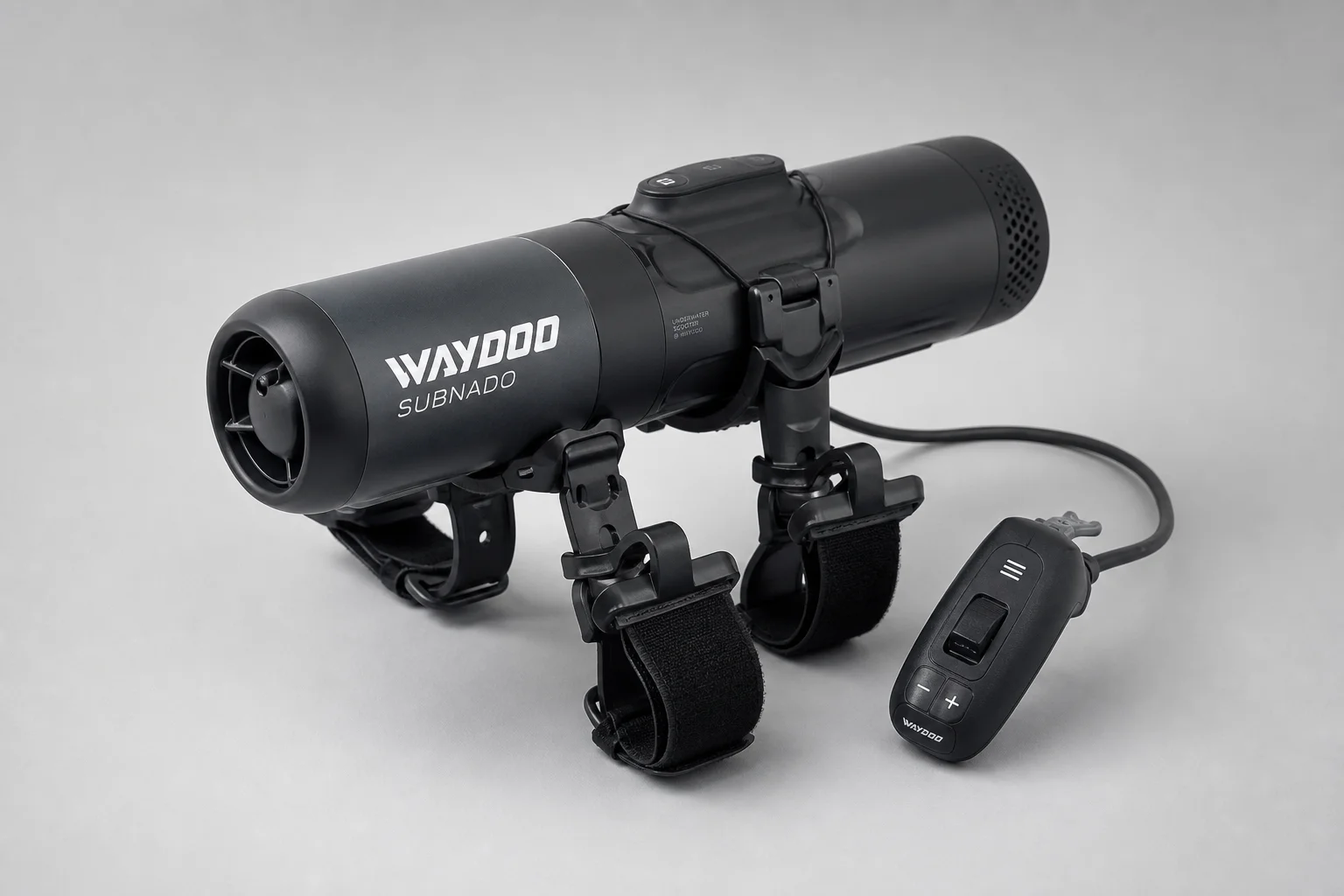
Waydoo Subnado: Compact Power and Arm-Mount Versatility
The Waydoo Subnado is a smaller, more affordable scooter priced at $500, making it the least expensive option tested. It features a fixed battery (non-removable), wired controller, and multiple mounting options including arm, leg, tank, and dual-scooter configurations.
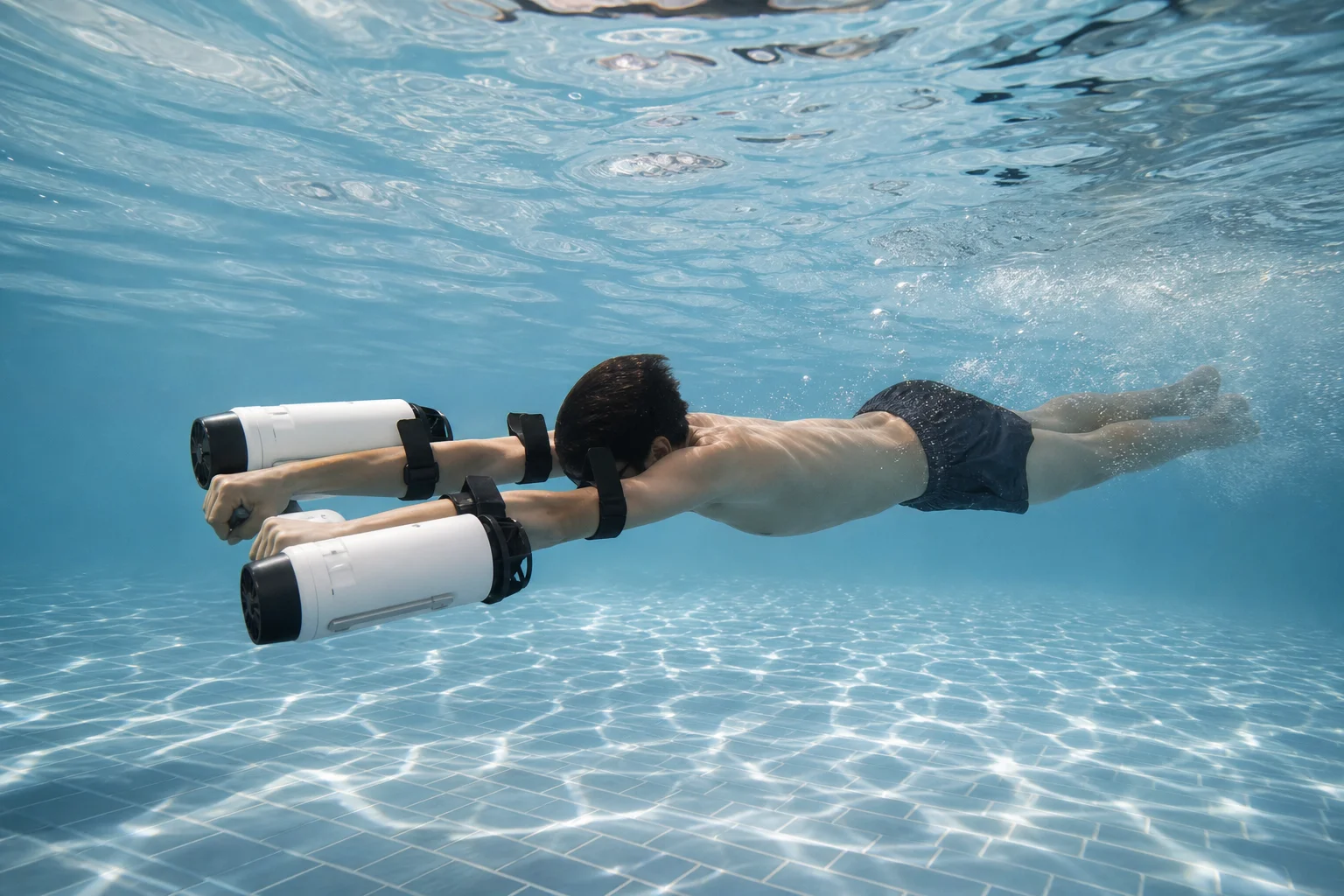
The wired controller connects via a thumb-operated trigger, offering complete control without wireless charging. Arm-mounting proved particularly popular with younger testers, creating a Superman-like flying sensation. The wire can tangle during use, but the compact form factor and low price offset this minor inconvenience.
Speed testing yielded 3.6 km/h (adult), 4.6 km/h (child), and 2.7 km/h (scuba gear). Battery lasted just under 12 minutes at full speed, significantly less than the claimed 56 minutes but still respectable given the compact size and price point. For the cost, the Subnado delivers impressive speed and power.
As a dual scooter, the Subnado performed exceptionally well, particularly when arm-mounted. The child achieved 6.3 km/h in this configuration, the fastest recorded speed for any dual-scooter setup tested.
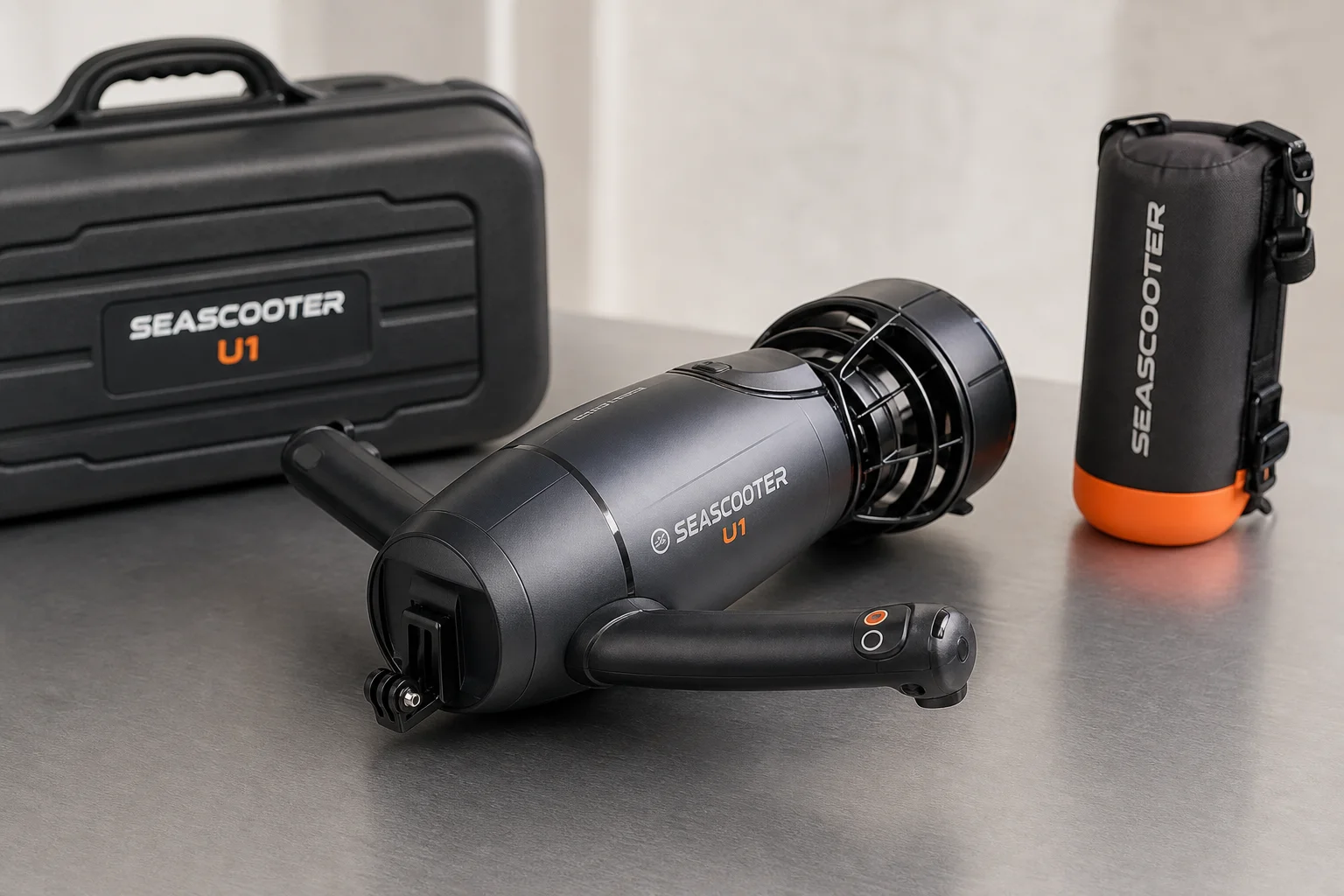
Seascooter U1: Kayak and Paddleboard Integration
The Seascooter U1 represents a different design philosophy: a scooter that doubles as a kayak and paddleboard engine. Side-mounted handles differ from the bent-handle approach of competitors. A small GoPro mount sits on the front, and magnetic controls replace traditional buttons.
Speed adjustment uses a click-and-hold system: hold left and click right to accelerate, hold right and click left to decelerate. A battery indicator light shows remaining charge, but actual speed settings remain invisible—you must feel the difference through acceleration. The scooter can be completely reconfigured by removing handles and attaching a wire for paddleboard or kayak use.
Testing produced 4.5 km/h (adult), 4.7 km/h (child), and 2.9 km/h (scuba gear). Battery lasted nearly 30 minutes at full speed, then continued for approximately 20 minutes in power-saving mode. The U1 offers impressive speed and extended runtime, plus genuine kayak and paddleboard functionality.
However, as a newly launched Kickstarter product, the U1 exhibits minor issues: the inability to see speed settings creates uncertainty during use, and the kayak-mounting wire experienced breakage during testing. These are likely first-production quirks that future iterations will address. The scooter also requires noticeable acceleration time before reaching full thrust, which slightly affected test times but creates a distinctive deep rumbling sound that testers found appealing.
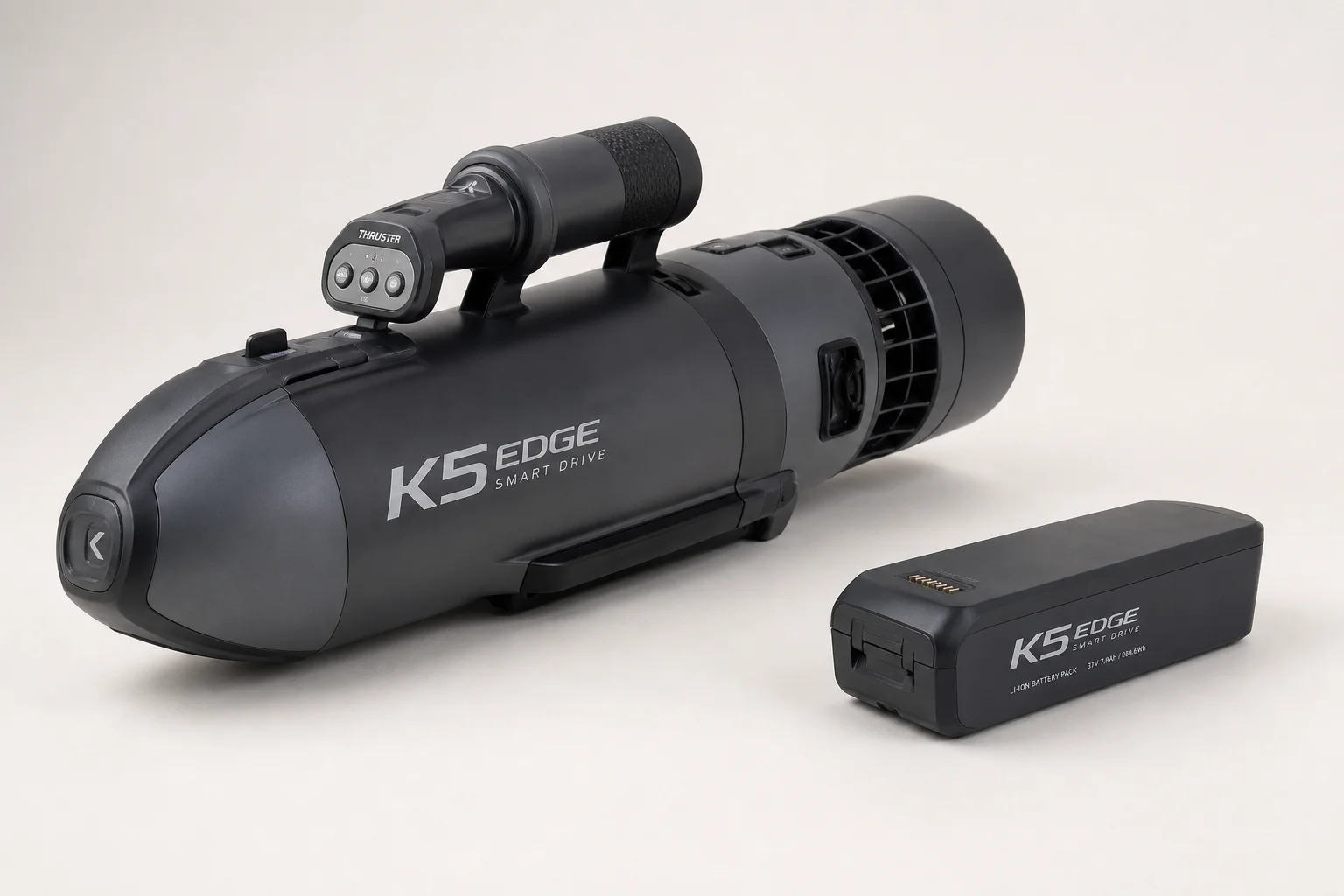
K5 Edge Smart Drive: Lightweight and Portable
At 2.2 kilos (4.5 pounds), the K5 Edge Smart Drive is among the lightest scooters tested. The removable battery simplifies packing, and the simple controller uses thumb activation for power and index-finger control for speed selection across three settings: normal, sport, and S+ (likely sports plus).
A small indicator light shows battery level and current speed setting. The design prioritizes portability and ease of use over advanced features. The manufacturer claims a 7 km/h top speed, though testing achieved 3.1 km/h (adult), 4.1 km/h (child), and 1.7 km/h (scuba gear).
Battery runtime reached 19 minutes at full speed, which actually exceeded the manufacturer’s conservative estimate of 18 to 60 minutes depending on speed settings. At $900, the K5 offers a compelling balance of weight, simplicity, and price for casual users who prioritize portability.
Lefit S1 Pro: Modular Design and Family-Friendly Features
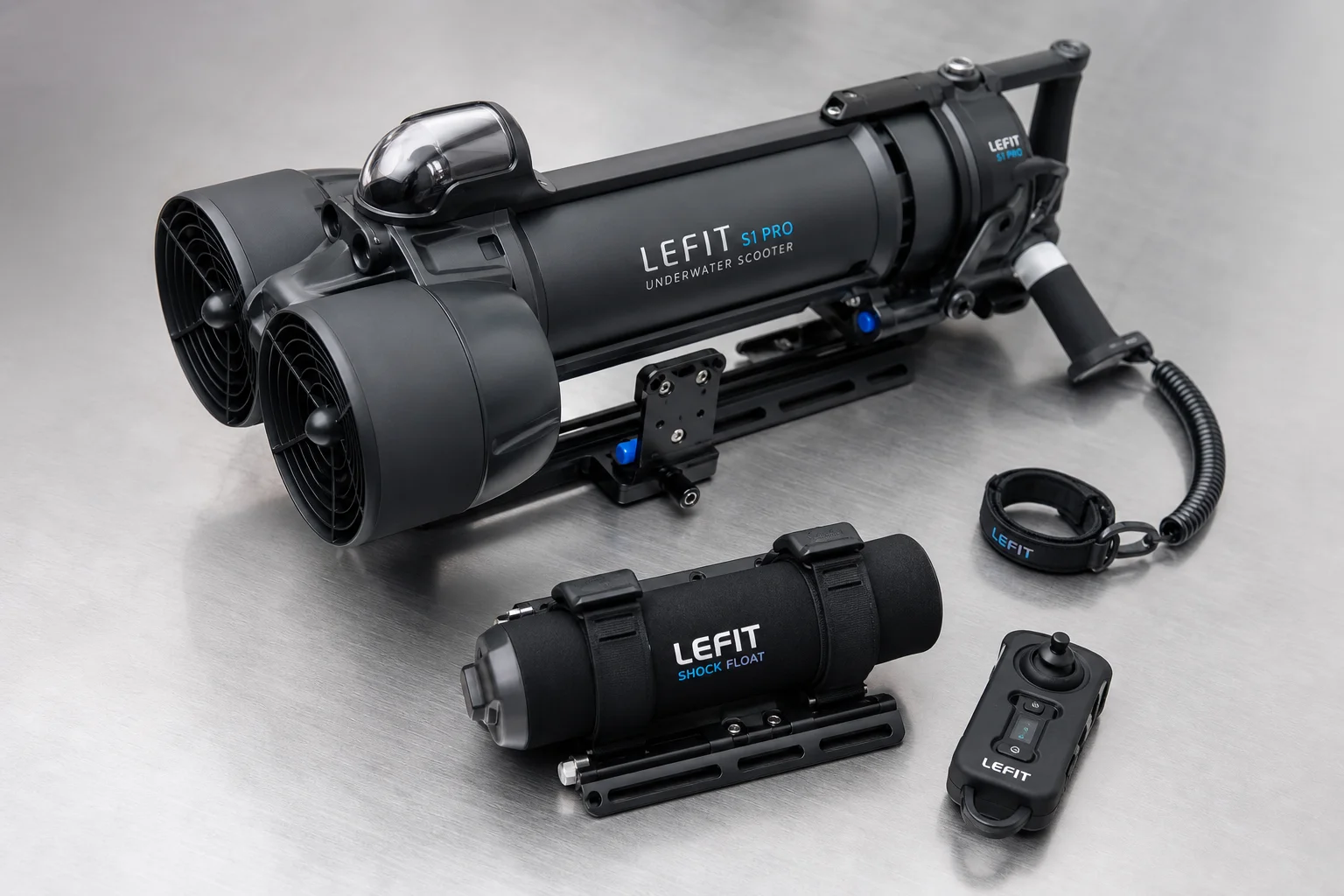
The Lefit S1 Pro is a lighter, more affordable predecessor to the P1, weighing 2.5 kilos (5.5 pounds). It uses the same rail-based mounting system with wireless controller, supporting single, dual, one-handed, and tank configurations.
The controller uses thumb and index-finger controls identical to the P1, but replaces the digital display with simple LED indicators for speed settings and battery life. Battery removal is straightforward: lift the outer cover and inner lid to access the cell for charging.
The standout feature is the included shock float—a small buoyant attachment that proved invaluable for younger children. Testing with a 4-5 year-old showed the float significantly increased confidence and enjoyment, particularly for less experienced swimmers.
Speed testing produced 3.1 km/h (adult), 3.9 km/h (child), and 1.9 km/h (scuba gear). Battery lasted approximately 10 minutes at full speed, below the claimed 35 minutes but still solid for the price point. As a dual scooter, the S1 Pro achieved 4.4 km/h (adult) and 4.5 km/h (child), demonstrating meaningful speed gains with dual configuration.
The S1 Pro excels in modularity and family-friendly design. The shock float, multiple mounting options, and lower price make it ideal for families introducing children to underwater scooters.
Dual-Scooter Performance Comparison
When configured as dual units, the Lefit P1 (standard battery) achieved 5.0 km/h (adult) and 5.7 km/h (child). With one extended battery added, speeds increased to 5.9 km/h (adult) and 6.0 km/h (child)—the fastest recorded speeds across all configurations.
The Lefit S1 Pro dual configuration produced 4.4 km/h (adult) and 4.5 km/h (child), noticeably faster than single-unit performance but slower than the P1 dual setup.
The Waydoo Subnado dual configuration, particularly when arm-mounted, delivered 4.6 km/h (adult) and 6.3 km/h (child). The child’s exceptional performance likely reflects familiarity with arm-mounting and reduced timing errors at shorter intervals.
Dual configurations universally provide significant speed increases, making them attractive for performance-focused users willing to manage two units.
Flying with Underwater Scooters: TSA and Airline Guidelines
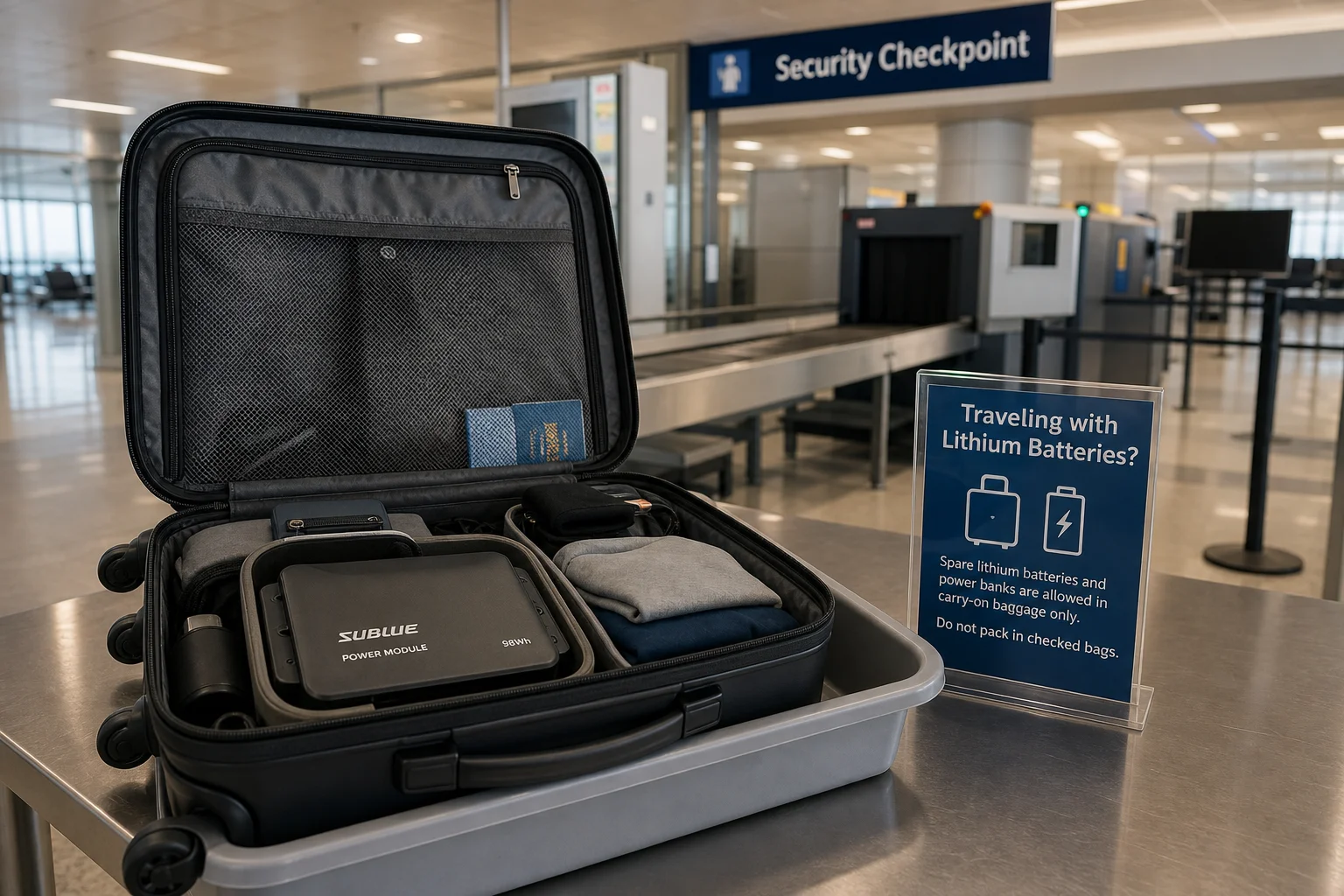
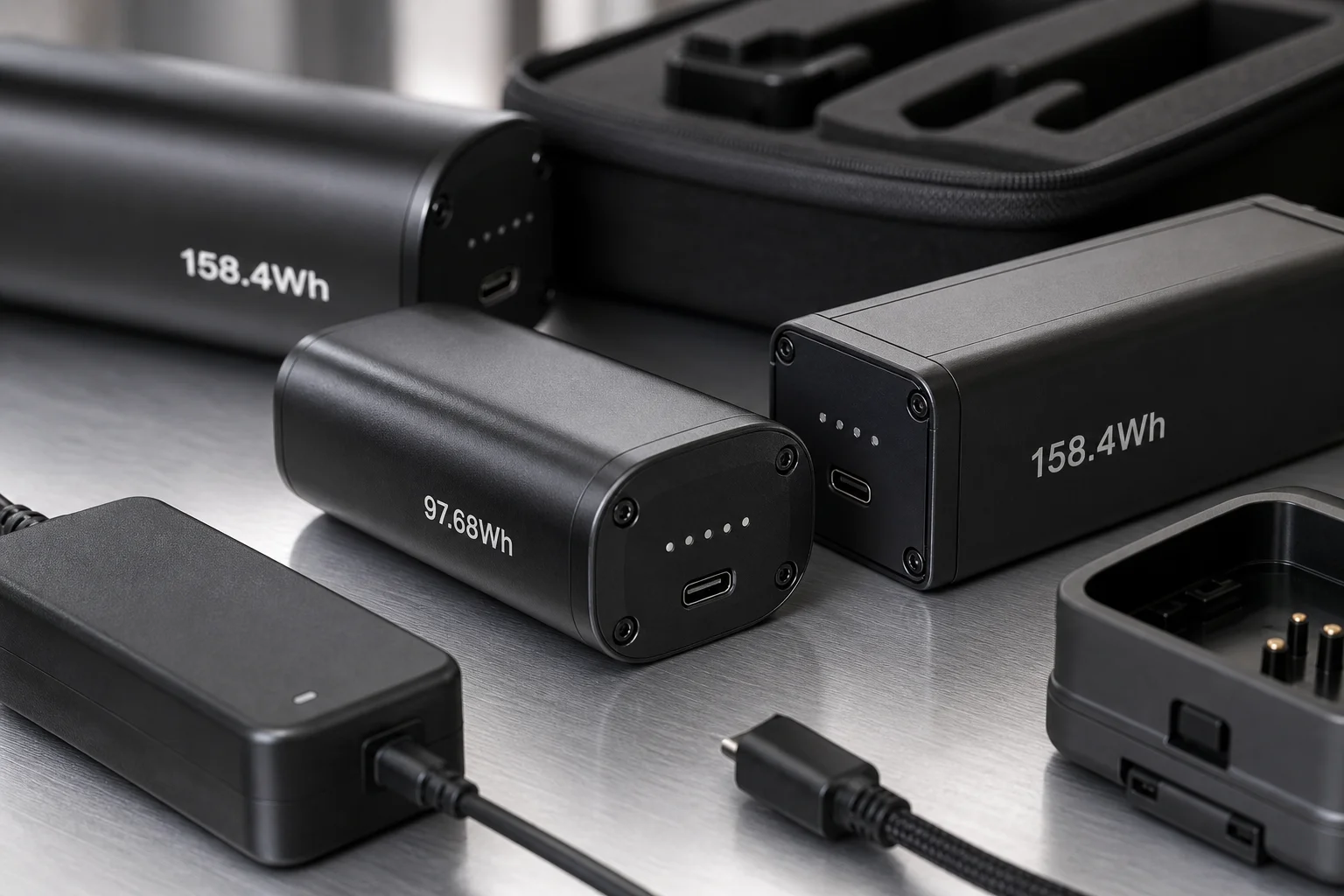
Transporting underwater scooters on aircraft requires careful attention to battery regulations. Most airlines allow batteries under 100 watt-hours without restriction. Batteries between 100 and 160 watt-hours may be permitted with pre-approval from the airline—check specific policies before travel.
Batteries exceeding 160 watt-hours cannot be carried on standard flights, though special shipping options exist at significant cost.
Always pack batteries in carry-on luggage, never checked baggage. Protective cases help prevent short circuits and damage. Remove scooters from bags during X-ray screening to avoid confusion—TSA agents unfamiliar with the equipment may flag it for additional inspection.
Print airline battery policies before travel. If TSA agents question the equipment, having written guidelines available can resolve disputes quickly. Check return-flight airline policies separately, as different carriers may have different rules.
For scooters with built-in batteries, verify watt-hour ratings printed on the unit. If no rating is visible, do not attempt to fly with the scooter—you cannot prove compliance with airline standards.
Conclusion
The Lefit P1 and extended-battery variant deliver the best overall performance for speed and runtime. The Waydoo Subnado offers exceptional value at $500, particularly for arm-mount enthusiasts. The Seascooter U1 stands out for kayak and paddleboard integration, though early-production quirks warrant caution. The K5 Edge Smart Drive prioritizes lightweight portability, and the Lefit S1 Pro excels in family-friendly modularity with the included shock float.
Choose based on primary use case: performance seekers should consider the P1 extended battery, budget-conscious buyers will appreciate the Subnado, families with young children benefit from the S1 Pro’s float attachment, and paddleboard users should explore the U1 despite its current limitations.
Further reading
Related Reviews

Backpacking Gear
Building a 10 lb Base Weight: An Ultralight Backpacking Gear List
A practical walkthrough of the ultralight pieces behind a 10 lb base weight, from a 765 g pack and a roomy one-person tent to a full camp chair and a dependable water filter.

Road Bikes
10 New Road Bikes Worth Watching: Aero, Titanium, Steel and Endurance Standouts
A practical roundup of 10 new road bikes, from aero flagships chasing single-watt gains to titanium, steel and endurance platforms built for real roads.
Bikepacking Gear
11 Bikepacking Essentials for Long-Distance Cycling
Eleven bikepacking essentials for long-distance cycling, from a steel gravel frame and a two-person tent to helmet lights, packable gloves, and a frame bag that puts weight in the right place.