Two-Way Radios
Best Two-Way Radios: Four Standout Picks From Hands-On Range Testing
We compared budget and premium FRS two-way radios on range, sound quality, latency, and durability. These four came out on top.
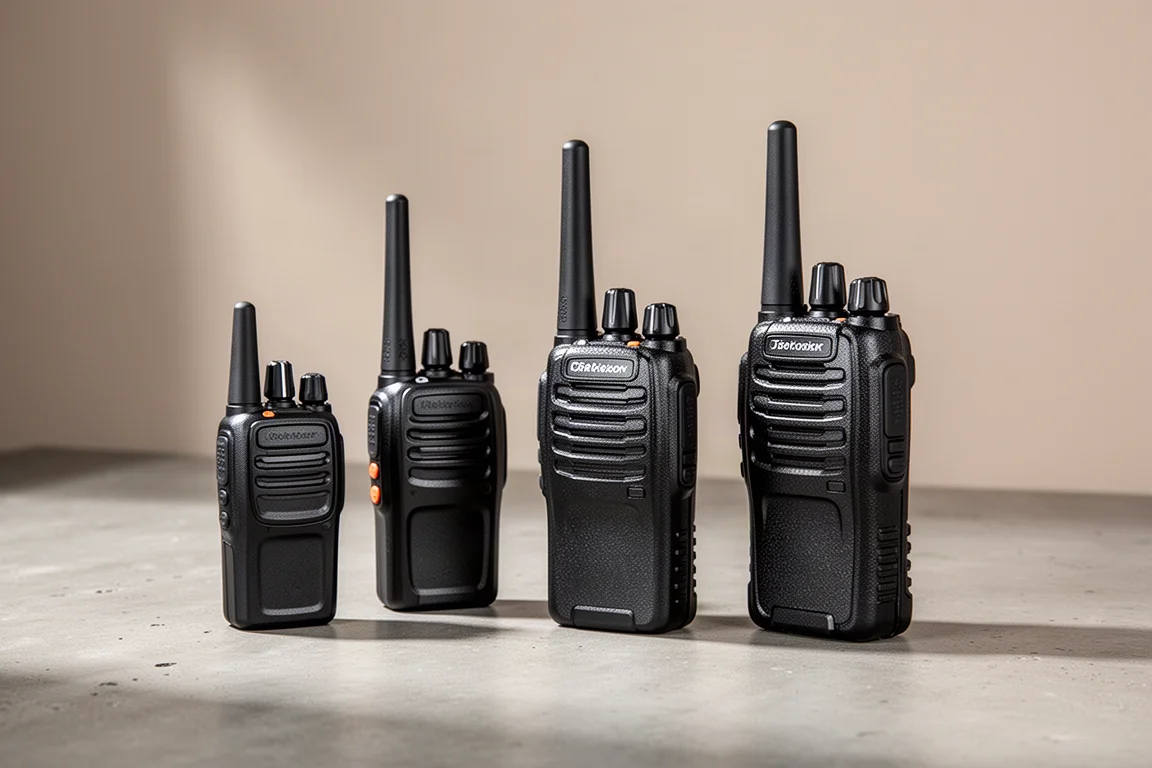
Introduction
Cell coverage can be spotty in exactly the places where you most need to stay in touch: campgrounds, trailheads, job sites, road trips through hills. A good pair of FRS two-way radios solves that problem for around the cost of a phone case, but performance between brands varies far more than the spec sheets suggest.
To find out how much difference price actually makes, a wide field of FRS walkie-talkies was put through the same gauntlet: range tests from 1,360 feet out to 6 miles over hills and traffic, sound quality scoring, push-to-talk latency timing, and repeated 6-foot drop tests. Budget sets around $10 were compared directly against premium pairs near $147. The results were revealing, and a few affordable radios embarrassed models costing several times more.
How These Radios Were Evaluated
All of the radios tested use the FRS (Family Radio Service) frequency, which requires no license, unlike GMRS or ham radios. Each set was measured on four fronts:
- Range and clarity: transmissions at 1,360 feet, roughly a mile through trees and houses, and 6 miles across hilly interstate terrain
- Sound quality: clarity, static, background noise, and maximum volume measured in decibels
- Push-to-talk latency: how quickly the radio starts transmitting after the button is pressed, measured by timing a fast spoken count
- Durability: three drops from 6 feet onto hard ground
Weight was also recorded as a rough quality indicator, ranging from about 96 g on the lightest budget sets to over 230 g on the heaviest.
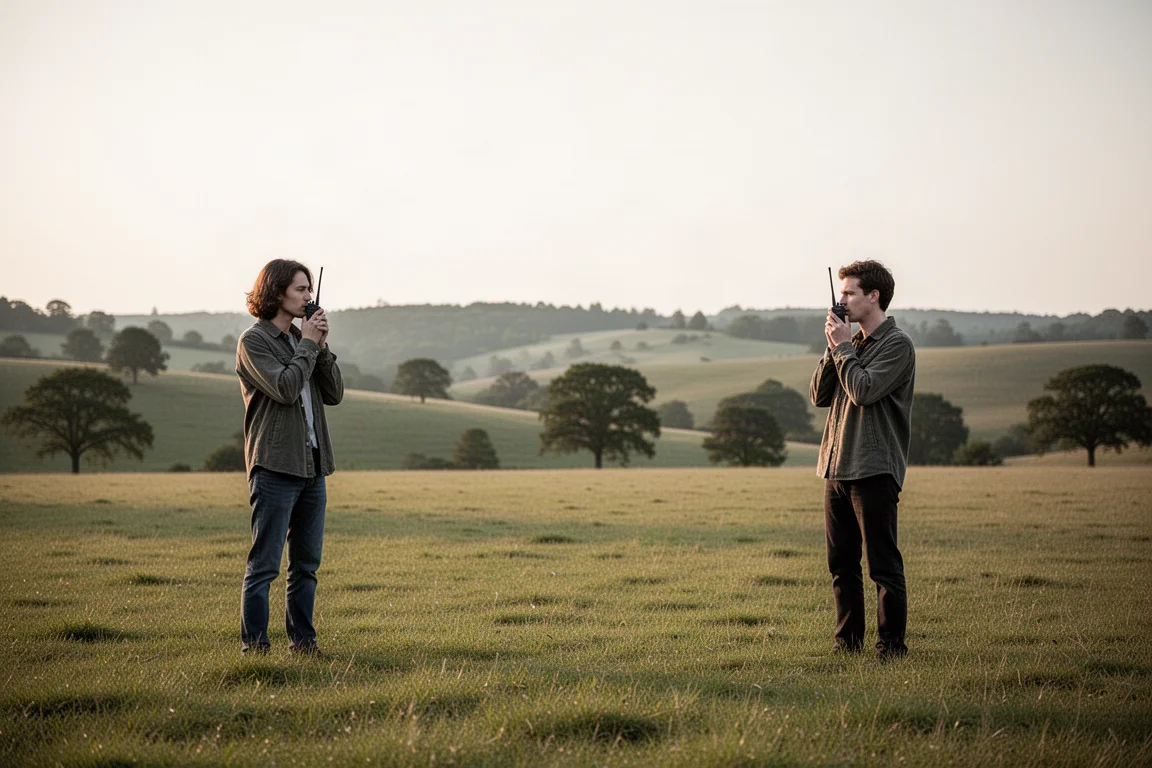
One early lesson: the cheapest radio tested, the Hunjid, struggled even at just 1,360 feet in mostly open space despite its 1,000-foot claimed range. At the other end of the scale, spending more did help, but not in a straight line. Some mid-priced sets beat pricier rivals on clarity, and the best overall value was nowhere near the top of the price list.
Best Overall: Motorola T802
The Motorola T802 finished first in just about every category, with the best average score of the entire lineup. It offers 22 channels and 121 privacy codes, giving 2,662 combinations to block out other conversations, plus weather radio and alerts, off-grid group messaging and broadcast, and Bluetooth connectivity to an app and audio accessories. Motorola claims up to 35 miles of range in mountain or valley terrain, and an IP54 weatherproof rating.
In the range tests, the T802 consistently delivered the clearest signal of any radio tested, including at 6 miles over hills, trees, and interstate traffic. Push-to-talk latency averaged just 1.5 counts, among the lowest recorded. It survived the drop tests with the battery cover detaching once but snapping back together without damage.
The trade-off is price: at around $115 for the pair, it sits near the top of the range. If you want the best-performing radio and are willing to pay for it, this is the one.
Runner-Up and Best Weather Resistance: Motorola T605
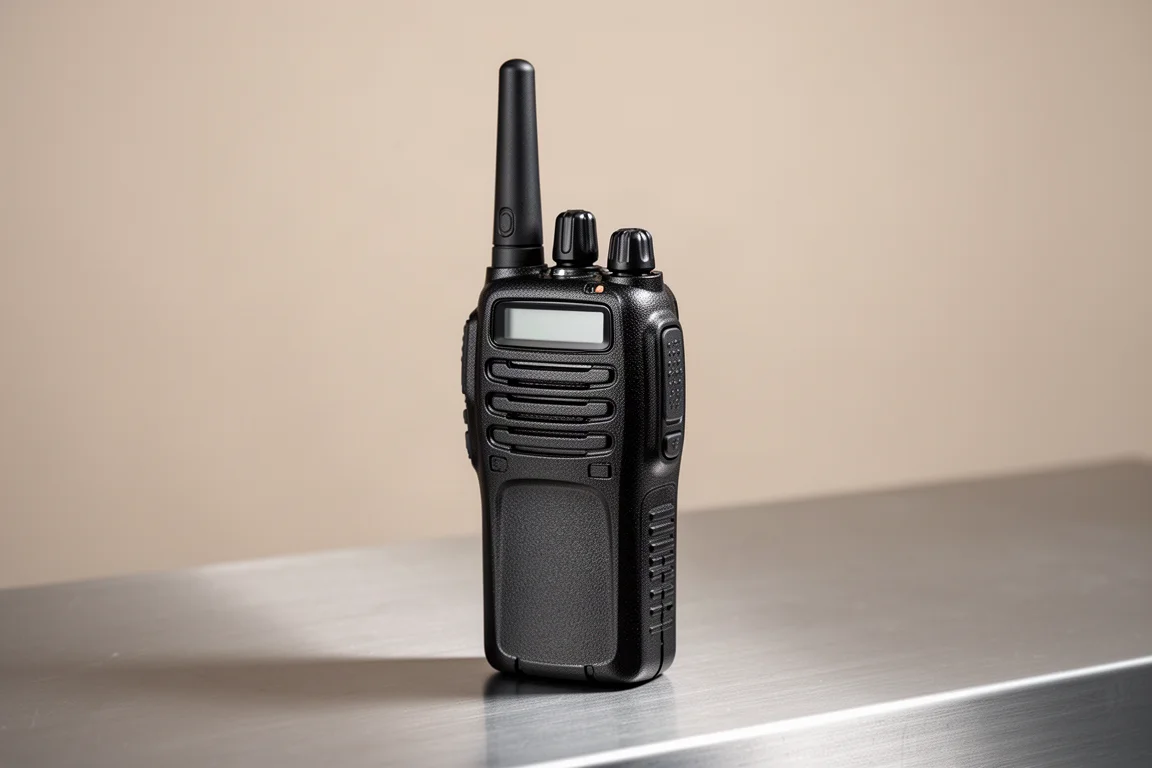
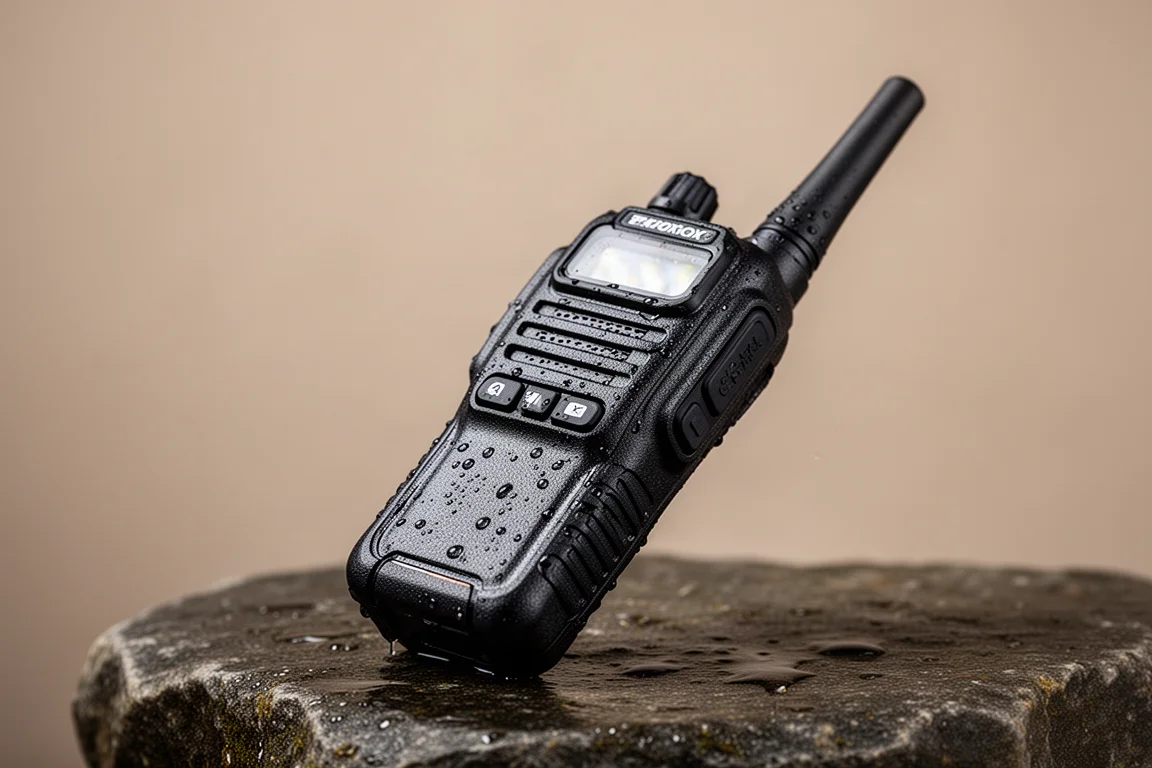
The Motorola T605 scored second overall with an average finish of 1.8, and in several tests it was rated the single best-sounding radio in the field. It shares the 22-channel, 121-privacy-code setup of the T802 and claims up to 35 miles of range in mountain or valley areas, up to 6 miles over open water, and up to 2 miles in a neighborhood.
Where it pulls ahead of the T802 is water protection: an IP67 waterproof rating, submersible up to 1 meter for 30 minutes, and designed to float face up. It also includes a flashlight with white and red LEDs, a water-activated flashlight mode, and an extra rechargeable battery for each radio. At 234.56 g it is the heaviest radio tested, which shows in its solid, rugged feel.
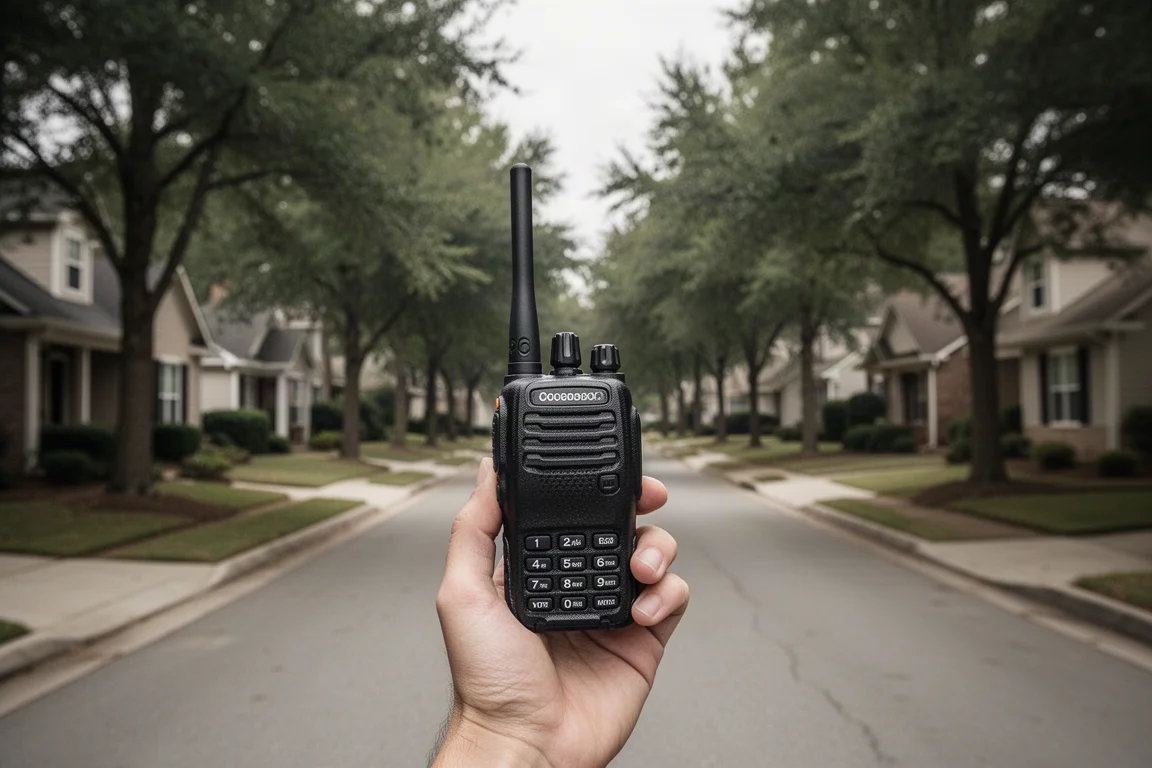
In real-world listening, the T605 consistently showed less static than rivals, including the more expensive Cobra, and it sounded noticeably better at the 1-mile obstructed test. The reviewer’s overall pick of the field, it costs around $92 for the pair.
Best Mid-Range Pick: Midland T71
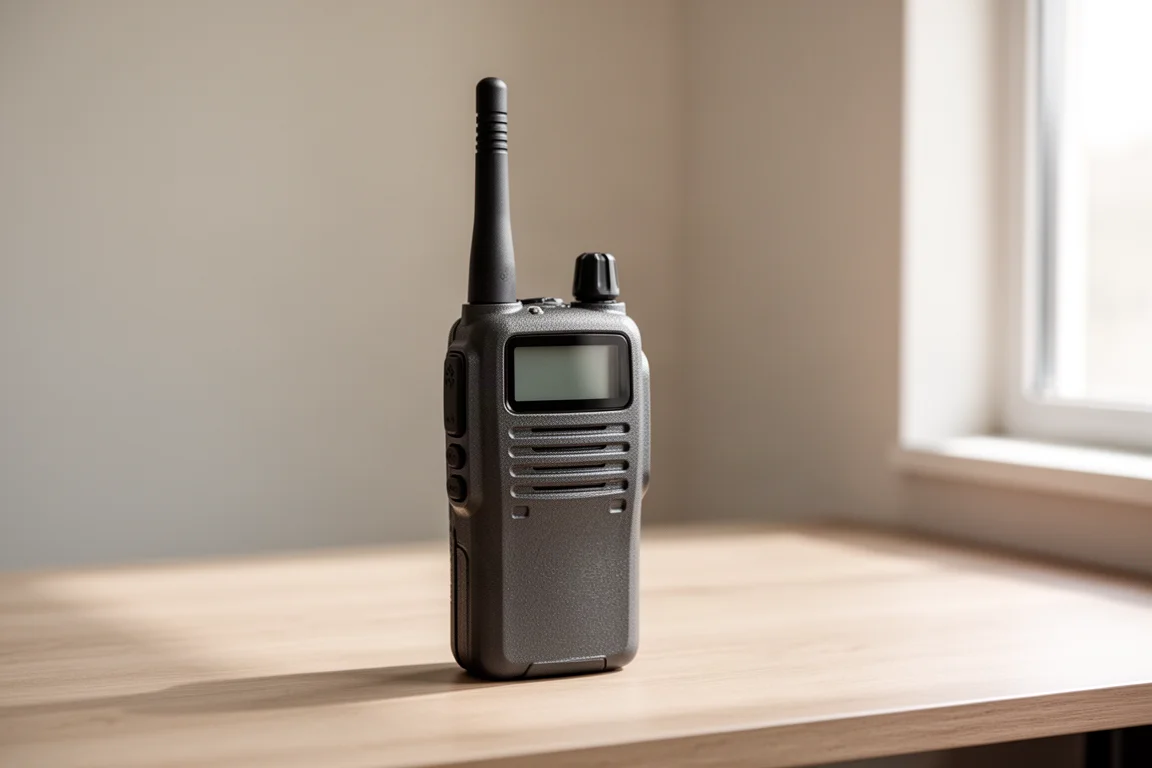
The Midland T71 delivered a strong average finish of 3.4 at around $70 for the pair. It is equipped with 36 channels plus 121 privacy codes for up to 2,662 channel options, a 1,000 mAh rechargeable battery, and a weather scan that automatically cycles through 10 weather channels. Motorola’s claimed 38-mile range figure is the headline number, though you have to switch to high power for maximum range, and practical testing showed it shines at ranges closer to a mile.
The T71 can charge one or both radios at a time and comes with an AC wall adapter. At 174.84 g it was the heaviest radio tested at its price tier, and it survived all three drop tests without damage. Sound quality came in about on par with the Motorola T210 and a step ahead of the Cobra, which sounded noticeably tinny by comparison.
If your use case is campground, neighborhood, or job-site communication within roughly a mile, the T71 hits a sweet spot between price and performance without the premium cost of the Motorola models.
Best Value: Paxton Two-Way Radios
If the decision comes down to value, the Paxton set is hard to argue with. At around $40 for four radios, it outperformed every other radio in its price bracket and beat several sets that cost considerably more. It offers 16 preset channels, a flashlight, rechargeable 1,500 mAh batteries, and a claimed range of 3 miles in open areas and 0.6 to 1.2 miles in most cities, with 8 to 96 hours of use per charge depending on activity.
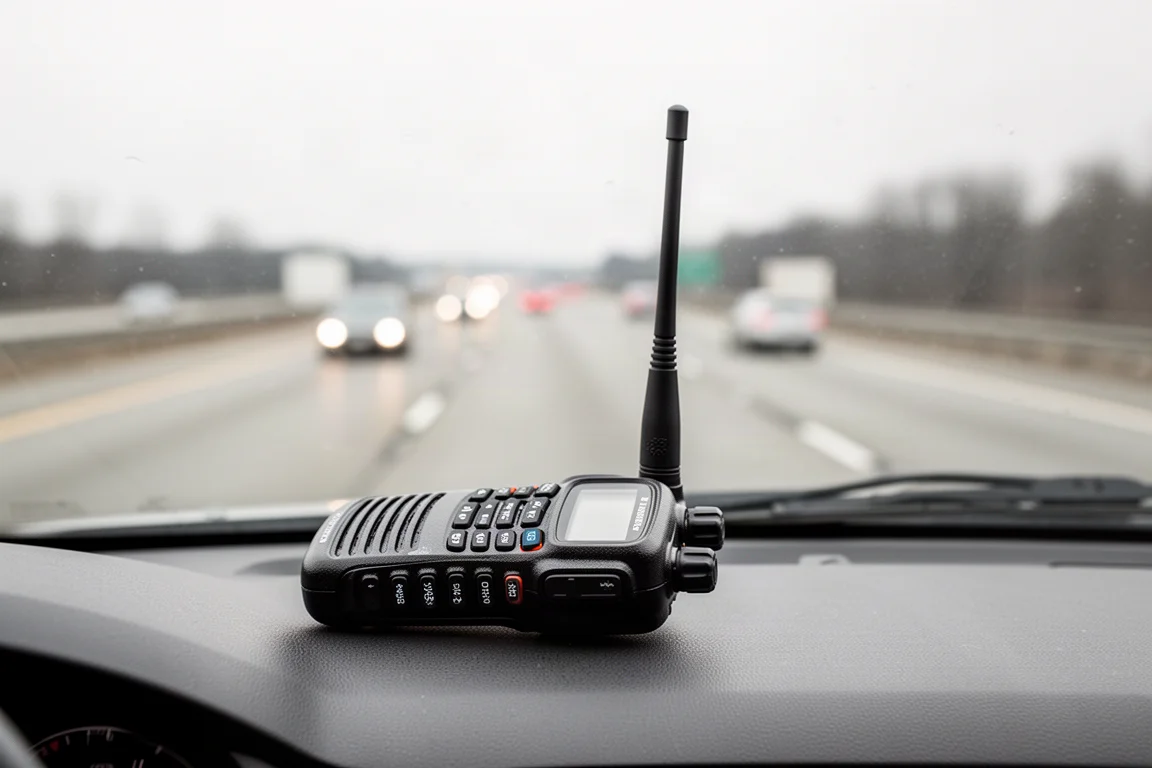
The Paxton was the loudest radio measured at 95.3 dB and scored the best sound quality of the first half of the lineup. In the tough 6-mile interstate test with hills and trees in the way, it was judged the best performer at that point in the testing, and at a mile through houses and trees it picked up a solid mid-field rating. Its main weaknesses are practical: it is heavy at just under 158 g, and it includes a charger but cannot use a USB-C cord.
Drop testing knocked the battery cover off once, but everything went back together without damage.
Which One Should You Buy?
A few patterns emerged from the testing that are worth keeping in mind no matter which set you choose:
- Match the radio to your real range needs. Claimed range figures like 35 miles are best-case line-of-sight numbers. If you realistically communicate within a mile of tree-obstructed terrain, the Midland T71 or Paxton will do the job for far less money.
- Sound quality separates the tiers. The Motorola T605 and T802 clearly outclassed the field on clarity and static suppression, while budget sets like the Hunjid and Max Talker struggled even at short range.
- Latency matters for conversation flow. The DeWalt and Wish House transmitted a fast spoken count with zero dropped words, and the Motorola T802 was close behind.
- Water resistance is tiered. IPX4 splash resistance on the Cobra is fine for light rain; the T605’s IP67 rating means it can survive full submersion.
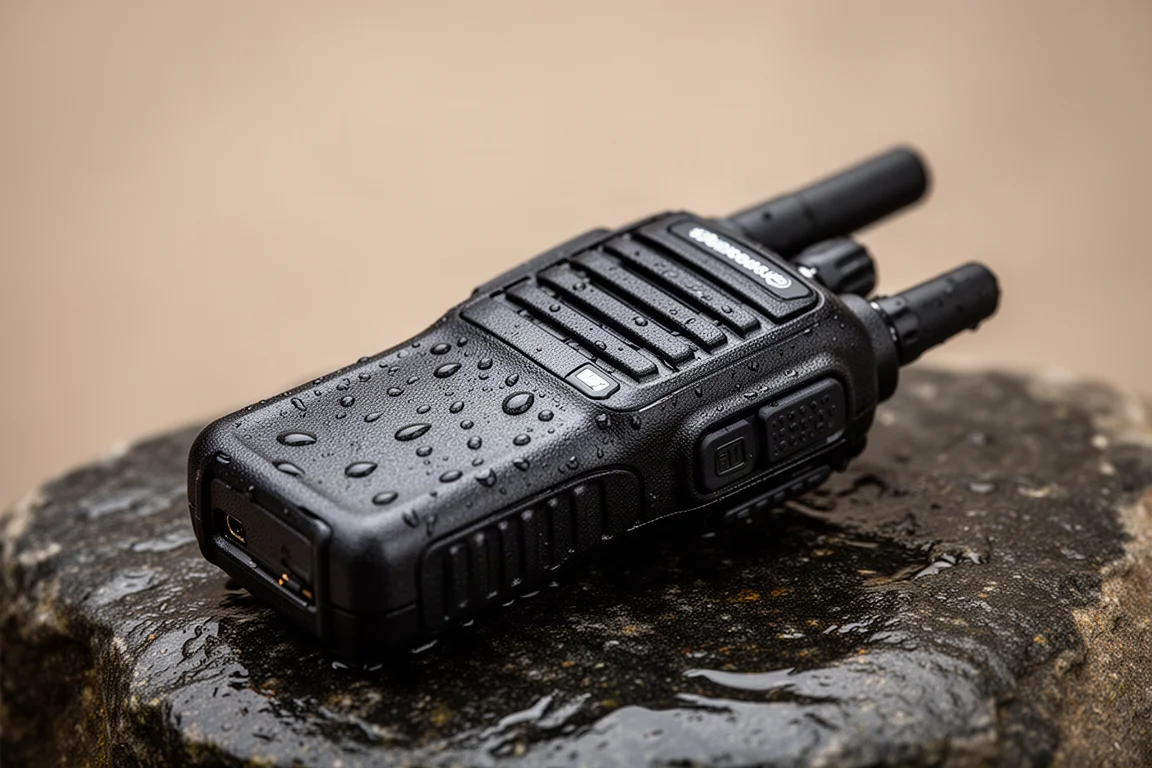
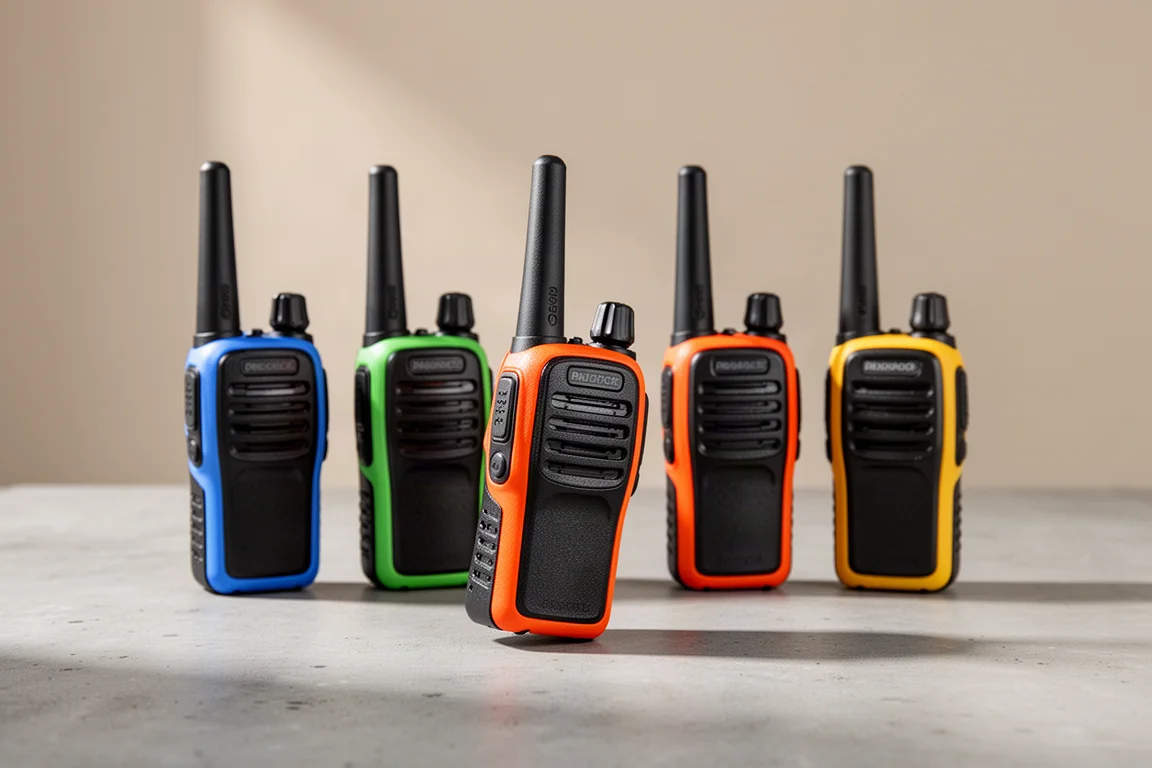
For most buyers, the decision is simple. Spend around $40 for the Paxton four-pack if you need multiple radios for family or group use and value is the priority. Step up to the Midland T71 around $70 for a better-built pair with more channels. Pick the Motorola T605 around $92 if waterproofing and the best sound in the field matter, or the T802 around $115 if you want the outright best performer with Bluetooth and messaging features.
Conclusion
The gap between the best and worst FRS two-way radios turned out to be enormous, and price alone does not predict performance. The Motorola T802 earned the top spot overall, the T605 is the pick for waterproofing and sound, the Midland T71 is a capable mid-range option, and the Paxton set is the standout value, beating radios at twice its price. Whichever way you go, buying one of these four means you are getting a radio that has already proven itself where it counts: clear communication at real-world distances.
Further reading
Related Reviews

Backpacking Gear
Building a 10 lb Base Weight: An Ultralight Backpacking Gear List
A practical walkthrough of the ultralight pieces behind a 10 lb base weight, from a 765 g pack and a roomy one-person tent to a full camp chair and a dependable water filter.

Road Bikes
10 New Road Bikes Worth Watching: Aero, Titanium, Steel and Endurance Standouts
A practical roundup of 10 new road bikes, from aero flagships chasing single-watt gains to titanium, steel and endurance platforms built for real roads.
Bikepacking Gear
11 Bikepacking Essentials for Long-Distance Cycling
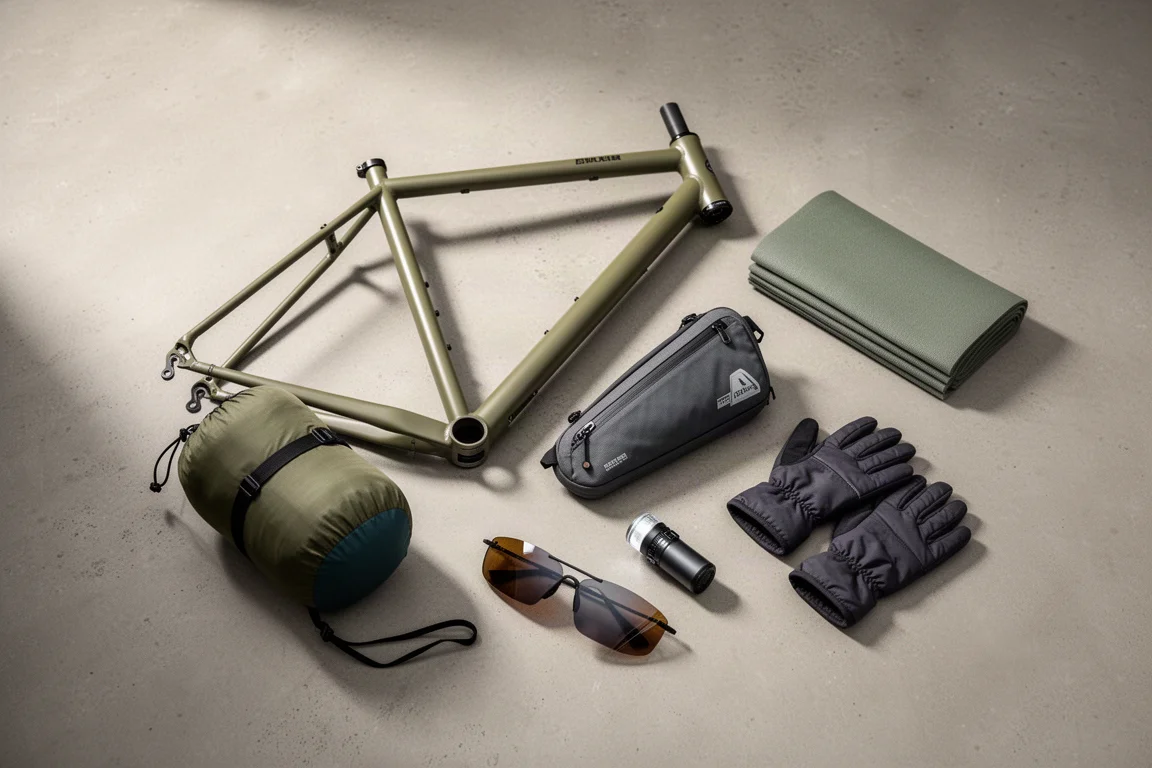
Eleven bikepacking essentials for long-distance cycling, from a steel gravel frame and a two-person tent to helmet lights, packable gloves, and a frame bag that puts weight in the right place.