Hi-Fi Audio
Best Two-Channel Hi-Fi Components: Eight Standout Amplifiers, Streamers and CD Players
Eight two-channel components worth knowing about, from an active anniversary loudspeaker to network hubs, high-power integrated amplifiers and CD players that double as DACs.
Introduction
Two-channel audio has been moving in two directions at once. One path leads toward compact, active, DSP-driven systems that trade boxes and cables for convenience and room tuning. The other stays firmly with traditional separates, where an integrated amplifier and a disc player still anchor the whole system.
The eight components in this roundup cover both paths. Some are anniversary statements from long-established brands, built around new driver technology or unusually generous power supplies. Others are pragmatic additions that make an existing system more flexible without asking you to start over. UK retail prices are noted wherever they were available, and the differences between these products are as much about philosophy as they are about specification.
What to Look For in a Modern Two-Channel System
Amplification approach matters more than the headline wattage figure. Class A/B designs remain the default for listeners who want a traditional tonal character and plenty of current delivery, while class D modules make it possible to build very compact systems with high output. Active designs go a step further by matching each driver to its own amplifier and removing the passive crossover from the signal path entirely.
Streaming support is the second dividing line. A network-equipped component should tell you clearly which services and protocols it handles, and whether it works with the control app you already use. Look for the specifics rather than the category: Spotify Connect, Tidal Connect and Roon support are not universal, and some manufacturers publish far fewer details about network playback than others.
Physical practicality deserves equal weight. A moving magnet phono stage lets a turntable connect directly without an outboard box. An HDMI eARC input lets a television become part of the system, with volume controlled from the TV remote. A subwoofer output leaves room to add low-frequency reinforcement later. Finally, consider how each component fits a long-term plan: an all-in-one active system is a complete solution, while a network hub or a standalone DAC extends what you already own.
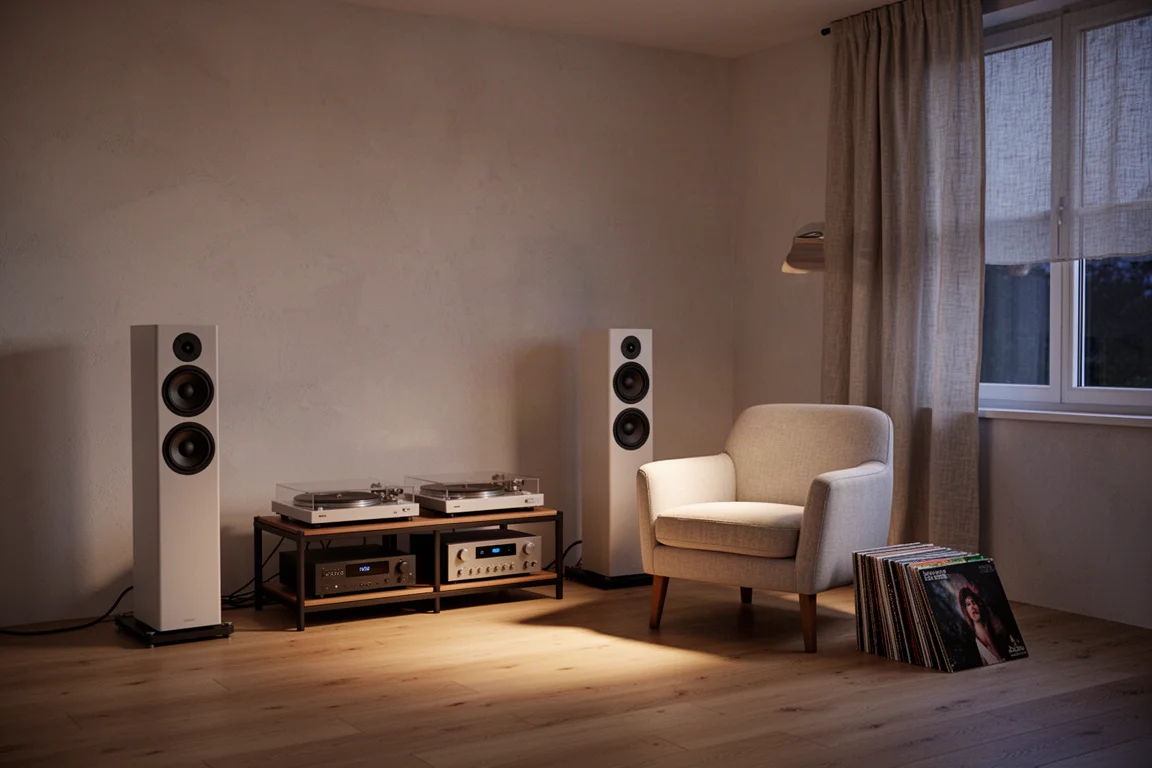
A useful exercise before shortlisting anything is to write down the sources you genuinely use week to week. If that list is a turntable, a television and a streaming subscription, the options narrow quickly. If it also includes a CD collection and a computer, flexibility inside the box becomes far more valuable than an extra few watts.
KEF LS60 Wireless: An Active Anniversary Statement
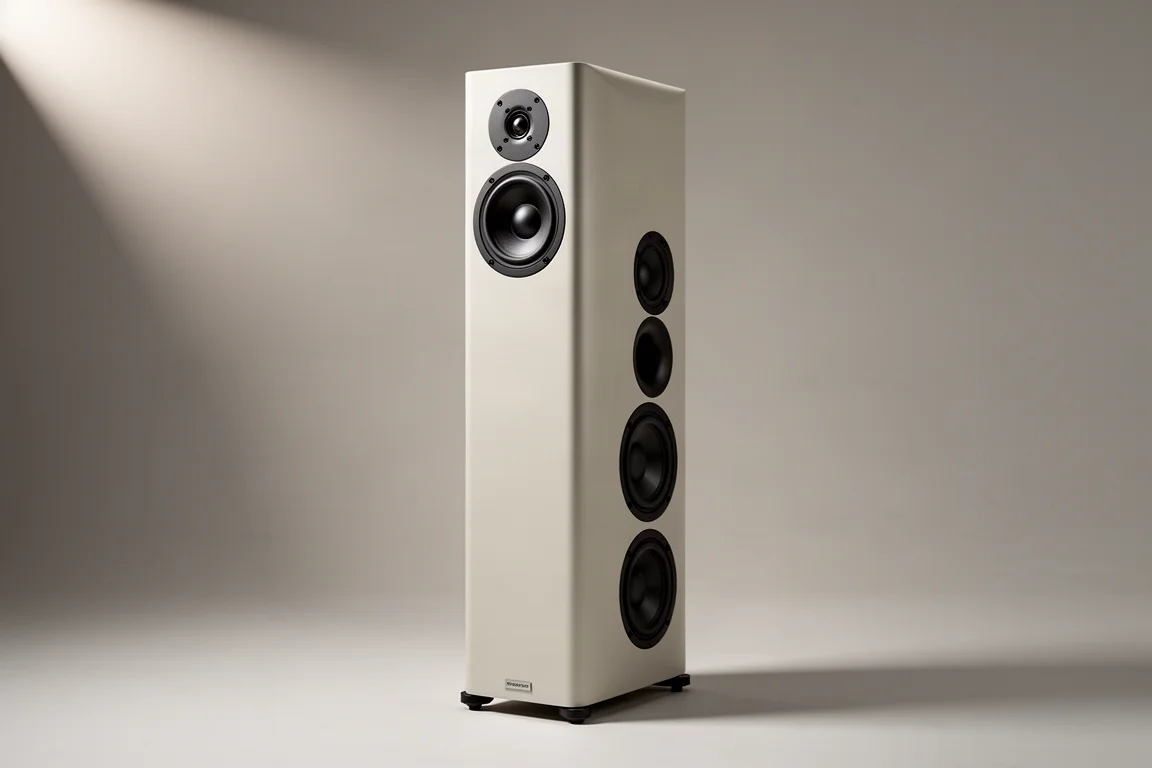
KEF marked its 60th anniversary with something other than a heritage reissue. The LS60 Wireless is a three-way active loudspeaker that mixes amplifier classes inside a slim floorstanding cabinet: 500 watts of class D for the four side-mounted 130 mm (5.25 inch) woofers, 100 watts of class D for the 100 mm midrange, and 100 watts of class A/B for the coaxially mounted tweeter. That works out to 700 watts per speaker.
The driver array is the most interesting part of the design. The 12th-generation Uni-Q driver carries Metamaterial Absorption Technology, as seen on the LS50 Meta, but because it no longer has to reproduce low frequencies KEF was able to shrink it. The result is a front baffle just 13 cm (5.25 inches) wide and a genuinely slim profile. Low frequencies are handled by two pairs of Uni-Core bass drivers, a technology borrowed from the KC62 subwoofer, mounted back to back in a force-cancelling arrangement that reduces cabinet vibration and maximises output in a confined space.
On the digital side, the LS60 Wireless plays files up to 24-bit/96 kHz wirelessly or 24-bit/192 kHz over a wired connection, and it accepts Spotify Connect, Tidal Connect and Roon alongside internet radio and the usual streaming services. Connectivity includes HDMI eARC, optical and coaxial digital inputs, an Ethernet port, an analogue RCA input and a subwoofer output. The KEF Connect app, available for Android and iOS, handles system control and provides access to DSP tuning for your room. It is offered in royal blue, mineral white and titanium grey, and it retails at £6,000 in the UK.
One point worth knowing before you commit: KEF has indicated that a passive version is not planned, because the woofer arrangement would present a demanding load for a conventional stereo amplifier. If choosing your own amplification matters to you, this is not the product that allows it.
Bluesound Hub: Bringing Extra Sources Into BluOS
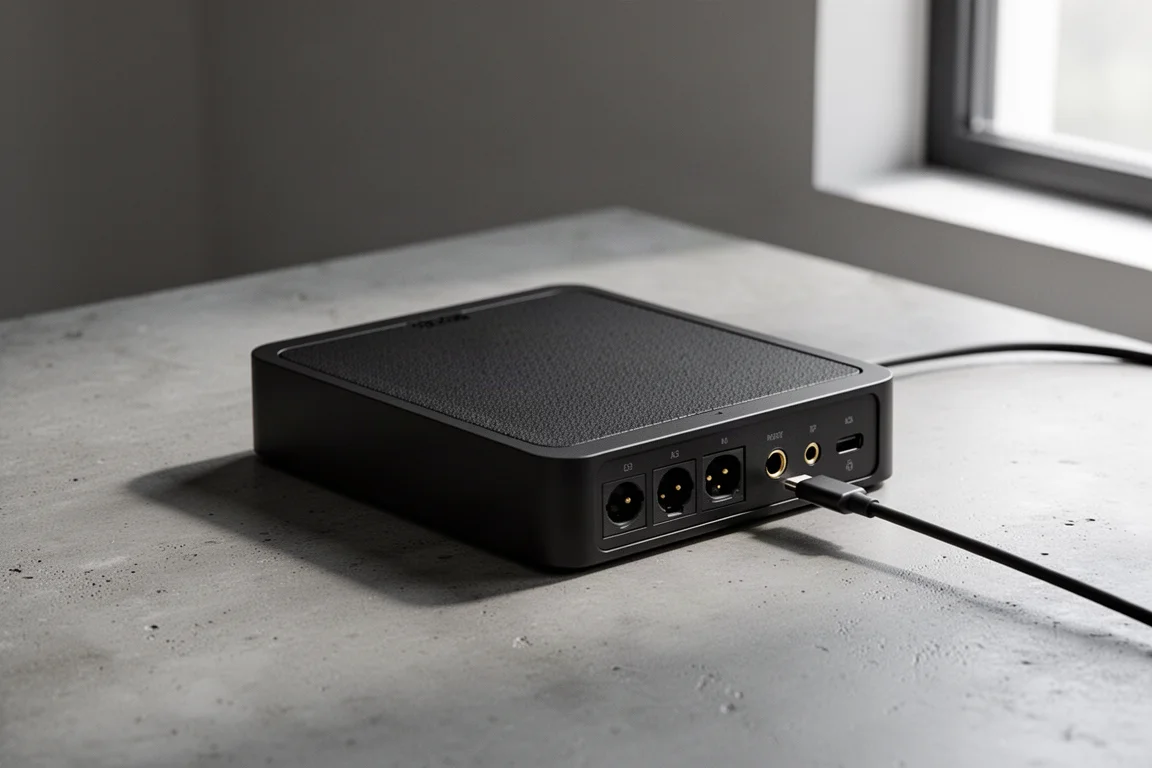
The Bluesound Hub is a network accessory rather than a dedicated streaming transport, and that distinction matters. It collects audio sources and makes them available to any Bluesound player on the network as part of a multi-room system. Inputs include HDMI eARC, coaxial digital, Toslink optical, analogue RCA and a moving magnet phono input.
Each Hub can stream one digital and one analogue source at the same time, and up to four Hubs can run on a single network. Once installed, the Hub is selected through the BluOS app, which is available for Android, iOS, Windows and macOS and can be operated from a phone, tablet or computer. Connection to the network is either wireless or wired Ethernet, and an external USB-C power supply keeps the chassis compact so it can be placed almost anywhere in the home.
The built-in moving magnet phono stage is the feature that will interest vinyl listeners most, since it makes it possible to send records to BluOS-equipped players elsewhere in the house. At £309 it is a flexible way to pull additional sources into an existing BluOS or NAD system. It is not, however, a low-cost route into the platform for a traditional hi-fi: the Bluesound Node costs a few hundred pounds more and includes a DAC that many listeners with better conversion already in place would not use.
Rotel RA-6000: Anniversary Power and Flexibility
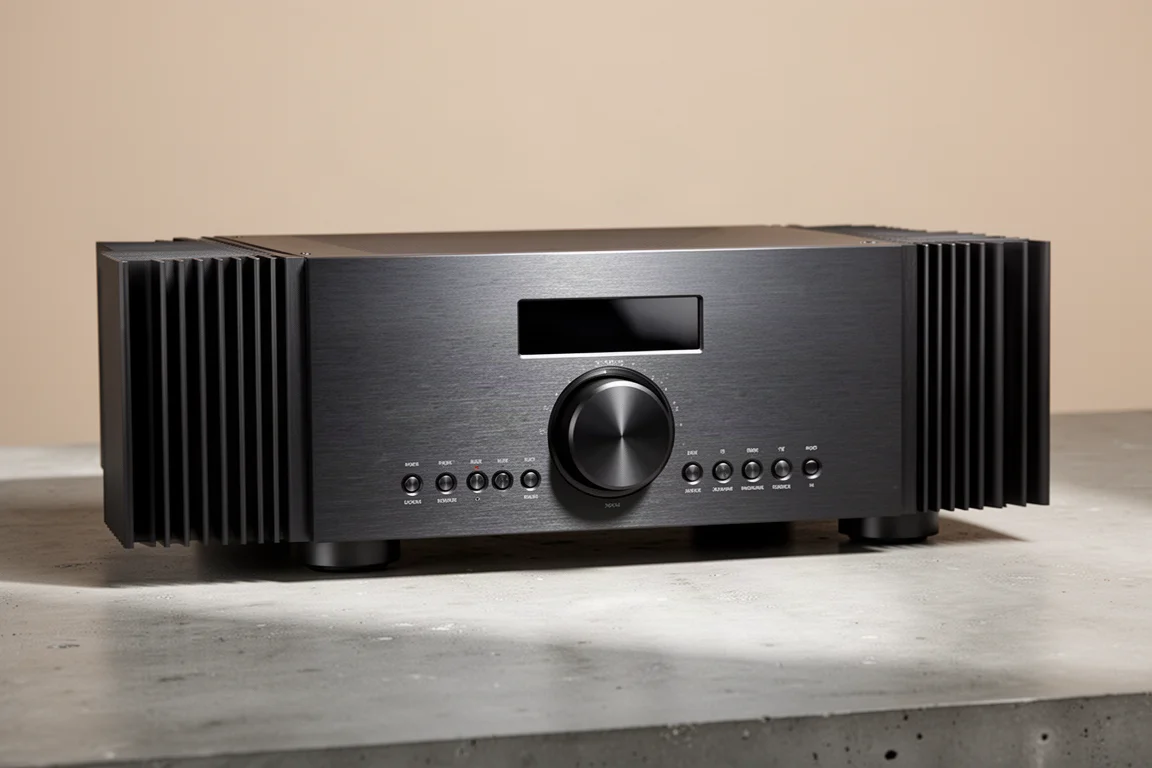
Rotel also used a 60th anniversary as the occasion for new hardware, launching the Diamond Series. The RA-6000 integrated amplifier is the centrepiece: a class A/B design delivering 200 watts per channel into 8 ohms and 350 watts per channel into 4 ohms, housed in a chassis weighing 19 kg (42 lb).
The input list is generous. There are three optical Toslink inputs, three digital coaxial inputs, USB and a network Ethernet connection, plus Bluetooth. Rotel has not published details of the streaming protocols the network input supports, so it is worth confirming that point before buying if network playback is central to your plans. Analogue connections cover a moving magnet phono stage, three RCA line inputs, a single balanced XLR input, pre-outs and a subwoofer output.
Pricing sits just under £4,000 in the UK, or around €4,500 / $4,500. For listeners who want a traditional high-current amplifier with modern digital inputs and a phono stage built in, it is a straightforward proposition.
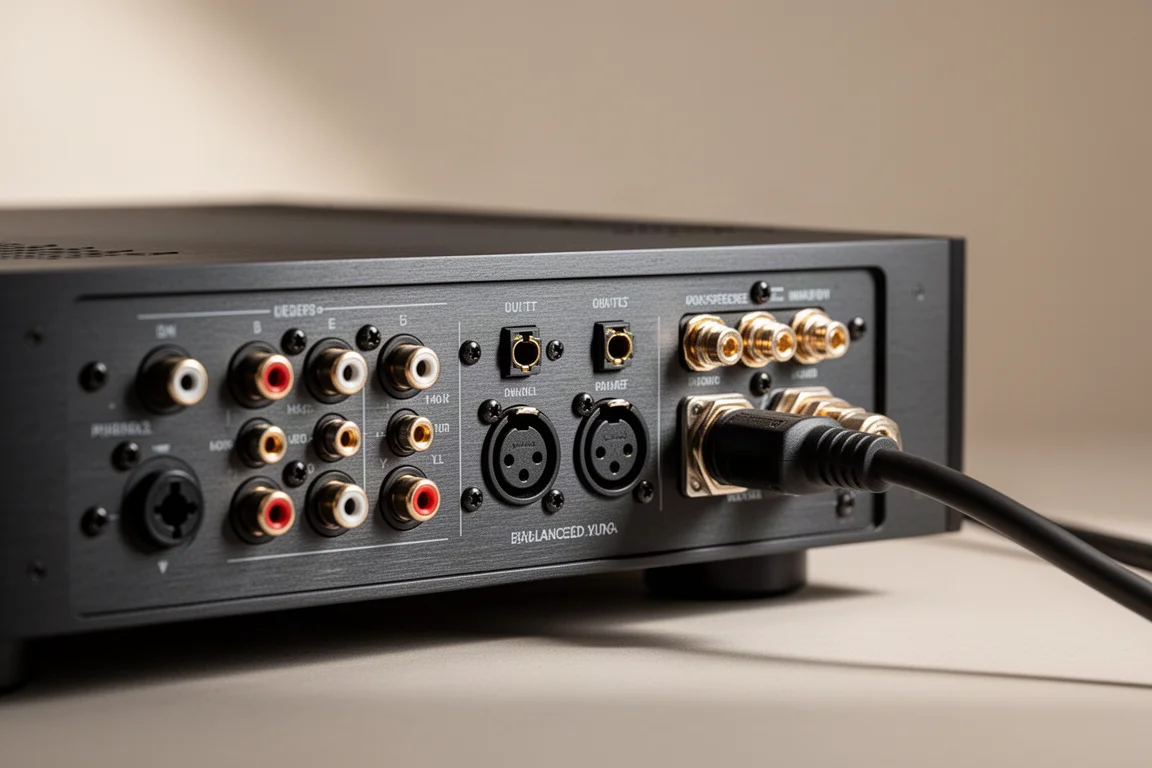
For owners of demanding floorstanding speakers, the 4-ohm power figure is the one that matters most, since it indicates how the amplifier behaves as impedance drops. The 19 kg chassis suggests a substantial power supply rather than a lightweight switching design, which is consistent with the current delivery the specification implies.
Rotel DT-6000: A CD Player That Doubles as a DAC
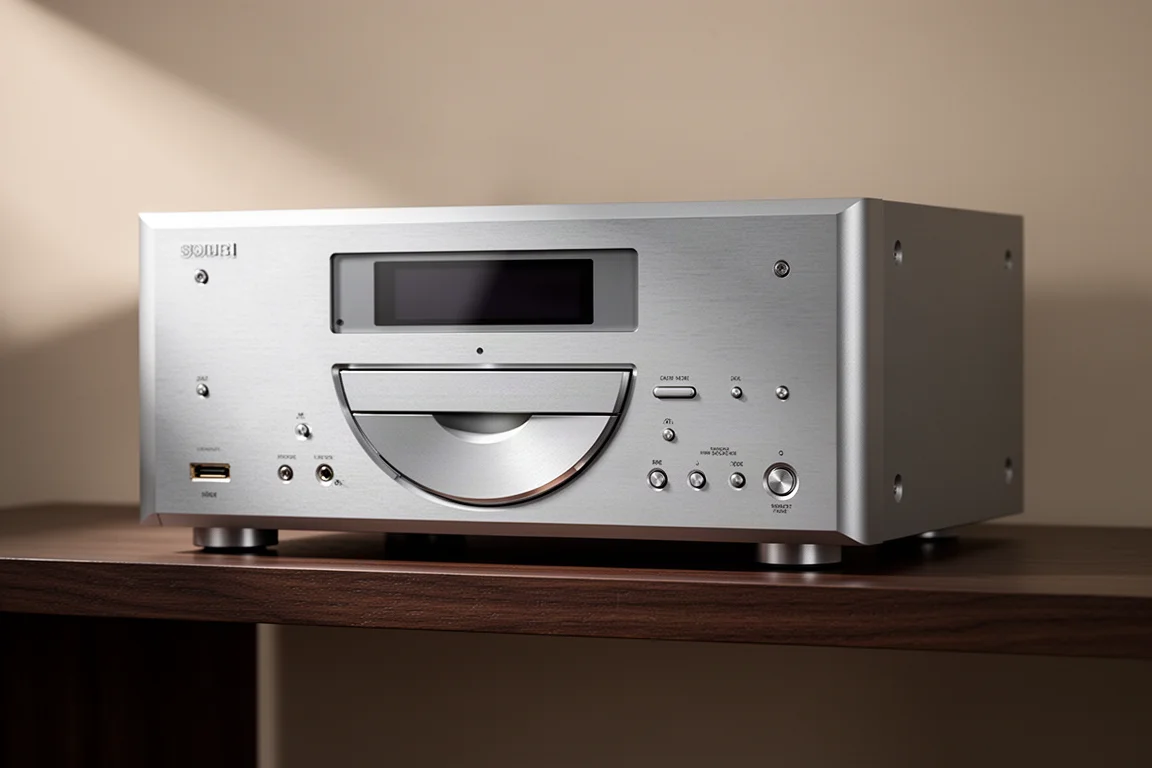
The DT-6000 is described as a DAC transport, but in practice it is a CD player with additional functionality, finished in silver or black to match the RA-6000. It offers single-ended RCA and balanced XLR analogue outputs, and it can operate as a standalone DAC fed by optical, coaxial or USB digital inputs. There is no digital output, which is why the transport label is a loose fit.
Conversion is built around the ES9028PRO chip, and MQA files are supported. The DT-6000 retails for just under £2,000 in the UK, or around €2,300.
For a system that already has a good amplifier, the standalone DAC mode is the practical argument: the same box can serve disc playback now and digital conversion from a computer or streamer later, without a second purchase.
Marantz Model 40N: Network Streaming in a Familiar Chassis
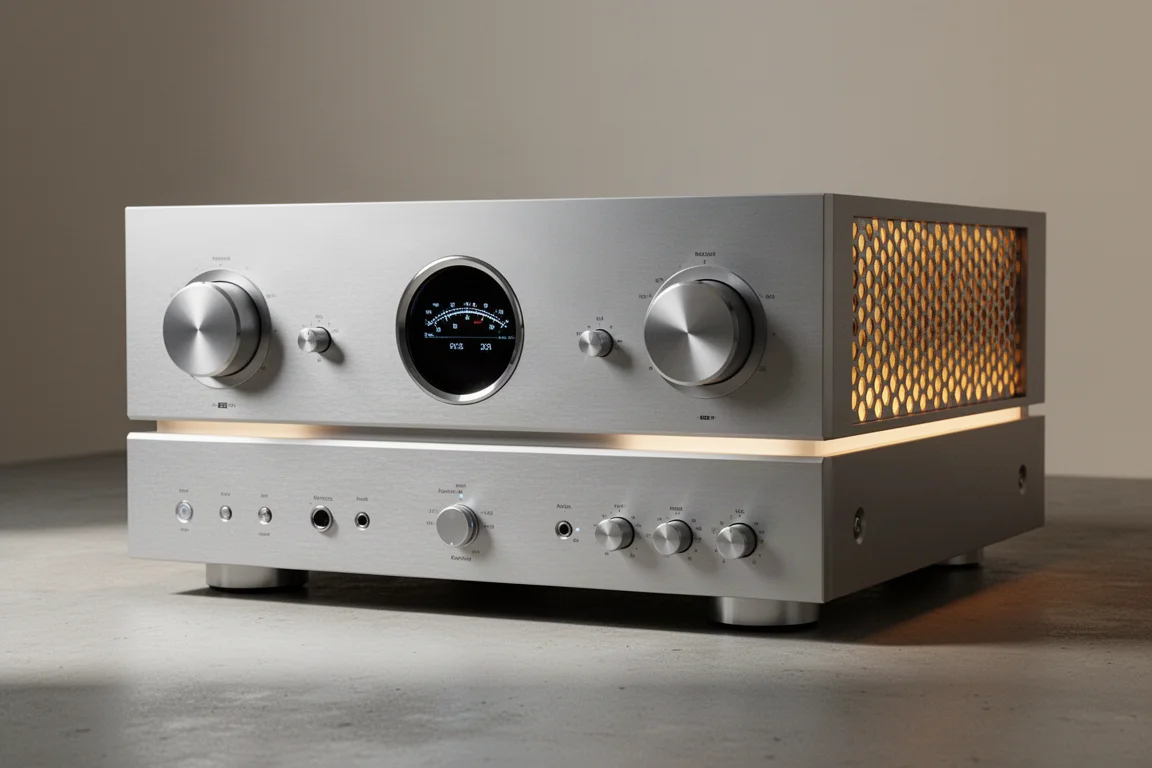
The Model 40N shares its visual language with the Model 30, but the internals and the price are different. Where the Model 30 uses 100 watts per channel of class D amplification, the Model 40N delivers 70 watts per channel of class A/B into 8 ohms. It also costs £700 less, at £2,199 in the UK.
The N in the name indicates network connectivity. A built-in HEOS streaming module can be reached over Wi-Fi or Ethernet, and the HEOS app covers most of the major streaming services, including Spotify Connect. Roon support has not been confirmed, so listeners who rely on Roon should check that before committing.
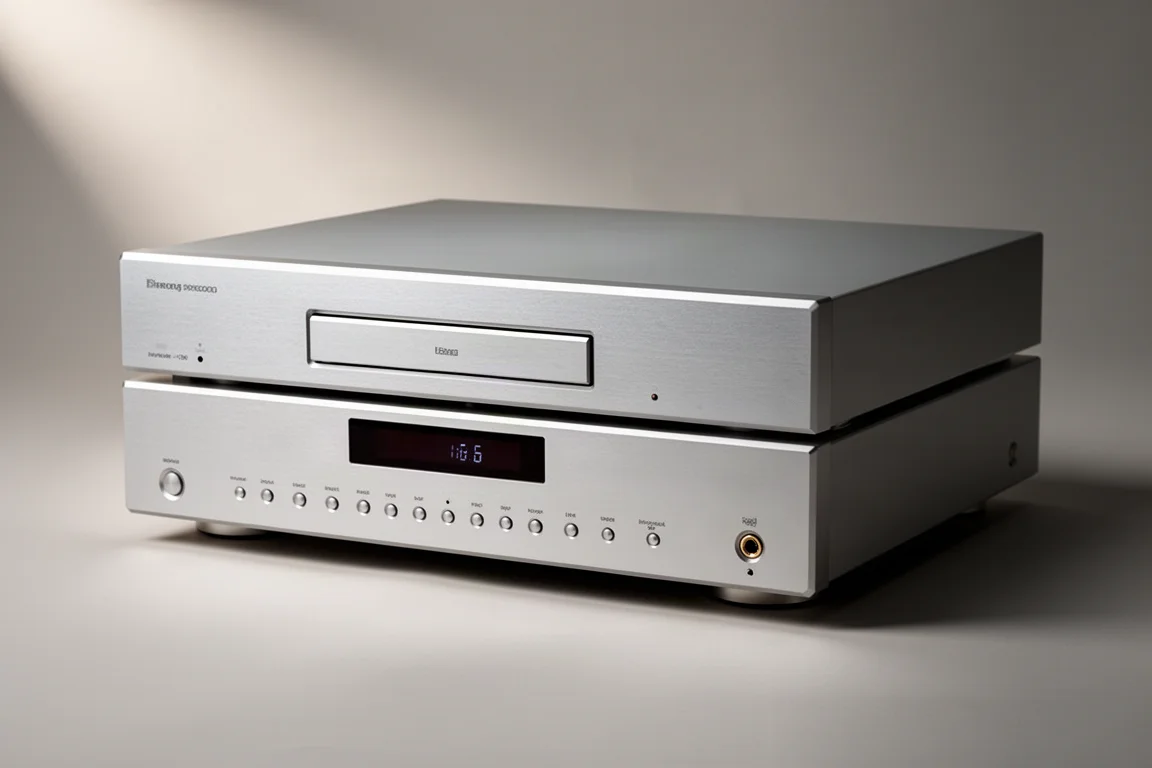
Paired with the matching CD60, the Model 40N forms a visually consistent two-box system for under £3,000.
Seventy watts per channel is a sensible figure for typical standmount speakers and moderately sensitive floorstanders, and the class A/B output stage gives the Model 40N a different character to the class D Model 30 sitting above it in the range. The lower price and the network module make it the more approachable of the two for listeners building a first serious system.
Marantz CD60: The Affordable Disc Companion
The CD60 is the natural partner for the Model 40N, and at £749 it costs roughly a quarter of what the SACD 30n does. That price makes it the most accessible disc player in this roundup, and it keeps the retro-styled Marantz aesthetic intact across both boxes.
For listeners who still buy CDs and want a single-brand system without spending four figures on disc playback, the CD60 is the obvious pairing. The trade-off is straightforward: it sits below the SACD 30n in the range, so anyone chasing the higher-end Marantz disc platform will still be looking further up the line.
Rega Elicit Mk5: Rega’s First Amplifier With Digital Inputs
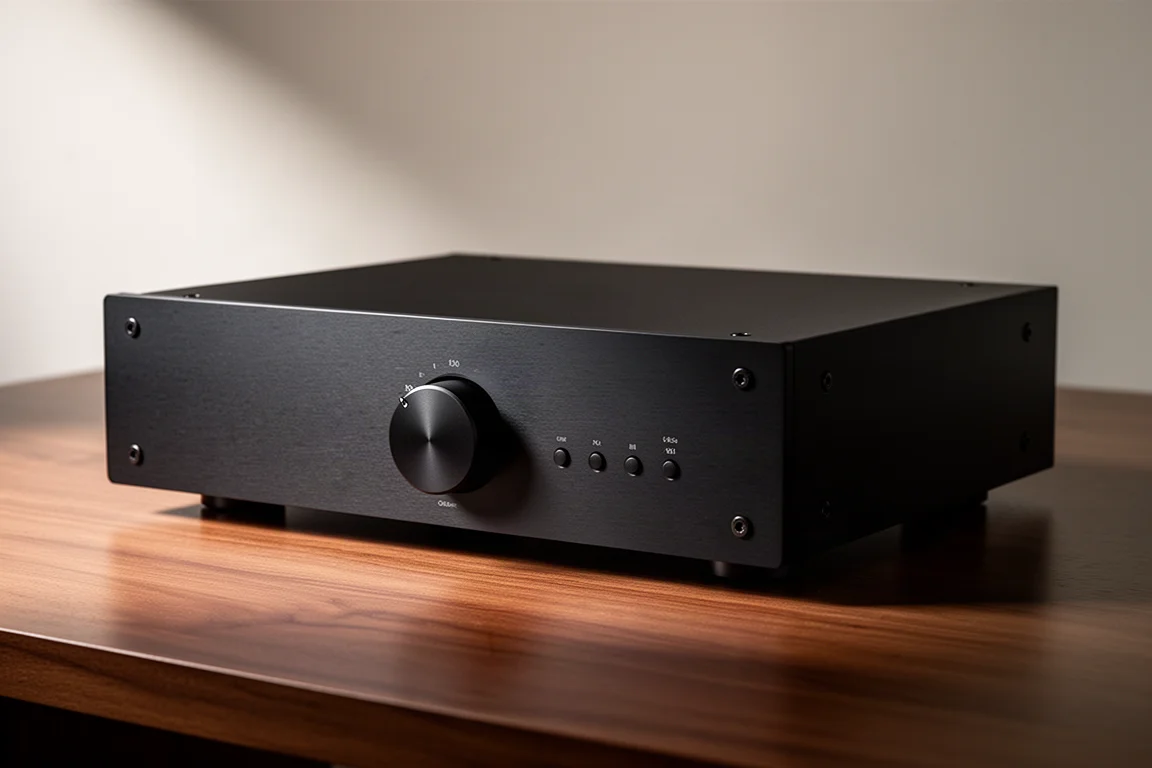
The Elicit Mk5 is the first Rega amplifier to include digital inputs, which is a notable step for a company best known for turntables and phono stages. Inside is a DAC built around a Wolfson chip, with all of the inputs galvanically and optically isolated.
Turntable owners are not left behind: a built-in moving magnet phono stage remains, and Rega’s phono stages carry a strong reputation. The preamp section is new and draws on lessons learned developing the higher-end Aethos amplifier, sharing the same FET-based circuit, while an Alps volume potentiometer replaces the previous microprocessor-controlled arrangement.
The Elicit Mk5 sells for £2,000 in the UK, the same price as the matching Saturn Mk3 disc player.
Rega Saturn Mk3: Top-Loading CD Playback With DAC Flexibility
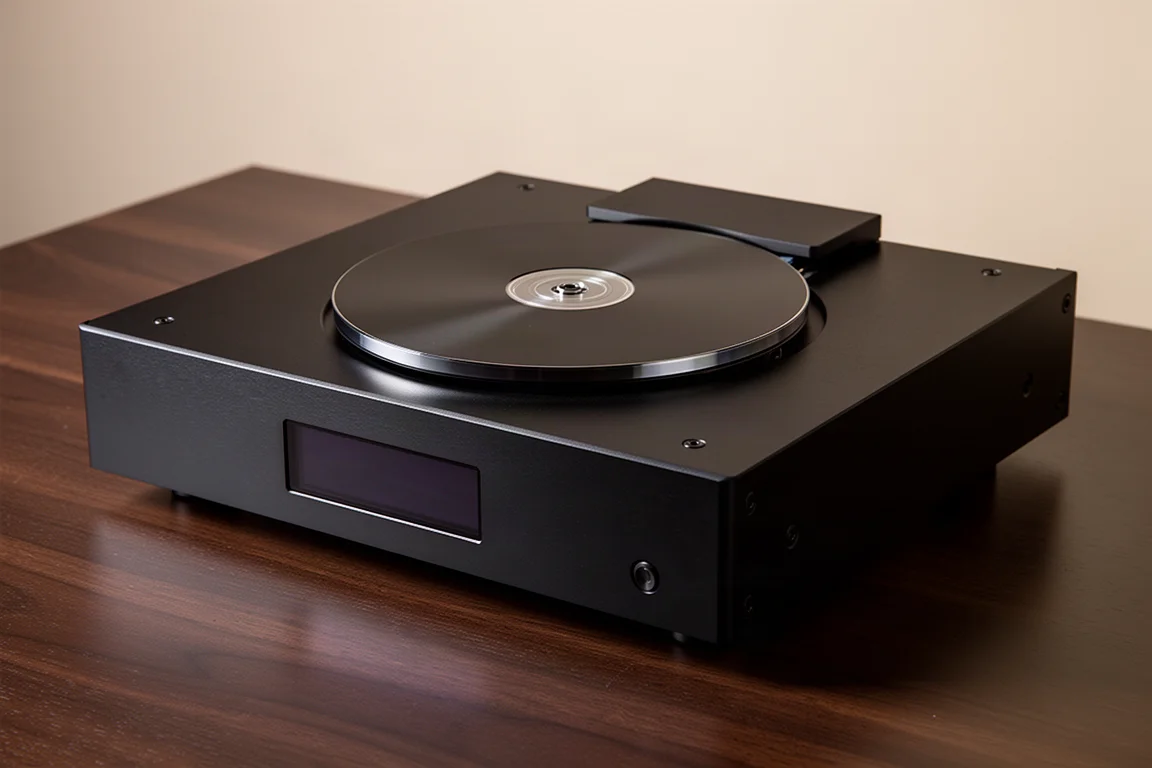
The Saturn Mk3 keeps Rega’s distinctive top-loading CD mechanism and wraps it in new casework that matches the rest of the range. It can be used as a standalone DAC or as a CD transport, which gives it more working life than a disc-only player. Digital inputs include two optical, two coaxial and an asynchronous USB connection, and digital outputs are provided for transport use.
Conversion is handled by dual Wolfson WM8742 chips, with support for signals up to 24-bit/192 kHz. Power supplies have been enhanced compared with the previous model, and the analogue and digital circuits have been redeveloped. Like the Elicit Mk5, it is priced at £2,000 in the UK.
For anyone who wants one box that handles discs now and computer audio later, the Saturn Mk3 covers both without adding a separate converter.
Buying the Elicit Mk5 and the Saturn Mk3 together is a £4,000 proposition, which puts the pairing in the same territory as several of the other components here. The matched casework and shared design language are part of the appeal, and the fact that the disc player doubles as a DAC means the second box keeps earning its place as sources change.
Buying Advice
If you want the smallest possible box count, the KEF LS60 Wireless is the most complete solution in this group: amplification, streaming and room tuning are all built in, at £6,000. The trade-off is that you cannot change the amplification later, and KEF has confirmed that a passive version is not planned.
If you already own good amplification and want to add streaming or disc playback, the Rotel DT-6000, the Marantz CD60 and the Rega Saturn Mk3 each solve that problem at a different price. The Saturn Mk3 and the DT-6000 both double as standalone DACs, which makes them the more flexible long-term purchases.
For a traditional two-box system, the Marantz Model 40N with the CD60 comes in under £3,000, while the Rega Elicit Mk5 with the Saturn Mk3 sits at £4,000. The Rotel RA-6000 costs just under £4,000 on its own and offers the most power of any amplifier here, along with a phono stage and a balanced XLR input.
The Bluesound Hub is a different kind of purchase entirely. It does not improve sound quality on its own; it adds sources to a BluOS multi-room system for £309. If that is the problem you have, it solves it neatly.
Conclusion
Eight components, four distinct approaches. Active DSP loudspeakers, network hubs, high-power integrated amplifiers and disc players with DAC flexibility all make sense for different listeners. The common thread is that each one addresses a specific problem clearly rather than trying to be everything at once.
Matching a component to the sources you actually use remains the most reliable way to avoid an expensive mistake. Decide on your sources, decide how much flexibility you want later, and the shortlist above narrows itself.
Further reading
Related Reviews
Hi-Fi Audio
Accuphase C-57 vs Allnic H-7000V: Two High-End Phono Stages Compared
A fully balanced solid-state phono stage with a pitch-black noise floor meets a tube design built for well-loved records. Here is how to choose between them.
Hi-Fi Audio
Active vs Passive Hi-Fi: Five Components for a Modern System
Five components that define modern active and passive hi-fi systems, with the strengths, trade-offs and setup details worth weighing before you buy.
Hi-Fi Audio
Advance Paris A10 Apex Review: A Hybrid Integrated Amplifier That Covers a Lot of Ground
A French hybrid integrated amplifier with a class A tube preamp stage, analogue power meters, and an internal DAC and phono stage good enough to make extra boxes unnecessary.