Reef Aquarium Salt
Best Tropic Marin Salt for Your Reef Tank: Classic vs Pro Reef vs Bioactive vs Symbiotic
A practical guide to the four Tropic Marin salt mixes, what each one is designed for, and how to match one to your reef, fish-only system, or automatic water change setup.

Introduction
The salt mix you choose sets the chemical baseline for every water change you make. It decides the alkalinity, calcium and magnesium levels your tank sees on a routine basis, and it influences how much time you spend scrubbing residue out of pumps, mixing containers and holding tanks. It is also one of the few consumables you will buy again and again, which makes it worth choosing deliberately.
Tropic Marin offers four salt mixes, and they are not simply a ladder of quality. Each one is built for a different way of running a system, from a straightforward fish-only tank to a mixed reef that benefits from a small amount of carbon dosing.
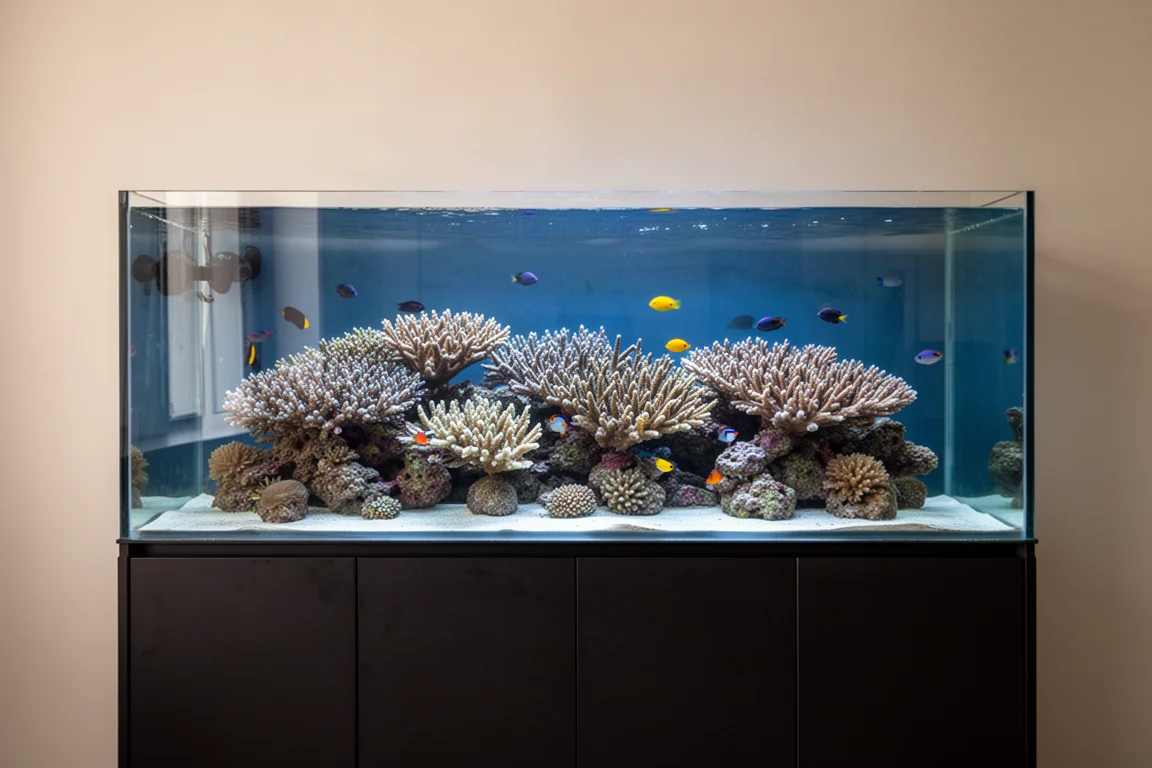
This guide covers all four mixes, what separates them in practice, and how to work out which one fits the way you actually maintain your tank.
What Sets a Premium Reef Salt Apart
Premium salt mixes cost more, but the gap is narrower than the sticker price suggests. Yield testing has shown that the volume a bucket claims to make is not always the volume it actually produces, so comparing mixes by cost per gallon of mixed water gives a fairer picture than comparing bucket prices.
The larger part of the cost sits in the raw materials. Salt is built from compounds such as sodium chloride, magnesium chloride and trace elements, and sodium chloride alone makes up roughly 70 percent of what is in the container. Suppliers offer that material in a wide range of grades. Ungraded sodium chloride, the kind used to melt ice on a driveway, is mined and shipped with no processing at all. Higher grades are refined, often using steam, to remove contaminants, and every step up the list costs the manufacturer more.
That is what a premium salt is really charging for, not extra ingredients so much as a cleaner and less variable raw material. Any well-made formula can run a successful reef tank, so price is a poor guide to whether one mix will outperform another on paper. What a refined mix buys you is consistency, and fewer contaminants entering the system with each water change.
Trace element claims deserve a closer look as well. Tropic Marin lists all 70 trace elements found in natural seawater. Many of those elements have no confirmed biological role yet. When a mix advertises all essential or all necessary trace elements, it is usually referring to the 20 or so whose functions are actually understood. Tropic Marin’s position is that everything present in clean natural seawater belongs in the mix, whether or not its role has been proven.
There is a practical side to cleaner raw materials. Hobbyists who have mixed many brands report that some mixes leave brown crusty deposits on pumps and on the walls of mixing containers, while others stay cleaner. A brown film can still appear occasionally with any mix, including Tropic Marin, and it comes from iron and manganese precipitating out. It is rare, it does not meaningfully change concentration, and it makes no practical difference. Across routine use, though, shops that run Tropic Marin report that they no longer need to drain and power wash their holding tanks every few months.
Mixing speed is a separate matter. Some mixes dissolve noticeably faster than others. The likely explanation is the amount of water already bonded to the salts in the blend, since sodium chloride always carries some hydration. That is a theory rather than a settled answer, but it fits the pattern most hobbyists see.
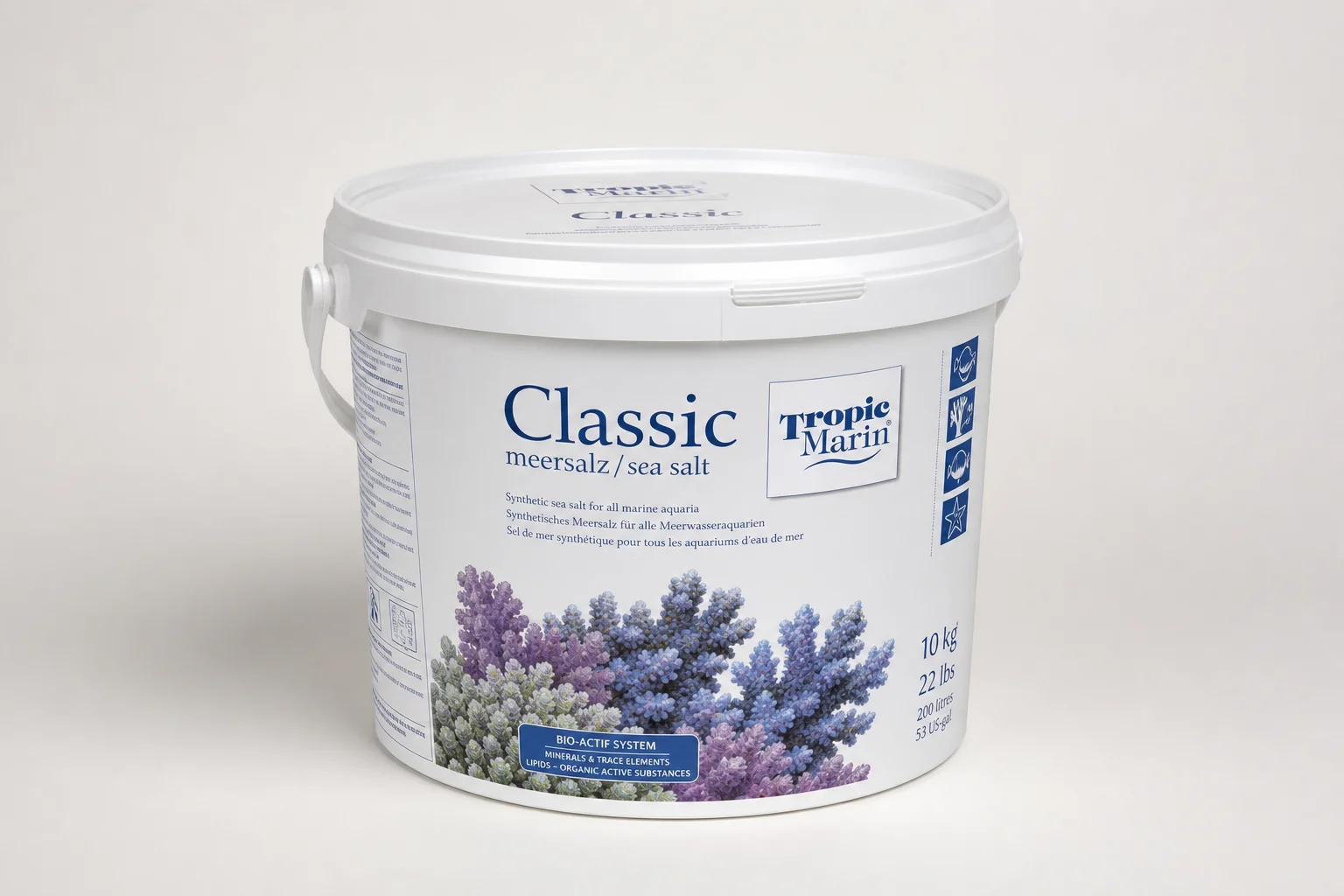
Tropic Marin Classic: The Original Mix for Fish-Only and Higher Alkalinity Systems
Classic is where the range started, and it has been in production for more than 60 years, making it one of the longest-running salt mixes in the hobby.
Its defining characteristic is alkalinity. Classic runs between 9 and 10 dKH, the highest of the four mixes. Alkalinity cannot be raised in isolation, so calcium and magnesium sit lower to match, at roughly 380 to 420 ppm calcium and about 1210 to 1310 ppm magnesium. That combination avoids the calcium carbonate precipitation that occurs when high alkalinity is paired with high calcium. Natural seawater magnesium sits around 1290 ppm, so the mix stays within reef parameters, just at the lower end.
For a fish-only or FOWLR system, Classic is the straightforward answer, because those systems do not need elevated calcium and magnesium. It also suits reef keepers who deliberately run alkalinity at the upper end of the range, along with LPS-dominated tanks and frag systems. Matching the alkalinity of the mix to the alkalinity of the tank is the point, so water changes do not push parameters around.
Classic can also be mixed and stored for extended periods, which makes it compatible with automatic water change systems.
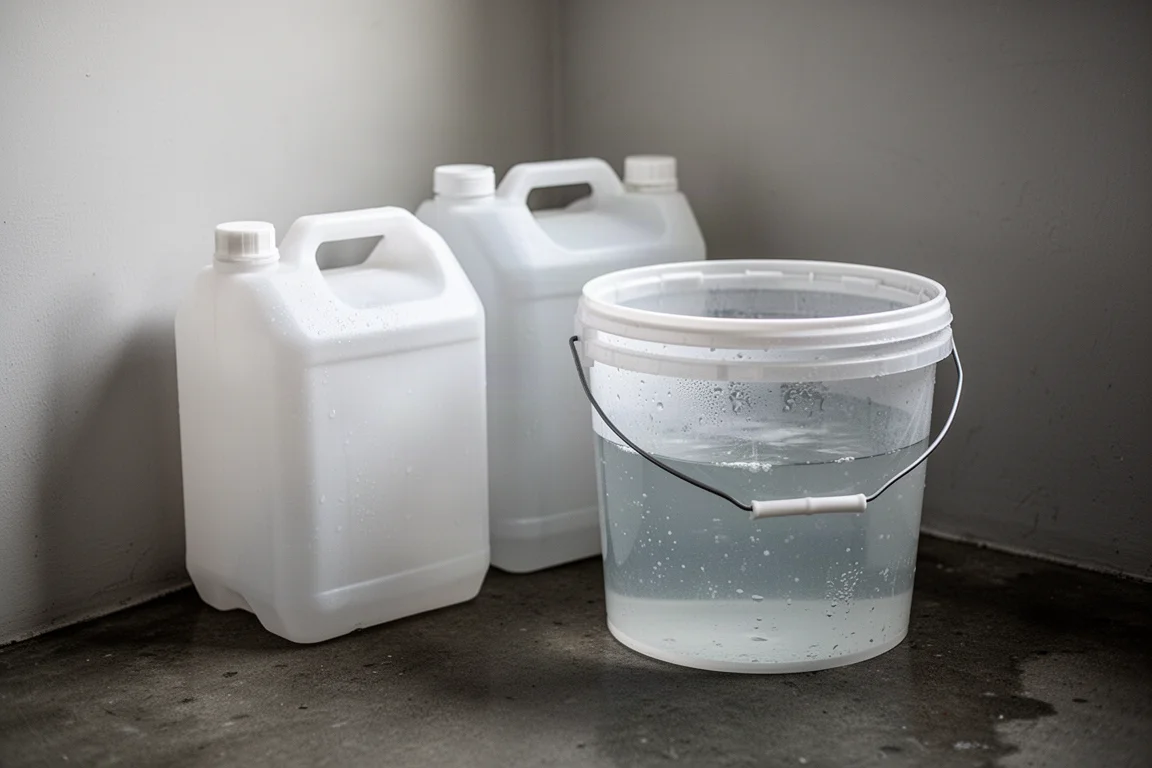
If you keep alkalinity around 9 dKH and want the mix to follow your tank rather than the other way around, Classic is the choice that makes water changes uneventful.
Tropic Marin Pro Reef: The Best Fit for Mixed Reefs and SPS Systems
Pro Reef is the mix most reef keepers reach for, and it is the best-selling salt in the range. It was developed in response to demand for a lower-alkalinity formula that would sit closer to natural seawater, which the ocean itself sits at roughly 6.5 dKH.
In practice, Pro Reef runs 7 to 8 dKH, just above natural seawater, with calcium at 420 to 460 ppm and magnesium at 1300 to 1400 ppm. Lower alkalinity leaves room for more calcium and magnesium, so a reef-focused mix can carry levels that a high-alkalinity formula cannot. The mix dissolves easily and, once fully dissolved, looks as clear as fresh water.
This is the mix for mixed reefs, LPS tanks and SPS systems. Stony corals, and acropora in particular, tend to react badly to alkalinity pushed too high, so a formula that keeps alkalinity in a moderate band removes a source of instability that is easy to overlook.
The design philosophy behind it is worth noting, because it explains a lot of the differences across the range. Some manufacturers treat a reef tank as a closed system that needs its own rules. Tropic Marin’s approach, carried over from the original formula, is that a tank is a small closed system but the target is still to run it as closely as possible to the way the ocean works. Pro Reef reflects that idea directly.
Like Classic, Pro Reef can be mixed and stored for long periods, which makes it suitable for automatic water change setups.

Tropic Marin Bioactive: Carbon Dosing Built Into Your Water Change
Bioactive takes Pro Reef and mixes in Reef Actif, a mild carbon dosing product, directly into the salt. Alkalinity is raised by one point to 8 to 9 dKH to account for the organic component, while calcium stays at 420 to 460 ppm and magnesium at 1300 to 1400 ppm.
Carbon dosing serves two purposes here. It helps manage phosphate and nitrate, and it keeps phosphate in a form that corals can readily use. The advantage of having it in the salt is practical. The manufacturer found that Reef Actif delivered a better result when mixed into the salt than when dosed separately into the tank, even though the mechanism behind that difference has not been pinned down.
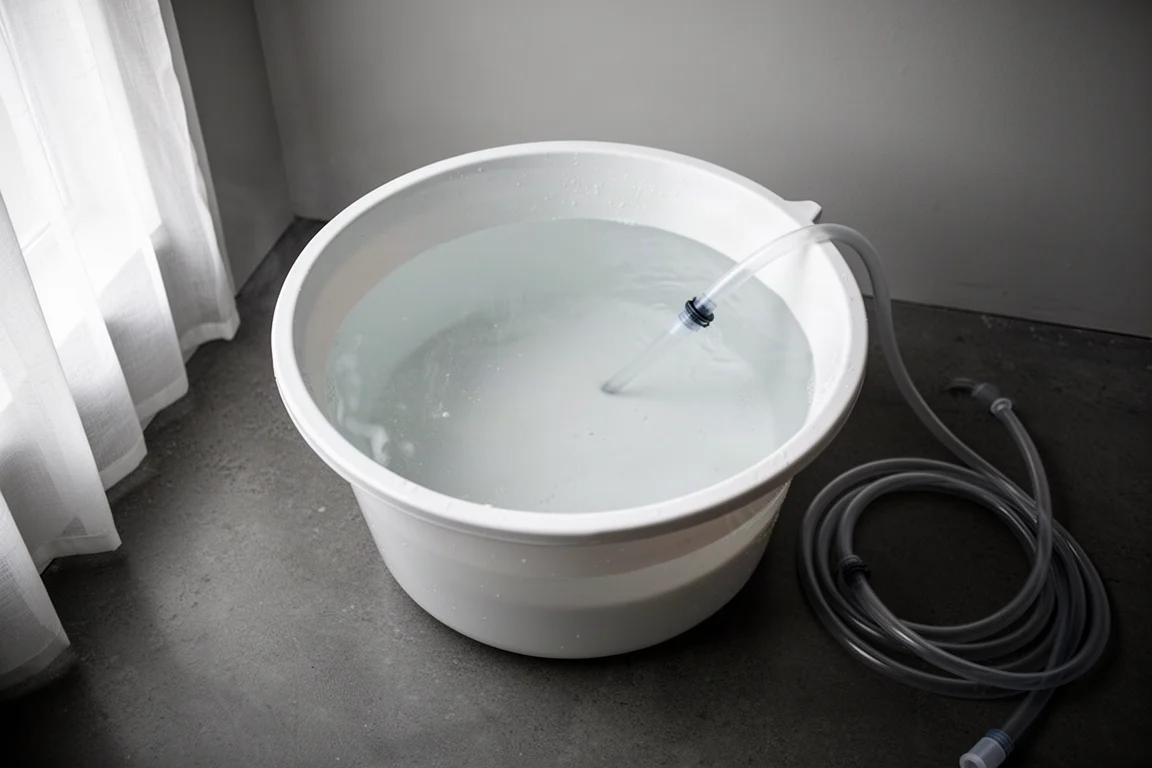
One behaviour to plan for is the haze. Bioactive mixes with a light cloudiness rather than the crystal clarity of Pro Reef, and the tank water looks slightly hazy immediately after a water change. It clears, usually within about an hour, once bacterial activity in the system takes over. There is no particulate matter left in the mix, and the haze itself is not a sign of a problem.
Storage is the real limitation. Bioactive should be used within roughly 24 to 36 hours of mixing. Held longer, the biopolymers chain together and form a light coloured, slimy blob in the container. It is harmless, the water remains usable, and nothing is lost from the solution, but it is not attractive to work with.
Within those limits, Bioactive suits a reef without an automatic water change system, particularly where phosphate tends to run a little high and carbon dosing is already part of the routine. It can also be used alongside other carbon dosing products.

Tropic Marin Symbiotic: Probiotics for Heavily Stocked Tanks
Symbiotic starts with Bioactive and adds probiotic bacteria intended to support the digestive tracts of fish. The logic is straightforward. Bioactive supports the invertebrates in the tank, while Symbiotic supports both the invertebrates and the vertebrates.
That makes it the mix to consider when the fish population is the main event. A heavily stocked FOWLR tank with large angelfish and similar livestock benefits most, because the probiotic component is aimed at fish health rather than coral growth.
The behaviour of the mix mirrors Bioactive. It mixes with a slight haze, the tank looks a little cloudy straight after a water change, and then it clears as bacterial activity takes over. Storage follows the same rule, so plan to use mixed water within roughly 24 to 36 hours.

How to Match a Tropic Marin Salt to Your System
The first question is whether you hold mixed saltwater for long periods. If you run an automatic water change system, or you keep a large reservoir mixed for weeks, the choice narrows to Classic or Pro Reef. Bioactive and Symbiotic contain biopolymers, and holding those mixes beyond about 24 to 36 hours causes the polymer chains to link up and form a light, slimy blob in the container. It is harmless and the water is still usable, but it is not pleasant to handle. If you mix and use your water within a day, all four mixes are available to you.
The second question is what you keep. Fish-only and FOWLR systems, LPS tanks and frag systems that run at higher alkalinity suit Classic. Mixed reefs and SPS systems, where corals prefer alkalinity closer to natural seawater, suit Pro Reef. Reefs without automatic water changes, where phosphate tends to run a little high, suit Bioactive, and it can be combined with other carbon dosing products. Heavily stocked tanks with a large fish population suit Symbiotic.

One more thing is worth checking before blaming the salt. Incorrect salinity measurement sits behind a surprising share of reports about low magnesium or calcium in a freshly mixed batch. The call usually begins with a fresh batch showing unusually low magnesium, and the trail leads back to salinity. Swing-arm hydrometers and refractometers are fast and convenient, but both can drift, and a refractometer that has been knocked or dropped can lose calibration without showing any obvious sign.
The one measurement you can trust without qualification comes from a calibrated, hand-blown glass floating hydrometer. Float it in a tall glass cylinder or a piece of capped PVC pipe filled with tank water, keep the instrument clean, and treat it as the reference you check everything else against. If it is put away wet and coated in salt, the reading is worthless, so rinse and dry it after use. It is an inexpensive tool, and a single coral lost to a salinity problem costs more than the instrument does.
If a salinity reading turns out to be wrong, remember that the tank itself is also off, and correct it slowly. Corals and other invertebrates live by osmosis and diffusion, constantly equalising with the water around them. A rapid shift forces water into or out of their tissues, which is why fast salinity changes are so damaging, and why fish systems can use deliberately low salinity to deal with parasites.
Conclusion
There is no single best Tropic Marin salt, only the one that fits your system. If you hold mixed water for long periods or run an automatic water change setup, Classic and Pro Reef are the safe choices, with Classic for fish-only and higher-alkalinity tanks and Pro Reef for mixed reefs and SPS systems. If you mix and use your water within a day, Bioactive adds mild carbon dosing to every water change, and Symbiotic adds probiotics for fish on top of that.
The price question resolves in much the same way. What you are paying for is refined raw material and consistency rather than a longer ingredient list, and cost per gallon of mixed water is a fairer comparison than the price on the bucket.
Further reading
Related Reviews

Reef Aquarium Salt
Aquaforest Salt Mixes Compared: Reef Salt Plus, Hybrid Pro, Reef Salt, and Probiotic Reef Salt
A practical guide to four Aquaforest salt mixes, including the new Reef Salt Plus and Hybrid Pro Salt, and how to match them to your reef tank's needs.

Backpacking Gear
Building a 10 lb Base Weight: An Ultralight Backpacking Gear List
A practical walkthrough of the ultralight pieces behind a 10 lb base weight, from a 765 g pack and a roomy one-person tent to a full camp chair and a dependable water filter.

Road Bikes
10 New Road Bikes Worth Watching: Aero, Titanium, Steel and Endurance Standouts
A practical roundup of 10 new road bikes, from aero flagships chasing single-watt gains to titanium, steel and endurance platforms built for real roads.