Cycling Lights
Best Trail Lights 2026: 10 Night Riding Lights Compared
Ten trail lights that clear the 1,500-lumen mark, compared on beam pattern, mounting options, controls, and measured runtime at maximum power.
Introduction
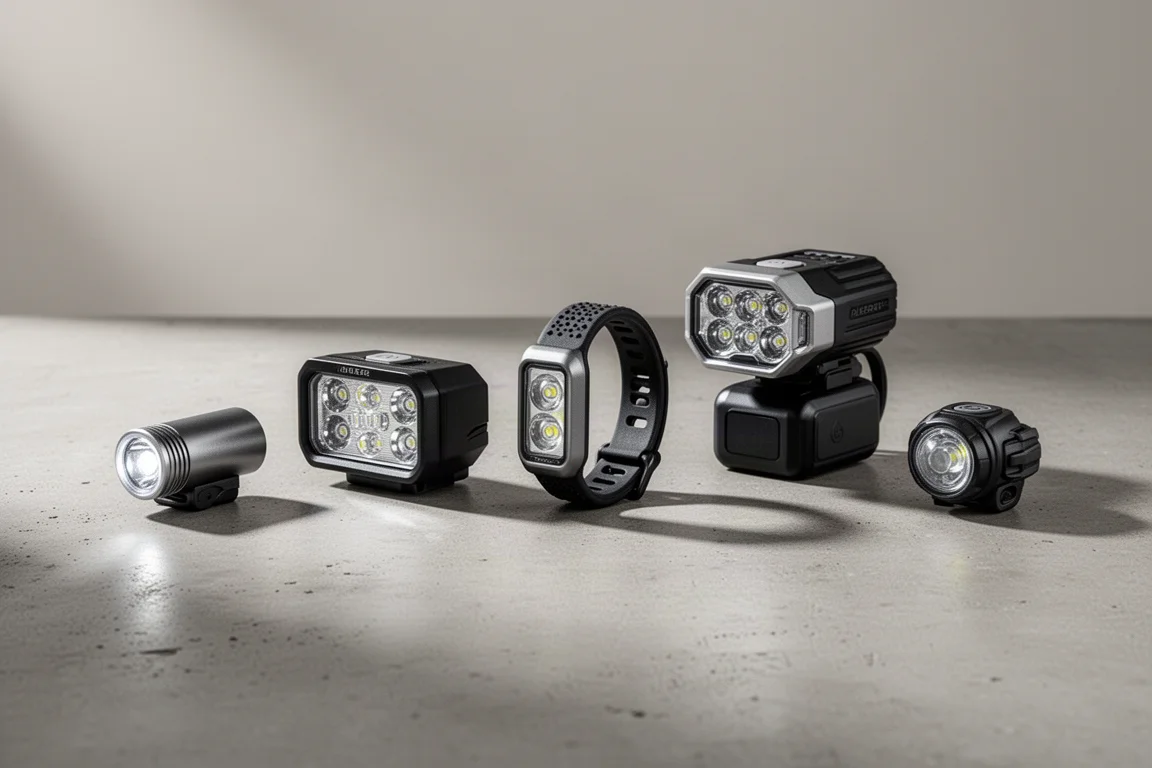
Trail lights are what keep mountain biking going through the winter months, and the gap between a good one and a mediocre one shows up within the first few metres of dark singletrack. The market is crowded, and headline lumen figures only tell part of the story. Beam shape, mounting options, battery behaviour, and how simple the controls are all matter just as much as brightness.
This roundup covers ten trail lights that clear an important baseline of at least 1,500 lumens. Several go far beyond that, with claimed outputs running into the thousands. Each one has been ridden on blue-graded trail centre runs and harder terrain, and each has been timed at maximum power to see how manufacturer runtime claims hold up in practice.
What to Look For in a Trail Light
The most obvious specification to check is brightness, and as a rule more lumens means more money. Practically speaking, 1,500 lumens is the lowest output that still feels comfortable on a blue-graded trail centre run. Every light in this guide meets that threshold, and some are considerably brighter.
Arguably more important than raw brightness is how a light projects. Spotlights focus the beam onto a particular area, which makes them a natural fit for helmet mounting: the light shines where you look rather than casting its power broadly. Flood lights illuminate a wide area, helping you pick lines, read obstacles, and see around corners. Many riders run a spot on the helmet and a flood on the bars, and some lights combine both lens types to cover both jobs on their own.
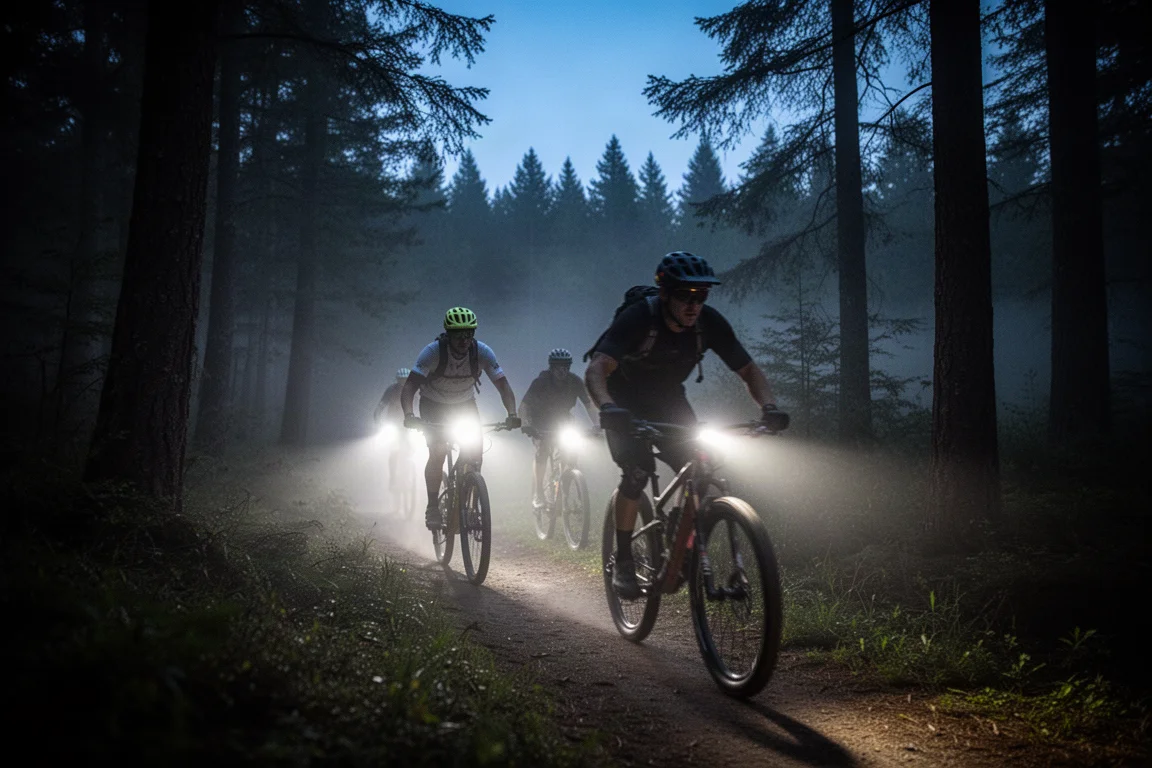
Runtime is worth checking just as carefully as beam pattern, because claimed figures are not always a reliable guide. Each light here was run at maximum power until the battery gave out. Several comfortably beat their claimed numbers, while a couple fell short, so real-world figures are worth confirming before you commit.
Finally, think about how the light will actually be used. A compact unit that suits helmet mounting, a bar light with a remote control, and a heavy all-in-one with a built-in battery each suit different riders. Mounting hardware and battery placement deserve the same attention as the lumen count.
Gloworm XS Adventure: Adaptable Optics for Bar or Helmet
Gloworm describes the second-generation XS Adventure as a balance between light and power that suits both helmet and bar mounting. The claimed output is 2,800 lumens, and this latest version adds a smartphone app for further customisation. In practice the standard settings are more than adequate, which makes the app a nice extra rather than a reason to buy.
Customisation does not stop at the app. The light ships with two spot optics and a honeycomb lens, and the box also contains three further lenses: a spot, a honeycomb, and a wide angle. GoPro-style mounts for handlebars and helmets are included as well. Swapping the stock optics for two honeycomb lenses and one wide angle broadened the beam considerably, producing a long, high-definition throw with a wide spread, an even light, and a gradual fade that helps you read lines out of turns.
Power is strong, and the light feels as though it emits more lumens than the claimed figure. It provides plenty of illumination to pick out rocks, roots, and other obstacles, and it is bright enough to work as a single unit without supplementary lights. The battery doubles as a power bank and includes an OLED info screen, though that screen is difficult to read while riding. On maximum power it lasted 1 hour 50 minutes, beating the manufacturer’s claimed runtime.
Magicshine MJ906S: Compact, High Output, E-Bike Ready
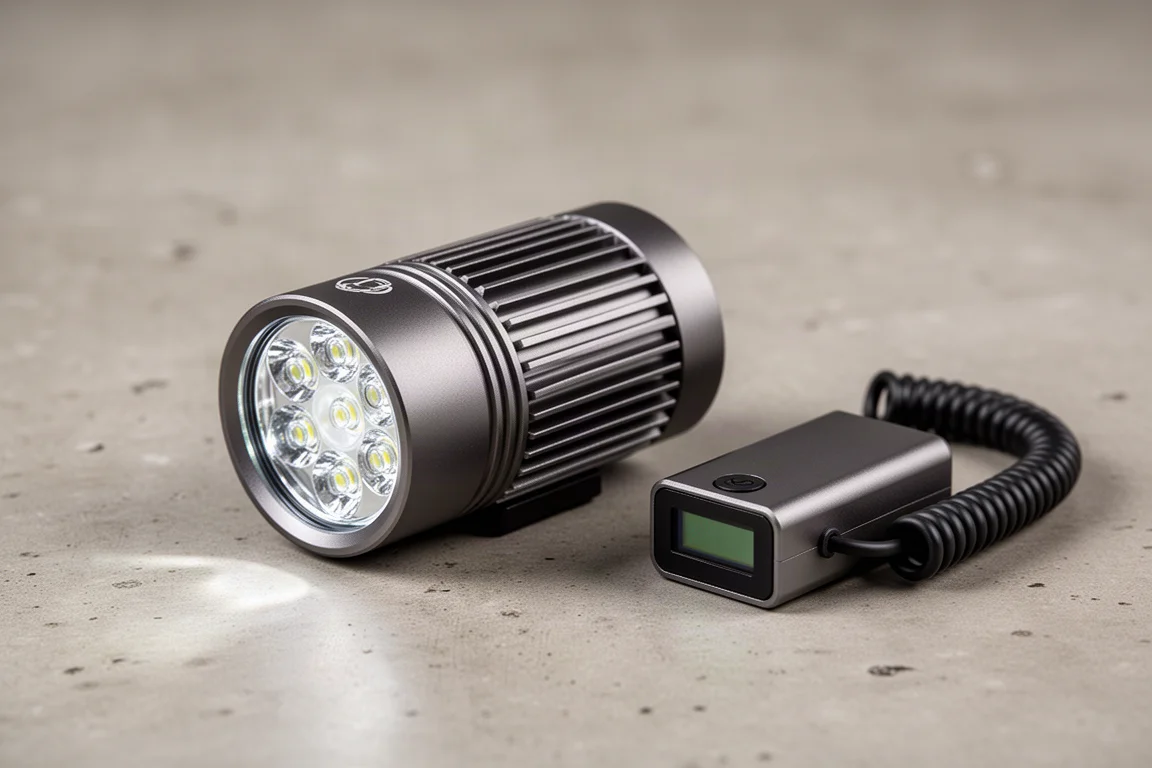
The MJ906S is one of the brand’s lightest, smallest, and highest output models, with a claimed 4,500 lumens in maximum mode. It is e-bike compatible and works with all mainstream motors, drawing power from the bike’s battery, and it can also run from its own battery when needed.
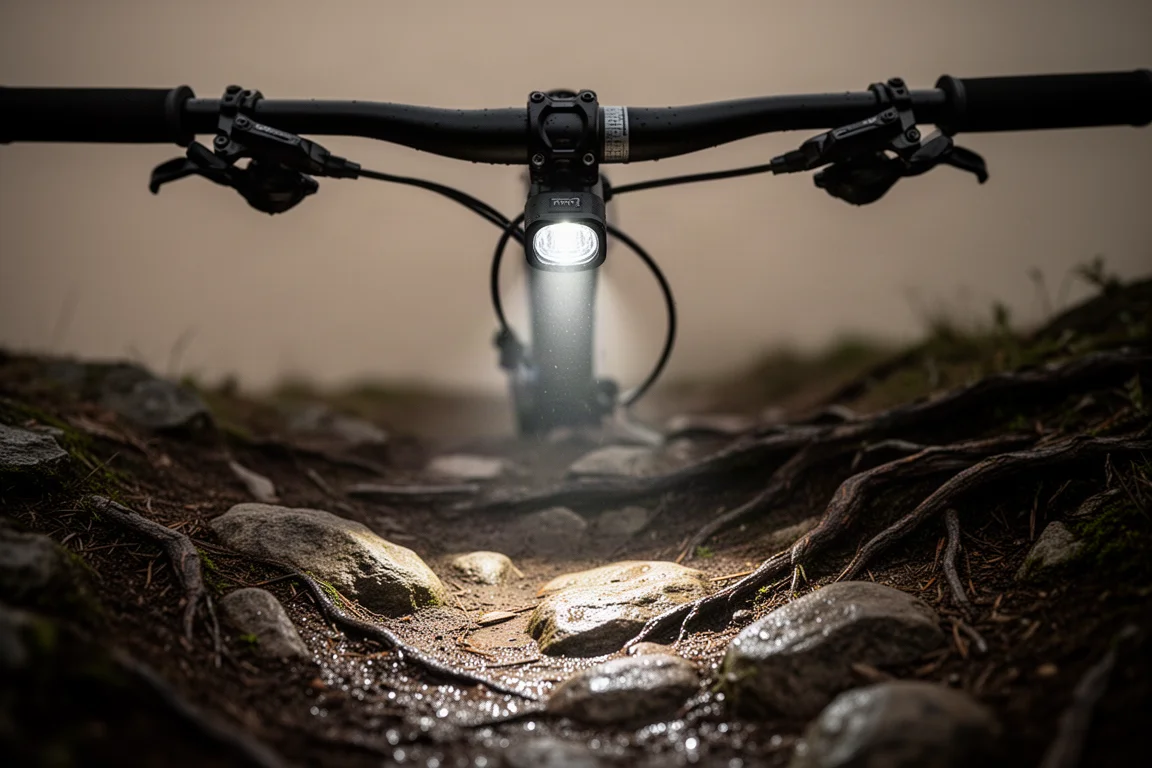
On the trail the illumination is impressive, particularly in the full 4,500-lumen mode, which is comfortable to hold on technical singletrack while output can happily be reduced for fire roads and bridleways. The beam has a good central focal point just ahead of the bars and lights obstacles well. Runtime is a genuine strong point: the light ran for 3 hours 26 minutes, more than double the claimed figure. For its size and weight it punches well above its class, working fine as a standalone bar light but excelling as a helmet light.
Light and Motion Seca Comp 2000: Broad Beam, Modest Intensity
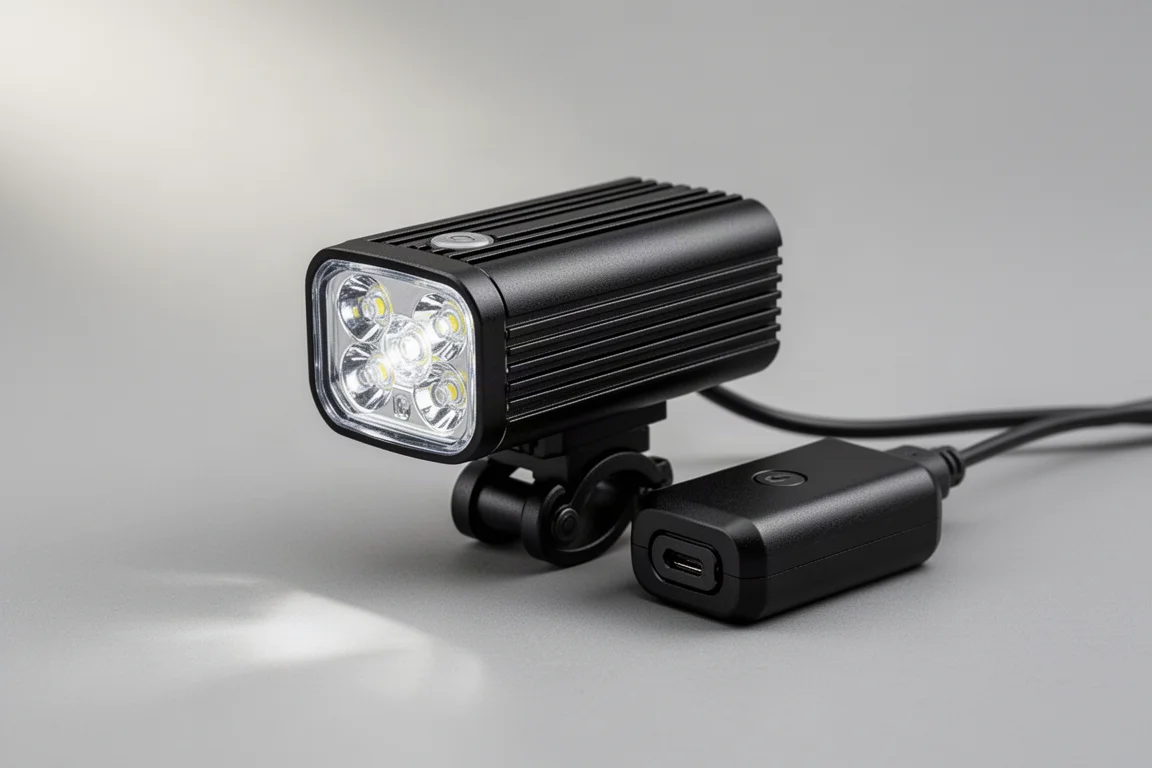
The Seca Comp 2000 is a three-LED all-in-one unit with a 2,000-lumen maximum output and an IP67 dust and waterproof rating. Including the bar clamp it weighs just 224g, so the compact dimensions are matched by low weight on the bike. It feels as though it produces more power than claimed, but there is not quite enough light to illuminate every obstacle: some roots and rocks, particularly off to the sides, stay in the dark.
The wide beam pattern spreads the available lumens broadly, which means it lacks the intensity of more powerful lights with a similarly broad spread. That broad beam makes it a promising option for technical trails, yet that is exactly where it struggles most, and the rubberised strap did not feel especially secure in use. Runtime came in at 1 hour 20 minutes, ten minutes short of the claimed figure. On balance it suits a casual night rider looking for an adaptable light for both road and mountain biking rather than someone chasing the toughest trails.
Exposure Six Pack Mk11: Reflex Technology at a Premium
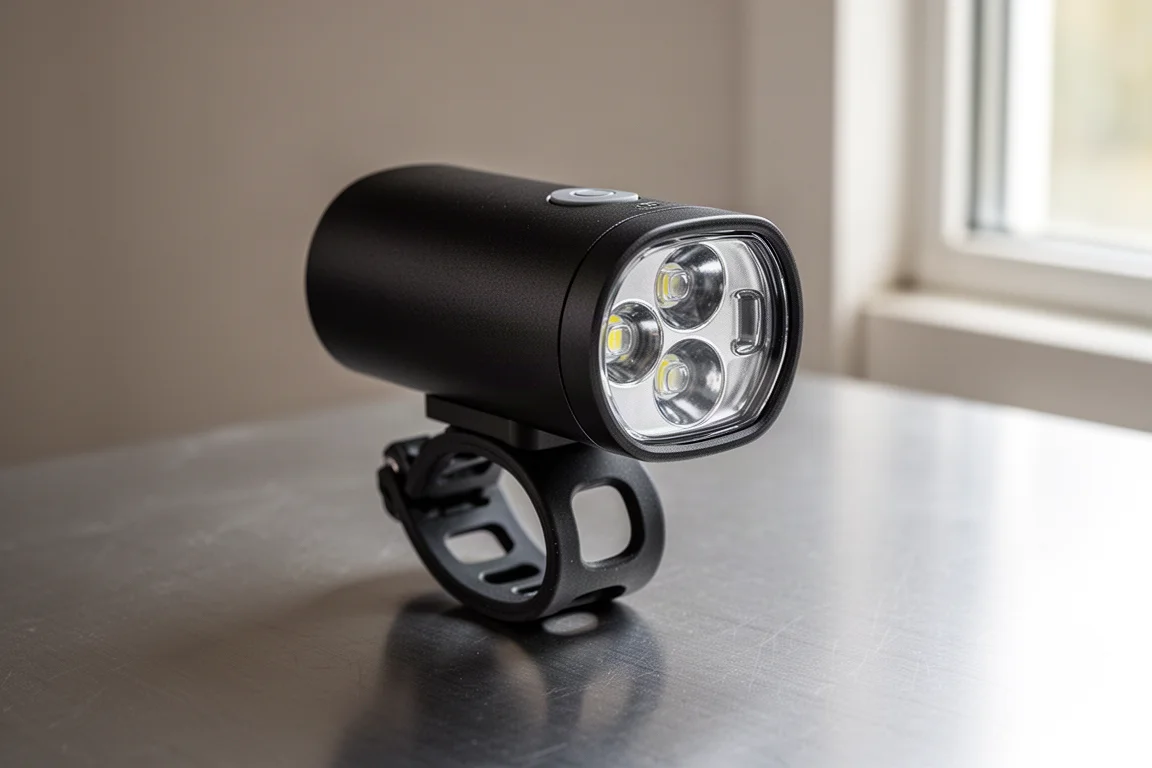
The Six Pack Mk11 is the brand’s highest output unit, with up to 5,000 lumens in its motion-sensitive Reflex setting. Illumination comes from six forward-facing LEDs that can be switched between ten operating modes. It is also the most expensive light in this roundup, at around £435, and the technology inside is what justifies the ask: 3D accelerometers determine speed, analyse trail conditions, and alter output to prolong battery life.
That system works outstandingly, making this a genuine set-and-forget light. Power output is impressive in both Reflex and maximum constant modes and feels very close to the claimed figures. The beam is well spread, with ample light to choose lines and view features outside the focal point, though that central focal point feels quite soft next to the harsher output of some rivals. On tight, twisty trails it benefits greatly from a dedicated helmet-mounted light, and when paired with one it is almost unbeatable on straighter, faster trails. Runtime was 1 hour 59 minutes, essentially identical to the claim. As a package it is close to faultless, though the immense power could be spread a little more evenly.
Ravemen PR2400: Strong Value With a Wireless Remote
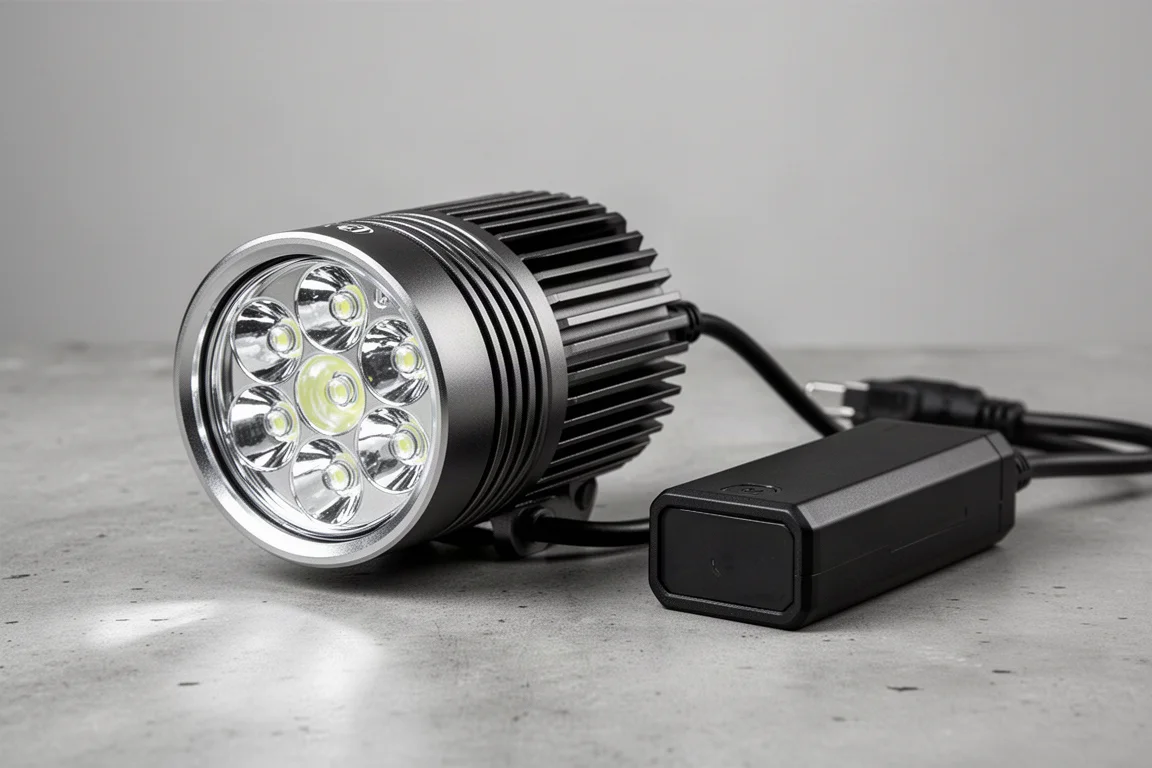
The PR2400 uses five LEDs for a claimed maximum of 2,400 lumens, powered by an 8,000mAh battery in an all-in-one body. A wireless remote control is bundled, and the light is compatible with external power packs to extend runtimes. Two buttons toggle between road and MTB modes and the brightness levels within each, the remote’s buttons operate in the same way, and all of the buttons glow in the dark.
Illumination is impressive, and the well-spread beam gives the impression that output is higher than the claimed 2,400 lumens. It highlights trail features from roots and rocks to specific lines, and there is never a sense of wanting more power until hardcore enduro-style descents come into play. Its undoing appears at higher speeds on tight trails, where lines around the exits of turns are harder to pick, though it is far from alone in that respect. In testing it ran 1 hour 38 minutes, longer than the 90 minutes claimed. The price-to-performance ratio is impressive and it is easy to use, making it a strong bar-mounted choice with a lid-mounted companion to help you see around turns.
Blackburn Dayblazer 1500: A Friendly Entry Point
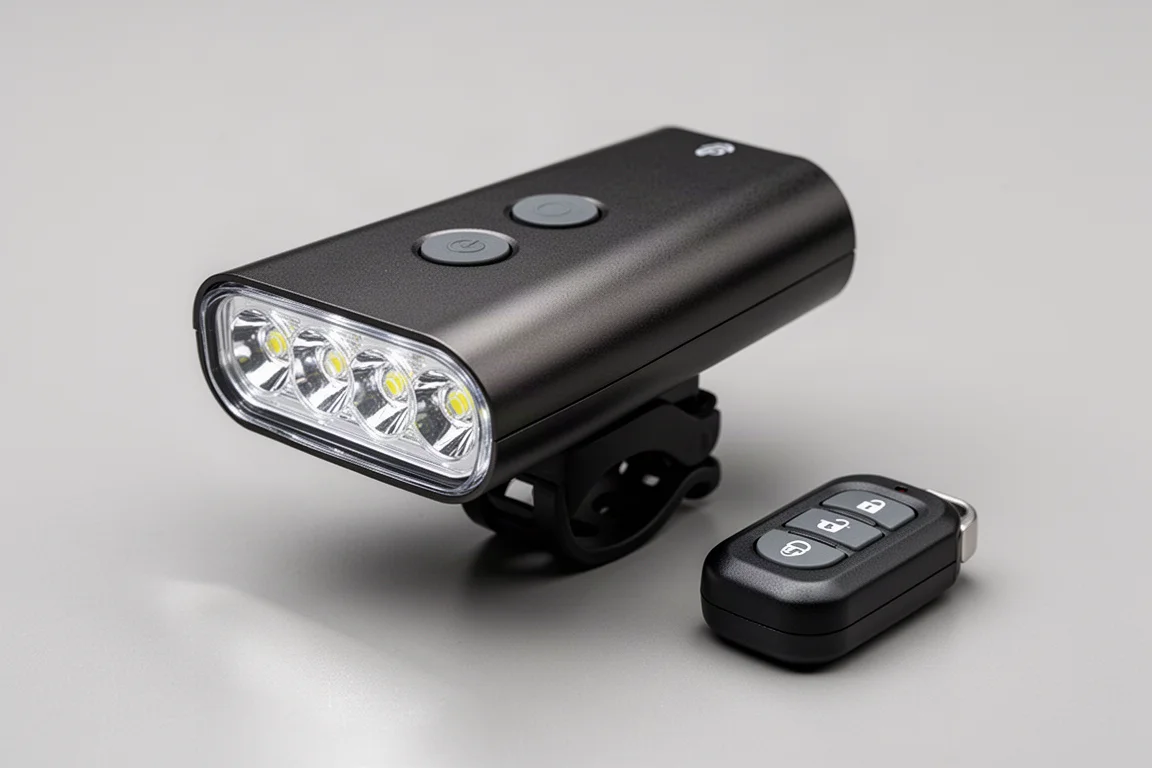
The Dayblazer 1500’s small size and low weight might suggest limited power, but it delivers a 1,500-lumen punch along with five operating modes and both handlebar and GoPro mount kits, all at a reasonable price. It feels as though output exceeds the stated figure, with a highly focused spot projecting just in front of the light. Rocks, roots, and line choices in that area are well lit, but little power is used outside it.
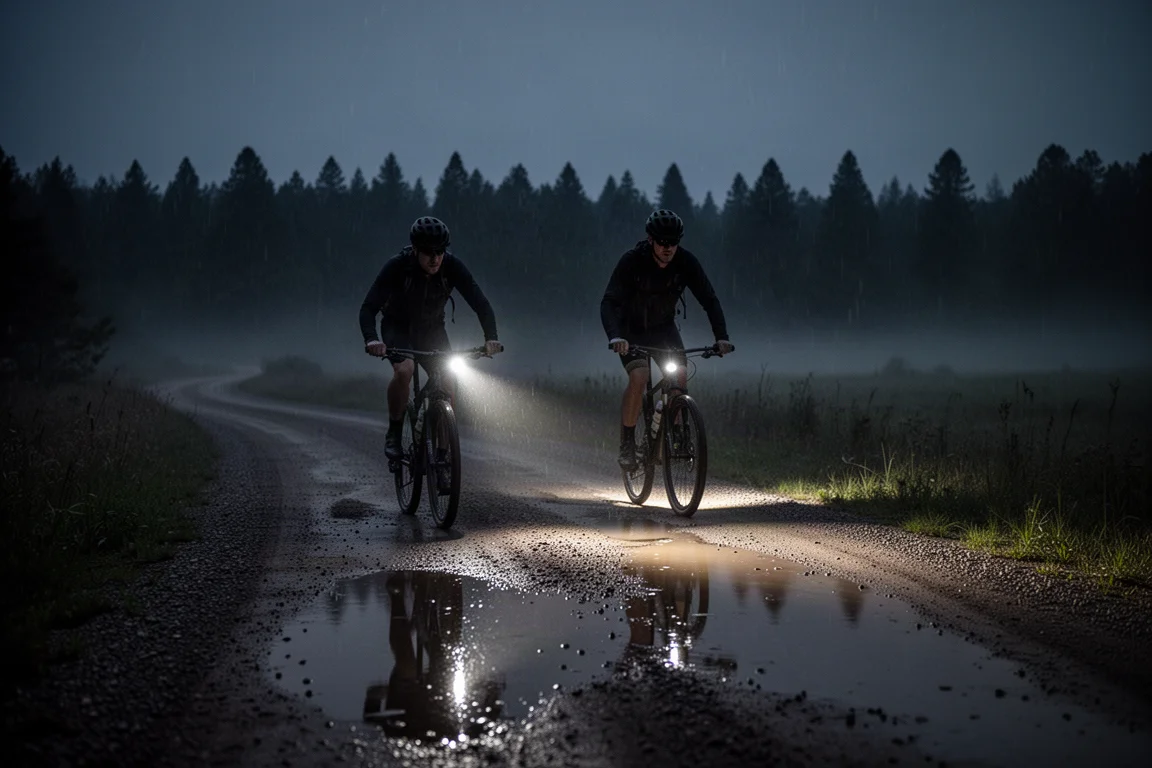
The beam cut-off at the sides is sharp, and that becomes obvious as soon as the trail turns twisty, to the point where knowledge of the track does more of the work than the light itself. Faster riding on more technical, twisting trails turns into guesswork. Runtime was 2 hours 6 minutes, slightly longer than claimed. Given the reasonable price, most of those shortcomings are forgivable: it is a great option for beginners dabbling in night riding and doubles as a useful road bike light for experienced mountain bikers. As a companion to a brighter secondary unit it works well too.
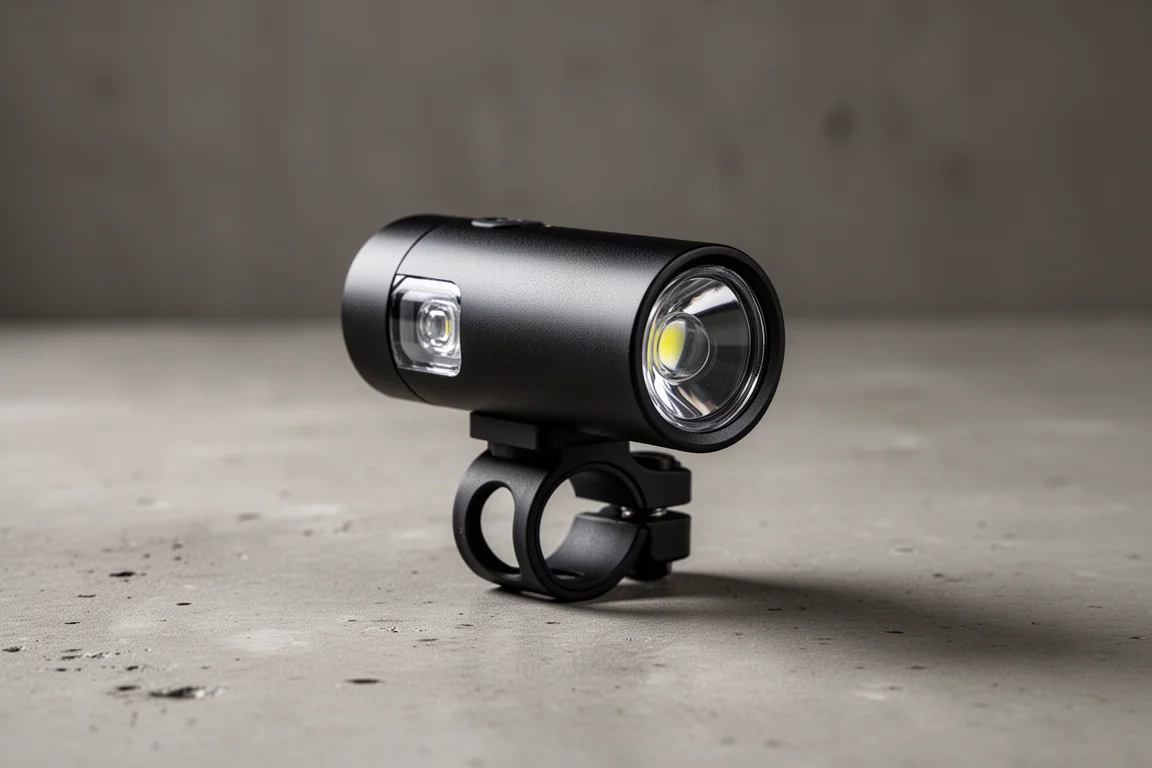
Moon Rigel Enduro: Plenty of Power, Fiddly Interface
The Rigel Enduro is a new addition to the range, packing a claimed 2,600 lumens at maximum power from six forward-facing LEDs. The all-in-one unit houses a 9,000mAh battery, two buttons, an LED matrix display for mode and battery information, and a bar-mounted wired remote.
The interface is where it stumbles. It is not intuitive to operate, and the boost function cannot be reached without studying the instruction manual first. The twin-button setup does not work logically, and the matrix display is not easy to decipher when shifting between modes or using the variable lumen and intelligent brightness functions, although it does show remaining battery charge clearly.
Those difficulties aside, there is plenty of power on the trail, making roots, rocks, and other obstacles easy to spot. The 2,100-lumen mode is ample for most scenarios, and only enduro-style riding calls for more. With decent power and a competent beam pattern it works as a standalone bar light, and paired with a helmet light it can handle most enduro-style riding with confidence. It is a shame the controls are unintuitive, but for the price it is a good package.
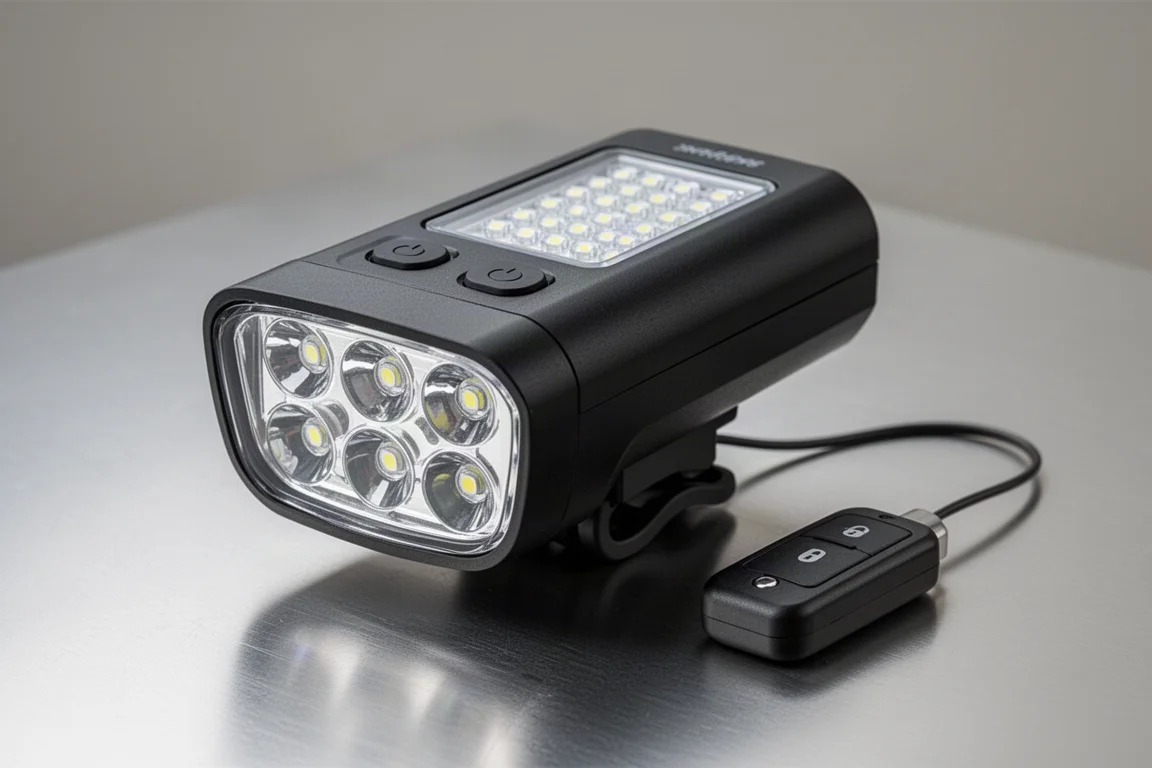
Hope R8 Plus: Wide Spread With Long-Term Watch Points
The R8 Plus puts out an impressive spread and intensity of illumination, with a maximum claimed 4,000 lumens from eight individual LEDs housed in a separate light unit. Beam shaping comes from four spot lenses on the top row of LEDs, with two diffuser and elliptical lenses sitting beneath them. It is very bright, with enough range to tackle even the trickiest and twistiest sections of trail at close to daylight pace.
Side-to-side flooding is impressive, and the spread is wide enough to give great visibility down the trail and around corners, so lines can be spotted even when the light is not pointing directly at them. Battery behaviour is worth knowing about in advance: once the battery drops to 30 percent or less, the brightest mode cannot be selected from a lower one, and within 10 percent of empty the light steps down from the brightest setting to the second brightest, which puts out 2,100 lumens. At maximum power it ran 1 hour 25 minutes, exceeding the claimed hour.
That performance comes at a high purchase price of around £325, though after-sales support has a long-standing reputation. The light is not perfect: the bar mount’s plastic lugs, which lock the light in place, can wear and let the light twist over time. That section of the mount is replaceable, and the issue only appeared after more than four years of use. When everything is running as it should, there is very little to complain about.
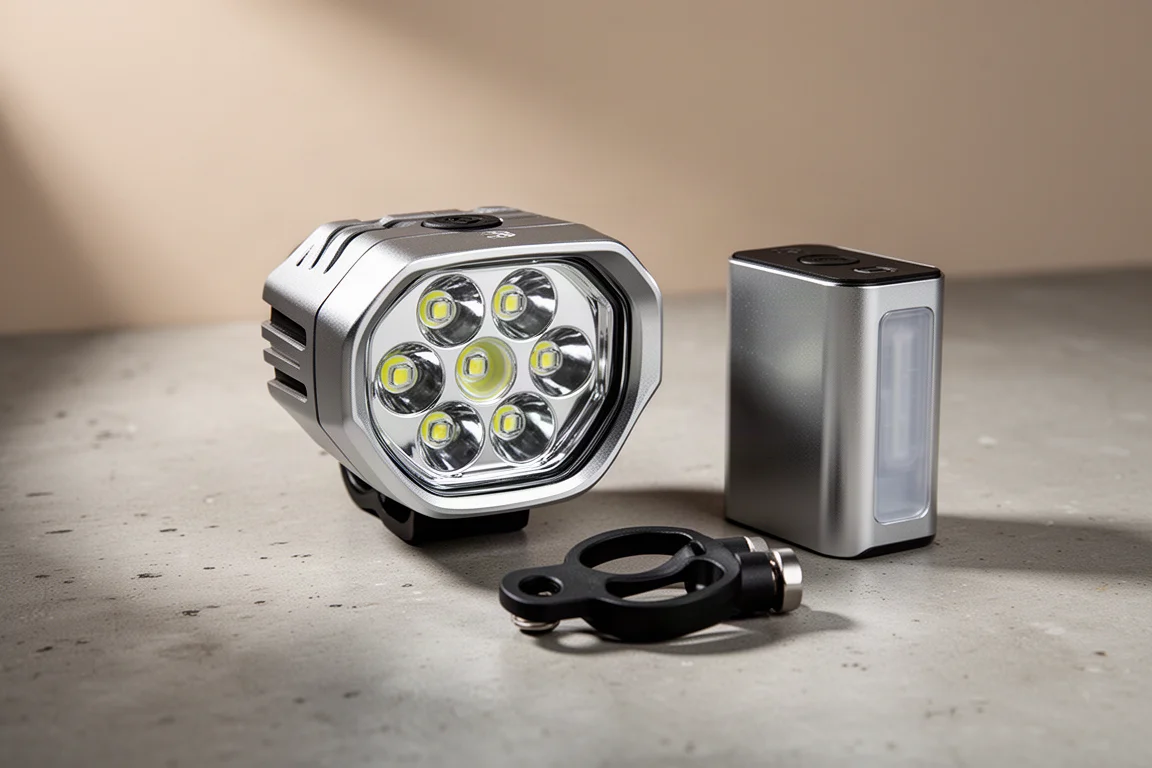
Magicshine Monteer 8000S: Maximum Trail Illumination
With a claimed 8,000 lumens, the Monteer genuinely turns night into day, illuminating trails and their surroundings with remarkable definition even on the hardest, gnarliest tracks. There is never a desire for more power. The beam spreads so wide that it is hard to discern where it cuts off, and there is masses of high-powered spot lighting directly ahead, making it easy to pick out rocks, roots, and lines well in advance.
The mode button is awkward to operate on rough sections, though it barely needs touching: staying in the 4,400-lumen output is more than adequate for most trails. There is no mode indicator, and a dedicated battery life display would be preferable, but those are small niggles. Runtime at the full 8,000 lumens was still good at 1 hour 50 minutes, and dropping to 4,400 lumens almost doubled battery life. As an all-round night riding light it is hard to beat and well worth the asking price.
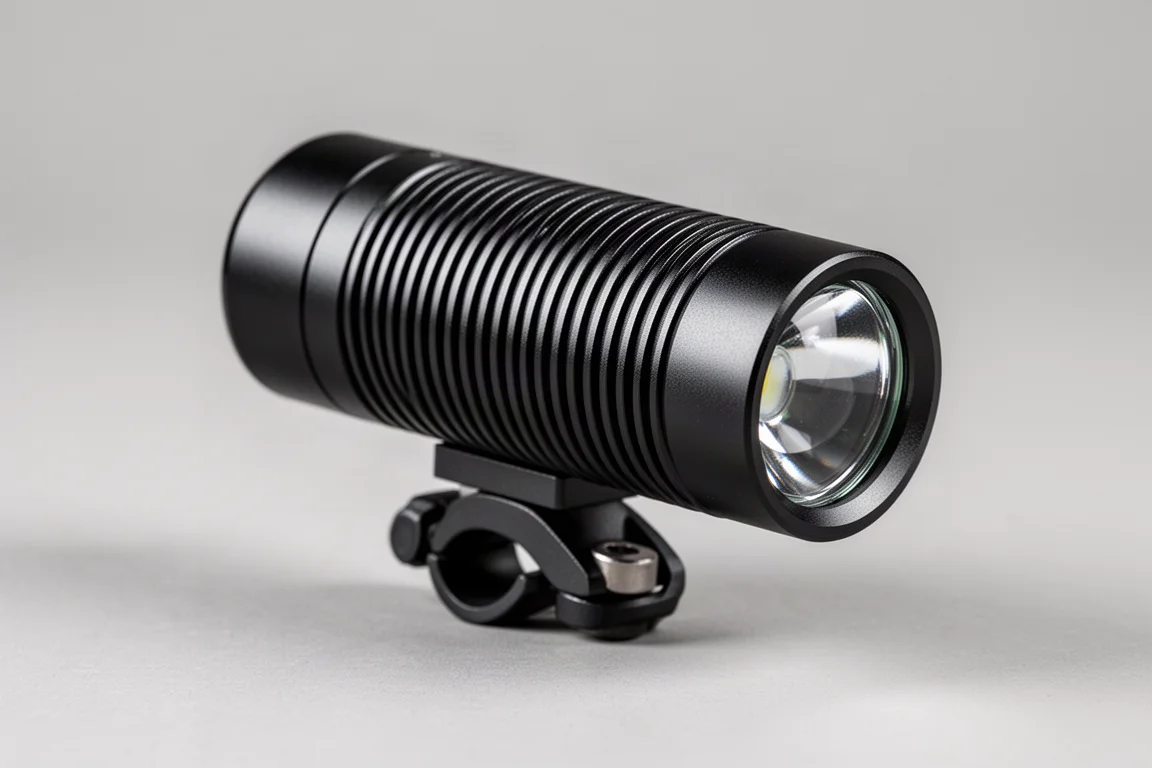
Pavo Motion 2400: Budget Performance With Motion Sensing
For riders on a tight budget who still want top-level performance, the Pavo Motion stands out: it rivals and beats lights with double the lumen output and triple the cost. Maximum output is 2,000 lumens in constant mode, with a motion-sensitive setting that adds a further 400 lumens. In that mode the light automatically harvests output when it senses you have stopped moving, managing changes in brightness subtly by dimming and illuminating slowly as you stop and start again.
If you are dropping straight into the deep end of a trail, it is worth moving the light around before setting off so it is guaranteed to be at maximum power from the start. The spread is wide enough to ride confidently, without being surprised by a previously unseen obstacle suddenly appearing in front of you. Riders tackling exceptionally technical trails at speed will want more lumens, and this is not the most feature-laden light here, but the performance for the price is excellent. In testing it ran for three hours, a full hour and ten minutes longer than the claimed runtime.
Overall Buying Advice
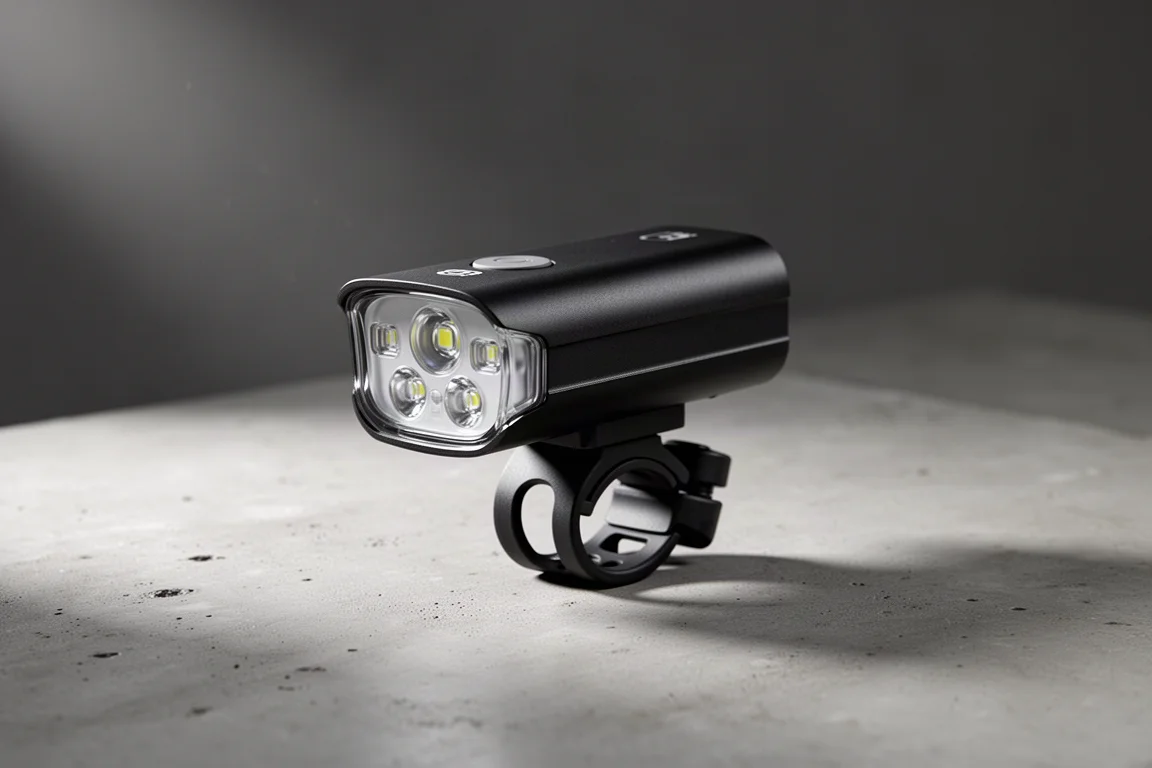
Choosing between these lights comes down to how and where you ride. If most of your riding happens on trail centre loops and fire roads after work, a compact, affordable bar light is easy to justify, and pairing it with a second light later gives you a natural upgrade path. The entry-level options here are genuinely capable of that job, and their measured runtimes beat their claimed figures.
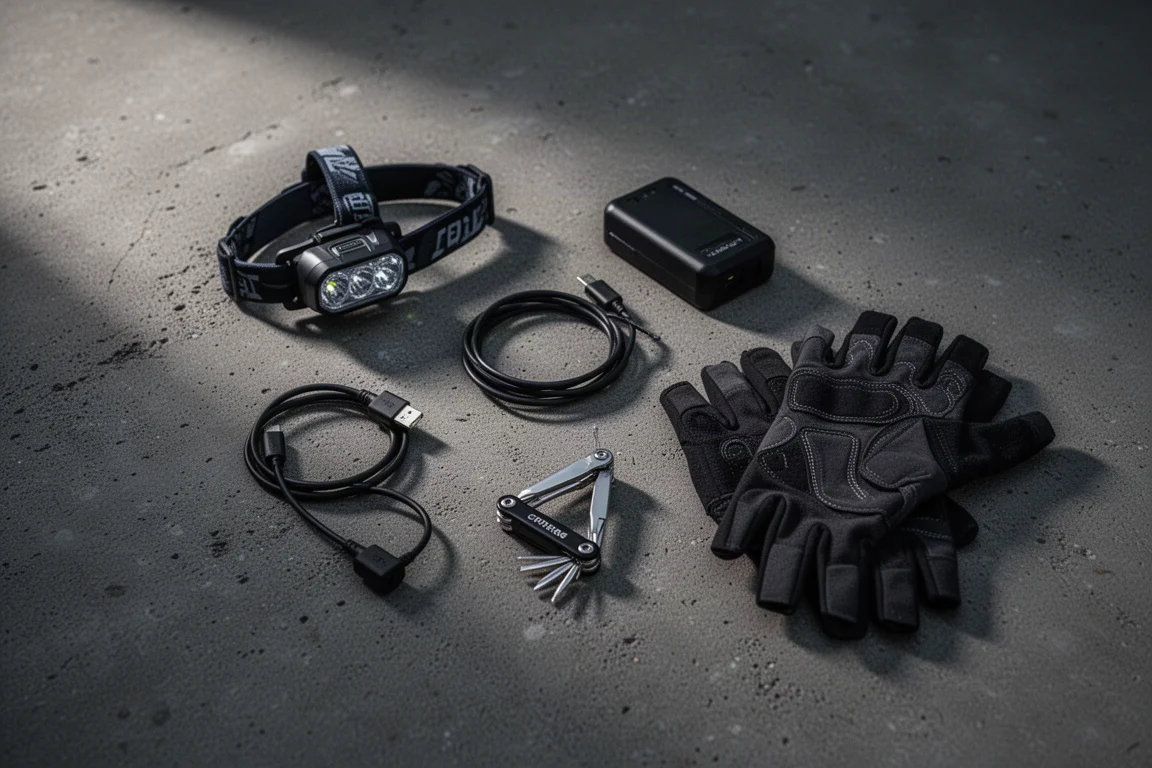
For harder, faster, more technical descents, the balance shifts towards beam spread and helmet mounting. A wide flood on the bars plus a focused spot on the helmet is the combination most riders settle on, and several lights in this guide are designed to work as either half of that setup. If you would rather carry one light and be done with it, the highest output all-in-ones offer the widest coverage, at the cost of weight and price.
Battery behaviour deserves a place on your checklist too. Some lights step down their brightest modes as the battery drains, which is worth knowing before you rely on maximum output late in a ride, and reverse-charging or power pack compatibility can extend a session considerably. Finally, check the mounting system: a light is only as good as the bracket holding it, and replaceable mounts are a meaningful long-term advantage.
Conclusion
Any of these lights will get you through a winter of night riding, but they reward different priorities. The budget-friendly options offer surprising performance for the money, the mid-range units balance output, controls, and beam shape sensibly, and the flagship lights deliver the kind of coverage that makes technical trails feel almost like daylight. Match the beam pattern and mounting style to the trails you actually ride, confirm the runtime, and you will end up with a light you stop thinking about.
Further reading
Related Reviews
Cycling Lights
Best MagicShine Bike Lights: Building the Ultimate Night Riding Setup
A practical look at five MagicShine lights for commuting, fast unlit roads, and group rides, plus how bright to go, how many lights you need, and how to aim them.
Cycling Lights
Best Magicshine Bike Lights: Four Front and Rear Options Explained
A practical guide to choosing bike lights, with four Magicshine front and rear options covering beam shape, output, mounting, and smart features.
Cycling Lights
Best Rear Bike Lights 2026: Five Options for Low-Light and Night Riding
Five rear bike lights compared on brightness, runtime, mounting and charging, with clear guidance on which setup suits commuting, group rides and daytime visibility.