Cycling Lights
Best Rear Bike Lights 2026: Five Options for Low-Light and Night Riding
Five rear bike lights compared on brightness, runtime, mounting and charging, with clear guidance on which setup suits commuting, group rides and daytime visibility.
Introduction
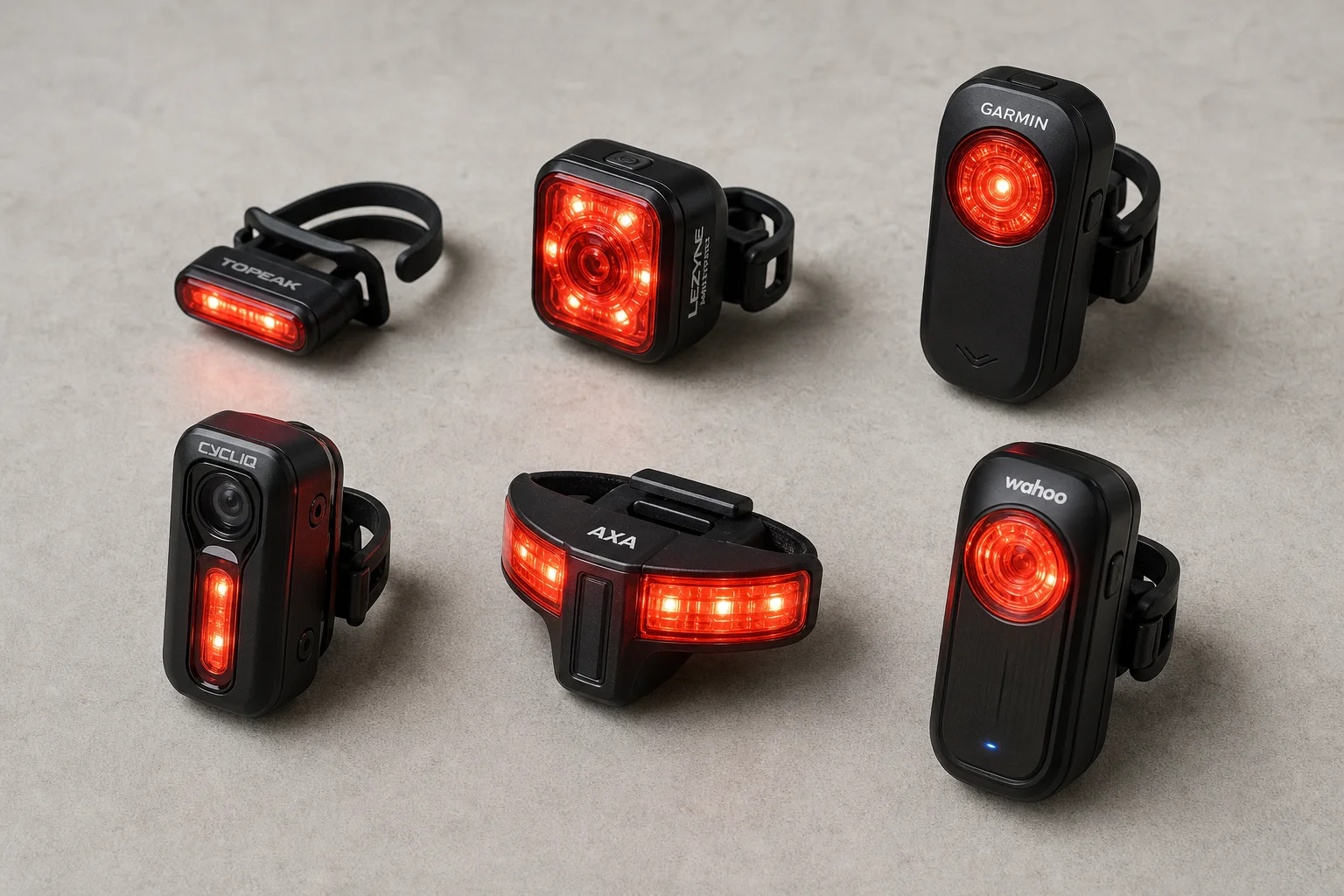
A rear light is one of the few pieces of cycling kit that earns its place on every ride. In low light and after dark it is a legal requirement in many countries, and even in daylight a bright flashing tail light changes how early other road users register your presence. The five lights below cover that full range of use, from a stripped-back budget option to app-connected models with sensors and adaptive behaviour.
Prices here run from around £35 to £100, and the differences between these lights are less about raw lumen counts than about how each one manages power, mounting and everyday reliability. Here is what each does well, and where each asks for a compromise.
How We Evaluated These Rear Lights
Five factors decided the shape of this roundup. First, usable brightness and the spread of modes, since a light that only performs at its maximum setting is rarely the one you will ride with. Second, runtime at realistic settings rather than headline numbers on the lowest output. Third, mounting security, because a light that tilts or wobbles on rough surfaces becomes a distraction rather than a safety aid.

Charging standard also matters more than it used to. USB-C has become the sensible baseline for a light you recharge weekly, and older micro-USB ports now read as a compromise rather than a neutral choice. Finally, there is the question of smart features: sensors, brake detection and app control can add genuine value, but only if they behave predictably in traffic.
Weighing those factors against price is what separates a light that suits your riding from one that merely looks impressive on paper. The sections below take each light in turn, with the specific strengths and the specific trade-offs.
Exposure Boost R ReAKT: Reactive Brightness That Reads the Road
The Boost R ReAKT tops out at 150 lumens on full power and runs for six hours in continuous mode, roughly double that in pulse. Three power settings let you extend battery life considerably, with the lowest mode stretching to as much as 48 hours. In practice the battery life is excellent, often lasting weeks between charges for riders who do not run maximum output constantly.
Its distinguishing feature is a pair of modes that respond to the surroundings. Peloton mode dims the light when it senses another rider’s front light, which avoids blinding the people behind you. ReAKT mode raises brightness when you brake hard, so the light draws attention at exactly the moment it is most useful. Peloton works best in the dark with riders behind you running steady front lights, while ReAKT is a genuinely helpful touch in traffic.
Pulse mode is the sensible everyday choice for visibility without being overly bright. The higher setting is very bright, so it is best avoided at night unless conditions really call for it, such as heavy rain or poor visibility. Side visibility is decent, though the smaller lens makes it less conspicuous than lights built specifically for urban riding.
The main reservation is the rear mount, which feels a little flimsy and wobbles once locked into place. At £100 it is also the priciest light in this group, which puts it in the territory of riders who want the smart behaviour and are willing to pay for it.
Lezyne Strip Drive Pro: Big Daytime Flash Output
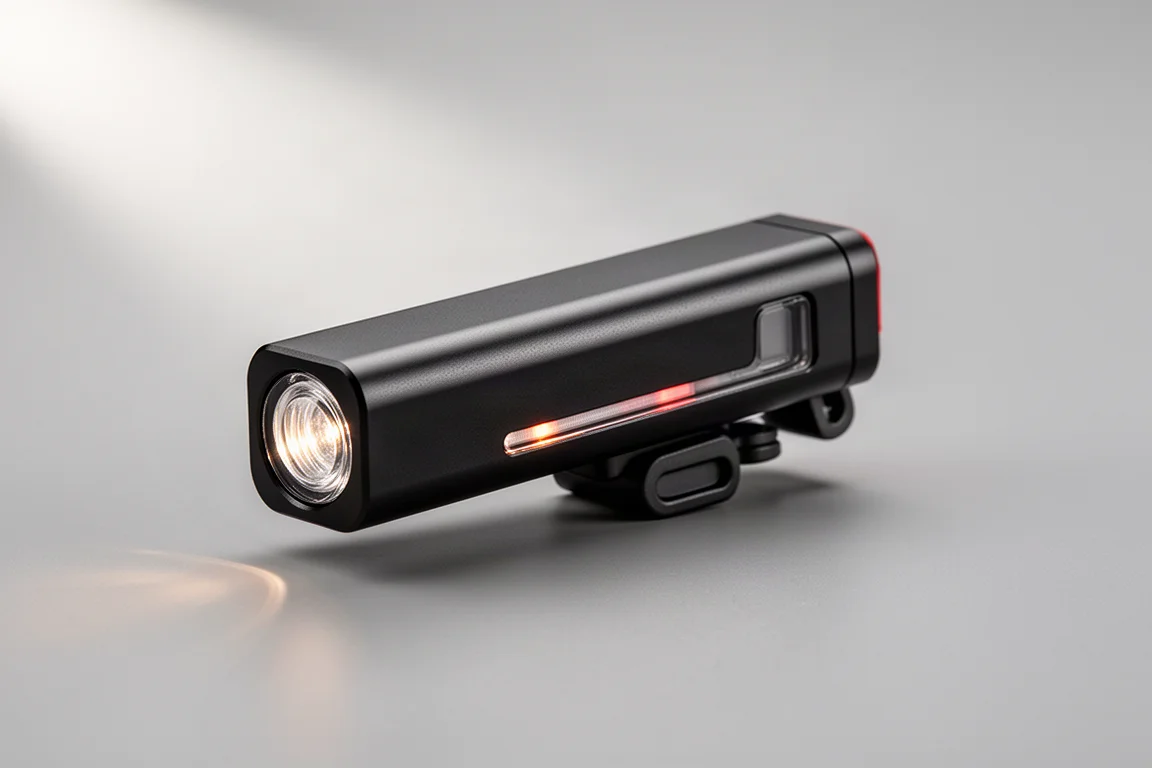
The Strip Drive Pro reaches up to 400 lumens in its daytime flash mode, and it offers seven modes in total: two static, one pulse and four flash. The higher-powered flash modes alternate sudden bright flashes with lower-powered ones, a pattern that is punchy and hard to miss in a rear-view mirror.
Runtime is impressive across the range. The 5 lumen setting runs for around 80 hours, the 80 lumen blast mode manages about five and a half hours, and the brightest 400 lumen mode lasts up to 18 hours on a full charge. For most riding the 200 lumen mode is enough, with the 400 lumen option adding confidence in fog or low visibility conditions.

Mounting uses a rubber band system, and installation is quick and simple. Two caveats are worth knowing: the strap is a little tight on deeper seat posts, and the light can shift slightly if you overtighten it. Day to day it is easy to live with, with a straightforward power-on function, mode memory and a secure USB-C cover that helps keep water out.
Charging is handled over USB-C, although no cable is included in the box. Pricing sits around £55, and it is frequently available under £50 online, which makes the power-to-price ratio the strongest argument in its favour.
CatEye Viz 450: Maximum Flash Power
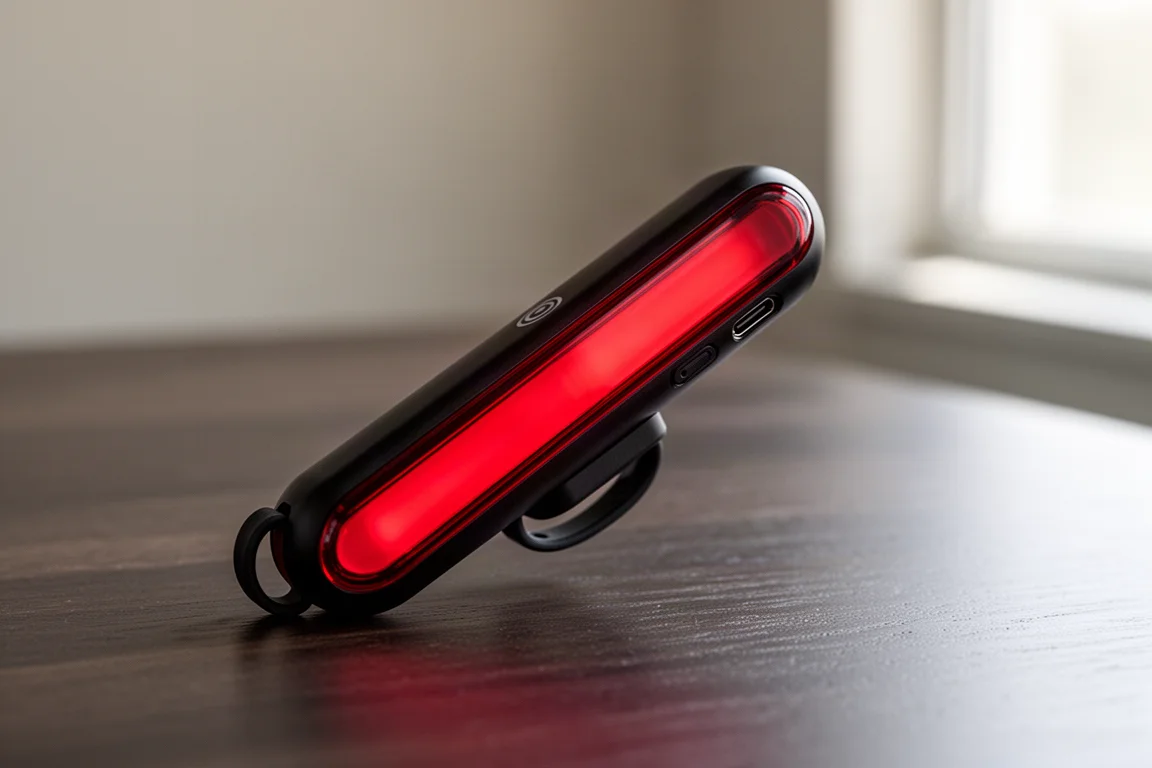
The Viz 450 is a strong contender among high-powered rear lights, largely because of its attention-grabbing 450 lumen hyper flash mode. That mode can feel overpowered, but it is excellent for guaranteeing visibility in low light and fog, and it delivers a noticeable boost in confidence when conditions are poor.
In clearer weather the same intensity can become distracting for drivers, particularly in urban environments. The group ride mode is the better choice there, offering enough brightness without overwhelming other road users. As a rule, hyper flash is best saved for bright sunny days when you need the extra punch.
The Viz 450 also stands out on looks, thanks to a bracket design that some riders will prefer over more utilitarian housings. Battery life is decent but lags slightly behind newer models: the 40 lumen constant mode lasted around five hours in testing, which is not as efficient as some rivals here. It also still uses a micro-USB port, which feels dated next to the newer USB-C options.
Overall the Viz 450 is excellent for visibility and safety. Riders who want the brightest possible daytime flash will find it hard to argue with the raw power, though future updates to this line would benefit most from improvements in charging and efficiency.

NiteRider Bullet: Affordable Ring-LED Visibility
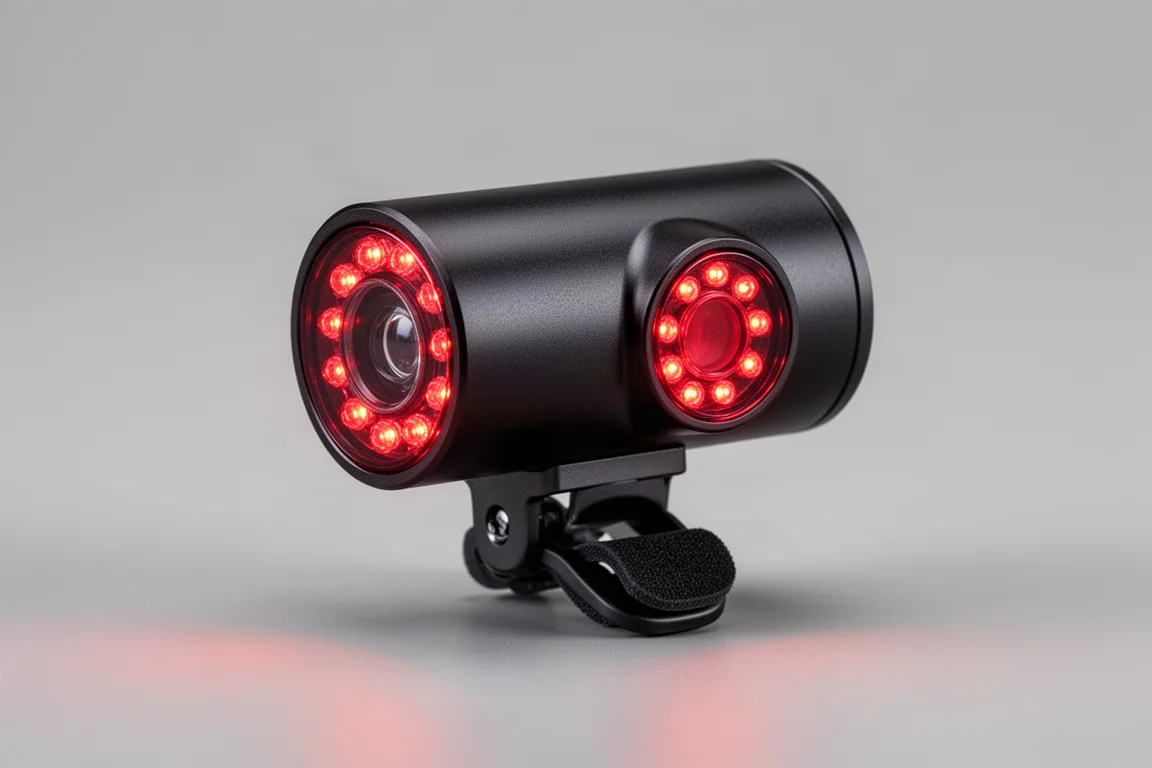
The Bullet produces up to 200 lumens from a circular LED design that delivers close to 360 degrees of visibility. The LEDs are arranged in a ring, with a second set of forward-facing LEDs that help the light stand out. Your legs partially block the light while riding, but the red glow around the housing adds extra visibility from the sides.
There are six modes in total. There is no dedicated day flash mode, though the 200 lumen flash is bright enough for daylight use. Pulse mode is the most power hungry at up to 10 hours of runtime, while high static runs just shy of 12 hours.

The light attaches with a bracket and a rubber insert that compensates for angled seat posts, and two bands are included for different seat post shapes. Charging is over micro-USB, and a cable is provided. Operation is very simple: a long press turns it on and off, and quick presses cycle through the modes.
Two practical notes. The bracket can shift on rough roads, tilting the light, and although the strap is sturdy, getting it tight enough to prevent that movement takes real effort. The long body of the light may contribute to the issue. At £35 it remains a cheaper option for riders shopping on a budget.
See.Sense ICON3: Connected Features and Custom LEDs
The ICON3 delivers up to 350 lumens through custom COB LEDs plus two additional LEDs, and its output creates a 270 degree arc of light. Small LEDs display remaining battery life in 20 percent increments, which is a genuinely useful detail on a light you recharge often.
At £100 it is one of the most advanced lights available, with light sensing, brake detection and a theft alarm, all controlled through an app. The app unlocks additional modes and smart features including crash alerts, riding stats and a get me home mode that provides an extra hour of light when the battery runs low. Brightness and flash patterns also adapt to changes in the environment and rider behaviour, learning from usage over time.
Performance in visibility terms is strong, with bright constant and flash modes. The caveat is power management, which can be unpredictable, including inconsistent activation of features such as brake detection. Battery life is claimed at 16 hours in reactive modes, though in traffic or frequent stop-start conditions it may last closer to 12 hours, and constant mode burn time is more limited, often reaching just two hours.
Mounting is easy with a quarter-turn bracket, and charging is over USB-C. For riders who enjoy the connected side of cycling gear, the feature set is genuinely interesting, as long as you accept that the adaptive behaviour is not always consistent.
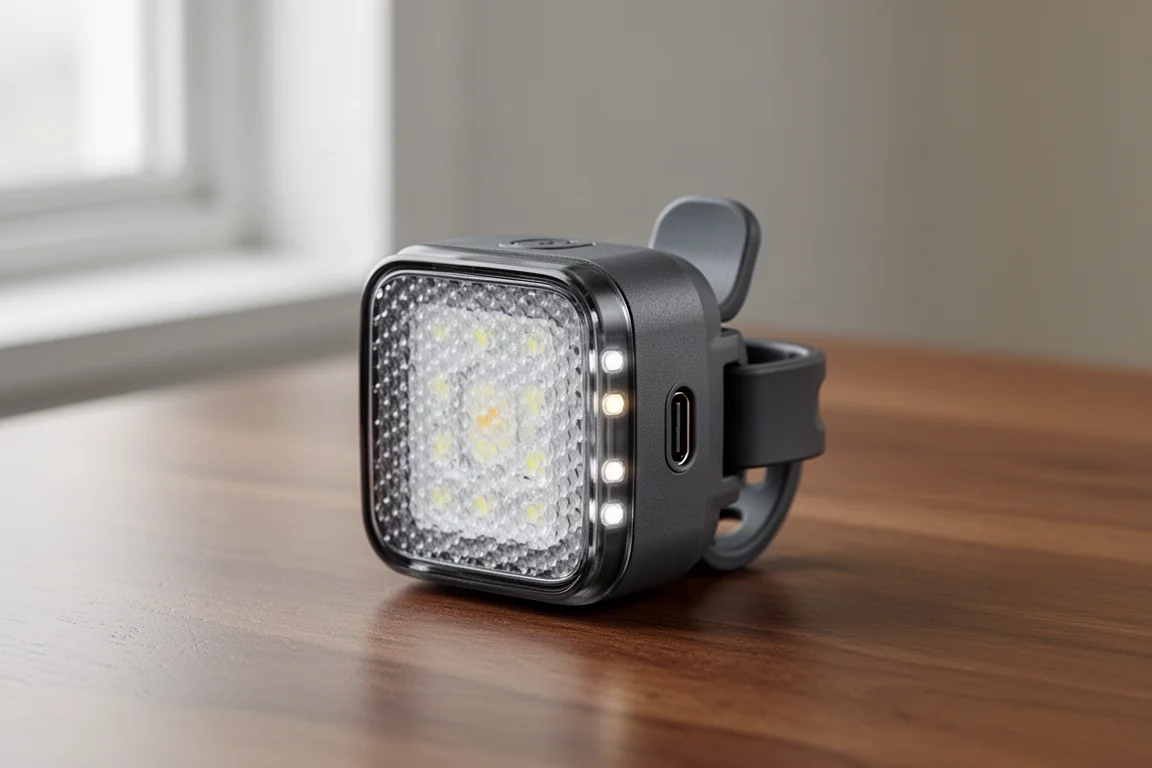
Buying Advice: Which Rear Light Fits Your Riding
The simplest way to choose is to start with the conditions you actually ride in. If budget is the deciding factor, the Lezyne Strip Drive Pro is the strongest all-round value here: plenty of power, a secure mount and pricing under £50 online. The NiteRider Bullet is the lowest-cost option at £35 if you want ring-LED visibility and simple operation above all else.
If you want the brightest possible light for daytime visibility, the CatEye Viz 450 is the pick, with the caveat that its micro-USB charging and efficiency trail the newer designs. Riders who value smart behaviour and are willing to pay for it will find the most to explore in the See.Sense ICON3, particularly if app control and adaptive modes appeal.

And if money is no object, the Exposure Boost R ReAKT is the one to get. Its reactive modes are genuinely useful, and the brand’s track record with reliability is worth the premium for riders who want to buy once and stop thinking about it. Whichever you choose, check that the mount suits your seat post shape before committing, and keep a charging cable where you store your bike so the light is always ready.
Conclusion
Each of these five lights solves a slightly different problem. The Exposure Boost R ReAKT rewards riders who want adaptive brightness and long battery life, the Lezyne Strip Drive Pro delivers the best value per lumen, the CatEye Viz 450 offers maximum daytime flash, the NiteRider Bullet keeps things simple and cheap, and the See.Sense ICON3 leans hardest into connected features.
Match the light to your riding conditions and your tolerance for charging cables, and any of the five will keep you visible on the road.
Further reading
Related Reviews
Cycling Lights
Best MagicShine Bike Lights: Building the Ultimate Night Riding Setup
A practical look at five MagicShine lights for commuting, fast unlit roads, and group rides, plus how bright to go, how many lights you need, and how to aim them.
Cycling Lights
Best Magicshine Bike Lights: Four Front and Rear Options Explained
A practical guide to choosing bike lights, with four Magicshine front and rear options covering beam shape, output, mounting, and smart features.
Cycling Lights
Best Trail Lights 2026: 10 Night Riding Lights Compared
Ten trail lights that clear the 1,500-lumen mark, compared on beam pattern, mounting options, controls, and measured runtime at maximum power.