Mountain Bikes
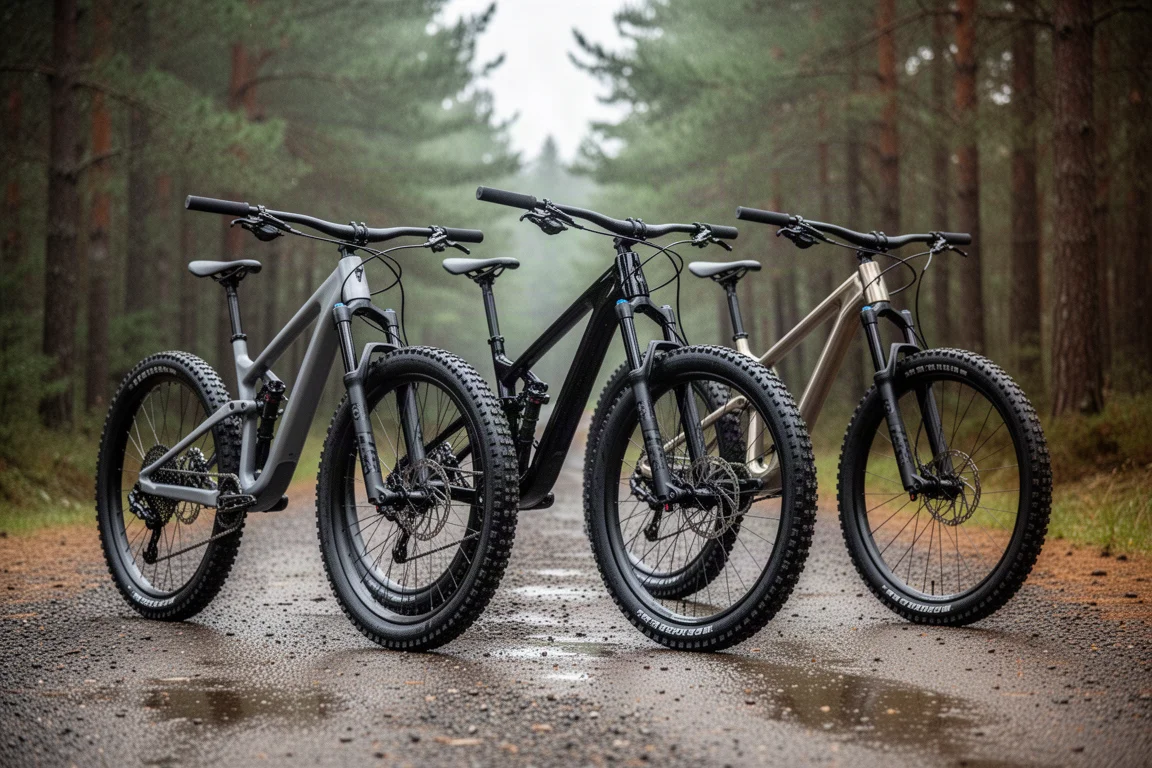
Best Trail Bikes: Whyte T-140 RS vs Vitus Escarpe CRS vs Merida One-Forty 700
Three full-suspension trail bikes compared on climbing efficiency, descending composure and value, with clear guidance on which one suits your riding.
Introduction
A trail bike carries a heavy brief. It should climb comfortably enough for a long day out, stay composed when the trail turns steep and rocky, and still feel playful on flatter, flowing ground. Very few bikes manage all three at once, and the ones that do tend to sit well above what most riders want to spend.
The three bikes here approach that brief from different directions. One leans on quiet composure, one on outright descending pace, and one on climbing efficiency. Each is a class leader in at least one of those areas, and each carries a trade-off worth understanding before you commit.

Prices sit in a fairly narrow band, but the differences in suspension, geometry and component choices are anything but small. What follows is a practical look at how each bike behaves on the climbs and the descents, and who it suits best.
What Defines a Modern Trail Bike
Rear travel across this group runs from 135mm to 143mm, matched to forks between 140mm and 150mm. That window keeps a bike efficient enough to pedal while leaving enough cushion for genuinely rough terrain.
Geometry has moved on a long way. Seat tube angles now sit between roughly 77 and 80.5 degrees, which places the rider in a stronger pedalling position on steep ground. Head angles hover between 64.7 and 65 degrees, and reach figures have grown considerably, adding stability at speed without resorting to a longer stem. Bottom bracket heights and wheelbases vary too, and both shape how a bike feels through corners and under hard braking.
Component choices matter just as much as the numbers. Tire casing, brake specification and dropper post range all shape the real-world experience, often more than headline travel figures do.
Whyte T-140 RS: The Composed All-Rounder
The Whyte T-140 RS is the most archetypal trail bike of the three. Its 135mm of rear wheel travel sits neatly between a short travel cross-country machine and a longer travel enduro bike, and it is paired with a 140mm fork. The geometry is modern, with a lengthy front end and a short stem that together deliver high-speed composure over rocks and roots while keeping handling quick between the trees.
Climbing on the T-140 is fuss free. The rear suspension does not bob noticeably under seated power, and its supple early stroke lets the rear tire dig in and grip tenaciously. The 76.9 degree seat tube angle only feels slack next to the much steeper angle of the Merida. At 30 percent sag the bike can feel a little lazy on the very steepest climbs, but reducing that to 25 percent sharpens it up nicely. The rear tire rolls well too, and there is little bob when you stand up to pedal.
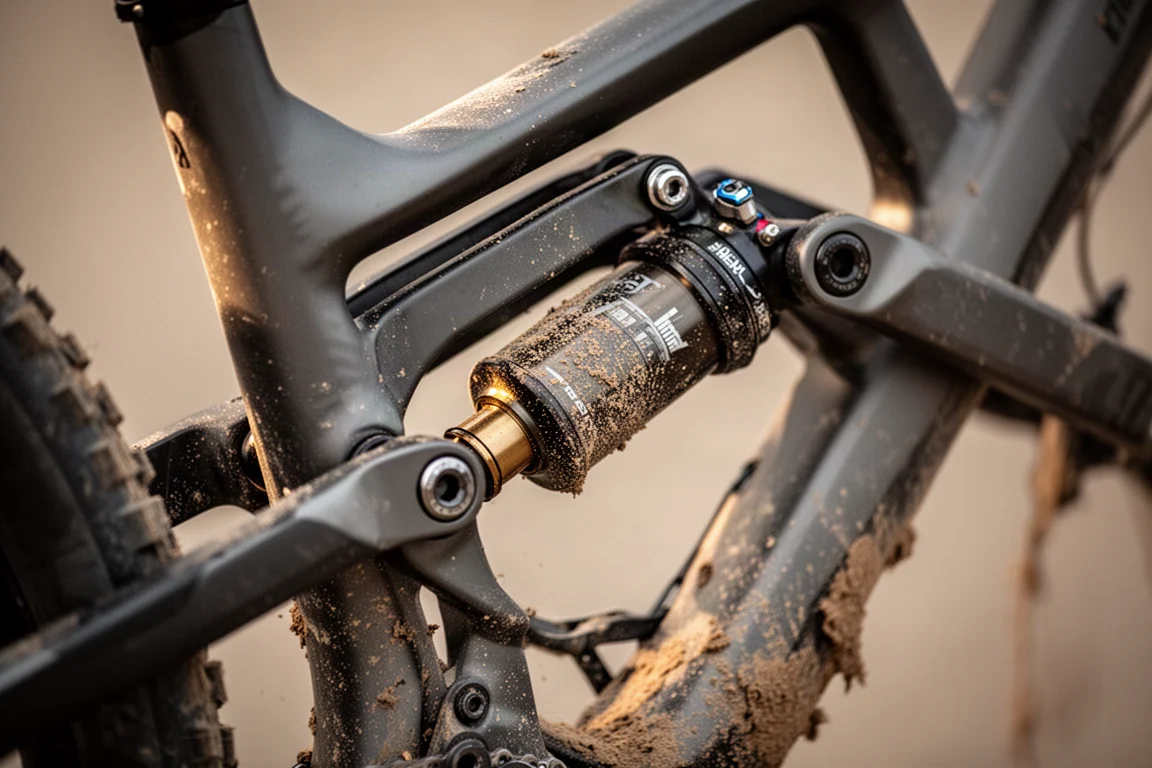
Pointed downhill, the T-140 feels quietly confident. It is a silent, rattle-free bike, and the suspension has a damped rather than harsh feel that smooths away impacts with minimal fuss. The long 1250mm wheelbase of the large size works with that calm suspension to control pitching, and the rear end soaks up hits big and small.
Up front sits a 140mm Fox 34 Performance Elite fork with the top-spec GRIP2 damper. It is smooth, comfortable and well controlled, and the GRIP2 damper is a clear improvement over the Fit 4 unit previously found on Fox’s top 34 forks. Heavier or faster riders may find themselves pushing the fork towards its limits on bigger impacts, though, and the 34mm chassis can get a little squirrely under heavy braking. Those riders may be better served by a 36mm fork in a slacker setting.
The 64.7 degree head angle and 330mm bottom bracket height help the bike carve through turns, whether they are flat corners or well-supported berms. Maxxis Minion DHF front and Dissector rear tires are a smart pairing, with rolling characteristics that do not detract from serious grip across a wide range of surfaces, and the thicker EXO+ casing on the rear shows a clear understanding of what trail riders actually need. SRAM supplies the drivetrain and G2 R brakes, which cannot quite match equivalent Shimano stoppers for outright power. The limited size range is the main drawback, and at £4,099 it is also the most expensive bike here.
Vitus Escarpe CRS: The Descender’s Bargain
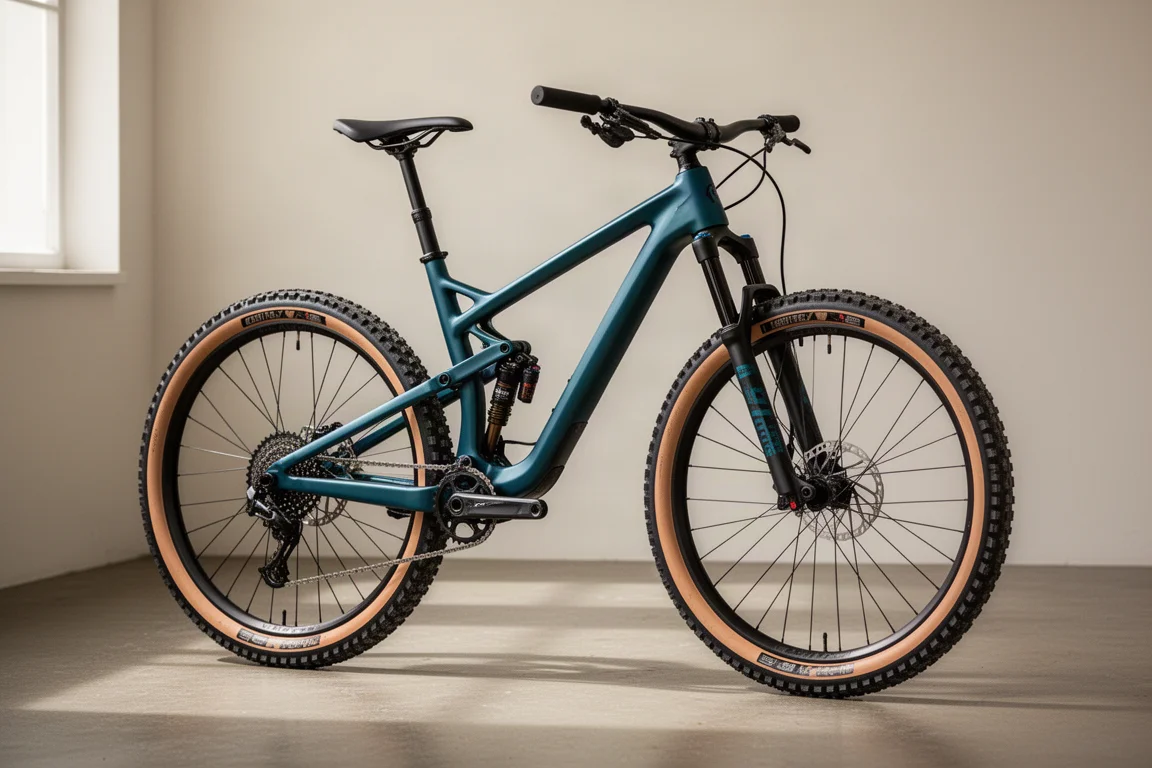
If pure descending capability without the heft of an enduro bike is the priority, the Vitus Escarpe CRS deserves a close look. It is the cheapest bike here at just under £3,200, yet it still packs a punch in the specification department, helped by an online-only sales model.
Unlike the Whyte and the Merida, the Escarpe uses a carbon fiber frame. Arguments continue over what carbon really brings over alloy, but such frames have the potential to be lighter, sleeker looking and smoother riding, although that is not always the case in practice. Bolted to it is a RockShox Lyrik Select fork, a full Shimano SLX drivetrain and brakes, Nukeproof Neutron wheels and Maxxis rubber with a descent-friendly EXO+ carcass at the rear. In short, it is a strong value build with components chosen to complement the bike’s descending capability.
Climbing rewards a sit-and-spin approach. Pedal more enthusiastically and rear suspension movement begins to rob you of power, making upward progress less efficient than on the other bikes here. It is not as arduous as hauling a full enduro machine uphill, but for all-round versatility it is not the first choice. That willingness to move does pay off in traction, and the Dissector rear tire claws its way up almost anything. The climbing position is comfortable, with a seat tube angle just over 77 degrees that gets steeper on larger frame sizes to keep taller riders in an effective position over the cranks, plus a roomy front end that never feels cramped. A flip chip lets you steepen the angles and raise the bottom bracket slightly if you want more technical climbing performance.
Downhill is where the Escarpe really shines. Set at around 30 percent sag, the rear suspension is incredibly simple, soaking up whatever the trail throws at it. High-frequency chatter disappears under the broad tires mounted on wide rims, while repeated medium-sized hits are controlled well by mid-stroke support from the shock. That combination makes the rear end feel like it has more than the 140mm of travel it actually has. The 150mm travel Lyrik Select fork with its 35mm stanchions feels truly unshakable and lets no harshness work its way through to the bar, and the four-piston SLX front brake is powerful with nicely supportive, active suspension behind it.
A couple of cost savings do show through. The two-piston SLX rear brake has enough grunt to do its job, but a four-piston model to match the front would be preferable. The bike is also more rattly than some rivals, which can be distracting, and mud clearance at the rear could be improved. These are small niggles in the grand scheme of things, and the descending prowess on offer is genuinely impressive.
Merida One-Forty 700: The Efficient All-Rounder
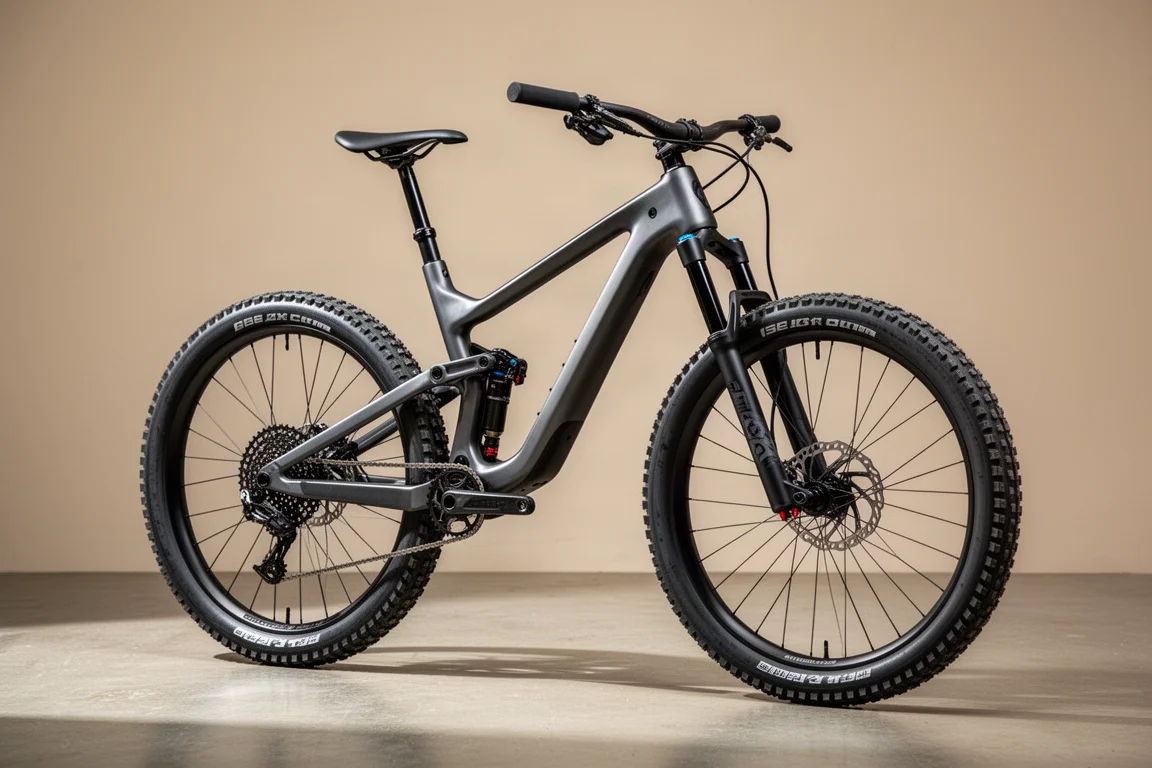
The Merida One-Forty 700 takes top honors in this comparison. Merida is a huge manufacturer that also builds bikes for other brands, yet its own models have not always been at the top of riders’ shopping lists. The 700 is the top alloy-framed version of the One-Forty and comes with a parts package that is not especially flashy but delivers where it counts on the trail. At £3,100 it is not quite the bargain the Vitus is, but it remains exceptional value given that you can walk into a physical shop to buy it, with all the advantages that brings.
You get 143mm of rear wheel travel paired with a 150mm Marzocchi Z1 fork. Those numbers alone may not get your blood rushing, but the geometry should. In the long size, which is equivalent to a large from most other brands, the One-Forty has the most radical geometry here: a 509mm reach that dwarfs anything else, an 80.5 degree seat tube angle, and a 65 degree head angle that is not quite as progressive as some but is balanced out by that enormous reach in stability terms. Riders who prefer a more conventional fit can size down, and the mid size’s 480mm reach lines up with the other bikes here. Saddle height is easy to sort thanks to Merida’s own dropper post, which adjusts from a tiny 30mm to a generous 230mm of drop, although the mechanism feels a little clunky in use.
Pointed towards a summit, the Merida stands out as the class leader. It was worth checking whether the shock was locked out, because all but the most awkward and square pedalling strokes deliver a rock solid feel under power, making it the most efficient bike here at gaining altitude. The lockout is almost redundant, even on tarmac. Despite that firm feel, the One-Forty barely falters on technical climbs, and with the same Dissector rear tire, traction is good with only marginally more lurch over steps than the Whyte. Ample top tube length and the steep seat tube angle leave plenty of space to move over the cranks when grip gets scarce.
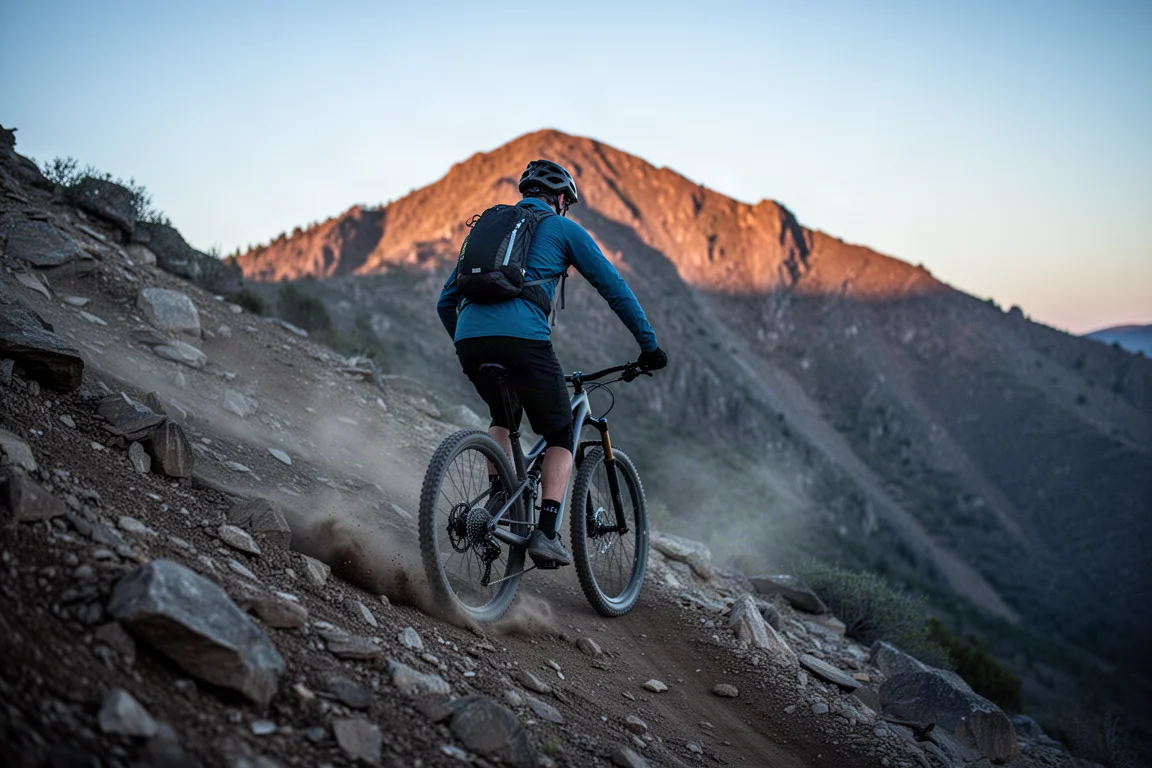
On the descents the Merida keeps impressing. The long reach, moderately slack head angle, decent rubber and plush, burly fork give it commanding performance. It can be a point-and-shoot bike, spying the extra section and letting the suspension and tires do the rest, or you can hop over a root and slither through an S-bend and it will flatter you with genuine agility. The same suspension support that helps it uphill gives you a platform to push against, so speed can be generated with ease and lips can be sent as far as you dare. That does mean the One-Forty is not quite as silky smooth in the rough as the Vitus, but with its geometry and the rubber wrapped around its rims you are unlikely to come unstuck. Drop into steep terrain and the front wheel stays far ahead of your weight, so it feels like you can drop into anything. The 203mm rotors at both ends are each squeezed by punchy four-piston SLX brakes.
A mixed Shimano drivetrain, largely based around SLX running gear, includes an upgraded XT shifter for crisp gear changes, and Race Face Effect cranks add a little Canadian curb appeal over the Shimano alternative. There is very little to complain about. The grips were not to taste, and swapping the 15mm stem for a 40mm one sharpened the already impressive handling, but that is about the extent of it.
How the Three Compare
| Bike | Rear travel | Fork | Frame | Price |
|---|---|---|---|---|
| Whyte T-140 RS | 135mm | 140mm Fox 34 Performance Elite | Alloy | £4,099 |
| Vitus Escarpe CRS | 140mm | 150mm RockShox Lyrik Select | Carbon | £3,199.99 |
| Merida One-Forty 700 | 143mm | 150mm Marzocchi Z1 | Alloy | £3,100 |
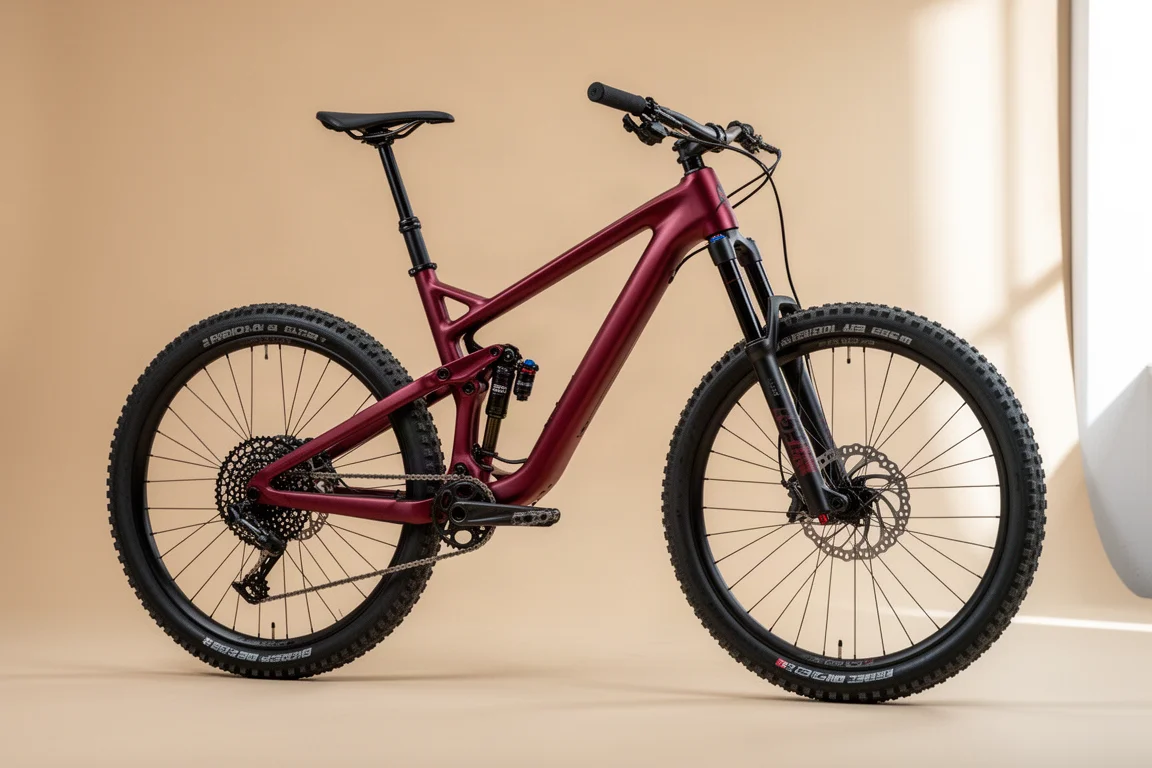
The pattern is clear once the numbers sit side by side. The Whyte is the calmest and quietest of the three, the Vitus is the plushest and the most aggressive on descents, and the Merida is the most efficient under power while still offering confident handling on the way down.
Buying Advice: Matching a Trail Bike to Your Riding
Start with the riding you actually do. If you want a single bike that climbs with the best of them and still descends confidently, the Merida One-Forty 700 is the most complete package here, and its radical long-size geometry gives it a stability advantage that is hard to match. If descending pace and value matter above all, and you are comfortable buying online, the Vitus Escarpe CRS delivers a carbon frame and a serious build for less money than either rival. If you value a quiet, composed, dependable companion for long days out with big climbs, the Whyte T-140 RS is the most reassuring of the three, provided you can find a size that fits.
Sizing deserves real attention. The Whyte’s limited size range is its weakest point, while the Merida’s long size can be too much for some riders, which is exactly why the brand offers a shorter alternative that lines up with more conventional fit. The Vitus runs a roomy front end with a steeper seat angle on larger frames, so taller riders keep a workable position over the cranks.
Suspension setup will change how each bike feels more than any component swap. The Whyte rewards dropping from 30 percent sag to around 25 percent on the steepest climbs, while the Vitus performs best at roughly 30 percent sag. The Merida’s platform is firm enough that the lockout barely matters.
Two smaller points are worth checking before you buy. Brake specification matters on long descents, and the Vitus’s two-piston rear brake is the one place where its value build shows a limit. Tire casing also matters, and the EXO+ rear casings on these bikes are a sensible choice for riders who spend time on sharp, rocky ground.
Conclusion
Choosing between these three comes down to which strength matters most to you. The Whyte T-140 RS is a true all-rounder with a calm, composed feel across a wide range of tracks, held back by limited sizing and the highest price here. The Vitus Escarpe CRS is a descender’s dream, supremely comfortable, utterly capable and cracking value for the money. The Merida One-Forty 700 takes the overall win because a trail bike has to climb as well as it descends, and it arguably does both better than anything else in this group while still offering excellent value for your hard-earned cash.
Further reading
Related Reviews
Mountain Bikes
Atherton AM.130 Review: 3D-Printed Titanium Lugs and a 130mm Trail Bike That Descends Like a Bigger Machine
The Atherton AM.130 pairs 3D-printed titanium lugs with carbon tubes and a DW6 suspension platform. Here is how it rides, what the build delivers, and who it suits.
Mountain Bikes
Beginner Mountain Bike Buying Guide: What to Look For in a Trailworthy Hardtail
A practical framework for evaluating beginner mountain bikes, whether new or used, by examining key components that indicate real trail capability.
Mountain Bikes
Best Aluminum Mountain Bikes 2026: Five Alloy Bikes Worth Your Attention
Five aluminum mountain bikes that show how far alloy has come, from a 120mm trail bike and a versatile machined frame to a 180mm freeride machine.