Power & Charging
Best Top-Off Power Inverters: Toro 300W vs Milwaukee
Two battery top-off inverters that turn your tool batteries into 120V AC and USB power, tested for output stability, efficiency, and real-world charging.
Introduction
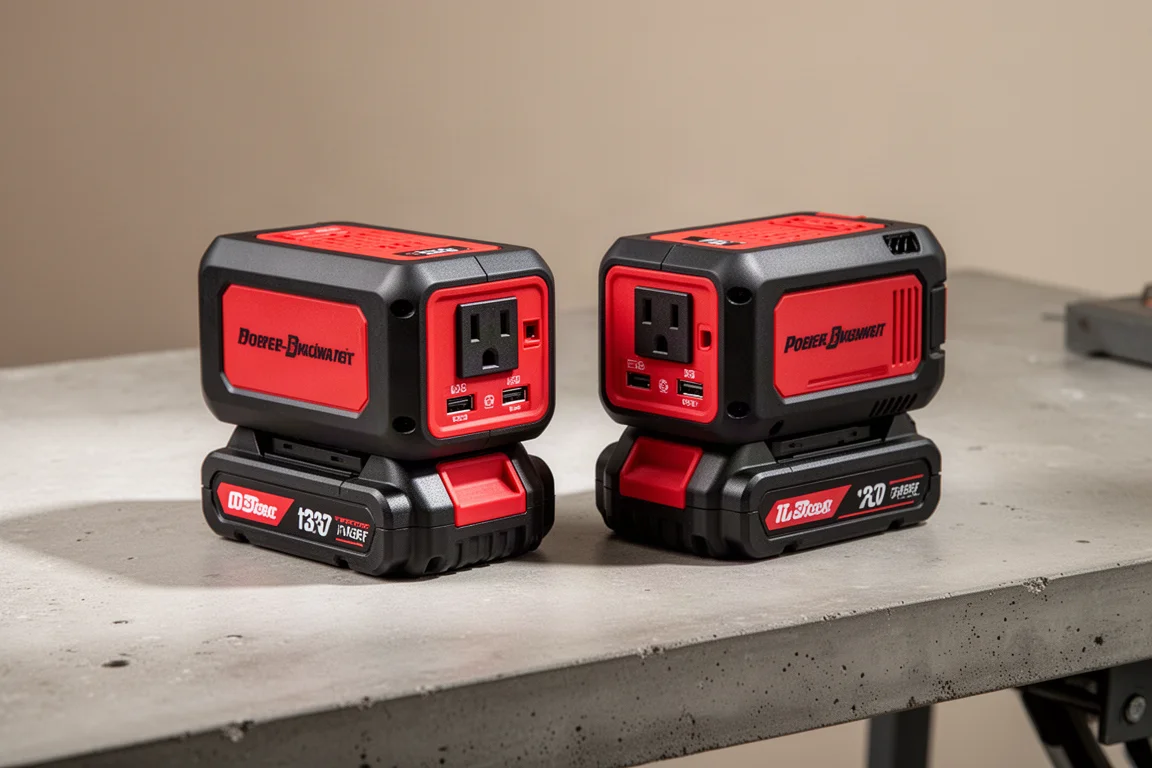
Battery top-off inverters are one of those quietly useful accessories that make sense the moment you understand the problem they solve: your truck’s USB ports die when the ignition does, and there is no 120V outlet in sight. Both the Toro 300W Top-Off inverter and the Milwaukee Top-Off inverter snap onto their respective cordless tool batteries and give you AC and USB power anywhere, but they behave differently in ways that matter depending on what you want to plug in.
Why Carry a Top-Off Inverter at All?
The core use case is simple. When a vehicle is off, its USB outlets typically shut down too, so anything you want to charge, ear protection, flashlights, heated gear, or a phone, has nowhere to go. A top-off inverter rides in the truck with a couple of spare tool batteries and turns those batteries into a small power station.
The Toro unit provides 2.5 amps of AC output at 120 volts, plus one USB-C and one USB-A port. That is enough for phone charging, battery chargers, laptops, and small electronics, but not enough for anything that generates heat. It is a charging and top-off tool, not a small-appliance power source.

Camping, fishing, hunting, and job-site use are all realistic scenarios, as long as you stay realistic about the load. Think in terms of LED bulbs rather than crock pots, and the format starts to make a lot of sense.
Toro 300W Top-Off Inverter
The Toro tops out at 300 watts, which works out to 2.5 amps at 120 volts, and it also delivers USB-C and USB-A outputs. On the meter it measured 122 volts, which is genuinely good; many larger power stations tend to sit closer to 110. The AC outlet handled a DeWalt battery charger without issue, kicking on the charger’s indicator and spinning up its internal cooling fan to push power back into a battery pack.
There is one design decision worth knowing about before buying: the single power button switches on both the USB ports and the AC inverter together. Even if you only need USB charging, the AC side stays live, and that constant inverter idle draws extra power and shortens runtime compared to a unit where you can enable each output separately.
On the plus side, it ran roughly seven full phone charges and could recharge a laptop four to five times from a pair of batteries, which is a solid amount of practical endurance for the format. It is priced at $119.
Milwaukee Top-Off Inverter
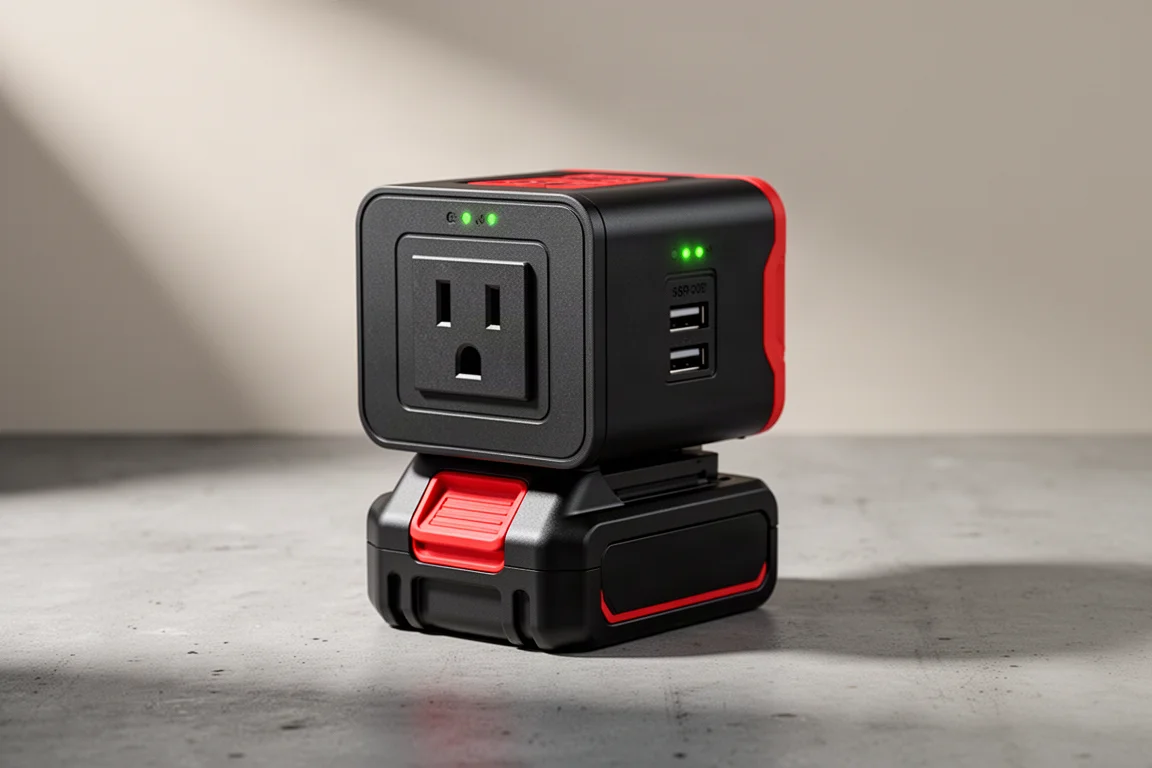
The Milwaukee unit puts out 175 watts, which is a meaningful step down from the Toro’s 300 watts. That matters in practice: the Toro shut itself off when a charger pulled too much, and the Milwaukee has even less headroom, so load discipline is even more important here.
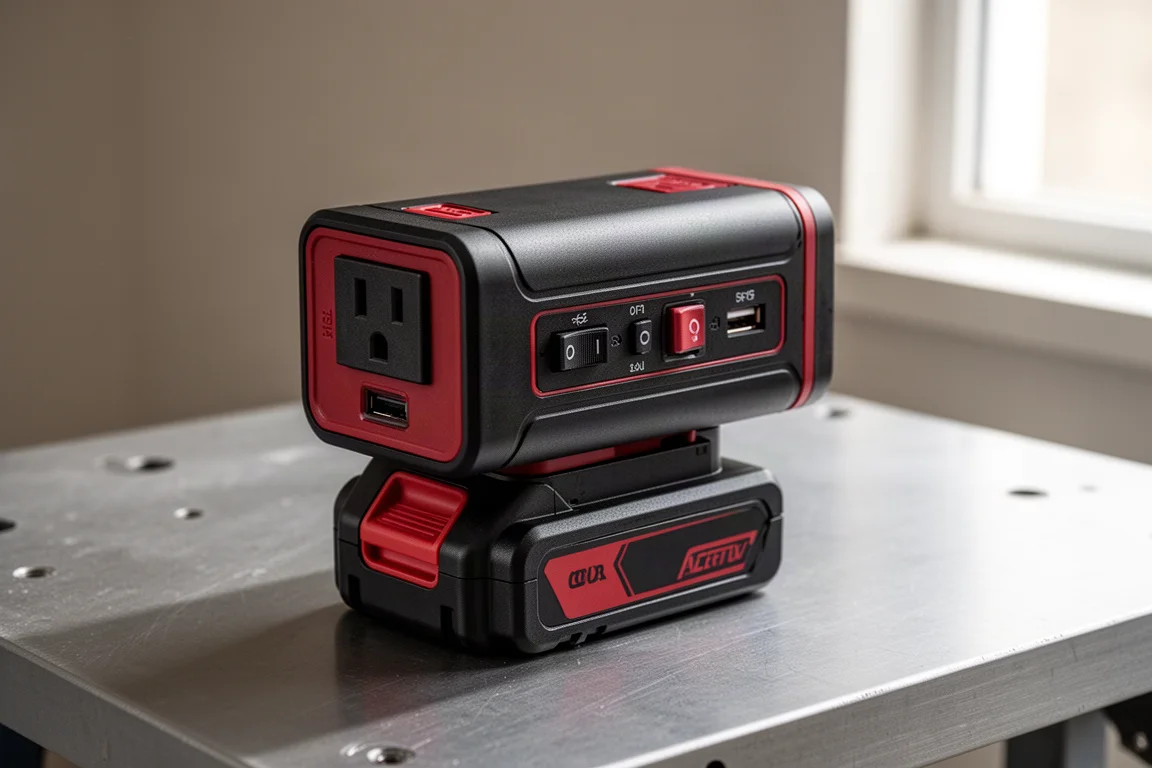
Where Milwaukee earns its place is output separation and steadier behavior. You can turn on just the USB outputs or just the AC inverter, which avoids wasting battery when you only need one. Its measured output ran about 119 volts, but at roughly 64 Hz rather than the 60 Hz you would expect from the grid.
Still, 175 watts is enough to charge a 65-watt laptop comfortably, though that consumes close to half of the unit’s total output. If your needs are USB devices and occasional small AC loads, the extra control is worth something.
Output Quality: Voltage and Frequency Under the Meter
Neither unit produces perfectly clean electricity, and this is the detail most buyers never check. Both are described as pure sine wave inverters, but the Toro’s frequency bounced around noticeably on a multimeter, dropping from near 60 Hz into the 58 Hz range and fluctuating while under load. Voltage was strong at 122 volts, but the frequency instability means the waveform is not holding steady.
The Milwaukee sits at the opposite end: its frequency runs consistently high around 64 Hz rather than bouncing, and voltage holds around 119 volts. Higher-than-spec cycles per second is not ideal either, but it is at least stable.
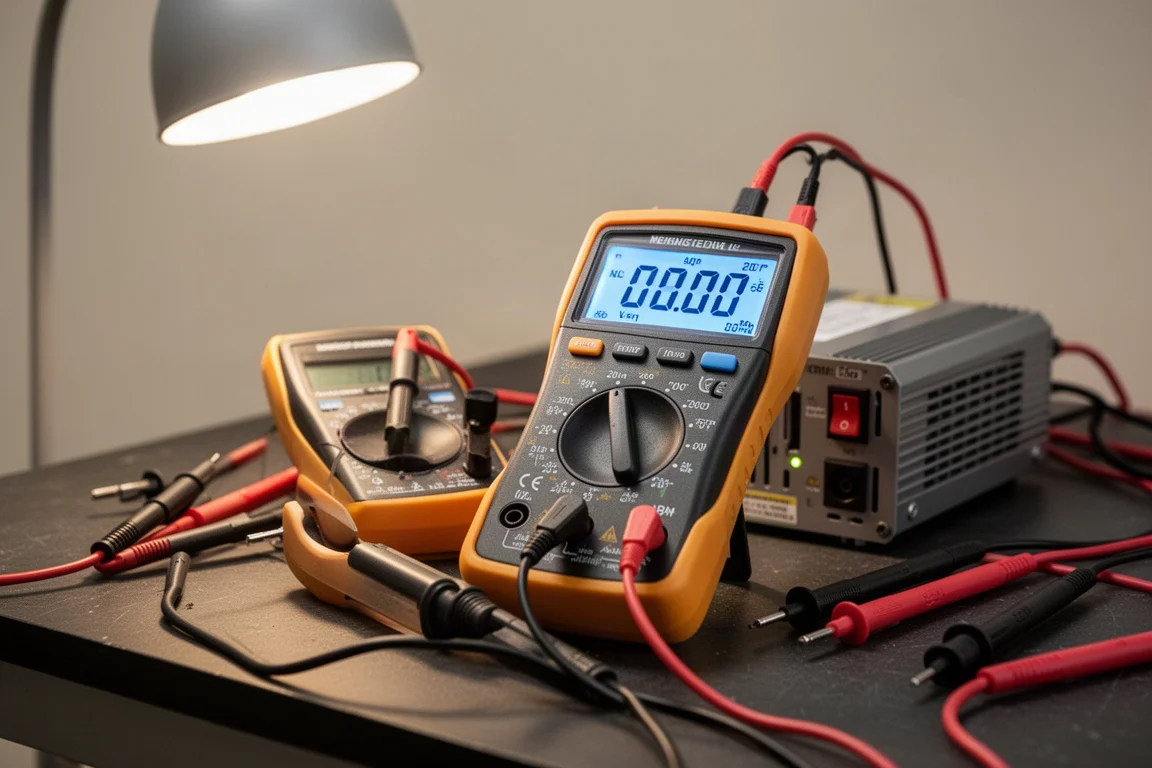
In practical terms, neither output is grid-quality power. Devices with rectifiers or tolerant power supplies will likely shrug it off, but it is smart to avoid plugging in anything sensitive or anything you would be upset to damage. Neither inverter is a match for a proper power station when power quality matters.
What 300 Watts Actually Gets You
Set expectations honestly: 300 watts will not run an electric blanket, a crock pot, or anything that produces heat. Three 100-watt-equivalent bulbs would probably be too much; you might manage two on the Toro, and closer to one on the Milwaukee.
A laptop charging is an easy win, and a 65-watt laptop draw uses roughly a third of the Toro’s capacity but nearly half of the Milwaukee’s. Phone charging, headlamps, work lights, and tool battery chargers are the sweet spot for both.
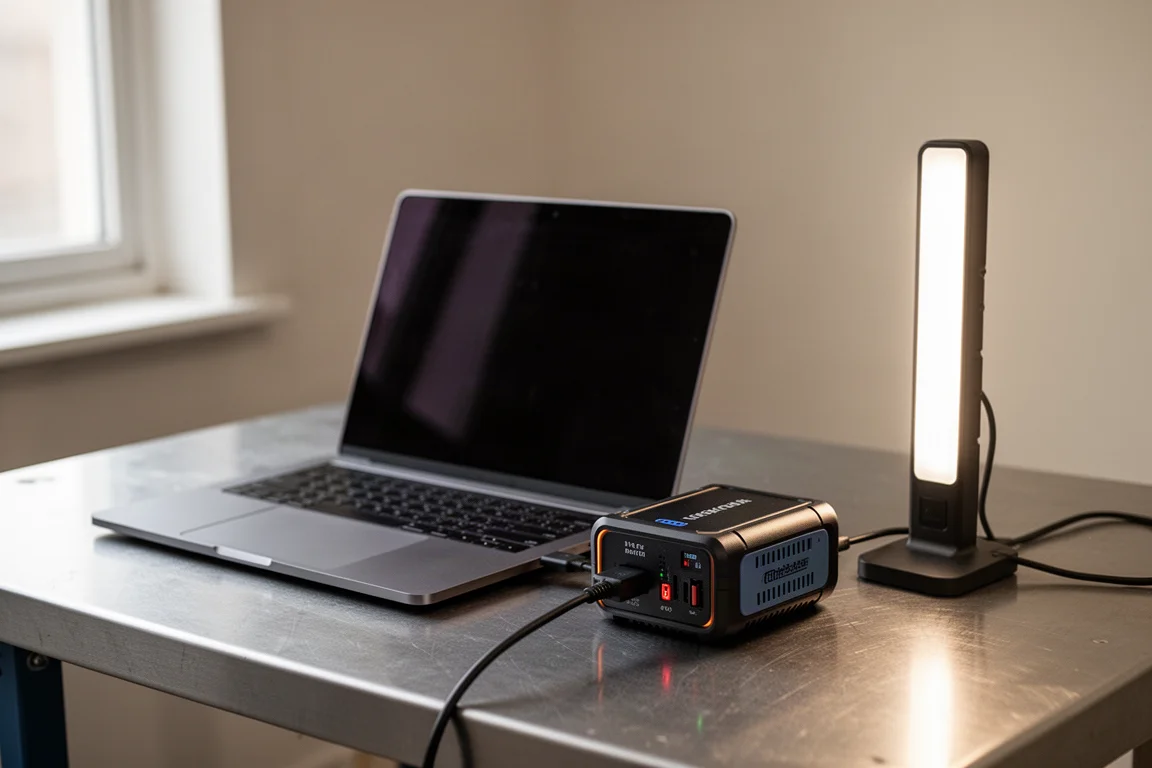
The big lesson from testing: even within the rating, some loads will trip the safety shutoff. The Toro cut out during an overload event even though the draw appeared to fit its 2.5 amp rating, which is at least confirmation that its protection circuitry works. Treat the AC side as best-effort and save the heavy loads for a real power station.
Efficiency and Conversion Losses
Every one of these units pays a conversion tax. Going from battery DC to AC and back to DC for charging loses energy at every step. Charging a 6Ah 20V battery from a 7.5Ah 60V pack through the Toro’s inverter means you will not get anywhere close to a full transfer of the available energy, some of it disappears as heat, and the cooling fans running during AC output make that audible.
That inefficiency compounds with the Toro’s always-on AC design. If your typical session is just topping off phones and small USB gear, the Milwaukee’s ability to keep the inverter stage switched off will stretch your battery further. If you regularly need the 120V outlet anyway, the difference matters less.
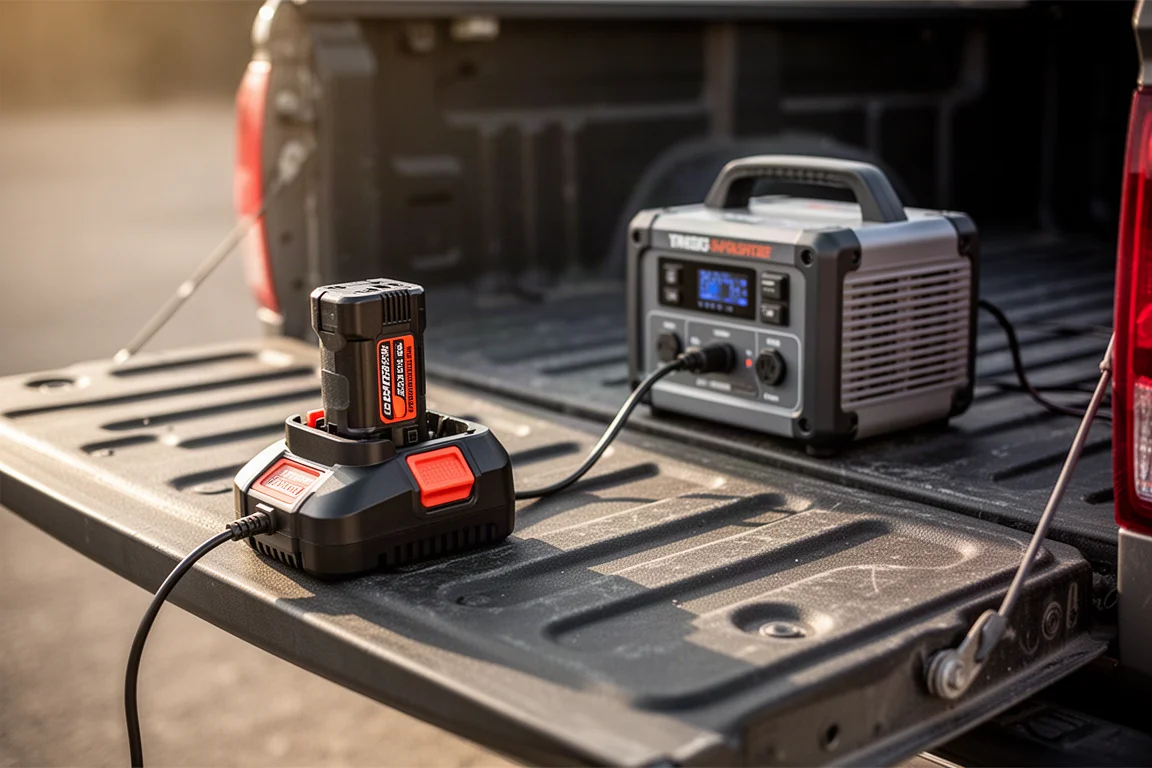
One strategy worth stealing: pair the inverter brand with the battery platform you already run. Carrying two Toro batteries in the winter and two Milwaukee batteries in the summer means the inverter is always ready with compatible packs, no extra batteries bought just for this accessory.
Buying Advice
Choose the Toro 300W if you want more AC headroom, higher measured voltage, and a bigger cushion for chargers and laptops, and you do not mind that USB and AC are always on together. Choose the Milwaukee Top-Off if you mostly charge USB devices, want separate control over USB and AC outputs to preserve runtime, and can live with 175 watts and a slightly high output frequency.
At $119, the Toro is the stronger pick for mixed AC-and-USB use. The Milwaukee suits USB-first users who already own Milwaukee batteries. Either way, know your loads before you plug in.
Conclusion
Both top-off inverters fill a real gap between nothing at all and a full power station. The Toro brings more watts, better voltage, and a friendlier price; the Milwaukee brings output flexibility and steadier frequency. Match the unit to your battery platform and your actual loads, and either one will earn its spot in the truck.
Further reading
Related Reviews

Backpacking Gear
Building a 10 lb Base Weight: An Ultralight Backpacking Gear List
A practical walkthrough of the ultralight pieces behind a 10 lb base weight, from a 765 g pack and a roomy one-person tent to a full camp chair and a dependable water filter.

Road Bikes
10 New Road Bikes Worth Watching: Aero, Titanium, Steel and Endurance Standouts
A practical roundup of 10 new road bikes, from aero flagships chasing single-watt gains to titanium, steel and endurance platforms built for real roads.

Bikepacking Gear
11 Bikepacking Essentials for Long-Distance Cycling
Eleven bikepacking essentials for long-distance cycling, from a steel gravel frame and a two-person tent to helmet lights, packable gloves, and a frame bag that puts weight in the right place.