Astronomy
Best Telescope Eyepieces: Three Levels from Starter to Expert
A practical guide to the three tiers of telescope eyepieces, covering the SVBONY Gold Line, Tele Vue Plössl, and Explore Scientific 82° Argon-filled eyepieces.
Introduction
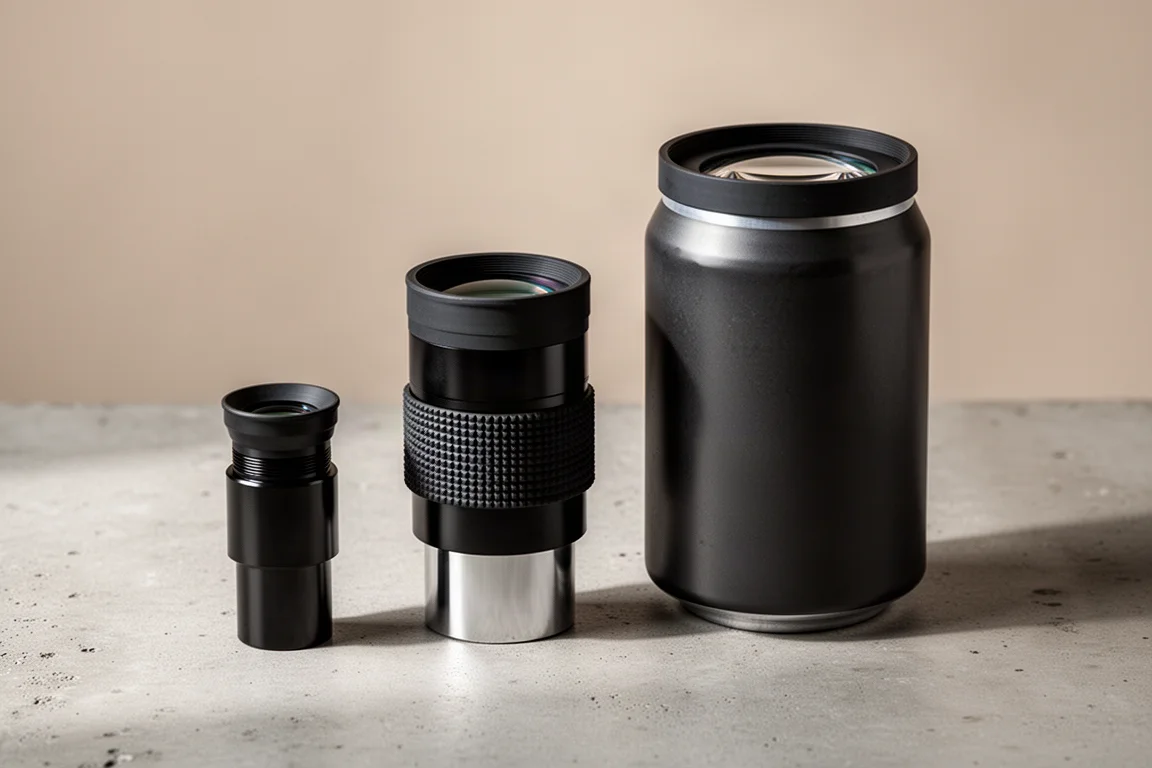
Telescope eyepieces are where the magnification actually happens. Prices tend to scale with size, but real value comes down to three things: the optical design, the quality of the lenses and coatings, and the apparent field of view. Eyepieces generally fall into three levels that most astronomy enthusiasts encounter: starter, intermediate, and expert. Understanding where each tier shines makes it much easier to spend wisely.
Why the Eyepiece Matters More Than You Think
Most eyepieces use a barrel diameter of 1.25 inches, which is what the vast majority of telescopes accept. Very old or very cheap telescopes sometimes use 0.965-inch barrels, slightly less than an inch, but those are increasingly rare. This guide focuses on the standard 1.25-inch format, with a look at the larger 2-inch format at the expert level.
Starter Eyepieces: Why the Free Ones Fall Short
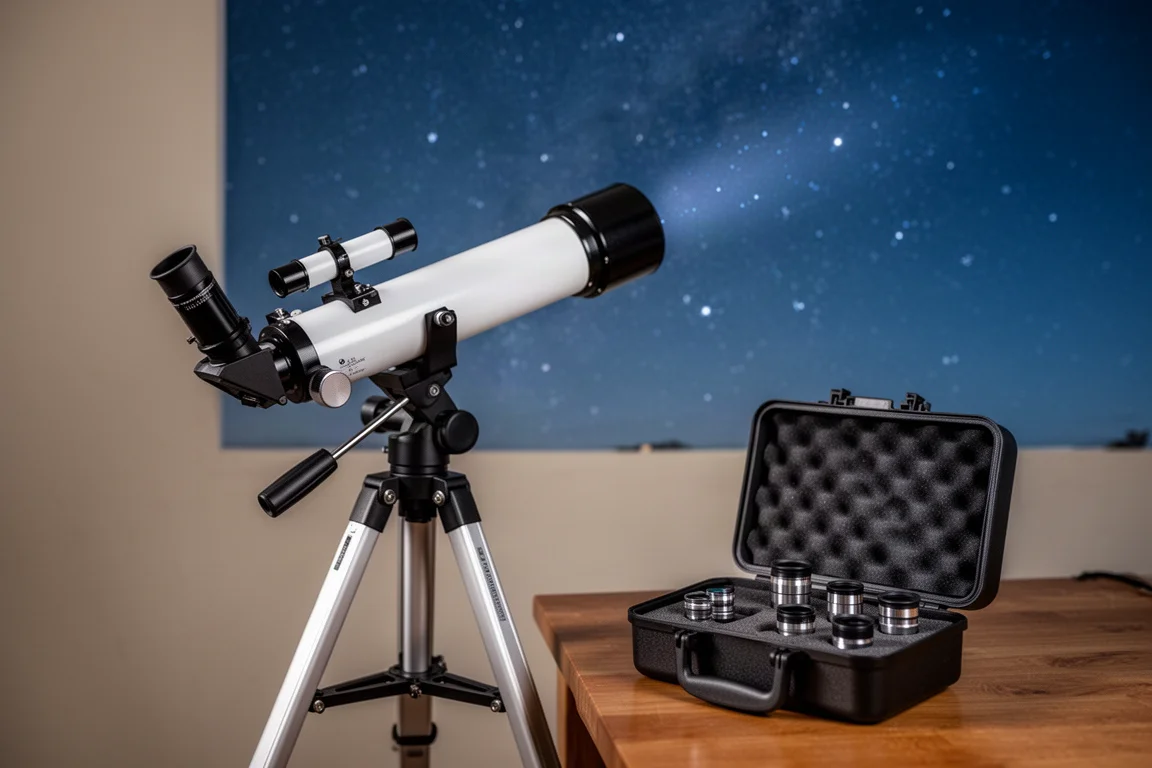
Starter eyepieces are the notoriously cheap ones bundled with introductory telescopes. They usually have plastic bodies and very simple old optical designs with only one or two lenses, such as Huygens, Ramsden, Super Ramsden, or Kellner designs. You will often see an H, R, or K written on the eyepiece body. Those are not brand names; they are design types describing the arrangement of lenses inside.
These eyepieces get the job done, but they come with real problems: blurred images around the edges of the view, color smearing when looking at the edges of the moon, and, in one tested Kellner example, blurry rays of light coming off Jupiter. The biggest downfall is the tight field of view, often less than 40 degrees and sometimes much less.
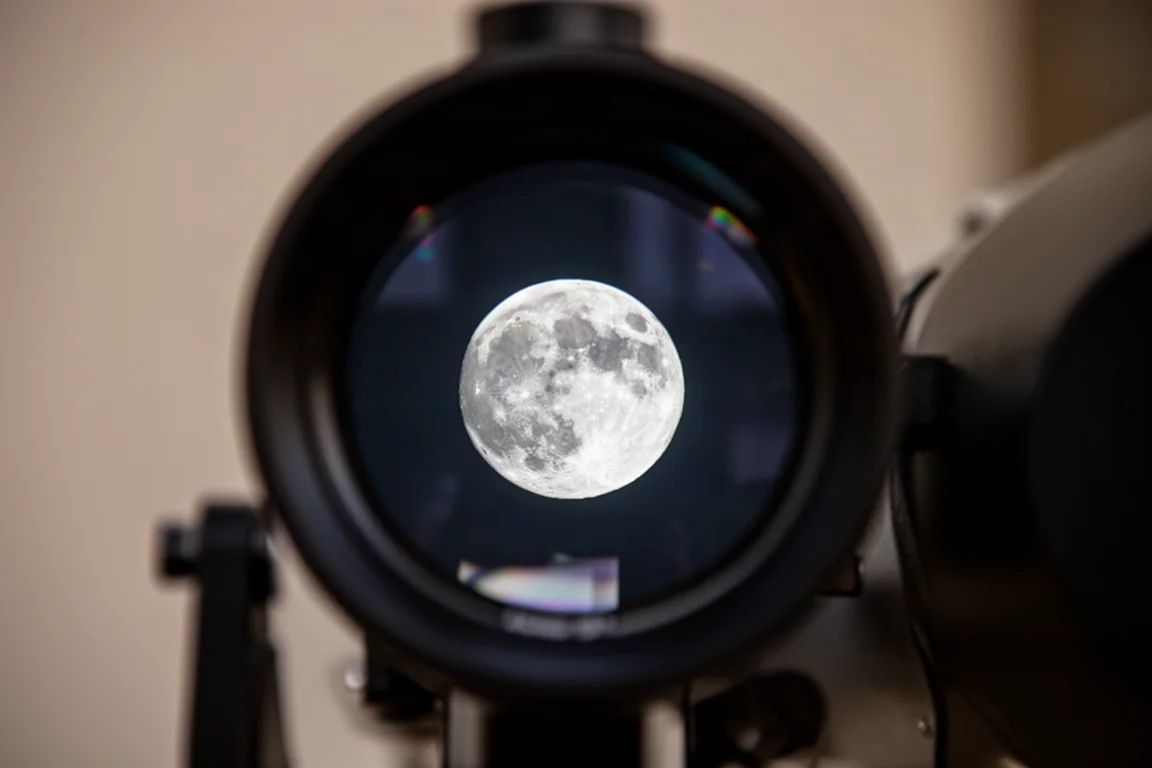
A real-world comparison makes this clear: with two 20 mm eyepieces of identical focal length on the same telescope, a Huygens with roughly a 35-degree field of view could not fit the entire moon in the viewing disc, while a 52-degree eyepiece showed the whole moon. Same telescope, same magnification, only the field of view changed.
At the top of the starter tier sits the Plössl design, with two pairs of stacked lenses, a respectable field of view of up to 52 degrees, and new prices around $20. A set of Plössls is the smartest first upgrade from bundled eyepieces, typically a 25 mm and a 10 mm. The one downside: as magnification increases, the viewing lens gets tiny, which becomes uncomfortable on high-magnification units like an 8 mm Plössl.
Intermediate Eyepieces: The Sweet Spot for Most Buyers
Intermediate eyepieces generally cost between about $30 and $120 and bring three improvements: a wider field of view, larger lenses even at high magnification, and generally higher-quality optics.
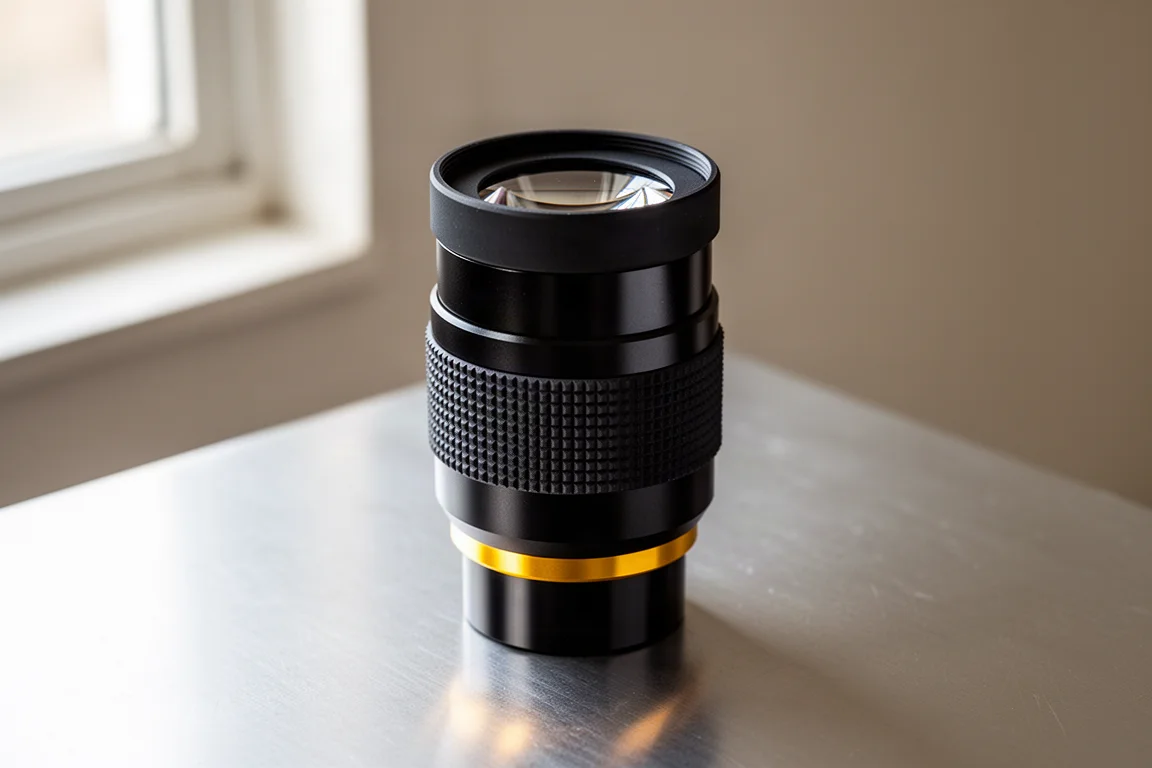
The practical benefit of a wider field is easy to feel. Your target floats across the visible disc more slowly before drifting out of view, which is slightly more immersive and means less constant re-aiming at the eyepiece. A 9 mm intermediate eyepiece also offers a noticeably larger viewing lens than an 8 mm starter Plössl, making high magnification far more comfortable. Many observers stop at this level because the improvement over starter eyepieces is so substantial.
Expert Eyepieces: Wide Fields and Serious Glass
Expert eyepieces start at roughly $120 and go up from there, sometimes dramatically. Fields of view begin around 82 degrees and reach up to 110 degrees, which is big money and ambitious from a design standpoint. The payoff is a far more immersive view, sometimes described as looking through a porthole out into space. It can feel a little bewildering at first, but the view grows on you quickly. These eyepieces also tend to offer more comfortable eye relief, so you do not have to press your eye right against the lens.
A practical note: high-priced eyepieces tend to hold their value well on the used market, so if you are comfortable buying used, check second-hand listings first.
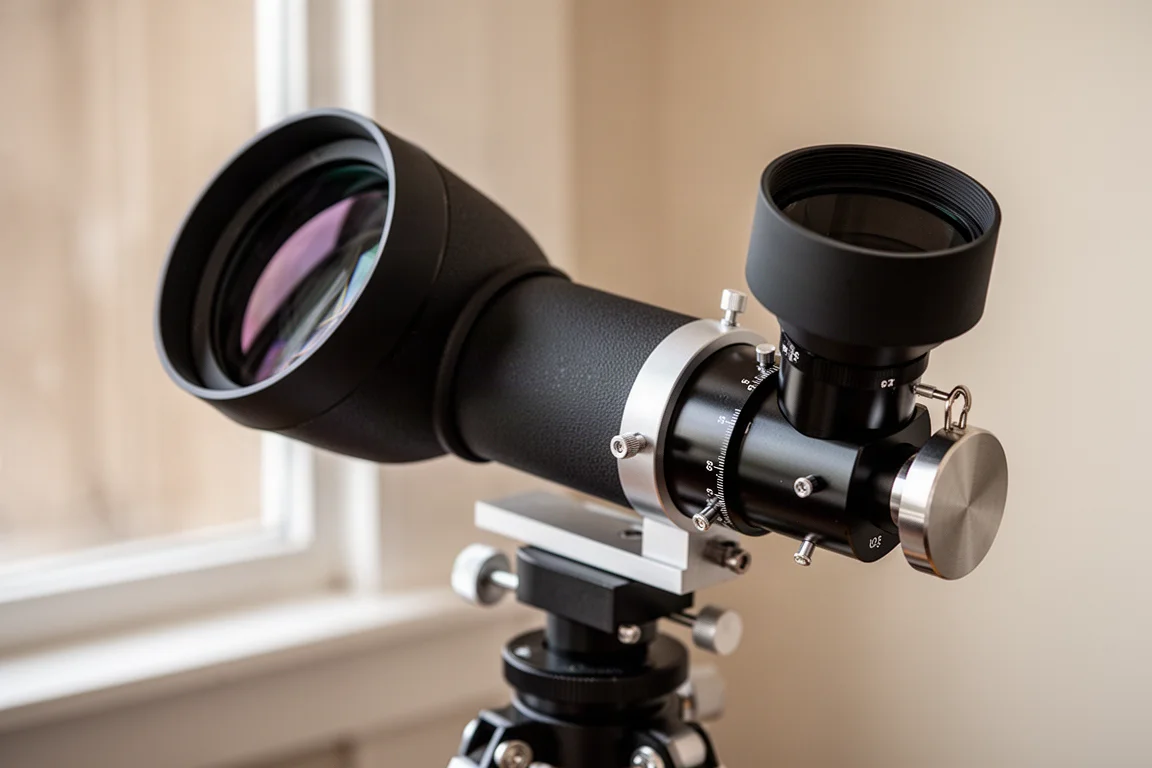
The biggest name at this level is Tele Vue, known for its distinctive green lettering and wonderful optical glass, with product lines spanning the older Radians, Delights, DeLites, Ethos, and Naglers. Some Tele Vue models include a ratcheting mechanism that helps with eye relief. You cannot go wrong with a Tele Vue eyepiece, and they hold their value especially well. Tele Vue also makes the gold standard of Plössls, still somewhat affordable and a favorite for collectors building a complete set.
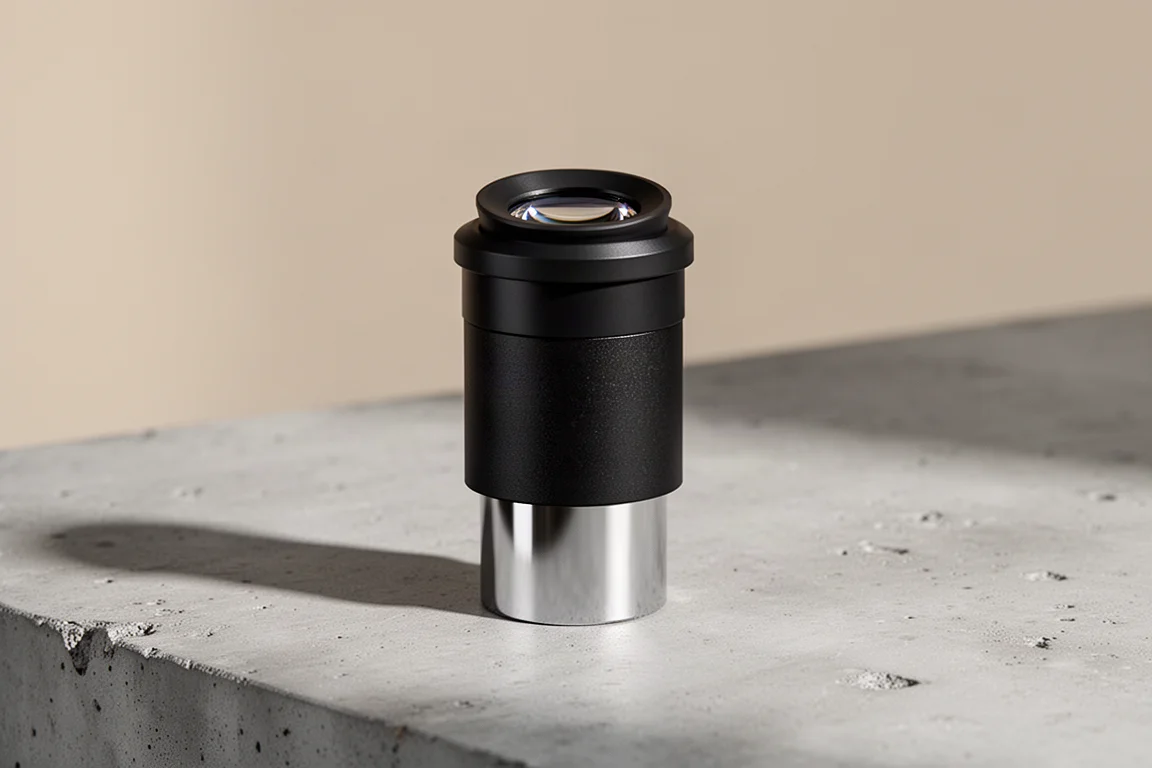
For observers who like wide fields but want friendlier pricing, the Explore Scientific Argon-filled 82° eyepieces are a compelling alternative. They deliver sharp images all the way out to the edge and are very enjoyable to use. The 30 mm 82° model is genuinely enormous, weighing over 2 lb, large enough that a counterweight on the back of the telescope helps balance the setup.
A Personal Eyepiece Collection and One Warning
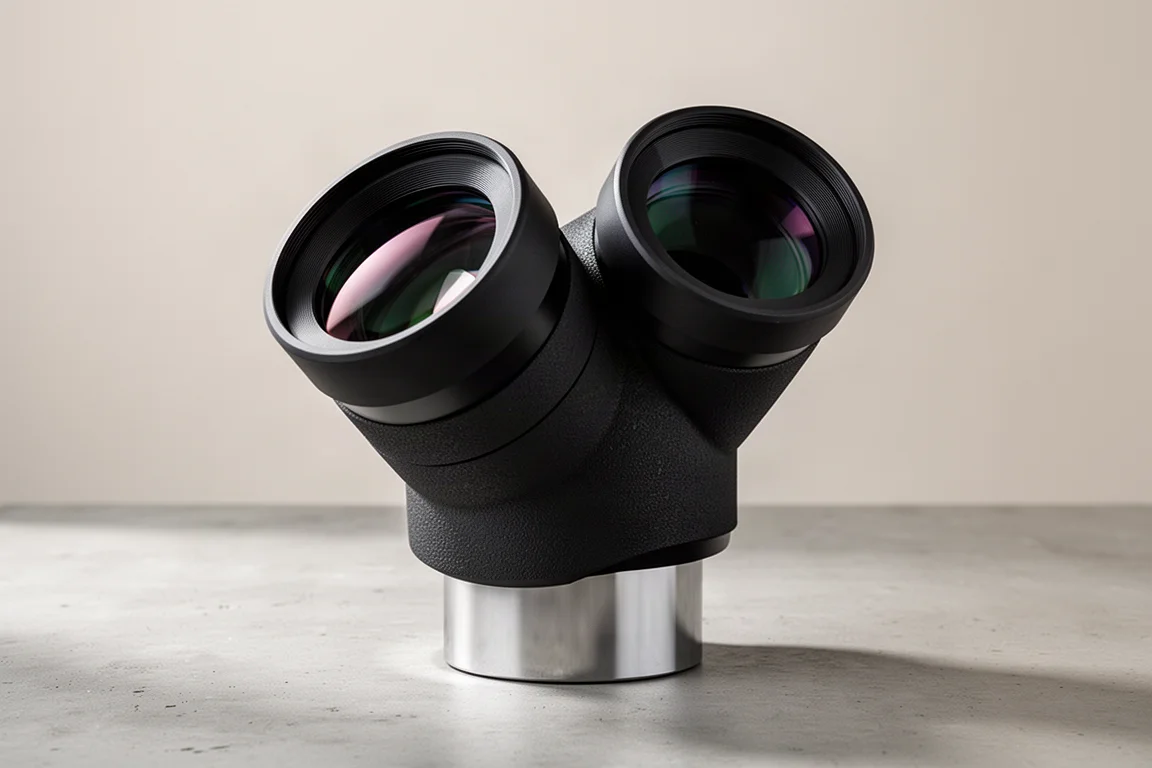
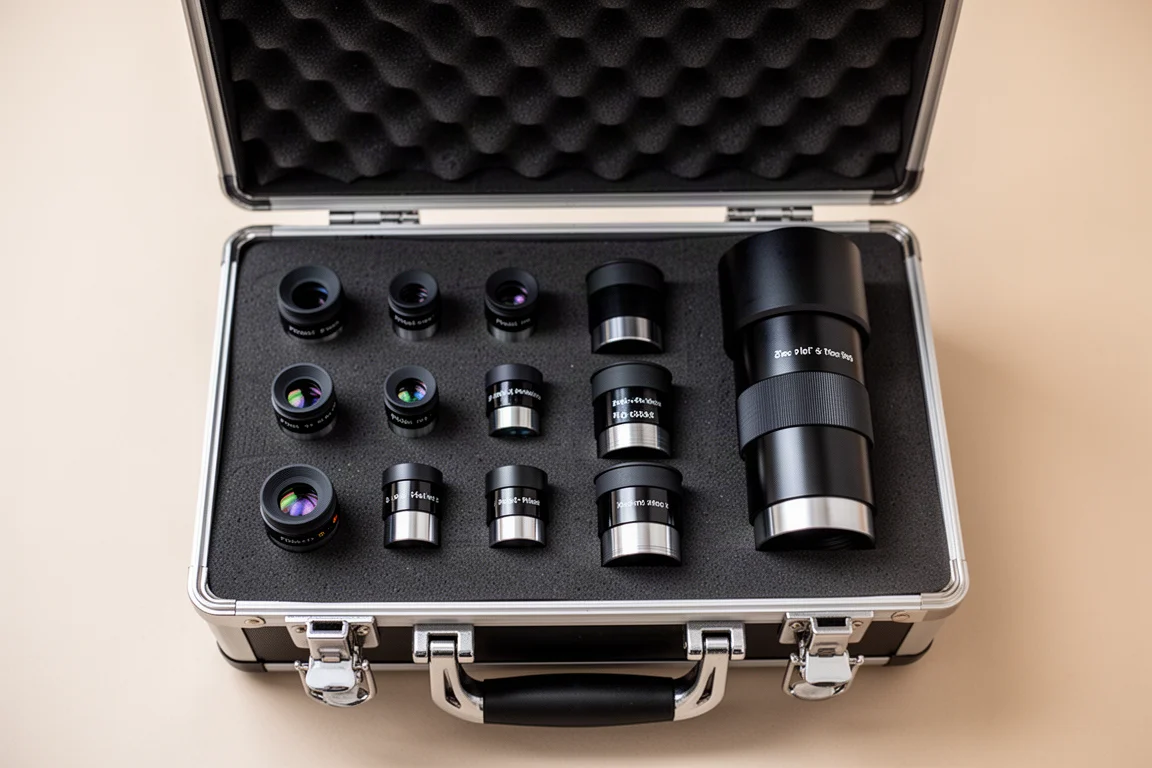
A well-rounded collection does not need to be exotic. A complete set of Tele Vue Plössls covers the basics, a set of 66° Gold Line eyepieces serves multiple telescopes at star parties where a wider field keeps images visible longer as viewers file through, and a prized set of 82° Argon-filled eyepieces delivers edge-to-edge sharpness. A handmade double-Plössl eyepiece built with Zeiss optics from expensive binoculars, with roughly a 52 mm focal length, rounds things out with a rich, satisfying wide field that shines under dark skies.
One serious safety note: vintage telescopes sometimes came with screw-in sun filters for eyepieces. These tend to overheat and crack, instantly directing enormous amounts of focused solar energy into the eye. Countless stories exist of permanent lines or spots burned into retinas, and some people lost vision in one eye entirely. If an old telescope comes with a filter labeled “sun,” throw it away immediately.
Conclusion
Match the tier to your needs. If bundled eyepieces are holding you back, a 25 mm and 10 mm Plössl set is the first upgrade worth making. If you want wider, more comfortable views without a huge outlay, a 66° intermediate eyepiece is the sweet spot. And if immersive ultra-wide fields appeal to you, expert-level eyepieces from Tele Vue or Explore Scientific deliver views worth saving for, with strong resale value as a bonus. Clear skies.
Further reading
Related Reviews
Astronomy
Astronomy Gifts for Dads: Binoculars, Telescopes and Accessories Worth Giving
A practical gift guide covering stargazing binoculars from around $50, beginner telescopes under $500, and accessories under $100.
Astronomy
Best Filters for EAA in Light Pollution: What Short-Exposure Testing Actually Showed
Five astronomy filters and two noise reduction tools tested under light polluted skies for electronically assisted astronomy, with practical results for broadband and narrowband targets.
Astronomy
Six Premium Eyepieces That Transform a Beginner Telescope
A hands-on comparison of Tele Vue Panoptic, Tele Vue Nagler, and Baader Hyperion eyepieces, and why upgrading the stock eyepieces is the best first move in stargazing.