Automotive Lubricants
Royal Purple Ultra Performance Grease vs Red Line CV2: Head-to-Head Grease Testing
Two high-performance synthetic greases went through tack, wear, corrosion, water, heat, and cold-temperature tests. Here's how they compared.
Introduction
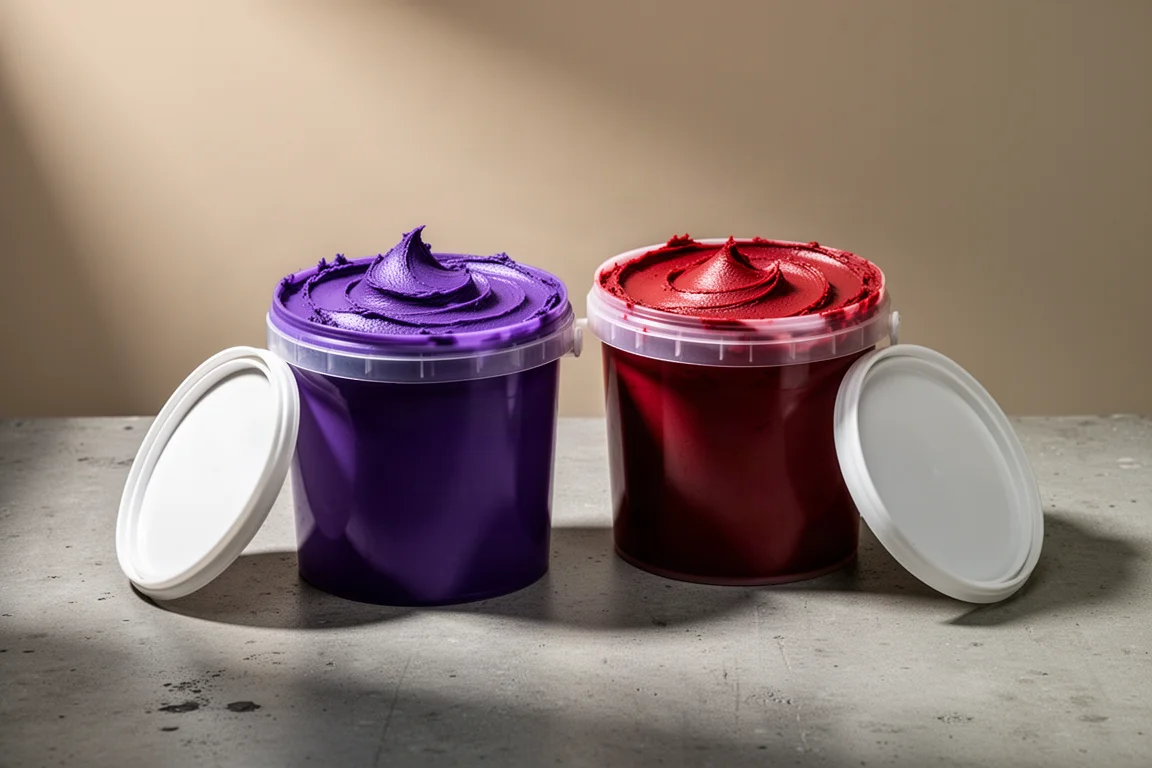
Grease is one of those products most people buy once and use for years, so choosing the right one matters. Two premium synthetic options, Royal Purple Ultra Performance Grease and Red Line CV2 Synthetic Grease, both make serious claims about handling extreme loads, heat, and wear. To see which one earns its place, both were put through a series of hands-on tests covering tackiness, film strength, corrosion protection, cold-temperature flow, water resistance, and heat tolerance.
Tack Strength: Which Grease Clings Better
A grease that clings well to moving parts is critical for long service intervals. To measure this, a test jig was built to quantify the cohesive and adhesive properties of each grease: roughly 25 ml of grease was placed between two metal discs, air pockets were squeezed out, and an upward force was applied through a pulley, lever, and inline weight scale to measure the force needed to separate the plates.
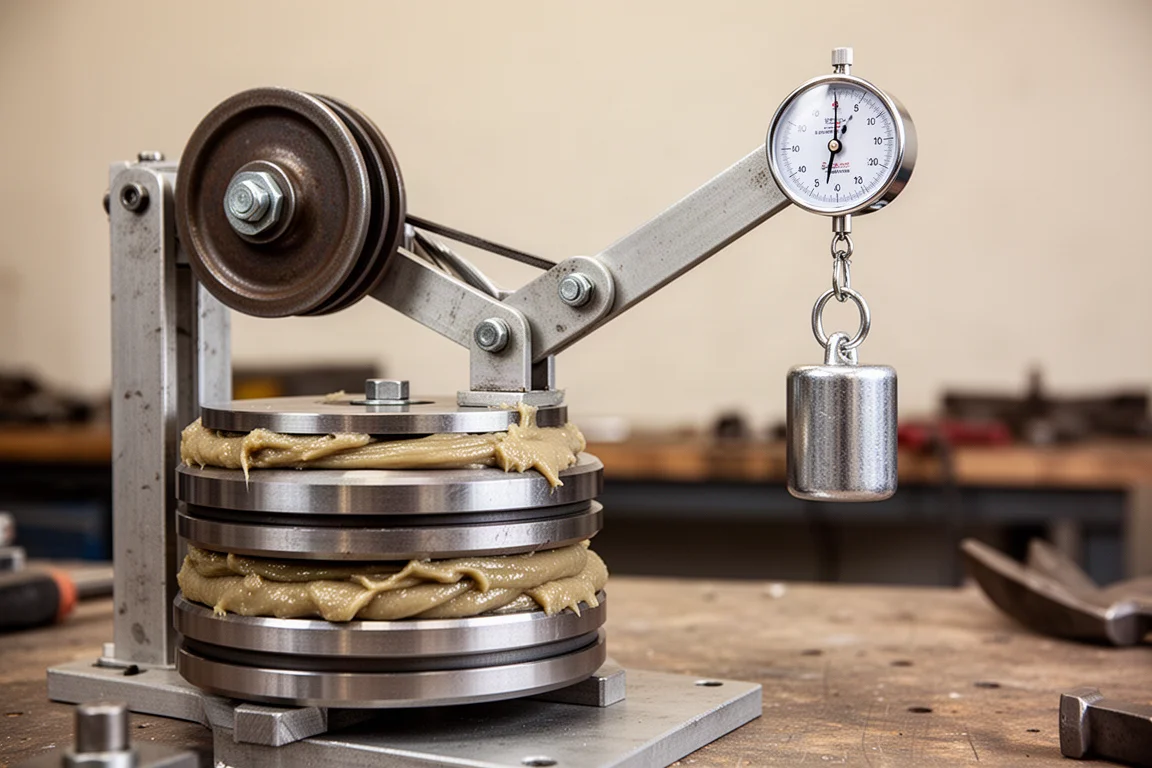
Royal Purple delivered an impressive 68.2 lb of strength. Red Line put up a great number at 67.24 lb, but that was not enough to beat Royal Purple. Still, both brands are very close in tack strength, so either should stay in place under demanding conditions.
Film Strength: Wear Protection Under Extreme Pressure
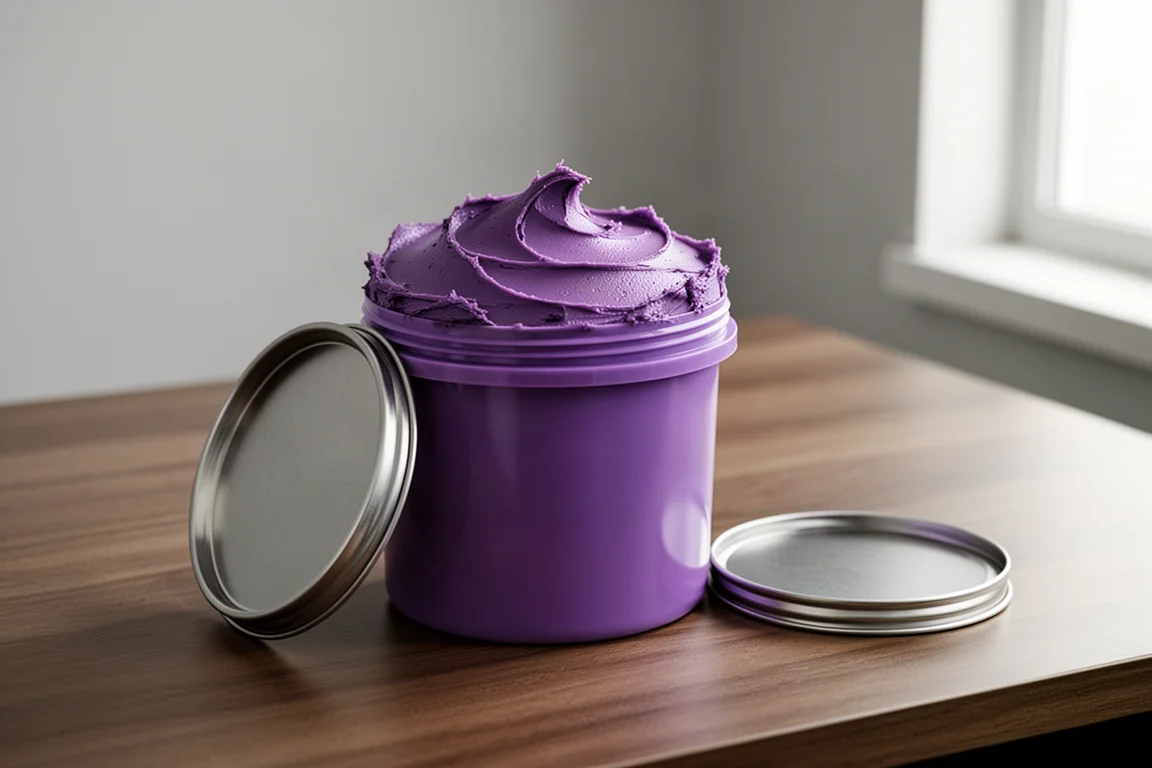
Film strength testing used a lubricity tester with approximately 40 ml of grease in the test cup and more than double the downward force typically used when testing motor oils, since grease is an extreme pressure lubricant. Each two-minute run left a wear scar on a test bearing, and the scar size revealed how well each grease protected the metal.
The wear scars on both bearings were so small that a microscope was needed to measure them. Royal Purple looked like the winner after its run, but Red Line actually beat it by a narrow margin. Both greases performed plainly amazingly in this category, and either would offer excellent wear protection for bearings and CV joints.
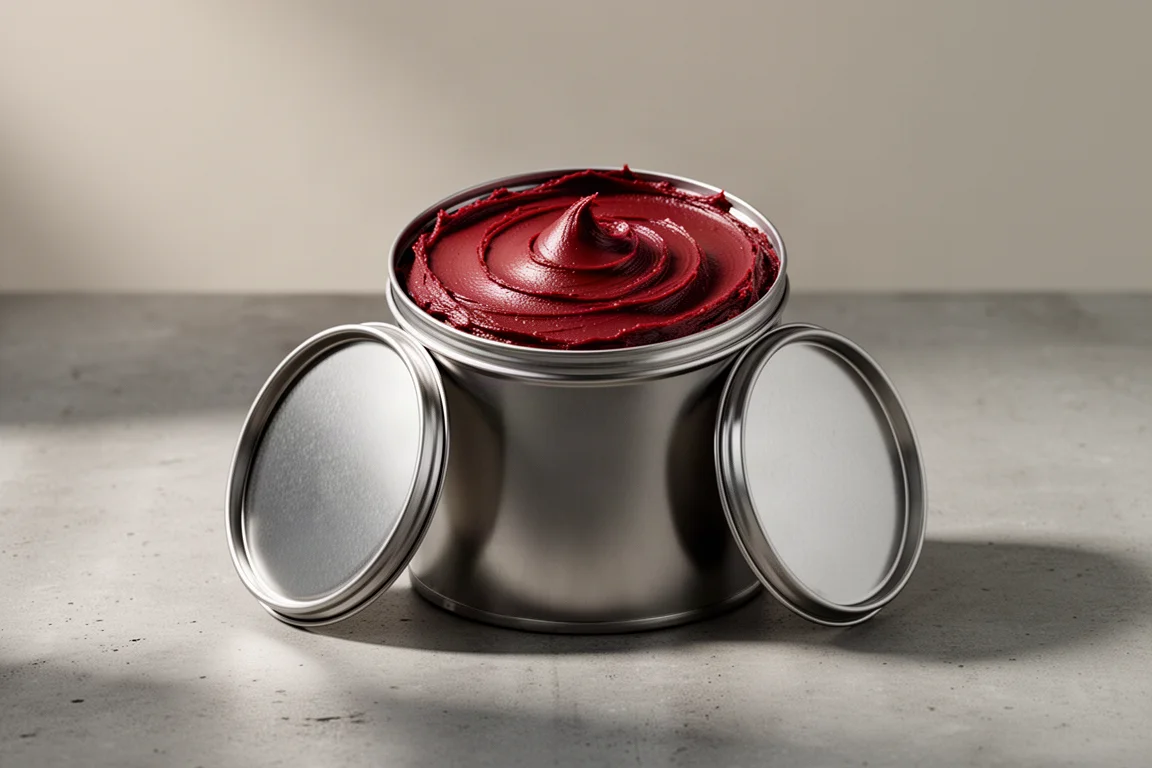
Corrosion Protection
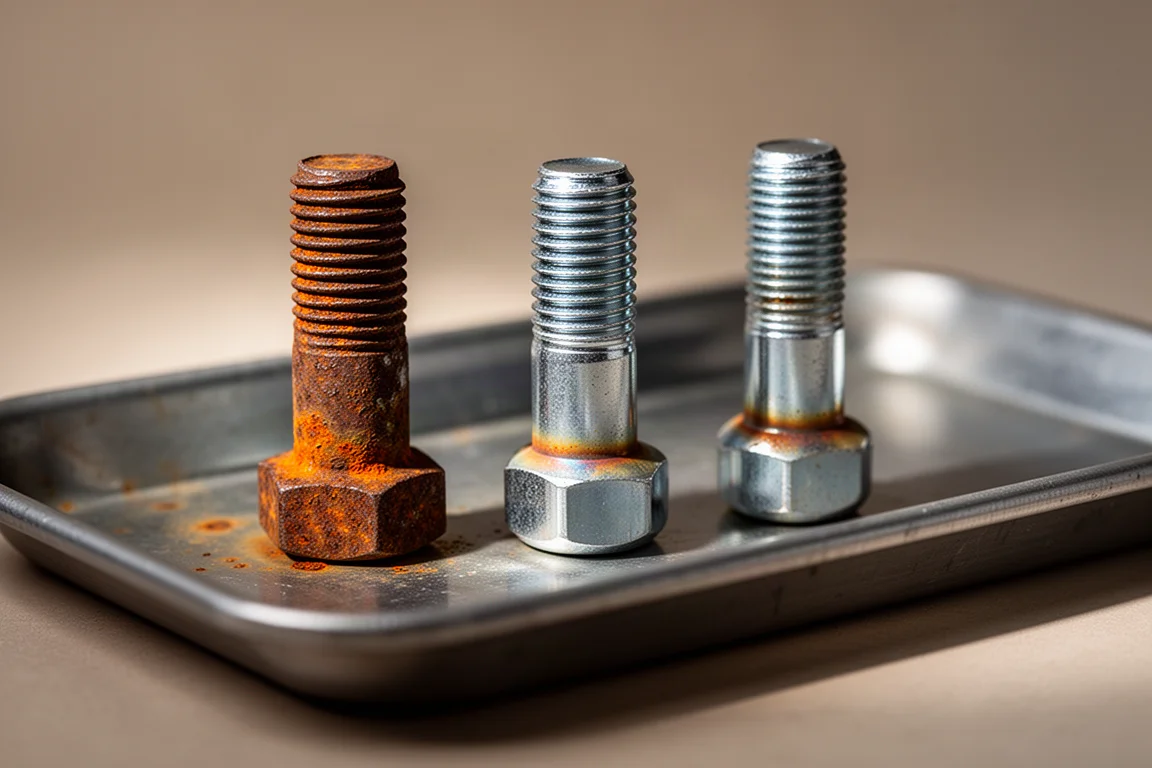
Grease plays an important role in preventing corrosion. In this test, the protective zinc coating was removed from three wheel stud lugs to make them more susceptible to rust. One bolt served as an untreated control, while the other two received a very light coat of grease. A powerful oxidizer was applied several times over 24 hours.
The control bolt showed heavy rust within a minute, while the Red Line and Royal Purple coated bolts showed no visible rust. After the full 24 hours and multiple applications, Red Line did a terrific job with only a small amount of oxidation forming at the base of the bolt where it was submerged in the oxidizer. Royal Purple allowed slightly more oxidation at the base plus some patches along the threads. Both offered strong protection, but Red Line edged ahead.
Cold Temperature Performance
For cold weather use, both sets of chemically cleaned bearings were packed with grease and placed in a freezer set to -20 degrees F. After 24 hours, the resistance to motion of each bearing was measured.
Red Line required a little over 9 lb to rotate the bearing, while Royal Purple needed a little over 12 lb. Both did a good job, but Red Line requires roughly 25% less rolling resistance than Royal Purple in extremely cold conditions, making it the clear pick for sub-zero environments.
Water Resistance
The water spray-off test measured how well each grease withstands exposure to water. A quarter-inch layer of grease was applied to a test plate, weighed, and then sprayed with 100 degree F water for one minute before being weighed again.
Royal Purple did a very good job, losing only a fraction of a gram and spreading to roughly 35.8 mm. Red Line washed away noticeably more, spreading to approximately 50 mm and losing about 0.37 g. For wet or submerged applications, Royal Purple holds up better.
Heat Tolerance and Dropping Point
The dropping point is the temperature at which grease passes from a semi-solid to a liquid. Royal Purple claims a drop point over 515 degrees F, while Red Line advertises one over 800 degrees F.
In testing, Royal Purple began to move at around 520 degrees F and started smoking near 700 degrees F. Red Line did not budge even as the tester reached 700 degrees F, winning this round decisively. Red Line CV2 is rated for use from -100 degrees F to 500 degrees F, which underlines its wide operating range.
Mixing Compatibility
Mixing incompatible greases can cause the base oil to separate from the thickeners. To check, the two brands were mixed together and inspected after 24 hours, with no visible change in the condition of the grease. Even so, it is best practice to avoid mixing greases with different thickener types: Royal Purple uses an aluminum complex thickener, while Red Line CV2 is a non-soap calcium formulation.
Which One Should You Buy
Both greases delivered impressive results. Royal Purple has the edge in water resistance and tack strength, while Red Line performed slightly better in nearly every other category, including wear protection, corrosion resistance, cold-temperature flow, and heat tolerance. If your use case involves heavy water exposure, Royal Purple is the safer bet. For everything else, from wheel bearings and CV joints to high-speed, high-load applications, Red Line CV2 is the stronger all-around performer. A note on specifications: Royal Purple UPG is an NLGI #2 multi-purpose aluminum complex grease made in the USA, and Red Line CV2 is an NLGI #2 GC-LB rated extreme pressure grease with red moly, made in the USA of global components.
Conclusion
It is hard to go wrong with either of these greases, since both offered exceptionally good performance across every test. The right choice comes down to your conditions: pick Royal Purple if water exposure is your main concern, and Red Line CV2 if you want the best overall balance of heat, cold, wear, and corrosion protection.
Further reading
Related Reviews

Backpacking Gear
Building a 10 lb Base Weight: An Ultralight Backpacking Gear List
A practical walkthrough of the ultralight pieces behind a 10 lb base weight, from a 765 g pack and a roomy one-person tent to a full camp chair and a dependable water filter.

Road Bikes
10 New Road Bikes Worth Watching: Aero, Titanium, Steel and Endurance Standouts
A practical roundup of 10 new road bikes, from aero flagships chasing single-watt gains to titanium, steel and endurance platforms built for real roads.
Bikepacking Gear
11 Bikepacking Essentials for Long-Distance Cycling
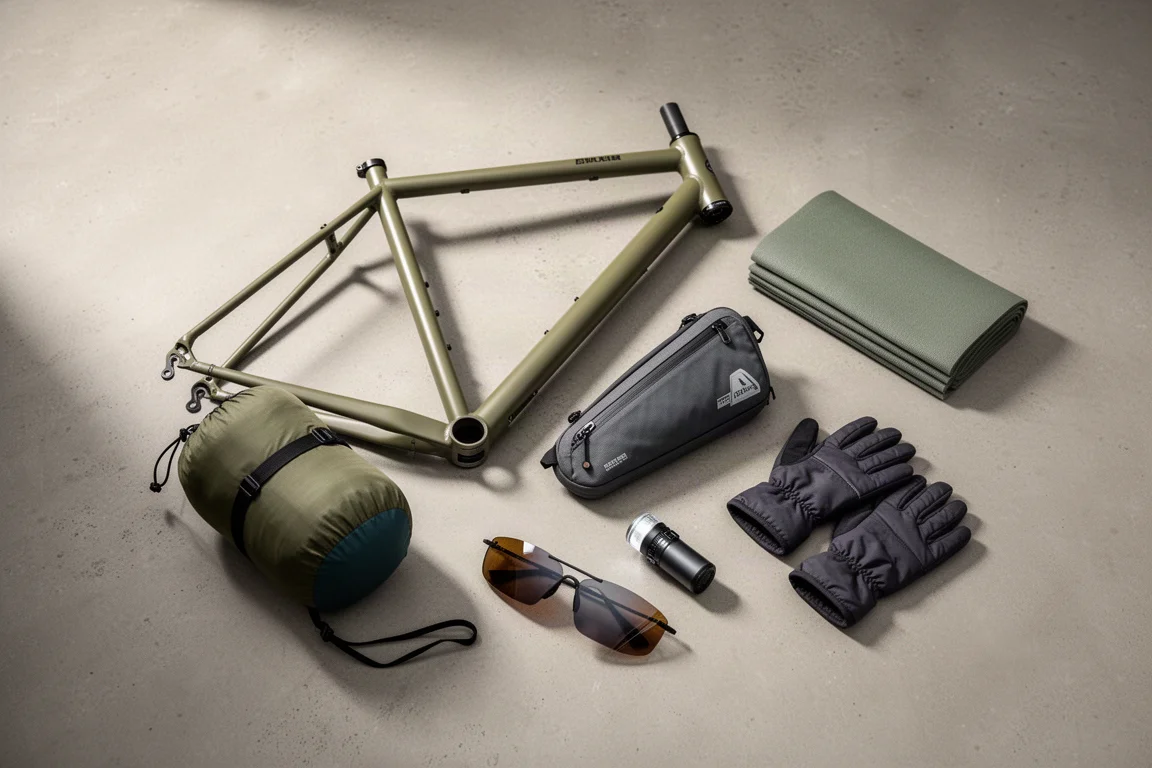
Eleven bikepacking essentials for long-distance cycling, from a steel gravel frame and a two-person tent to helmet lights, packable gloves, and a frame bag that puts weight in the right place.