Subwoofers
Best Subwoofers for Two-Channel Stereo: Three Options Worth Considering
Three subwoofers for music-first systems, from a value pick at around $500 to a feature-rich model at around $1,400, plus the integration basics that make them work.
Introduction
Subwoofers have a reputation problem in two-channel circles. They are widely treated as a home theater accessory, something you add for explosions rather than for music. The history says otherwise. The first subwoofer patent was filed in 1964 by Raymond Dones, who wanted distortion-free bass down to 15 Hz, and he called the design the Octavium. The Grateful Dead and the Pointer Sisters were early adopters.
Cinema borrowed the idea a decade later. The 1974 film Earthquake used a system called Sensurround, with multiple subwoofers in the theater reaching down to 17 Hz, and Dolby later created the LFE channel to give bass its own place in a soundtrack mix. In-wall subwoofers followed in the mid-1980s. By then home theater had claimed the category, and music listeners drifted away from it.
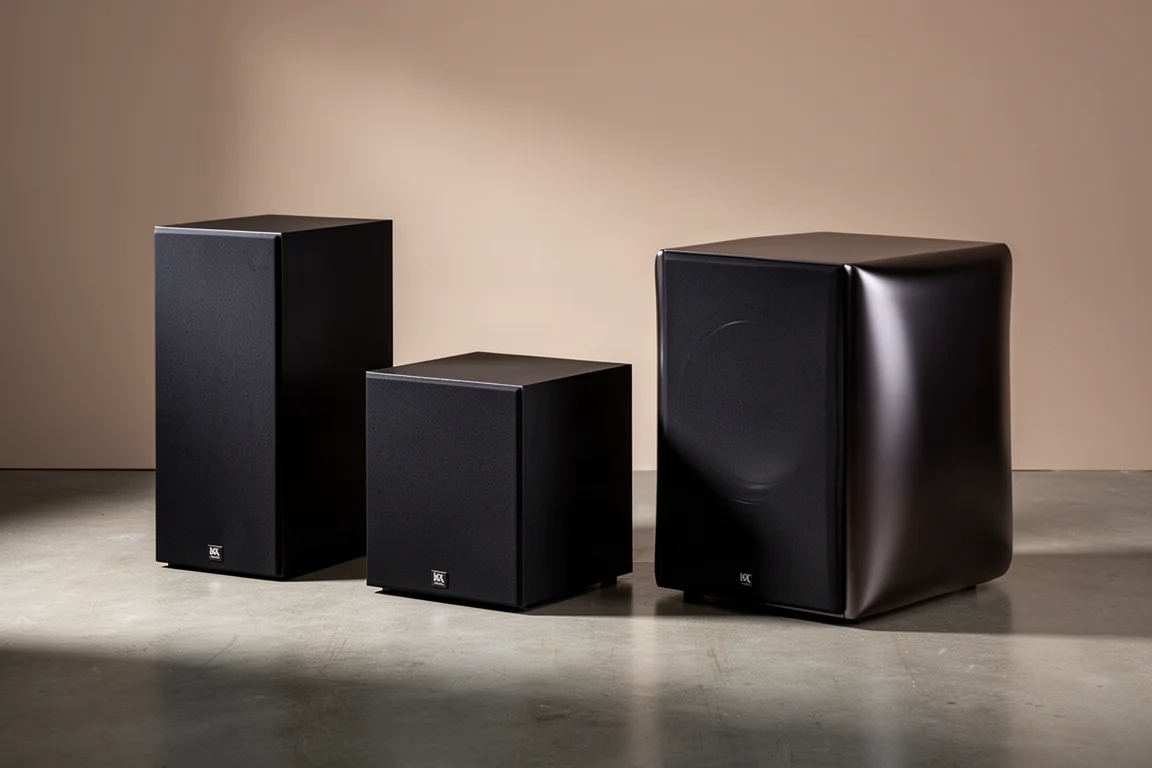
That drift costs you real musical information. Below are three subwoofers that make sense in a two-channel system at very different price points, along with the integration basics that decide whether any of them will sound right in your room.
Why a Subwoofer Changes Two-Channel Sound
The obvious reason is extension. Plenty of speakers, floorstanders included, do not reach down to 20 Hz. Pipe organs do, and so do kick drums, bass lines and synthesizers. Even material that seems to sit comfortably above the bottom octave often carries content your speakers simply stop reproducing.
Bookshelf speakers rolling off near 50 Hz are the clearest example. On The Chain by Fleetwood Mac, a famously nuanced bass line loses part of its tonality when the speaker cannot reach the lowest notes. The same happens with Billie Jean by Michael Jackson, and with Hans Zimmer’s Why So Serious from The Dark Knight, where a small speaker can make the track seem to drop out altogether. It is not only about the final few notes, it is about the character of the bass.
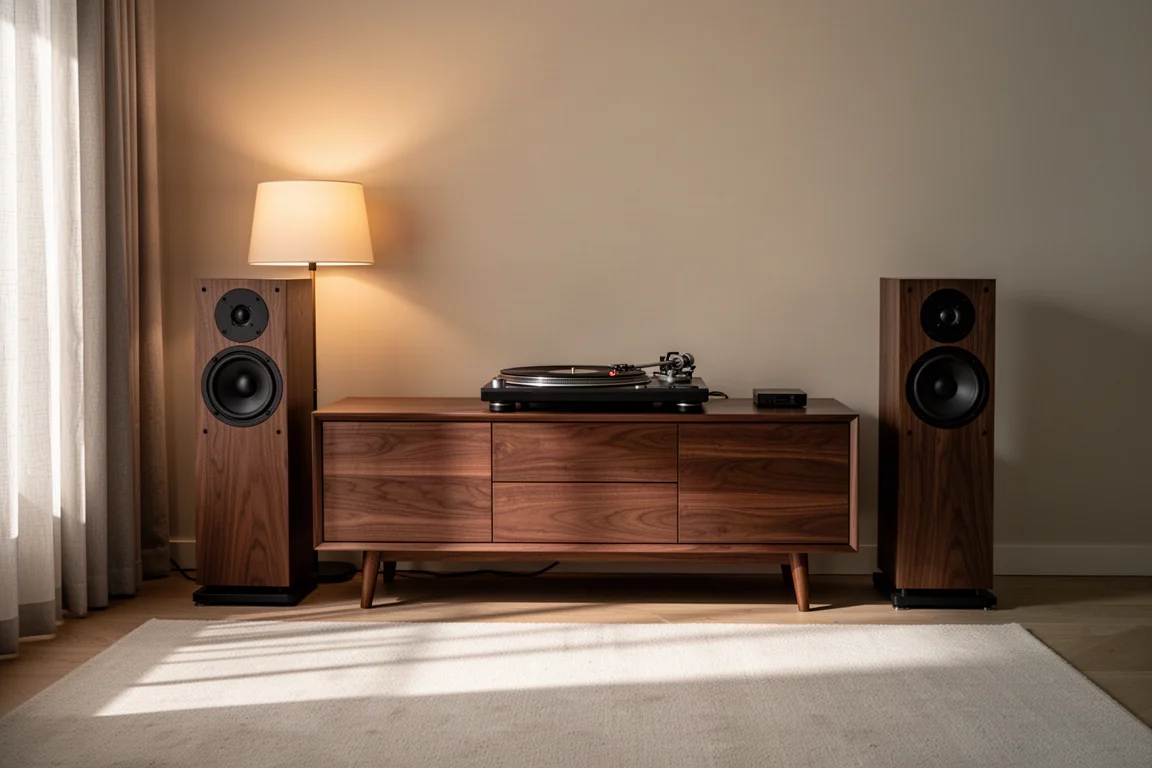
There is also a listening level problem. Unless you play music at the level the mastering engineer used, you will hear less bass than the mix contains. At a modest 65 to 70 dB, a lot of low-frequency information is simply quieter than intended. A receiver or integrated amplifier with a loudness control can compensate, but if yours does not have one, the subwoofer’s own level control is the practical fix.
Then there is headroom. Music with wide dynamic range asks a small woofer for swings it cannot deliver cleanly, and a dedicated subwoofer takes that job off the main speakers.
How to Integrate a Subwoofer Properly
Integration matters more than the subwoofer itself. The usual approach is a high-pass filter on the main speakers, with the crossover starting around 80 Hz. That keeps the deepest notes away from a driver that is also handling the midrange.
The division of labour is not a minor detail. A typical two-way speaker crosses its woofer to its tweeter somewhere near 2,000 Hz, and vocals live between roughly 400 Hz and 2,000 Hz. Sibilance sits in the 4,000 to 6,000 Hz region, and many female vocals land close to that crossover point. When the same woofer is also asked to produce deep bass, its cone has to travel much further. Sound pressure level tracks driver acceleration, and every octave lower needs roughly four times the excursion. The difference in cone travel between 1,200 Hz and 80 Hz is around 256 times. That large, slow movement modulates the higher frequencies the driver is producing at the same time, smearing detail in a way that is easy to hear once it is gone.
Taking the low bass away from the main speakers tightens the midrange and the top end, and it helps lock in soundstage and imaging.
You do not need expensive hardware to do this. Some affordable Class D amplifiers include a fixed 80 Hz high-pass filter, and streamers with a subwoofer output can apply a variable high-pass in the digital domain. Full bass management is available on streamers that cost around $250. Room correction is the other half of the job, and many subwoofers include a microphone and an app for setting crossover, gain and delay, which makes placement far less painful.
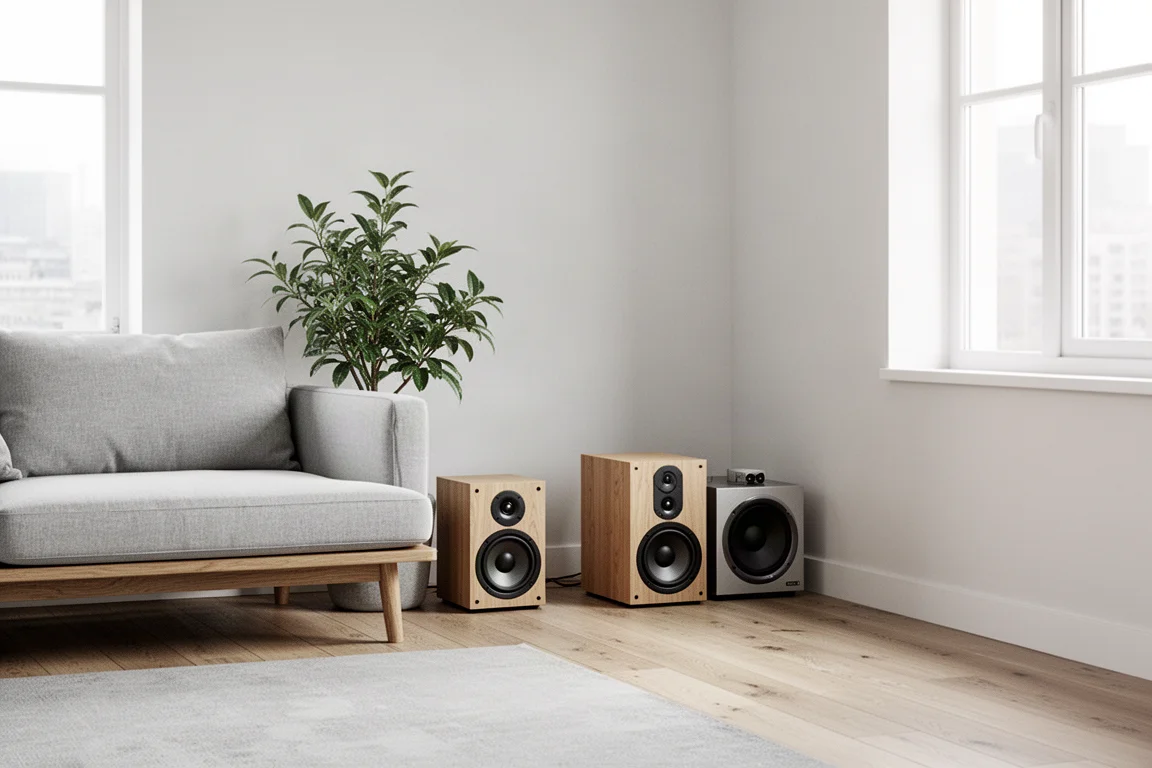
Placement itself is flexible. Because low frequencies are less directional, you can move a subwoofer to the position that measures and sounds best rather than the position that suits your speakers. The standard trick is to place the subwoofer where you normally sit, then move around the room to find where the bass sounds most even, and leave the subwoofer there.
Best Value: RSL Speedwoofer 10S Mark II
The RSL Speedwoofer 10S Mark II is the value pick of this group at around $500. It is a 10-inch design with the kind of output that makes it an easy recommendation when budget is the main constraint.
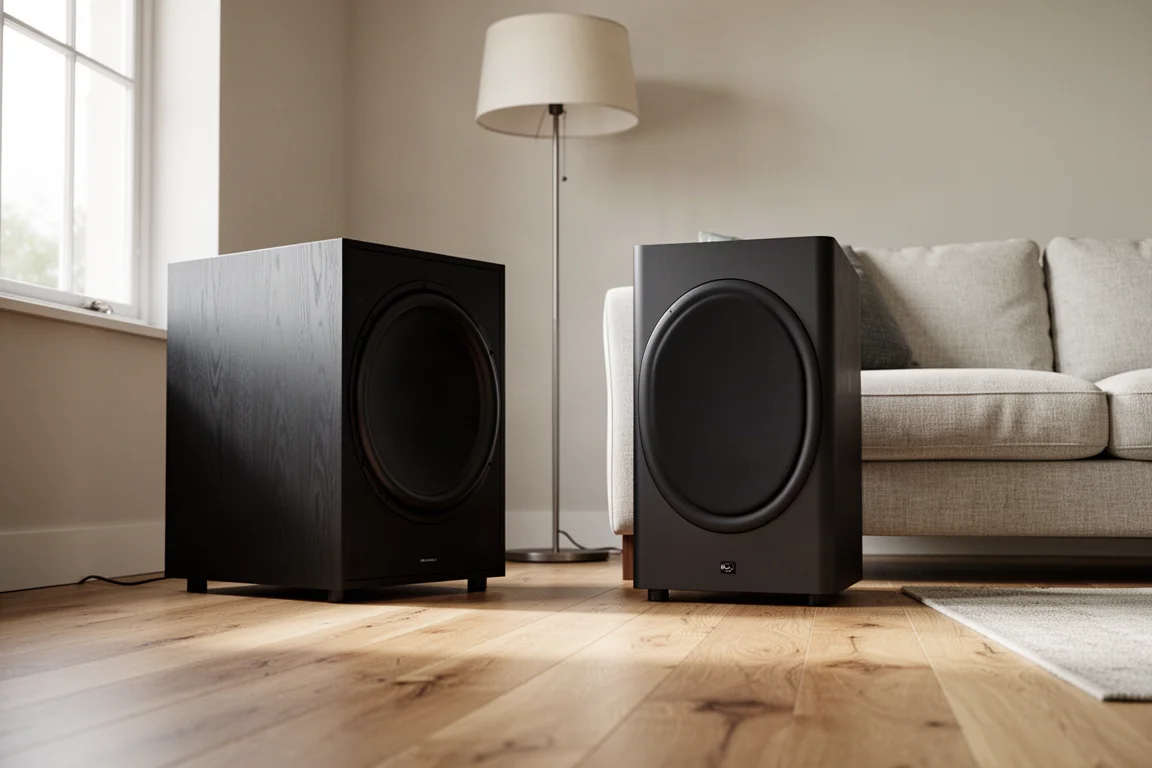
The trade-off is size. Despite the 10-inch driver, the cabinet is large, so it asks for genuine floor space. If you have a corner or an alcove to spare, that is a fair exchange for the performance on offer.
Best Compact Sealed Option: SVS SB-1000 Pro
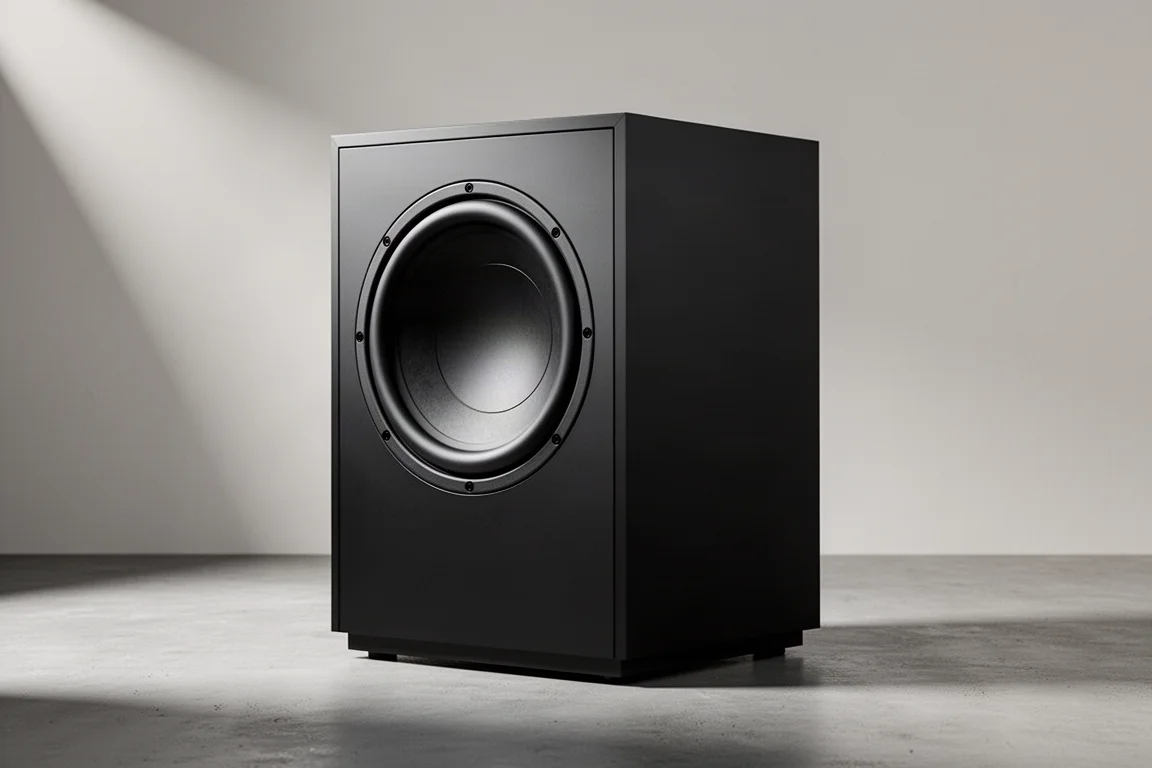
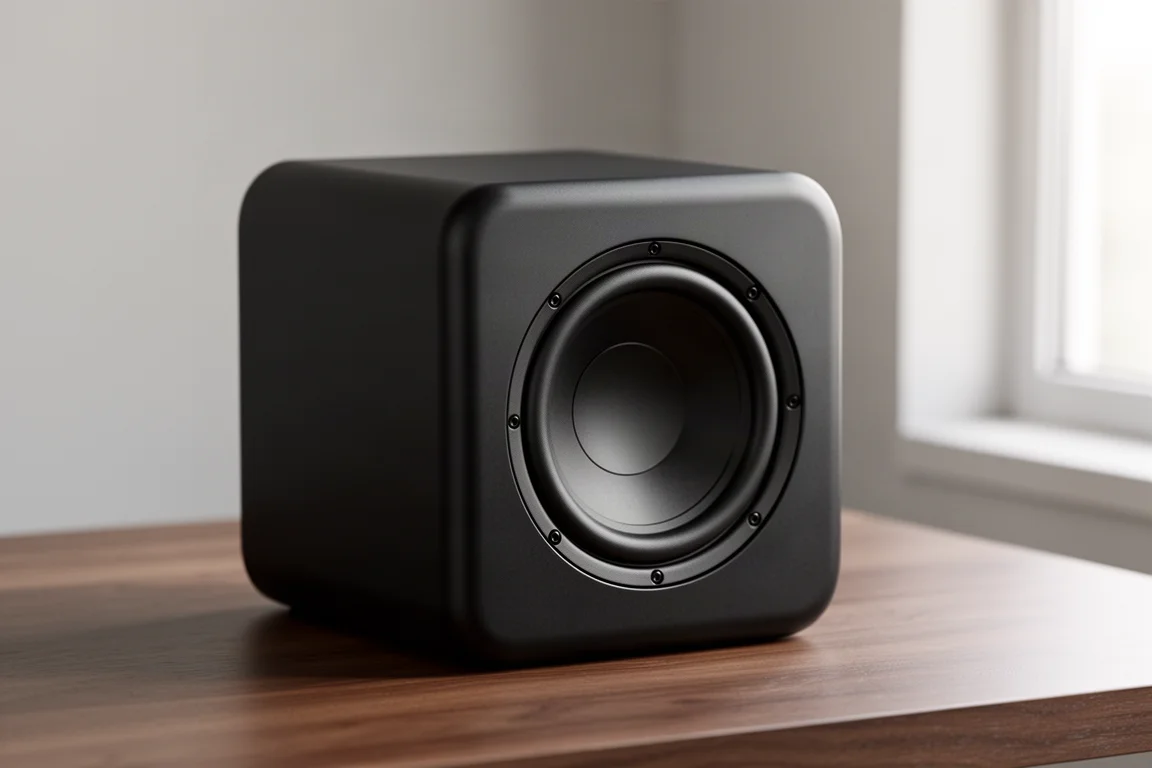
The SVS SB-1000 Pro is a 12-inch sealed subwoofer in a genuinely small cabinet, priced at around $600. It is the option to look at when you want serious low-frequency capability without a mini-fridge occupying your listening room.
SVS also provides an app for setup and control, which is the kind of feature that quietly becomes essential. Being able to adjust level and crossover from your seat, rather than crawling behind the cabinet, changes how often you actually fine-tune the system.
Best Feature-Rich Option: Q Acoustics Q Sub 120
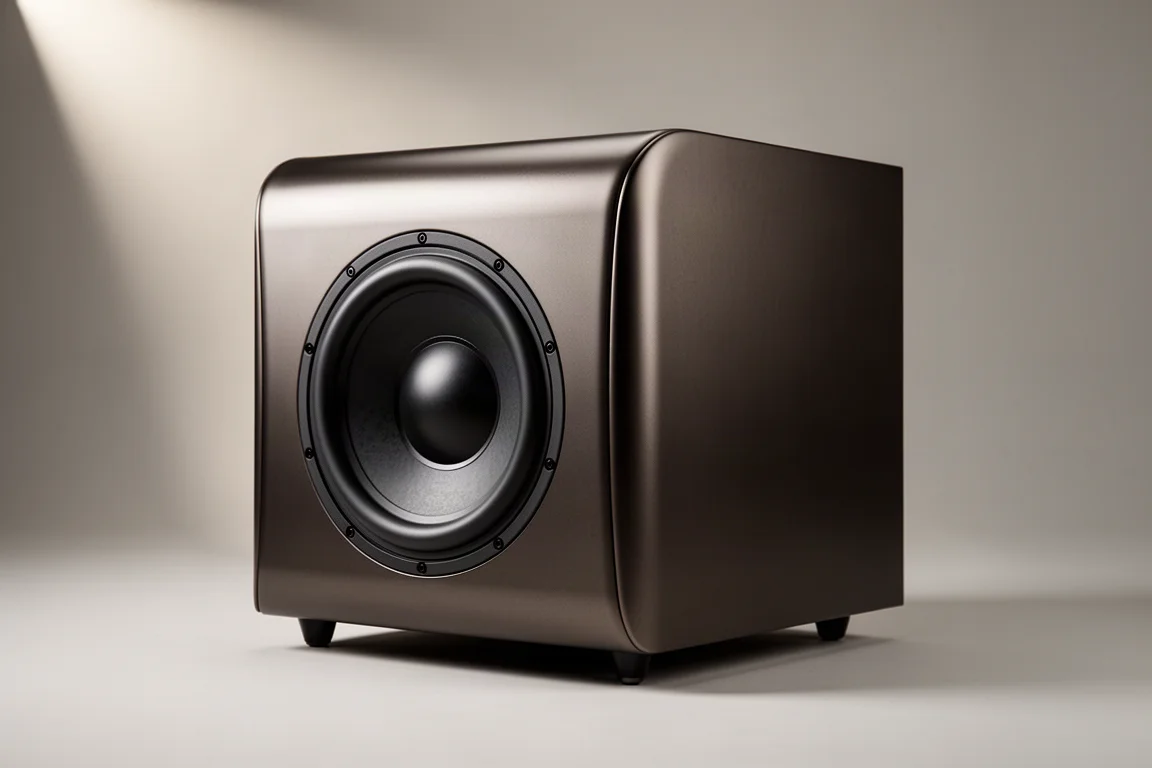
The Q Acoustics Q Sub 120 is the most capable and the most expensive of the three at around $1,400. It is a large subwoofer, but not an unreasonable one, and it strikes a balance between output and physical size that is hard to find.
Its appeal for two-channel use is the control set. The rear panel offers a selectable crossover, selectable phase, DSP and delay, which gives you the tools to blend it with your main speakers rather than simply adding bass on top of them.
That flexibility matters most in rooms where the ideal position is not available. Being able to adjust delay and phase, and to shape the response digitally, means the subwoofer can be tuned to the space you actually have.
What to Consider Before Buying
Subwoofers are large, and most of them are visible. If you dislike a big cabinet in your room, that is a legitimate objection, and it is the main reason in-wall subwoofers exist. In-wall models keep the floor clear, but they are not cheap: a pair with two 8-inch woofers runs about $3,000, and a single unit is around $2,000. That route only makes sense if space is genuinely at a premium and you are willing to commit to installation.
Placement is the second compromise. The best-sounding position for a subwoofer is not always the most convenient one, so expect to move it a few times before settling. That is still a better situation than a pair of speakers that produce too much or too little bass in a fixed position you cannot change.
Cost is the third factor. A good subwoofer is a real outlay, but it can also let you keep smaller main speakers and still get full-range sound, which sometimes balances out against the price of a larger pair of speakers.
Buying Advice
Start with integration, not specifications. If your amplifier or streamer can high-pass your main speakers, you will get more from a $500 subwoofer than from a more expensive model added to an unfiltered system.
On price, the RSL Speedwoofer 10S Mark II at around $500 and the SVS SB-1000 Pro at around $600 are sensible starting points, while the Q Acoustics Q Sub 120 at around $1,400 adds deeper tuning options for listeners who want them. Budget subwoofers from Polk exist for very tight budgets, though they will not reach as low or offer the same control, and inexpensive amplifiers from brands such as Fosi Audio or Aiyama include a fixed high-pass filter to get a basic setup working.
Whichever you choose, budget time for setup. Measure, adjust the crossover and level, and give yourself a few evenings to fine-tune. The difference between a subwoofer that is simply present and one that is properly blended is large, and it is entirely within your control.
Conclusion
The subwoofer was invented for music, and it remains one of the most effective upgrades a two-channel system can receive. You do not have to replace your main speakers or spend a fortune to hear the difference. A well-integrated subwoofer, with a high-pass filter on the mains and a crossover starting around 80 Hz, adds extension, midrange clarity, headroom and placement flexibility that passive speakers cannot match on their own.
Further reading
Related Reviews
Subwoofers
Arendal 1961 Subwoofer 1S Review: Beautiful Build, Modest Punch at $1,000
A sealed $1,000 subwoofer with a gorgeous cabinet, plus three lower-priced alternatives that deliver more impact for movie nights.
Subwoofers
Arendal Sound 1723 2V Subwoofer Review: Dual 13.8-Inch Drivers Under $3,000
A flagship ported subwoofer with dual opposing 13.8-inch drivers, a 1,200W RMS amplifier, app-based DSP, and a 10-year warranty.
Subwoofers
Ascendo 16 Sub Active Sealed Review: Sealed Bass Built on Real Engineering
A close look at the Ascendo 16 Sub Active Sealed, a 16-inch sealed home theater subwoofer with independently verified measurements, a purpose-built driver, and genuinely controlled output.