Subwoofers
Best Subwoofers for Music and Movies: Five Picks That Earn Their Space
Five subwoofers that add genuine low-frequency weight to music and movie systems, with the trade-offs worth weighing before you buy.
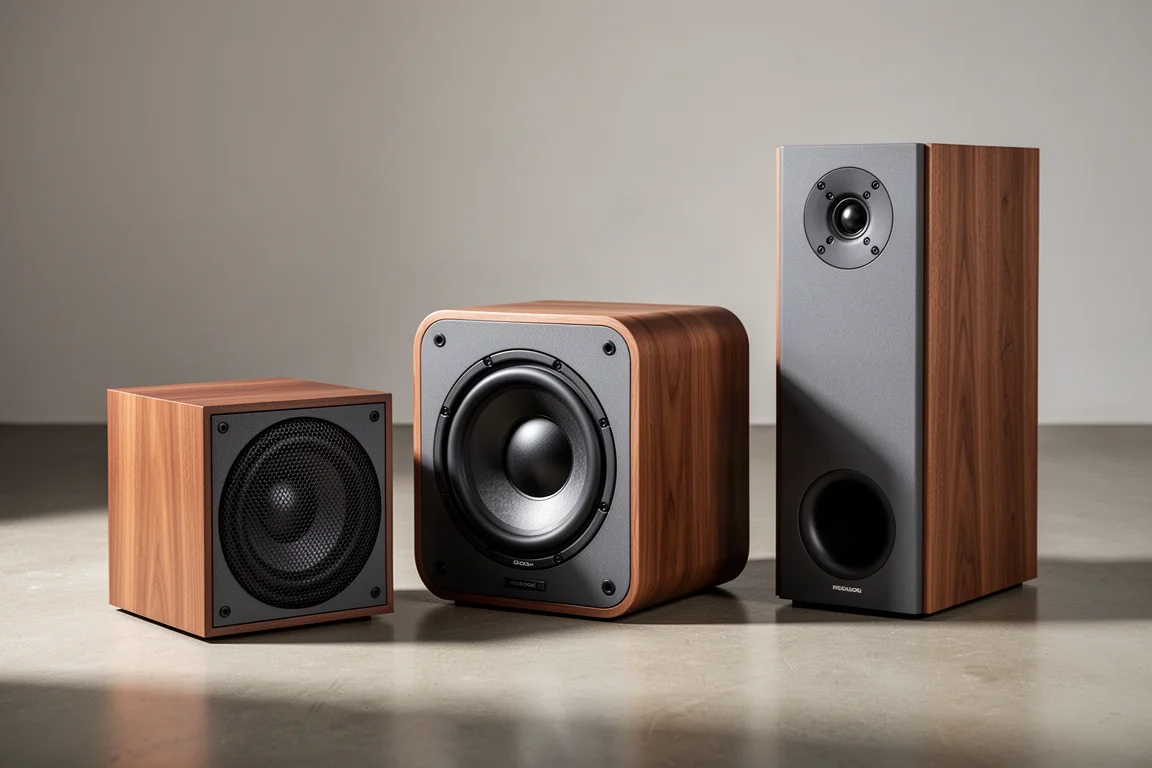
Introduction
Subwoofers are not only for home theater systems. If you listen to music through bookshelf speakers, or through tower speakers that roll off before the lowest notes, a subwoofer reproduces the part of the recording your main speakers never reach. It also helps with the room itself: bass behaves differently in every space, and a dedicated bass driver gives you a way to add weight exactly where your speakers run out.
That does not mean you need a stack of cabinets. In practice, a single well-chosen subwoofer is enough for most rooms and most listeners.
Why a Subwoofer Belongs in a Music-First System
A useful reference point is 50 Hz. Most speakers handle notes above that range confidently, some reach down to 40 Hz, and in-room response may dip into the 30s, but 50 Hz is a conservative cutoff for what a typical pair of speakers does well.
Plenty of instruments live below that line. A standard electric bass guitar has a low E at 41 Hz, a five, six or seven-string bass reaches down to 31 Hz, and a grand piano’s lowest note sits at 27.5 Hz. Pipe organs can extend far lower still. Kick drums in many productions are tuned near 50 Hz, and synthesizers in electronic music and heavier genres routinely generate content well below what small speakers can deliver.
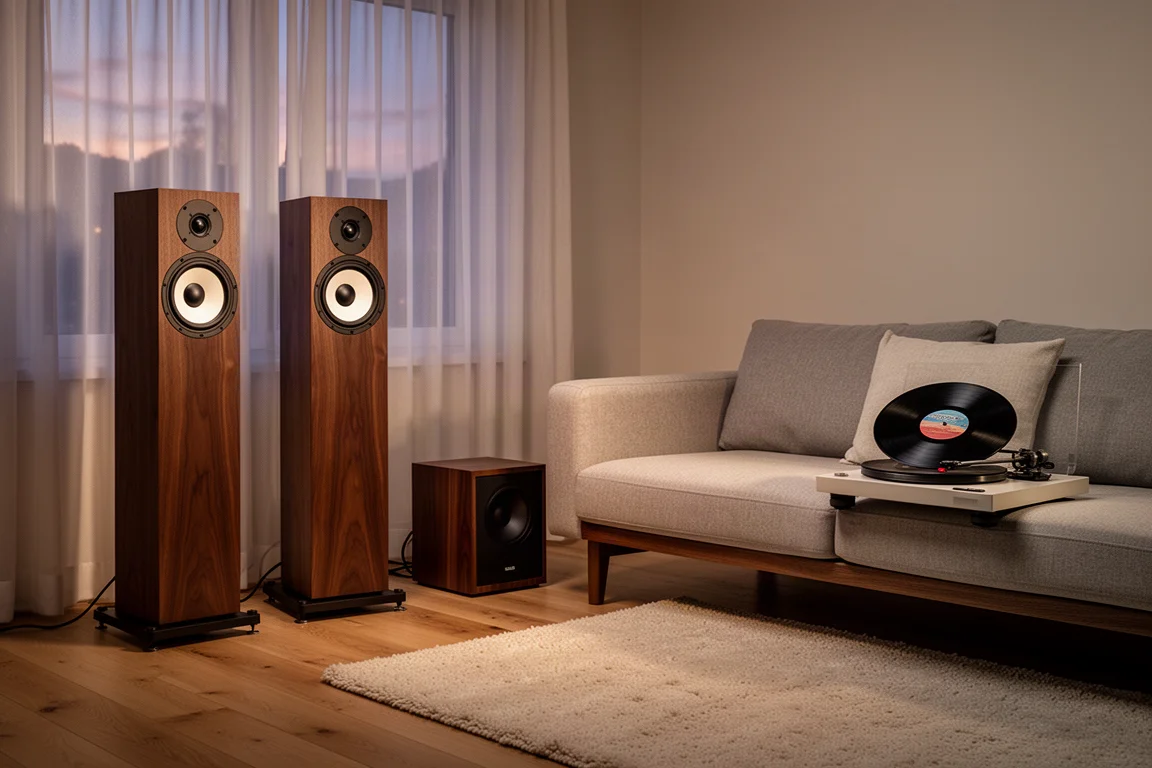
The second benefit is harder to measure but easy to hear. Getting a subwoofer in phase with the main speakers tends to expand the soundstage, and music feels bigger even when you are not listening to notes that reach 20 Hz. Much of what people attribute to speaker placement and seating position turns out to be bass integration, and a subwoofer is often the single change that affects the presentation most.
What to Check Before You Buy
Twenty hertz is the ideal target, and most budget subwoofers will not get close to it. That is acceptable. In a desktop setup with very small speakers, even a subwoofer that reaches 50 Hz adds the low end those speakers are missing.
Beyond extension, look at the practical details: cabinet size, whether the controls live on the rear panel or in an app, whether phase is adjustable, and whether the subwoofer supports a wireless connection kit if running a cable across the room is not realistic. One subwoofer is usually enough, and placement flexibility matters more than the number of cabinets you own.
Best Overall Value: SVS SB-1000 Pro
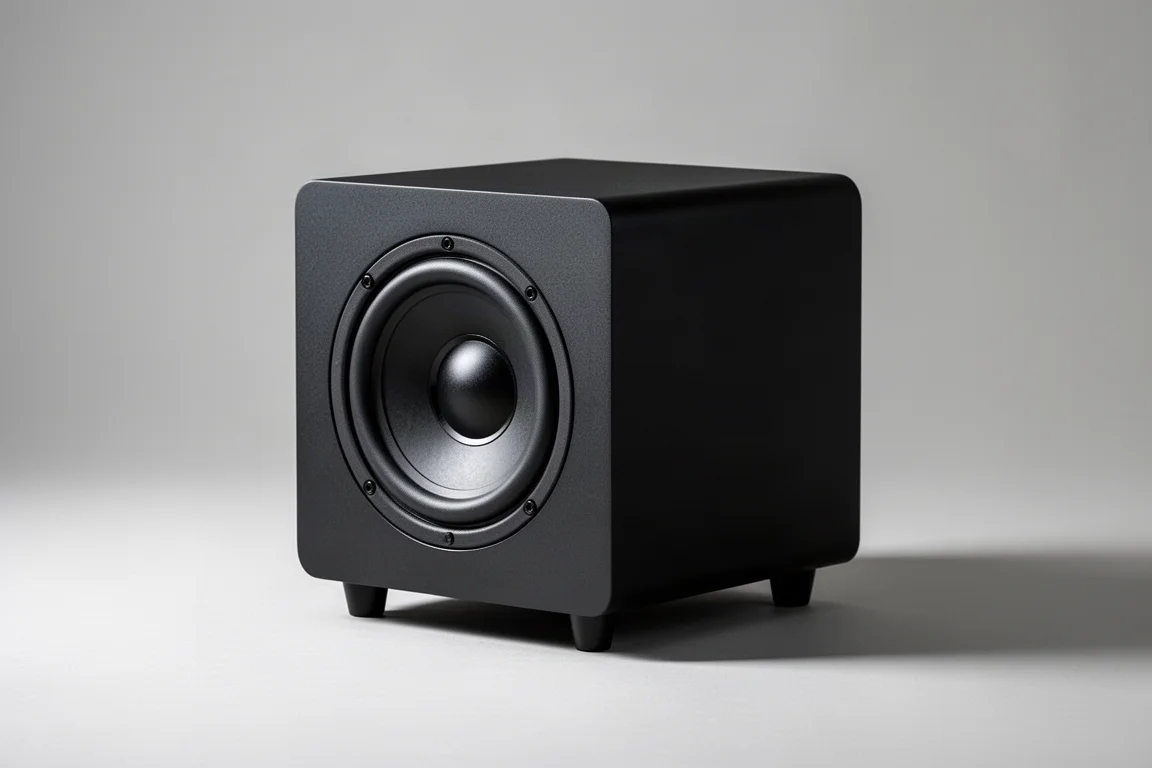
The SVS SB-1000 Pro is a 12-inch sealed subwoofer that stays surprisingly small. It is only marginally larger than some dual-driver designs, yet it plays deeper and with more confidence. Its footprint is roughly 13 by 14 by 15 inches, compact enough to tuck behind a chair, and an optional wireless connection kit removes the cable run entirely.
The bigger advantage is control. The SVS app lets you adjust crossover, phase and EQ from your phone, so you can tune the subwoofer from your seat instead of crawling around the room on your hands and knees. At $600 it is the most expensive pick here, but in a large living room it is loud enough to shake wall art. If you want one subwoofer that handles both music and movies in a small cabinet, this is the practical floor to aim for rather than going smaller.
Best All-Rounder at Its Price: RSL Speedwoofer 10S Mark II
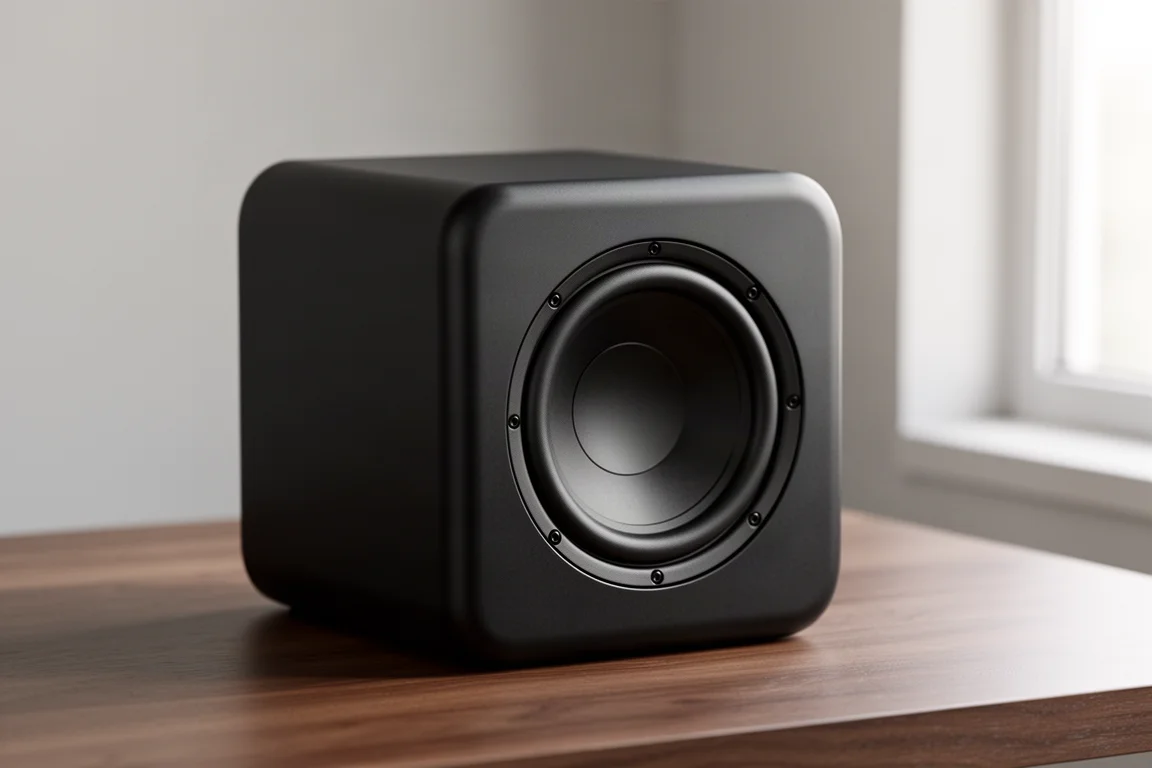
The RSL Speedwoofer 10S Mark II is the strongest all-around option at its price. It delivers 400 watts RMS, includes variable phase, and costs $450, which is $150 less than the SVS. What it gives up is app-based control, so crossover and EQ adjustments happen on the subwoofer itself rather than on your phone.
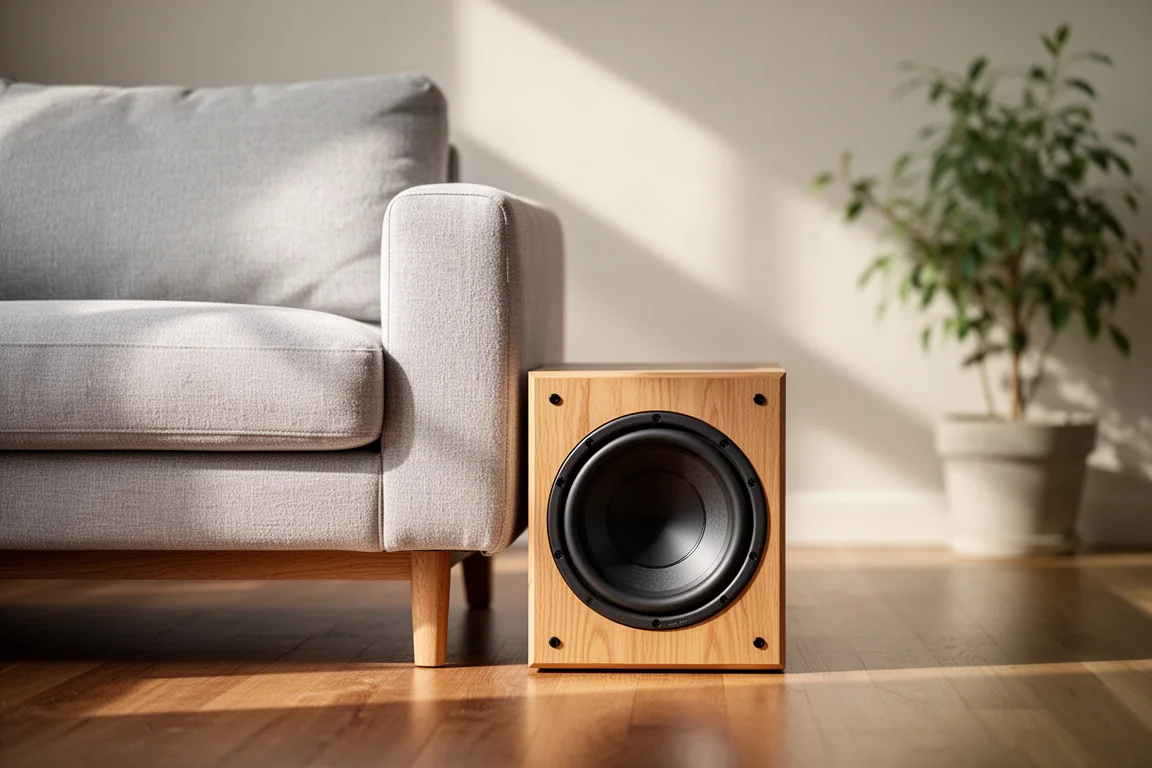
It is also physically larger than the SB-1000 Pro, so it needs more floor space. Availability can be tight and it is often a pre-order item, though stock does appear from time to time. It is genuinely difficult to find an unhappy Speedwoofer owner, and RSL has a strong reputation for customer service, which matters when you need help dialing a subwoofer into a room.
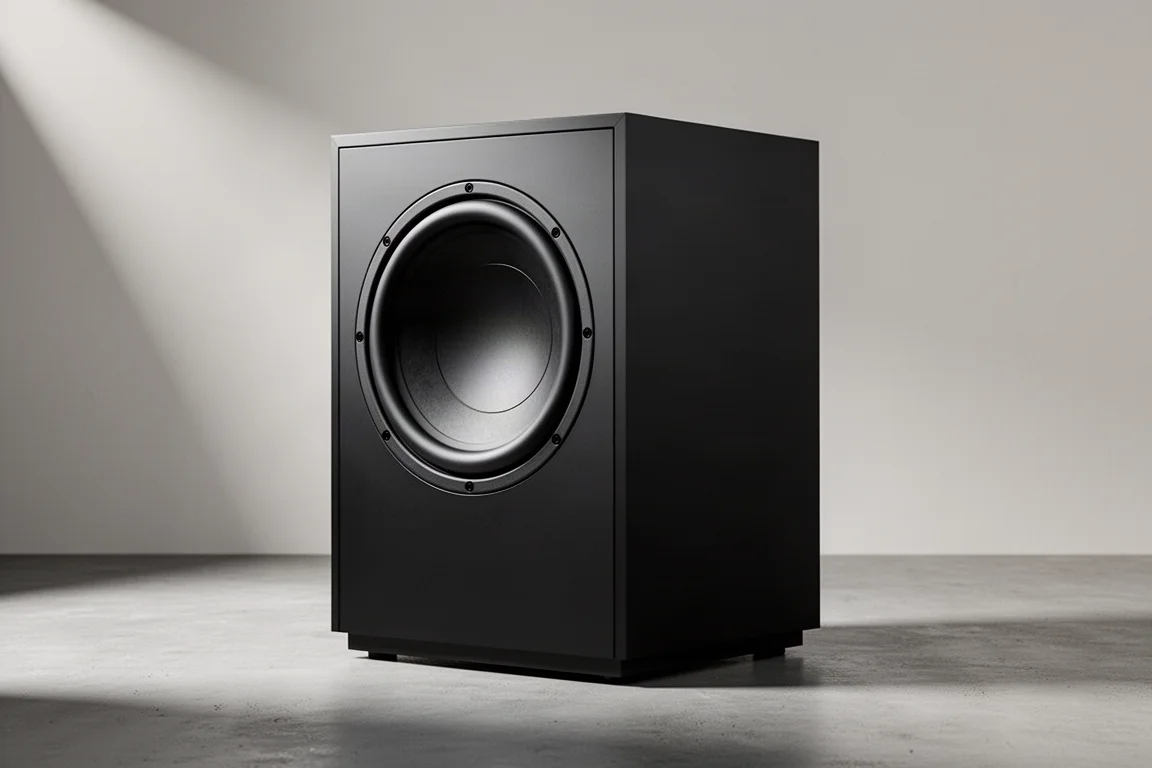
Best Budget Pick: Emotiva SE12
Emotiva is closing out a broad range of subwoofers, which makes this a good moment to look at the brand. The SE12 comes in at $269 and uses a passive radiator design. It also offers a high-pass filter output that can feed a separate amplifier, a feature you rarely see at this price.
For listeners who cannot stretch to the RSL or the SVS, the SE12 is a sensible entry point into real low-frequency support rather than a compromise that adds noise without depth.
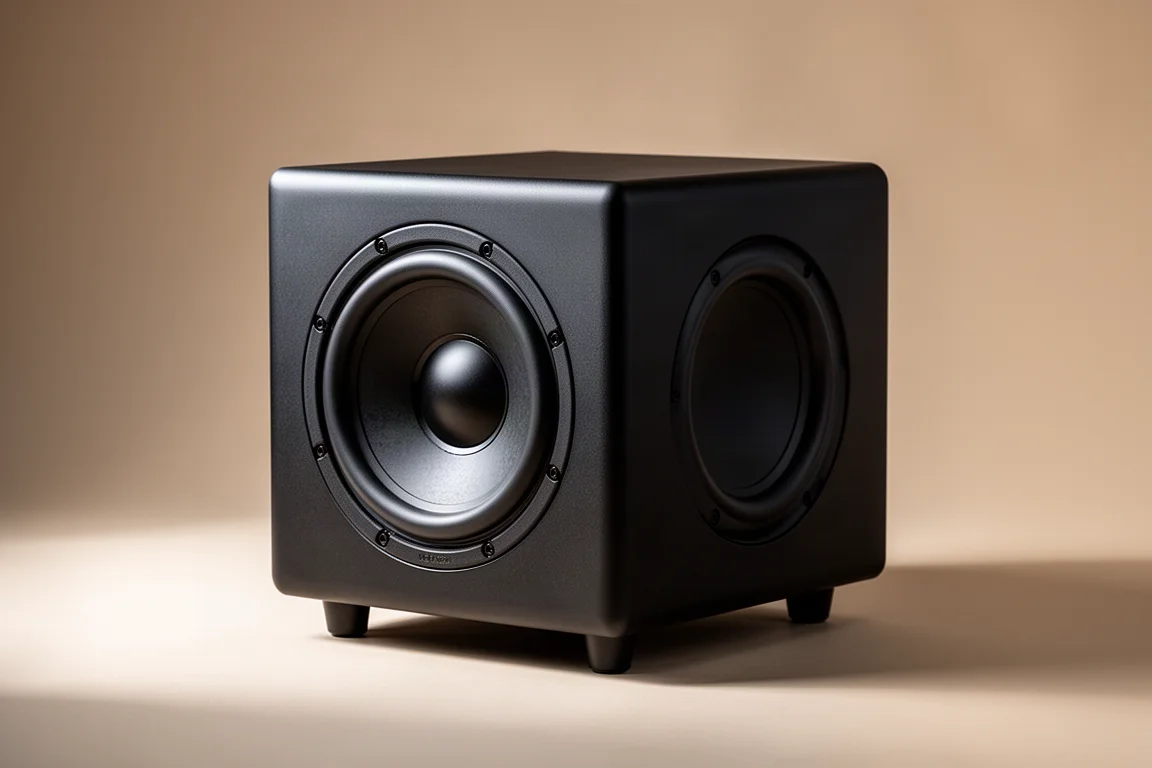
Step-Up Value: Emotiva XS10
The Emotiva XS10 sits at $399 and represents the step up within the Emotiva range. At that price it is a striking value for anyone who wants more output and headroom than the entry-level models provide without moving into the $600 bracket.
Treat the XS10 as the middle of the Emotiva lineup: more capable than the SE12 and the XS8, less expensive than the SVS. If your room is on the larger side and output per dollar is the priority, it deserves a serious look while closeout pricing holds.
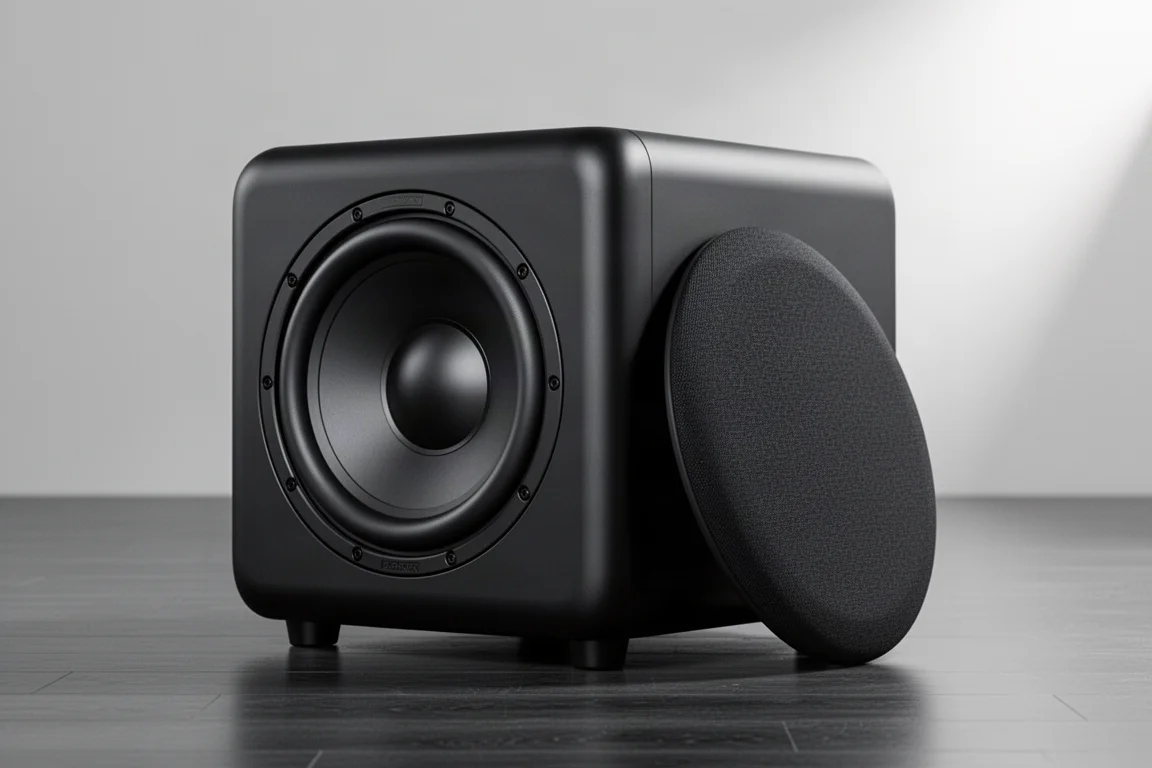
Compact Option: Emotiva XS8
The Emotiva XS8 comes in at $330 and rounds out the budget end of the range. It suits smaller rooms and desktop systems where the goal is filling in the bottom octave rather than pressurizing a large space. Paired with modest speakers, it covers the low end those speakers simply cannot produce.
Buying Advice: Matching Bass to Your Room and Budget
Start with your speakers. If they run out around 50 Hz, almost any competent subwoofer will be an improvement. If they already reach into the 30s, a subwoofer still helps with room-related unevenness and with the very lowest content in a recording.
There are cheaper routes as well. Basic options from brands such as Monoprice, Sony, JBL and Yamaha sometimes sell for under $200, and a simple desktop subwoofer can be found for around $70. Those make reasonable desk accessories, but they are not what you would put in a living room. The picks above are the point where a subwoofer starts behaving like a proper part of a music system.
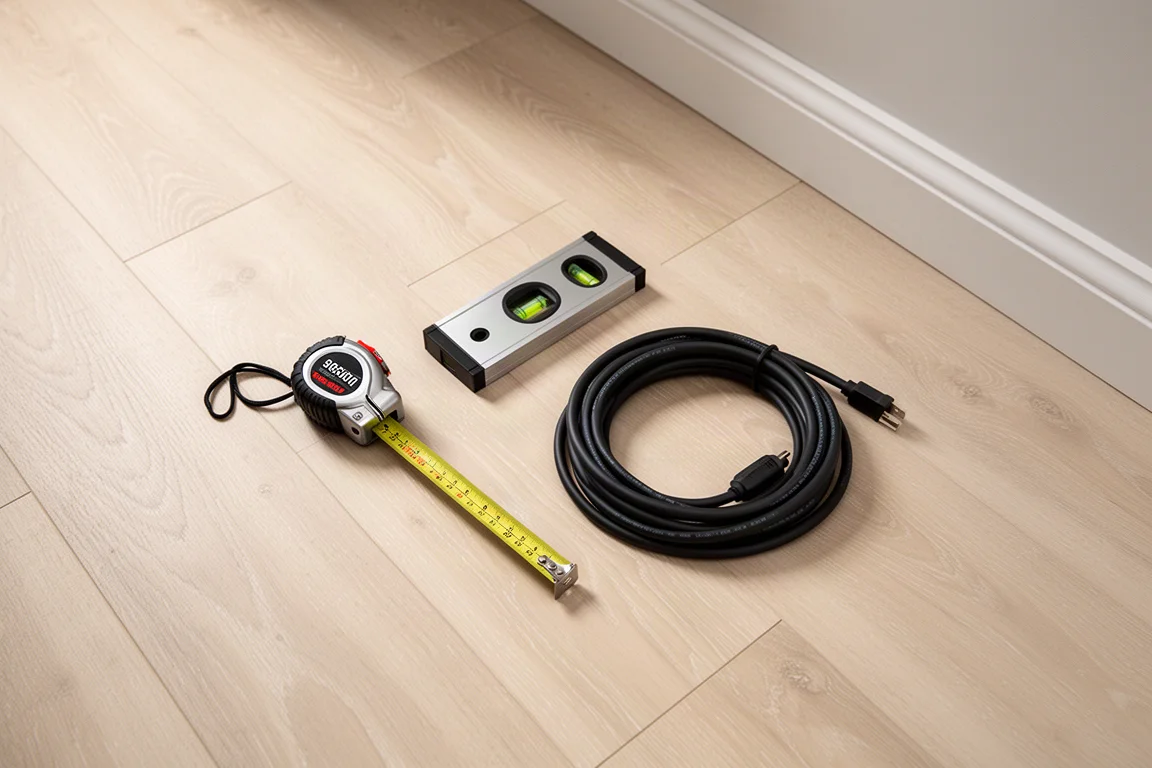
The most reliable way to decide is to buy from a seller with a return policy, integrate the subwoofer into your existing system, and live with it for a week. Plenty of listeners who were firmly against subwoofers have changed their minds after hearing one in their own room, including people who insisted the bass they grew up with was already sufficient. Small, unobtrusive options exist, so cabinet size is rarely a good reason to skip the upgrade.
Conclusion
A subwoofer is the most efficient way to hear more of the music and the soundtracks you already own. If you want the smallest strong all-rounder, the SVS SB-1000 Pro is the one to beat, with app-based tuning and enough output for a large room. The RSL Speedwoofer 10S Mark II is the best all-around value at its price for listeners who do not need app control. And when budget decides, the Emotiva SE12, XS10 and XS8 cover the entry and mid steps of the range with a passive radiator design and a genuine step up in output as you move up the line.
Further reading
Related Reviews
Subwoofers
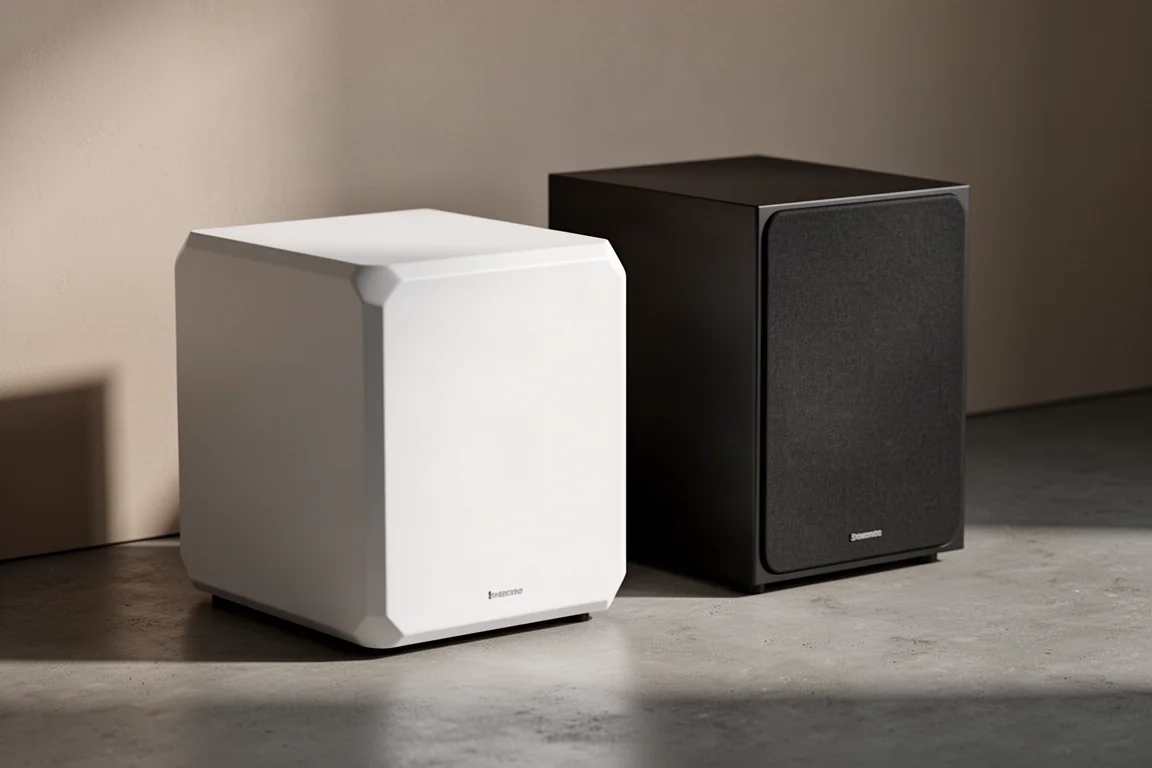
Arendal 1961 Subwoofer 1S Review: Beautiful Build, Modest Punch at $1,000
A sealed $1,000 subwoofer with a gorgeous cabinet, plus three lower-priced alternatives that deliver more impact for movie nights.
Subwoofers
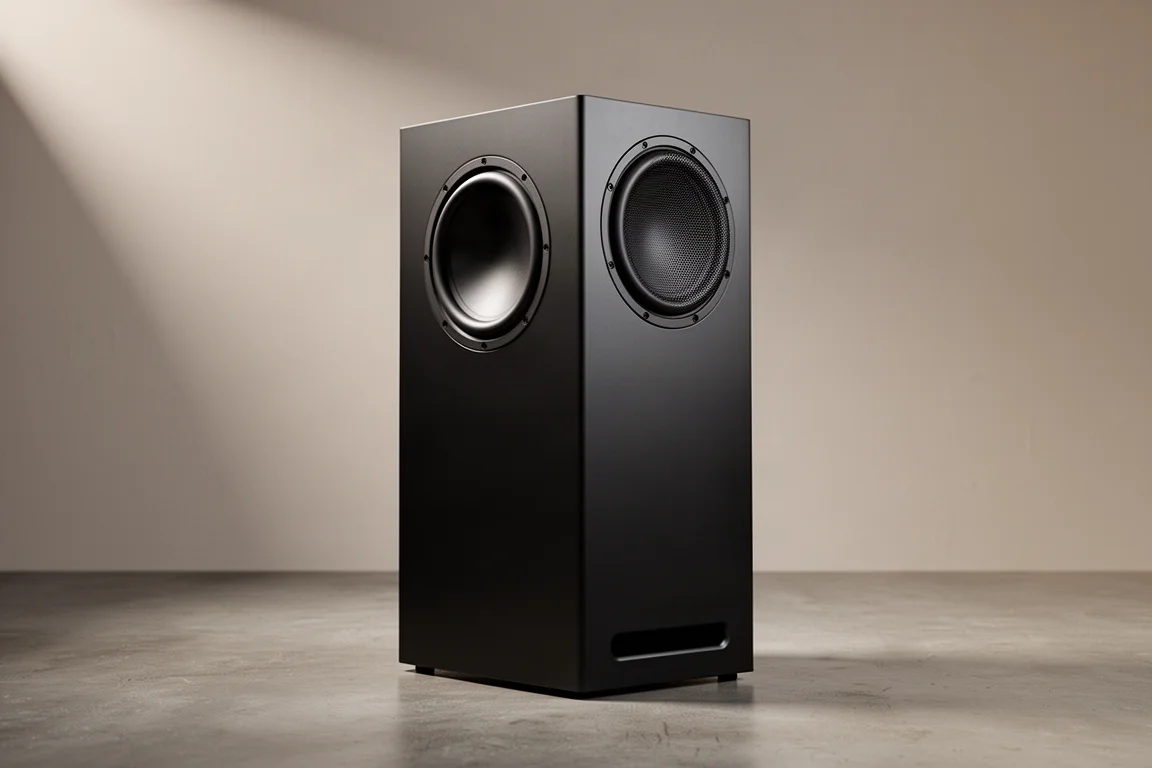
Arendal Sound 1723 2V Subwoofer Review: Dual 13.8-Inch Drivers Under $3,000
A flagship ported subwoofer with dual opposing 13.8-inch drivers, a 1,200W RMS amplifier, app-based DSP, and a 10-year warranty.
Subwoofers
Ascendo 16 Sub Active Sealed Review: Sealed Bass Built on Real Engineering
A close look at the Ascendo 16 Sub Active Sealed, a 16-inch sealed home theater subwoofer with independently verified measurements, a purpose-built driver, and genuinely controlled output.