Hi-Fi Speakers
Best Standmount Speakers: Seven Standout Pairs Worth Considering
A practical roundup of seven standmount speakers, from active all-in-one pairs to high-efficiency passive designs, with the strengths and trade-offs that matter most.
Introduction
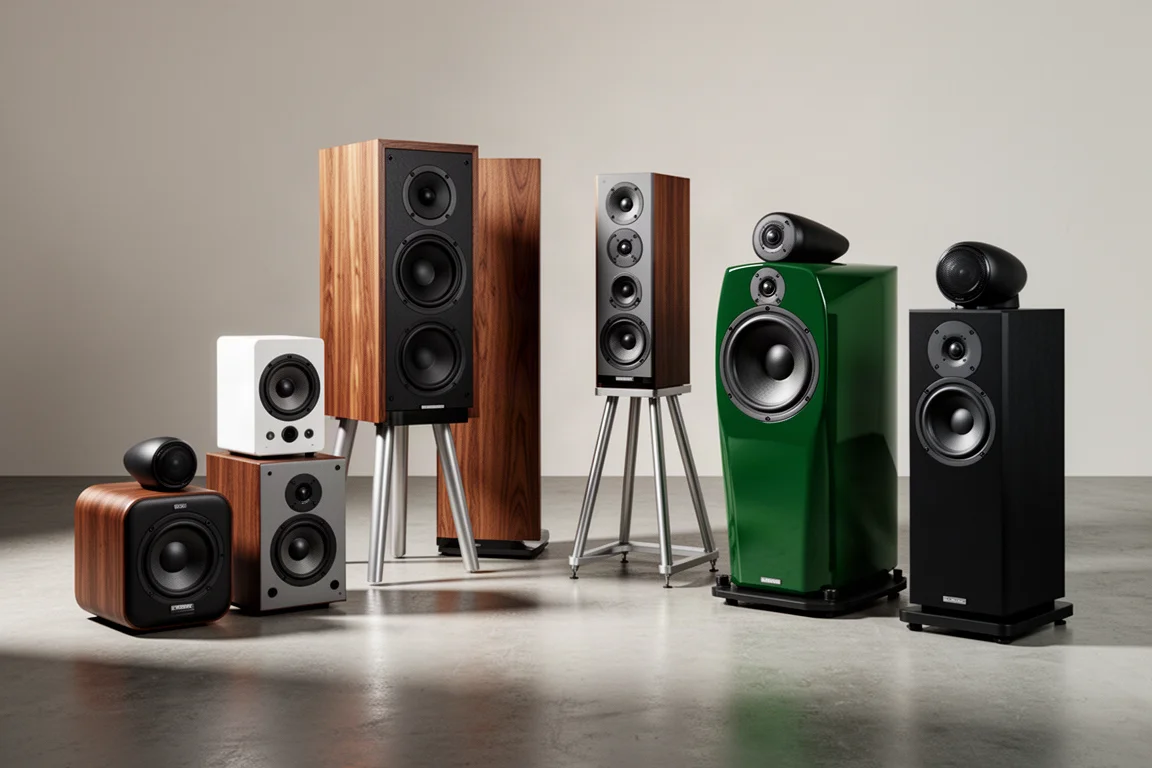
Standmount speakers are the most practical route into a serious two-channel system. They take up far less space than floorstanding models, they are easier to place in an ordinary living room, and a well-designed pair can image with a precision that larger cabinets often struggle to match. The seven models in this roundup cover a wide range of approaches, from fully active pairs with a television-friendly HDMI ARC input to large, high-efficiency passive designs that ask for nothing more than a modest amplifier.
One point is worth making before the list begins. If music is the priority, a pair of proper loudspeakers will almost always beat a soundbar. A soundbar can do a job with films, but it cannot match the stereo separation and the sense of scale that two separate speakers deliver once the television is switched off and an album goes on.
How These Speakers Were Chosen
These speakers were compared on the things that shape day-to-day ownership rather than on specifications alone. How refined does the presentation sound? How hard does it hit when the music calls for it? Does it still work at low volume late at night? How much amplifier does it demand, and how easily does it fit into a room that was not designed for listening?
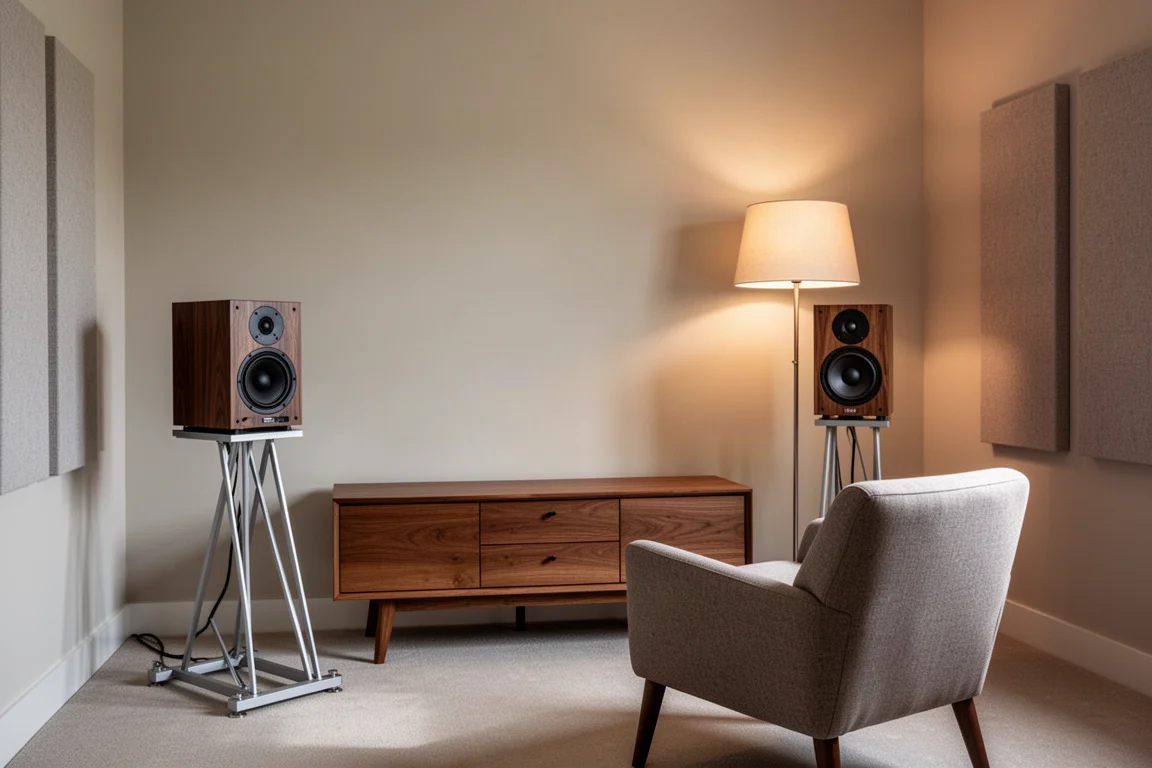
Room acoustics deserve more attention than they usually get. Treating a room properly, including the ceiling and the corners, changes what you hear more than most hardware swaps. Software room correction can genuinely help with bass problems in small rooms, but it does very little about mid-range and high-frequency reverb. That is worth remembering when choosing between a speaker that is easy to place and one that needs breathing space around it.
The result is a shortlist that leans towards speakers with a clear character rather than a single, universal winner. Each of the seven does at least one thing unusually well.
Klipsch The Sevens: Dynamic Active Power
Klipsch The Sevens are an active pair, so the amplification is built in and no separate power amplifier is needed. There is no streaming platform inside, but the HDMI ARC socket makes them a straightforward partner for a television, and the compact cabinet keeps the system simple.
Their strongest quality is sheer punch. They are super dynamic, and they are genuinely enjoyable at low volume, which is a harder combination to pull off than it sounds. They are not as refined as the smaller PSB Alpha iQ, and that gap becomes obvious once the PSB pair is joined by a subwoofer. Even then, The Sevens stay closer to a thrill ride than to a study in subtlety.
For anyone weighing up a soundbar, this is exactly the kind of product that makes the case for a real stereo pair.
PSB Alpha iQ: Compact and Refined
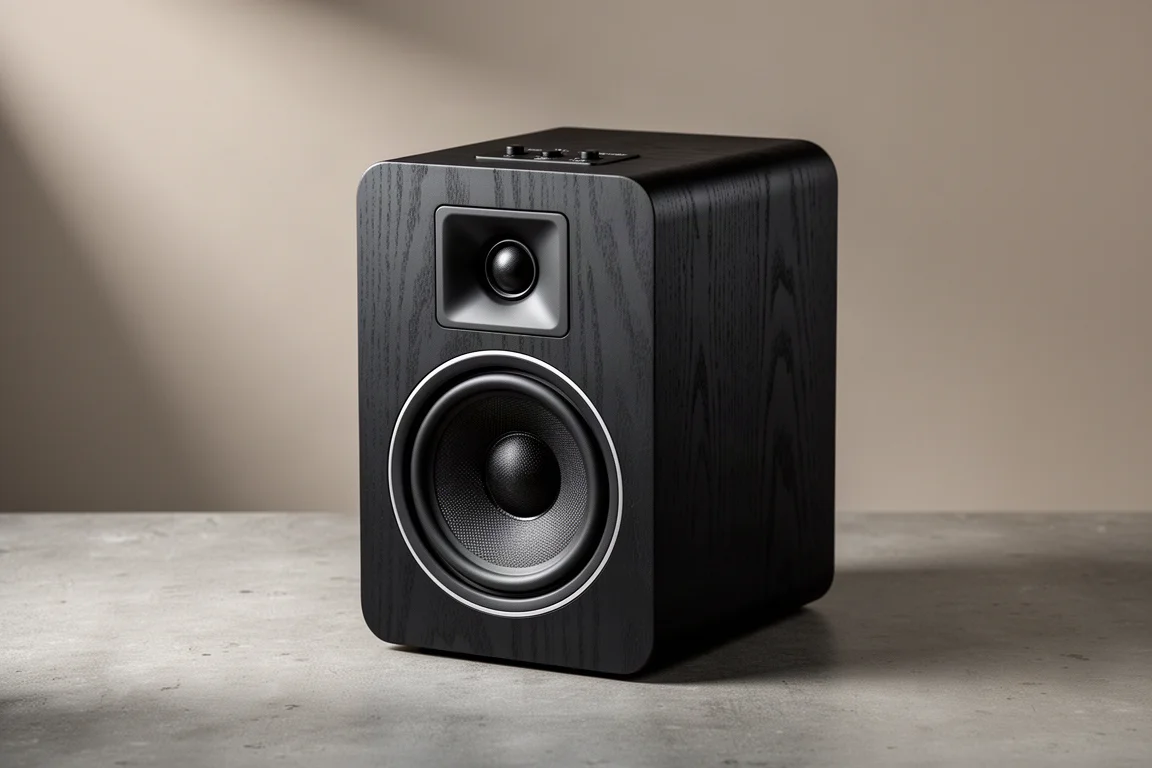
The PSB Alpha iQ is much smaller than The Sevens and takes a different path altogether. Where the Klipsch pair majors on dynamics, the PSB pair majors on refinement. The presentation is calmer and more controlled, and the small cabinet makes it easy to fit into a tight space.
Low-end extension is naturally limited by the size of the box, and a subwoofer can be added to fill in the bottom end. Even with that addition, the Alpha iQ keeps its composed character rather than chasing the punchier delivery of the Klipsch actives.
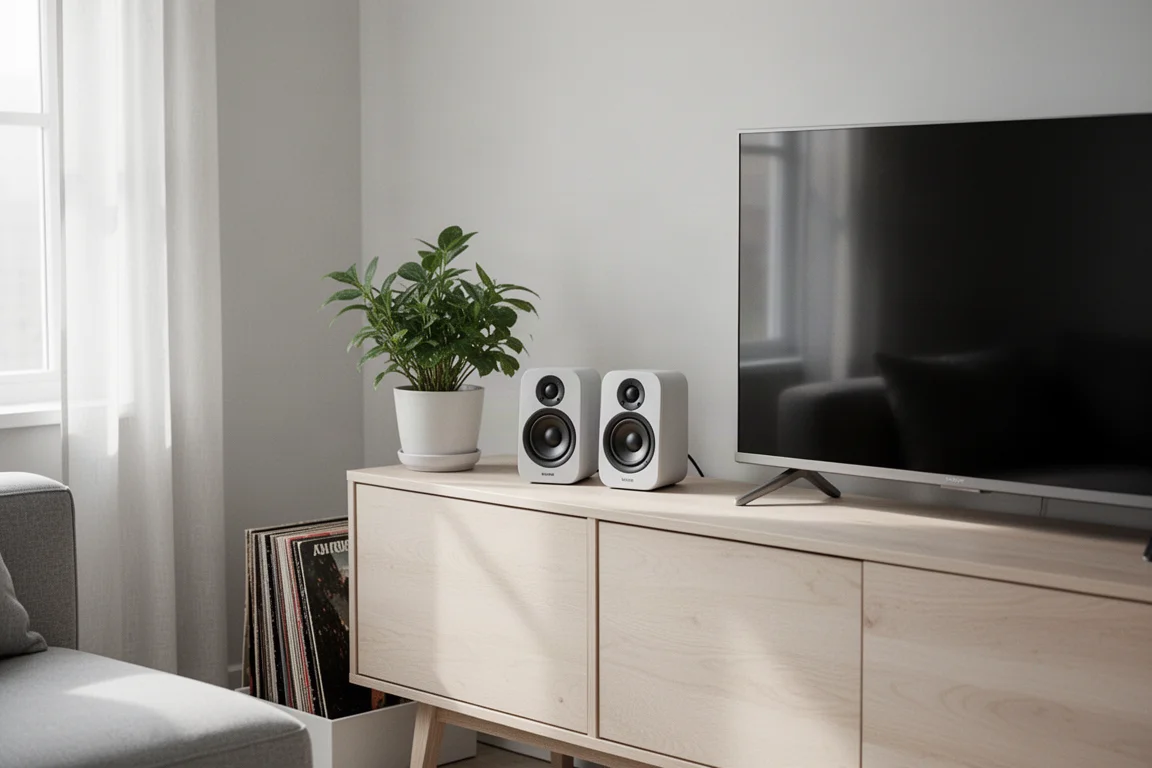
For a compact apartment system, a desk setup or a room where the speakers have to disappear into the furniture, the size advantage is real rather than cosmetic. It is the pair to choose when subtlety matters more than slam.
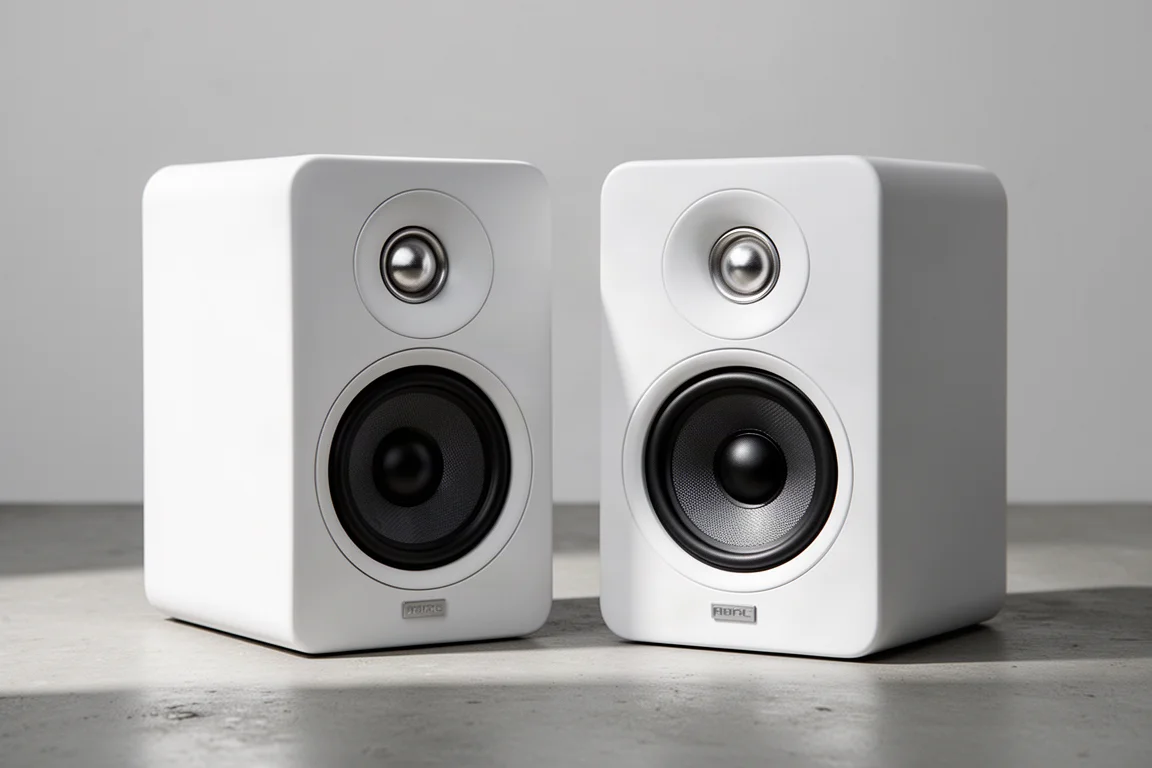
Zu Audio DWX: High Efficiency, Big Presence
The Zu Audio DWX is a very large standmount and a passive design, so it needs its own amplifier. Its high efficiency means amplifier power is far less of a concern than it would be with a low-sensitivity box, which opens up a much wider range of affordable amplification.
Like the Klipsch pair, it plays nicely at low volumes, and it offers decent bass extension for a standmount. The top end is more polished than on earlier Zu models, and the overall presentation is more refined than The Sevens. Paired with something as modest as a Bluesound Powernode, the DWX still sounds more expansive and more mature than the Klipsch actives, which says a great deal about the headroom in the design.
The trade-off is physical. This is a big cabinet, and it needs a room that can give it some space.
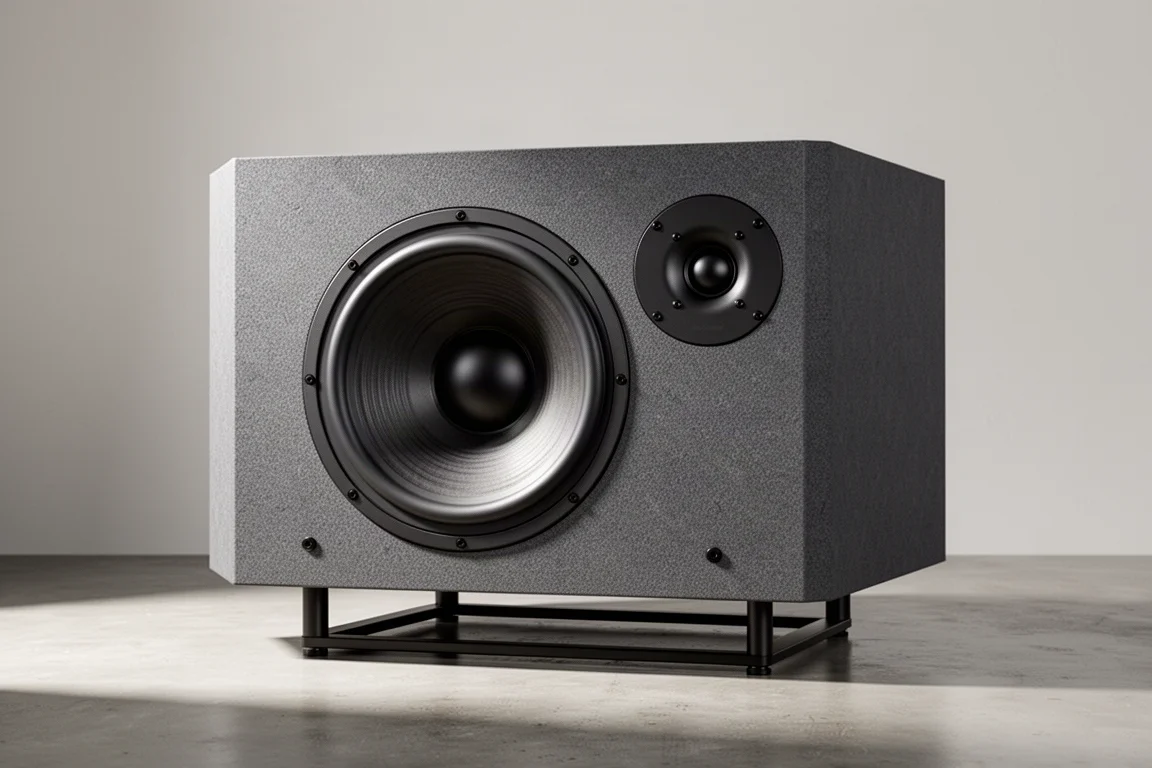
KEF R3 Meta: The Most Complete All-Rounder
The KEF R3 Meta is the most complete all-rounder in this group. It is a three-way standmount rather than a two-way, and KEF offers bespoke matching stands that make the pair feel like a single, considered product. Blue and white finishes are both available, and both look excellent.
It works in small rooms and large ones. In a small apartment it does not create the bass problems that some standmounts do, and in a larger space with an open hallway it stays composed when the volume climbs. It does not lose its composure at loud listening levels.
A subwoofer will extend the low end, but it is not essential. The speaker also responds clearly to whatever sits upstream of it. With a Cambridge Audio Evo 150 the presentation is cleaner and crisper; with a Hegel H590 the low end gains fullness and warmth. It resolves those upstream differences more cleanly than the Zu Audio DWX, which makes it an unusually useful reference for anyone who likes to change components.
Compared with the rest of the field, it exposes more fine detail than the Wharfedale Linton, sounds richer than the Monitor Audio Silver 100 7G, and is a more complete all-rounder than the Bowers & Wilkins 705 S3. It sits right where entry-level hi-fi tips over into the high end. In Europe, the KEF R3 Meta with its matching stands sells for around €3,000.
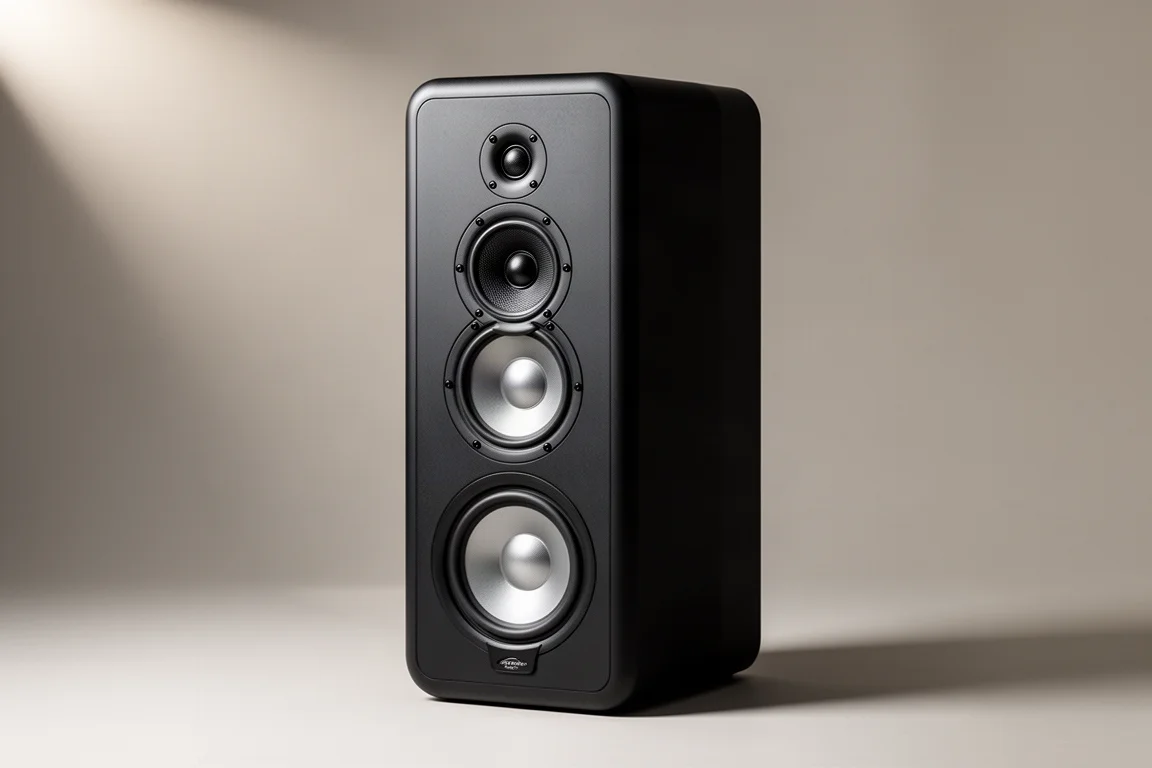
Wharfedale Linton: Traditional Character
The Wharfedale Linton takes a more traditional approach. Compared with the KEF R3 Meta it exposes less fine detail, and that difference is audible on well-recorded material. Listeners who value resolution above everything else will notice it immediately.
For anyone who prefers a less analytical balance, though, it remains a reasonable option, and it is a familiar reference point in this part of the market. It is the kind of speaker that rewards a buyer who already knows what they like rather than one chasing the last word in transparency.
Monitor Audio Silver 100 7G: Distinctive and Capable
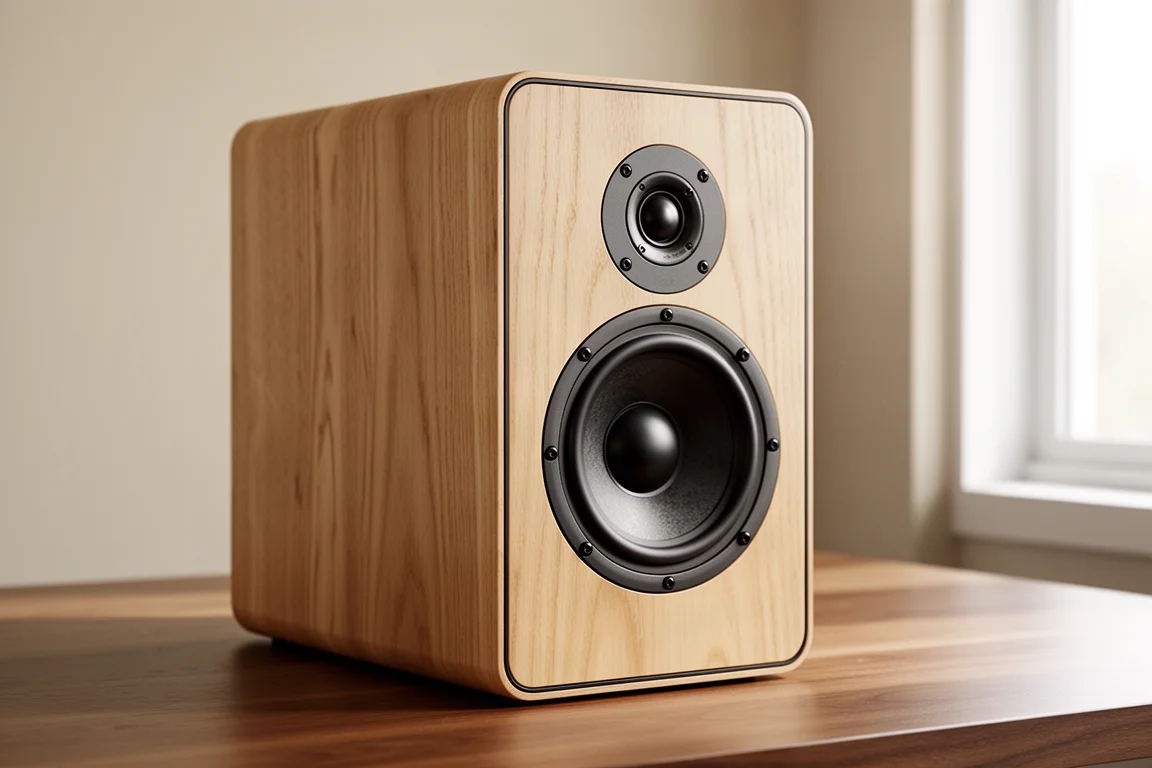
The Monitor Audio Silver 100 7G is a capable standmount with a genuinely distinctive finish option in British racing green, which sets it apart visually from almost everything else here. It performs well in its own right.
It is not as rich-sounding as the KEF R3 Meta, however, and that is the comparison most buyers will make. The R3 Meta is the more complete speaker of the two, while the Silver 100 7G appeals most to listeners who want a particular look and character in their room.
Bowers & Wilkins 705 S3: Detailed but Demanding
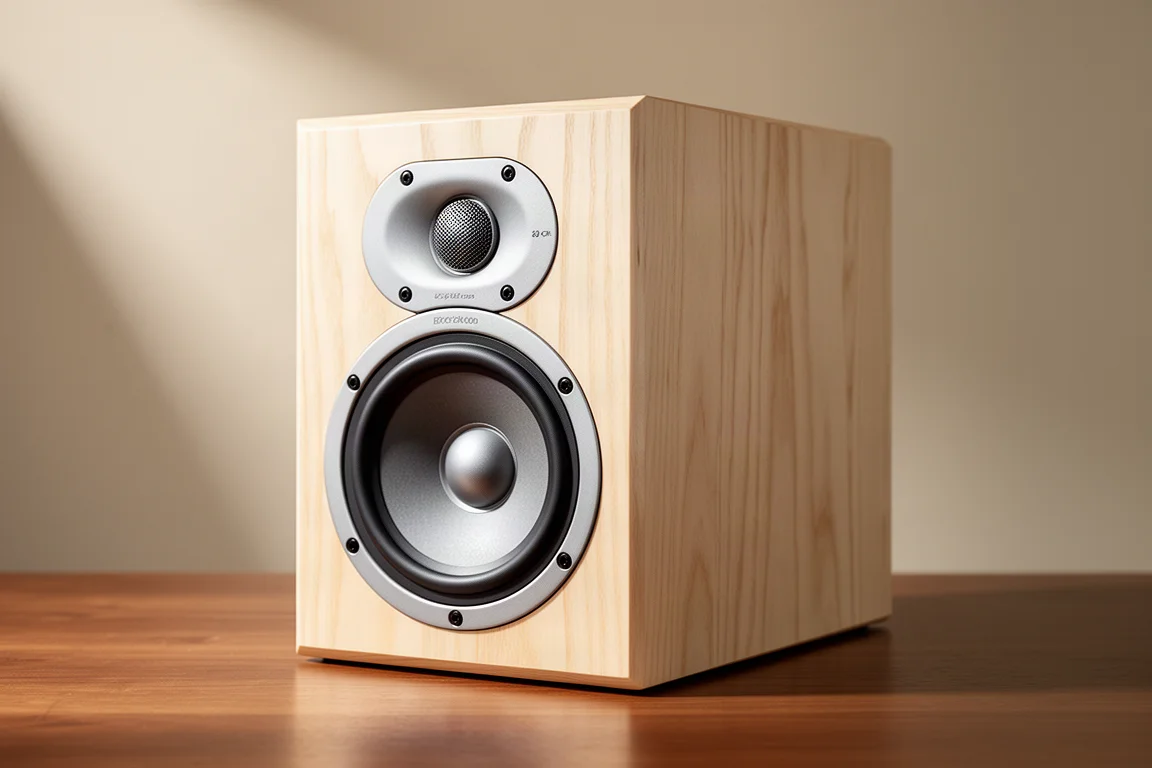
The Bowers & Wilkins 705 S3 is a detailed and capable standmount with obvious appeal, and there is plenty to admire in how it presents a recording. Over longer listening sessions it is harder to live with than the KEF R3 Meta, and it is less of an all-rounder across different kinds of music.
That does not make it a bad speaker. It makes it a speaker worth auditioning carefully rather than buying on specification alone. Buyers who respond to its particular presentation will find a lot to like, while anyone who wants one pair to cover every genre should compare it directly with the R3 Meta.
Buying Advice: Matching a Speaker to Your Room
The first decision is active or passive. Active pairs such as the Klipsch The Sevens and the PSB Alpha iQ simplify the system, remove the need for a separate power amplifier, and in the Klipsch case add an HDMI ARC input for television use. Passive designs such as the Zu Audio DWX and the KEF R3 Meta let you choose the amplification and change it later, which suits anyone who likes to tune a system over time.
Room size shapes the choice as much as budget does. A standmount that stays composed in a small apartment and in a larger, more open space is a genuine advantage, and the KEF R3 Meta manages exactly that. If most of your listening happens quietly, the Klipsch The Sevens and the Zu Audio DWX both stand out for how well they hold together at low volume.
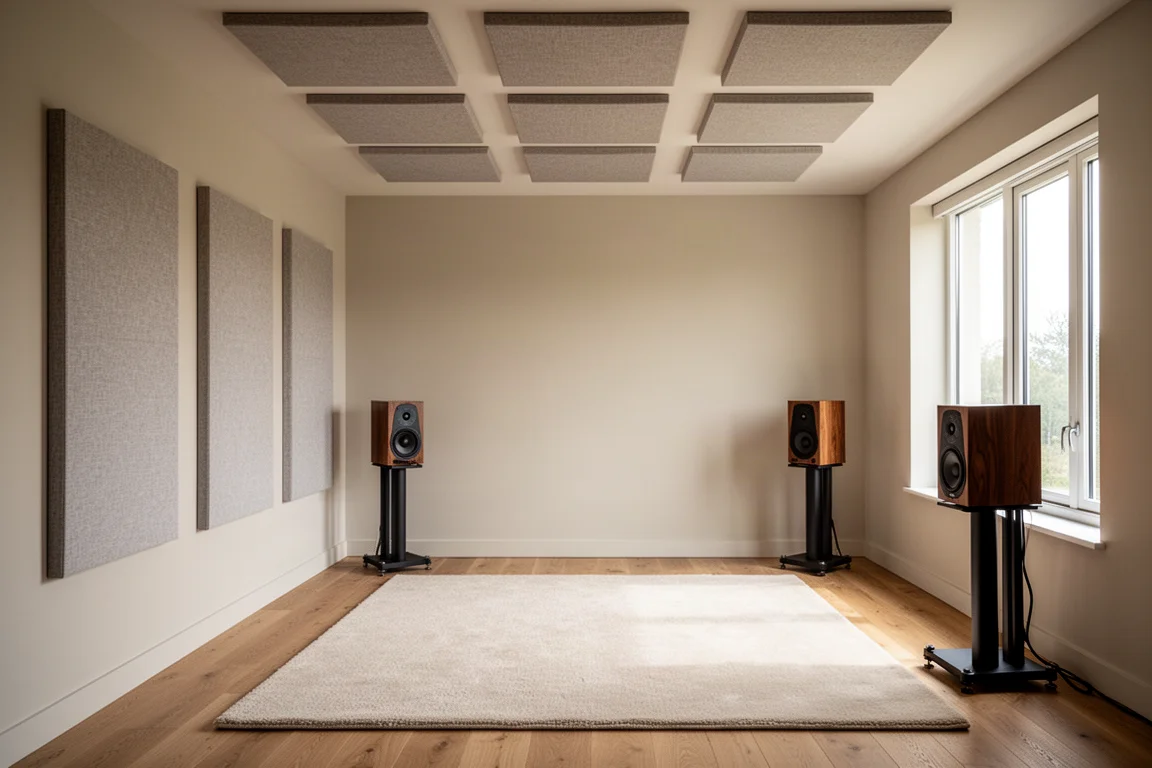
Amplifier matching matters, particularly with the KEF R3 Meta, which clearly reflects the character of what feeds it. Stands matter too: the bespoke KEF stands turn the R3 Meta into a finished piece of furniture rather than a box on a shelf. And before spending anything on electronics, consider the room itself. Physical treatment of the walls and ceiling does more for mid-range and high-frequency reverb than any correction software, while software correction is most useful for bass problems in small spaces.
Conclusion
There is no single winner here, only a set of speakers with clearly different priorities. The Klipsch The Sevens deliver active convenience and real punch. The PSB Alpha iQ trades some of that punch for refinement and a smaller footprint. The Zu Audio DWX rewards a modest amplifier with scale and maturity, while the KEF R3 Meta is the most complete all-rounder of the group and the natural reference point for the rest.
The Wharfedale Linton, Monitor Audio Silver 100 7G and Bowers & Wilkins 705 S3 each bring something distinct, whether that is a traditional balance, a striking finish or a highly detailed presentation. Match the speaker to your room, your amplifier and the way you actually listen, and any of the seven can be a satisfying long-term purchase.
Further reading
Related Reviews
Hi-Fi Speakers
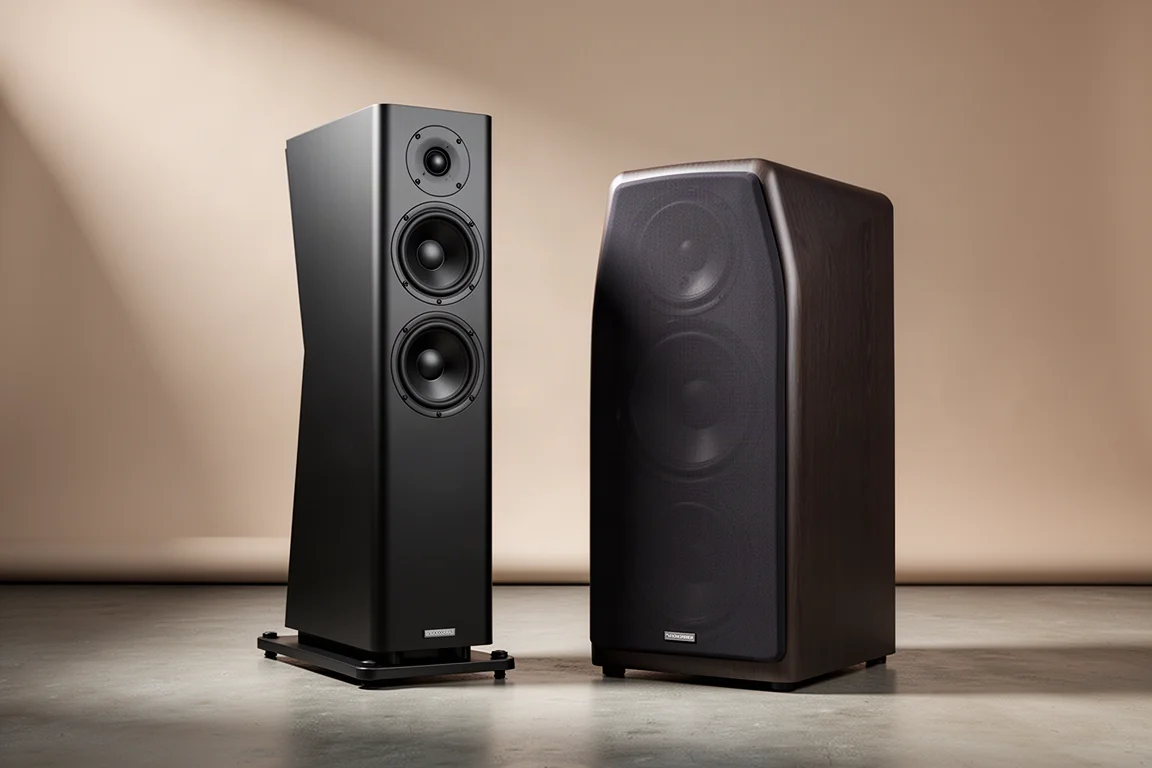
1723 THX Tower vs 1528 Bookshelf: Which Speaker Fits Your Room?
Two speakers at roughly the same price, built very differently. How the 1723 THX tower and the 1528 bookshelf compare on construction, bass, power needs, and sound.
Hi-Fi Speakers
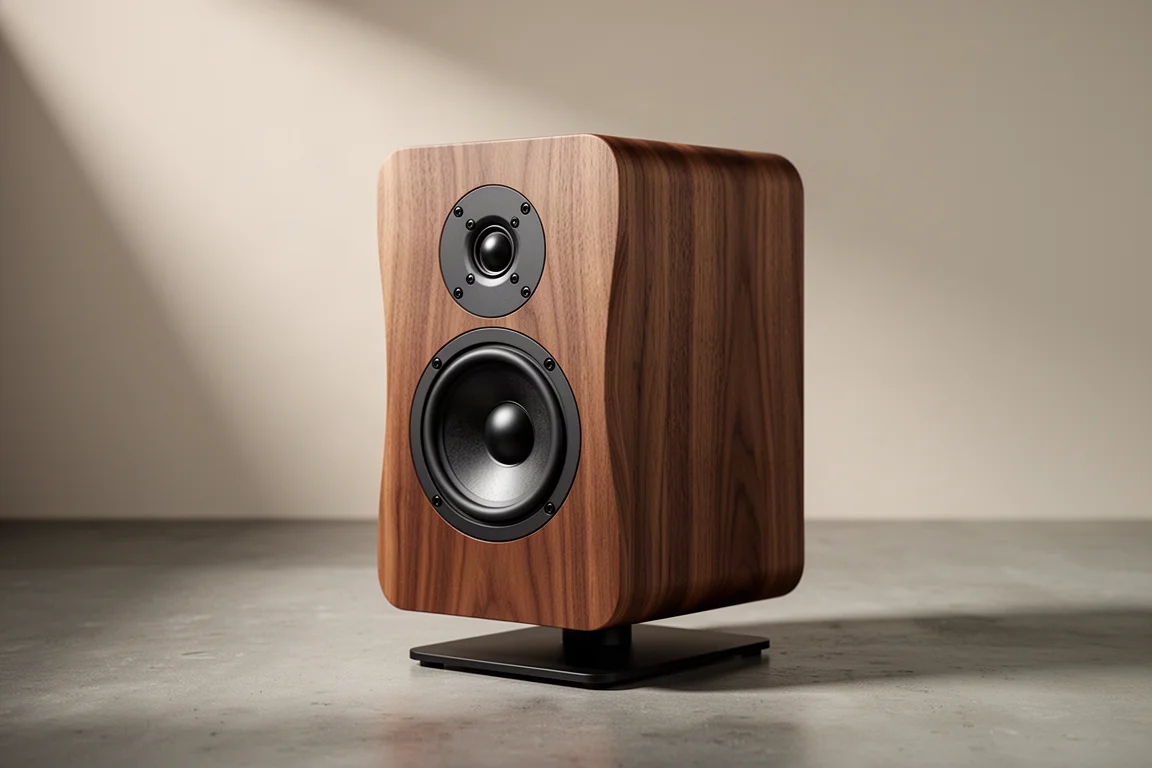
Acoustic Energy AE 300 Review: Deep Bass From a Compact Standmount
A two-way standmount with real wood veneer, surprising low-end weight, and a warm, easygoing character. Here is what to know before buying.
Hi-Fi Speakers
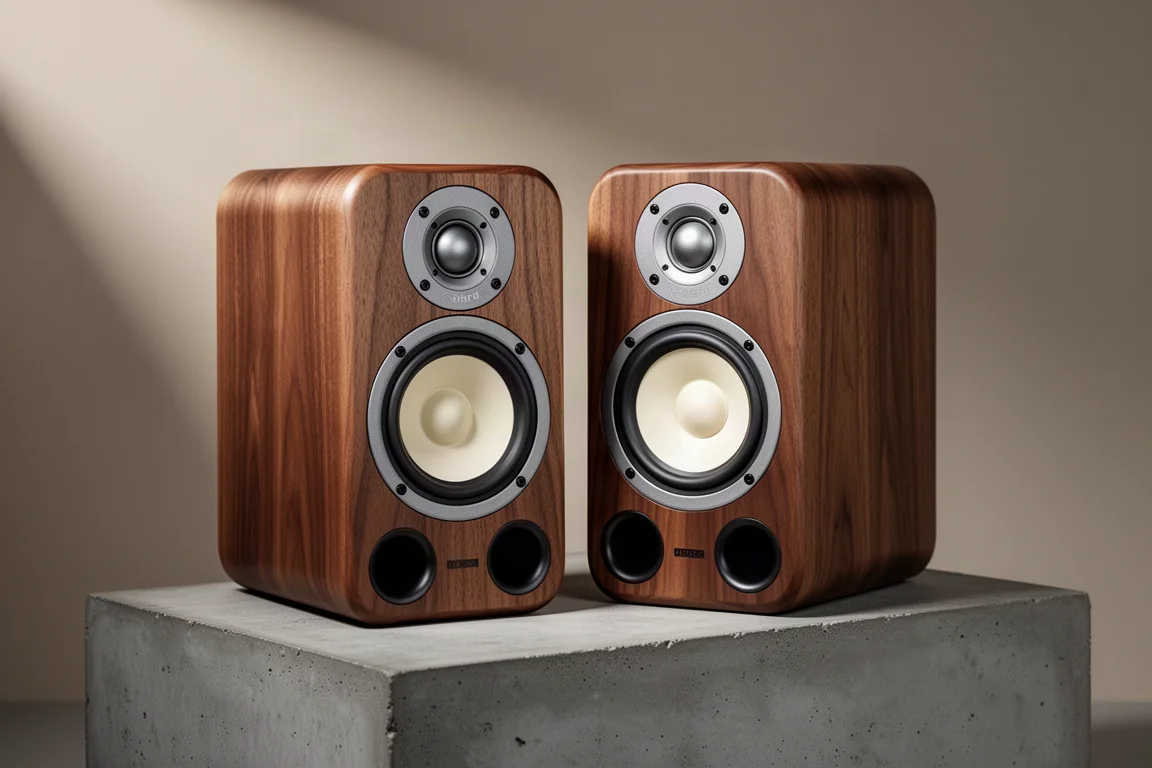
Acoustic Energy AE1 40th Anniversary Review: A Modern Take on a British Classic
A compact standmount that revives a 1980s favorite with all-new parts, a warm mid-centric balance, and a price of £1,499 per pair.