Hi-Fi Speakers
Best Standmount Speakers Compared: MoFi, KEF, and Wharfedale
Four accurate standmount speakers in the same price neighbourhood, compared on bass extension, radiation behaviour, output capability, and tonal character.
Introduction
The four standmount speakers in this comparison sit in roughly the same bracket, about $1,500 to $2,700 depending on where and when you buy them, and all four are genuinely accurate designs. Each stays within about plus or minus 3 dB of linear, and a couple do better than that. What separates them is not basic accuracy but character: how wide they radiate, how they behave when you stand up or walk around the room, how deep the bass reaches, and how they cope when you ask them to play loud.
That matters because two speakers can look almost identical on a single on-axis curve and still sound noticeably different in a real room. The practical advice is straightforward: read the differences, narrow the field to two candidates, order both, and send back the one that does not suit your space. There is no substitute for hearing them in your own room.
What These Speakers Have in Common
Two of the four are coaxial designs. The MoFi SourcePoint8 is a two-way coaxial, and the KEF R3 Meta pairs a coaxial array with an additional mid-bass driver. The two Wharfedale models are three-ways, and they differ from each other too, with the Aura 2 using an AMT tweeter.
Coaxial drivers tend to hold a more consistent radiation pattern from the midband into the high frequencies, both horizontally and vertically. In practice, the sound in the main seat stays broadly similar as you move from seat to seat, stand up, or walk around the room. If you often host guests, or listen while doing things elsewhere in the room, that consistency is a real benefit. Coaxial speakers usually reward a little toe-out, roughly 10 to 20 degrees rather than aimed straight at the listener. The trade-off is horizontal width: past roughly 50 degrees off the tweeter axis, output starts to fall away.
A conventional three-way with a separate tweeter behaves differently. Horizontal radiation is broad through the midrange and upper midrange, then narrows in the higher frequencies. Vertically it is far more critical: move more than about 20 to 30 degrees off the tweeter axis and the midrange and treble drop off sharply, so someone standing above the speaker hears something quite different from someone seated.
All four are reasonably linear overall, so the decision is less about accuracy and more about which set of compromises fits your room.
MoFi SourcePoint8: The Coaxial All-Rounder
The SourcePoint8 is a two-way coaxial standmount with smooth response, staying within roughly plus or minus 2 dB, and it reaches deeper in the bass than the KEF R3 Meta. Its horizontal radiation holds at around plus or minus 60 degrees and keeps its composure up to roughly 10 to 12 kHz before narrowing gently. On compression it performs very well, staying composed as the level rises.
Two things are worth knowing before buying. First, this is not the speaker to push right up against a wall; within about a foot of a boundary it can sound boomy. Second, distortion creeps a little above 3% at the very highest output levels. That only becomes relevant if you listen loud from a long distance. At normal levels and typical seating distances it is unlikely to be an issue.
KEF R3 Meta: Designed for Near-Wall Placement
The R3 Meta is the smallest of the four and combines a coaxial driver array with a separate mid-bass driver. Its bass response rolls off and then flattens, an extended bass shelf approach that makes it unusually well suited to placement close to a wall without the boominess that usually comes with it. If you can give your speakers space away from boundaries, that design choice costs you some low-frequency output compared with the MoFi.
Through the high frequencies the R3 Meta is a little more linear than the MoFi, and around 1 to 1.5 kHz it sits about a decibel lower, which can read as slightly less attack or forwardness. Horizontal radiation is around plus or minus 50 to 60 degrees in the midrange and nearer 50 degrees in the upper midrange and treble. Of the four, it shows the most compression as the level rises, which is worth weighing if high output matters to you.
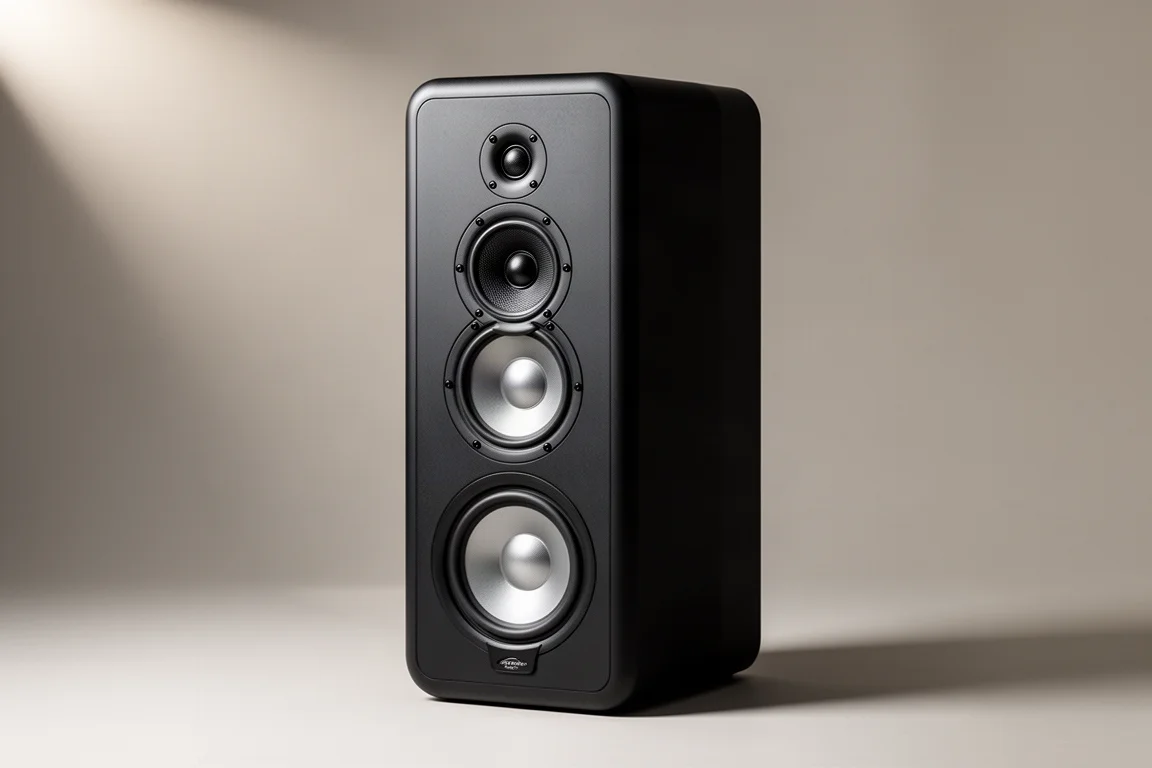
Wharfedale Aura 2: Deep Bass and High Output
The Aura 2 is a three-way design with an AMT tweeter, and it has the deepest bass extension here, roughly 10 to 12 dB more output at 30 Hz and 4 to 7 dB more at 40 Hz than the others. A slight dip in the mid-bass region means it tolerates being a little closer to a wall than the MoFi, though not as close as the KEF. The midrange carries a small lift around 1 to 2 kHz, which gives voices and instruments more attack.
The trade-offs sit in the treble and in radiation. There is a resonant peak around 13 kHz that can sound sharp or shrill on certain tracks, and radiation narrows quickly in the high frequencies: wide at roughly plus or minus 70 degrees through the midrange, then collapsing so that by 10 kHz it is 30 to 40 degrees narrower than the midrange. That can stack images together and pull high-frequency detail inward. Vertically it narrows sharply as well, with crossover lobing that makes ear height more critical. On the plus side, its output capability eclipses the other three, and it handles compression well.
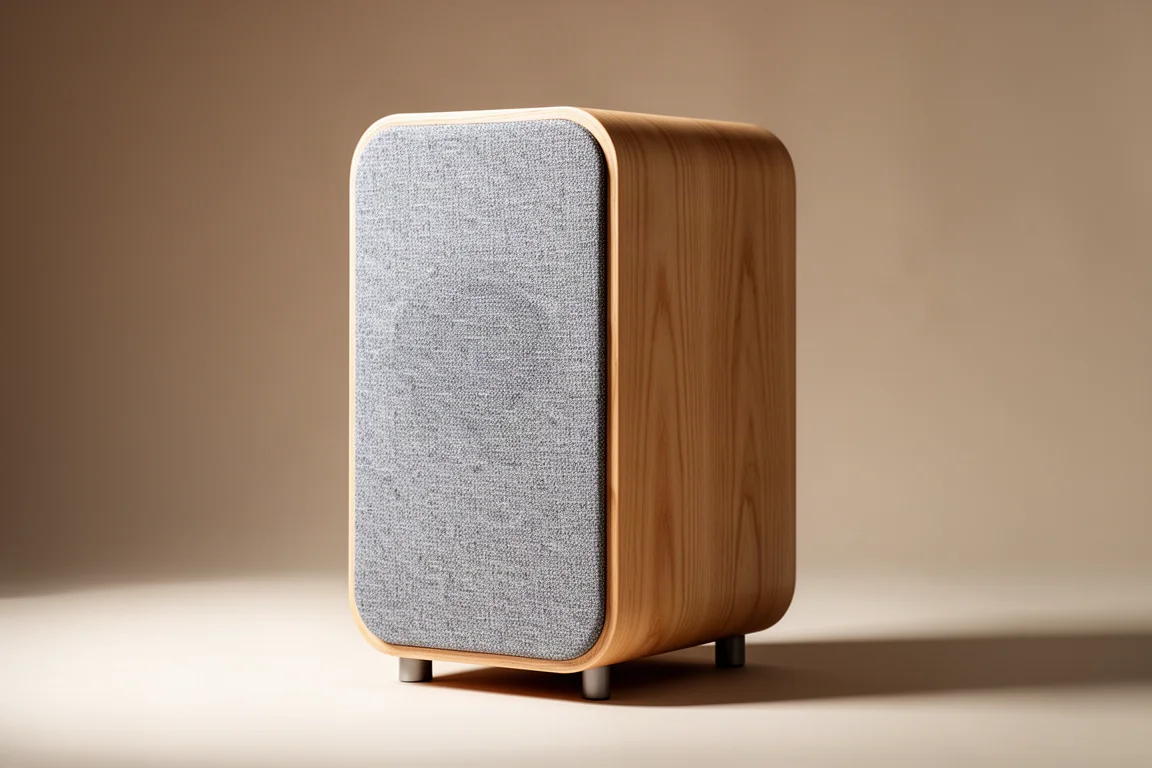
Wharfedale Linton Heritage 85: Wide Radiation and Value
The Linton Heritage 85 is the third three-way here and the most affordable of the group, roughly $1,000 less than the Aura 2. Sensitivity is lower and the bass does not extend as deep as the Aura 2, but overall linearity is reasonable. There is a dip around 1 kHz that softens the vocal region and can push some material slightly further back in the stage, which some listeners will enjoy and others will not.
Radiation is wide through the midrange and narrows in the higher frequencies, with some crossover cancellation around 2 to 3 kHz, so ear height and seating position matter more than with the coaxial designs. Vertically it is better behaved than the Aura 2, but not as consistent as the MoFi or the KEF.
How to Choose Between These Speakers
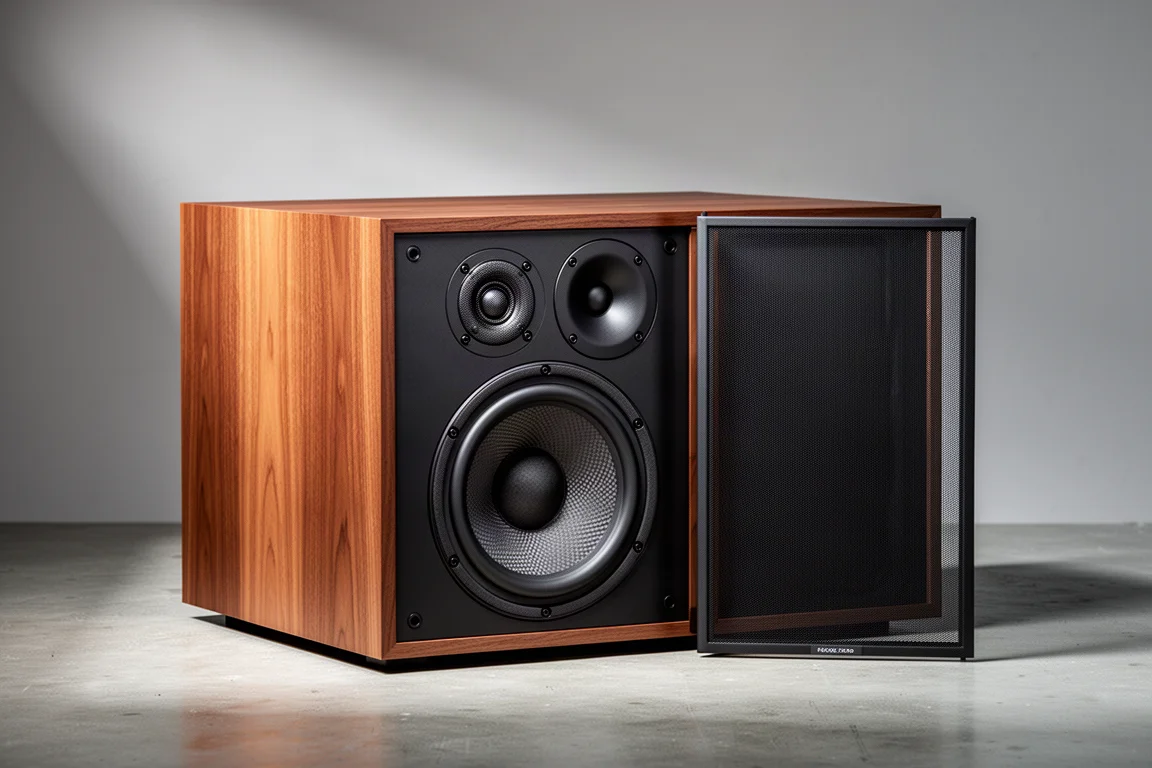
Start with placement. If the speakers have to sit close to a wall, the KEF R3 Meta is the obvious starting point, with the Aura 2 next in line. If you have room to pull them out into the room, the MoFi SourcePoint8 offers deeper bass and a wider, more consistent radiation pattern.
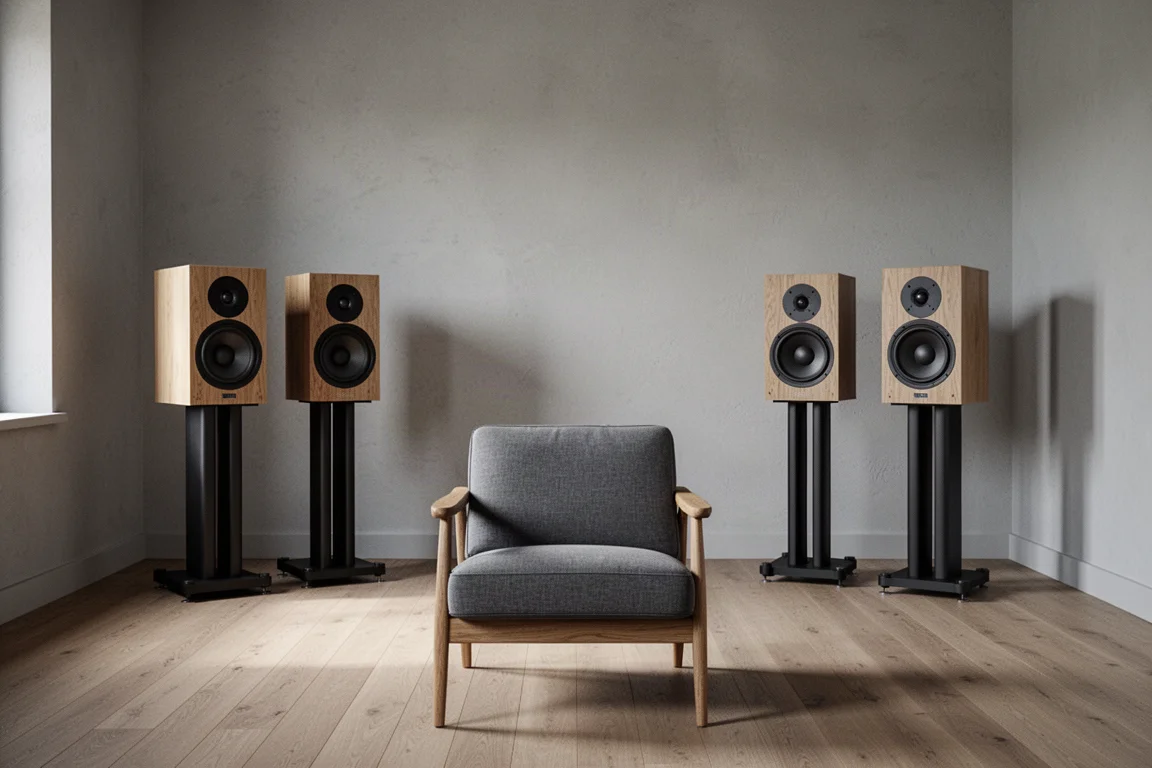
Next, think about how you listen. If you move around while music plays, or regularly have several people listening from different seats, the coaxial designs have a clear advantage in consistency, especially vertically. If you mostly sit in one spot and want a big, wide soundstage, the Wharfedale pair will suit, provided you accept the narrowing at high frequencies.
Then consider output. The Aura 2 will play louder and lower than the rest. The MoFi and the Linton are strong in this area too, while the KEF compresses earlier than the others. If you sit far away or listen at high levels, factor that in.
Finally, treat the tonal differences as preferences rather than faults. The Aura 2’s extra midrange presence and its treble peak will appeal to some listeners and not others. The KEF’s slightly lower presence region and the Linton’s dip around 1 kHz give a softer, more relaxed presentation. None of these is wrong; they are simply different starting points, and the right one depends on the room and the music you actually play.
Conclusion
All four of these speakers are accurate, well-executed designs in the same price neighbourhood. The differences between them come down to radiation behaviour, bass extension, and tonal flavour rather than fundamental quality. Pick the two that match your room and your listening habits, try them at home, and keep the one that disappears into the music. That is a far more reliable route than choosing on specifications alone.
Further reading
Related Reviews
Hi-Fi Speakers
1723 THX Tower vs 1528 Bookshelf: Which Speaker Fits Your Room?
Two speakers at roughly the same price, built very differently. How the 1723 THX tower and the 1528 bookshelf compare on construction, bass, power needs, and sound.
Hi-Fi Speakers
Acoustic Energy AE 300 Review: Deep Bass From a Compact Standmount
A two-way standmount with real wood veneer, surprising low-end weight, and a warm, easygoing character. Here is what to know before buying.
Hi-Fi Speakers
Acoustic Energy AE1 40th Anniversary Review: A Modern Take on a British Classic
A compact standmount that revives a 1980s favorite with all-new parts, a warm mid-centric balance, and a price of £1,499 per pair.