Hi-Fi Speakers
Best Standmount Speakers Around £1,000: Three Strong Contenders Compared
A practical comparison of three standmount speakers in the same price neighbourhood, covering build quality, sound character, amplifier pairing and who each one suits best.
Introduction
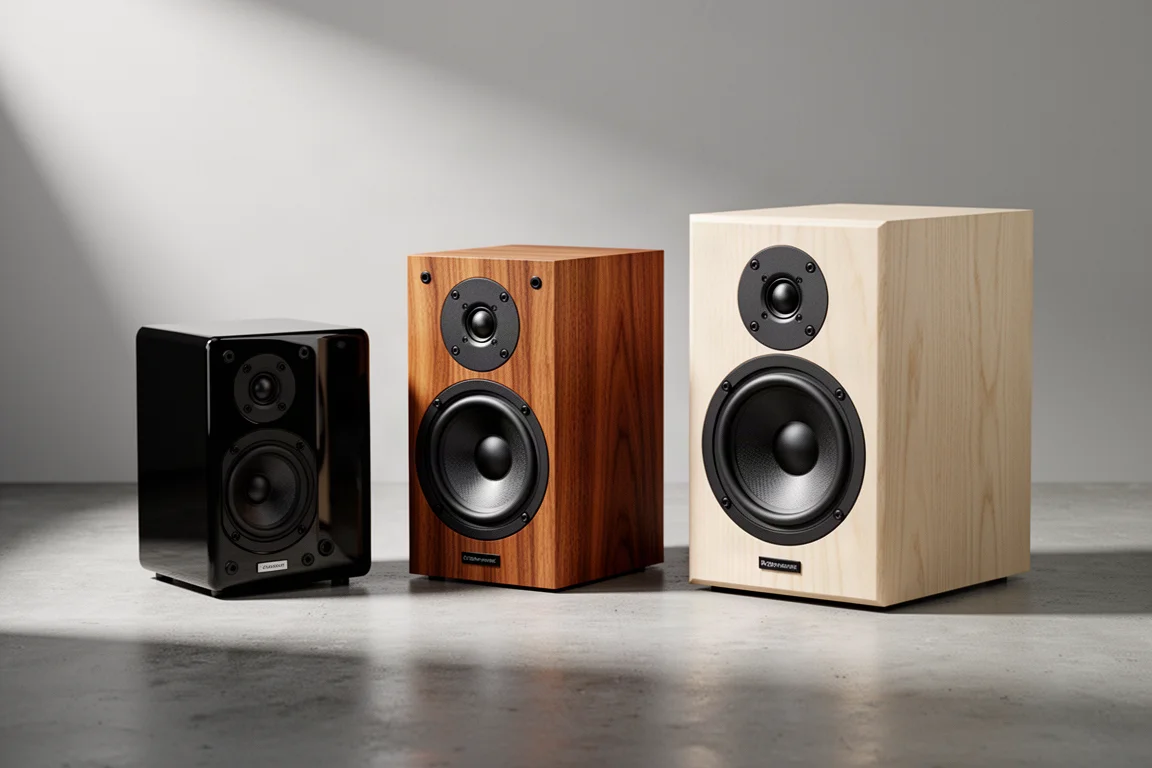
Three standmount speakers, one rough price neighbourhood, and three genuinely different sets of priorities. The Acoustic Energy AE500 sells for £1,049 in the UK. The Monitor Audio Silver 100 7G comes in at £799. The Dali Opticon 2 MK2 sits in the same roughly £1,000 group, and it is the most affordable Dali model to be hand assembled at the company’s Danish factory.
All three are two-way designs with rear ports, and all three turned out to be easy to drive, including with a low-wattage valve amplifier. That matters more than it might sound. Speakers at this price are generally designed with modest integrated amplifiers in mind, and these three behave accordingly.
What follows is a practical look at what each speaker does well, where each one gives something up, and which listener each is likely to suit.
What Defines This Group of Speakers
All three are compact two-way standmounts with a rear-firing port. The Acoustic Energy uses a slot-shaped port rather than a cylindrical one, a design choice aimed at reducing chuffing noise. The Dali and the Monitor Audio both use flared ports for the same reason.
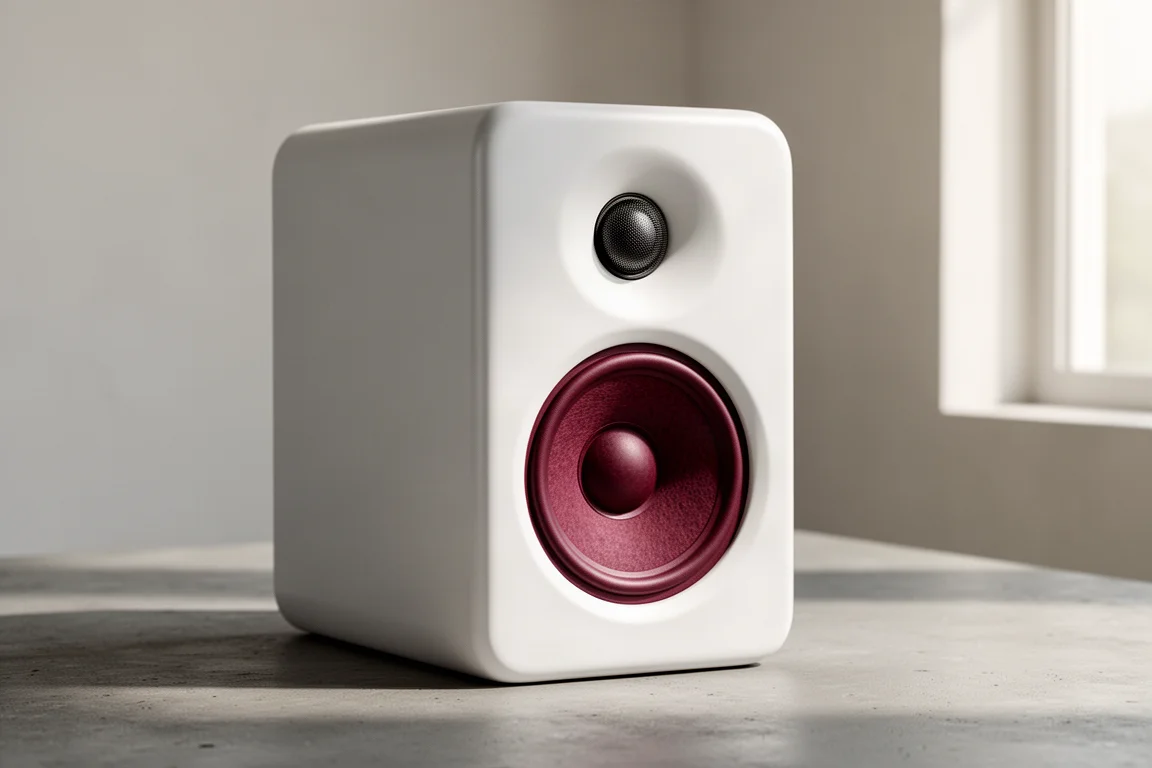
Driver materials diverge. Acoustic Energy builds both the 125 mm midwoofer and the 25 mm tweeter from woven carbon fibre, which is uncommon at this price and helps keep the tonal balance consistent between the two drivers. Dali uses a 165 mm paper pulp and wood fibre midwoofer with its trademark burgundy colouring, paired with a larger than usual 29 mm soft dome tweeter. Monitor Audio fits a 200 mm ceramic coated aluminium magnesium midwoofer alongside a 25 mm tweeter made from the same material, set into a shallow waveguide.
Sensitivity sits in a similar place across the group. The Acoustic Energy is rated at 87 dB into a 6 ohm load. The Monitor Audio is rated at 87.5 dB into a nominal 8 ohm load, although its 4.9 ohm minimum impedance suggests a 6 ohm rating would be more accurate. In practice, none of the three demanded serious amplifier power.
Acoustic Energy AE500: Natural Balance and a Furniture-Grade Finish
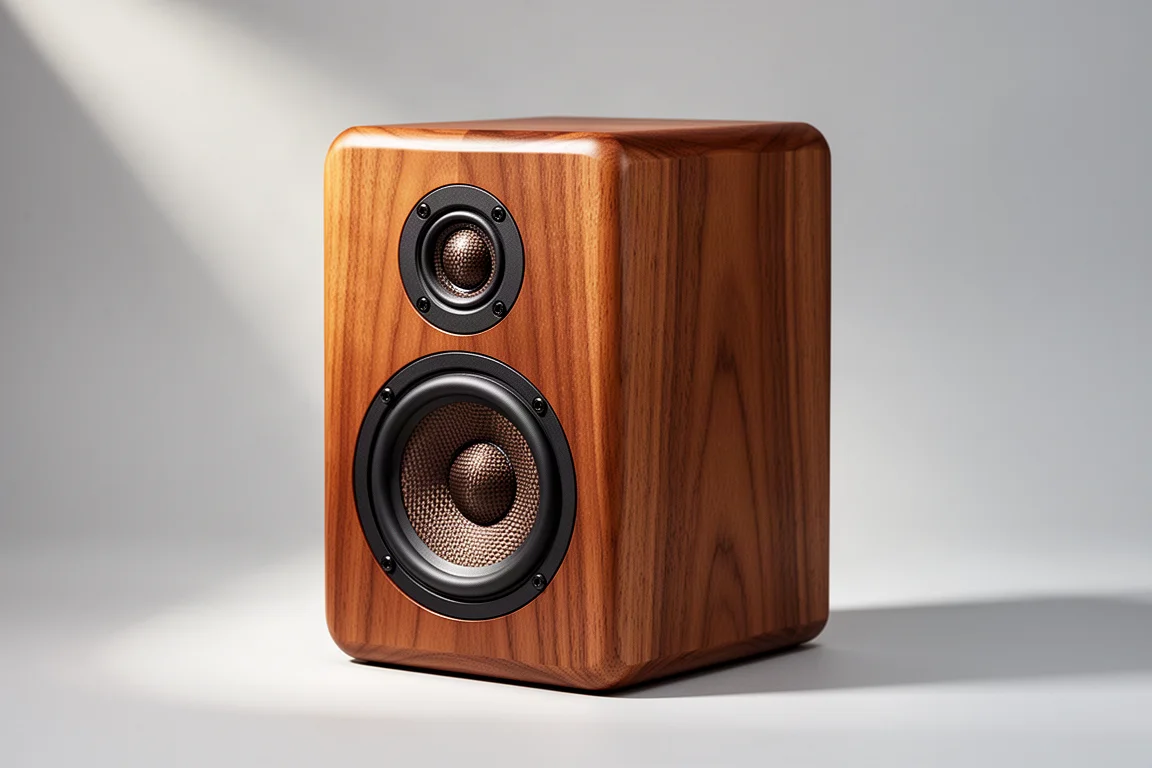
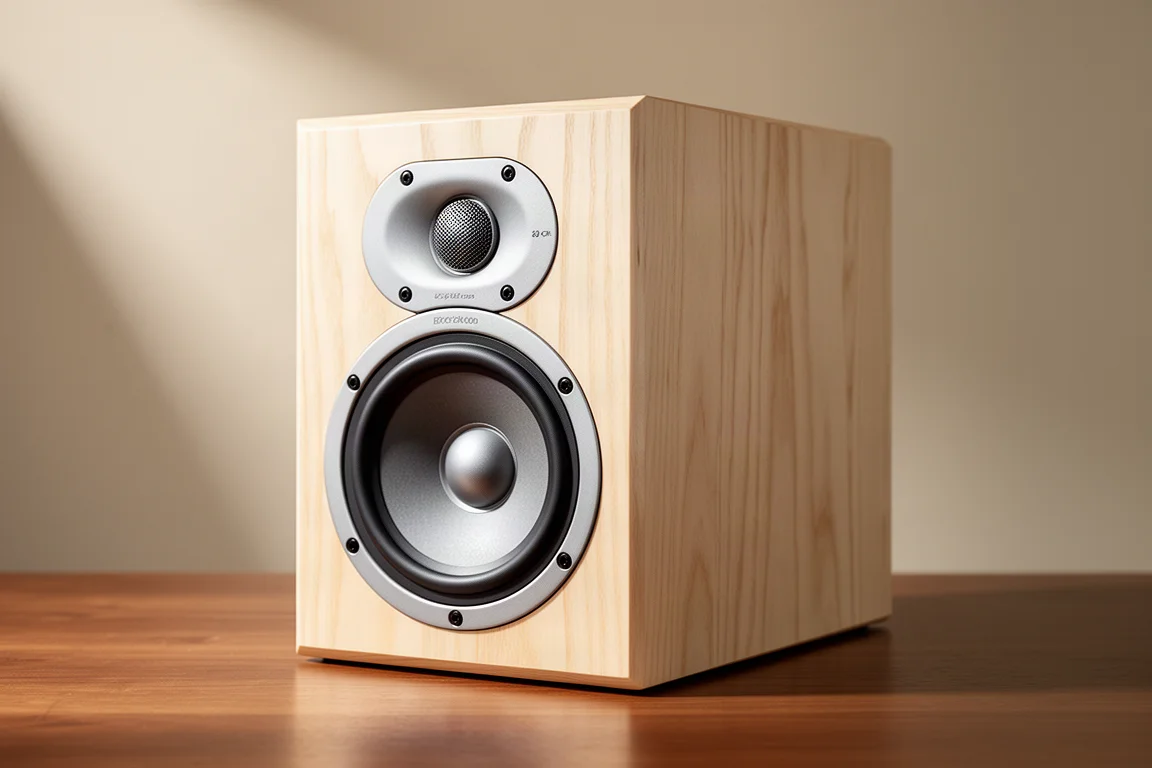
The AE500 is the smallest speaker here at 310 x 185 x 260 mm and 8 kg, and it is also the most premium looking. Buyers can choose piano gloss black, piano gloss white, or American walnut, and the real wood walnut veneer is a furniture-grade finish of the kind usually reserved for speakers costing two or three times as much.
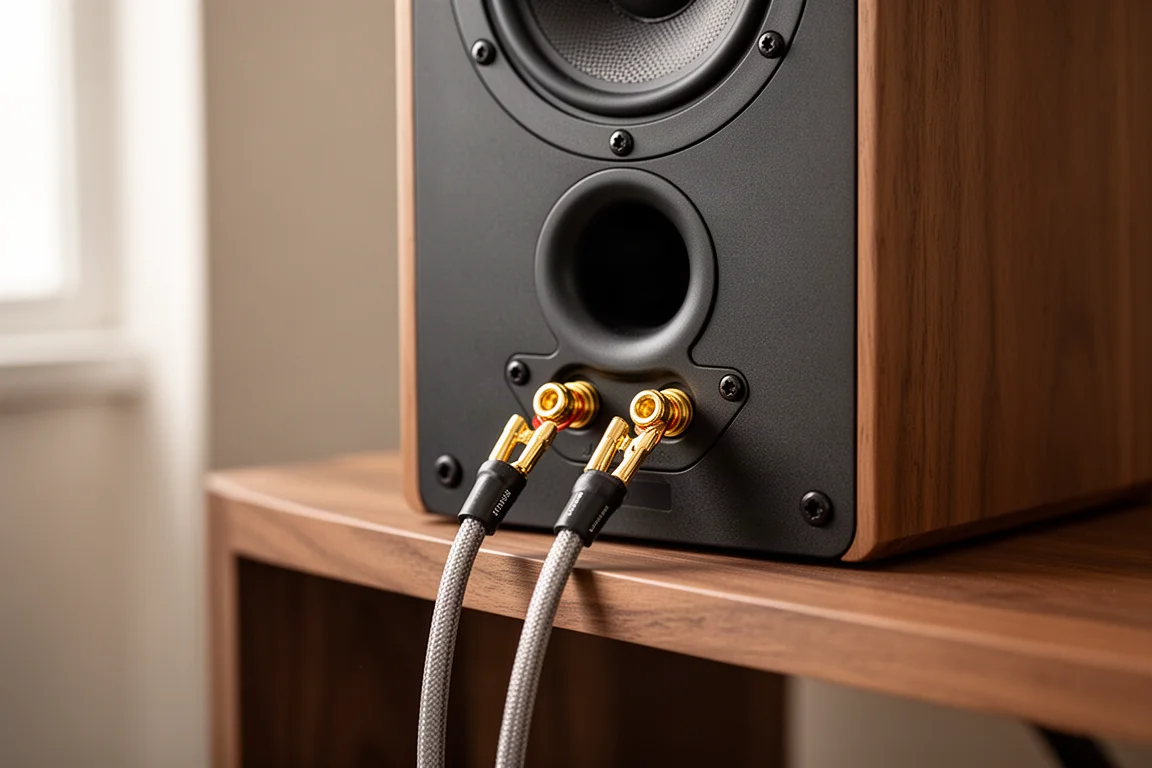
The cabinet is built from 15 mm MDF with an extra 3 mm bitumen layer sandwiched in the middle to reduce resonances that could colour the sound. On the back there is a single set of binding posts of respectable quality.
Sound is where the AE500 makes its case. It is one of the most natural and neutral designs at the price, and it refuses to exaggerate any one part of the range. Bass is the politest of the three. Acoustic Energy rates it down to 45 Hz at minus 6 dB, but in practice little happens below 50 Hz, and many owners will get better results by adding a subwoofer. The trade-off is a sensible balance between bass weight and a clean low end.
Leading edges of notes have decent definition, vocals and lead instruments have real body, and notes decay reasonably. Upper harmonics are well preserved, which makes the speaker easy to listen to over long sessions without ever sounding rolled off. Soundstage width and depth are good, and stereo imaging holds up at the price.
The one clear limitation is complexity. With busier music at average levels above 80 dB, the sound starts to muddy. Rock and large-scale classical works are better served by the other two speakers here, both of which use considerably larger midwoofers.
Dali Opticon 2 MK2: Danish Assembly and an Open Midrange
The Opticon 2 MK2 is the most affordable Dali speaker to be hand assembled in Denmark, and that is the core of its appeal. Buyers trade fancy finishes for Danish build: tobacco oak vinyl wrap, black ash, or satin white. Construction is solid, but it does not compete with the Acoustic Energy in the looks department.
Technically, the speaker carries several Dali signatures. The 165 mm midwoofer uses a paper pulp and wood fibre cone, and the motor uses the company’s patented soft magnetic material, or SMC, which has lower hysteresis and eddy currents than conventional ferrite magnets and is claimed to reduce third order distortion. The 29 mm soft dome tweeter is larger than most at this price, which allows a lower crossover point of 2,000 Hz. A flared rear port handles airflow, and the single set of binding posts is acceptable for the money, if not quite as substantial as the Acoustic Energy’s.
Sonically, the Opticon 2 MK2 shares a great deal with the AE500. Balanced is the right word. Nothing is exaggerated, and vocals and acoustic instruments sound particularly natural. The differences that do exist favour the Dali: it plays louder, copes more easily with dynamic swings, and sounds more open in the midrange and high frequencies with a better sense of timing. It also throws the widest and deepest soundstage of the three, with the most precise placement of performers within it.
With simple material it approaches the resolution of considerably more expensive speakers. With complex recordings the gap widens, and the speaker loses a little composure.
Monitor Audio Silver 100 7G: Detail Retrieval and Deep Bass
At £799, the Silver 100 7G is the least expensive speaker in this group. It is available in black ash, real wood walnut, satin white, real wood ash, and gloss black. The gloss black finish is the one to think about carefully, because reflections are hard to control.
The cabinet is wider than usual at 375 x 230 x 332 mm and 9.4 kg, a shape dictated by the 200 mm ceramic coated aluminium magnesium midwoofer. The 25 mm tweeter uses the same material and sits in a shallow waveguide to aid dispersion, protected by a mesh grille. On the back there is a flared port and two sets of binding posts for bi-wiring or bi-amping.
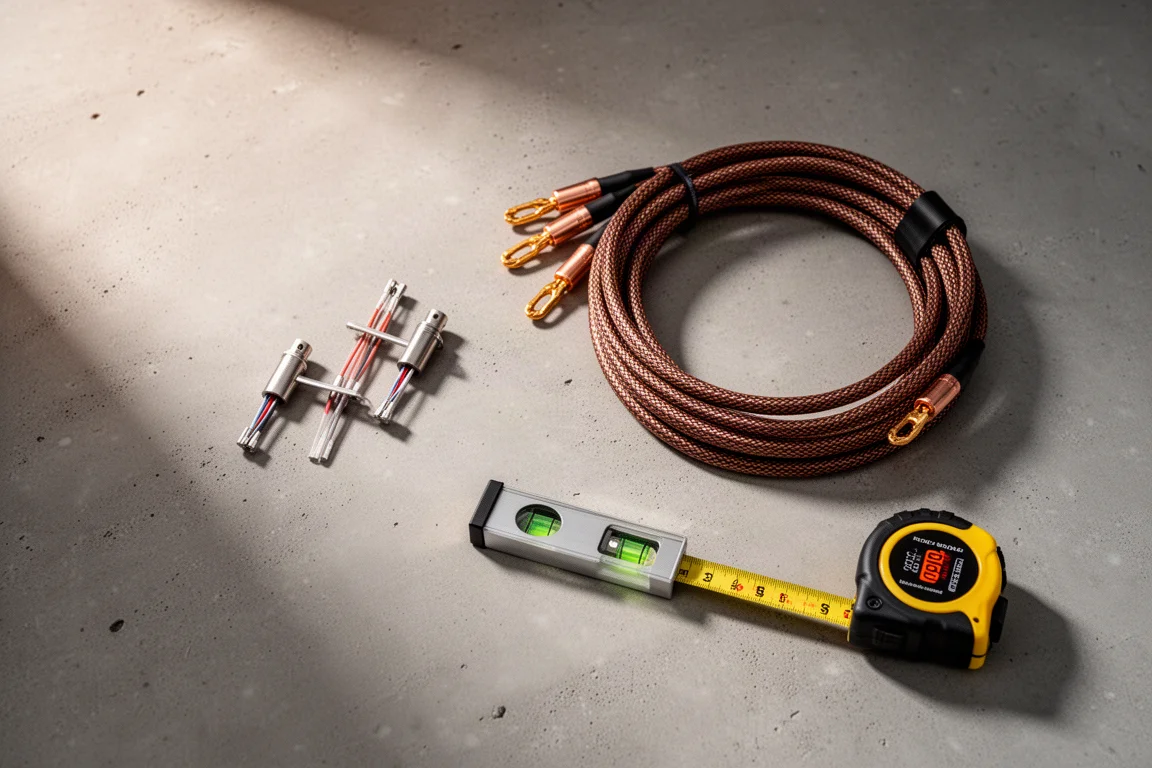
Those binding posts come with a warning. The supplied gold-plated links thin out the midrange, harden the top end, and compromise detail and focus. Replacing them with proper bi-wireable connections, either made up from speaker cable or bought pre-terminated, is the single most effective thing an owner can do.
Once that is sorted, the level of detail is remarkable. Few speakers under £1,000 resolve this much information. Bass is arguably the star: it digs deep and clean, with excellent note-to-note distinction and no bleed into the midrange. Monitor Audio rates the speaker down to 35 Hz at minus 6 dB, though that figure almost certainly assumes boundary reinforcement. In practice, notes in the 40s arrive without trouble.
Crisp transients make it easy to follow individual performers, and there is plenty of top end extension. The speaker is not perfect. There is some leanness in the midrange that strips out harmonics, and the presentation runs a touch cool.
How the Three Compare on Sound
Ranked by resolution, the Monitor Audio Silver 100 7G leads. It pulls more information out of recordings than anything else here, and its bass is both deeper and cleaner than the Acoustic Energy’s. The cost is a cooler, slightly grainier midrange and less top end refinement.
The Dali Opticon 2 MK2 sits half a step behind on resolution but has the more natural tonal balance and the larger, more precise soundstage. The Acoustic Energy AE500 is a class below both when it comes to extracting detail, yet it has the most natural tone of the three.
Bass is the clearest dividing line. The AE500 is polite and clean but limited in extension. The Opticon 2 MK2 adds weight and scale. The Silver 100 7G goes deepest and stays cleanest, which makes it the obvious choice for bass-heavy material.
Midrange character separates them too. The Dali is the most open through the mids, the Acoustic Energy the most even, and the Monitor Audio the most revealing but also the leanest.
Amplifier Pairing Notes
All three speakers are easy to drive, which is typical of designs at this price. The Acoustic Energy AE500 is rated at 87 dB into 6 ohms, and it worked well with a valve amplifier delivering only 8 watts per channel, as long as volume stayed moderate. The Monitor Audio Silver 100 7G is rated at 87.5 dB into a nominal 8 ohms, but its 4.9 ohm minimum impedance means it should really be treated as a 6 ohm speaker.
The Dali Opticon 2 MK2 is the one to check against your amplifier. If your integrated amplifier has no manufacturer-specified 4 ohm rating, there is a theoretical risk of overheating, although extended listening produced no problems. Choosing a speaker rated at 8 ohms, or an amplifier with a 4 ohm rating, removes the question entirely.
Character matters as much as power. The Monitor Audio responds well to warm-leaning amplification, which offsets its slight coolness, and a small amount of toe-in helps as well. A very lean amplifier is not the right partner for it.
Overall Buying Advice
Pick the speaker that matches your priorities rather than the one with the best specification sheet.
The Acoustic Energy AE500 is the choice for listeners who want neutral, unfatiguing sound in a compact cabinet and who value finish quality. It is the best-looking speaker here and the easiest to live with over long sessions, provided you accept its modest bass and do not push it hard with complex music.
The Dali Opticon 2 MK2 suits anyone who cares most about soundstaging, vocal naturalness and open mids, and who likes the idea of Danish hand assembly. It is the most balanced all-rounder of the three for acoustic and vocal material.
The Monitor Audio Silver 100 7G is the value pick. It costs the least, resolves the most, and delivers the deepest, cleanest bass. Budget for a proper set of bi-wire links and pair it with amplification on the warm side of neutral.
Conclusion
Affordable hi-fi has improved enormously over the past few decades, and these three speakers illustrate the point well. Each one is genuinely strong at its price, and none of them is a mistake. The Acoustic Energy AE500 wins on tone and finish, the Dali Opticon 2 MK2 on openness and soundstage, and the Monitor Audio Silver 100 7G on detail and bass per pound.
Check your amplifier’s impedance rating, decide which of those three qualities matters most to you, and the choice becomes straightforward.
Further reading
Related Reviews
Hi-Fi Speakers
1723 THX Tower vs 1528 Bookshelf: Which Speaker Fits Your Room?
Two speakers at roughly the same price, built very differently. How the 1723 THX tower and the 1528 bookshelf compare on construction, bass, power needs, and sound.
Hi-Fi Speakers
Acoustic Energy AE 300 Review: Deep Bass From a Compact Standmount
A two-way standmount with real wood veneer, surprising low-end weight, and a warm, easygoing character. Here is what to know before buying.
Hi-Fi Speakers
Acoustic Energy AE1 40th Anniversary Review: A Modern Take on a British Classic
A compact standmount that revives a 1980s favorite with all-new parts, a warm mid-centric balance, and a price of £1,499 per pair.