Outdoor Water Filters
Best Squeeze Water Filters: Seven Lightweight Filters Ranked by Flow Rate
Seven popular hollow fiber squeeze filters compared by how fast they move a litre of water, plus the design details that explain the speed differences.
Introduction
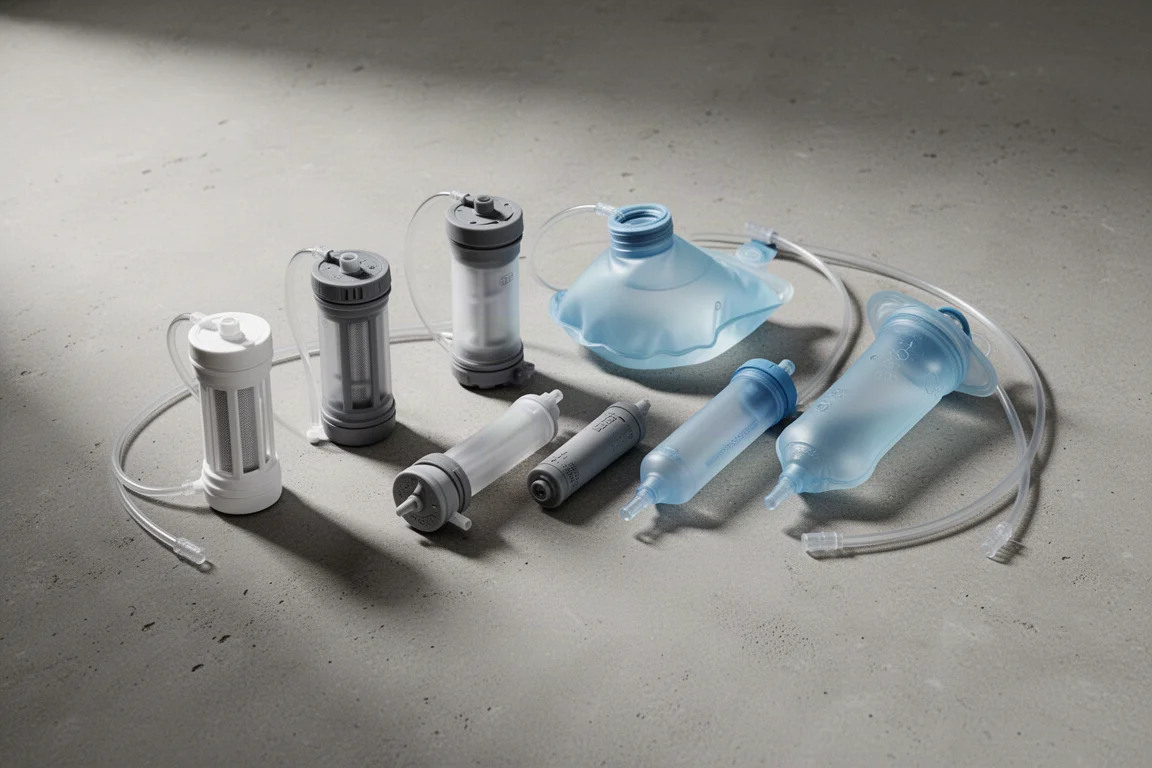
A lightweight squeeze filter is one of the simplest ways to make backcountry water safe to drink. Seven of the most popular models all rely on the same core idea: a hollow fiber membrane that lets water pass while blocking bacteria and protozoa. Each one pairs with a bag, pouch, or bottle that you squeeze to push water through the filter and out into your drinking container.
Because the technology is shared, the differences between these filters come down to details. Flow rate is the one most people notice first, since a slow filter turns every refill into a chore. This guide ranks seven squeeze filters by how quickly they moved a litre of water in timed pours, then explains what appears to be driving those differences.
How These Squeeze Filters Compare
All seven filters use hollow fiber membrane construction. Inside each housing is a bundle of thin white tubes that water can pass into and through, while bacteria and protozoa are blocked at the membrane surface. Pore size is one variable: the three Sawyer models use a 0.1 micron rating, while several others use 0.2 micron.
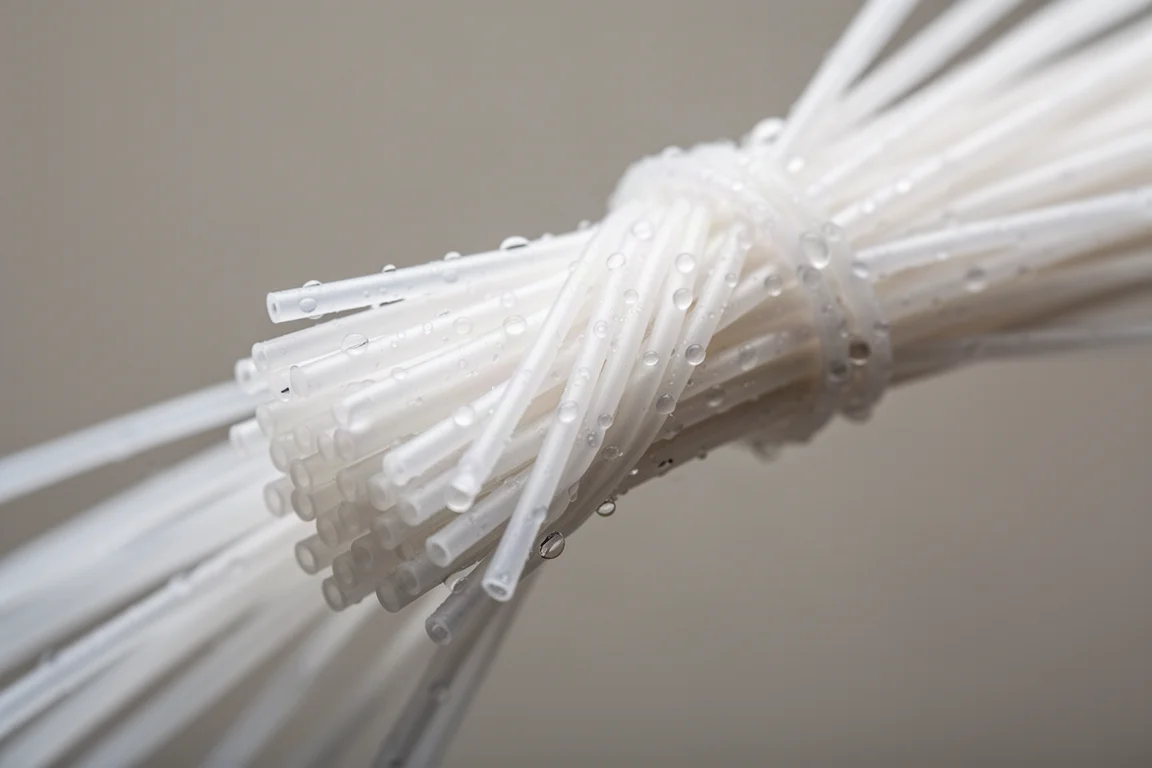
Timed pours of one litre into a standard threaded bottle produced a clear spread, from about 10 seconds at the fast end to the high 40s at the slow end. Four factors appear to explain most of the gap. The first is how openly water reaches the fiber bundle: some housings expose the fibers to almost any water arriving at the inlet, while others restrict it through a narrower opening. The second is tube diameter, though that remains unconfirmed. The third is the number of tubes, which can be estimated from the diameter of the bundle at the outlet. The fourth is tube length, since a longer bundle offers more surface area for water to pass through.
Katadyn BeFree: The Fastest Flow in the Group
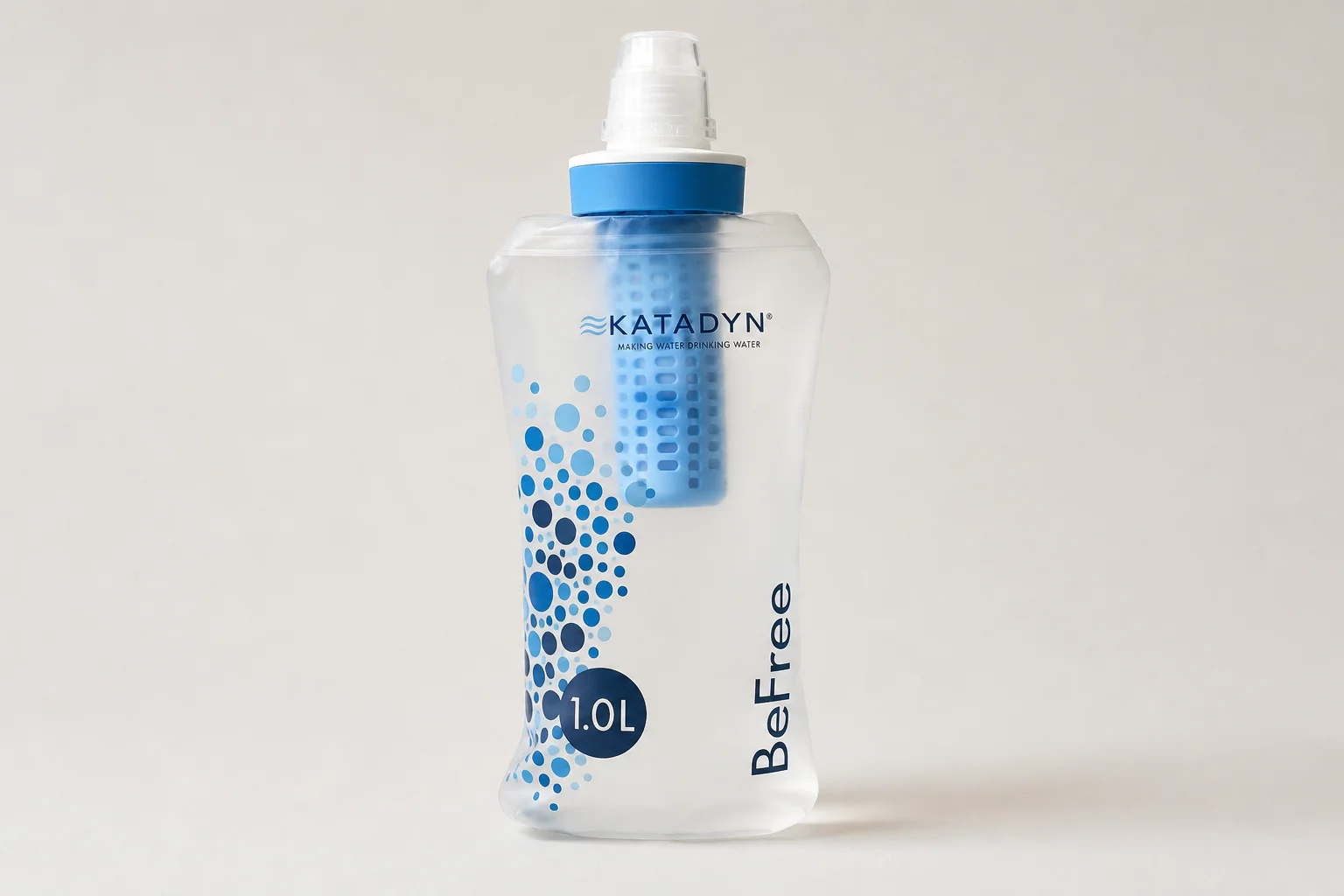
The BeFree was the quickest filter in the group by a wide margin. It moved a litre in about 12 seconds with its own reservoir, and about 10 seconds when paired with a wide-mouth collapsible bag, where extra pressure seemed easier to apply.
Its speed lines up with its construction. The fiber bundle sits openly exposed, so water arriving at the inlet has a short and largely unrestricted path to the membrane surface. It also appears to combine long tubes, a high tube count, and generous exposure, which is the best combination of the four factors above.
The trade-off is how flow holds up over time. The BeFree has a reputation, along with the Sawyer Micro, for clogging quickly after relatively little use, with some people reporting clogging after a week or two. That may come down to handling or unusually dirty water rather than the filter itself, since the same model has been used regularly for a year without any clogging problems.
Platypus QuickDraw: Nearly as Quick, With More Flexible Threading
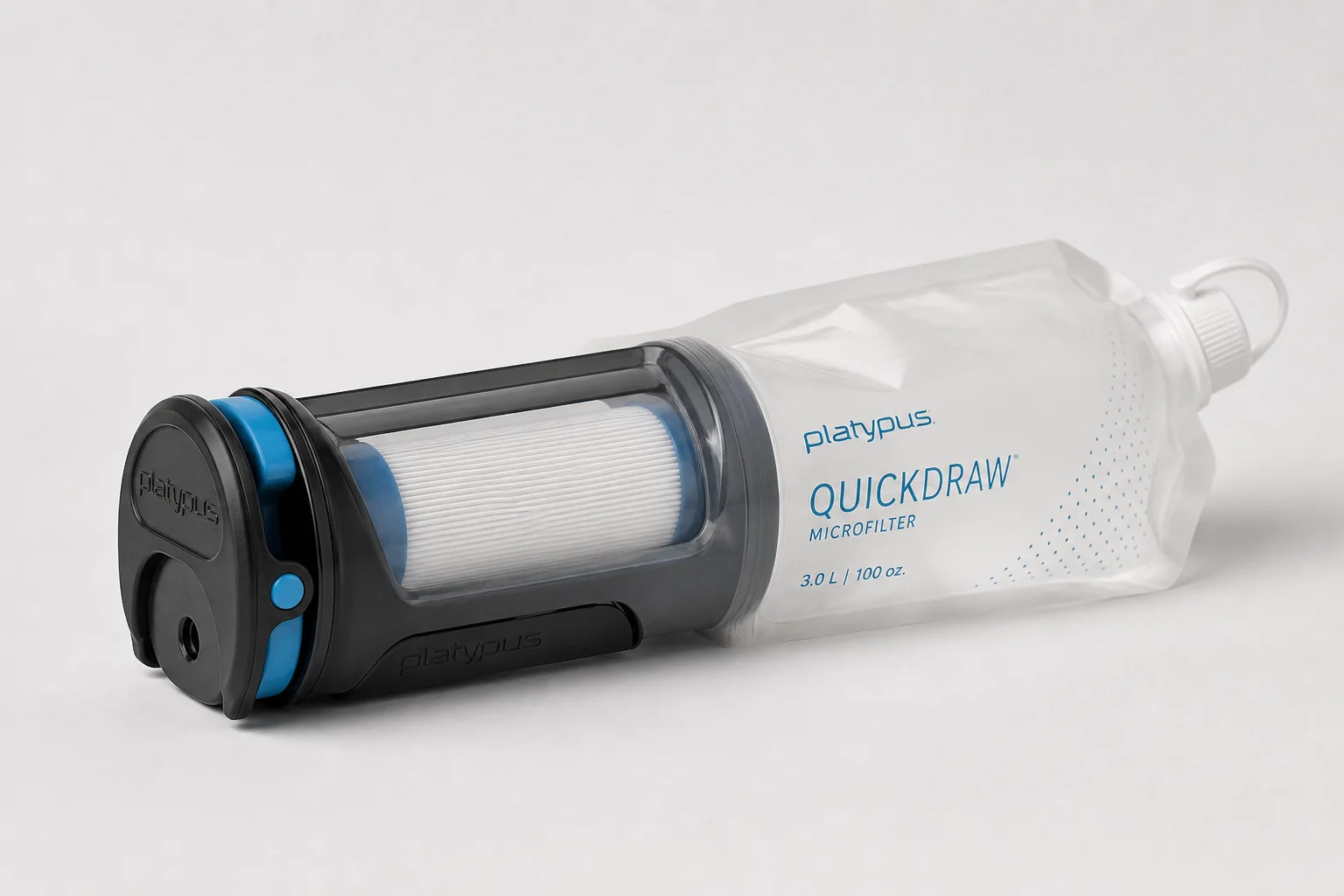
The QuickDraw finished second on flow. It filtered a litre in about 20 seconds using its own reservoir and about 21 seconds using a wide-mouth collapsible bag, a difference small enough to suggest the bag choice matters less here than it does on some other filters.
Its standout feature is threading. The filter has threads on the outside, which fit the wider opening of its own reservoir, and threads inside the casing, which fit standard bottle threads. That means a single filter can work with either style of container without an adapter.
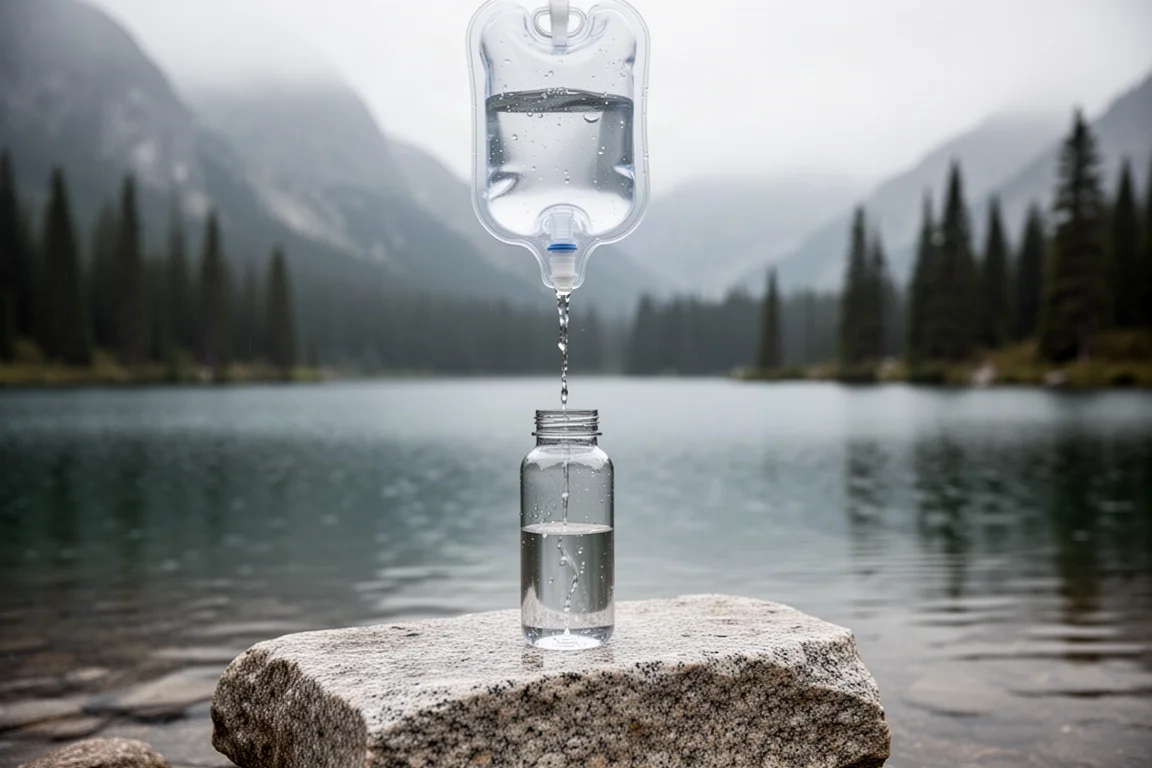
The QuickDraw also has a more open inlet than the Sawyer Squeeze, which helps explain why it stays ahead of the Squeeze despite using the same membrane technology.
Sawyer Squeeze: The Proven All-Rounder
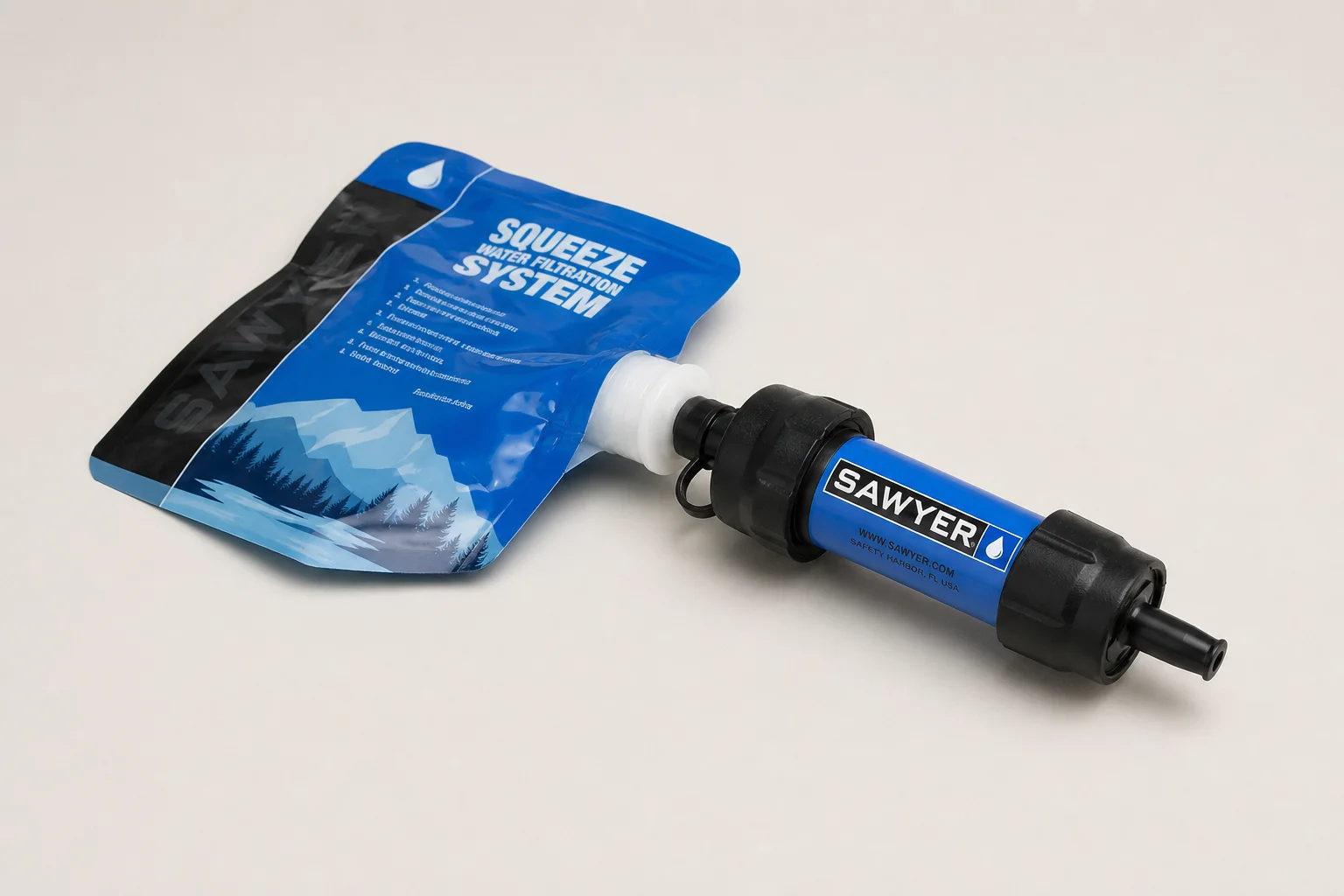
The Sawyer Squeeze is one of the most widely used filters on the market, and it filtered a litre in roughly 26 seconds in these pours. That puts it clearly behind the BeFree and the QuickDraw, but comfortably ahead of the rest of the field.
Its advantage over the smaller Sawyer Micro comes down to length. The Squeeze’s filter material runs the full length of the housing, roughly double the tubing length of the Micro, which increases surface area and supports faster flow. The inlet is more constricted than the QuickDraw’s, which is one reason it does not close the gap entirely.
Hydro Blue VersaFlow: Dependable Mid-Pack Flow
The VersaFlow filtered a litre in about 34 seconds. That is a step behind the three fastest filters, but it sits ahead of the remaining options in this group and should feel workable for everyday refills on a trip.
For outings where you are filling a bottle at a time rather than racing a group to the next source, that pace is unlikely to be a dealbreaker.
LifeStraw Flex: Two-Stage Filtration With a Removable Carbon Element
The Flex is a two-stage design. Its hollow fiber membrane is rated at 0.2 micron, and it also accepts a removable carbon element that reduces odd tastes, tannins, and discoloration in the water.
That carbon stage has a measurable cost. With the carbon element installed, the Flex took about 48 seconds to filter a litre. With it removed, the same filter finished in about 36 seconds, which is noticeably quicker and also sounds different in use. The choice comes down to whether better-tasting water or faster refills matter more to you.
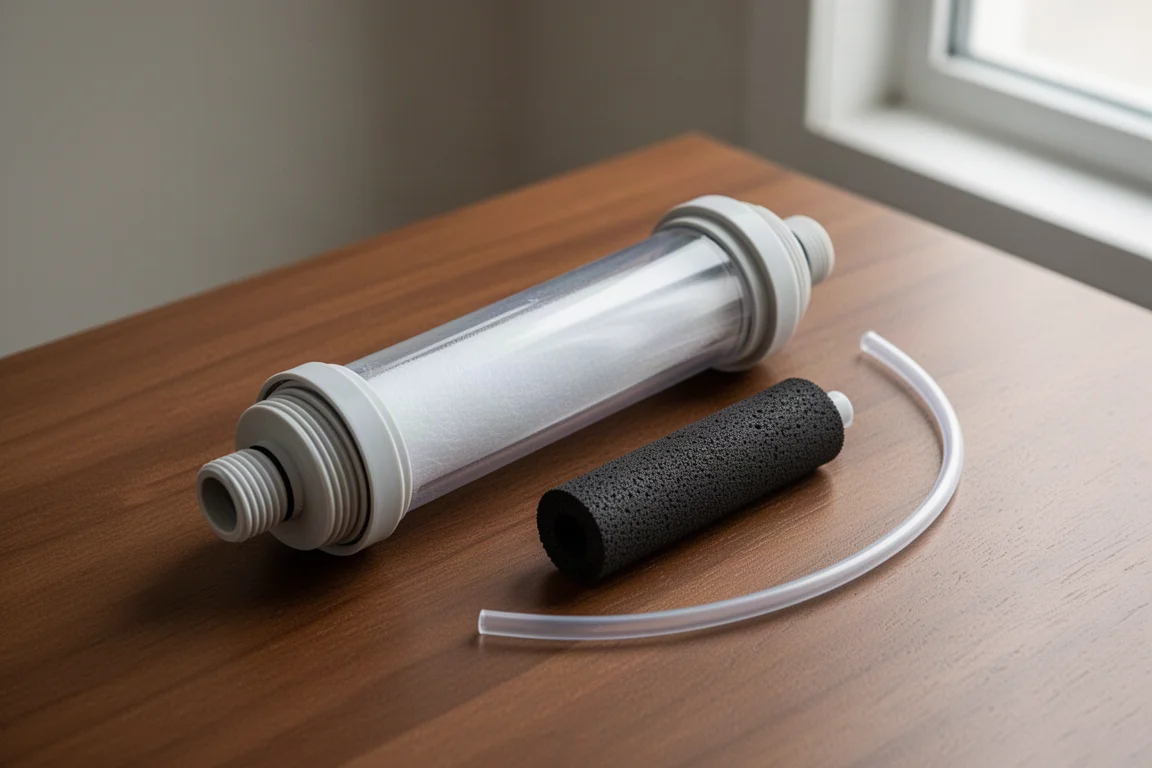
Sawyer Mini: Compact, With a Narrower Path for Water
The Mini is the most compact approach in the Sawyer range, but it was among the slowest filters here. Part of the reason is visible in the design: the outlet opening is narrower than on the other filters, which constricts water flow into the fiber tubes and limits how fast water can move through the membrane.
Like the other Sawyer models, it carries a 0.1 micron rating.
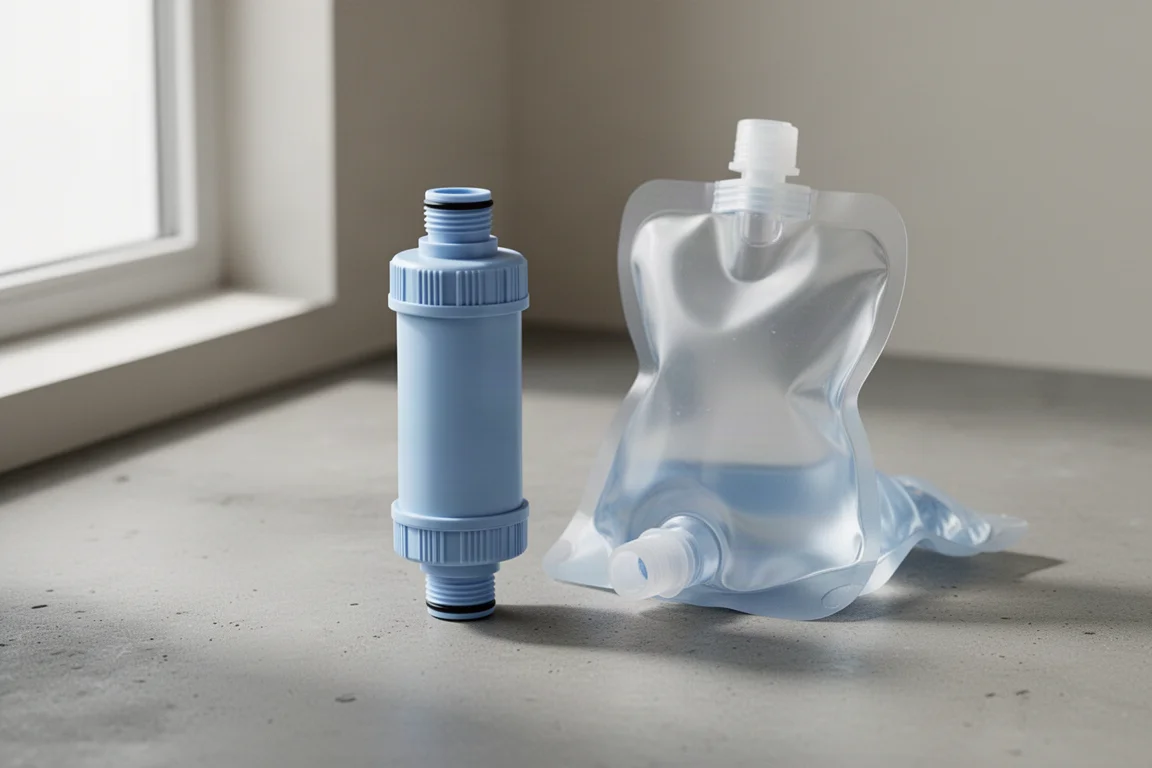
Sawyer Micro: Small Body, Limited Surface Area
The Micro was noticeably slower than the Squeeze in the timed pours. Its housing holds a much shorter length of filter material, and the tubes inside are tightly bound, so there is less surface area for water to pass through.
That limited surface area is also the likely explanation for its clogging reputation. With less room for sediment to spread out, the membrane can become overloaded by dirty water quickly, which slows flow further. If you expect silty or heavily sedimented sources, this is worth weighing against the lighter, more compact body.
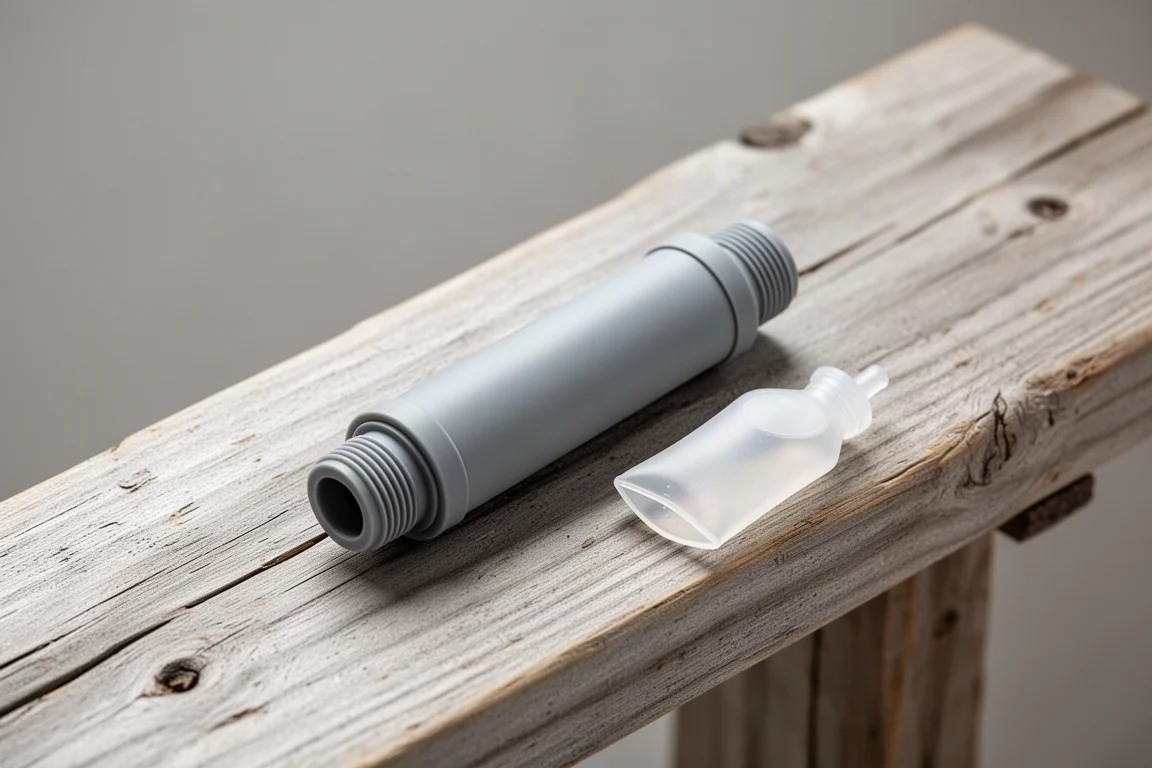
Overall Buying Advice
If raw speed is the priority, the ranking is straightforward: the BeFree was fastest, the QuickDraw was a close second, and the Sawyer Squeeze was the best of the rest. The VersaFlow, LifeStraw Flex, Sawyer Mini, and Sawyer Micro follow in that order based on the pours here.
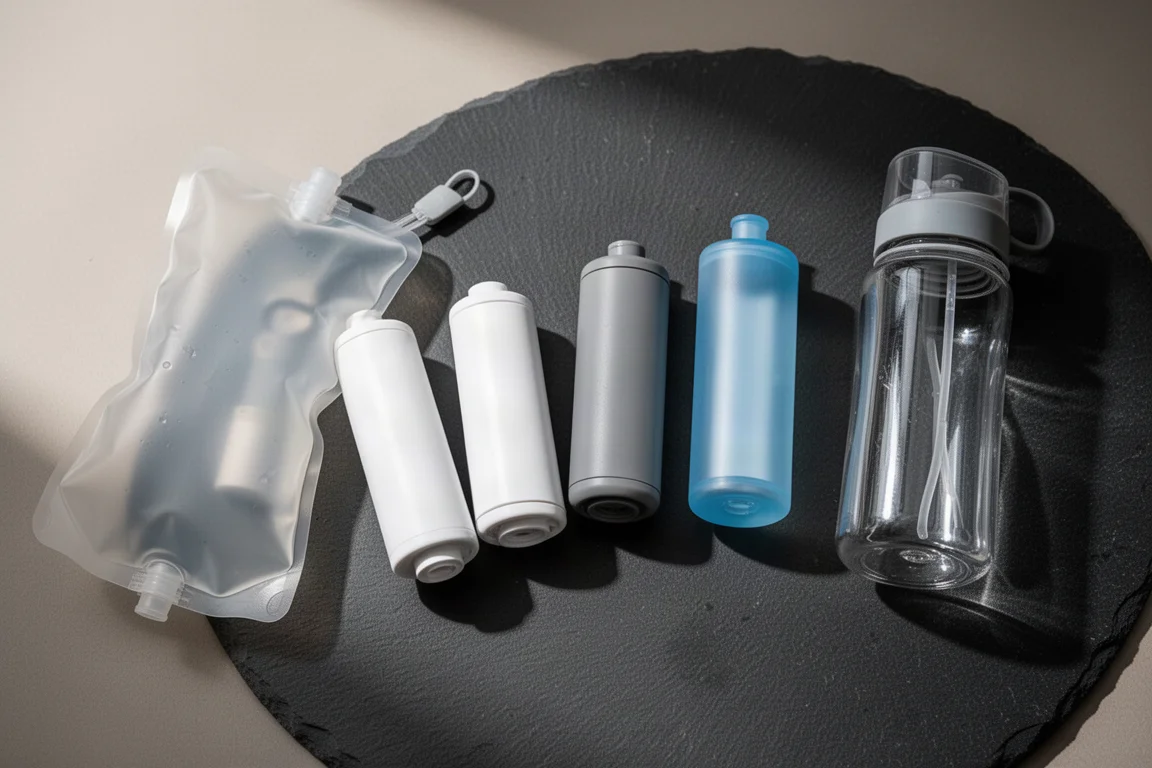
Bag pairing matters too. A wide-mouth collapsible bag is easier to fill from a stream and easier to squeeze hard, and it produced the BeFree’s best result. Check that the threads on your chosen filter match the containers you already carry, since the QuickDraw is the most flexible of the group on that front.
Finally, think about the water you actually filter. Filters with less surface area, notably the Micro, slow down faster when sediment is present. If your sources are often silty, a longer fiber bundle is the safer choice.
Conclusion
All seven filters use the same hollow fiber approach, but flow rates vary widely depending on how openly water reaches the membrane, how many tubes are packed inside, and how long those tubes are. The BeFree and QuickDraw lead on speed, the Sawyer Squeeze balances speed with wide availability and a long track record in the field, and the remaining filters trade some flow for size, weight, or added features such as carbon filtration.
Further reading
Related Reviews

Backpacking Gear
Building a 10 lb Base Weight: An Ultralight Backpacking Gear List
A practical walkthrough of the ultralight pieces behind a 10 lb base weight, from a 765 g pack and a roomy one-person tent to a full camp chair and a dependable water filter.

Road Bikes
10 New Road Bikes Worth Watching: Aero, Titanium, Steel and Endurance Standouts
A practical roundup of 10 new road bikes, from aero flagships chasing single-watt gains to titanium, steel and endurance platforms built for real roads.
Bikepacking Gear
11 Bikepacking Essentials for Long-Distance Cycling
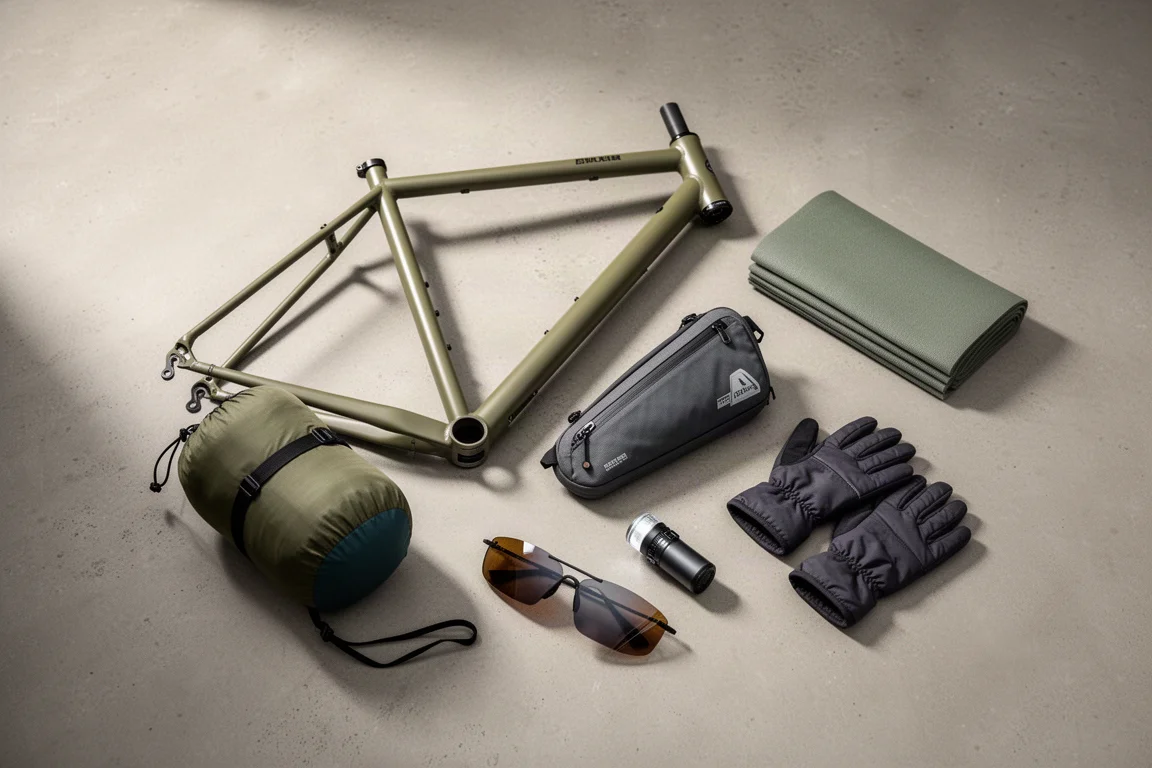
Eleven bikepacking essentials for long-distance cycling, from a steel gravel frame and a two-person tent to helmet lights, packable gloves, and a frame bag that puts weight in the right place.