Astrophotography
Best Solar Cameras Compared: Four Astro Cameras Tested for Hydrogen Alpha and White Light
Four popular solar imaging cameras tested across multiple focal ratios, from full solar discs to close-up prominences, to find which sensor actually matches your telescope.
Introduction
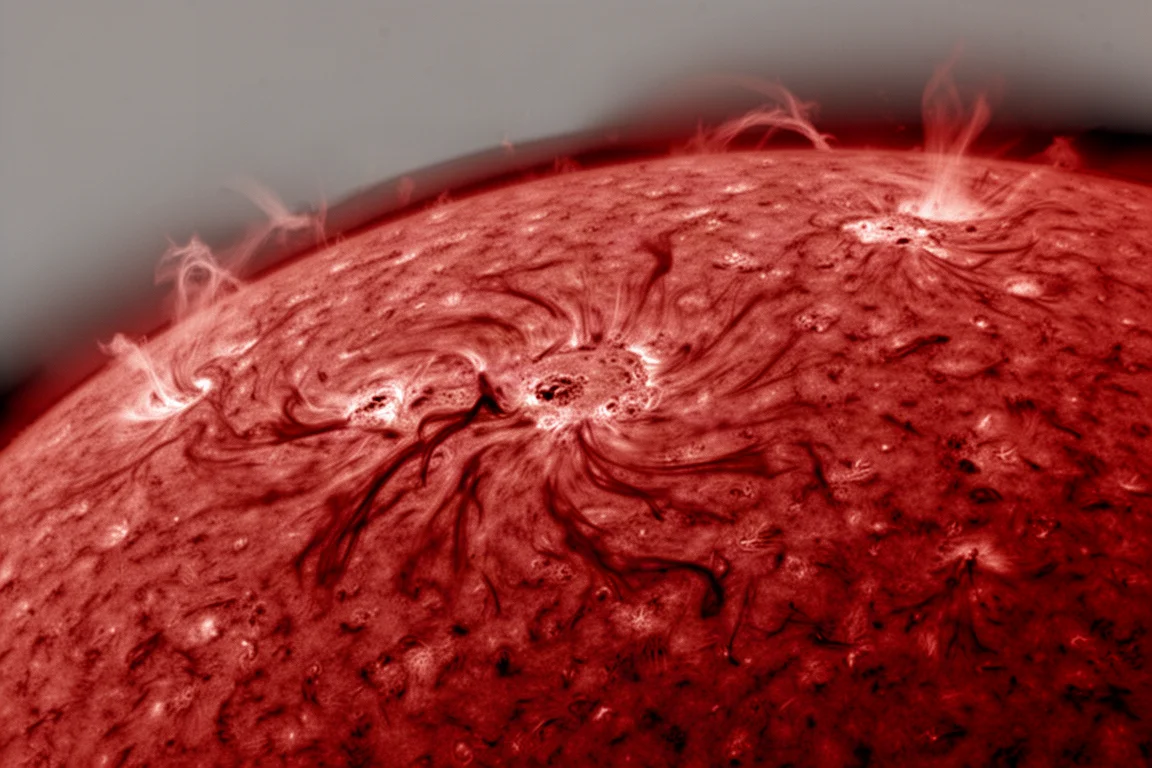
Choosing a camera for solar imaging is more subtle than most spec sheets suggest. The goal here is simple: find which camera best matches telescopes like a 100mm f/7 hydrogen alpha refractor and larger white light refractors, covering both full solar discs and close-ups of prominences and surface detail.
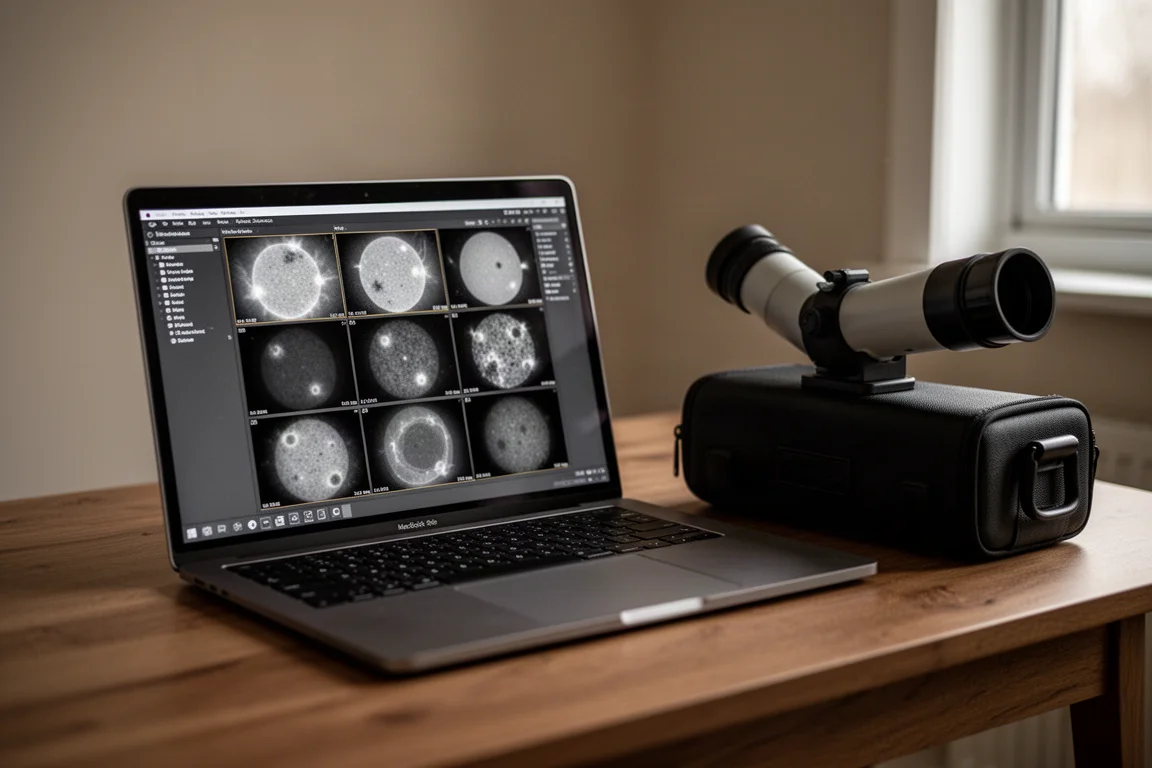
The approach combined theory and field testing. The same cameras were swapped across every focal length combination, with barlows at 1.75x, 2.5x and 4x, capturing full discs as well as tight shots of prominences and surface features. Every capture used Sharpcap Pro, a 16-bit SER file, a 10ms exposure, and gain adjusted to a 75% histogram (sometimes shorter exposures for white light). AutoStakkert picked the best 200 of 2,000 frames, flats were taken with a Daystar flat cap, and identical settings were used in ImPPG across several days with varying seeing.
How Camera Specs Translate to the Sun
Sensor pixel size turns out to be the decisive specification. Quantum efficiency is fairly similar across the common solar sensors and not a big differentiator, and while a global shutter is often praised, real-world results suggest rolling versus global shutter matters far less than people claim. Full well capacity, however, genuinely matters for contrast on the sun.
The matching rule comes down to focal length divided by aperture, aiming for a sampling factor of three times the pixel size (scaled by wavelength: 0.656 micrometers for hydrogen alpha, 0.54 for white light). In practice, that means small pixel sizes suit small focal ratios and larger pixel sizes suit longer focal ratios. One safety note that always applies: never look at the sun without a proper solar filter or dedicated solar telescope, and remember a hydrogen alpha etalon filter is not a solar filter.
ZWO ASI174MM (IMX174)
The ASI174MM has been a long-standing favourite for solar work, and for good reason at high magnification. At f/28 with a 4x Power Mate, the IMX174 was the clear winner, exactly in line with theory. That combination of an f/7 refractor, a 4x Power Mate and this camera has even produced an Astronomy Picture of the Day.
The catch is the 5.86 micron pixels, which are simply too large for a native f/7 train. For full disc hydrogen alpha at f/7, this camera ranked last, not through any fault of the camera itself but because it is a poor optical match at low focal ratios. It shines when steady seeing lets you push high magnification, which is uncommon but spectacular when it happens.
QHY5III174M (IMX174)
The QHY5III174M uses the same Sony IMX174 sensor as the ZWO equivalent, and in testing the two behaved similarly across the board. That is worth stressing: even with identical sensors, camera makers do not always enable the same sensor features, may add memory, and differ in form factor and extras like tilt adjustment, so same-sensor cameras are not automatically identical.
Like its sibling, this camera ranked at or near the bottom at native f/7 and with the 1.75x barlow, tied mid-pack at 2.5x, and reached its stride at f/28 with the 4x Power Mate. If your solar setup runs at long effective focal ratios, this is the sensor family to look at.
Player One Saturn (IMX533)
The Player One Saturn, built around the IMX533, emerged as the most convenient all-rounder for full disc work. With roughly 9 megapixels on a square 3.76 micron pixel grid, it covered the entire sun in a single exposure with room to frame prominences, and it consistently produced very pleasant images in one step.
At f/7 with a 2.5x Power Mate it ranked first in both hydrogen alpha and white light, matching theory. It also carries about 50% more full well capacity than the IMX290 and four times the resolution. Its one weakness: at full sensor size the frame rate drops to around 29 fps, yet this combination still produced some of the best full disc captures because the wider field and other camera characteristics compensate.
Player One Mars-C (IMX290)
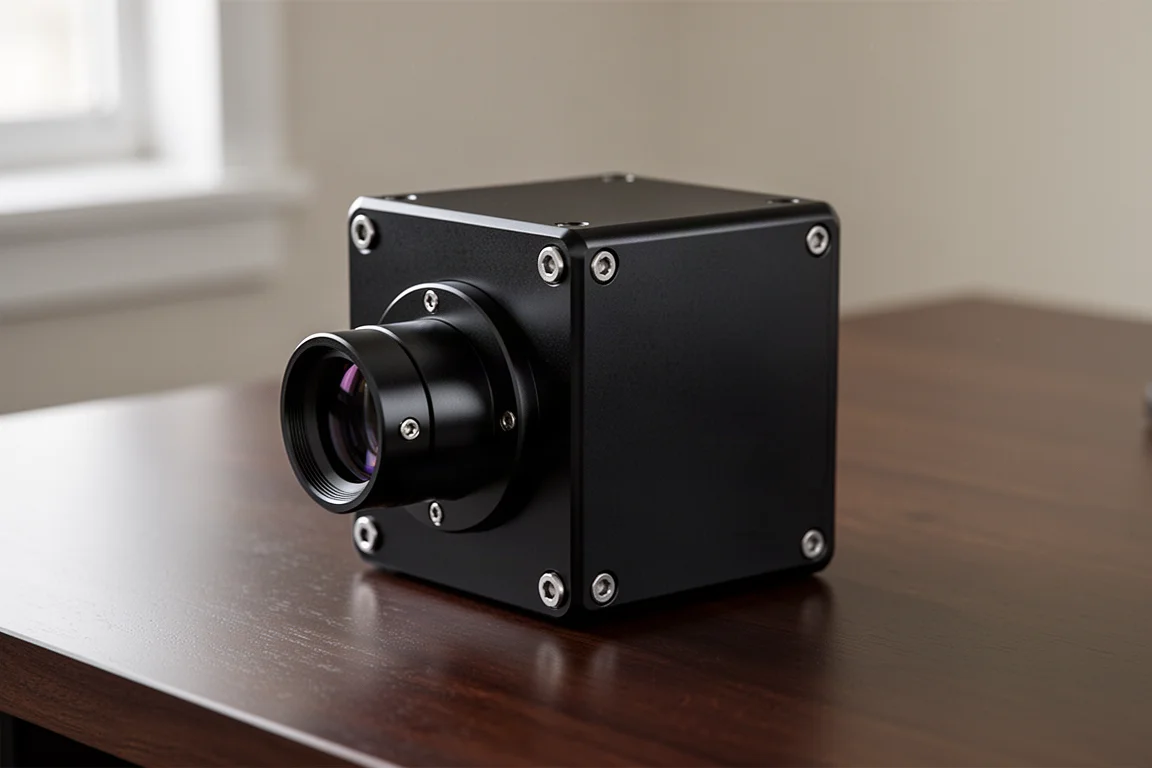
The Mars, based on the IMX290 with 2.9 micron pixels, was the sharpest performer at native f/7, exactly as theory predicts. For hydrogen alpha at low magnification, it ranked first, delivering the most detail of any camera tested. The trade-off is framing: a full solar disc requires a five or six panel mosaic, which is slower and more error-prone than a single capture.
With the 1.75x barlow it ranked first or a close second, but it fell behind as focal ratio climbed, finishing last at f/28. Player One’s built-in tilt mechanism is also worth noting, since tilt adjustment helps mitigate Newton rings in double-stack hydrogen alpha systems.
Real-World Results at Every Focal Ratio
The pattern across hydrogen alpha and white light was remarkably consistent. At native f/7, the IMX290 led with the IMX533 close behind in single-shot convenience, while the IMX429 and IMX174 trailed. At f/12.25 with the 1.75x barlow, the IMX533 and IMX429 rose to the top. At f/17.5 with the 2.5x Power Mate, the IMX533 had the edge. At f/28 with the 4x Power Mate, the IMX174 was clearly the best.
A note on the newer IMX462: it shares the IMX290’s frame rate, resolution, pixel size and ADC, with higher QE and slightly lower read noise, but a much smaller full well, roughly five times worse. For mono solar use where its near-infrared advantage is irrelevant, the IMX290 may still be the better choice, though a side-by-side test would be needed to confirm.
Buying Advice for Solar Camera Shoppers
A few criteria are vital. Choose mono, not colour, since hydrogen alpha is a single wavelength and mono delivers better sensitivity and detail. Match pixel size to your focal ratio, the single most important technical decision. Prioritize frame rate: keep exposures at 10ms or shorter to freeze seeing, and aim for at least 60 fps where possible, though a slower full-disc capture can still win on other merits. Cost is personal, but buy the best camera you can afford.
Helpful extras include generous full well capacity (arguably vital for contrast), a square sensor since the sun is round, and full disc coverage in one shot. Global shutter versus rolling shutter turned out not to matter in practice, and built-in tilt support and offset adjustment are nice conveniences, with Player One cameras offering built-in tilt.
Beyond cameras: a 540nm continuum filter makes a remarkable difference in white light, a quality Herschel wedge generally beats a front broadband filter on a refractor (both Lunt and Baader wedges come recommended), Lunt-style etalon scopes do not need a UV/IR cut filter, taking flats with a flat cap improves brightness uniformity, and the best imaging window is usually just after sunrise before the sun heats the landscape. Good seeing remains the single most important factor, trumping any equipment choice.
Conclusion
The right solar camera depends on how you shoot. For native f/7 hydrogen alpha and low magnifications, an IMX290-based camera delivers the sharpest detail if you accept mosaics for full discs. For single-exposure full disc work and 2.5x power, the IMX533 is the most convenient strong performer. And for high magnification under excellent seeing, the IMX174 cameras remain the reference. Matching pixel size to focal ratio is the lesson that changes everything.
Further reading
Related Reviews
Astrophotography
ASKAR FRA400C Review: A Versatile 400mm Refractor for Astrophotography and More
The ASKAR FRA400C is a compact 72mm refractor that balances reach, versatility, and portability for astrophotographers and visual observers.
Astrophotography
Askar SQA106 Review: A Premium 106mm Astrograph With Exceptional Optics
The Askar SQA106 is a premium 106mm quintuplet astrograph with impressive sharpness across full-frame sensors, though its price and weight demand careful consideration.
Astrophotography
Astro Imaging Gear 2026: Eight New Products Worth Watching
A look at the most interesting new astrophotography and astronomy products announced this year, from fast telescopes to smart cameras and wireless accessories.