Mountain Bikes
Best Slopestyle Bikes: Five Proven Rigs for Big Tricks
Five slopestyle mountain bikes compared on suspension layout, frame weight, gearing and geometry, with the trade-offs worth knowing before you buy.
Introduction
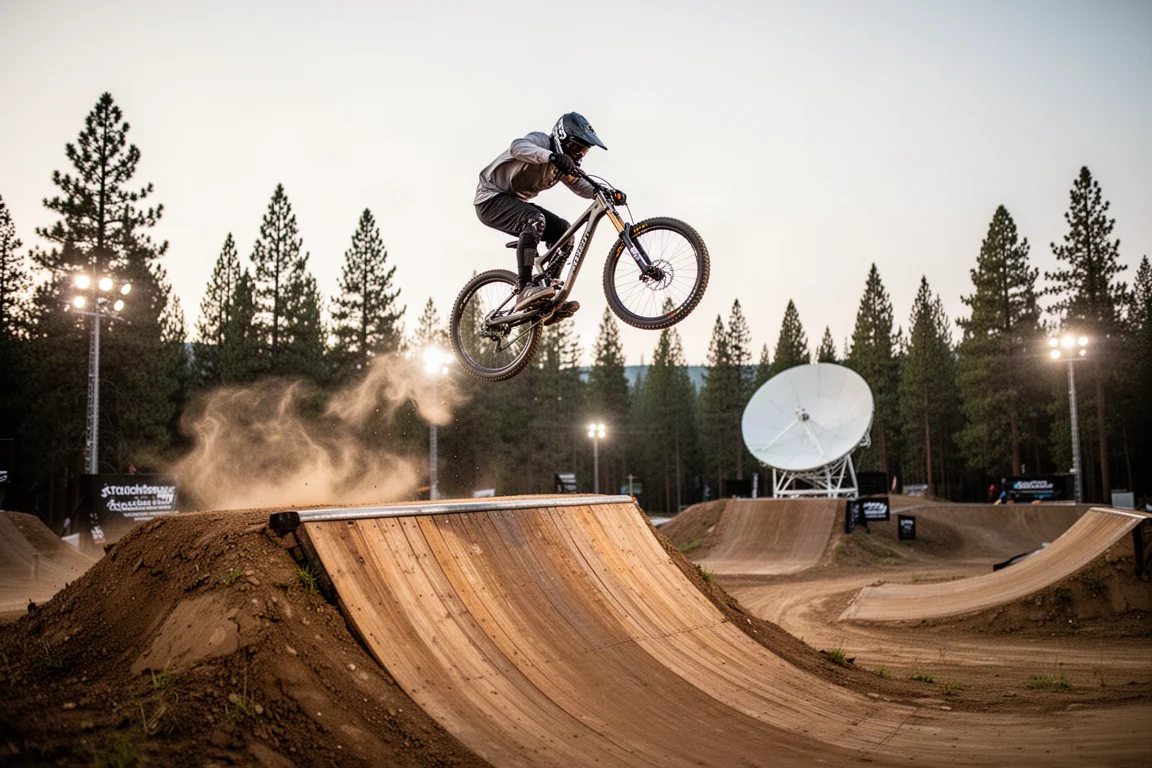
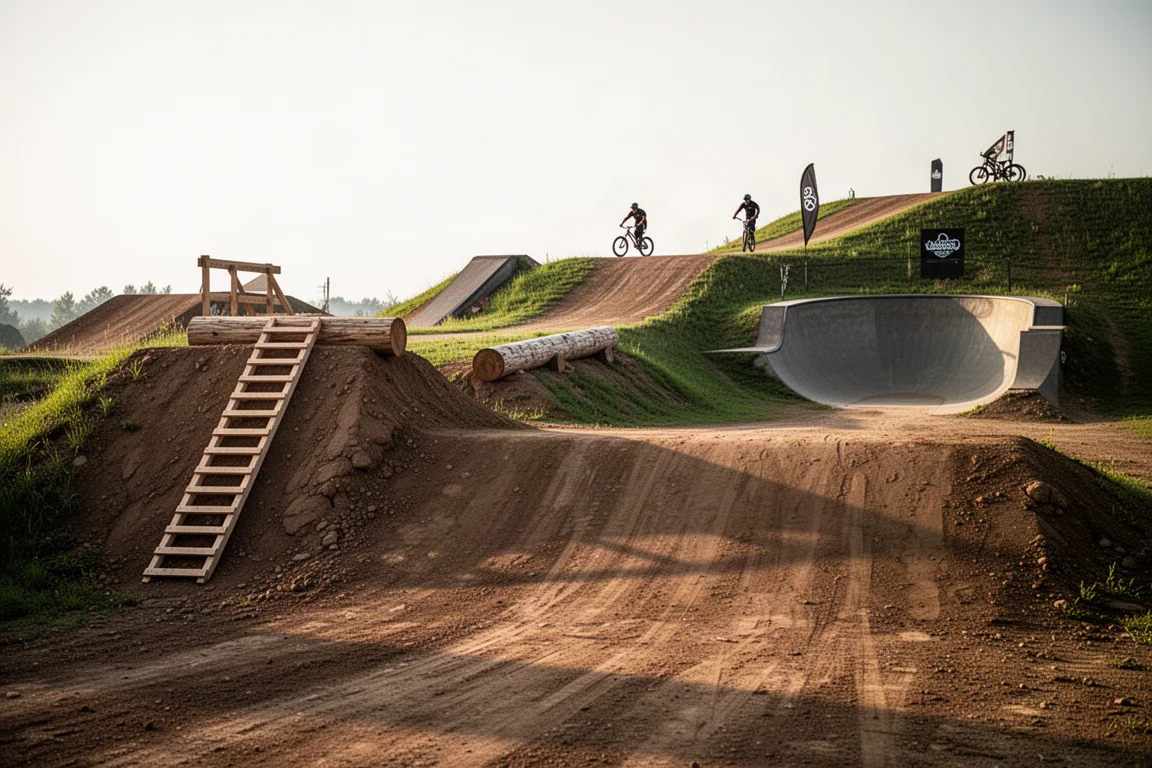
Slopestyle is one of the most spectacular corners of mountain biking. Riders throw BMX and dirt jump tricks over man-made obstacles such as ladder drops, satellite dishes, log drops, huge jumps and quarter pipes, and runs are judged rather than timed. A panel scores degree of difficulty, variety of tricks, execution, progression and amplitude, and the combined marks add up to a total out of 100. Emil Johansson has taken 12 Crankworx World Tour gold medals, which shows how deep the level at the top has become.
That scoring system shapes the bikes. A slopestyle rig is not built for speed or all-day trail miles. It is built to be predictable on takeoff, forgiving on landing, light enough to spin and flip, and strong enough to survive repeated hits on the biggest features on the course.
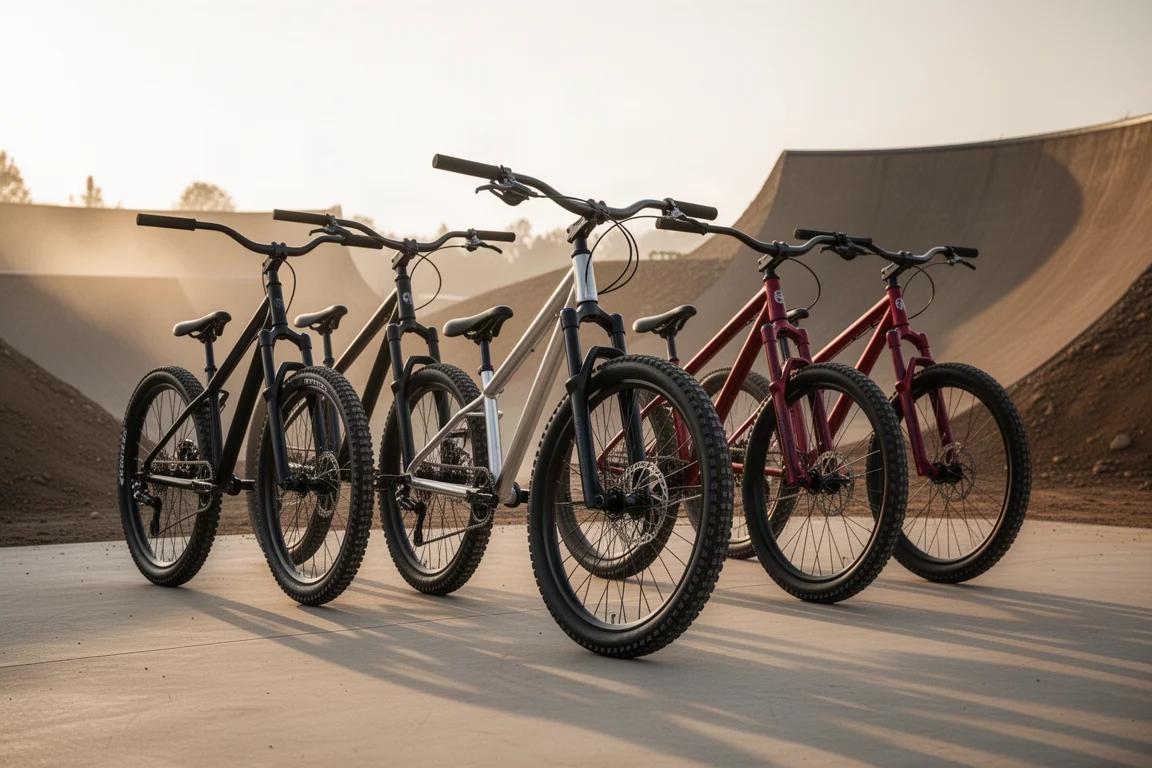
This guide covers five bikes that have shaped the discipline, from lightweight hardtails to full suspension designs with concentric pivots. Each entry focuses on what the bike is doing mechanically and who it suits.
What Makes a Slopestyle Bike Different
Before looking at individual bikes, it helps to understand the shared blueprint.
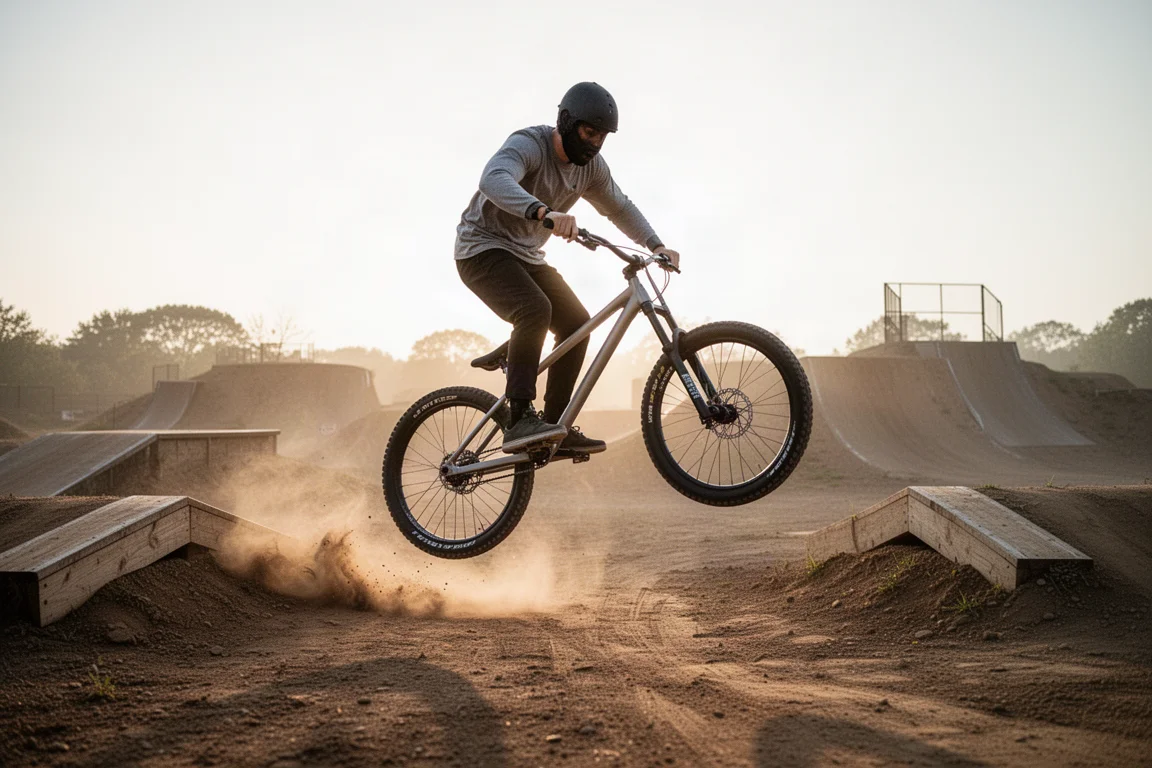
Slopestyle bikes run short travel suspension at the front and either short travel or no suspension at the rear. That combination keeps takeoffs predictable while still taking the sting out of hard landings. Frames are short and steep, paired with narrow, tall handlebars to make flip and spin tricks manageable.
Weight matters because lighter bikes make tricks faster and less effort, but strength matters more because the jumps and drops are enormous. Most run 26-inch wheels: smaller wheels reduce the gyroscopic forces that slow rotational tricks and stay tucked out of the way during tail whips.
Gearing is single speed. There is no need for gears, weight stays down, and there are no cables or derailleurs to snag mid-air. Many riders run a gyro for bar spins, though some simply run a very long brake hose looped around the steerer tube.
5. Specialized P.Slope
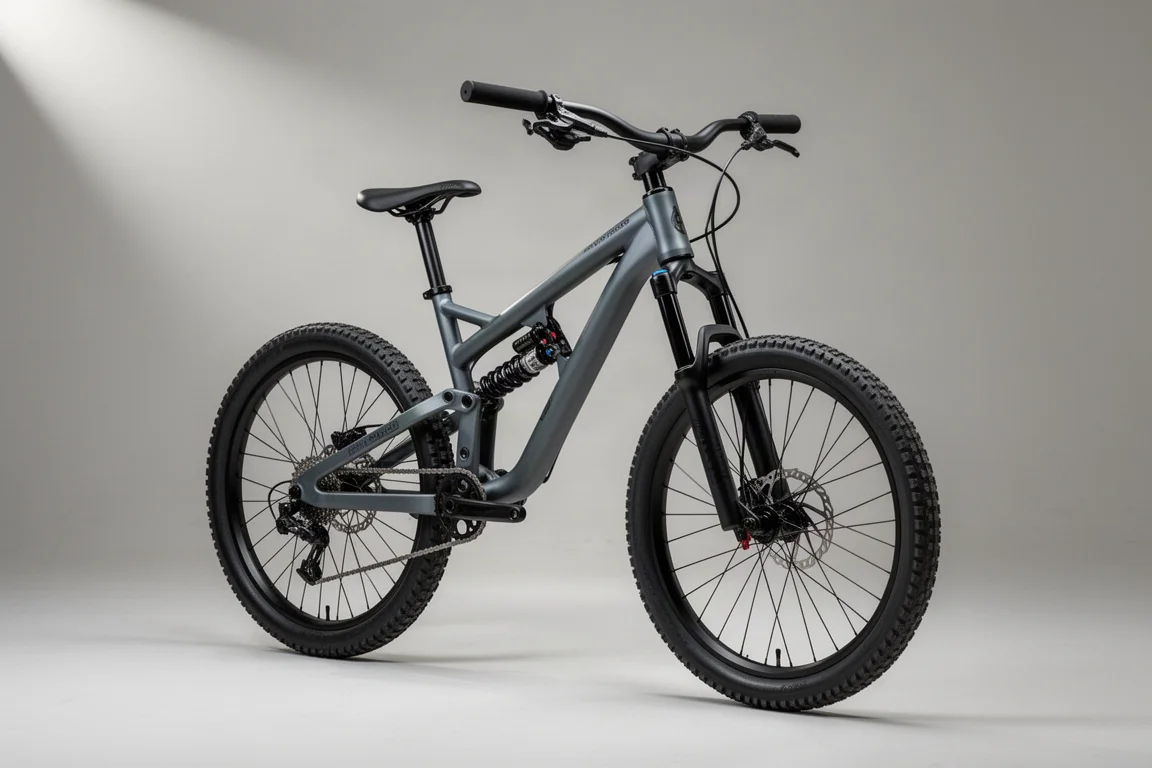
The P.Slope is a full suspension slopestyle bike with just 85mm of rear travel, designed to be paired with a 100mm fork up front. That small amount of movement is deliberate: it gives the rider maximum pump from landings and pop from takeoffs, while still absorbing the worst of a hard landing.
The frame uses a concentric pivot, with bearings rotating around the outside of the bottom bracket shell. Because there is zero chain growth through the rear wheel travel, a single speed setup works without a chain tensioner. The suspension linkage is built around a very low 2:1 leverage ratio, which means the damper has less work to do and riders do not need to run huge air pressures to stop the bike bottoming out.
There are some unusual details. The P.Slope uses a non-threaded bottom bracket interface rather than the threaded bottom bracket found on most slopestyle frames, and adapter sleeves are offered to convert it to a traditional threaded setup. Geometry is compact: one size only, a 22.5-inch effective top tube, a steep head angle and very short chainstays, which keeps handling sharp and makes the bike easy to pop into a manual. Sliding 135mm dropouts with an integrated disc mount let chain tension be adjusted independently of the brake, which simplifies swapping the rear wheel.
The P.Slope has been around since 2013 with only minimal changes, and the 2020 complete build was priced at £2,500. Availability is limited now, so it is worth checking what is still on the market.
4. NS Decade
The Decade takes the hardtail route. With no rear suspension at all, weight is kept as low as possible: NS claims the custom butted aluminium frame weighs just 2.15kg. A tapered head tube and geometry designed around a 100mm travel fork keep the front end in familiar slopestyle territory.
The 381mm chainstays keep the rear end very tight, which gives riders extra room for tail whips and makes the bike easy to manual. It runs single speed with horizontal dropouts, and an optional derailleur hanger is available separately if you want to run gears.
One of the neatest touches is the removable gyro tabs. They come off with a single Allen key bolt per side, keeping the frame clean and free of protrusions if you would rather loop a brake hose around the steerer, and they can be refitted when you want a cable or hydraulic gyro for unlimited bar spins. The Decade is sold as a frame only, priced around £319 to £429, which makes it a strong starting point for a custom build.
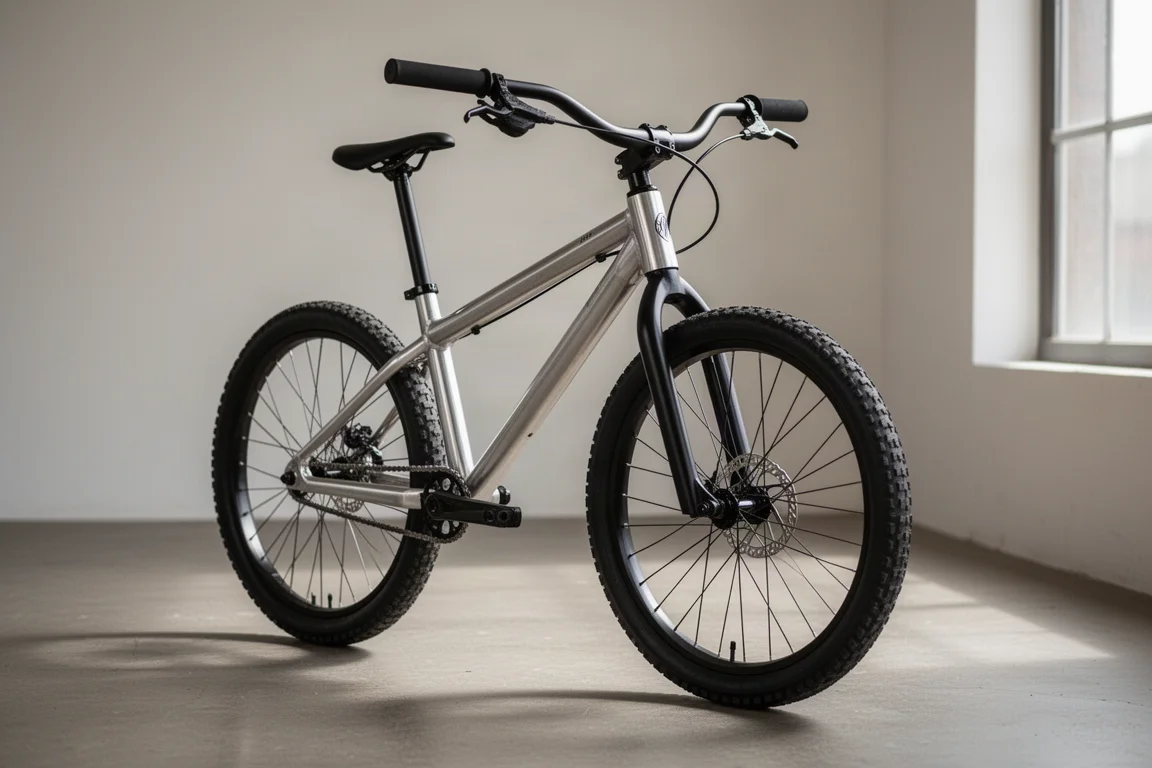
3. Commencal Absolut
The Absolut is one of the cleanest looking slopestyle hardtails around, and Commencal claims a frame weight of just 1.9kg, lighter than the NS Decade’s claimed figure. Cabling is internally routed, so there are no guides or outers to snag clothing during tricks.
The details are all shaped by trick riding. Maximum rear rotor size is 160mm, which keeps the brake tucked out of the way. The rear dropouts are horizontal and single speed only, with a very minimal look, and integrated chain tugs make it straightforward to set the wheel perfectly straight with correct chain alignment every time.
Unlike most slopestyle frames, the Absolut comes in a choice of sizes: small, medium and large, plus a 24-inch wheel kids size aimed at younger riders coming up. It is sold as a complete bike only, with the RS model priced around £2,300 to £2,500.
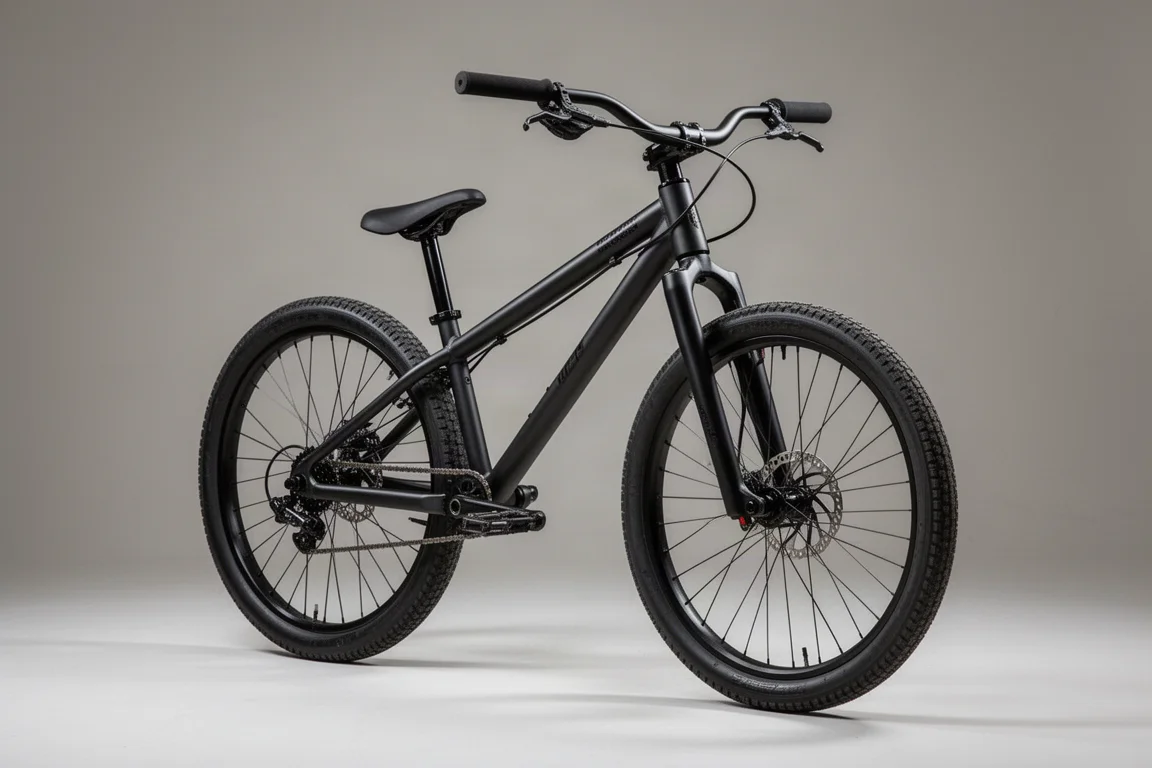
2. Canyon Stitched 720
The Stitched 720 is a full suspension slopestyle bike with 100mm of rear wheel travel. Its single pivot axle path uses a seat stay operated linkage to drive an air shock mounted snugly inside the frame.
Like the P.Slope, it uses a concentric pivot, so there is no chain growth and chain tension stays constant without a chain tensioner. It runs horizontal dropouts because it is single speed only, and it includes integrated chain tugs and slotted IS disc brake mounts.
Geometry is built for stability on the biggest jumps: one size only, a 430mm reach, a 69-degree head angle and 397mm chainstays. External cable routing keeps maintenance simple, and a tapered head tube and 73mm threaded bottom bracket are the modern standards you would expect to see. At £1,949 for the complete bike, it is one of the more accessible ways into a full suspension slopestyle build.
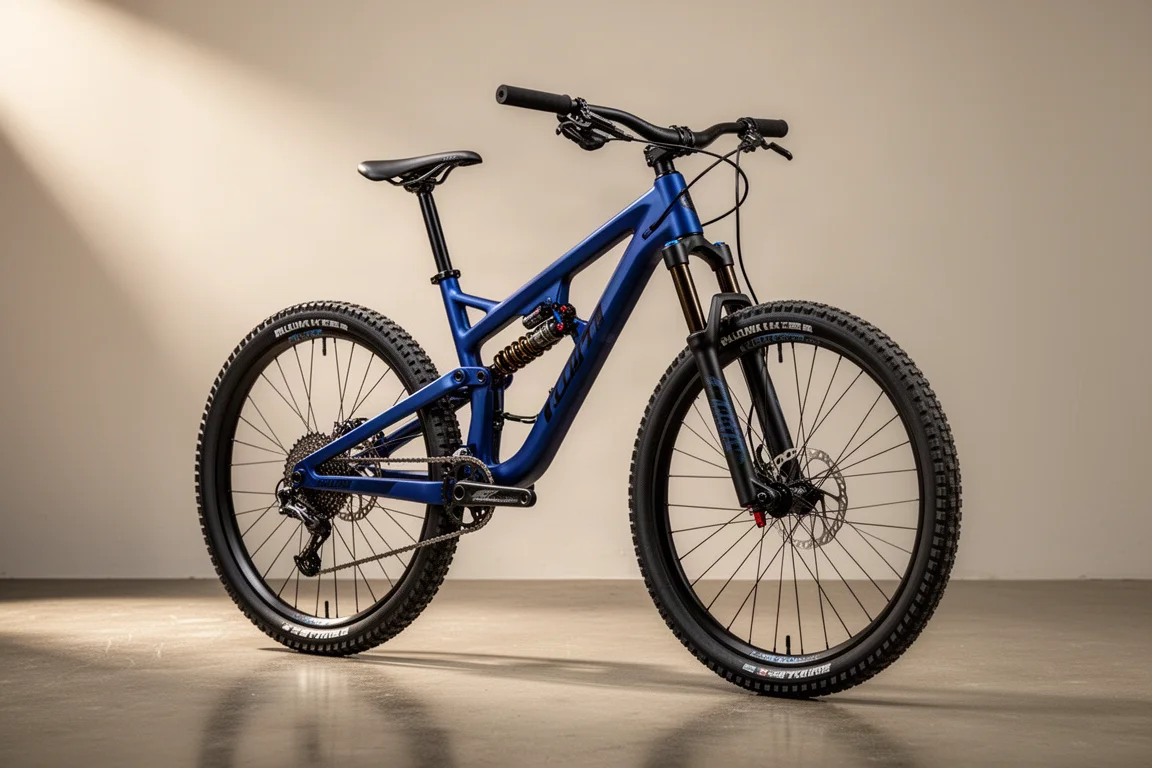
1. Trek Ticket S
The Ticket S sits at the top of this list because it is the bike ridden by some of the best slopestyle riders in the world on the biggest features in the sport. It has been around since 2014 and is a full suspension version of Trek’s Ticket dirt jump hardtail, sharing many of the same features and much of the geometry.
Its approach is a little more mountain bike derived than the others here. There is 100mm of rear travel and 12mm through axle rear dropouts. The single pivot rear suspension does not use a concentric pivot, so a derailleur hanger is needed to mount a chain tensioner, because there is some chain growth built into the design. ISCG 05 tabs are included in case you want to run a chain device.
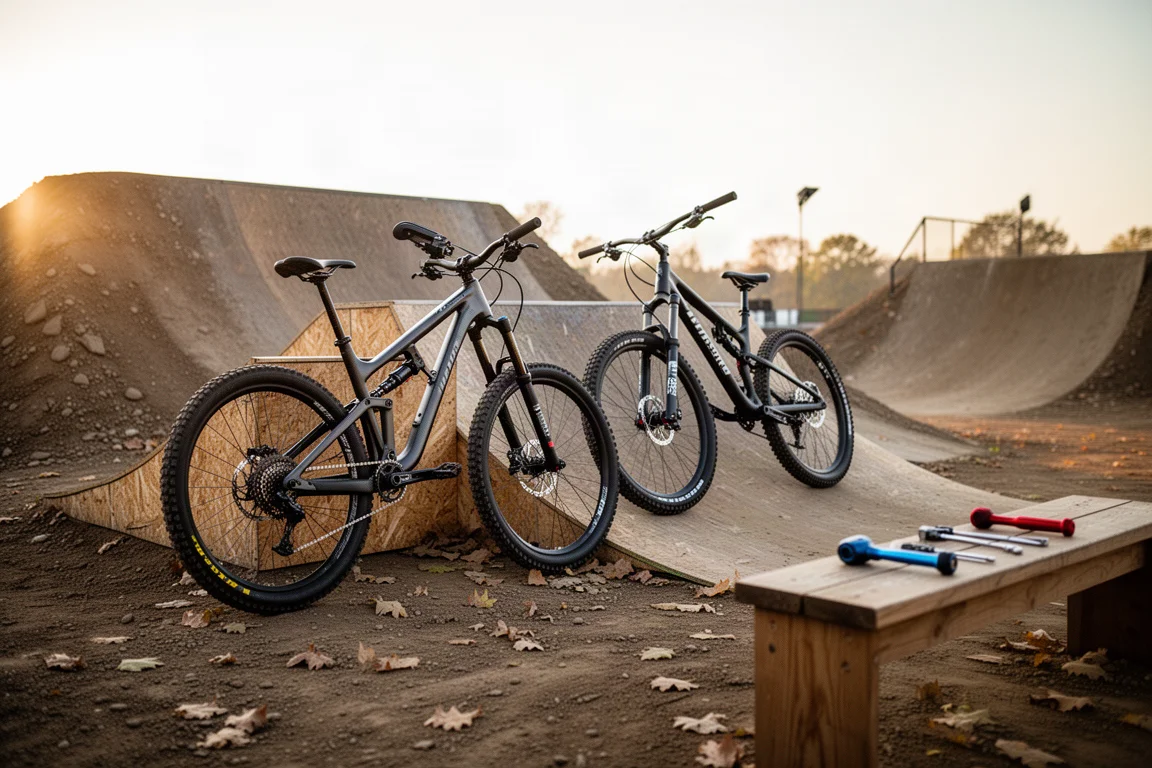
The rear suspension is claimed to keep maximum traction under braking, and a magnesium link sheds further weight from the design. Add Trek’s aluminium tubing and a full set of aluminium bolts, and Trek claims a frame weight of 3.08kg with an air shock, which is light for a full suspension frame built to be ridden off massive drops. A flip chip at the rear lets riders adjust bottom bracket height by 10mm and head angle by half a degree, and the frame uses a press fit bottom bracket and a 142mm rear hub so larger cranks and wider hubs can be used.
All of that technology comes at a price: the Ticket S retails for just under £1,900 for the frame only. Custom paint options have been offered in the past, so eye-catching examples do exist.
Buying Advice
Choosing between these five comes down to how you ride and what you are willing to spend.
If you want the lightest possible platform for spins and whips and you are comfortable on a hardtail, the Commencal Absolut and NS Decade are the most direct route. The Absolut is the lighter of the two on claimed frame weight and offers more sizes, including a kids build. The Decade is a cheaper frame-only option with removable gyro tabs and the flexibility of an optional derailleur hanger.
If you want rear suspension, the choice is between the Specialized P.Slope, Canyon Stitched 720 and Trek Ticket S. The P.Slope and the Stitched 720 both use concentric pivots, which means no chain growth and no chain tensioner with a single speed setup, and both are designed around a 100mm fork. The Ticket S trades the concentric pivot for a more trail-derived suspension package with through axles, a flip chip and a magnesium link, and it is the only frame here with a claimed weight quoted with an air shock fitted.
On budget, the Canyon Stitched 720 complete bike at £1,949 is the most affordable full suspension option in this group, while the Trek Ticket S is the most expensive at just under £1,900 for the frame alone. The P.Slope at £2,500 was a complete build, but availability is limited now.
Conclusion
Every bike here solves the same problem in a slightly different way: predictable takeoffs, enough cushion for hard landings, low weight for tricks and enough strength for the biggest features.
Hardtails keep things simple and light. Full suspension adds control and comfort on landing. Concentric pivots remove chain tension headaches for single speed riders, while the more mountain bike derived designs add adjustability and through-axle stiffness. Match the bike to the way you ride, check which sizes and builds are actually available, and any of these five will hold up.
Further reading
Related Reviews
Mountain Bikes
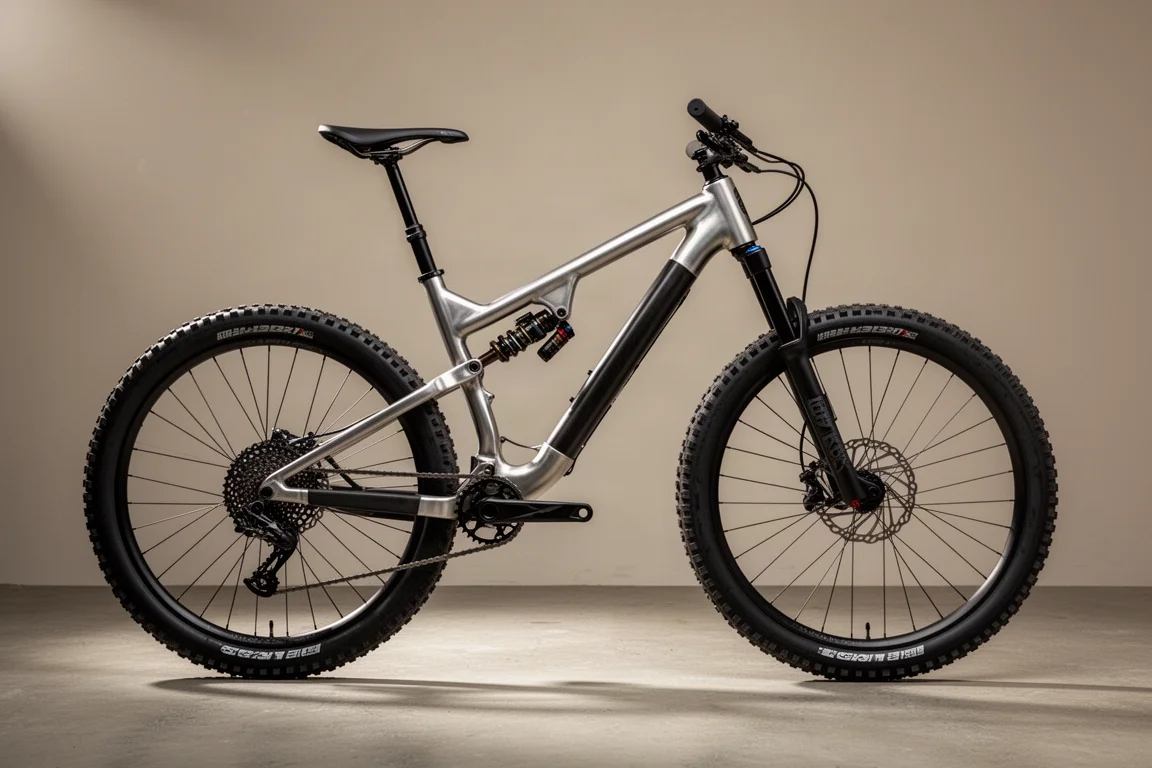
Atherton AM.130 Review: 3D-Printed Titanium Lugs and a 130mm Trail Bike That Descends Like a Bigger Machine
The Atherton AM.130 pairs 3D-printed titanium lugs with carbon tubes and a DW6 suspension platform. Here is how it rides, what the build delivers, and who it suits.
Mountain Bikes
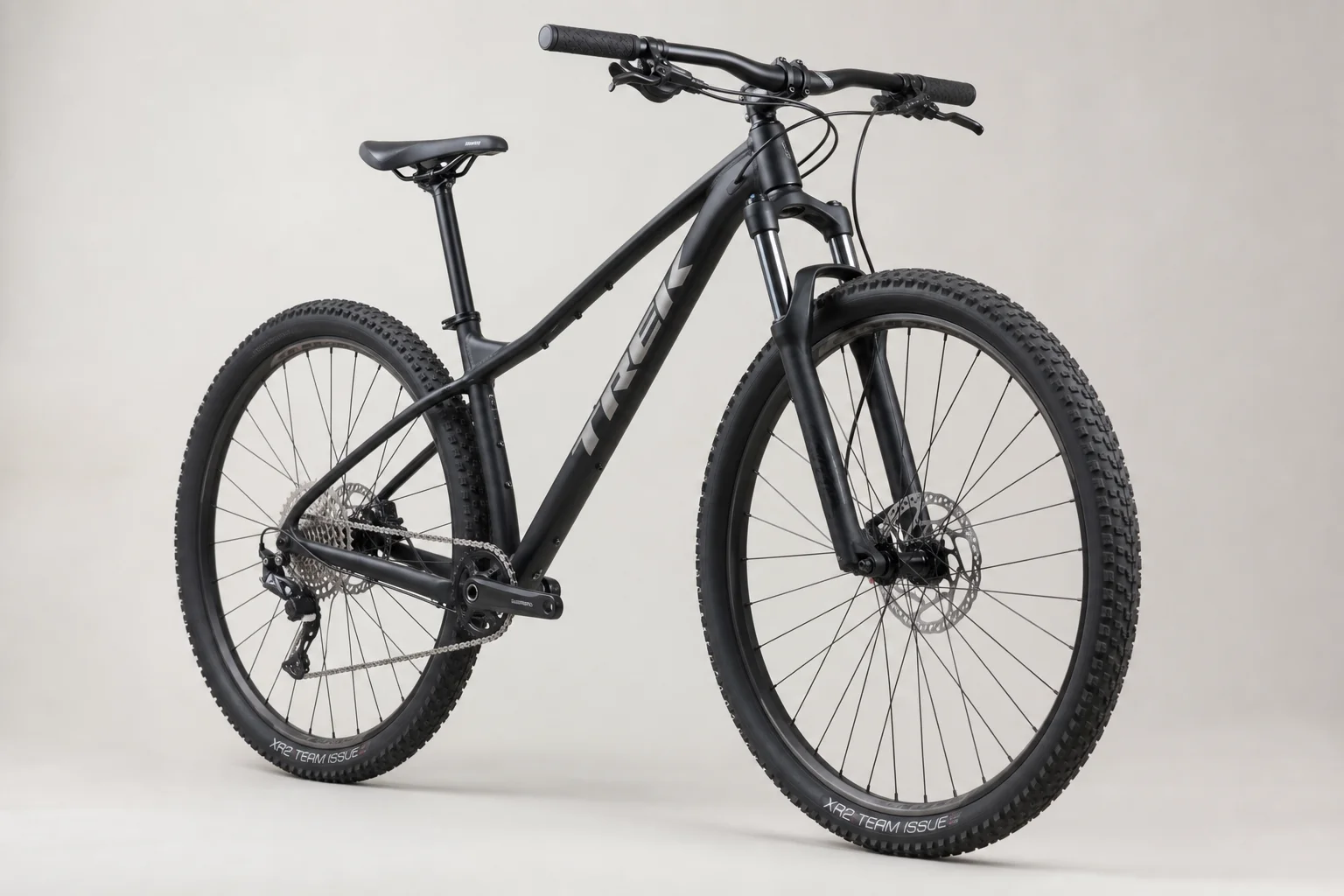
Beginner Mountain Bike Buying Guide: What to Look For in a Trailworthy Hardtail
A practical framework for evaluating beginner mountain bikes, whether new or used, by examining key components that indicate real trail capability.
Mountain Bikes
Best Aluminum Mountain Bikes 2026: Five Alloy Bikes Worth Your Attention
Five aluminum mountain bikes that show how far alloy has come, from a 120mm trail bike and a versatile machined frame to a 180mm freeride machine.