Bags and Everyday Carry
Sling Bag Comparison: Roaring Fire Slingshot vs Patagonia Atom vs 5.11 Tactical
Three sling bags tested on trail and around town: a tactical day bag with clever pockets, a minimalist everyday carry, and a robust vehicle go-bag.
Introduction
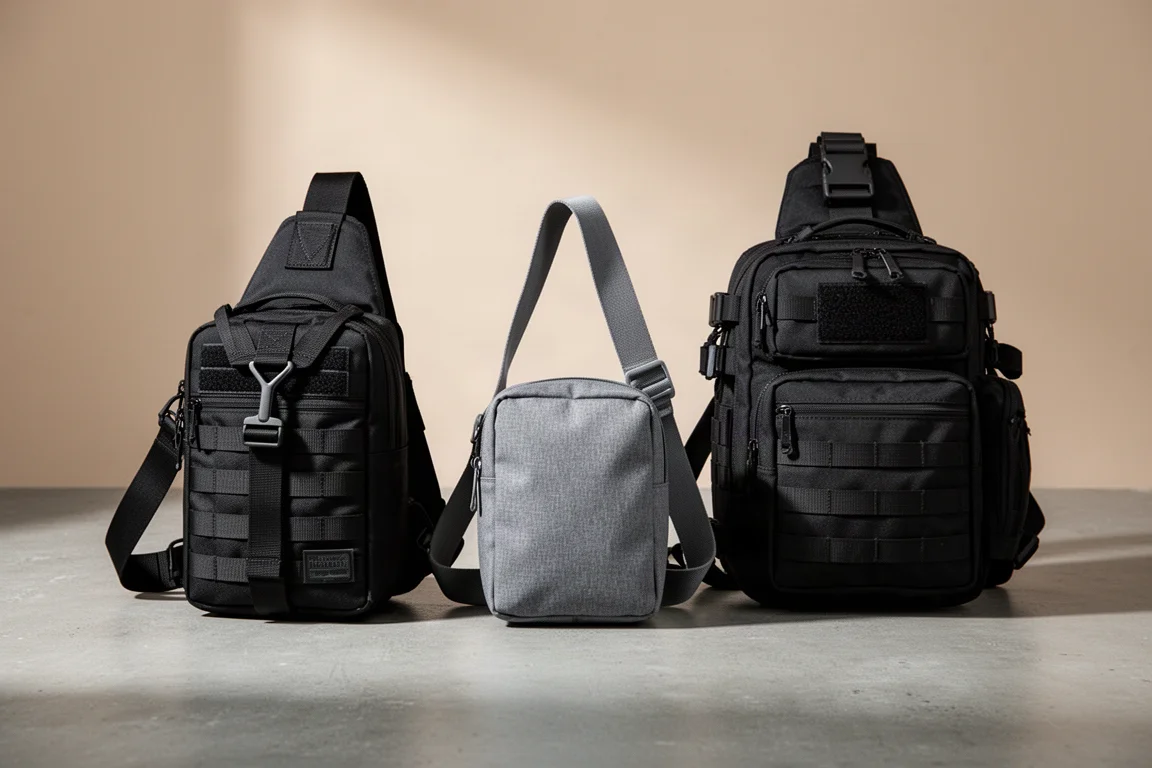
Sling bags occupy a sweet spot between a pocketed jacket and a full backpack. The Roaring Fire Slingshot Sling Bag was put to work as a day pack on hiking trips through Yukon and Alaska, and it held up well enough to earn a place alongside two very different alternatives: the minimalist Patagonia Atom Sling and the larger, more robust 5.11 Tactical Sling Bag. All three are made overseas, and the Roaring Fire and Patagonia sell for exactly the same price, which makes this an interesting comparison.
Why Choose a Sling Bag?
A sling bag has one shoulder strap, which means the entire weight of the bag rides on that single strap. That is both the appeal and the limitation. On the plus side, you can position the bag in front of you, behind you, or anywhere in between, which makes contents far easier to reach than on a traditional backpack. Some designs even let you switch the strap from shoulder to shoulder; others are dedicated to one side.
Directionality matters more than people expect. A well-designed sling opens on the correct side so that when you slide it around to your front, the compartments face up and are accessible. It might look symmetrical, but the pocket layout reveals otherwise.

Roaring Fire Slingshot Sling Bag: Interior Design That Works
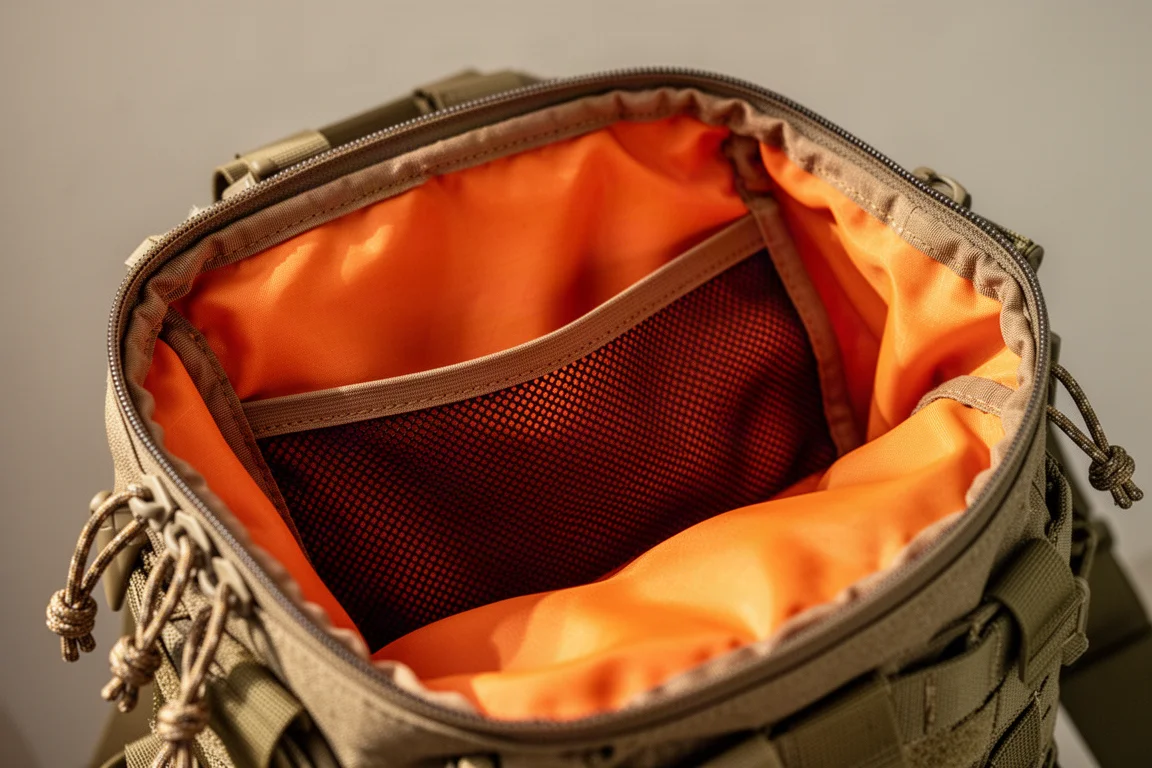
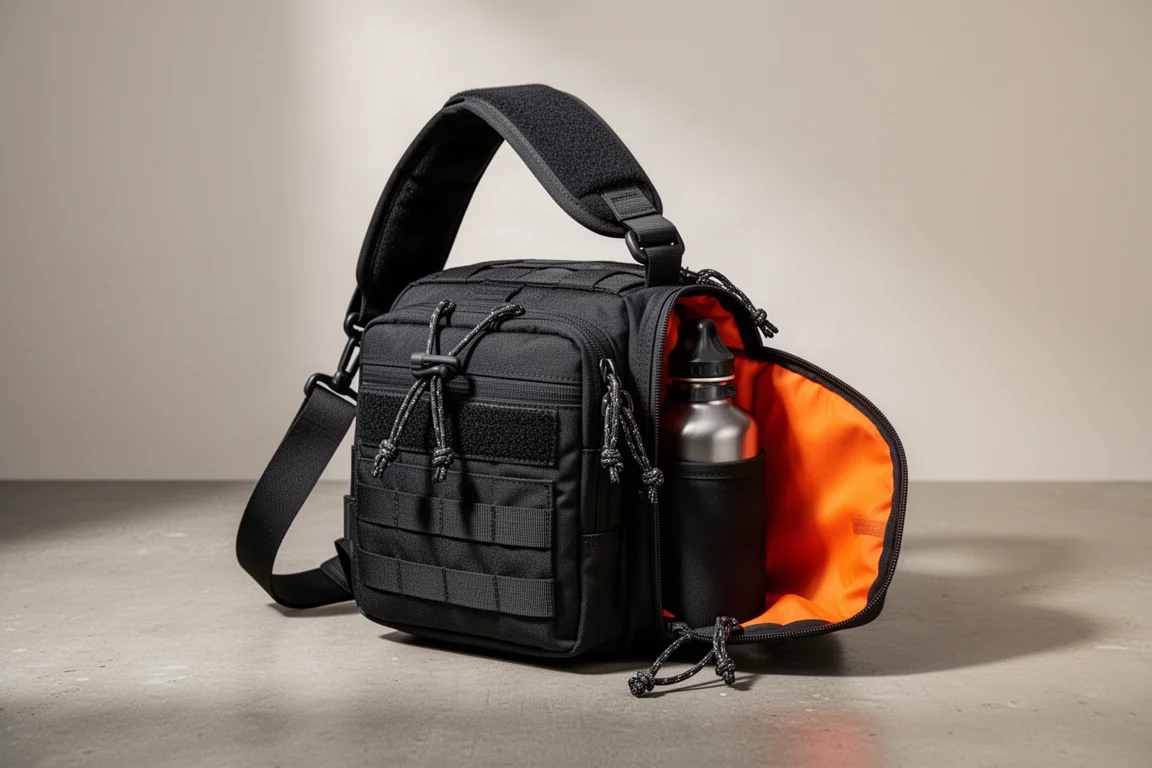
The standout design choice here is the half-depth pockets. The main pouch and the top pocket do not unzip all the way to the bottom. At first that seems like an annoyance, especially compared with bags that open fully like a suitcase. But there is a real safety benefit: when you are moving, working in low light, or pulling gear out while wearing the bag, things cannot simply tumble out of a fully open flap. Access is slightly restricted, but that is the point.
The bright interior more than makes up for the restriction. The orange nylon lining gives excellent contrast and light reflectivity compared with the dark interiors of most bags, so finding small items is much faster. A mesh pocket starts at the halfway mark and runs down inside the main compartment, giving you a secure place for items that would otherwise shift around.
The fabric is Cordura 1000D with what appears to be a coating. After dust and dirt exposure on trail, the bag showed surprisingly little of it, though the color probably helps as well.
Hardware and Comfort
Everything is YKK zipper, and the pulls feel genuinely smooth. Paracord zippers add a nice tactile touch. The shoulder strap is one of the more comfortable among comparable bags, which matters since sling bags concentrate all the weight on one side.
A concealed rear pouch offers a soft-lined interior that would take a hook-side Velcro panel nicely, making it a good discreet spot for items you want out of sight. There is also a small front attachment point if you deliberately want a pouch there, but the overall exterior stays clean, and that is a good thing: anything hanging off the outside tends to catch on branches and door frames.
Hydration Without the Bulk
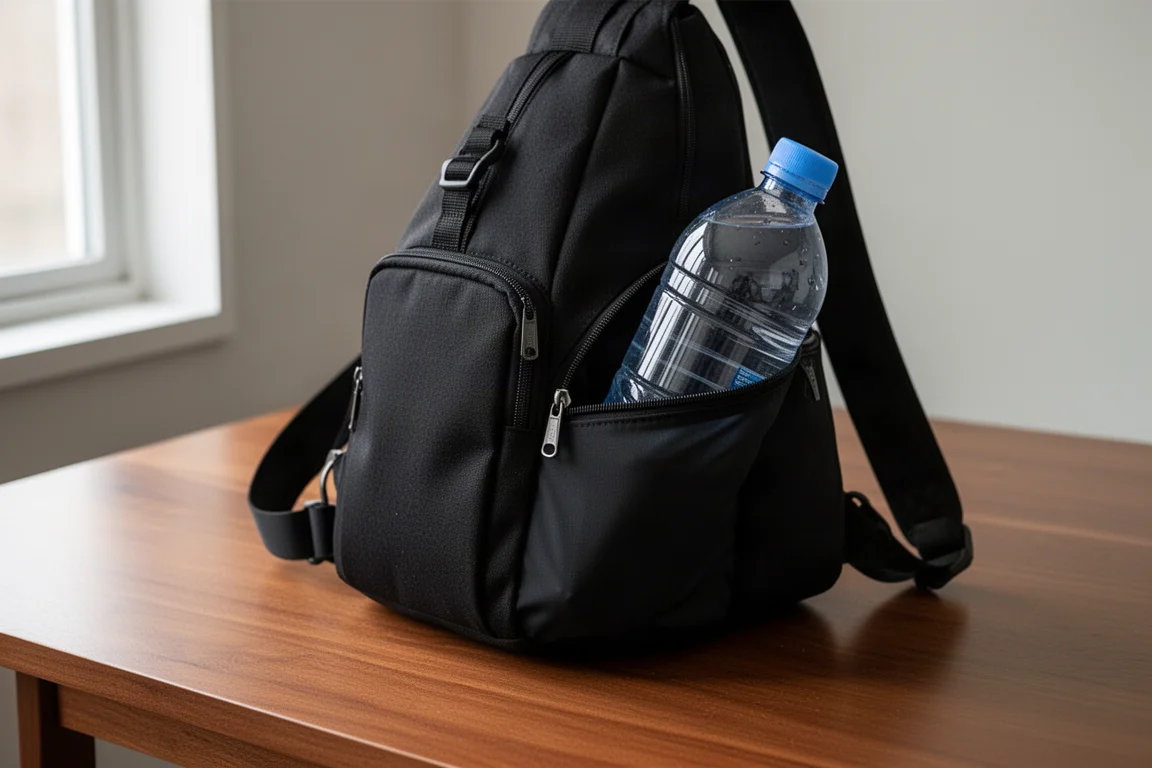
One feature worth highlighting is the side water bottle holder. A standard bottle slides straight in. For larger bottles, the answer is a partial side zipper: open it just enough and a 32 oz Nalgene fits inside, snug but easy to remove.
Why not design it fully open from the start? Because anything smaller then flops around loose. The zip-expansion approach gives you both options in one pocket, and it is a genuinely clever addition at this price.
Closure and Strain Relief
The Y strap is more than an attachment point. It wraps around the bag, fastens at the bottom and the top, and when cinched down on a full bag it takes the strain off the main zipper. That means the zipper is not carrying the pressure of overstuffed contents.
It also earns its keep as an external carry system. A compact splitting hatchet that is too tall for the main compartment can be dropped inside, the strap run over the top and cinched down. The tool stays put and the zippers stay closed, even with something oversized poking out.
Patagonia Atom Sling: The Minimalist Option
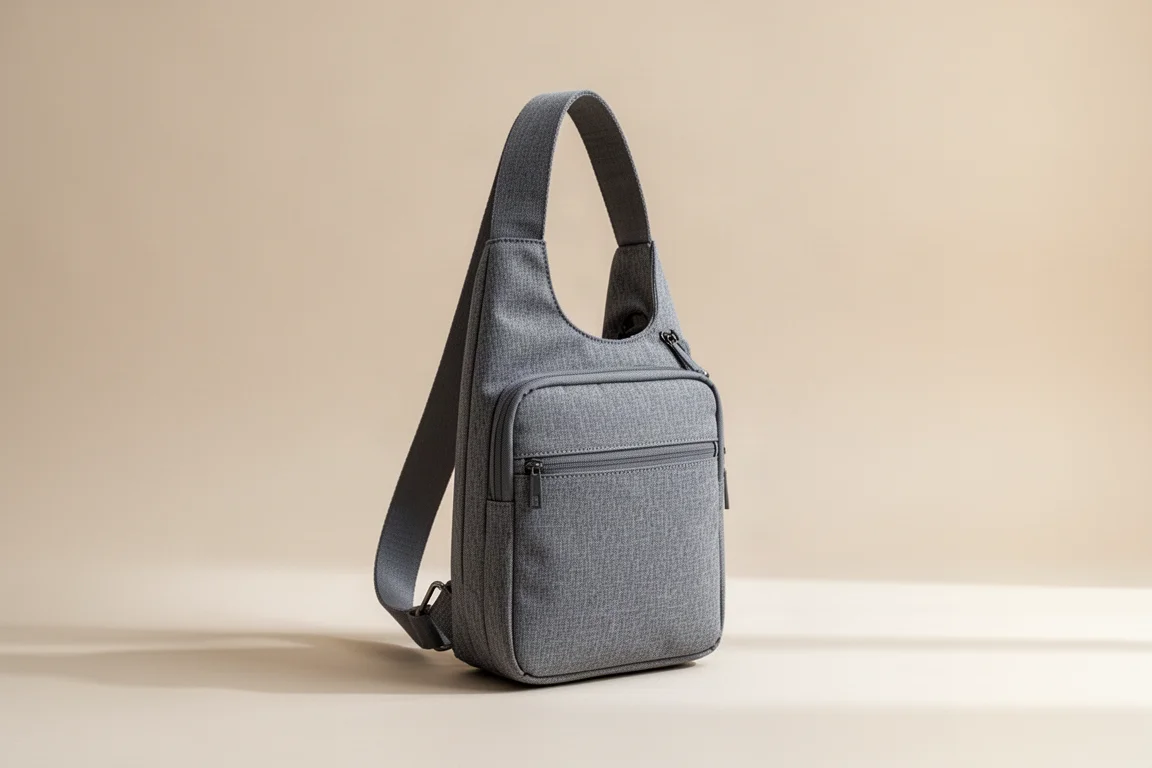
The Patagonia Atom sells for the same price as the Roaring Fire and takes a far simpler approach. It fills up fast, the design is basic, and the single strap is dedicated to one shoulder only, so no switching sides.
The strap is quite large for such a lightweight bag, and the front pouch folds over when anything with shape goes inside. Put a knife in there and you feel it against your chest. This is a bag designed for flat items: papers, a phone, small electronics. For pure minimalist everyday carry, it is hard to beat at this price, but it is not built for heavy or awkward loads.
5.11 Tactical Sling Bag: Built Like a Tank
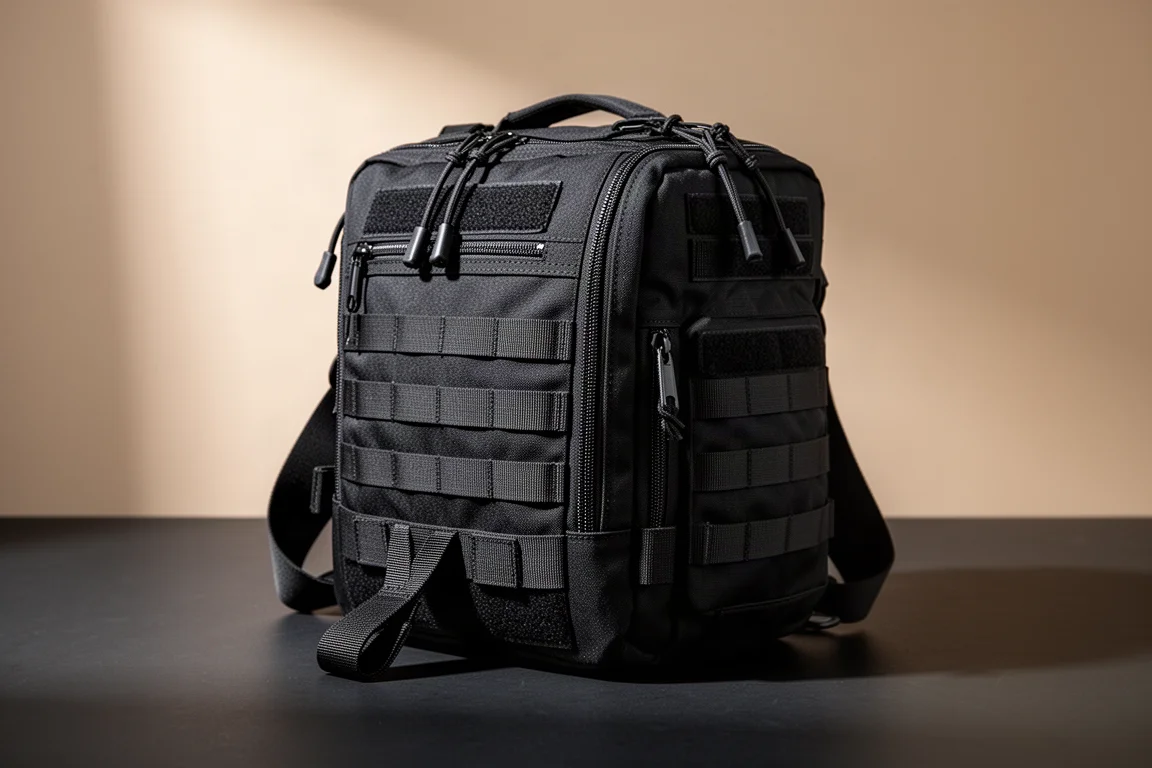
The 5.11 sits at the opposite end. Designed in the US and produced overseas, it is a solid, robust bag priced at the higher end of this group. This particular unit serves as a vehicle go bag loaded with gear, and it absorbs abuse without complaint.
It opens all the way down to the corner, which is excellent for total access to everything at once, and it offers plenty of MOLLE plus a Y strap at the base for attaching more gear. The trade-offs are comfort and practicality as a hiking companion: it is not a comfortable carry, partly due to weight and partly due to the strap design. For a vehicle kit or a base-load bag, it works. For a day on the trail, less so.
Small Pouches and Accessories
Roaring Fire also makes a small organizer pouch worth a look. It opens like a book into two true compartments and includes MOLLE webbing, key caddies, side pockets and a zip pocket with double zippers that can be safely used. Compared with the popular Maxpedition equivalent, which is essentially one deeper pocket, the two-compartment layout is easier to live with, and the vertical interior slots fit most carried gear better than side-oriented elastic.
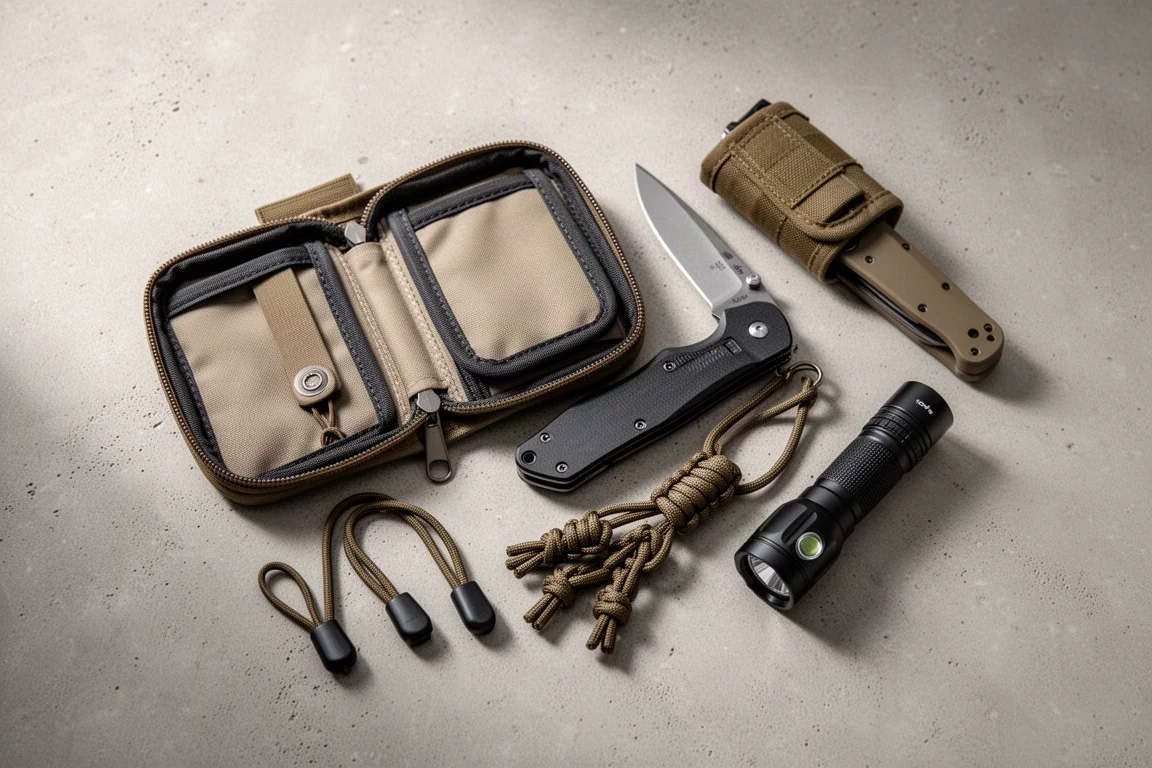
As a standalone build-your-own kit bag, for a first aid kit, or as an add-on to an existing pack, it is a solid, well-executed design in the same 1000D fabric.
Which One Should You Buy?
If your main use is hiking and day adventuring, the Roaring Fire Slingshot offers the best balance: comfortable carry, smart half-depth pockets with a bright interior, an expandable bottle holder, YKK hardware, and a Y strap that protects the zipper and carries oversized tools.
If you want the simplest possible everyday carry for flat items at the same price, the Patagonia Atom is the lighter, cleaner choice. If you need maximum durability and capacity for a vehicle or emergency kit and comfort is secondary, the 5.11 is the tool for that job.
Conclusion
Sling bags reward matching the design to the task. The Roaring Fire Slingshot proved itself as a trail day pack across two trips in the far north, the Patagonia Atom keeps things minimal for town carry, and the 5.11 Tactical handles heavy-duty storage duty. Pick based on what you will actually stuff into it, and each of these three makes a convincing case.
Further reading
Related Reviews

Backpacking Gear
Building a 10 lb Base Weight: An Ultralight Backpacking Gear List
A practical walkthrough of the ultralight pieces behind a 10 lb base weight, from a 765 g pack and a roomy one-person tent to a full camp chair and a dependable water filter.
Road Bikes
10 New Road Bikes Worth Watching: Aero, Titanium, Steel and Endurance Standouts
A practical roundup of 10 new road bikes, from aero flagships chasing single-watt gains to titanium, steel and endurance platforms built for real roads.
Bikepacking Gear
11 Bikepacking Essentials for Long-Distance Cycling
Eleven bikepacking essentials for long-distance cycling, from a steel gravel frame and a two-person tent to helmet lights, packable gloves, and a frame bag that puts weight in the right place.