Sleeping Pads
Best Sleeping Pads 2026: Five Backpacking Pads Compared by Warmth, Width, and Baffle Style
Five backpacking sleeping pads compared on insulation, R value, width, and baffle style, with practical guidance on which design suits which kind of camper.
Introduction
Your sleeping pad is not just a cushion. It is roughly half of the warmth in your entire sleep system, and it is the piece of gear that decides whether a long day on the trail ends in a good night or a cold one. Sleeping bag insulation compresses flat underneath a sleeper, so the pad is what stands between your body and the cold ground.
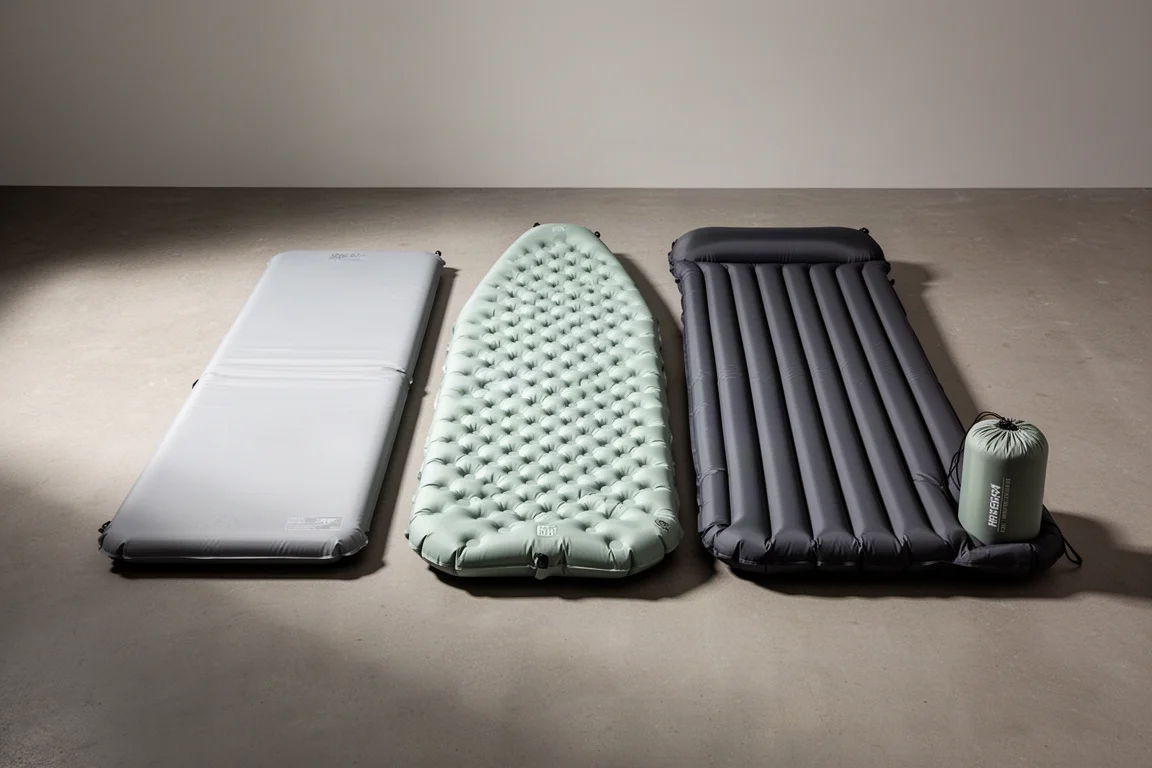
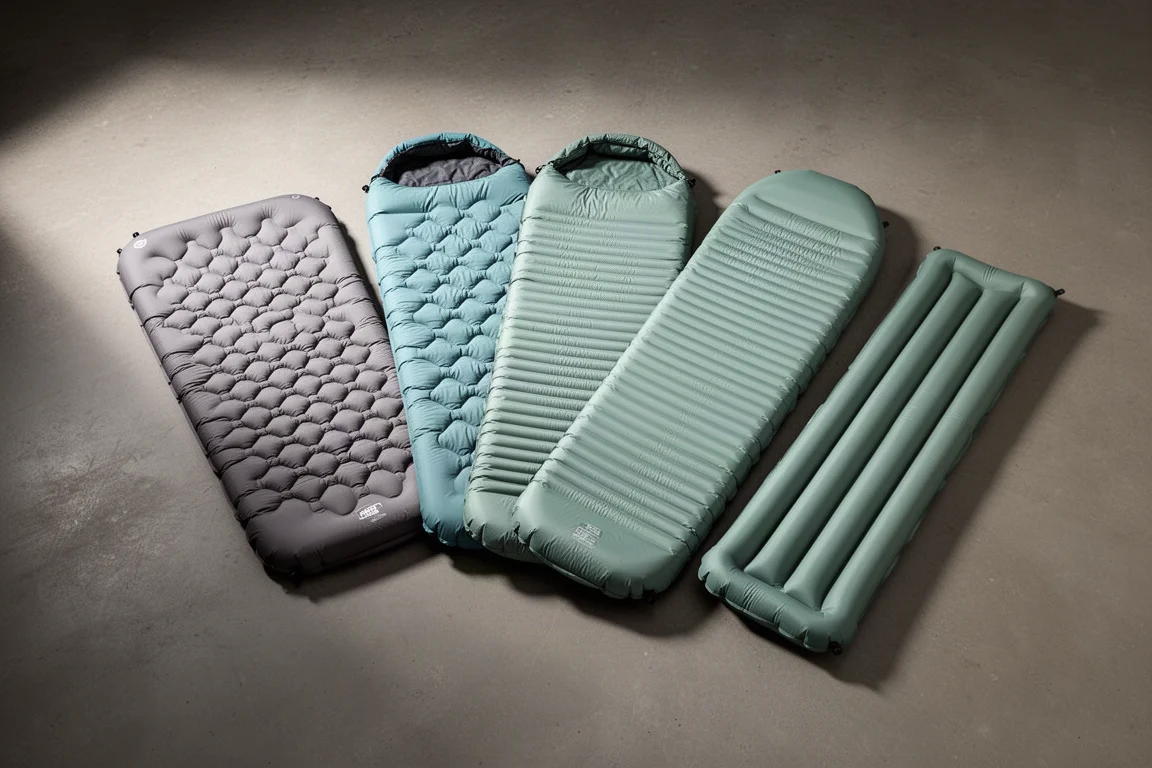
The five pads below cover a wide spread of approaches: a very affordable warm-weather option, a quilted pad with an honest caveat about its claimed rating, a down-insulated design, a famously light pad with a firm feel, and a quilted comfort specialist. Here is how they differ, and who each one suits.
Why Your Sleeping Pad Matters More Than You Think
It is easy to assume that a 0°F sleeping bag in 30°F conditions is more than enough. That is not always true. When you lie on top of a bag, you compress and flatten the down insulation beneath you, which removes most of its warmth. The pad underneath takes over that job, insulating you from the cold ground and allowing your own body heat to come back to you.
That is why an insulated pad matched to the temperatures you actually camp in matters more than the rating printed on a bag. A cheap, uninsulated pad can be perfectly fine in deep summer, when overnight temperatures stay above roughly 50°F to 60°F. Outside that window, you need a pad with real insulation between you and the ground.
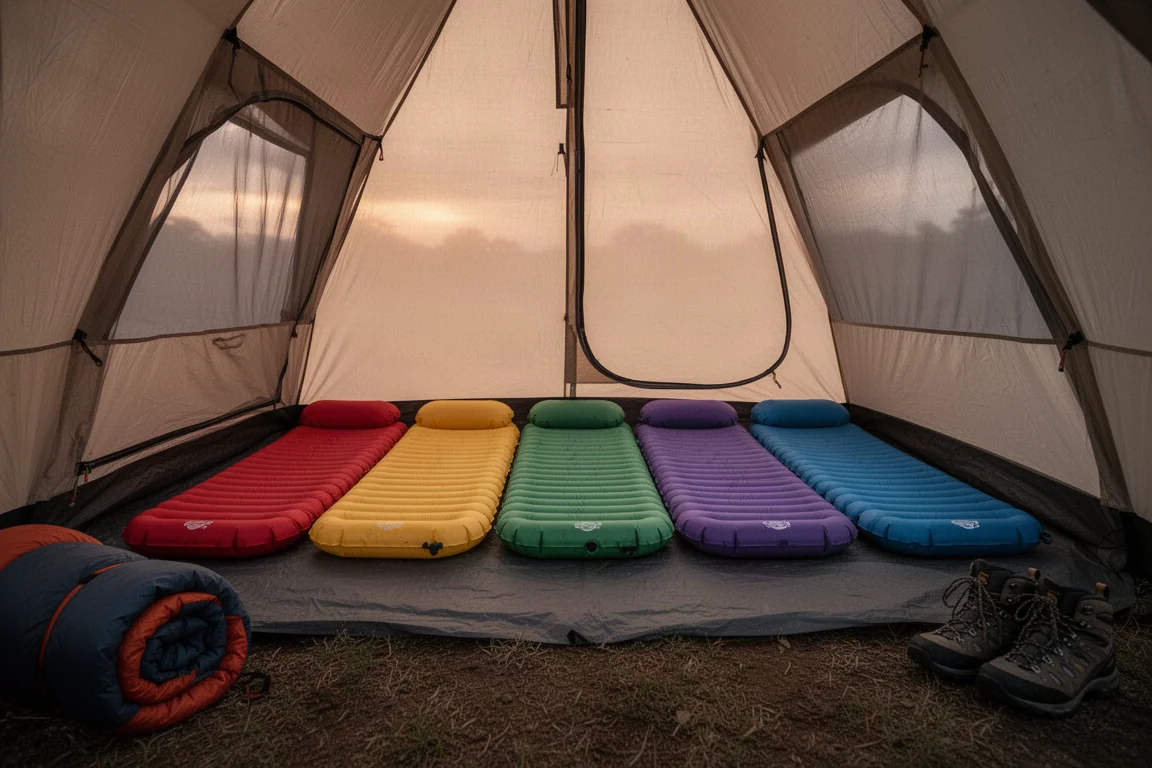
R value is the standard baseline for that decision. Lower R values sleep colder and higher R values sleep warmer, because a higher number means more insulation or more insulating technology inside the pad. R value is only a baseline, though, since it comes from a controlled laboratory environment, and not every pad performs in the field the way its rating suggests.
Trekology UL80: An Affordable Warm-Weather Pad
The Trekology UL80 is a very affordable sleeping pad, and it is a fair illustration of what low-cost pads can and cannot do. Budget pads typically do not carry enough insulation for most three-season conditions, but that is less a flaw than a limitation: if your trips stay warm and nights do not drop below roughly 50°F to 60°F, a pad like this works just fine.
Its baffles are a little wider than the narrow horizontal baffles found on some ultralight pads, and it does reasonably well for that style. It still does not match the support of a quilted design, but as a low-cost entry point it is a sensible place to start.
Big Agnes Zoom UL: Quilted Baffles and a Real-World Caveat
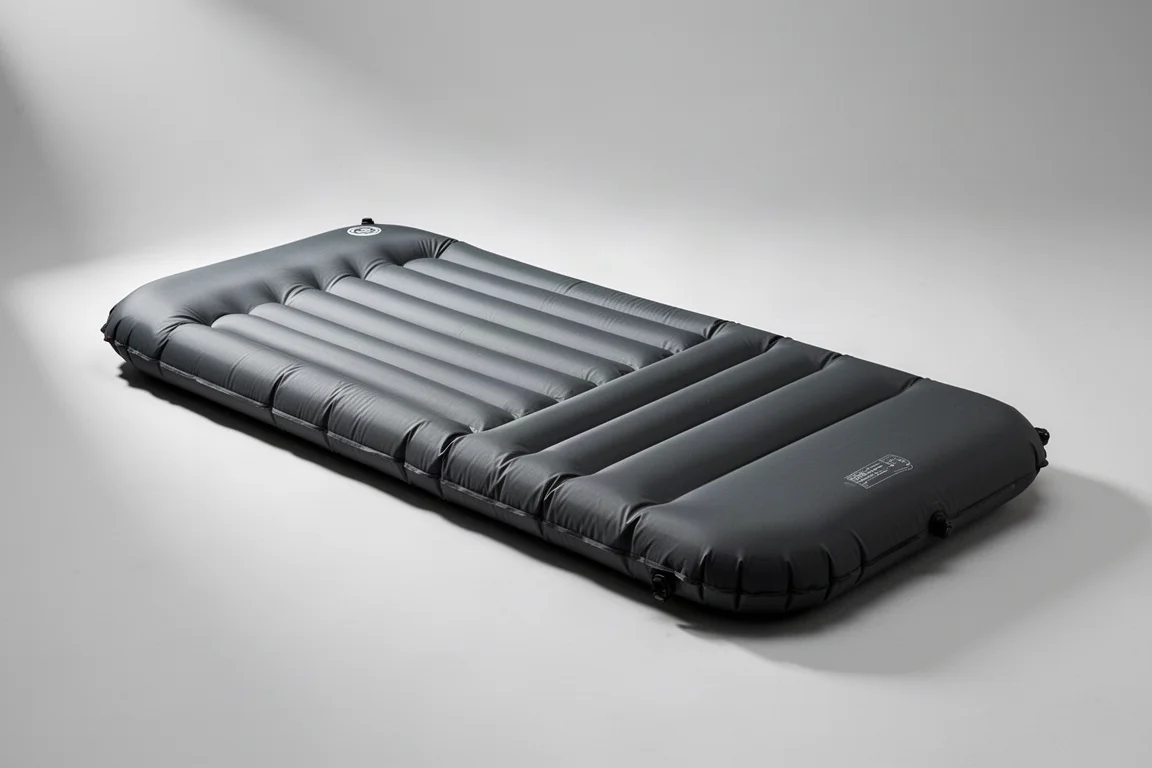
The Big Agnes Zoom UL carries a claimed R value above 4, which would normally make it a strong three-season choice. Real-world experience with this pad suggests it sleeps closer to an R value of 2 to 2.5. The reason is the reflective mylar film inside the pad: it does not provide 100 percent coverage, and the weld points interrupt the insulation, leaving gaps that allow cold air to move from the ground up to your back. In a controlled environment the pad can reach its claimed number. In the field it does not sleep that warm.
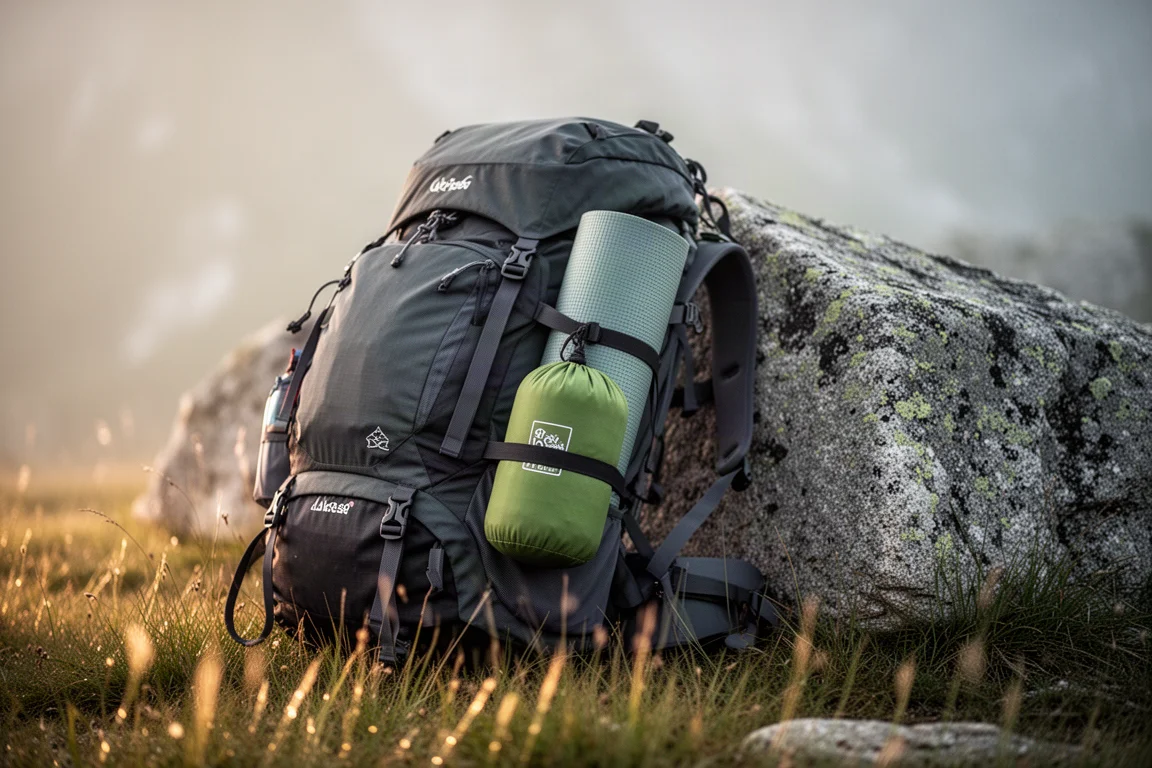
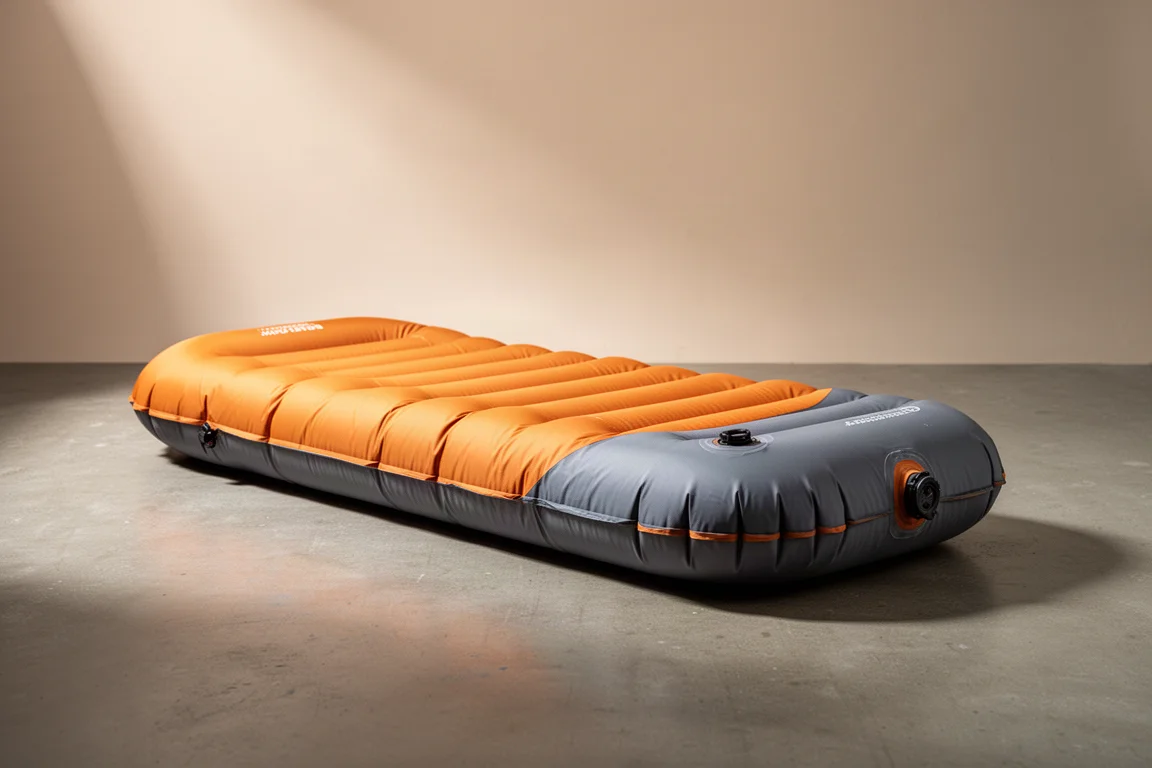
Where the Zoom UL stands out is its quilted baffle pattern. Each small cell creates a pocket of support, which spreads body weight across the surface instead of concentrating it, and that is the most comfortable way to sleep on a pad.
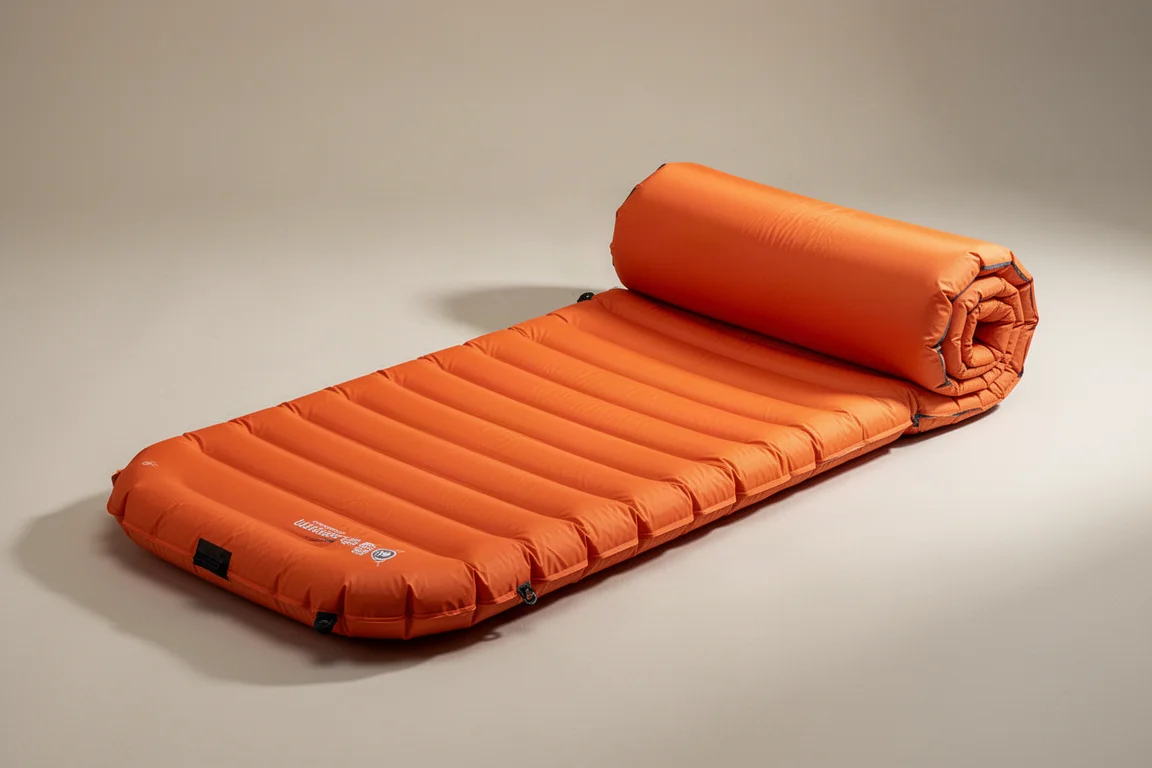
EXPED Ultra 7R: Down Insulation Instead of Reflective Film
The EXPED Ultra 7R takes a different route to warmth. Instead of relying on a mylar film to build an insulating barrier, it uses down insulation inside the pad. That sidesteps the coverage problem that affects film-based designs and gives the pad a different feel under a sleeper.
Its vertical baffles sit in the middle of the comfort spectrum, between the narrow horizontal baffles of weight-first pads and the quilted cells of comfort-first ones. The face fabric is soft, which allows the pad to give slightly under your body while still supporting it well. For backpackers who want insulation that does not depend on a reflective layer, this is the most interesting design in the group.
Therm-a-Rest NeoAir XLite: Ultralight but Firm
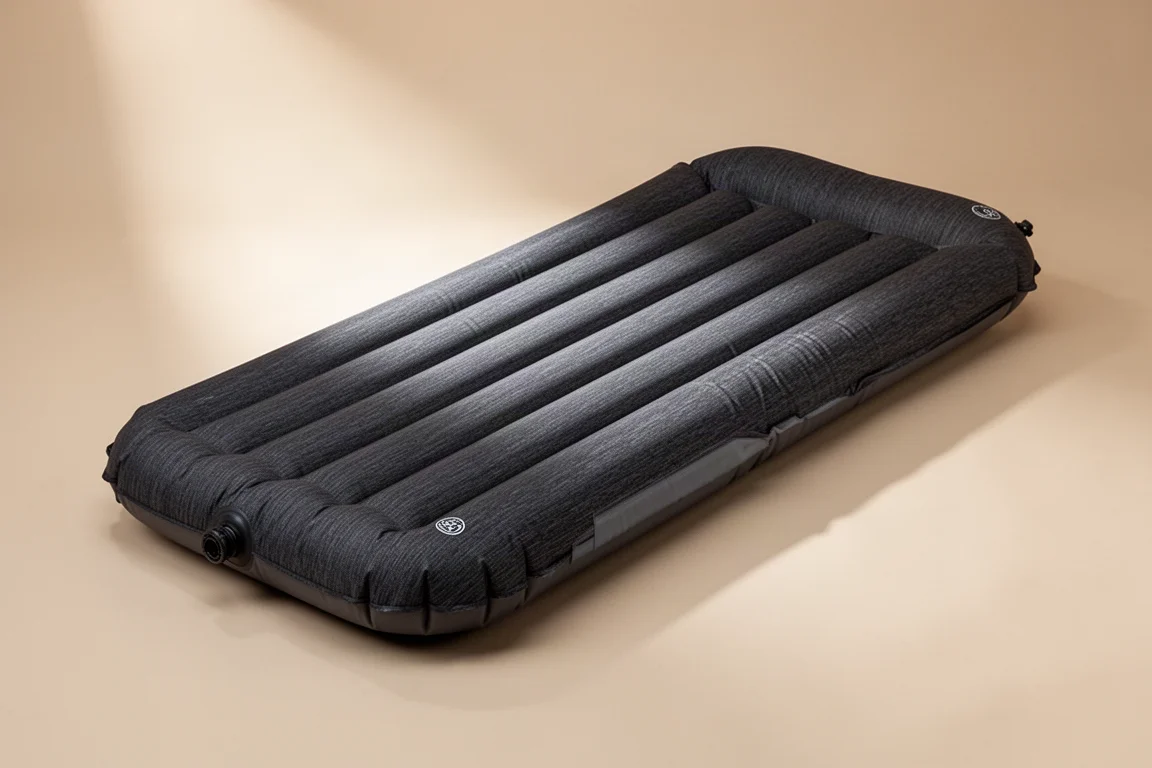
The Therm-a-Rest NeoAir XLite is the pad many backpackers buy first, drawn in by its very low weight. It is a genuinely nice piece of gear, and it is also one of the least comfortable sleeping pads on the market for the way it sleeps.
The issue is baffle size. The NeoAir’s horizontal baffles are small, so they do not support the body well across the length of the pad, and the surface feels firm rather than forgiving. If your only priority is carrying the lightest possible load, it earns its place. If you want to sleep well rather than simply sleep light, the baffle design is the compromise you are accepting.
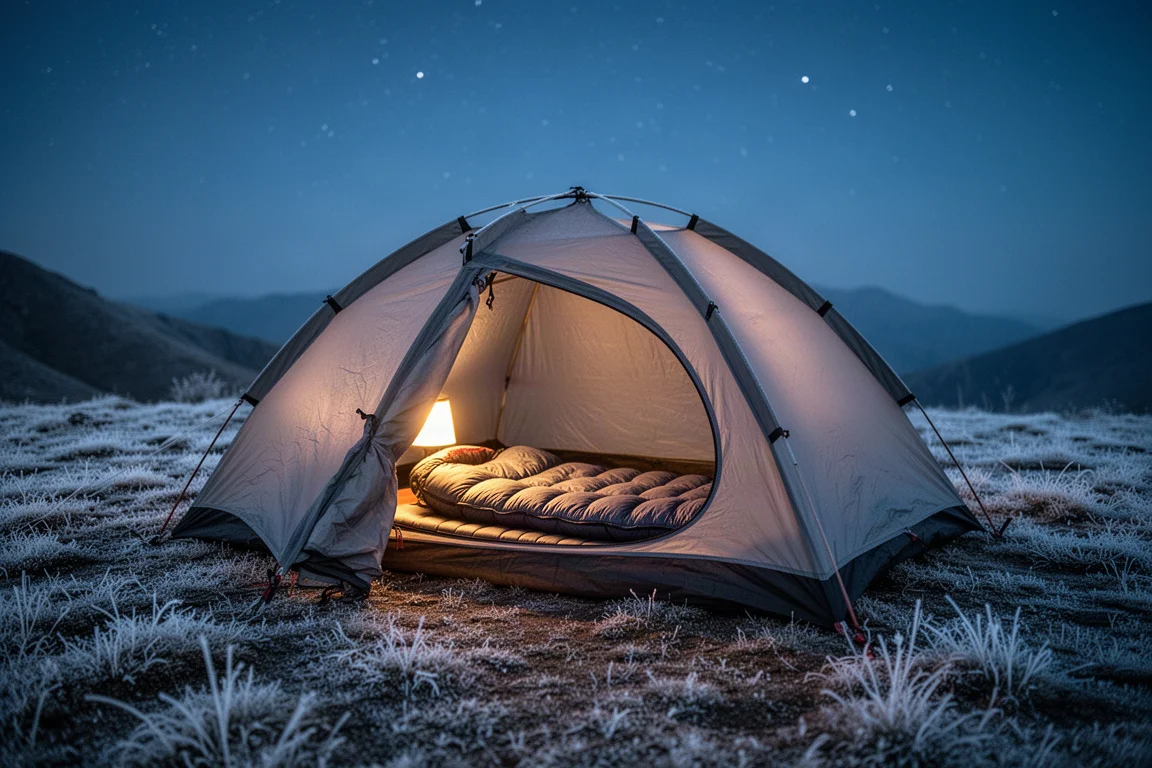
This is the lesson that ultralight shopping tends to teach the hard way. Weight is easy to compare on a spec sheet and baffle style is not, but baffle style is what you actually feel for eight hours a night.
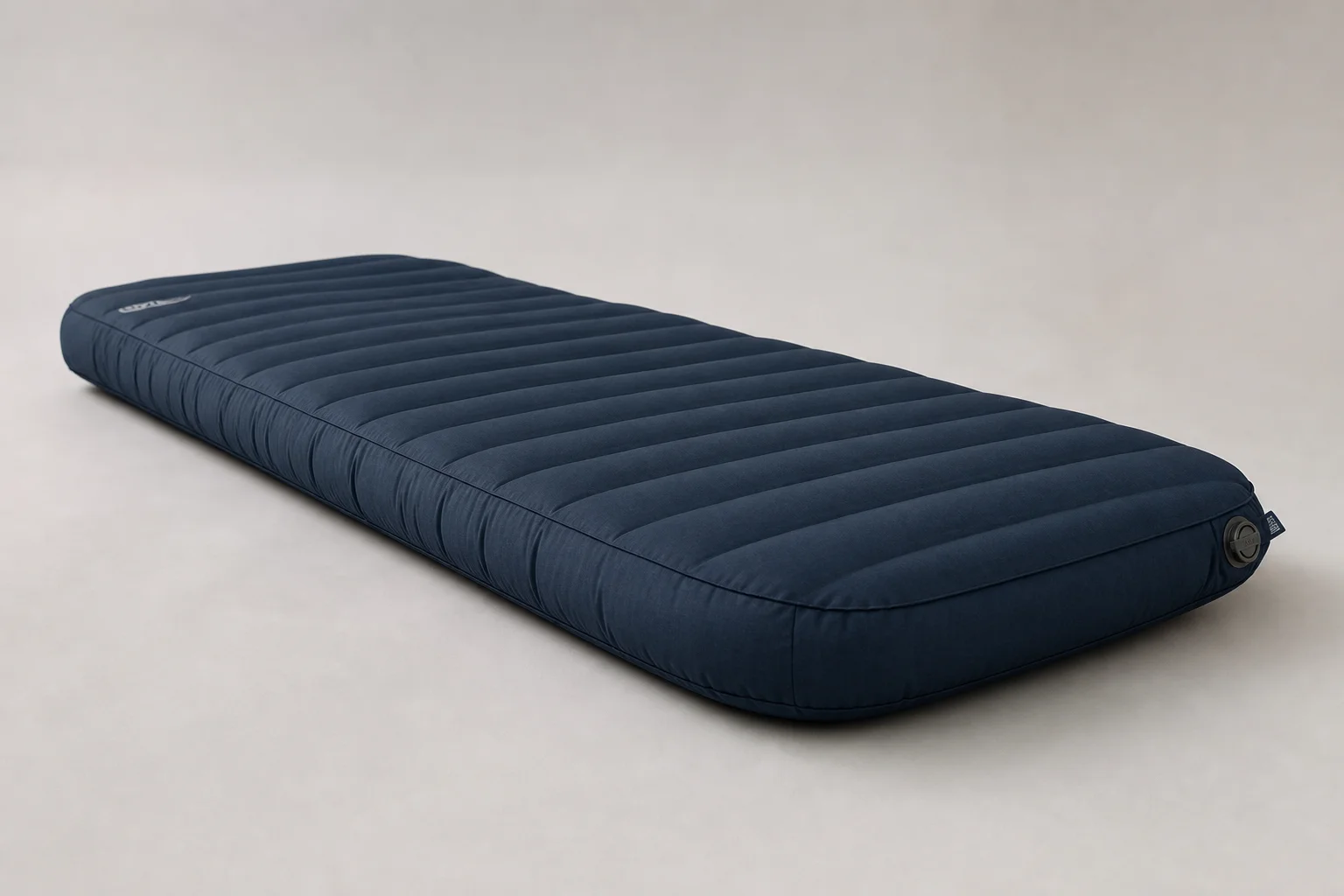
Sea to Summit Ether Light XT: Quilted Comfort
The Sea to Summit Ether Light XT uses the quilted baffle pattern that has become the benchmark for sleeping comfort. Each small pocket in the quilt forms a cell of support, so your back is not resting on a single long air channel but on a grid that spreads weight evenly. The result is a pad that feels considerably more supportive than a horizontal-baffle design of similar thickness.
That construction is why quilted pads like this one are the most comfortable option in this group, and it is the pattern to look for if comfort is your first criterion rather than minimum weight.
Buying Advice: Width, Baffles, and Warmth in Practice
Width is the detail that surprises people most. A 20-inch pad is workable, but as a back sleeper or a side sleeper it is not a great option: your elbows want to fall off the edge, and a mummy-shaped tapered pad makes that worse. Twenty-inch pads still have their place, mainly when you are sharing a tent that cannot fit two wider pads, but they are simply less comfortable.
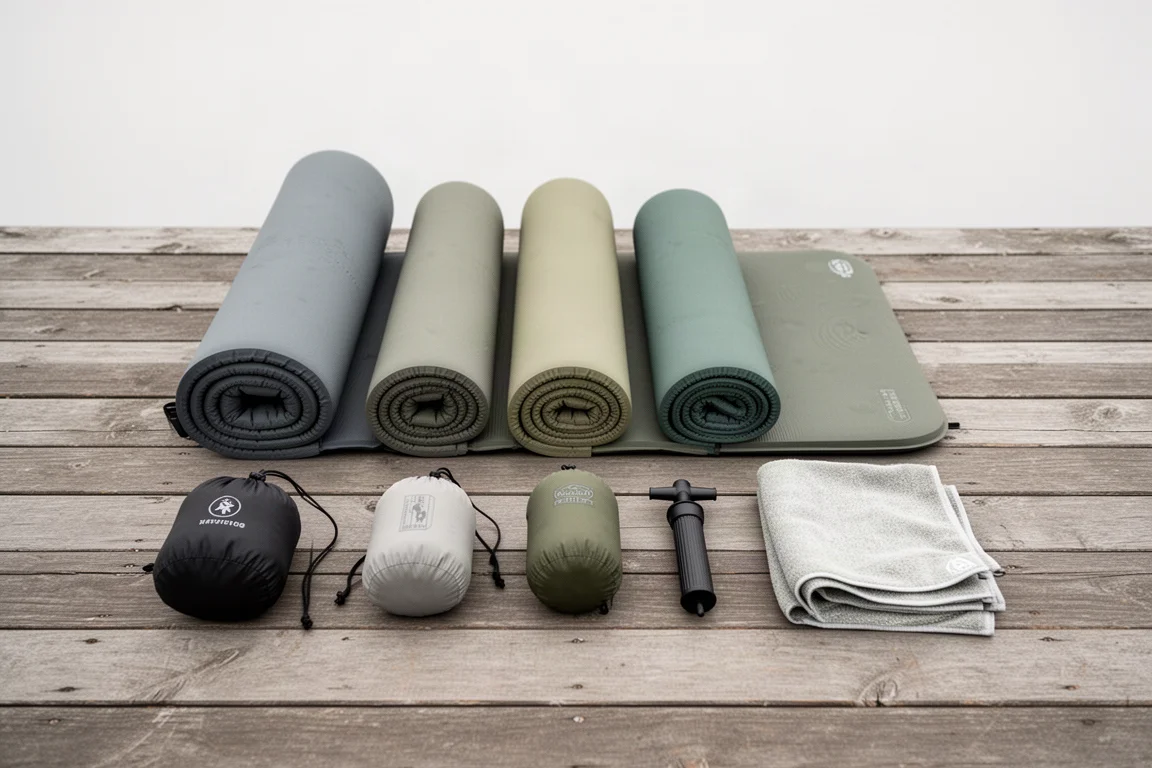
A 25-inch pad gives you noticeably more room on both sides, and the extra weight is well worth it. Most backpackers do not share a tent, and those who do usually end up in a three-person tent anyway, which makes the space argument for a narrow pad much weaker than it first appears.
Baffle style deserves the same attention as R value in your decision. Quilted baffles are the most supportive and comfortable. Vertical baffles, as on the EXPED Ultra 7R, are a good middle ground, especially with a soft face fabric. Wider horizontal baffles can work acceptably. Narrow horizontal baffles are the least comfortable and the most common compromise in ultralight pads.
Finally, treat claimed R values as a starting point rather than a guarantee, and look for how a pad performs in real conditions before you commit. Match the insulation to the temperatures you actually camp in, and you will sleep far better than a higher rating on paper would suggest.
Conclusion
The right pad depends on the trips you take most often. Warm-weather campers can save real money with the Trekology UL80. The Big Agnes Zoom UL delivers an excellent quilted sleep surface, provided you plan around its real-world warmth rather than its claimed rating. The EXPED Ultra 7R offers down insulation instead of a reflective film. The Therm-a-Rest NeoAir XLite rewards weight-focused backpackers and asks them to accept a firm, less supportive feel. And the Sea to Summit Ether Light XT is the pick when comfort comes first. Buy for width and baffle style, match the insulation to your conditions, and any of these five will serve you well.
Further reading
Related Reviews
Sleeping Pads
Best Backpacking Sleeping Pads 2026: Nine Pads Rated on Price, Comfort, Warmth, and Weight
Nine backpacking sleeping pads compared on price, comfort, warmth, and weight, from a $65 summer pad to a year-round option rated at R-7.3.
Sleeping Pads
Best Backpacking Sleeping Pads: Comfort, Warmth, and Weight Compared
A practical comparison of the Nemo Quasar 3D, Therm-a-Rest NeoAir XTherm Max, and Big Agnes Rapide SL for backpackers choosing between comfort, warmth, and packed weight.
Sleeping Pads
Best Backpacking Sleeping Pads: Ultralight, Winter, Comfort and Budget Picks
A practical roundup of the sleeping pads that stand out for ultralight weight, winter warmth, pressure relief and value, plus three popular pads that fell short.