Backpacking Gear
Best Sleeping Pad Pumps for Backpacking: Electric Pump vs Pump Sack
A practical comparison of a pad-specific electric pump, a multi-use pump with a lantern, and a battery-free pump sack for backpacking trips.
Introduction
Few camp chores are less appealing than inflating a sleeping pad with your lungs after a long day on the trail, and the job only gets harder at elevation. Mouth inflation also pushes warm, moist breath into the pad, which creates a favourable environment for mould growth inside the baffles. The realistic alternatives are a pump sack or a small electric pump, and the right answer depends on how much you value convenience versus simplicity.

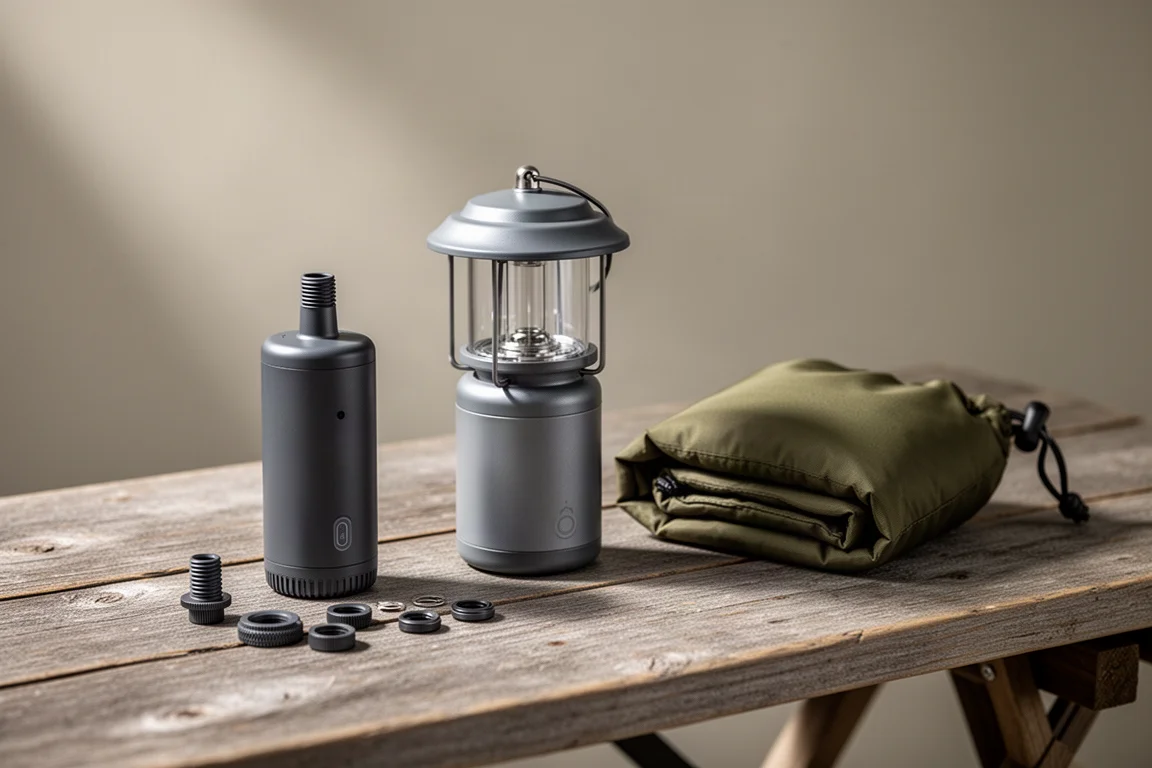
This guide compares three options that cover the practical range: a dedicated electric pump built specifically for sleeping pad valves, a multi-use electric pump that also works as a lantern, and a manual pump sack that has no battery to manage. Each has a clear use case, and the differences come down to valve fit, packed weight, and how much work you are willing to do inside the tent.
What to Look For in a Sleeping Pad Pump
Valve fit is the first thing to check. A pump that locks onto your pad valve lets you switch it on and walk away, while a universal attachment usually means holding the pump in place until the pad is full. Packed weight matters almost as much, because the lightest option is not always the one you would guess. Power source is the third factor: a rechargeable battery adds convenience, while a removable cell lets you run the pump from batteries you already carry for a headlamp or flashlight. Finally, decide whether you want a single-purpose tool or a device that also handles deflation and lighting.
Flextail Gear Zero Pump: Best for Hands-Free Inflation
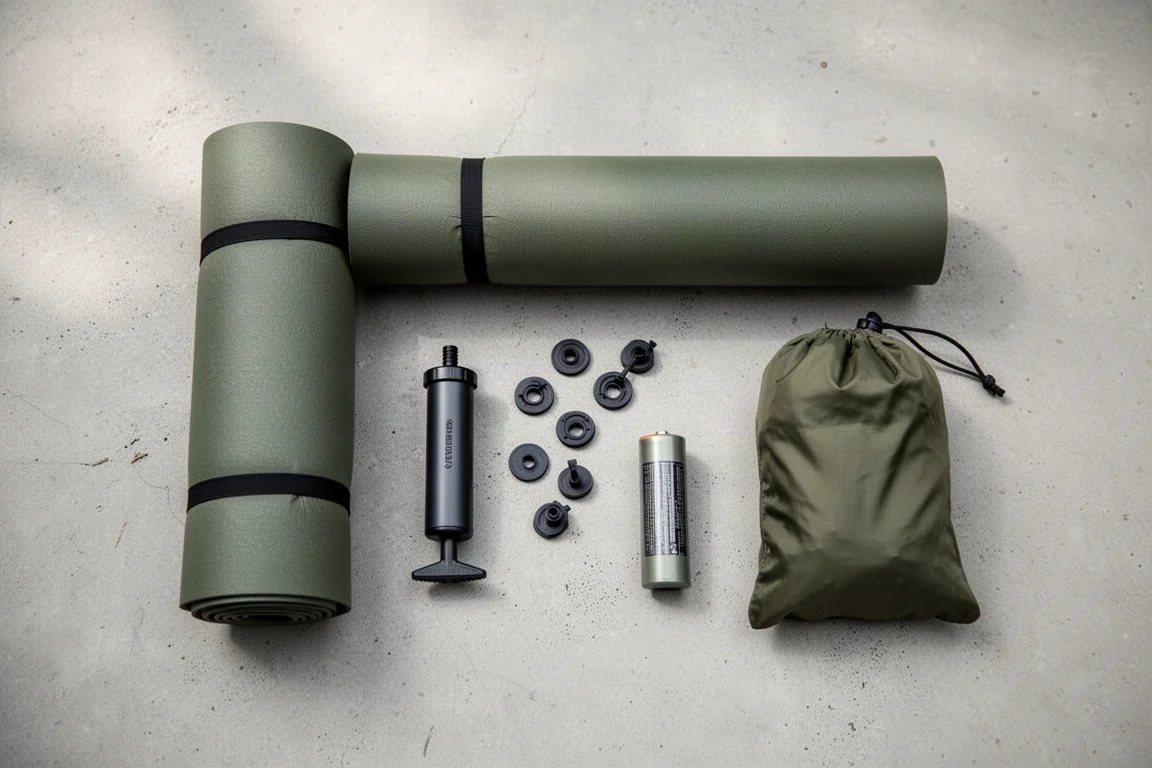
The Zero Pump is a compact electric pump built specifically for sleeping pads. It ships with six attachments shaped for specific pad valves from brands including Nemo, Big Agnes, and Exped. That specificity is the point: the adapter seats on the valve, the pump sits on top of it, and you can switch it on and leave it alone while it fills the pad. It also shuts itself off when the job is done, so there is no need to watch the clock.
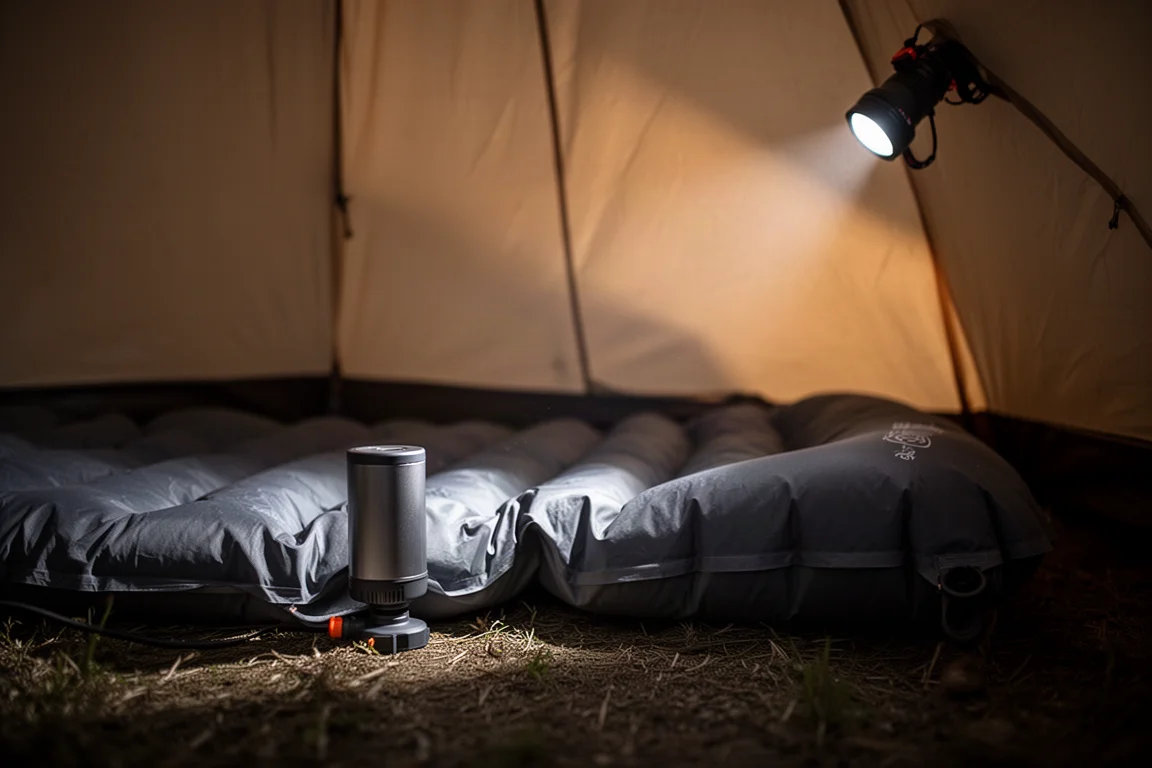
Power comes from a 700 mAh battery with a 3.7 V output, described as the minimum level needed to run the pump. The pump itself has no charging port. Recharging happens on the battery, which carries a USB-C port, so you can top it up from a wall charger or from a battery you already own. In practice that runtime is enough for a weekend trip or a four or five day trip, and inflating a pad four to six times over a trip should not leave you worrying about a recharge.
Weight is where the design earns its place in a pack: 1.2 ounces without the battery and attachments, and just over two ounces with everything required to run it. Extended field use, including runs of 10 to 12 minutes at a time and dozens of pad inflations, has not revealed obvious failure points.
Tiny Pump X2: Best Multi-Use Option
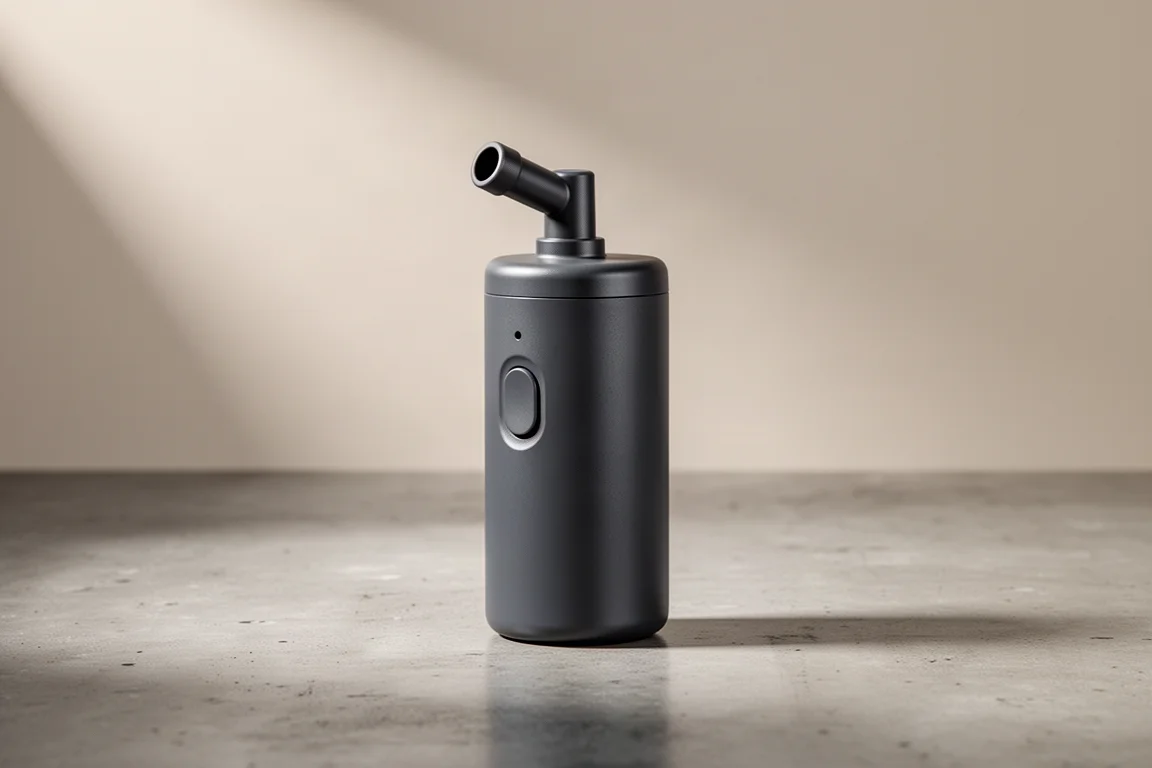
The Tiny Pump X2 takes a different approach. It inflates and deflates, and it adds a light on top, so it doubles as a small lantern at camp. For anyone counting grams, that combination can replace two items in a pack, which is a genuine argument in its favour.
The trade-offs are worth understanding before you buy. The X2 is heavier than a pump designed only for pads, and its attachments are universal rather than pad-specific, which means they work across many different inflatables but will not lock onto a particular valve. Because it does not attach directly to the valve, you generally have to hold it in place while the pad fills rather than switching it on and walking away.
Nemo Vortex Pump Sack: Best Battery-Free Option
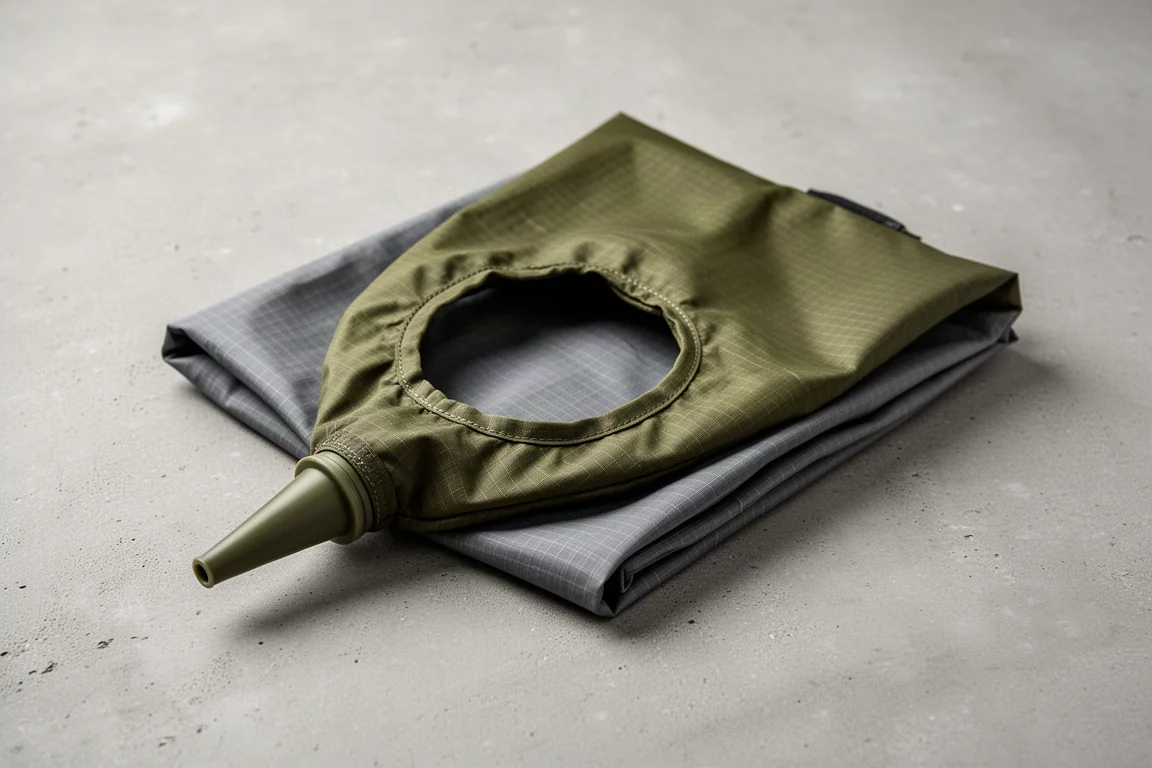
The Vortex Pump Sack is the manual route, and it sits closer in weight to the electric option than you might expect. The Zero Pump with its included attachment and battery weighs the same as the sack at just over two ounces, so packed weight is not what separates these two.
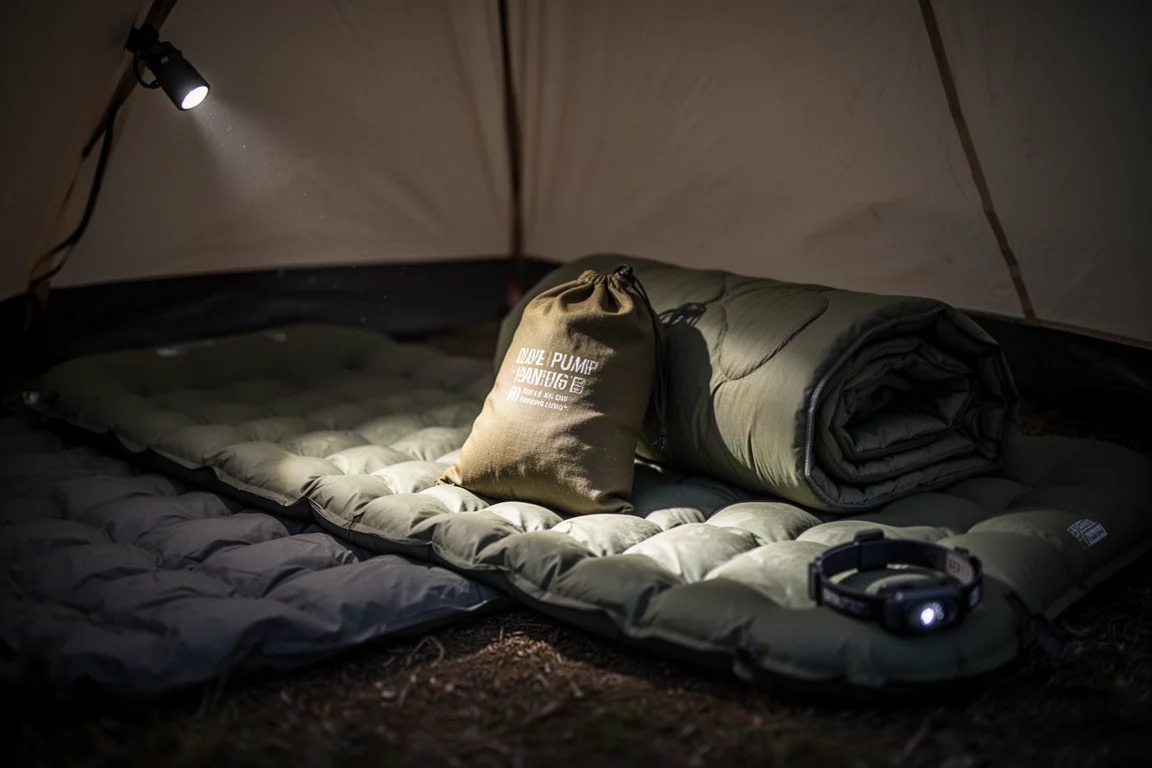
What separates them is effort. Pump sacks are clever and packable, but they can be finicky to use, they are not especially efficient, and filling a pad with one often means kneeling in an awkward position inside a tent. They are also single-purpose. If you want nothing to charge and nothing to fail electronically, a sack remains a reasonable choice.
Overall Buying Advice
Start with how you feel about the inflation ritual itself. If the goal is to make the chore disappear, a pad-specific electric pump is the most direct answer, because it attaches to the valve, runs unattended, and shuts off by itself. If you would rather carry one device that also lights your tent and deflates your pad, the multi-use pump makes sense even though it is heavier and needs to be held in place. If you prefer to avoid batteries entirely and do not mind the manual work, a pump sack stays simple and dependable.
Whichever route you take, mouth inflation is the option worth retiring first. Warm, moist breath inside a pad is a problem you can simply avoid, and the alternatives are light enough that saving weight is no longer much of an argument against carrying one.
Conclusion
All three options work, and the deciding factor is convenience. The Zero Pump is the strongest pick for backpackers who want fast, hands-free inflation with pad-specific attachments. The Tiny Pump X2 suits anyone who values multi-use gear and does not mind the extra weight. The Nemo Vortex Pump Sack stays relevant for anyone who wants a battery-free tool and accepts the manual effort.
Further reading
Related Reviews

Backpacking Gear
Building a 10 lb Base Weight: An Ultralight Backpacking Gear List
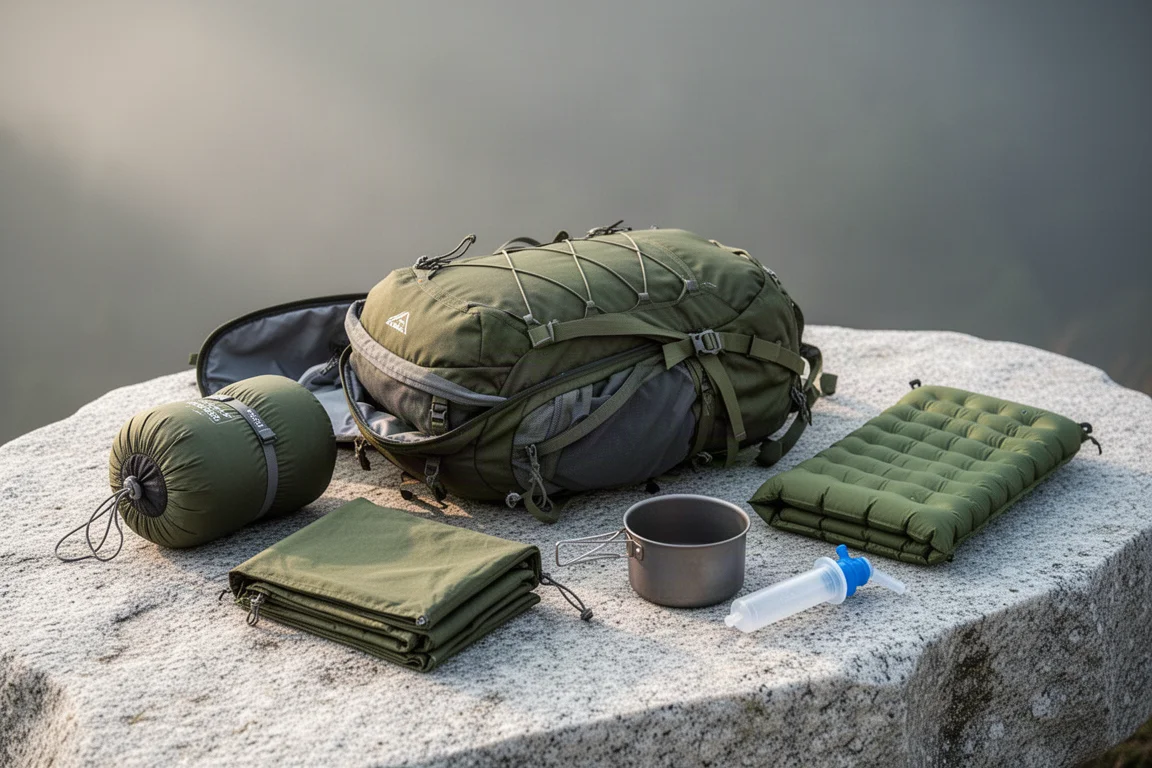
A practical walkthrough of the ultralight pieces behind a 10 lb base weight, from a 765 g pack and a roomy one-person tent to a full camp chair and a dependable water filter.
Backpacking Gear
A 15-Pound Lightweight Backpacking Gear List for Solo Trips
A beginner-friendly 15-pound backpacking setup built from easy-to-find gear, with notes on what each piece does, how it packs, and where to spend your attention.
Backpacking Gear
8 Ultralight Backpacking Gear Upgrades Worth Carrying
Eight small, affordable backpacking upgrades that solve real trail annoyances, from a pillow that stays put to a fuel valve that rescues leftover canister gas.