Camping Sleeping Mats
Best Sleeping Mats for Backpacking and Alpine Camping: Four Designs Compared
Four sleeping mats covering insulated inflatables, a minimal air pad, and closed-cell foam, compared on warmth, weight, durability, and repair.
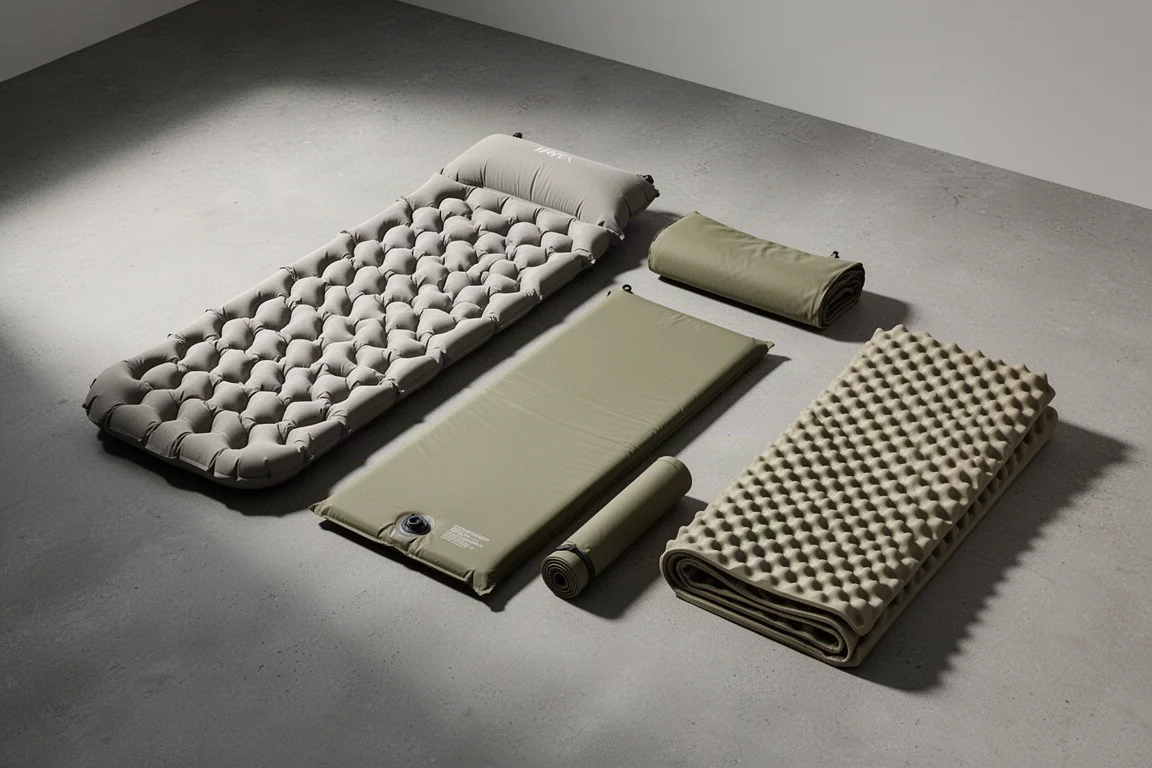
Introduction
Choosing a sleeping mat is really a question about which compromise you are willing to accept. Warmth, packed size, weight, durability and simplicity all pull against each other, and no single design wins on every count.
The four mats below cover the full spectrum of what is available today. Two are insulated inflatables, one is a minimal uninsulated air pad, and one is a closed-cell foam mat that cannot puncture at all. Each has been used in real conditions, from a high-altitude bivvy in Nepal to a long-distance summer thru-hike, and each makes its design priorities obvious within a single night.
How These Sleeping Mats Compare
The clearest way to separate these mats is by warmth, expressed as an R-value, and by how they behave when something goes wrong.
The Sea to Summit Comfort Plus carries an R-value of 4.0 as stated by the manufacturer, although it is listed as high as 5.9 on other retailer pages. The Exped Sim Lite 3.8 is rated at 3.1. The Therm-a-Rest Z Lite sits at 1.7. The Camp Essentials Light Mat is around 0.5, which in practice means effectively no insulation at all.
Weight and packed volume tell the other half of the story. The Exped mat weighs 1050 g and stays bulky even when rolled. The Z Lite is 410 g at full length. The Camp Essentials mat is the lightest and packs down smallest of the group. Insulation, in other words, is what costs you both grams and litres.
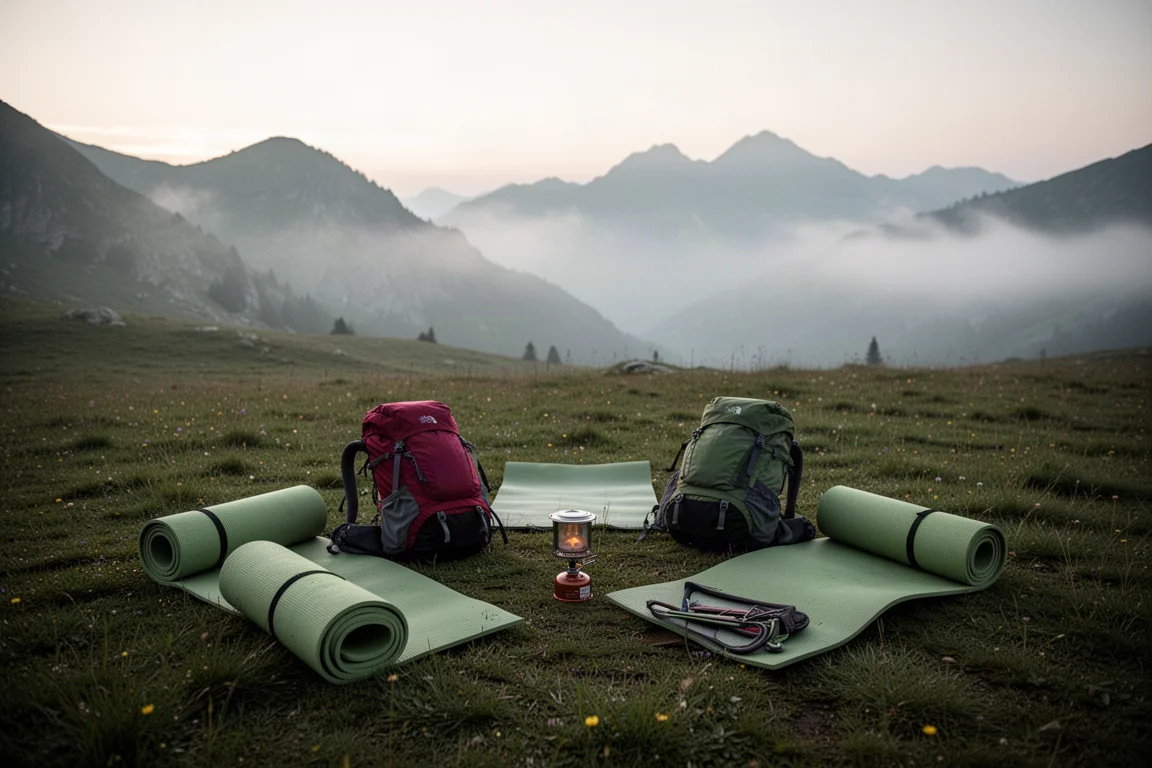
Repairability is the third variable. Inflatable mats can be punctured, and over a long enough service life they can delaminate. Closed-cell foam has neither problem, but it cannot be compressed into a small package and it offers the least cushioning of the four. How you inflate an inflatable mat matters more than most buyers expect, and that theme runs through the next section.
Sea to Summit Comfort Plus: Warmth and Cushioning for Cold Camps
In use since around 2015 for hiking, trekking and expeditions, this mat has been taken to Nepal and used in an open bivvy at roughly 6200 m with no tent at all, just a sleeping bag. Staying warm at that altitude is largely about stopping body heat from radiating away, and the Comfort Plus approaches that in two ways: synthetic insulation runs throughout the mat, and a metallic layer built into the structure reflects heat back toward the sleeper.
Comfort comes from the Air Sprung Cells, a honeycomb pattern of individual pockets that behaves something like an inner-spring mattress, compensating as you roll from one position to another. It is the most comfortable mat in this group. The trade-off is noise, since it is a little louder to move around on than the others.
Two details matter for anyone heading somewhere remote. The face fabric is around 40 denier, tough enough to be thrown down without much ceremony. More importantly, the mat uses a dual-layer construction with two separate air chambers, so a puncture in one still leaves the other inflated and a mid-night leak does not mean sleeping on the ground. A repair kit is included, and a single small puncture has been straightforward to fix.
Inflation takes about five or six breaths at each end, and deflation is quick: open the valves, leave it for roughly 30 seconds and it lies flat, ready to roll. The R-value is 4.0 according to Sea to Summit, though some retailers list it as high as 5.9.
Exped Sim Lite 3.8: Comfortable Until the Laminate Failed
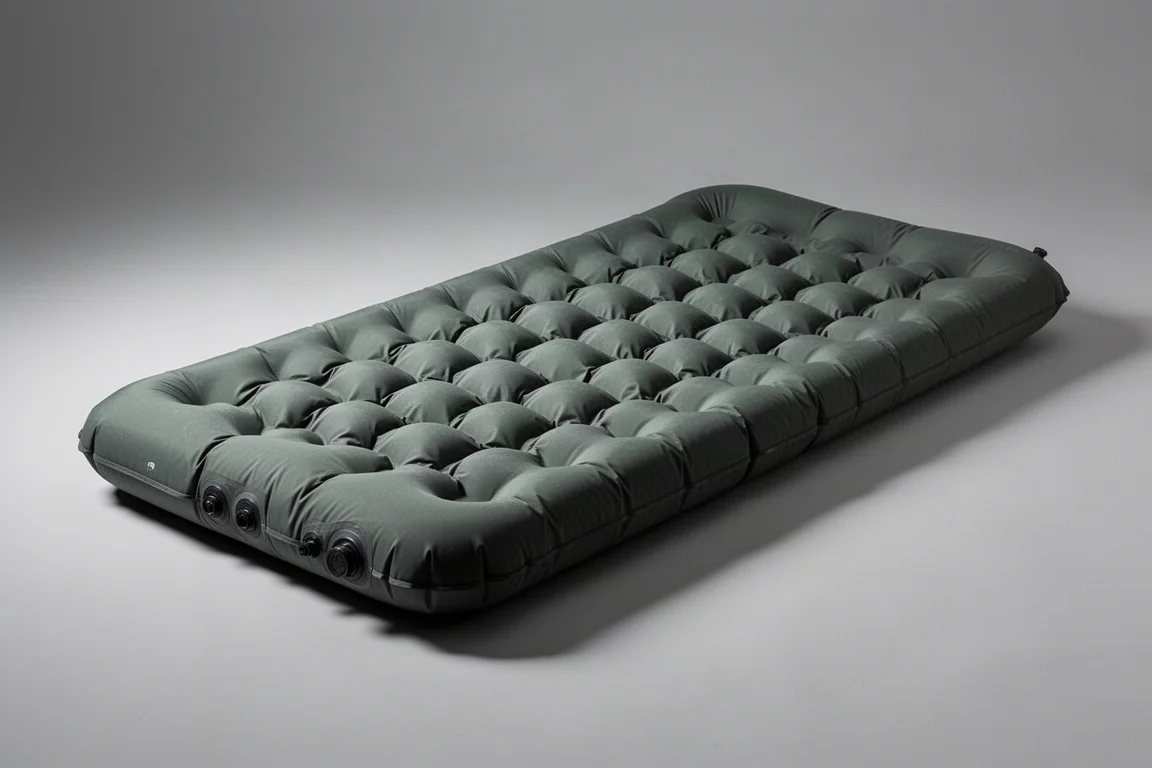
Bought in 2012 for rock climbing trips, camping and days spent at the crag, the Sim Lite 3.8 was considered the cream of the crop among inflatable insulated mats at the time. It stayed in rotation for around five years and was a genuinely comfortable mat while it worked, with an R-value of 3.1 that is warm enough for alpine conditions. The construction pairs 75-denier fabric on both the top and the bottom with an open-cell PU foam core cut into a honeycomb pattern.

In 2019, on Mont Blanc, the mat delaminated overnight. The top layer separated from the foam core and inflated beneath the sleeper, producing a large bulge under the chest, and the remaining nights of that trip were spent on a partly inflated mat. The likely cause was years of inflating the mat directly by mouth: moisture from breath worked into the adhesive between the foam core and the TPU, and the bond eventually gave way.
A pump bag was supposed to make mouth inflation unnecessary, but it was a separate purchase at the time and the one available was slow, taking around 30 minutes to fill the mat. That is why mouth inflation became the habit. It is worth noting that the same habit has not caused any problems on the Sea to Summit mat after six or seven years of use.
The other drawbacks are practical rather than dramatic. At 1050 g it is heavy for what it offers, it remains bulky when packed, and it normally comes with a packing sleeve that is easy to lose. Given how far inflatable mat construction has moved on since 2012, this would not be a repeat purchase.
Camp Essentials Light Mat: The Minimalist Choice
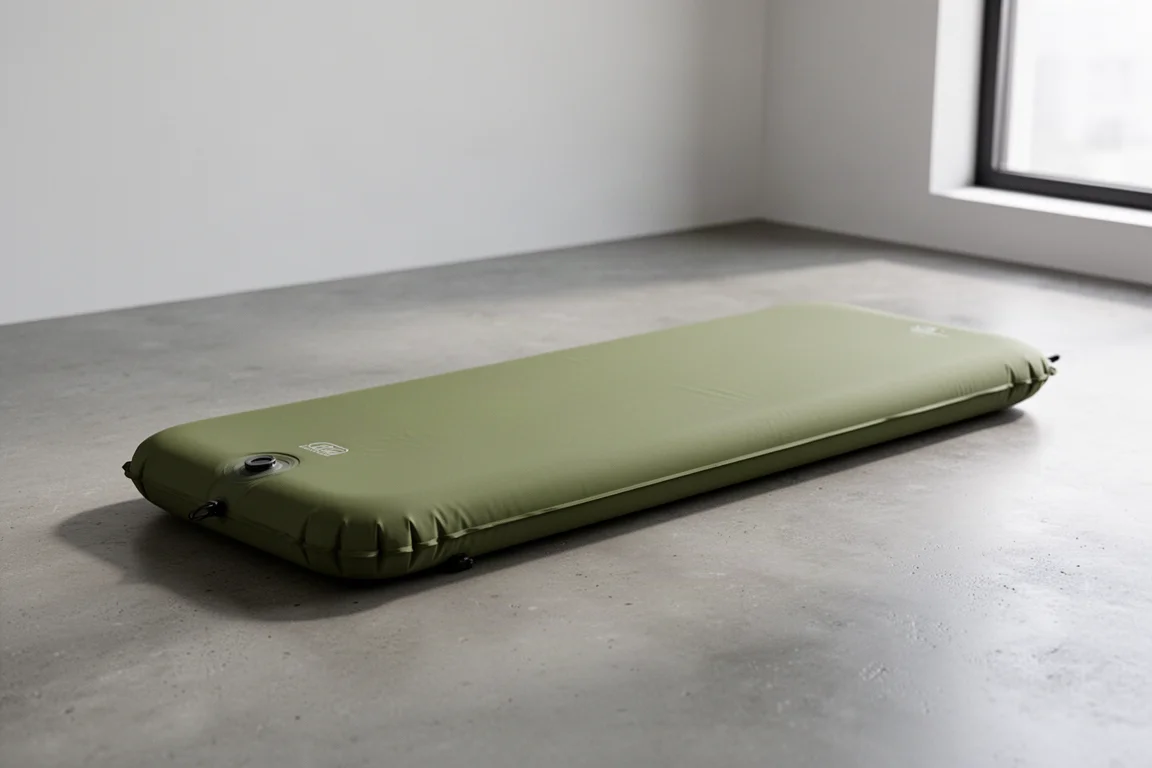
This is the cheapest and lightest mat here, and by far the simplest. It was used on the GR11, a long-distance summer thru-hike where warmth was never the priority. Campsites were selected for undergrowth, leaves and foliage, which supplied both cushioning and a degree of insulation from the ground.
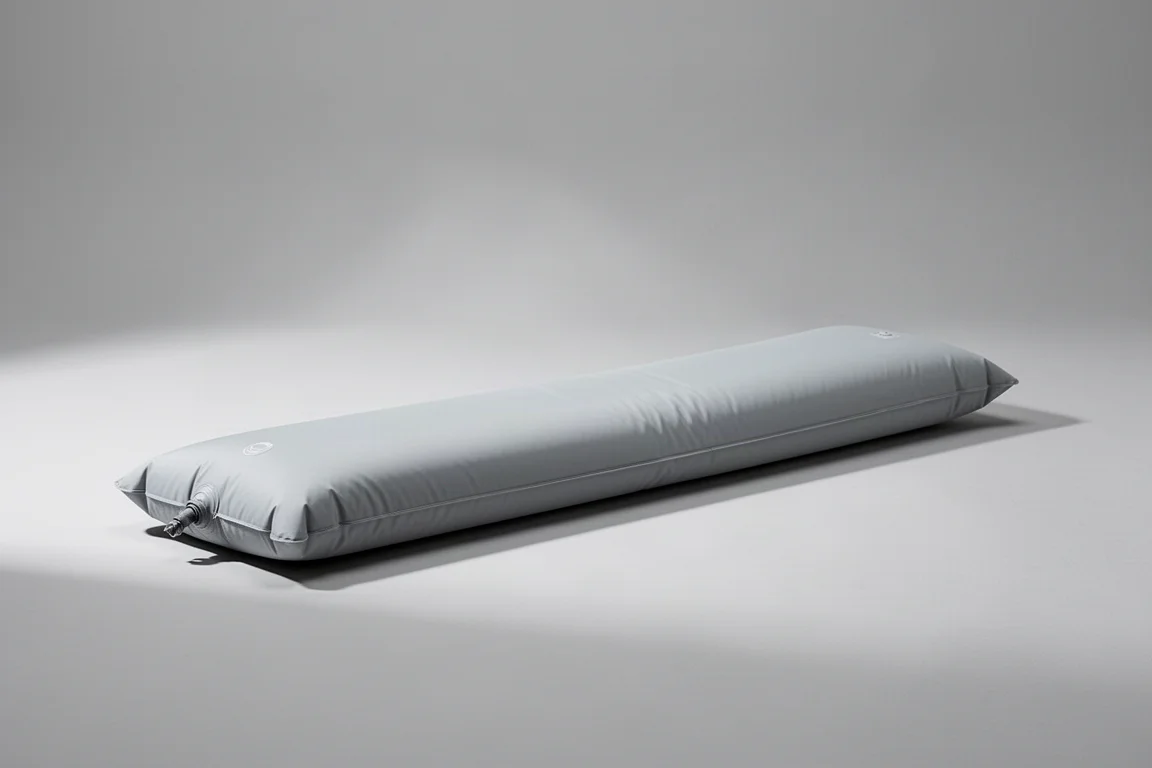
There is no insulation in this mat whatsoever. Its R-value is around 0.5, close to zero, and the design is little more than a single air chamber with a basic inflation and deflation valve.
Two things stand out from real use. The first is durability: one puncture occurred on the GR11 and was patched immediately, and the mat gave no further trouble. The second is that on a couple of nights it felt too thin, and it was easy to roll off the edge entirely, which is a good argument for choosing a wider version next time.
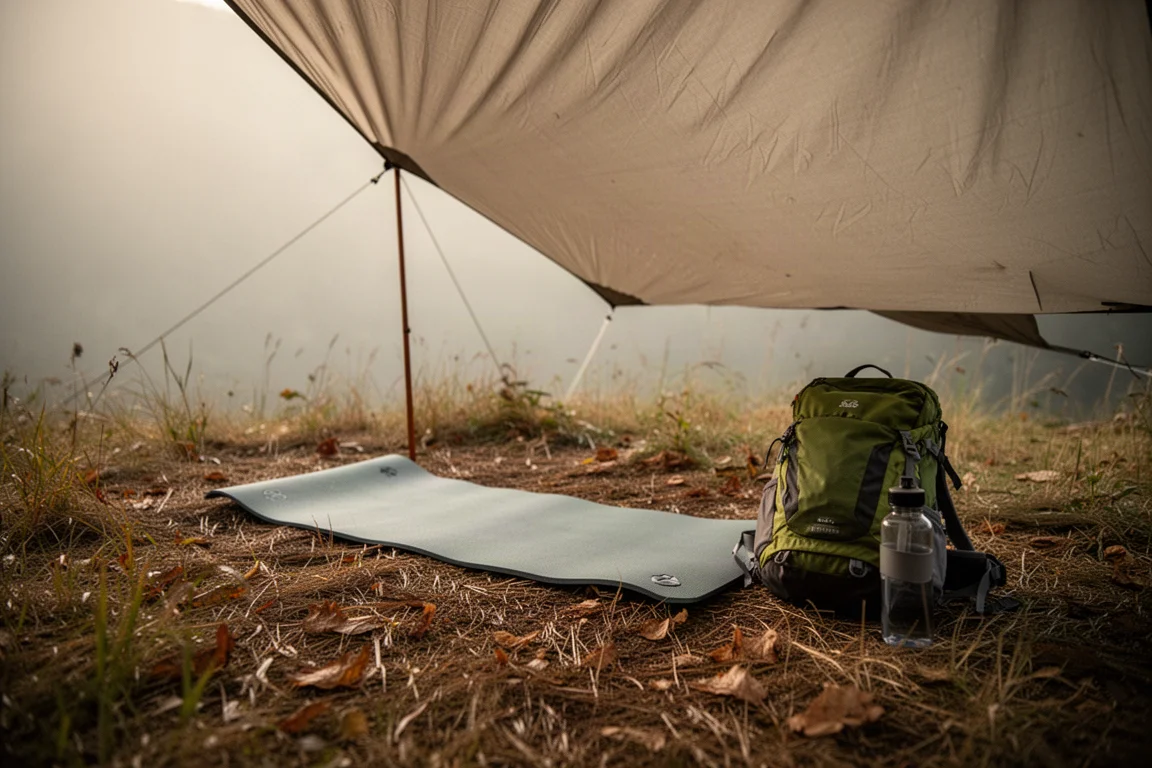
Deflation takes a little fiddling, and the mat packs down very small, which is the whole point of owning one. The broader lesson is that the lighter you go, the more campsite selection becomes part of your sleep system. A flat, well-drained pitch with some foliage beneath it can turn a 0.5 R-value mat into a comfortable night, and the same pitch would be wasted on a heavier insulated mat.
Therm-a-Rest Z Lite: Closed-Cell Simplicity
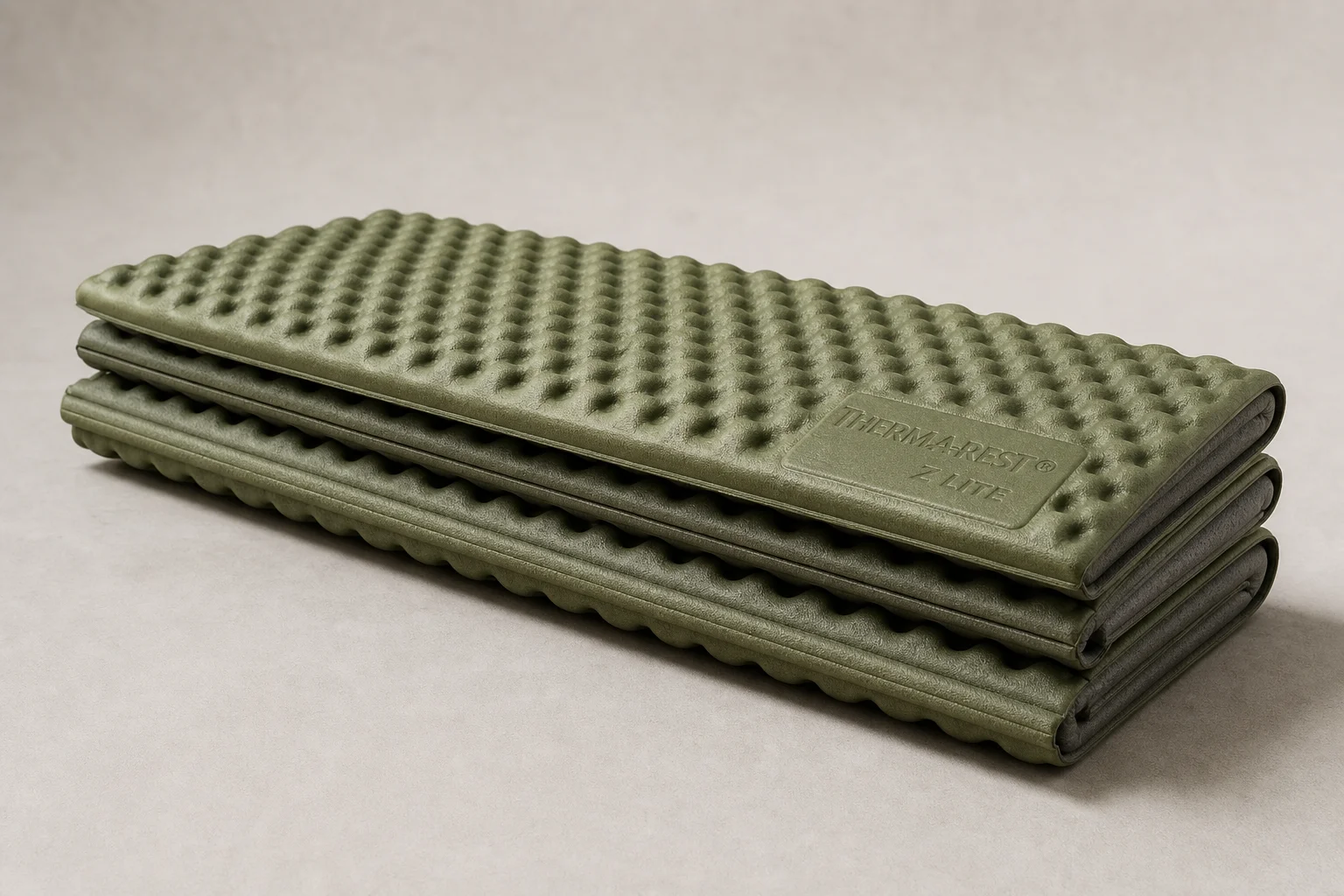
The most recent addition to this group, and the only one that is not inflatable. The Z Lite is a sheet of closed-cell polyethylene foam with a dimpled, bubble-like surface that provides the cushioning. It cannot puncture, cannot delaminate and cannot leak.
It has been used once so far, and the plan is to take it on a three-week thru-hike mostly above the tree line. Warmth is rated at R-value 1.7, a clear step up from the uninsulated Camp Essentials mat.
Part of the appeal is what the mat does when you are not sleeping on it. A foam mat can be thrown on the grass outside the tent for stretching in the afternoon, which is not something an inflatable handles comfortably.
The compromise is bulk and weight. At full length it weighs 410 g, actually more than the Camp Essentials mat, and it is cumbersome to carry. Cutting it down to eight sections produces a three-quarter-length mat that is lighter and can be slipped against the back of a pack as back support, rather than strapped to the outside where it would catch on trees and make getting into the pack awkward. The offcut makes a useful seat. For a trip of this length, the bulk is a trade worth making.
Buying Advice: Matching a Mat to Your Trip
If your trips involve cold, exposed or high-altitude camps, an insulated inflatable is the sensible starting point. The Sea to Summit Comfort Plus is the warmest and most comfortable option here, and its two-chamber design adds a real margin of safety for remote travel. The main thing to protect is the internal bond: use a pump bag rather than your breath wherever one is available, because moisture in the adhesive is what eventually caused the failure described above.
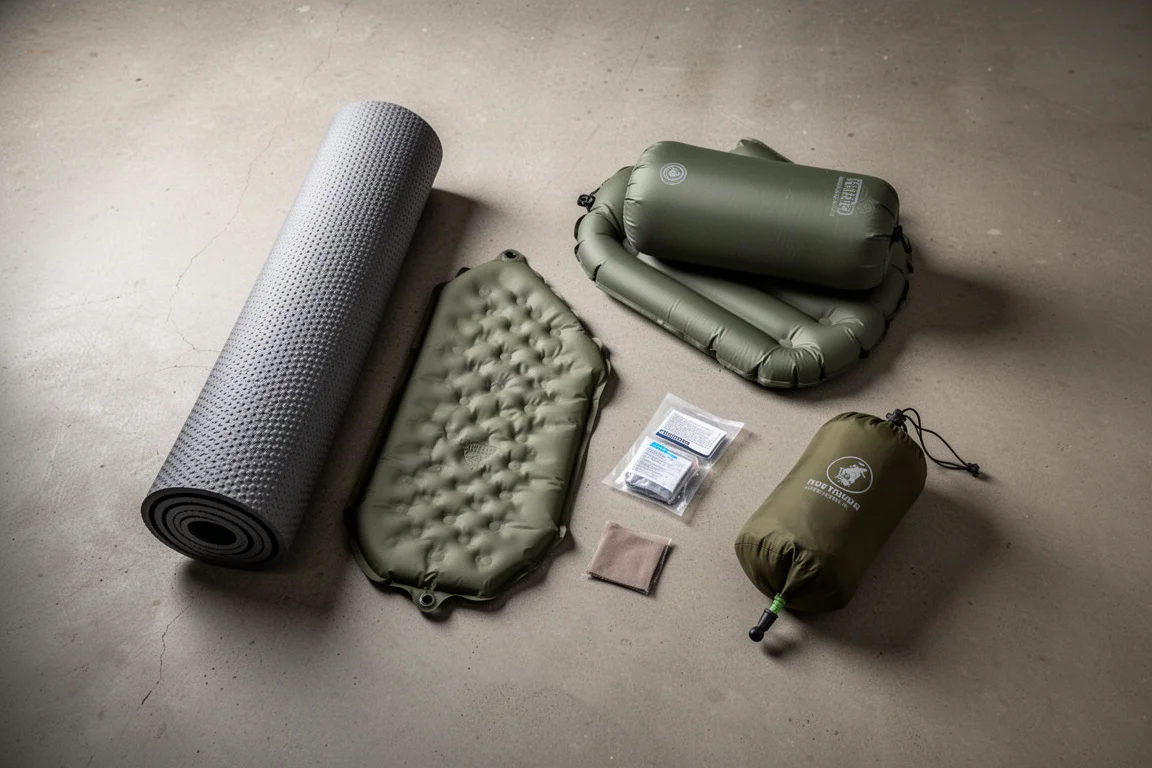
If reliability and simplicity matter more than packed size, closed-cell foam is the answer. The Therm-a-Rest Z Lite cannot fail in the night, works as a stretching mat and a seat, and can be trimmed to whatever length you actually need. It will never disappear into your pack, so it only makes sense if you are comfortable carrying it on the outside or against your back.
A minimal mat like the Camp Essentials Light Mat is a specialist tool rather than a general one. It suits long summer walks where every gram counts and you are willing to choose your pitches carefully, and it is the wrong choice for shoulder-season or alpine trips. Whichever direction you go, budget for a repair kit and treat inflation method as part of the mat’s long-term durability rather than an afterthought.
Conclusion
These four mats are not really competitors so much as answers to four different questions. The Comfort Plus answers how to sleep warm and comfortably in serious cold. The Sim Lite 3.8 shows what happens when an inflatable is inflated by mouth for years. The Camp Essentials mat answers how little you can carry in summer. The Z Lite answers what you take when you want something that simply cannot break.
Match the mat to the trip, protect the internal bond on any inflatable, and choose your campsite with as much care as you choose your gear.
Further reading
Related Reviews
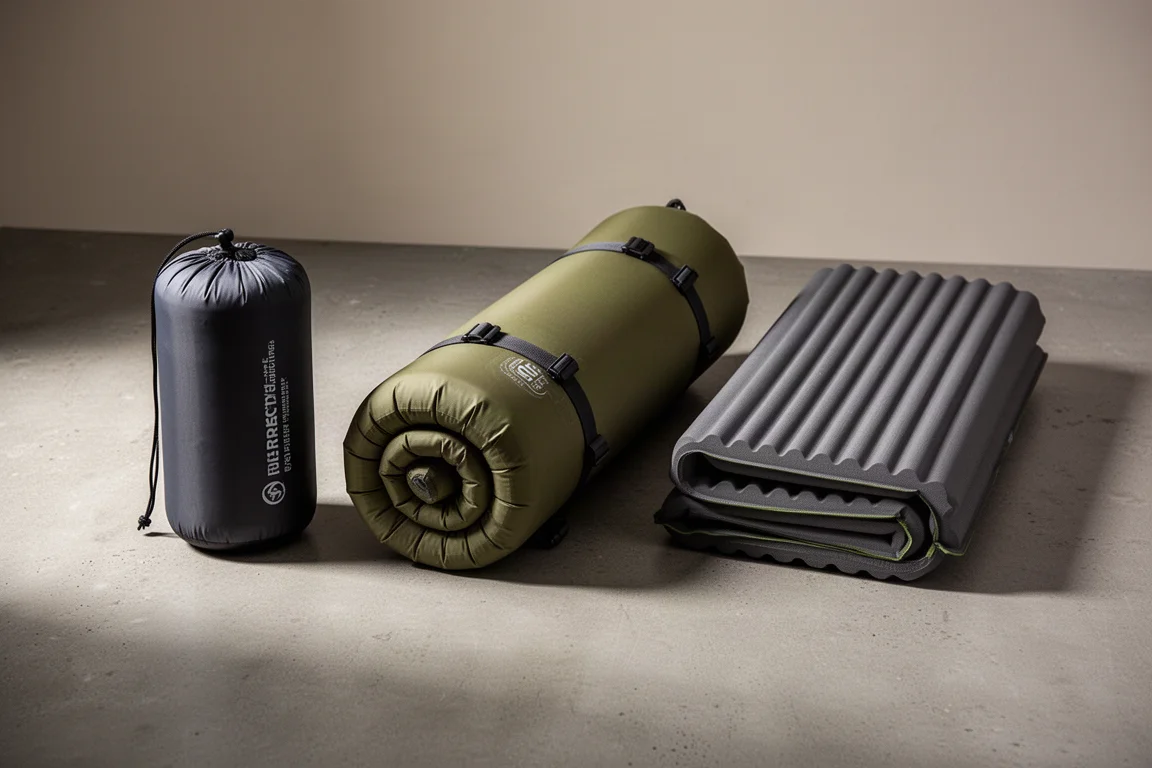
Camping Sleeping Mats
Sleeping Mats for Cold-Weather Camping: Three Options Compared
How the Trekology UL-80, OEX Prowl, and Therm-a-Rest RidgeRest differ in pack size, weight, comfort, and warmth on cold ground.

Backpacking Gear
Building a 10 lb Base Weight: An Ultralight Backpacking Gear List
A practical walkthrough of the ultralight pieces behind a 10 lb base weight, from a 765 g pack and a roomy one-person tent to a full camp chair and a dependable water filter.

Road Bikes
10 New Road Bikes Worth Watching: Aero, Titanium, Steel and Endurance Standouts
A practical roundup of 10 new road bikes, from aero flagships chasing single-watt gains to titanium, steel and endurance platforms built for real roads.