Cycling Components
Best Shimano Groupsets of All Time: 105 5700, Dura-Ace 7800, and Dura-Ace R9150
Three Shimano groupsets, three eras of engineering: what 105 5700, Dura-Ace 7800, and Dura-Ace R9150 each brought to the road, and which one suits your build.
Introduction
Shimano has spent more than a hundred years developing bicycle components, and every new groupset tends to improve on the one before it. The latest Dura-Ace is functionally superior to anything that came before it. That does not make the older generations irrelevant, though. Some of them changed what riders could expect from a given price, and a few still ride beautifully today.
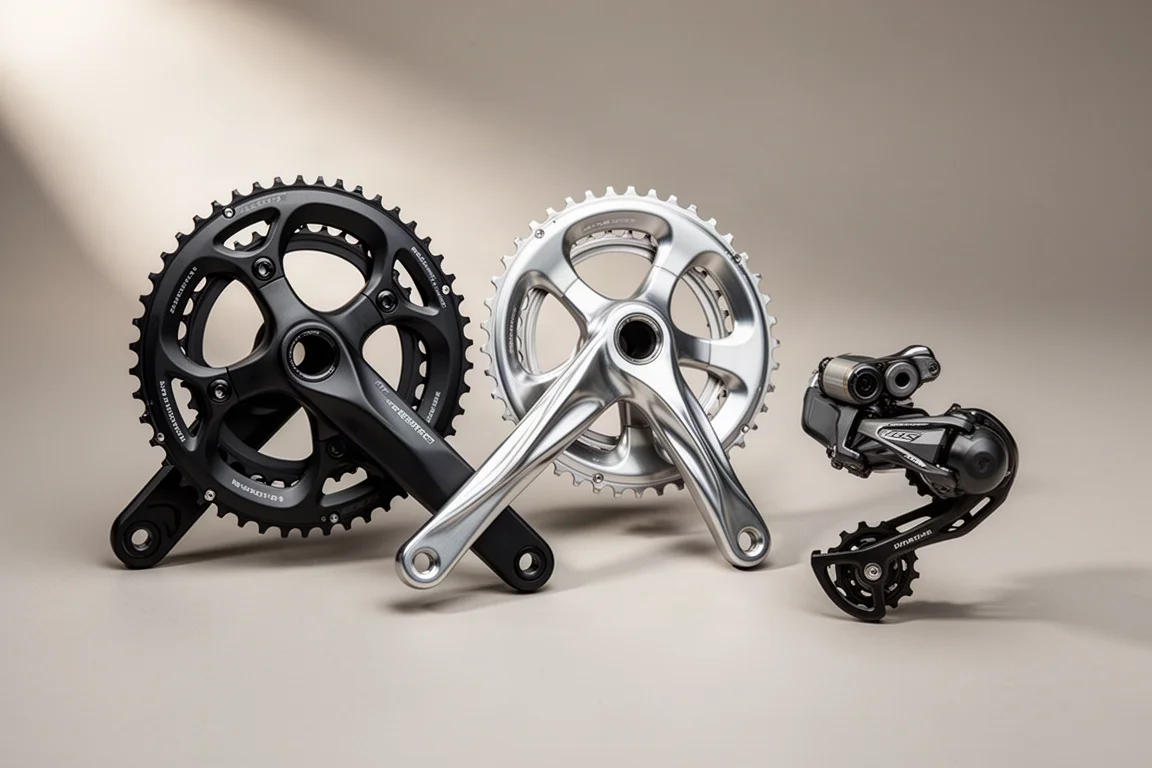
This roundup covers three groupsets that each represent a different kind of milestone: Shimano 105 5700, which carried top-tier thinking down to an accessible price; Shimano Dura-Ace 7800, the groupset that introduced Hollowtech II; and Shimano Dura-Ace R9150, the electronic Dura-Ace that made Di2 feel settled.
What Makes a Shimano Groupset Worth Remembering
A groupset earns a lasting reputation on more than shift quality alone. The criteria that matter most are what a groupset brought down from the tier above it, how well it survives years of use, how easy it is to live with at home, and what it asks of your wallet.
Price is part of the story. Dura-Ace is typically three or four times the price of 105, and while it is lighter, it is not four times the performance. That gap is exactly what makes the trickle-down groupsets so compelling: the technology on an affordable groupset usually appeared on a Dura-Ace groupset first.
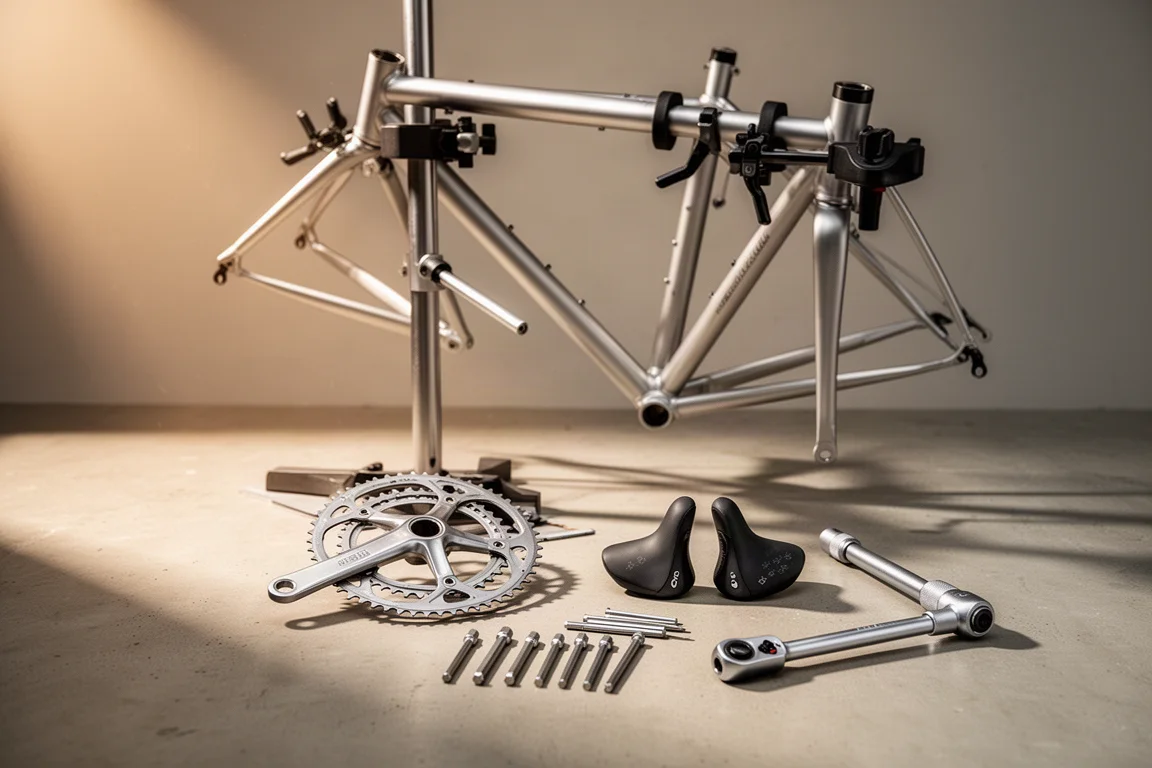
Durability counts just as much. A bottom bracket standard that still works flawlessly two decades later says more about a design than any launch specification. All three groupsets here share the same crank axle standard, which is a large part of why they remain serviceable today.
Shimano 105 5700: Trickle-Down Performance for the Masses
105 5700 arrived in 2010 and was a significant technological leap at the time. It brought the top-end performance of the Ultegra and Dura-Ace groupsets of that era down to the 105 level, which is exactly what the 105 name has always been about.
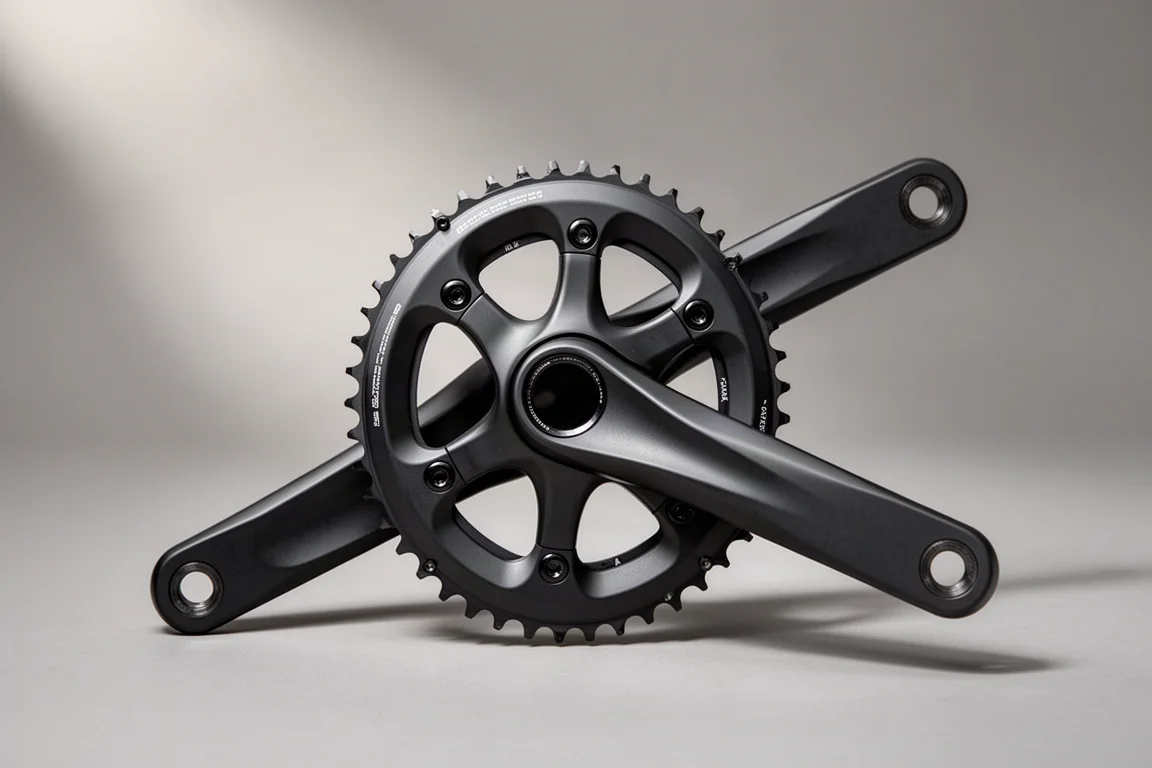
It was the first 105 groupset to use an asymmetric, directional chain for better shifting, and its cranks used a universal bolt circle diameter so riders could fit compact chainrings. The five-bolt crank arm and integrated STI shifters gave it a look and feel that sat close to the more expensive tiers.
Shifting was helped along by PTFE-lined cables for a smoother action, and the complete groupset weighed 3,313 grams including the bottom bracket and pedals. It was offered in silver or black. The 105 line itself was first introduced in 1986.
Why 105 5700 Still Makes Sense Today
For all the prestige of Dura-Ace, the vast majority of Shimano’s sales come from more affordable options like 105, and it is fair to say that without 105 the top of the range would look very different. 105 is the entry point into serious, performance-oriented groupsets.
This particular generation is also a neat demonstration of trickle-down technology. The front derailleur looks much the same as the higher-tier version of its day, and the cables route neatly underneath the bar tape rather than poking out of the sides of the shifters. That cable routing is taken for granted now, but at the time it made a bike look noticeably cleaner.

There is a useful rule of thumb here: a 105 groupset is usually better than the Dura-Ace groupset from roughly ten years before it. For riders who want dependable mechanical shifting without paying flagship money, that makes 105 5700 a sensible, low-drama choice.
Shimano Dura-Ace 7800: The Hollowtech 2 Breakthrough
Dura-Ace 7800 launched in 2003, seven years after the previous Dura-Ace groupset. That was an unthinkably long wait at the time and would be even more unusual now, which is part of why it felt like such a large step forward.
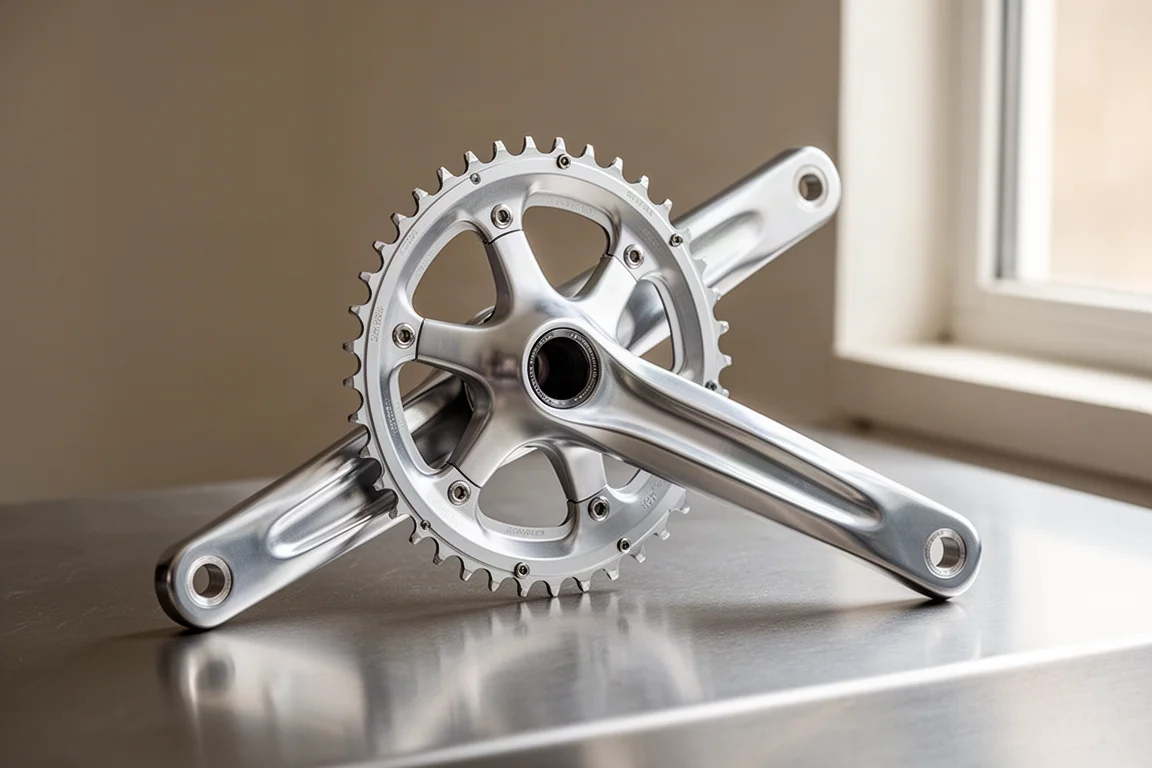
It was the first Shimano groupset built around Hollowtech II. A 24 mm axle is bonded onto the crank arm, and tension is preloaded with a simple system that Shimano still uses today. It is a home mechanic’s dream, and it was both lighter and stiffer than the groupset it replaced, particularly around the cranks. The muscular crank arm and solid-looking chainring set the aesthetic tone for the whole groupset.
The levers were a step forward as well. They were far more comfortable to hold than what came before, and they protruded slightly at the front, which gave riders a useful secondary hand position. The groupset also moved from nine speeds to ten, with external cables that kept shifting smooth.
Dura-Ace 7800: A Mechanical Benchmark That Still Rides Well
Two decades on, the bottom bracket system from this groupset is still going flawlessly, which says a great deal about how well the design was executed. The external cable routing dates it visually, but it also makes the groupset easy to adjust and maintain.
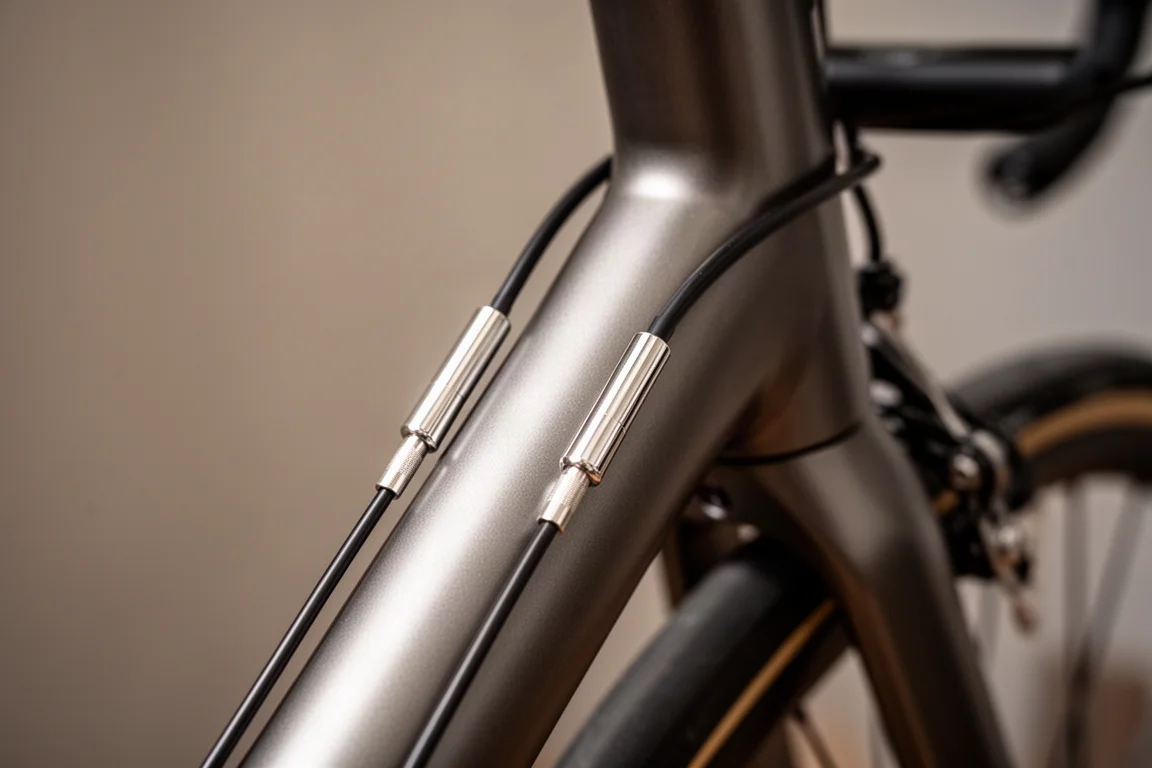
This is a groupset that resonates with riders who remember early-2000s racing. It did not introduce electronic shifting or hydraulic disc brakes, and it is not as light as what came later, but it delivered performance that felt like a quantum leap at the time and it remains a satisfying mechanical system to ride.
Shimano Dura-Ace R9150: Electronic Shifting Refined
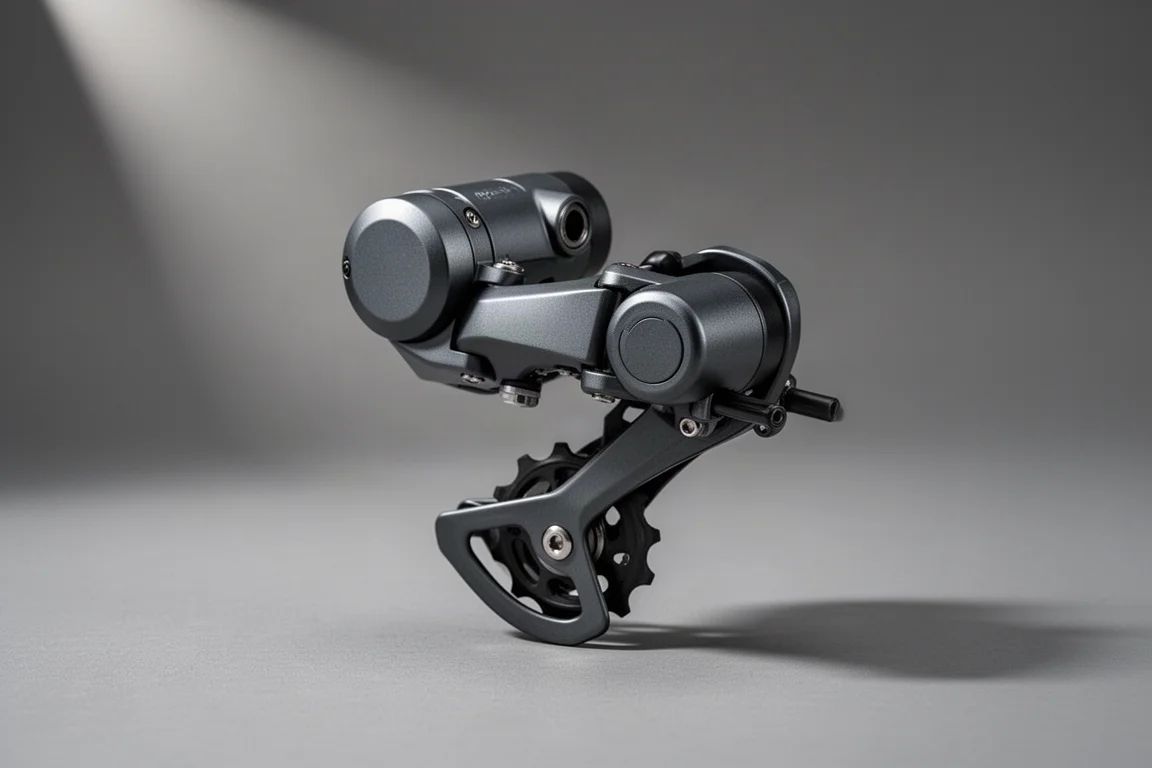
Dura-Ace R9150 is the electronic shifting version of the mechanical 9100 groupset. The system is called Di2, short for Digital Integrated Intelligence, and this generation was the third iteration of it. Di2 began with the 7900 groupset in 2011.
Two details stand out. This was the groupset where Shimano managed something that had seemed impossible, making the levers the same size for both the rim brake and the disc brake versions. And it was the first Dura-Ace series groupset that allowed a 30-tooth cassette, which opens up easier gearing for the steepest climbs without giving up much on fast descents.
Comparing the Three: Weight, Gearing, and Shifting Feel
The 105 5700 is the value proposition: ten speeds, mechanical shifting, PTFE-lined cables and a 3,313 gram complete weight including the bottom bracket and pedals. It is the groupset that put serious performance within reach of far more riders.
Dura-Ace 7800 is the mechanical classic. It shares the Hollowtech II crank axle standard, runs ten speeds, and pairs external cable routing with levers that offer a comfortable secondary hand position. Its appeal is as much about durability and simplicity as outright weight.
Dura-Ace R9150 is the most recent of the three. Shifting is electronic, the lever bodies match between rim and disc brake versions, and the gearing can be configured with a 30-tooth cassette for steeper terrain.
Buying Advice: Matching the Groupset to the Rider
If value is the priority, 105 5700 is the straightforward answer. It offers the best bang for your buck in this group, it is reliable, and it is more than most riders ever really need. It also makes a strong candidate for a first serious road bike or a dependable second build.
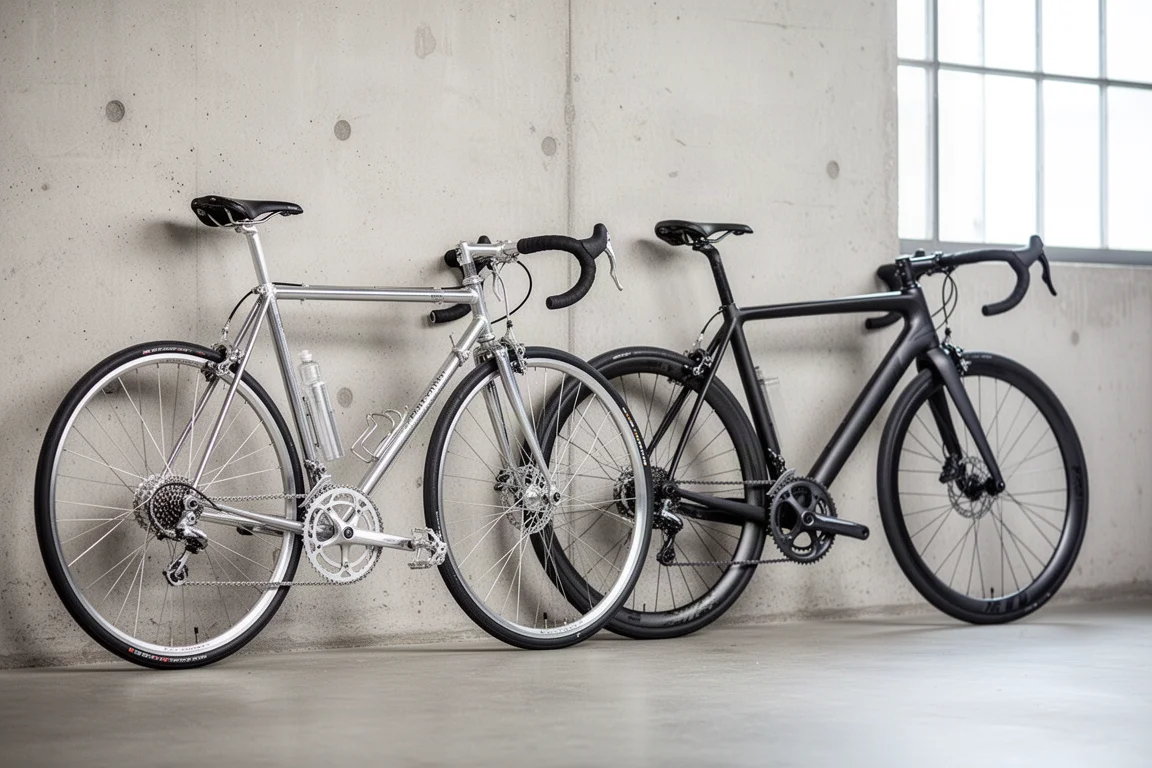
Dura-Ace 7800 suits riders who want a period-correct mechanical build, or who value a groupset that can be serviced at home and has already proven it can last two decades. Its limitations are the external cables and the ten-speed platform.
Dura-Ace R9150 is the choice for riders who want electronic shifting and the flexibility of a wider gear range, including the option of a 30-tooth cassette. It sits at a considerably higher price point, so it makes the most sense when the rest of the bike is built to a similar level.
Conclusion
Each of these three groupsets makes a different case for itself. 105 5700 wins on value and reach: it brought genuine performance to more riders than the two Dura-Ace groupsets combined, and it remains the sensible entry point into serious equipment. Dura-Ace 7800 wins on engineering legacy: Hollowtech II, a bottom bracket standard still in use today, and a mechanical feel that has aged well. Dura-Ace R9150 wins on refinement: electronic shifting, matched lever sizes across brake types, and a wider cassette range.
Whichever one fits your budget and your build, the common thread is that Shimano’s tiering has worked in riders’ favour. Technology at the top eventually reaches the tiers below, and that is what makes an older groupset worth considering rather than dismissing.
Further reading
Related Reviews
Cycling Components
A 20,000-Mile Budget Race Bike Build: Five Parts Worth Knowing
A rim brake race bike assembled from low-cost components and ridden for 20,000 miles. Here is what delivered real speed, what caused problems, and what to weigh before copying the formula.
Cycling Components
7 Bike Fit Products Fitters Avoid: What to Check Before You Buy
Seven bike components that regularly cause knee, foot and saddle problems, with the specific concerns behind each one and what to look for instead.
Cycling Components
Four Affordable Bike Upgrades That Improve Ride Feel
Four low-cost cycling products that make a real difference to ride feel, plus the free setup changes worth trying first.