Aquarium Water Filtration
Best RODI Systems for Reef Tanks: Five Stage Water Saver Plus vs Seven Stage Pro
How to choose between two RODI systems for reef tanks, what each filter stage actually adds, and why the Five Stage Water Saver Plus suits most keepers while the Seven Stage Pro ends the search.
Introduction
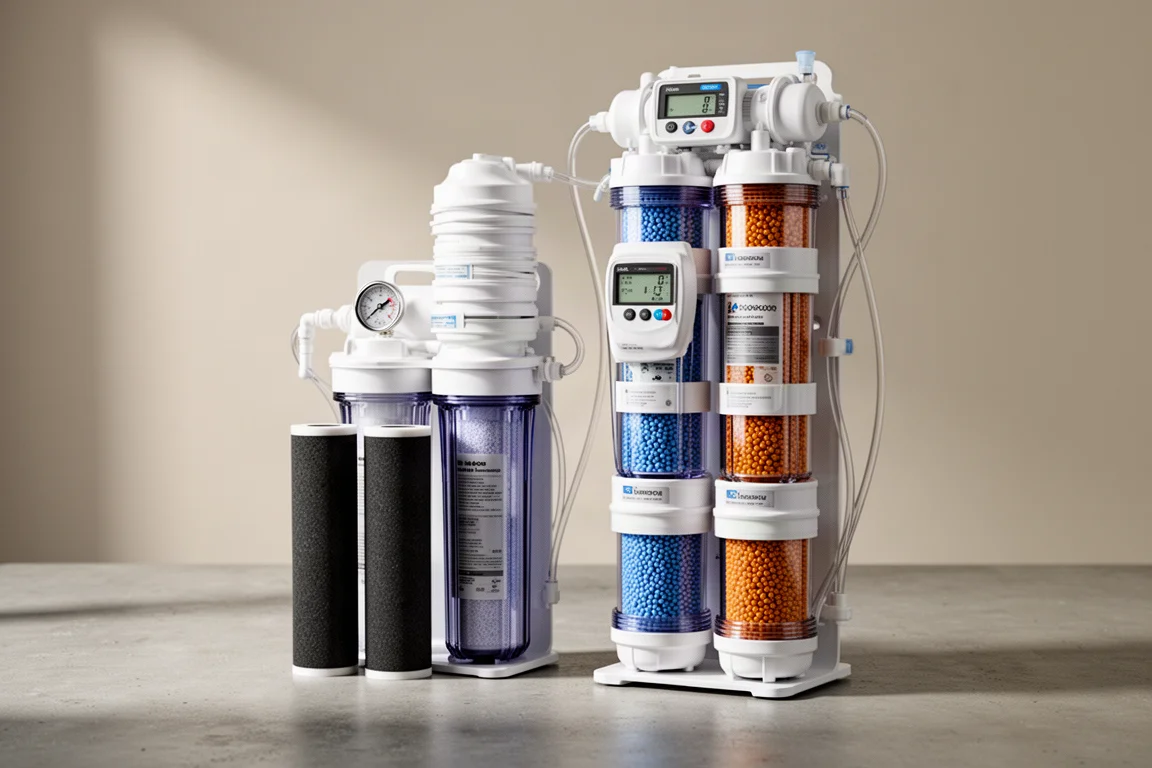
Reverse osmosis deionized water is the baseline for a healthy reef tank, and almost every keeper arrives at the same three questions: which system is cheapest, which is best, and which is easiest to live with. The honest answer depends on what is in your tap water and how much water you need to make each week, not on a single ranking.
Two systems cover the widest range of reefers. The Five Stage Water Saver Plus is the pick for the vast majority of setups, because it handles a broader set of disinfectants without asking you to test your supply or call your water provider. The Seven Stage Pro is the end game choice for keepers who plan to stay in the hobby for years and want the lowest possible long term filter cost.
This guide explains what each stage count actually adds, how membrane ratings and water saver options change day to day ownership, and which accessories are worth having on the unit from the start.
How to Choose the Right RODI System
The easiest way to read the lineup is to look at what each extra stage contributes rather than at the total number. At the entry point, the four stage system is the most affordable and the most portable option, which suits a condo, an apartment or a home with limited storage space, and it produces zero TDS water with the option to add stages later. The five stage system then adds a second carbon block: two universal carbon blocks with more carbon than most blocks on the market, and a wider removal range for the disinfectants used in municipal supplies as well as some of the chemicals that can end up in well water, particularly near agricultural land. In practice this removes the guesswork, because whether your supplier uses chlorine or chloramines, the unit is covered.
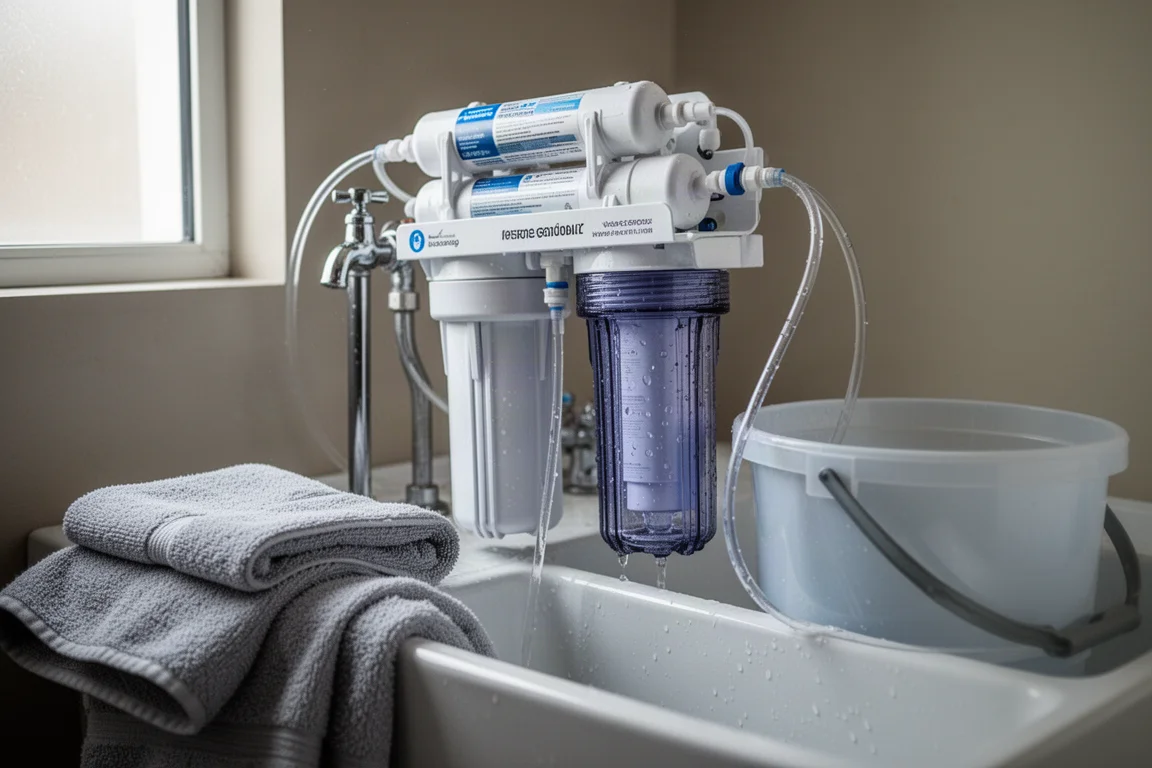
Above the five stage, the differences shift from water coverage to convenience and long term cost. Additional resin stages exist to protect against depleted resin and to squeeze more usable life out of each canister, which matters more the longer you plan to run the system.
Beyond stage count, three specifications shape how a system feels to own: the membrane rating in gallons per day, whether the unit includes a water saver option, and whether it ships in a standard or plus configuration with the monitoring accessories. Each of those is covered in the sections below.
Best Overall: Five Stage Water Saver Plus
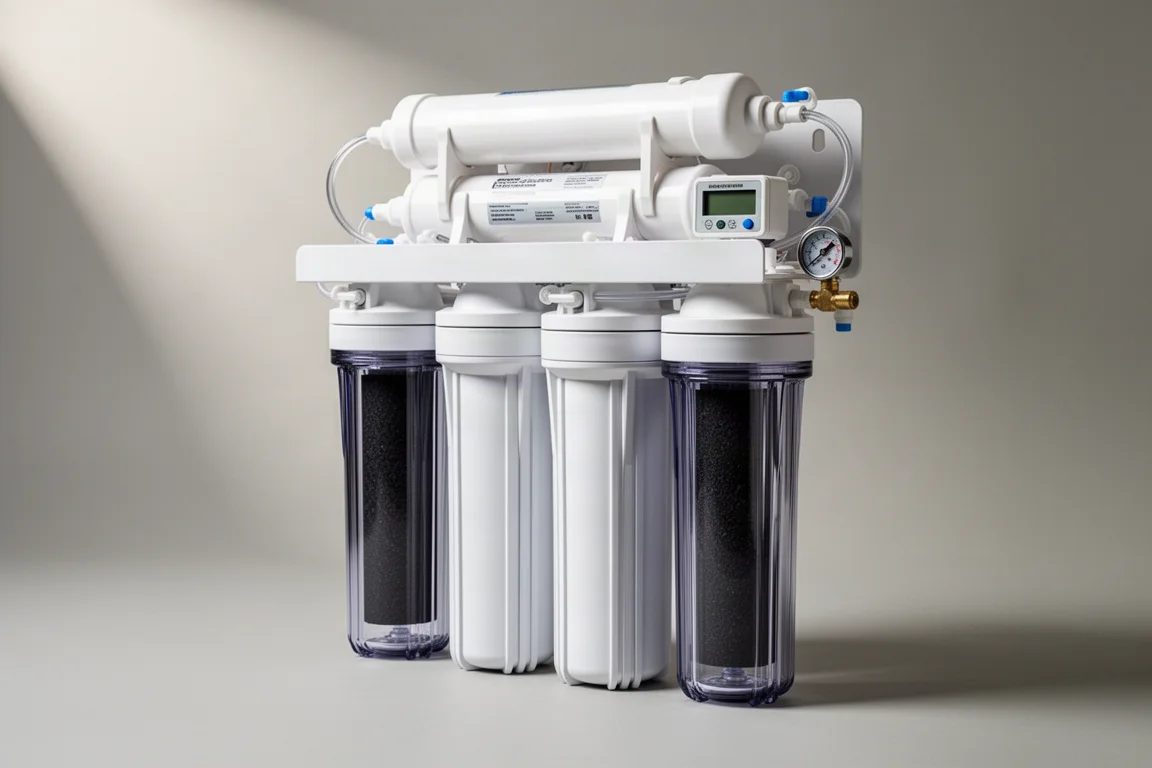
For most reef tanks, the Five Stage Water Saver Plus balances coverage, cost and effort more convincingly than anything else in the range. It starts with the five stage core described above: two carbon blocks, a membrane, and a DI stage that finishes the job with zero TDS output.
The water saver option is the part that changes daily life. Running two 75 gallon per day membranes in series doubles output to roughly 150 gallons per day, and because the membranes work in series, the volume of wastewater is cut in half. For keepers in drought prone areas, or anywhere water is expensive, that combination of faster production and lower waste is the difference between a system that feels practical and one that feels like a chore.
Plus versions ship with a TDS meter, a pressure gauge and a flush kit already installed, which are the three accessories most owners would otherwise add later. What each of them does is covered further down.
Connections are straightforward on both the four and five stage systems. A laundry or garden hose attachment screws onto a laundry tub tap, and there is an adapter for a standard kitchen or bathroom sink aerator, along with adapter rings for other fittings.
Best for Long-Term Reef Keeping: Seven Stage Pro
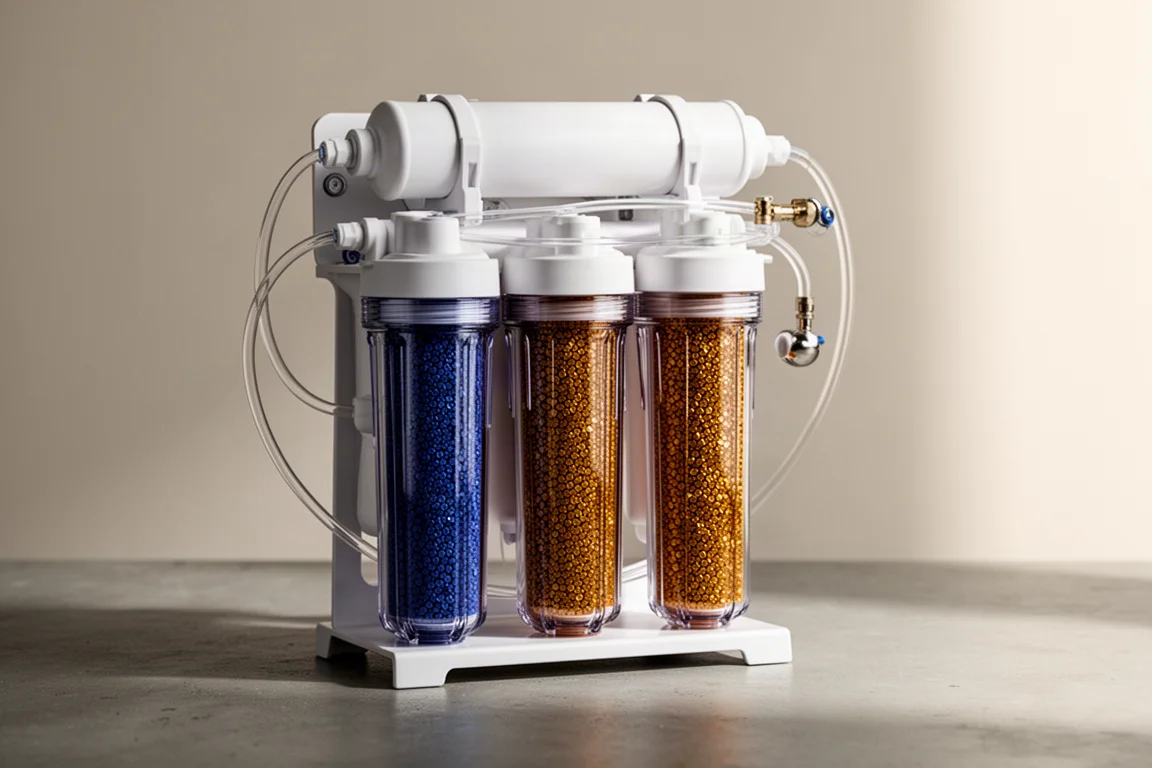
The Seven Stage Pro is the most capable system in the lineup, and its defining feature is three DI resin canisters instead of one. These are not identical resin stages used purely for redundancy. They use different resin types for specific jobs and run in series, with each canister operating at a different pH. That pH shift changes some contaminants into forms that are easier to remove, with ammonia gas and silicone as the clearest examples.
The design is also more efficient. Each canister is optimized for either negatively or positively charged ions and holds a higher capacity for them, so the resin lasts longer and the canisters are replaced far less often, roughly half the filter changes and half the work of a single DI stage.
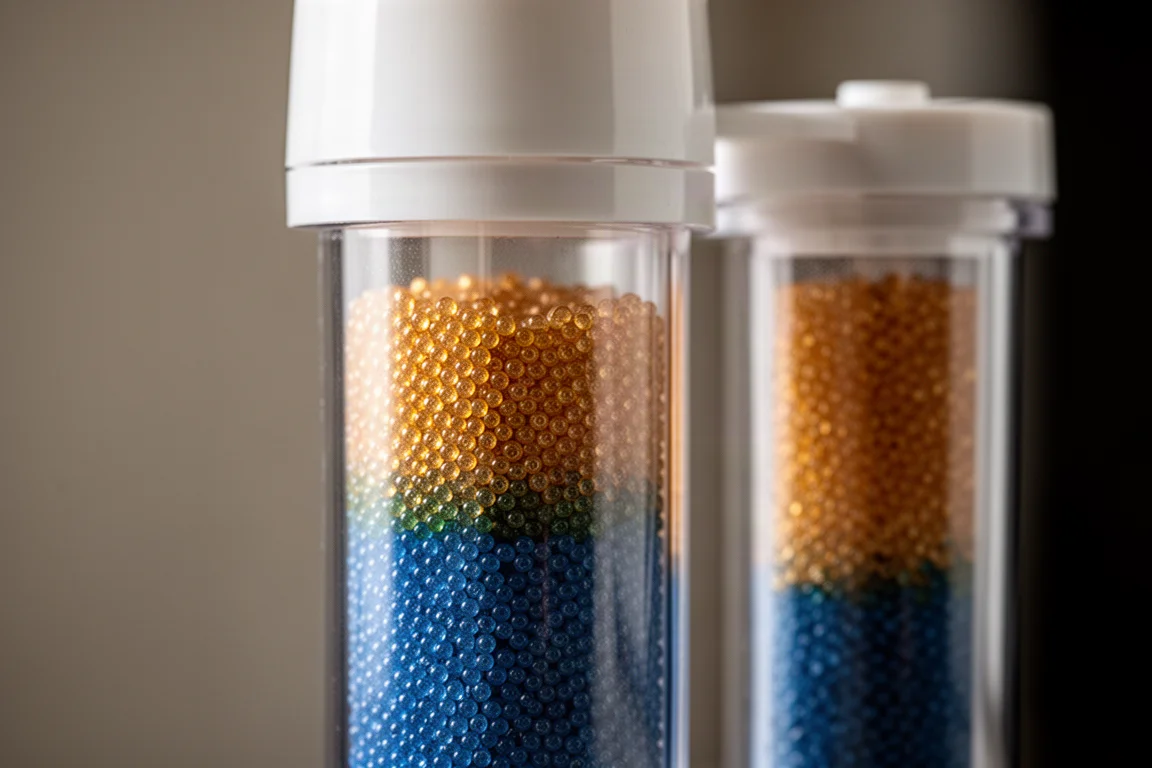
There is one more advantage worth knowing about. If high CO2 in your source water is the problem, replacing only the anion resin addresses it directly. Depletion is easy to follow visually as well, since the resin changes color as it is used up, and the final canister acts as a buffer, so a canister that runs a little long does not release contaminants into your storage water.
For keepers who intend to stay in the hobby for the long haul, this is the system that effectively closes the question. It is also not an all or nothing decision: a smaller system can be built up with additional canisters over time, so a modest start can grow into the same level of capability.
Membrane Ratings: 75 vs 100 Gallons Per Day
Membrane rating decides how long you wait for water. The available options are 75 and 100 gallons per day.
A practical rule of thumb is to work out how much water the system can produce in about 12 hours and whether that covers a 30 percent water change on your tank. Many keepers prefer to start production in the evening and finish the change the next morning, which is exactly the window this estimate describes.
The 75 gallon per day membrane is the better default. The 100 gallon per day membrane produces water faster, but it is not as thorough, letting a couple of extra percent of contaminants through to the DI stage. The water leaving the unit is still zero TDS, but the DI resin can be consumed roughly twice as fast, which raises running costs and means more frequent filter changes. Unless that extra 25 gallons per day genuinely matters to you, 75 gallons per day is the stronger choice.
What the Plus Accessories Actually Do
Plus configurations exist because three small additions remove most of the uncertainty from owning an RODI system.
The TDS meter is the one that answers the basic question of whether the unit is working. Without it there is no simple way to confirm that the water leaving the system is the ultra pure water you are aiming for, and it is the add on most owners eventually buy anyway.
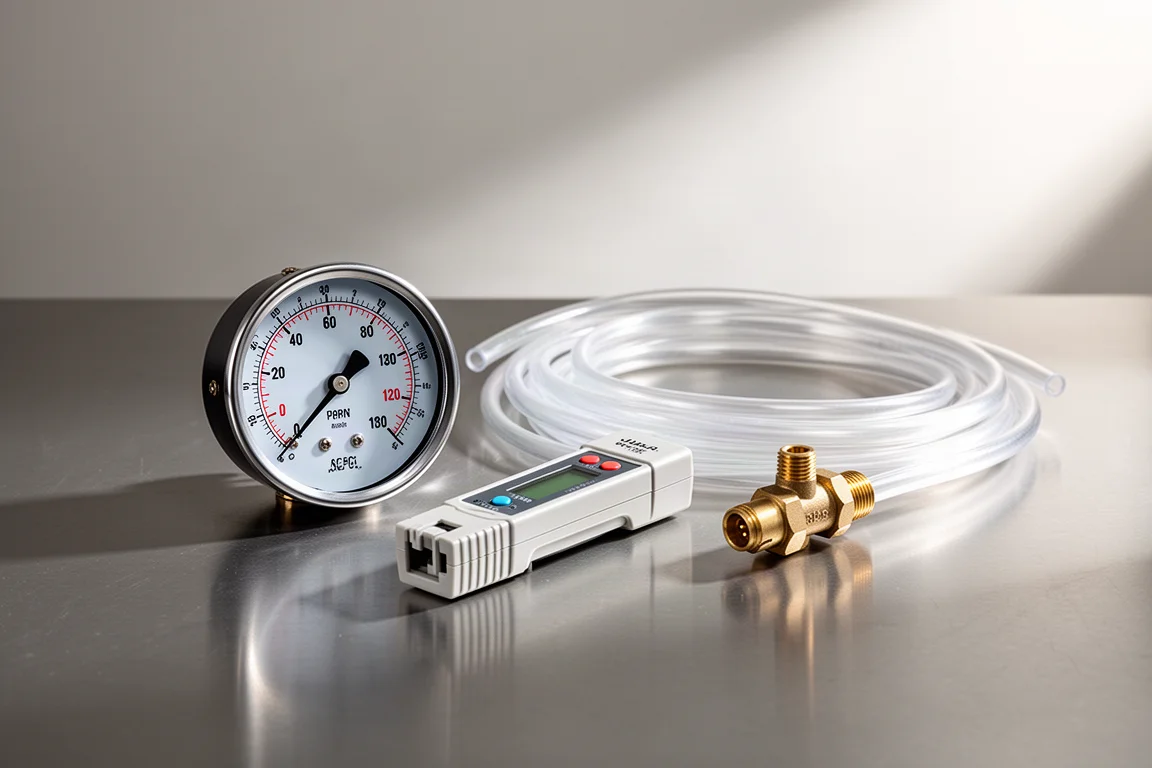
The pressure gauge serves two purposes. It helps troubleshoot problems, showing whether filters are clogged or household pressure has dropped, and it tracks the single variable that most affects membrane performance. Higher pressure raises both flow rate and rejection rate, so knowing your number is useful when you are trying to get more out of the system.
The flush kit is the maintenance item. Opening it flushes particles off the membrane, and used every time you produce water it helps the membrane reach its expected service life of around three years.
Practical Setup and Maintenance Notes
Every unit in the range can run from a laundry or garden hose tap, or from a kitchen or bathroom sink using an aerator adapter, with adapter rings included for other fittings. The smaller configurations are easy to put away between uses, which is why they suit renters and small spaces. Systems above the five stage add fittings aimed at permanent installation, including a ball valve, under sink line connections and a waste line that routes into the drain trap.
Maintenance is mostly visual. DI resin changes color as it depletes, so it is easy to see when a canister is close to spent. In units with two resin stages, a common routine is to move the older canister into the first position and fit a new one behind it, which keeps the final stage fresh. With three resin stages, the last canister serves as a buffer and changes come around far less often.
Overall Buying Advice
Match the system to how you actually use it. If you want one purchase that covers a wide range of water supplies, performs well and stays simple to run, the five stage system is the sensible default, and adding the water saver option makes it faster and less wasteful.
If long term cost and maximum efficiency matter more than the initial outlay, the seven stage pro is the one that ends the search, with its higher capacity resin and roughly half the filter changes. If budget or storage space is the deciding factor, the four stage system still produces zero TDS water and can be upgraded later, which keeps the door open.
On specification, choose the 75 gallon per day membrane unless you specifically need the extra production speed and are prepared to replace DI resin more often. Choose the water saver option if you live somewhere water is scarce or expensive, since it doubles production and cuts wastewater at the same time. Add the plus accessories, or buy a plus unit outright, because the TDS meter, pressure gauge and flush kit are what turn a filter into a system you can actually monitor.
Conclusion
There is no single best RODI system for every reef tank, but there is a best starting point for most of them. The Five Stage Water Saver Plus covers the widest range of water supplies, includes the accessories that matter, and can be configured for faster production with less waste. The Seven Stage Pro answers a different question, for keepers who want the most efficient resin setup and the fewest filter changes over a long run in the hobby.
Further reading
Related Reviews
Aquarium Water Filtration
Best BRS RODI Systems for Reef Tanks: Matching the Stage Count to Your Water
A practical breakdown of the six BRS RODI systems, from the four-stage value models to the seven-stage Pro Plus, and how to choose the right one for your source water.

Backpacking Gear
Building a 10 lb Base Weight: An Ultralight Backpacking Gear List
A practical walkthrough of the ultralight pieces behind a 10 lb base weight, from a 765 g pack and a roomy one-person tent to a full camp chair and a dependable water filter.

Road Bikes
10 New Road Bikes Worth Watching: Aero, Titanium, Steel and Endurance Standouts
A practical roundup of 10 new road bikes, from aero flagships chasing single-watt gains to titanium, steel and endurance platforms built for real roads.