Reef Aquarium Testing
Best Reef Tank Test Kits: Practical Picks for Alkalinity, Calcium, Magnesium, Nitrate and Phosphate
A practical set of reef aquarium test kits for the five parameters keepers check most often, chosen for speed, readability and results you can trust when dosing.
Introduction
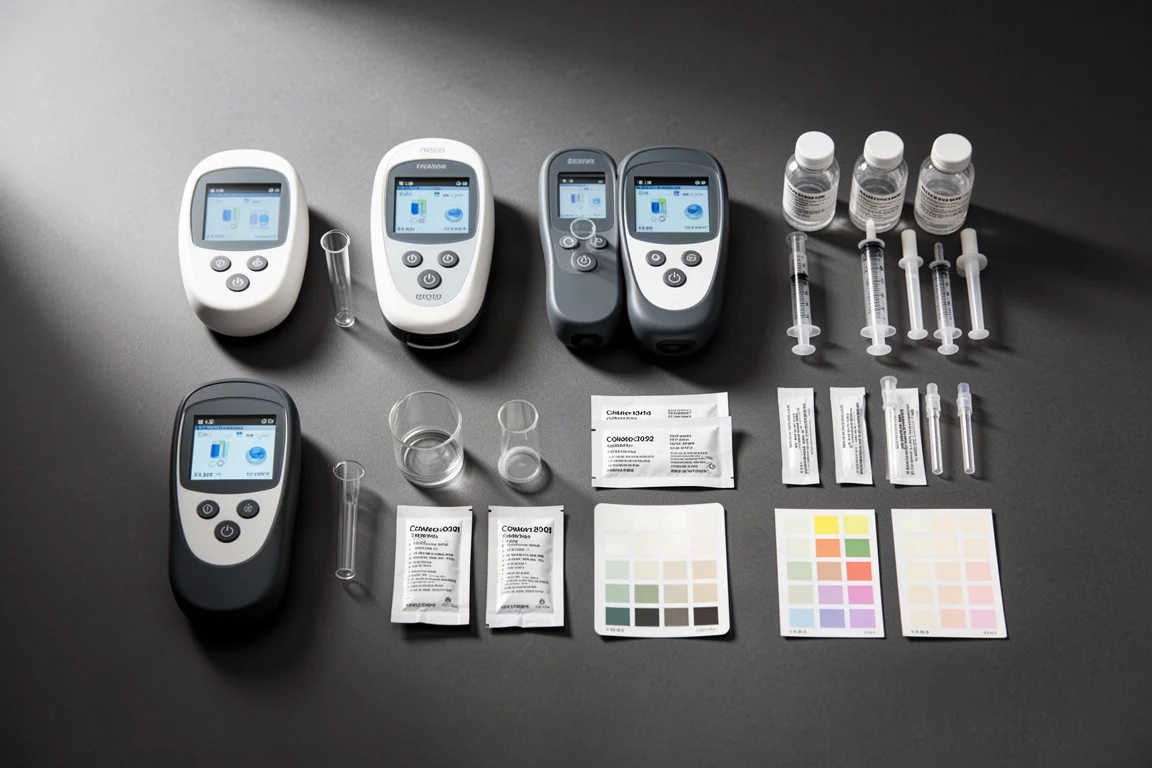
Reef keepers test five parameters more often than any others: alkalinity, calcium, magnesium, nitrate and phosphate. Those numbers drive almost every dosing decision, so the kits on the shelf matter more than most gear purchases. A test that takes ten minutes and demands careful colour matching tends to get skipped, and a skipped test means dosing blind.
The kits below were selected for the opposite reason. They are quick to run, consistent from one session to the next, and easy to read without second-guessing the result. Each one covers a single parameter, so a set can be built around the way a tank is actually maintained.
How These Test Kits Were Chosen
The criteria here are practical rather than prestigious. A kit has to be quick and easy to perform, capable of useful and accurate results, easy to read and interpret, reasonably priced for what it brings to the table, and workable for most reefers running a normal maintenance schedule.
Brand loyalty played no part in the selection, and neither did price alone. The most expensive kit on the market is not automatically the best one, and the cheapest kit rarely survives a year of weekly testing. What matters is whether a kit produces a number that can be trusted when it is time to dose.
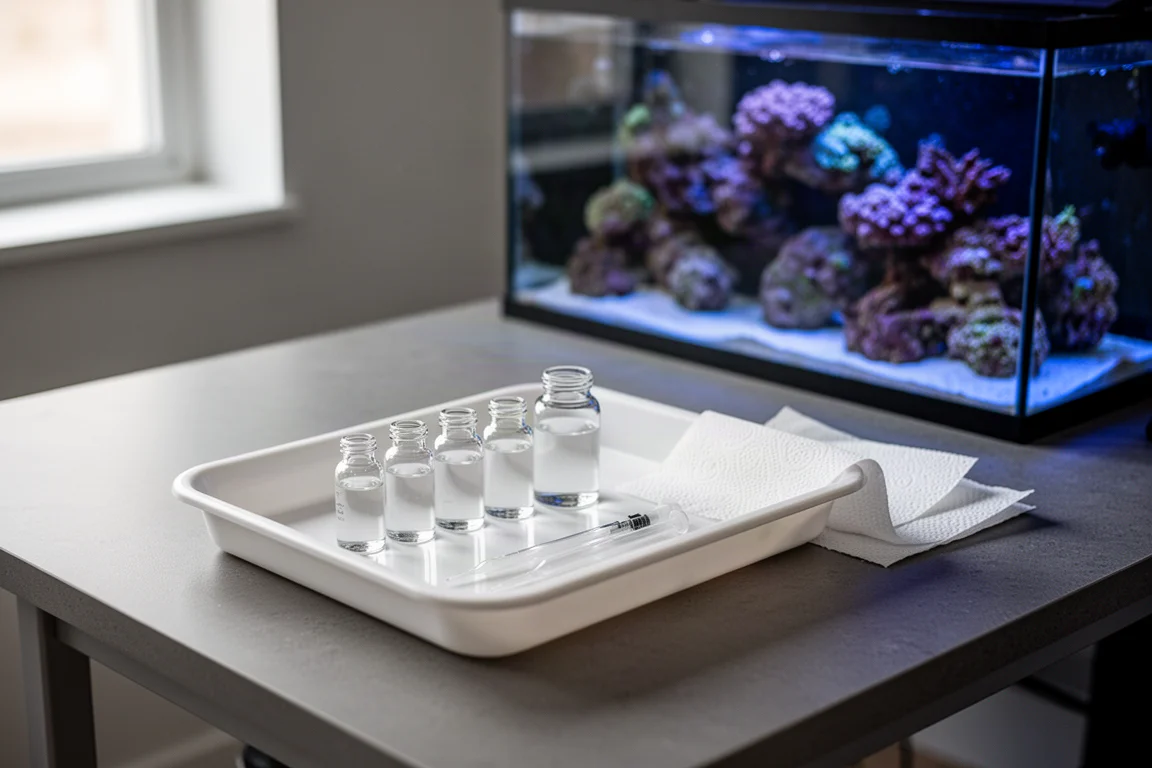
Together the picks cover the major three elements plus the two nutrients that cause the most trouble. They come from different makers, which is worth noting: this is a working set assembled for results, not a single-brand bundle, and mixing kits is entirely normal once the routine settles in.
Best Alkalinity Test: Hanna Alkalinity dKH Checker
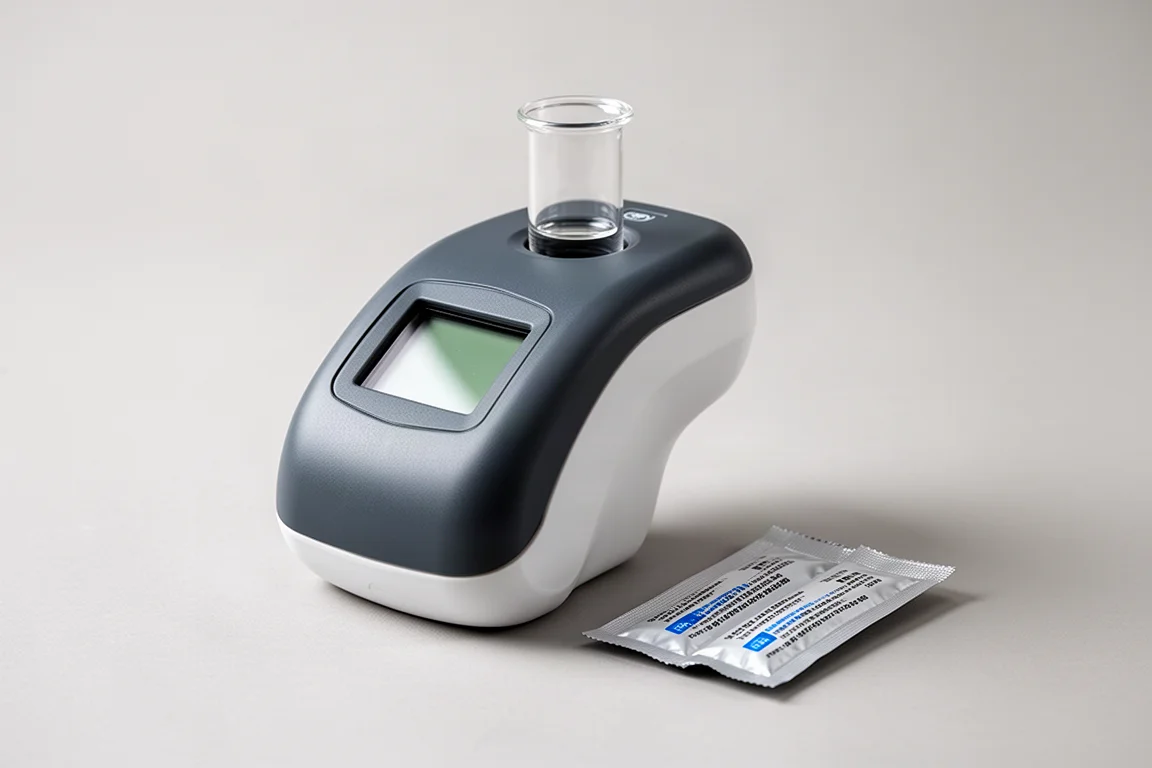
Alkalinity is the parameter that gives the clearest pulse on coral health and growth, which makes speed here genuinely valuable. This checker completes a test in as little as 30 seconds and returns a digital reading in dKH, so there is no counting drops and no judging a precise colour change by eye.
Repeatability is the real draw. Results do not shift with the skill level of the person running the test, which makes week-to-week comparisons far easier to trust. The kit ships with a water resistant card carrying visuals that guide the procedure, plus a hard case for the checker and its components.
It costs more upfront than a standard alkalinity kit. Considering how fast it runs and how consistent the readings are, that premium buys time back on every maintenance session.
Best Calcium Test: Red Sea Calcium Pro Test Kit
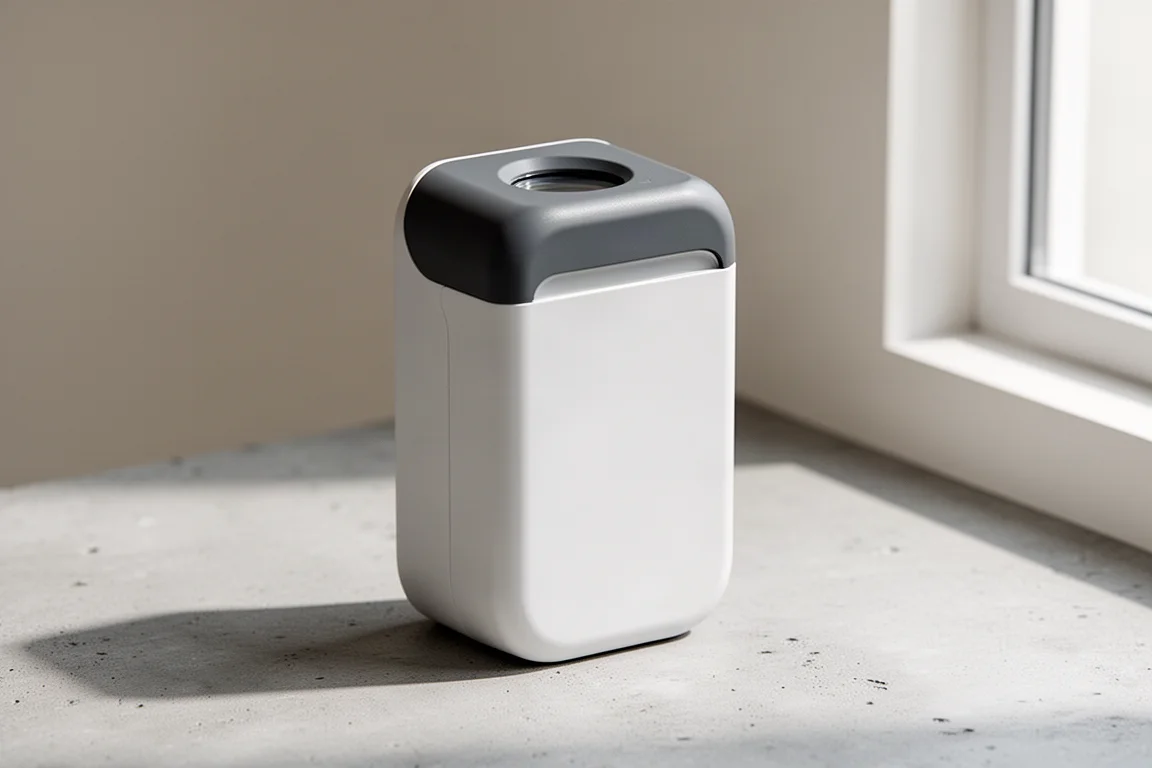
This calcium kit has been in continuous use for close to ten years, and the hardware explains the longevity. A titrator handles the shaking and drop-adding stages smoothly, even one-handed with the other hand holding a vial, and the endpoint colour change is clear enough to read with confidence rather than guesswork.
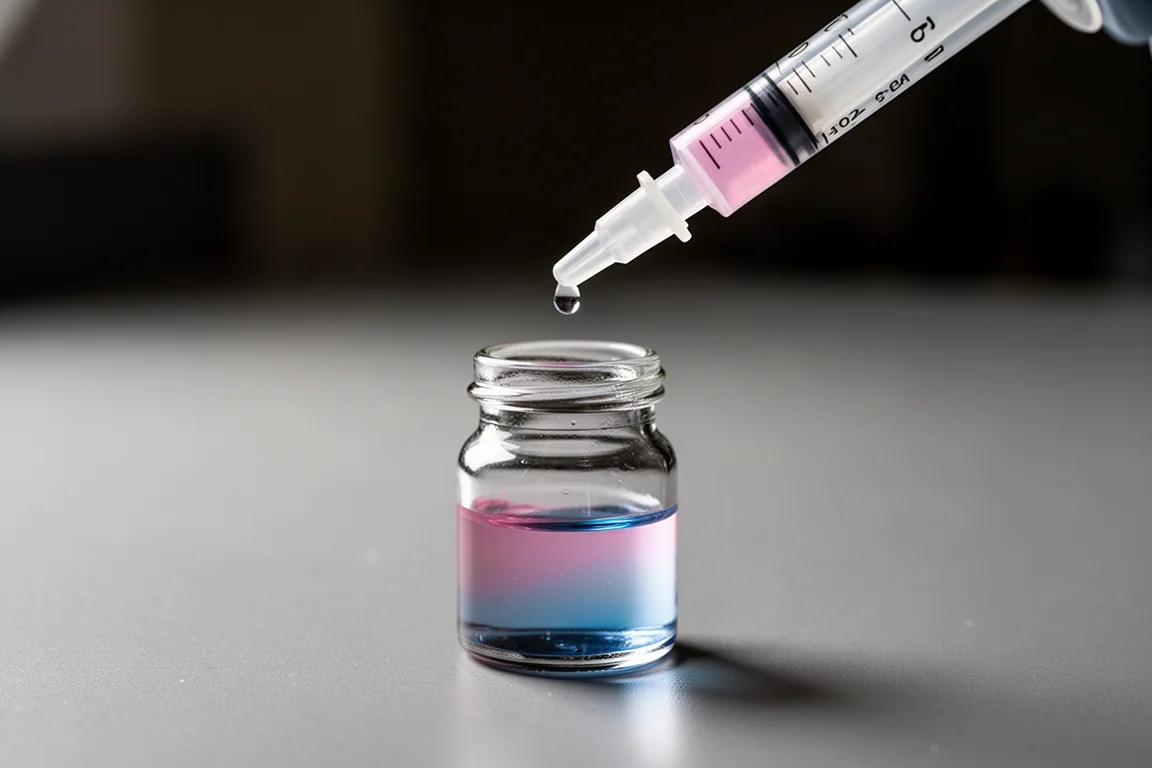
A water resistant card doubles as a visual guide, so the steps do not need to be memorised before a quick test. Everything stores in a hard cover case, and the kit feels well made in the hand.
The initial purchase costs a little more than a basic calcium kit. Replacement reagent refills ship without the extra tools and land around the price of an average calcium test kit, which softens that upfront number considerably over a few years of regular testing.
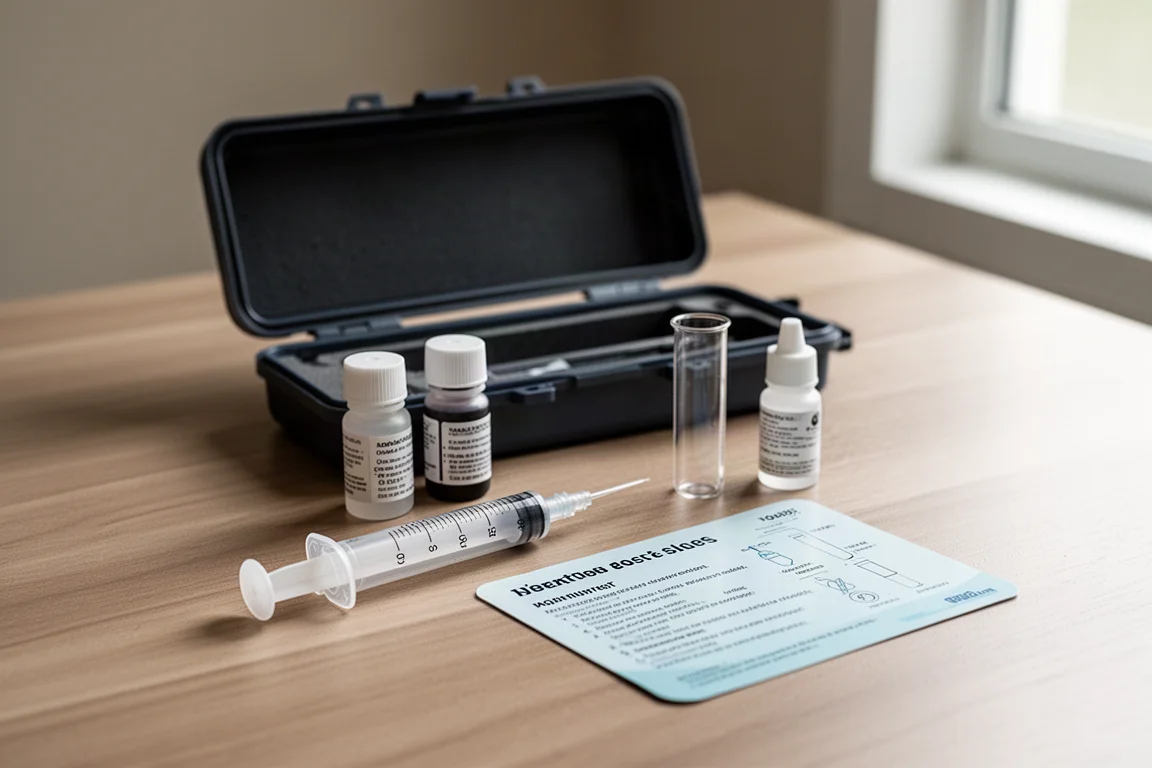
Best Magnesium Test: Aquaforest Test Pro Magnesium Kit
Magnesium kits are rarely exciting, but this one is a rare case where one of the most affordable options also performs near the top of the field. The procedure is straightforward enough to run consistently whether the hobby is new or long established.
A reference solution is included, which allows a test of your own technique before trusting a tank reading. That is a genuinely useful feature for anyone who wants confirmation that their numbers are real rather than a handling error.
A card with a visual walkthrough keeps the steps quick to follow, though reading the full instructions before the first run is worth the extra few minutes. There is no titrator in the box, and the titrator and test vial from the Red Sea calcium kit can be used alongside this one to make the drop-adding stage easier.
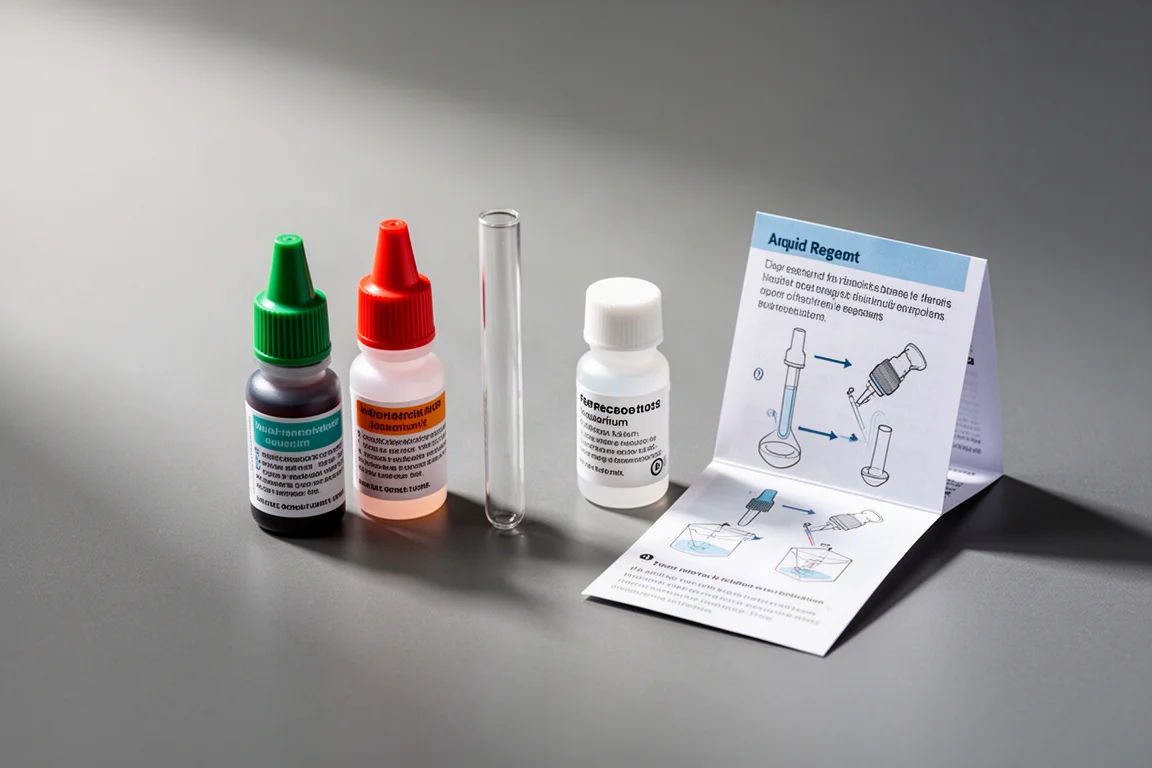
Best Phosphate Test: Hanna Phosphate Ultra Low Range PPM Checker
Phosphate is one of the two nutrients that cause the most trouble, and low range accuracy is where this checker earns its place. It uses a single reagent and takes only a few minutes, roughly half of which is hands free while the colour develops.
The readout spans 0.00 to 0.90 PPM, which comfortably covers the 0.04 to 0.06 PPM window most reefers aim for.
A hard case keeps cuvettes and reagents neat and tidy. It costs a bit more upfront than a regular phosphate test kit, but skipping colour matching in favour of a digital number removes most of the ambiguity, and the reagents are not expensive when it is time to restock.
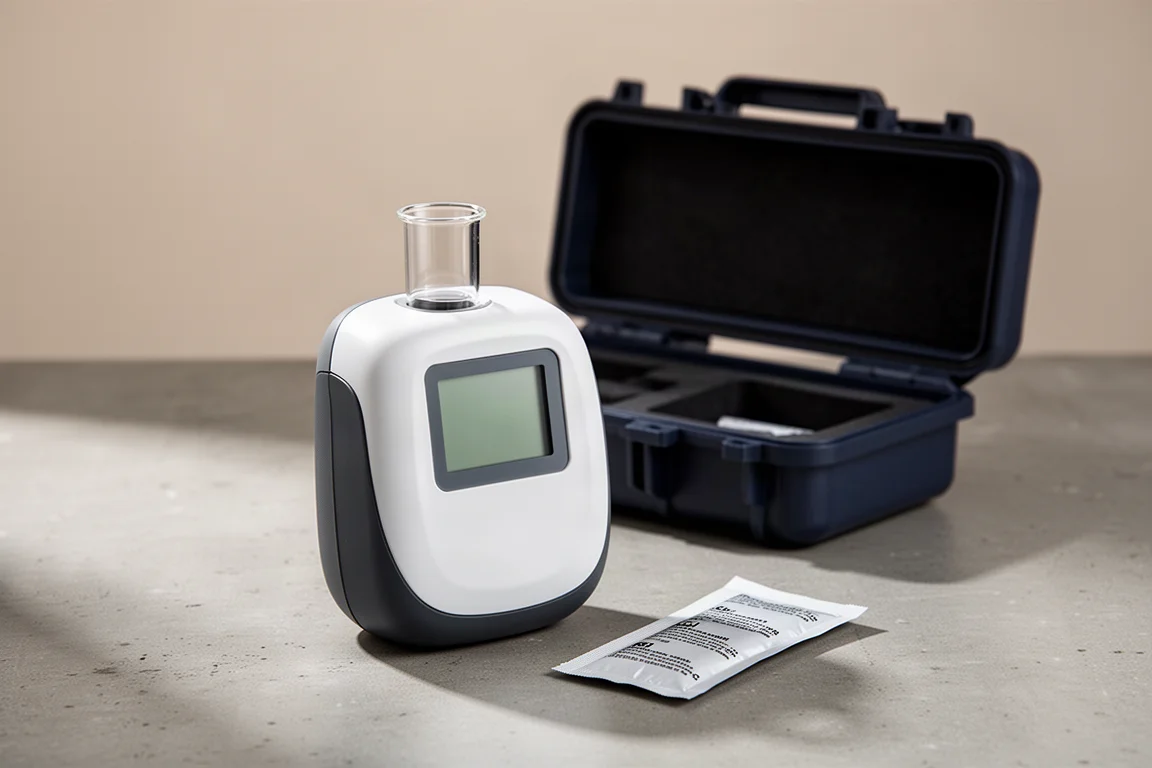
Best Nitrate Test: Hanna Nitrate High Range PPM Checker
The procedure is nearly identical to the phosphate checker: one reagent, minimal handling, and a digital result at the end. Development takes a little longer, but that stage is hands free, so the wait adds no real work to a testing session.
Readings go up to 75.0 PPM in 0.1 PPM increments, which covers the five to 20 PPM range most reefers target with room to spare.
The appeal is the same as the rest of the digital checkers: no colour card to interpret and no debate about whether two shades match. A hard case is included, and the whole routine folds into a few minutes of bench time.
A Familiar Alternative: NYOS Nitrate Test Kit
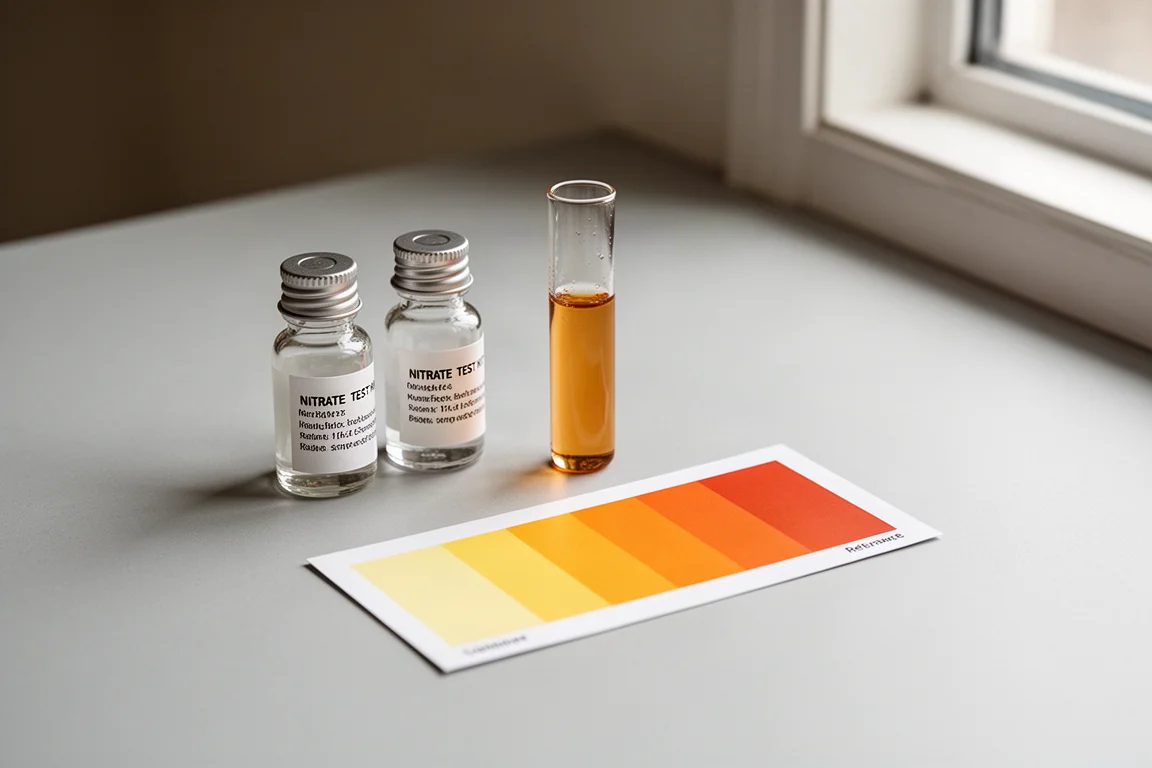
Not every reefer wants a battery-powered checker, and this remains a strong conventional nitrate kit. It is still a favourite standard nitrate test kit for anyone who prefers a straightforward reagent-and-colour procedure, and it was the go-to option before a digital nitrate checker made the round easier.
The trade-off is the usual one with colour matching. Reading the result takes more interpretation and a bit more care with lighting, while a digital checker simply displays a number. Both approaches produce usable results, and the conventional kit costs less.
For a keeper who tests nitrate weekly and does not mind matching shades against a reference card, this kit is a sensible, affordable pick that has earned its following over years of use.
Overall Buying Advice
Assembled as a set, these kits cover alkalinity, calcium, magnesium, nitrate and phosphate, which is the full group of parameters most tanks need on a regular schedule. Running all five takes under 15 minutes once the routine is familiar.
Alkalinity is the one worth testing more than once a week, and this checker finishes that test in under a minute, which makes a tighter schedule realistic. The other four sit comfortably in a weekly or biweekly rotation depending on how heavily the tank is stocked and dosed.
On cost, the digital checkers and the calcium kit ask for more upfront, while the magnesium kit is one of the most affordable options available. Replacement reagents are the ongoing expense to weigh, and refill pricing across the group is reasonable. If the budget only stretches to part of the set, start with alkalinity and the nutrient tests, then add calcium and magnesium.
Conclusion
The goal is a testing routine that actually gets done. Fast procedures, digital readouts where colour matching would slow things down, and results that stay consistent week to week all point in the same direction: less time at the bench and more time watching the tank. Any of these six kits works well on its own, and together they form a practical set for the parameters that matter most.
Further reading
Related Reviews
Reef Aquarium Testing
Best Reef Test Kits 2026: Magnesium, Calcium, Alkalinity, Phosphate and Nitrate Picks
A parameter-by-parameter guide to the reef test kits reef keepers buy most, from magnesium and calcium through to alkalinity, phosphate and nitrate, plus the stirrer that makes titration testing easier.
Reef Aquarium Testing
Hanna Phosphate Checkers Compared: Low Range vs Ultra Low Range vs Phosphorous
A practical guide to choosing between Hanna's low range, ultra low range phosphate, and ultra low range phosphorous checkers, plus eight testing habits that make results more consistent.

Backpacking Gear
Building a 10 lb Base Weight: An Ultralight Backpacking Gear List
A practical walkthrough of the ultralight pieces behind a 10 lb base weight, from a 765 g pack and a roomy one-person tent to a full camp chair and a dependable water filter.