Aquarium Substrate
Best Reef Tank Sand: Seven Substrates Compared for Flow, Sifters, and New Tanks
A practical comparison of seven reef tank substrates, covering grain size, flow behaviour, natural biology, and the hardscape fix that keeps a sandbed in place.
Introduction
Reef tank sand looks like a simple purchase and rarely behaves like one. Grain size decides whether a sandbed stays where you put it, whether burrowing fish and inverts can actually use it, and how the bottom of the tank reads once the lights come on. Choose badly and you spend the next few months pushing substrate back into place and wondering why the water never quite clears.
The options below cover the situations most reef keepers run into: a brand new tank that needs a head start, a high flow system that keeps pushing sand into one corner, a setup built around sand sifting livestock, and a hardscape piece that stops the problem at the glass rather than chasing it around the tank.
How to Choose the Right Reef Sand for Your Tank
Three things matter more than anything printed on the bag: grain size, how the sand behaves under flow, and how much real biology it carries.
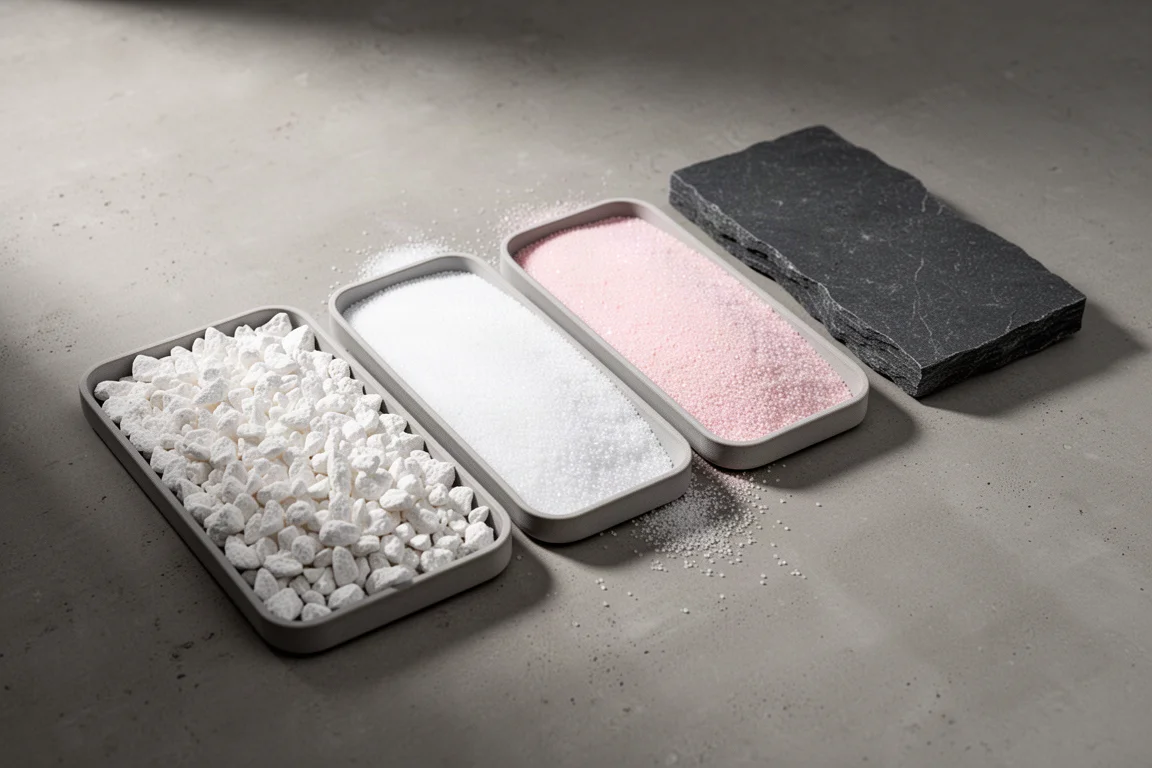
Grain size is the master variable. Fine grades such as oolite, which is roughly sugar sized and sometimes finer, are light and easy for sand sifting animals to filter and move. In the wild, sand sifting species are found almost entirely over very fine oolite or silty substrates, so a fine grade is the closest match to their natural habitat. Coarser grades hold their position better, but they collect more detritus and tend to take on a purple tone over time, because the grains do not roll over the way finer sand does and sand sifting animals cannot turn them.
Flow behaviour follows directly from that. The heavier the grain, the less likely it is to be lifted by a return pump. Very fine sand is the most likely to migrate, and even a mid-weight sand can be pushed around in a high flow system. Almost everyone prefers the look of a finer grain, which is exactly why most tanks end up on a compromise.
Biology is the third variable. Dry sand is inert. Most wet live sand on the market has to be sifted and dried to hit a target grain size, then re-wetted, and the water carries only a limited bacterial population rather than bacteria living on the grains themselves. A sand that is harvested and left ungraded keeps far more of the microbial community it had in the ocean.
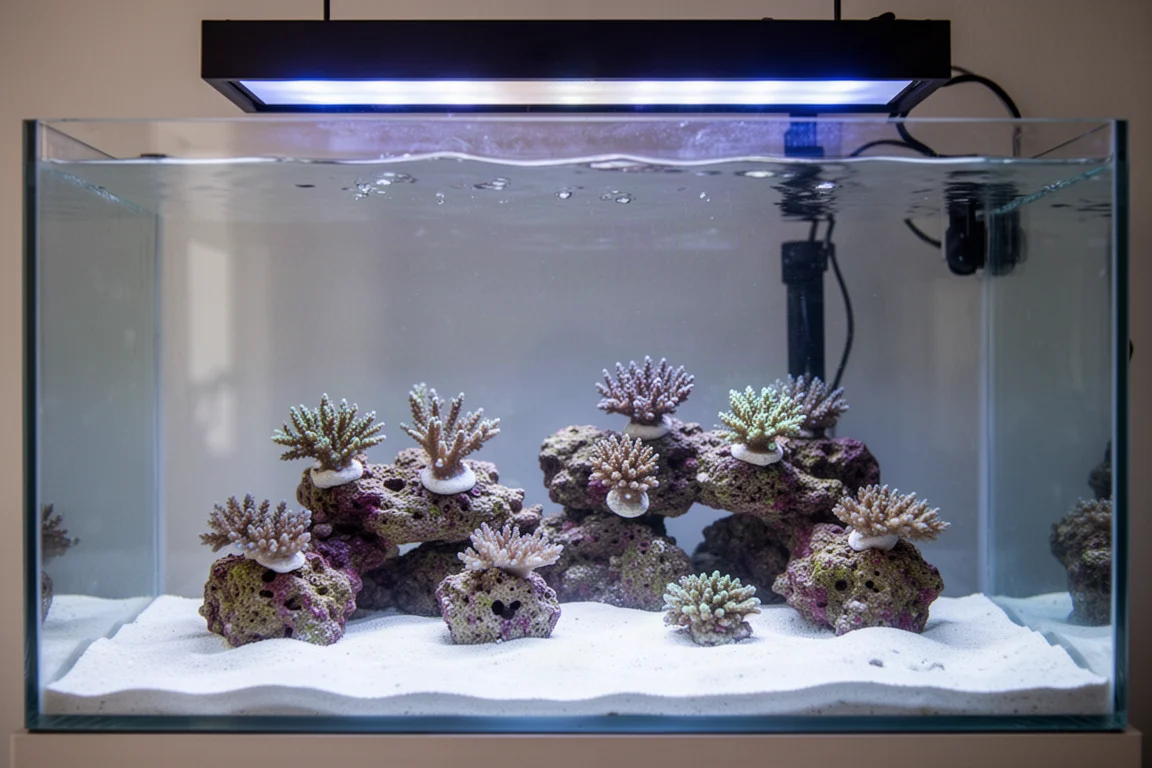
Appearance still counts. A finer grain reads more naturally under reef lighting, while a heavier grain looks slightly more granular without tipping into gravel. The right answer for your tank depends on how much flow you run, what lives on the bed, and how much maintenance you are happy to do.
Best Overall: CaribSea Ocean Direct
Ocean Direct is the sand to reach for when you are starting a new tank. It is collected from the ocean and is not graded or sifted the way most substrates are, and no bacteria are added afterwards. The claim is a natural biome of the sea, and extended testing of the sand’s bacterial profile has matched that of long-established reef tanks, which matters a great deal when you are building a system up from dry rock.
For a new setup, that head start is the whole point. A sandbed carrying a settled microbial community helps the tank move through its early stages, and it does so without any additive being introduced at the bagging stage. It is not the most commonly chosen sand on the shelf, but on the evidence it deserves to be considered the default for a brand new build.
Most Popular Pick: CaribSea Special Grade
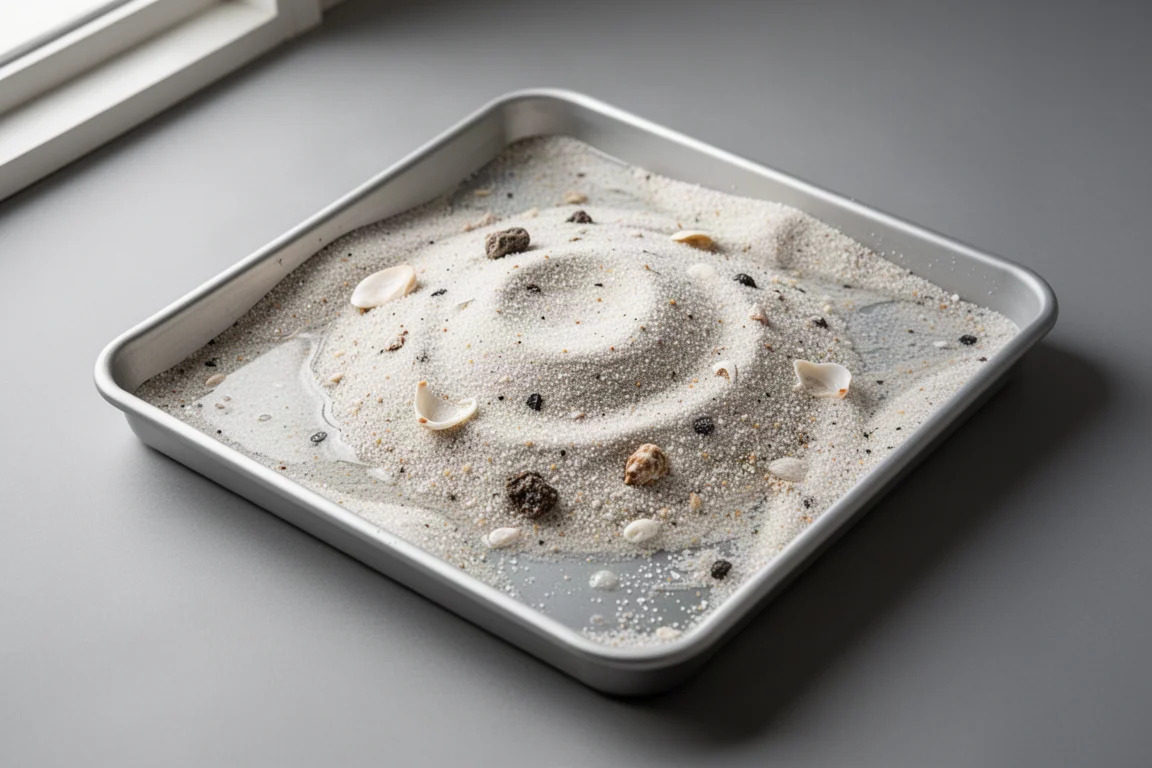
Special Grade is the most widely chosen reef sand, and granule size is the reason. The grains are heavy enough to stay in place under normal flow while still reading as sand rather than gravel, which makes it the sensible baseline for a high flow tank. If your flow is genuinely extreme, stepping up one grade coarser helps, but that coarser material collects more detritus and discolours faster because sand sifting animals cannot work it over.
It is worth being honest about the limits. Even Special Grade can be moved in a very high flow system, just less dramatically than a fine sand. The trade-off sits on a sliding scale between staying put and looking natural, and Special Grade is the point on that scale most reef keepers settle on.
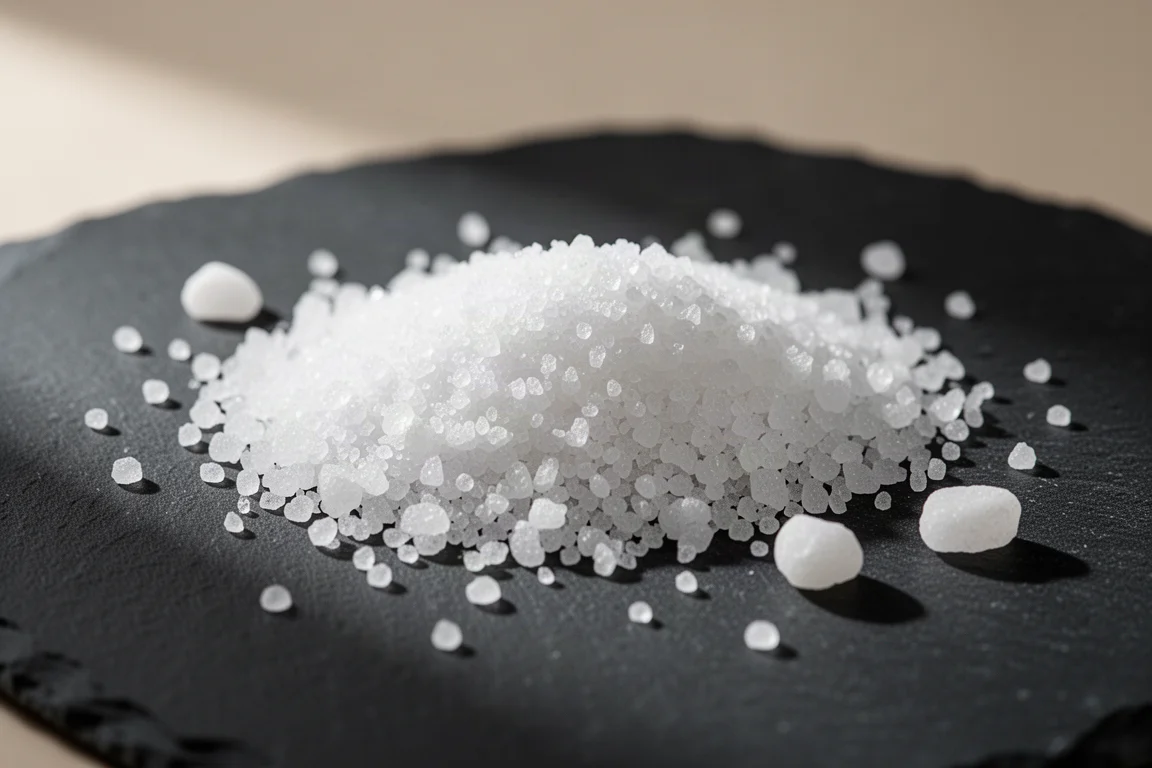
If you want a heavier bed without losing the look of sand, this is the grade that gets you closest to both, and it pairs well with the flow-management approach covered further down.
Best for Sand Sifters: CaribSea Oolite
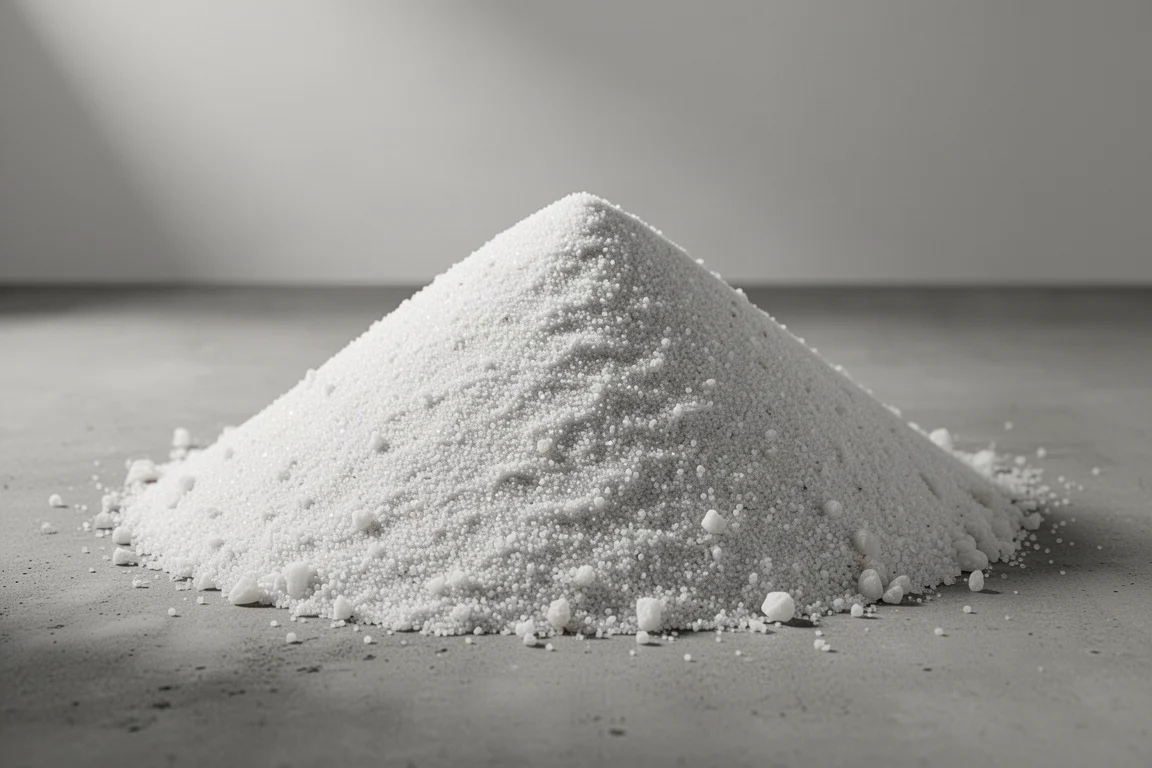
Oolite is a super fine grade, roughly sugar sized and sometimes a little finer. That is precisely what sand sifting fish and inverts need: grains light enough to pass through or move aside while they work the bed. Put a sand sifter on a coarse substrate and it will still dig, but it is not the environment the animal is built for, and the results are rarely good.
Oolite is available as a dry sand on its own, or as a grade within the Ocean Direct line if you want the fine grain and the ocean-harvested biology in the same bag. If you keep even one species that relies on fine substrate, this is the grade to build the bed around.
Fine-Grade Alternative: CaribSea Ocean Direct Oolite
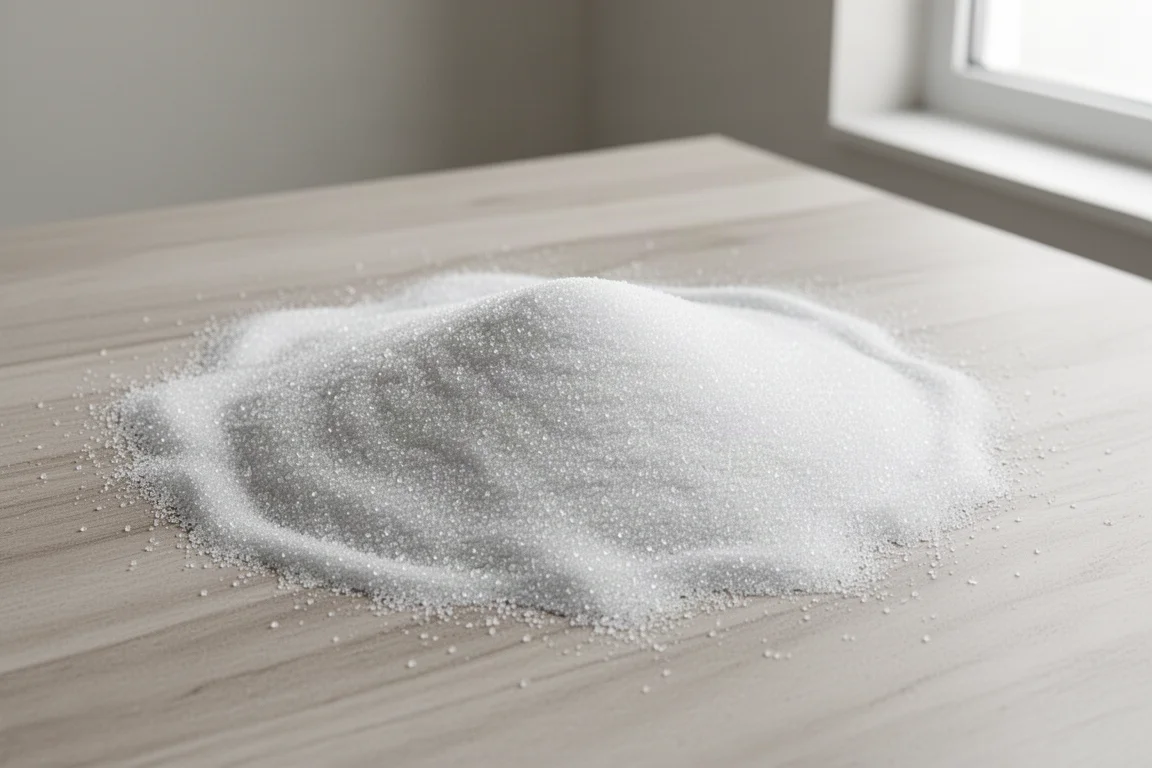
Ocean Direct Oolite gives you the super fine grain size of a dedicated oolite sand with the wet, ungraded character of the Ocean Direct line. In practice that means the grain size sand sifters need and the microbial community of an ocean-harvested substrate in one product, which is a genuinely useful combination when you are setting up a tank around burrowing livestock.
The trade-off is the same one that applies to every fine sand. These are the grains most likely to be picked up by pumps, so plan your flow and your rockwork with that in mind rather than fighting it afterwards.
A Natural Blend: CaribSea Ocean Direct Original Grade
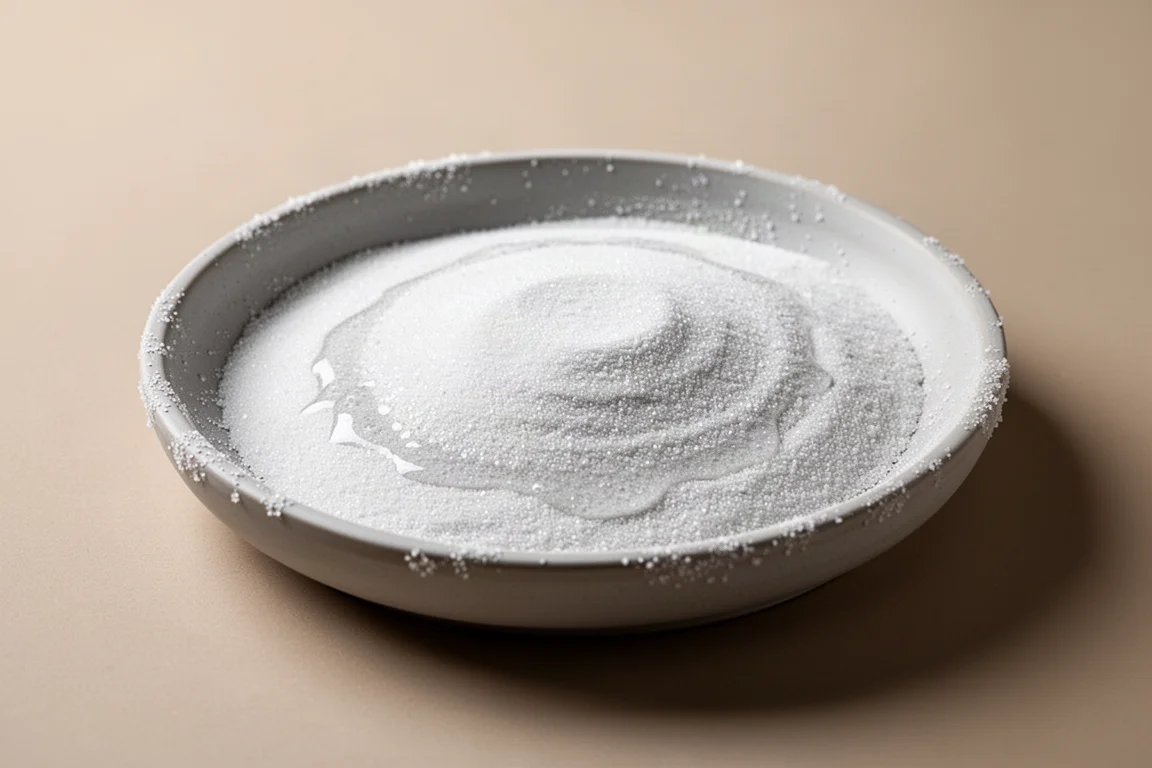
Because it is never dried, Ocean Direct Original Grade arrives as a mix of grain sizes rather than a single sorted grade. It contains a proportion of oolite and a proportion of special grade, so it lands between the two in both texture and behaviour: fine enough to look natural under reef lighting, heavy enough to hold its position better than a straight fine sand.
That makes it a practical choice if you want a mixed texture without buying two bags and blending them yourself, and it keeps the ocean-harvested biology of the Ocean Direct line intact.
CaribSea Fiji Pink: What to Know Before Buying
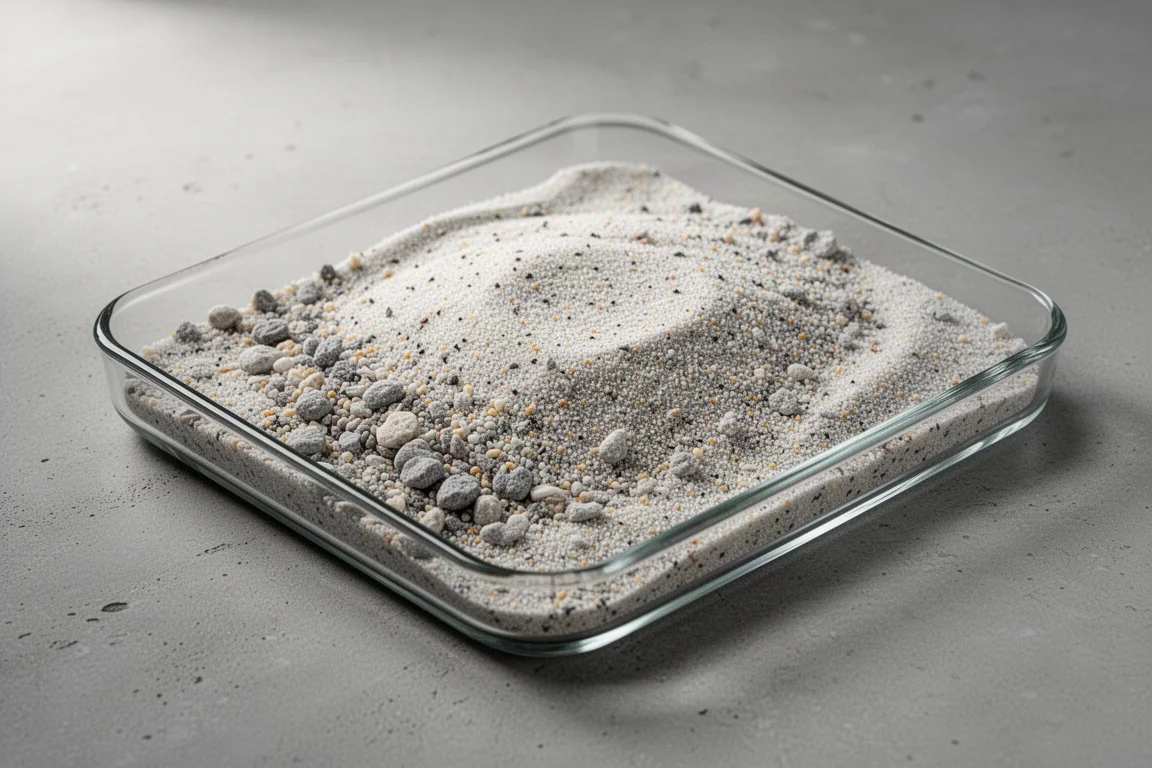
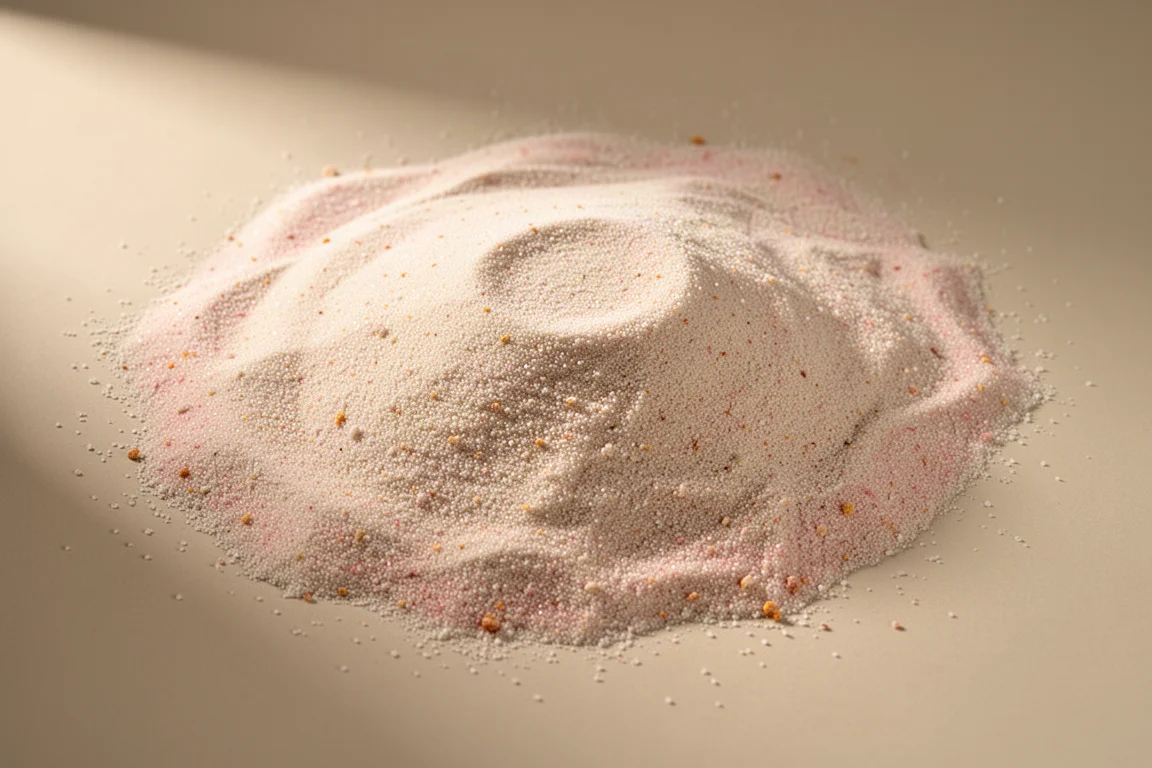
Fiji Pink was, for a long time, one of the most popular reef sands, largely on the strength of its name and the small pink quartz particles it contains. Those particles are not visible without close magnification, so the appearance most buyers expect is not quite what arrives. The grain itself is also finer than Special Grade, which means it moves easily under flow and blows around more than its popularity suggests.
If you like the look, go in with realistic expectations: moderate your flow, expect to redistribute the bed periodically, and treat the sand as something that will need occasional maintenance rather than something that will hold a sculpted shape forever.
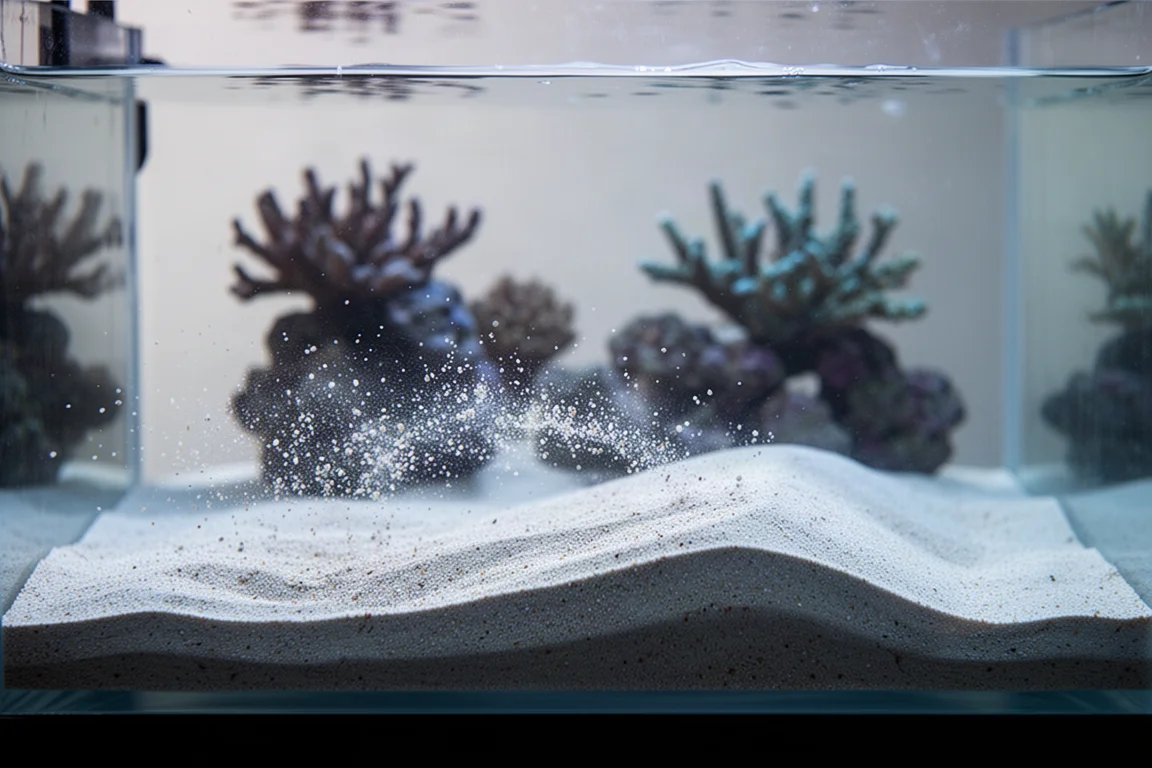
The broader lesson is that a fine grain and a high flow system pull in opposite directions, and no name or colour changes that. Match the grade to your pumps, not to the bag.
Keeping Sand in Place: MarcoRocks Foundation Rock
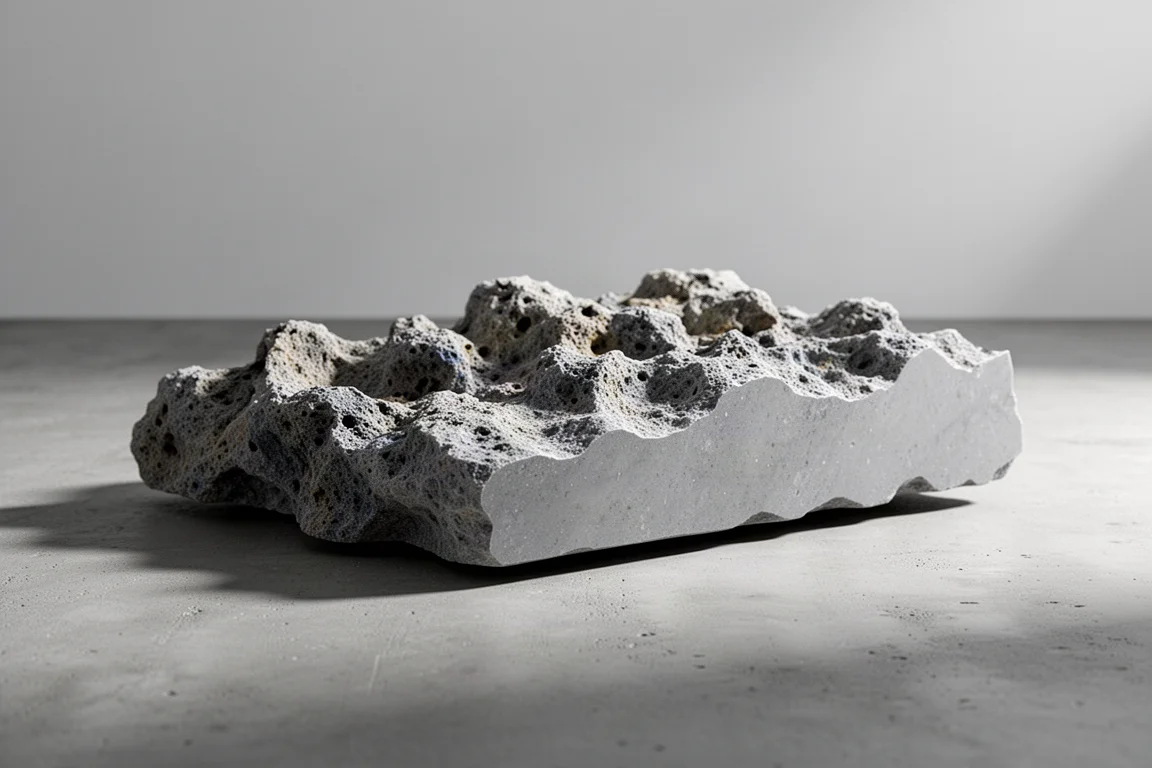
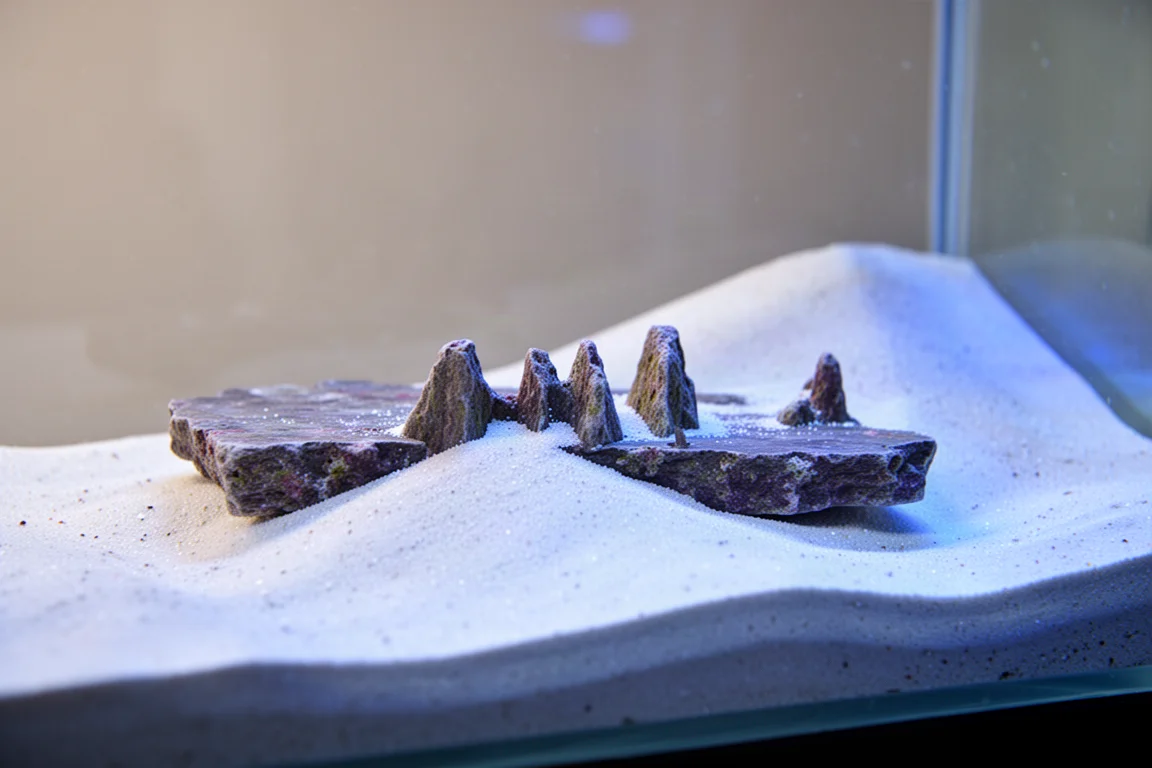
A flat-bottomed rock solves a problem no grain size can fix: water driving straight down the glass and lifting the bed. MarcoRocks Foundation Rock is machined flat so it sits flush against the bottom of the tank. Placed at the edge of the sandbed alongside the glass, it takes the impact of the current before the water reaches the sand, which stops the recurring dunes that build up where return pumps hit the front pane.
It can be buried almost completely, with sand piled up to the tips, or left partly exposed as a low island for zoanthids, mushrooms or Xenia that you would rather not have spreading across your main rockwork. Either way it is a small addition that changes how much of the bed stays put.
Mixing Sands and Managing Flow
Mixing works best when the two components are close in weight. Special Grade combined with a coarser material such as crushed coral fills the gaps and helps the grains lock together, and some separation will occur over time, so cleaning the sandbed and remixing it is simply part of the routine. Blending a very fine sand into a coarse one is far less successful, because flow sorts the grains out and leaves the heavy material behind regardless of how thoroughly you mix it.
A more practical route is to let the flow show you where the problems are. Run the tank, find the dead spots where sand is stripped away, and fill only those areas with crushed coral. It will look slightly different from the surrounding sand, but it will not look like a bare bottom, and you avoid treating the whole bed when only two or three patches actually need help.
Which Reef Sand Should You Choose?
For a brand new tank, Ocean Direct is the strongest starting point, because the natural biome gives the system something dry rock cannot provide. For most established tanks and anything running meaningful flow, Special Grade remains the safe default and the grade most people will be happiest with long term.
If sand sifting livestock are the priority, build the bed from Oolite, or from Ocean Direct Oolite if you want the fine grain and the ocean-harvested biology together. If you want a natural mixed texture without blending bags, Ocean Direct Original Grade sits neatly between the two extremes. Fiji Pink is a look-first choice, and it needs a calmer flow plan to behave well.
Whichever grade you pick, add a flat foundation rock at the glass before the sand settles in. It is the least expensive way to stop a sandbed from migrating, and it lets you run more flow than the substrate would otherwise allow.
Conclusion
Reef sand is a long-term decision made in a few minutes at the checkout, so it is worth matching the grade to the tank rather than to the label. Choose for your flow first, then for the livestock that will live on the bed, then for the biology you want to start with. Get those three in the right order and the substrate stops being a maintenance problem and starts being part of the system.
Further reading
Related Reviews
Aquarium Substrate
Best Aquarium Sand for Reef Tanks: Four Options Compared
A practical comparison of four reef tank sands, from the most popular mid-grain pick to the finest oolite, plus depth guidance and materials worth skipping.
Aquarium Substrate
CaribSea Aquarium Sand Compared: Dry Grades and Packaged Alternatives
How CaribSea's dry sand grades compare with each other and with the brand's packaged options, plus the rinsing and additive details to settle before you fill the tank.
Aquarium Substrate
CaribSea Arag-Alive Special Grade Review: Why Reef Keepers Keep Choosing It
A practical look at the most widely chosen Arag-Alive grade, why its medium grain holds up in high flow, and how to set it up without the usual mess.