Rain Gear
Best Rain Jackets for Backpacking: Budget, Cold Weather, and All-Purpose Picks
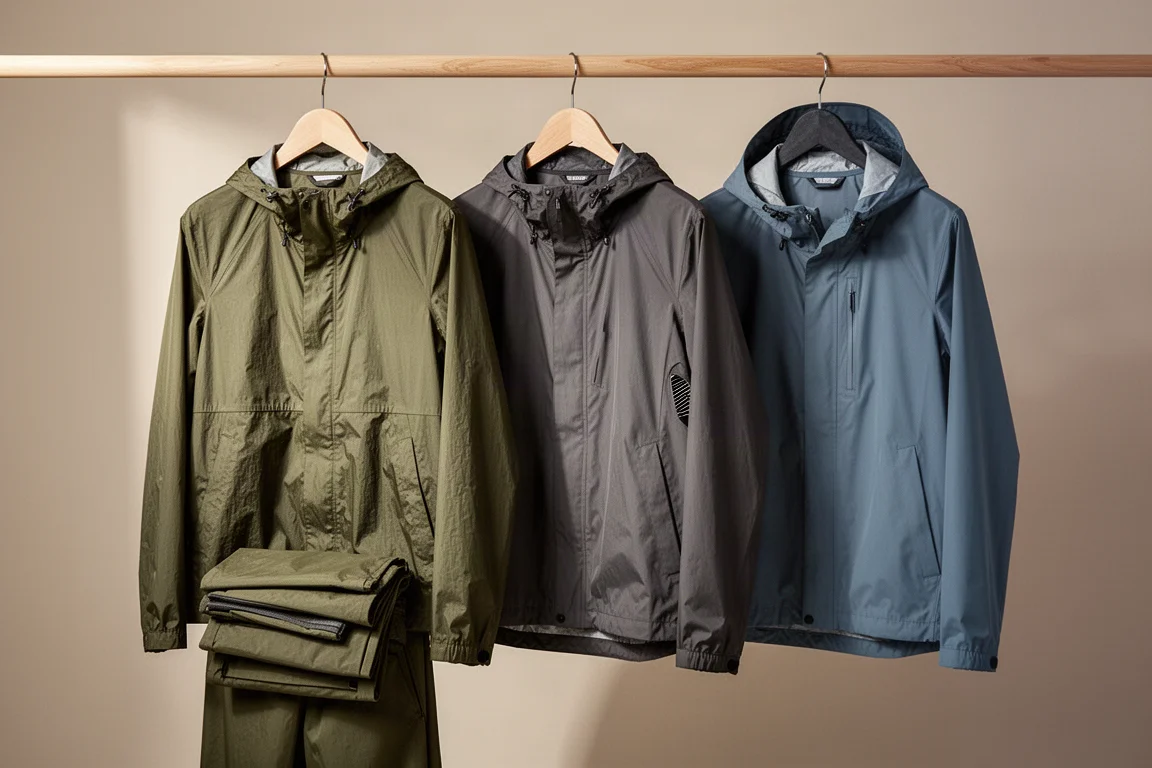
Three lightweight rain jackets for backpacking, covering a twenty dollar two-piece suit, a windproof shell for cold conditions, and a soft all-purpose jacket.
Introduction
A rain jacket is one of the few pieces of gear that can decide whether a long day outside stays enjoyable. It needs to keep water out, pack down small, and be comfortable enough that you actually put it on when the sky turns grey. The three jackets below sit at very different price points and solve different problems: a budget suit that costs about as much as a takeout meal, a windproof shell built for cold and wet weather, and a lightweight all-purpose jacket for the trail and everyday use.

Because these jackets are carried far more often than they are worn, weight and packed size matter as much as waterproofing. Durability, breathability, and hood adjustment are the details that separate them in practice, and each of the three picks below leans toward a different answer.
How These Rain Jackets Compare
All three options are light by hiking standards, but they prioritize different things.
Price is the widest gap. The budget suit costs about twenty dollars, the windproof shell runs about one hundred dollars before optional seam sealing, and the all-purpose jacket costs one hundred and ninety dollars. The cheapest option is also the least durable, which is worth keeping in mind if you hike through overgrown or brushy terrain.
Breathability is the second dividing line. Two of these jackets use non-breathable or lightly breathable fabrics and rely on pit zips and layering to manage heat, while the third is built as a soft, sleek shell that works as well in town as it does on the trail.
Weight lands between 4.6 ounces for a medium all-purpose jacket and around 12 ounces for a full two-piece suit. None of these options will weigh down a pack.
Best Budget Option: Frogg Toggs Ultralight Rain Suit
The Frogg Toggs Ultralight Rain Suit is the least expensive way to stay dry. It is a two-piece setup, so the jacket and pants come together as a combo, and the whole thing costs about twenty dollars. It is widely available at local outfitters, at Walmart, and online.
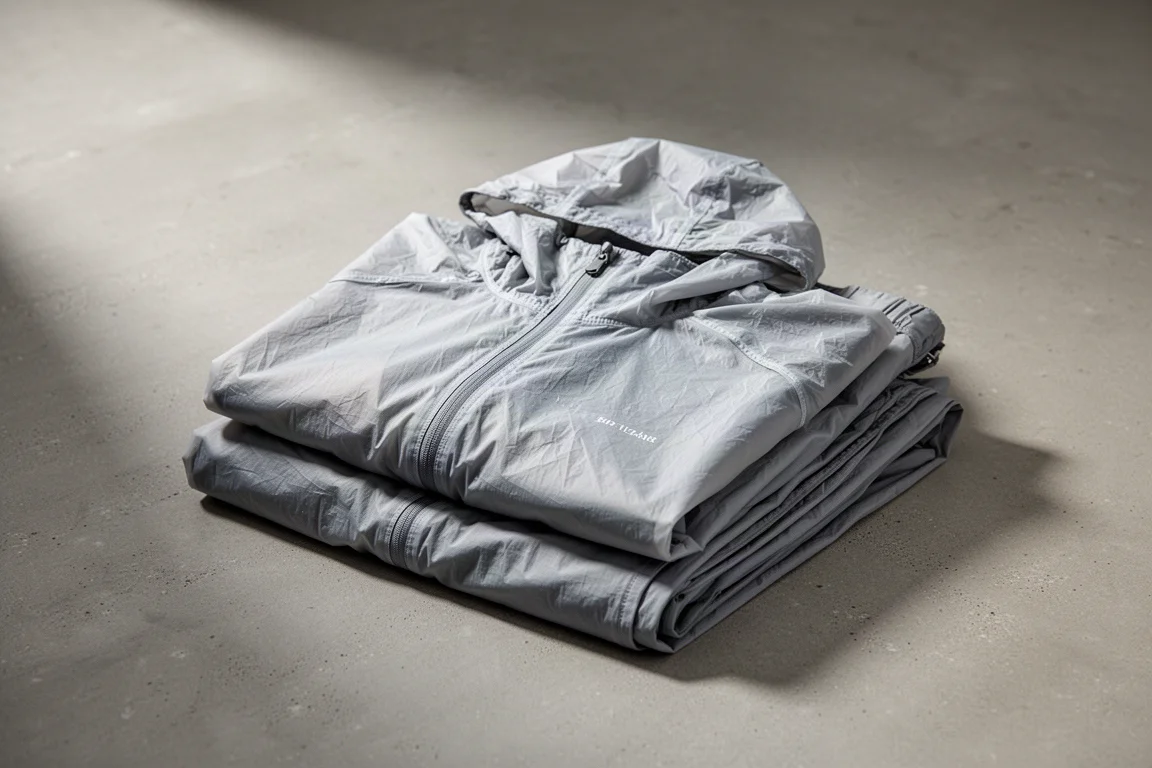
The full suit weighs roughly 12 ounces depending on size, which makes it a genuinely light option for the money. It is also a proven one: this suit was used on a 2015 Appalachian Trail thru-hike, where it performed well on a well-maintained path. Across a 2,200 mile trek, two of these suits covered the entire rain gear needs of the trip for a total of about forty dollars.
Durability is the main compromise. The fabric tears easily, so it is a poor match for routes with heavy briars or brush. The saving grace is that field repairs are simple: a piece of duct tape patches a tear well enough to keep going, so it is worth carrying a little. The other trade-off is appearance. It is a frumpy piece of gear with limited color options, and it is not the jacket you reach for when style matters.
Best for Cold and Windy Weather: Anti-Gravity Gear Ultralight Rain Jacket
The Anti-Gravity Gear Ultralight Rain Jacket feels sturdier and more durable than many lightweight shells. It blocks wind effectively and works well as an outer layer in colder temperatures, when staying warm is the priority.
Pit zips are a practical highlight. They help regulate temperature on the move, and they also make it easier to reach pockets underneath the jacket without unzipping the whole thing while wearing a pack. The hood is adjustable, and the jacket weighs between 7.5 and 8.2 ounces depending on size.
Pricing is straightforward: about one hundred dollars for the jacket, plus twenty dollars if you want the manufacturer’s seam sealing service, or you can seam seal it yourself at home. That puts a fully prepared jacket at around one hundred and twenty dollars. Color options are limited but useful. You can choose something that blends in quietly, or a bright orange that stands out clearly for visibility, which matters if you are backpacking during hunting season or want to be easy to spot in an emergency.
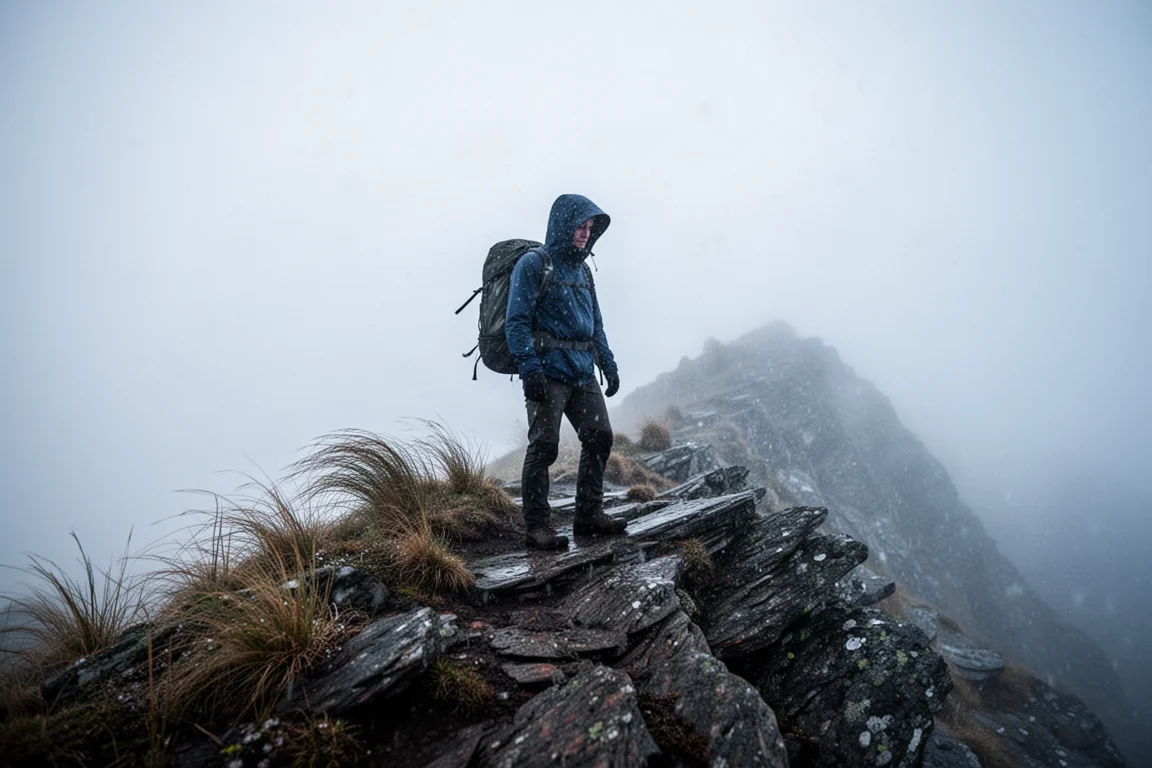
The main drawback is breathability. The material is not breathable, so it is not the jacket to wear in warm weather or as everyday outerwear, even with the pit zips open. That same density is what makes it a strong choice for heavy rain and cold conditions, so the limitation and the strength come from the same place.
Best All-Purpose Pick: Enlightened Equipment Visp Rain Jacket
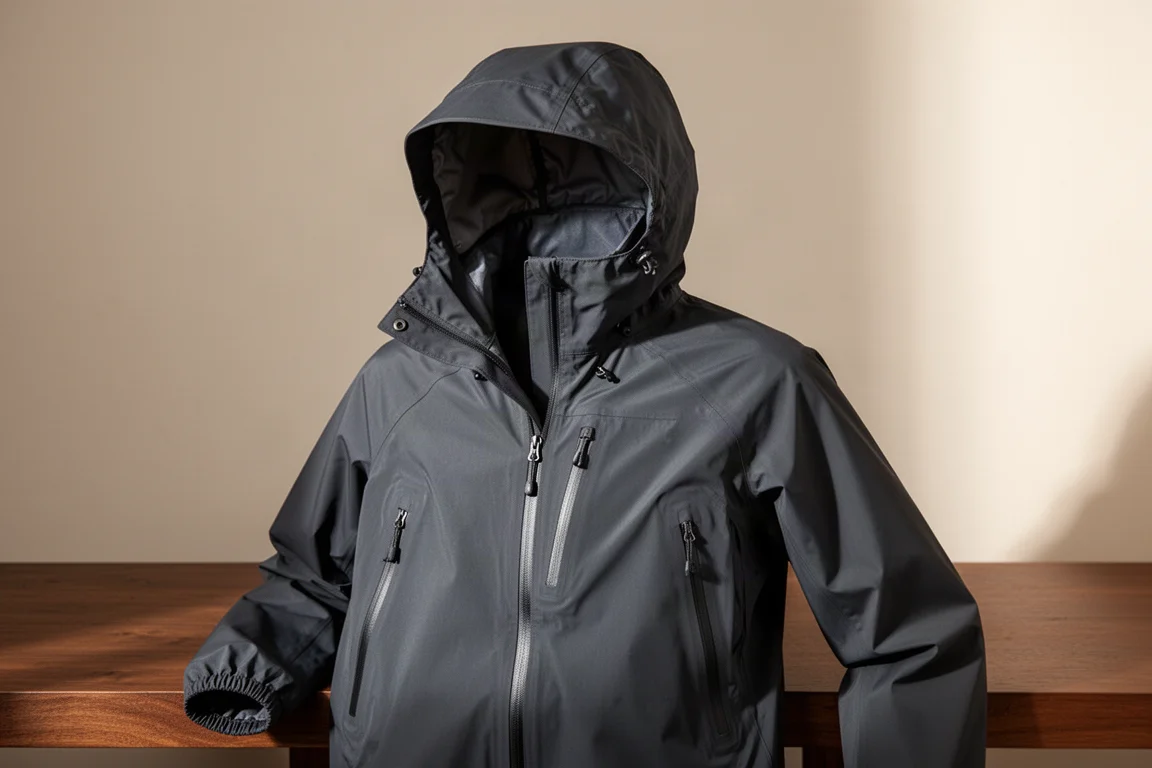
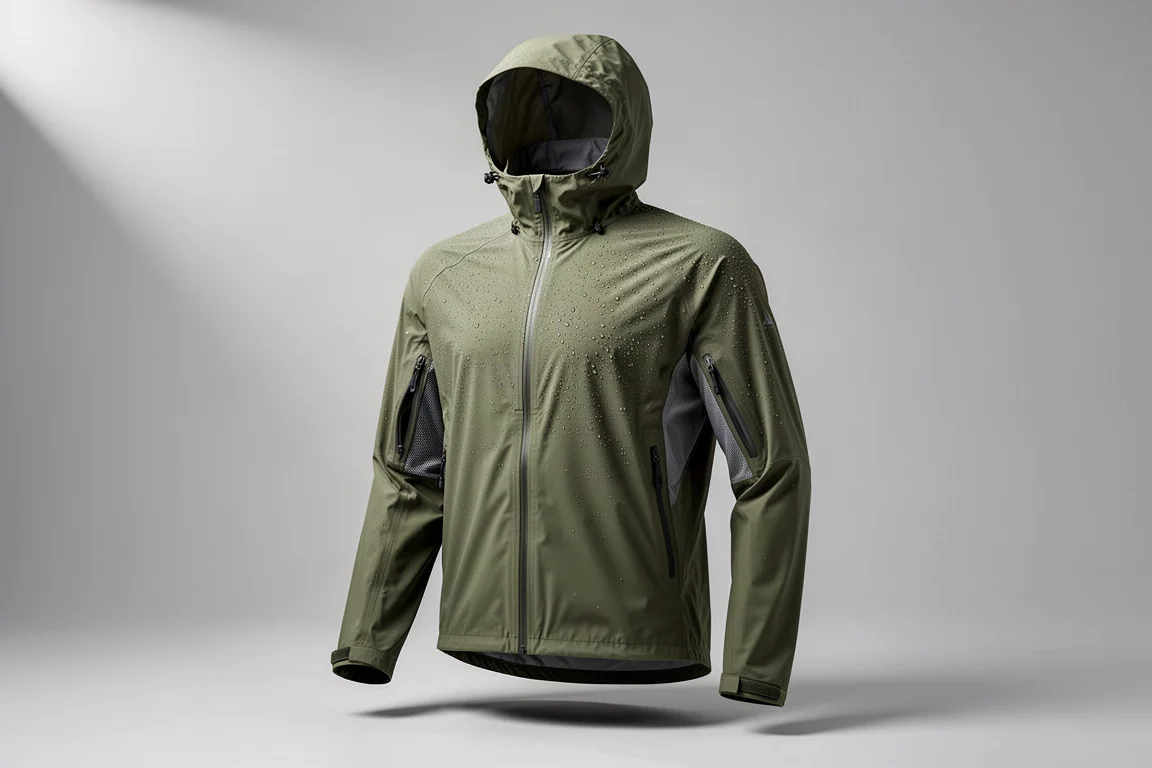
The Enlightened Equipment Visp Rain Jacket is the most versatile of the three. It feels soft, has a sleek design, and is light enough to disappear into a pack. A medium weighs 4.6 ounces, and a men’s version is available alongside the women’s version.
The details are thoughtful. The hood is two-way adjustable so it can be fitted properly, and velcro at the wrists lets you choose between a loose fit and a snug one that keeps rain out. The seams come already seam taped with actual seam-sealing tape rather than a gel sealer, so there is no extra preparation before the first trip.
Pit zips are the one decision point. The women’s Visp does not come with them as standard. You can order a custom version with pit zips, but that takes about eight to ten weeks, and lead times can fluctuate. In-stock versions ship in about one to two days but arrive without pit zips.
The trade-off is price. At one hundred and ninety dollars it costs more than the other two options here, which is the main reason to think carefully before choosing it over the budget suit or the windproof shell.
Matching a Rain Jacket to Your Trip
The right jacket depends less on the weather forecast than on the trip itself. Long-distance hikes on maintained trails reward low weight and low cost, and a jacket that can be patched with tape is not a liability when the trail is clear and the brush is light. Routes with dense growth, rough rock, or heavy pack abrasion call for something sturdier that will not tear at the first contact.
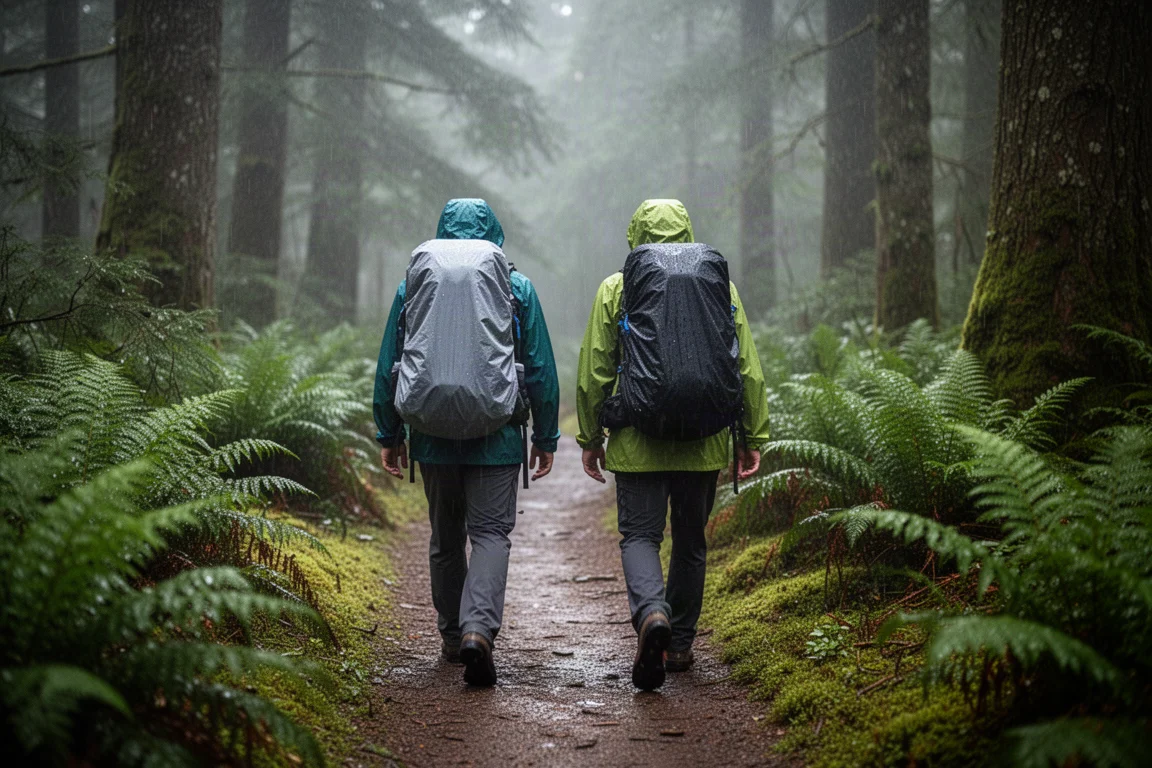
Cold and windy conditions shift the priority to wind blocking and warmth, which is where a denser shell with pit zips earns its place. If the jacket needs to work on the trail and around town, a softer, lighter shell with a well-fitted hood is easier to live with day to day.
Budget matters too, and it is worth remembering that a twenty dollar suit, or a forty dollar rotation of two suits, can cover an entire long thru-hike. Spending more buys durability, breathability, or a cleaner look, not basic waterproofing.
Layering and Fit Notes
Fit and layering decide how well any of these jackets perform. A shell should be roomy enough to wear over a midlayer without compressing it, and the hood should adjust down far enough to stay put in wind. Wrist closures matter more than they seem, since a loose cuff lets water run up the sleeve.
Pit zips are the most useful ventilation feature in this group, both for cooling down on a climb and for reaching pockets without taking off a pack. If you plan to wear a jacket over a fleece in cold rain, size accordingly rather than relying on the fabric to stretch. A suit style setup has one extra advantage here: the pants add protection that a jacket alone cannot provide, which is worth considering if you hike in sustained rain.
Durability, Care, and Field Repairs
Ultralight rain gear trades abrasion resistance for weight, and all three jackets reflect that balance in different ways. The budget suit is the most fragile and the easiest to repair, since tape holds well on its fabric. The windproof shell is the sturdiest of the three. The all-purpose jacket sits in between, with taped seams that remove one common failure point before it ever becomes a problem.
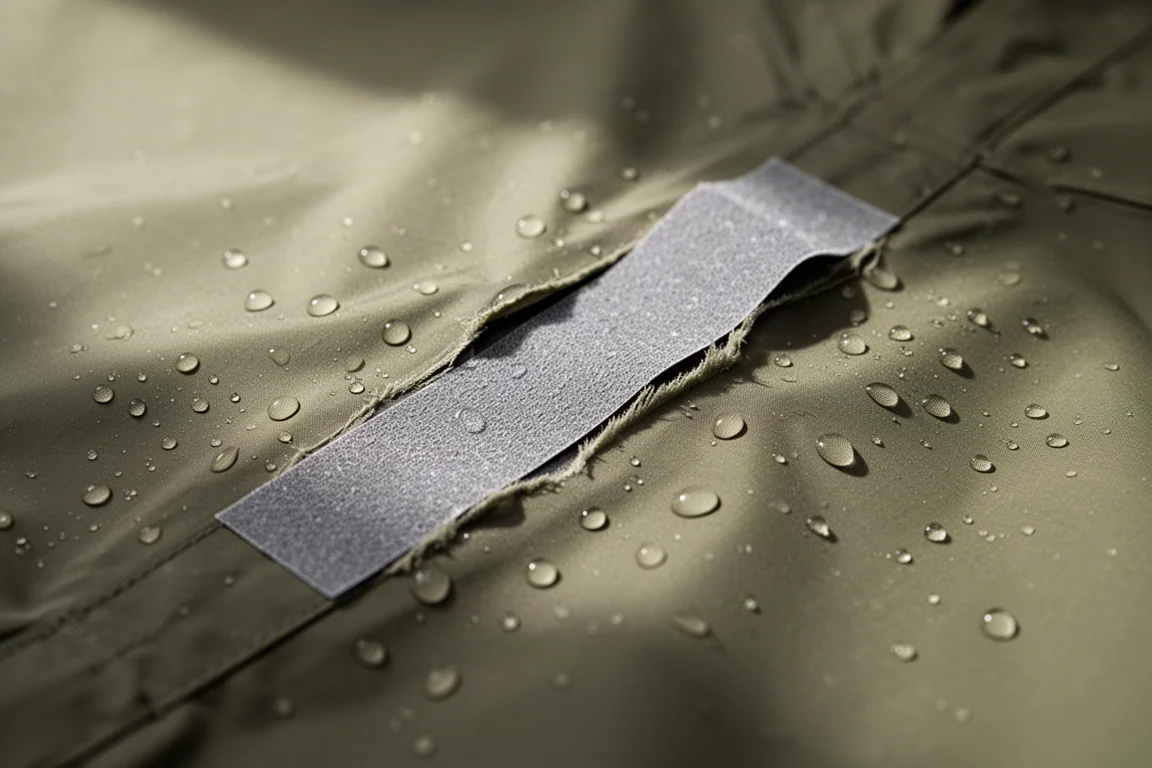
Care is simple. Keep the fabric clean, store the jacket dry, and check seams, cuffs, and hood cords before a long trip. Carrying a small amount of repair tape costs almost nothing and can rescue a shell mid-hike, and it is the single cheapest piece of insurance for any of these jackets.
Conclusion
These three jackets cover the realistic range of backpacking rain gear. The Frogg Toggs Ultralight Rain Suit is the budget answer, light and proven on long trails, as long as you accept that it tears easily and can be patched with tape. The Anti-Gravity Gear Ultralight Rain Jacket is the cold and windy weather shell, sturdy, wind blocking, and equipped with pit zips, with breathability as its clear limitation. The Enlightened Equipment Visp Rain Jacket is the all-purpose choice, soft, sleek, and light, with taped seams and a well-designed hood at the highest price of the three.
Pick the one that matches how and where you actually hike, and any of them will keep you dry without weighing down your pack.
Further reading
Related Reviews

Backpacking Gear
Building a 10 lb Base Weight: An Ultralight Backpacking Gear List
A practical walkthrough of the ultralight pieces behind a 10 lb base weight, from a 765 g pack and a roomy one-person tent to a full camp chair and a dependable water filter.

Road Bikes
10 New Road Bikes Worth Watching: Aero, Titanium, Steel and Endurance Standouts
A practical roundup of 10 new road bikes, from aero flagships chasing single-watt gains to titanium, steel and endurance platforms built for real roads.
Bikepacking Gear
11 Bikepacking Essentials for Long-Distance Cycling
Eleven bikepacking essentials for long-distance cycling, from a steel gravel frame and a two-person tent to helmet lights, packable gloves, and a frame bag that puts weight in the right place.