Projector Screens
Best Projector Screens 2026: 10 Standard Throw Options Compared
A practical comparison of 10 standard throw projector screens from budget white materials to premium ambient light rejecting designs, with measured gain and speckle notes.
Introduction
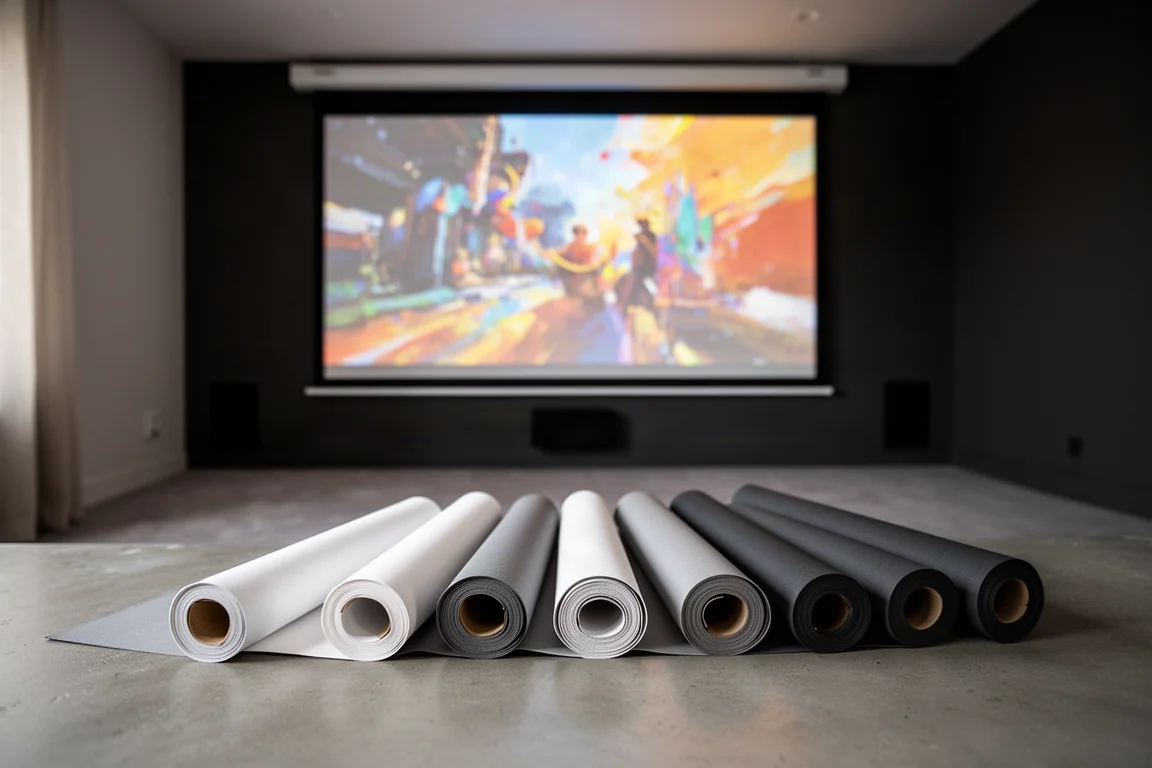
Choosing a projector screen for a new triple laser projector can feel overwhelming. There are white screens, gray screens, and ambient light rejecting (ALR) screens, and each behaves differently with laser light sources. This guide compares 10 standard throw projector screens ranging from around $140 to $4,500, covering measured gain, ambient light rejection, laser speckle behavior, and the practical size and form factor limits of each material.
The screens fall into three basic categories. White screens include the Elite Screens Cinnowite UHDB, Silver Ticket WAB, and Valerion Pure Vision. Gray screens include the Screen Pro 3C and Spectra Element Gray. The ambient light rejecting group includes the Valerion Fresnel ALR, Spectra Shadowscape, Nothing Projector Lenticular Long Throw, Vivid Storm Fusion, and Screen Innovations Black Diamond Fusion.
How These Screens Were Compared
Screen gain and ambient light rejection are related but distinct qualities. Screen gain measures how much of the total light hitting the screen gets reflected back toward the viewer. Ambient light rejection measures how much less light from non-projector sources is reflected back compared to what the screen gain would suggest.
For this comparison, each screen was measured with a triple laser projector using a reference 1.0 gain screen material as a baseline. Ambient light rejection was tested with three light sources: one directly overhead, one from the rear of the room, and one from the side. Laser speckle was evaluated by swapping screens side by side and comparing both stationary speckle on large single color areas and moving speckle during panning shots.
Elite Screens Cinnowite UHDB
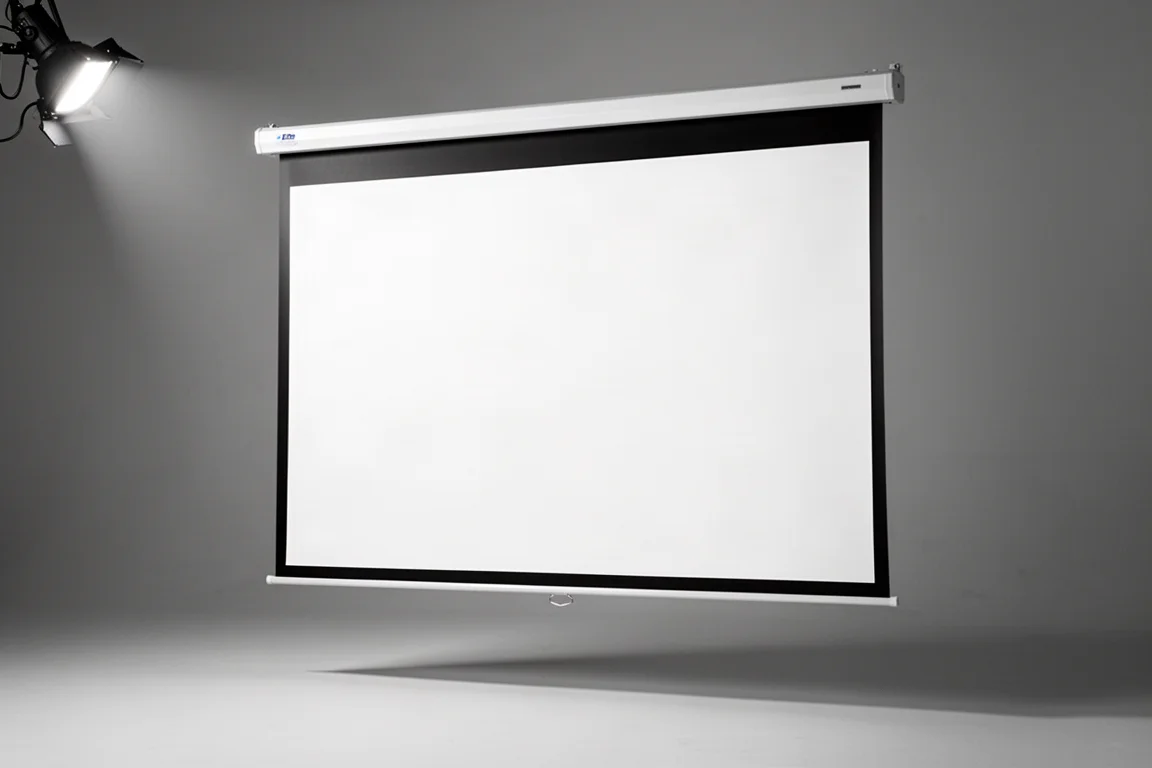
The Elite Screens Cinnowite UHDB is a 100 inch fixed frame screen priced around $139, making it the most affordable option in this group. It measured 409 peak nits compared to 322.8 on the reference material, giving it a calculated gain of 1.27, close to its listed gain of 1.3.
Despite being a white screen, the Cinnowite UHDB showed some ambient light rejecting properties. It reflected less light from non-projector sources than expected given its gain, with about 20% ambient light rejection from front and side sources and 14% from a rear overhead source. It also showed slightly higher native contrast values than typical white screens.
Silver Ticket WAB
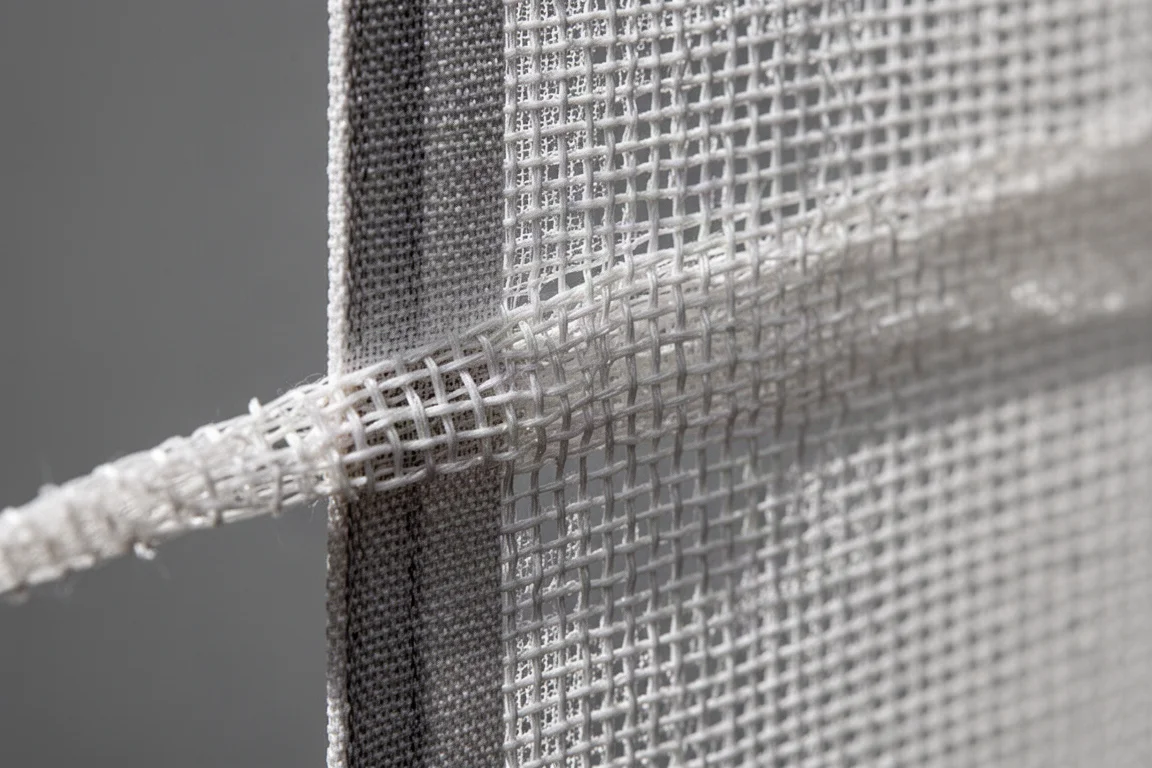
The Silver Ticket WAB is a 100 inch fixed frame woven acoustically transparent screen priced around $399. The woven construction allows speakers to be placed behind the screen for a more immersive setup. It measured 273.9 nits peak white, giving it a calculated gain of 0.85.
The WAB had slightly negative ambient light rejection values, reflecting about 1% more than expected from the rear source, 6% more from the front overhead light, and 4% more from the side. Its standout quality is laser speckle performance. It is the only screen tested that completely eliminates laser speckle, making it the clear choice for anyone sensitive to speckle with a triple laser projector.
Screen Pro 3C
The Screen Pro 3C is a 100 inch fixed frame low gain gray screen priced around $439, marketed for its laser speckle reducing properties. It measured just 139.4 nits on peak white, giving it a calculated gain of 0.43.
It had almost no ambient light rejecting qualities, rejecting 7% from the rear and 4% from the side, while being 1% brighter than expected from the front overhead source. Its main advantage is availability in drop down and floor rising versions, which can be useful for convertible home theater spaces. It still showed a moderate amount of laser speckle despite its marketing.
Spectra Element Gray
The Spectra Element Gray is a 100 inch fixed frame gray screen priced around $499. It measured 167.3 nits on peak white, giving it a calculated gain of 0.52, slightly higher than the Screen Pro 3C.
Unlike the 3C, the Element Gray did have some ambient light rejecting qualities, rejecting about 22% of light from directly overhead, 12% from the rear of the room, and 18% from the side source. It also had considerably less moving speckle than stationary speckle.
Valerion Pure Vision
The Valerion Pure Vision is a 100 inch fixed frame white screen priced around $499, marketed for its laser speckle reducing properties. It measured 345.6 nits on the material, giving it a calculated gain of 1.07, very close to its advertised 1.1 gain.
The Pure Vision had zero ambient light rejecting properties, measuring exactly 0% ALR from all three sources. Its speckle reduction was a notable surprise. Despite not being a woven structure, it was only very mildly worse than the Silver Ticket WAB for stationary speckle, making it a strong value pick for laser projector owners.
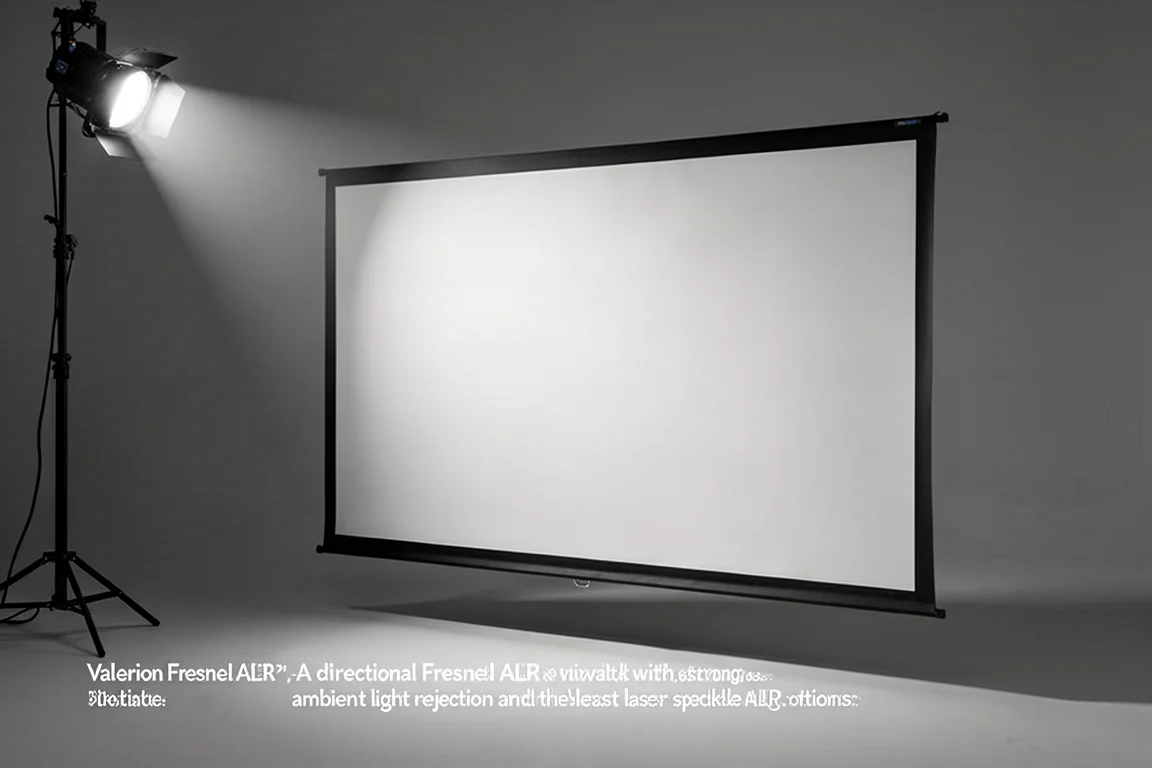
Valerion Fresnel ALR
The Valerion Fresnel ALR is a 100 inch fixed frame screen priced around $799. It is directional, meaning the screen needs to be inverted for a ceiling mounted projector, which reduces its ALR properties from overhead sources.
Assuming correct orientation for a projector mounted below the screen, it has a calculated gain of 0.78. Ambient light rejection is about 86% from directly overhead, 53% from rear overhead sources, and 55% from side sources. Flipped for a ceiling mounted projector, rejection drops to 50% from directly overhead, with 2% more light reflected from rear overhead sources and slightly increased side rejection at about 58%.
The Fresnel had by far the least stationary speckle among the ALR screens. Its downsides are limited availability in only 100 inch and 120 inch 16:9 sizes, an ideal viewing cone of about 50 degrees, and reduced overhead ALR when inverted for ceiling mounting.
Spectra Shadowscape
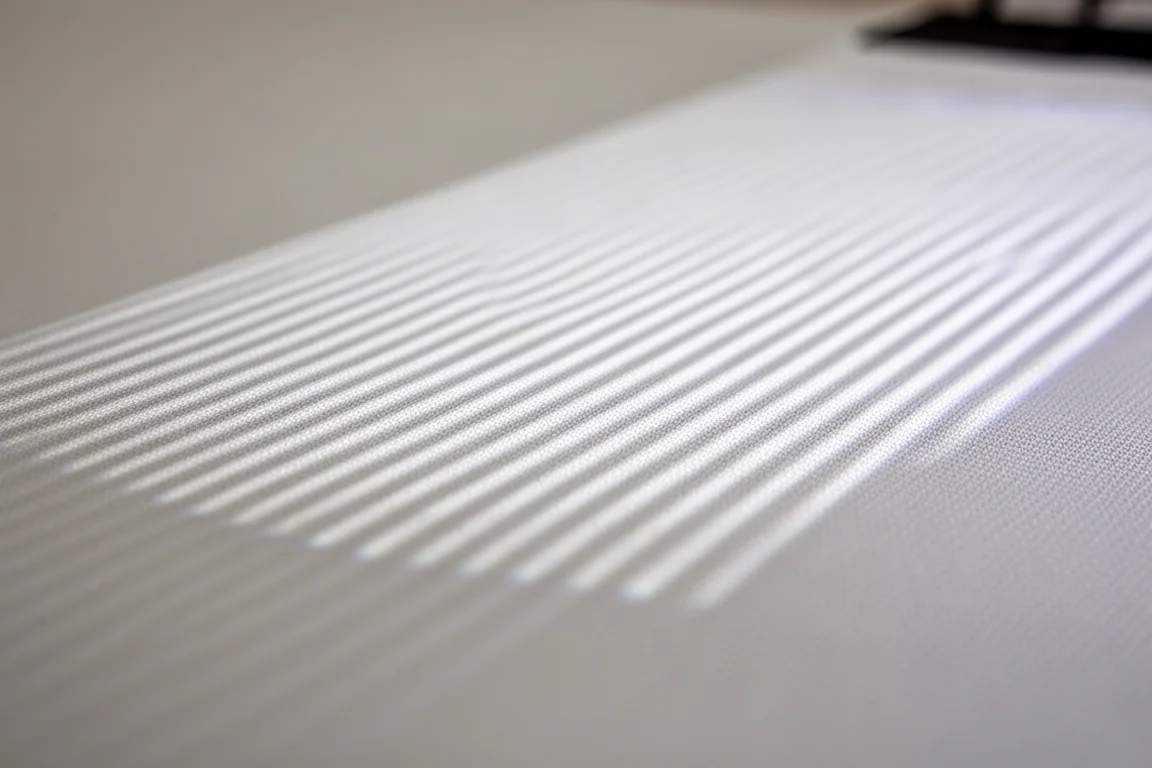
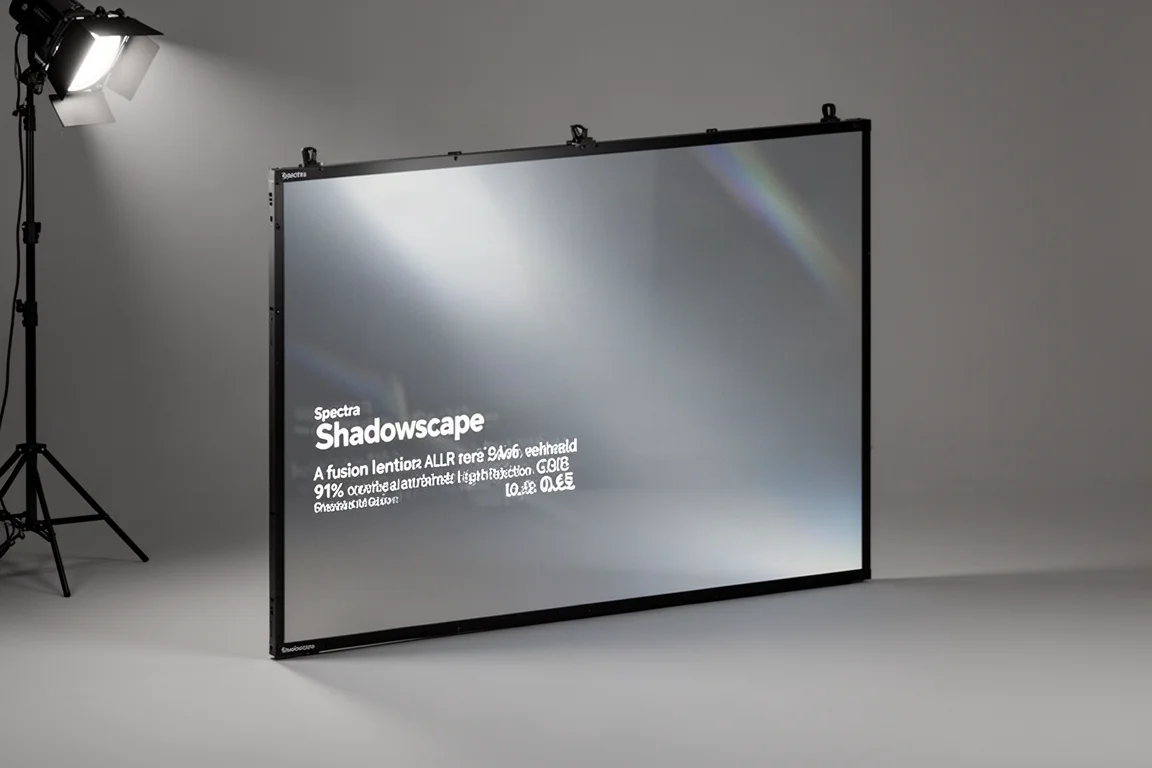
The Spectra Shadowscape is a 100 inch fixed frame ALR screen priced around $999. It is the first of the fusion type screens that combine a lenticular ALR structure with an angular reflective coating. Despite a sticker showing which direction should be up, there was no directionality to the screen.
It measured around 210 nits on peak white in either orientation, giving it a calculated gain of 0.65. It rejected 91% of ambient light from directly overhead, but only 40% from rear overhead sources and 37% from the side, consistent with the structure of its lenticular ridges.
Nothing Projector Lenticular Long Throw
The Nothing Projector Lenticular Long Throw is a 100 inch fixed frame fusion type ALR screen priced around $1,042. Like the Shadowscape, it was not actually directional despite having a direction sticker.
It measured 212.1 nits, giving it a calculated gain of 0.66. It had exactly the same ambient light rejection as the Spectra Shadowscape at 91% from directly overhead, 40% from the rear, and 37% from the side. Under a microscope, the material looks identical to the Spectra and Screen Innovations fusion screens.
Vivid Storm Fusion
The Vivid Storm Fusion is a 100 inch fixed frame ALR screen priced around $1,379. It is another part lenticular, part angular reflective screen, but it performed noticeably differently.
It measured 451.3 nits peak white, the brightest of the group, giving it a calculated gain of 1.4. It also had the highest ambient light rejection at 96% from directly overhead, 54% from rear overhead, and 68% from the side. However, watching actual content revealed hot spots and a borderline unwatchable amount of laser speckle, likely due to a heavy angular reflective coating.
Screen Innovations Black Diamond Fusion
The Screen Innovations Black Diamond Fusion is a 100 inch fixed frame screen priced around $4,500. As the name implies, it uses fusion lenticular and angular reflective ALR technology. It is non-directional and does not even have a labeled up or down orientation.
It measured 226 nits peak white, giving it a calculated gain of 0.69, slightly higher than the Spectra and Nothing Projector screens. It rejected 91% of ambient light from directly overhead, with 43% from the rear and 40% from the side, about 3% better than the other fusion screens. Despite the massive price difference, its material appears identical to the Spectra Shadowscape and Nothing Projector screens under a microscope.
Size and Form Factor Considerations
For ambient light rejecting screens, the Valerion Fresnel is the clear winner for value, with the lowest price of the five ALR screens, lower laser speckle, higher ambient light rejection, and higher gain than the others except the Vivid Storm. But Fresnel screens have their lens structures stamped into each individual screen, so they are only available in 100 inch and 120 inch 16:9 sizes with no custom options.
The lenticular fusion style screens are produced on large rolls, so they can be cut to size. The Spectra Shadowscape, Nothing Projector, and Screen Innovations materials all share the same roll width limitation, with 130 inches being the maximum 16:9 screen size. Wider cinemascope screens can go up to 160 inches since that keeps the screen height the same.
For fixed frame screens, the Silver Ticket WAB, Spectra Element Gray, and Screen Pro 3C are all available in sizes from 92 inches up to 200 inches.
Overall Buying Advice
For most people with a triple laser projector, the Silver Ticket WAB is the right pick. Its relatively loose weave produces an incredibly cinematic image that completely eliminates laser speckle, resulting in a calm image while maintaining the excellent color and motion clarity of a triple laser DLP projector.
If ambient light is a concern, a low gain gray screen can help lower black levels, but it comes at the expense of reduced overall brightness with no actual increase in contrast. In a mostly light controlled room, a low gain screen makes less sense now that mechanical irises are more common, since closing the iris lowers brightness while increasing native contrast.
For ALR screens, the Valerion Fresnel offers the best combination of price, speckle reduction, and ambient light rejection, provided the size and viewing cone limitations work for your space. If you need a larger screen or use a ceiling mounted projector, the fusion style screens are a better pick, and the Spectra Shadowscape offers the same performance as far more expensive options.
Conclusion
The projector screen market offers clear trade-offs between price, gain, ambient light rejection, and laser speckle performance. The Silver Ticket WAB stands out for speckle elimination and cinematic image quality, while the Valerion Fresnel offers the best ALR value with size limitations. The fusion screens from Spectra, Nothing Projector, and Screen Innovations perform nearly identically despite very different prices, making the Spectra Shadowscape the sensible choice in that group. The Vivid Storm Fusion has impressive specifications on paper but suffers from hot spots and excessive laser speckle in practice.
Further reading
Related Reviews
Pickleball Paddles
2025 Paddle Awards: The Best Pickleball Paddles of the Year
A category-by-category breakdown of the best pickleball paddles of 2025, covering value, control, all-court, power, and paddle of the year.
Automotive Accessories
70mai Dash Cam Comparison: A200 vs A510 vs A810
Three dash cameras from 70mai across different price points reveal how resolution and sensor quality impact real-world footage clarity, especially for number plate visibility and low-light performance.
Mobile Gaming Accessories
8BitDo FlipPad vs GameSir Pocket Taco: Which Vertical Phone Controller Fits You Best?
Two compact vertical phone controllers with very different approaches to connectivity, controls, and everyday use. Here is how they compare across seven practical categories.