Powered Speakers
Best Powered Speakers for Turntables in 2026: Six Pairs Worth Considering
Six powered speaker options for vinyl playback, with practical guidance on space, budget, and built-in phono stages before you buy.
Introduction
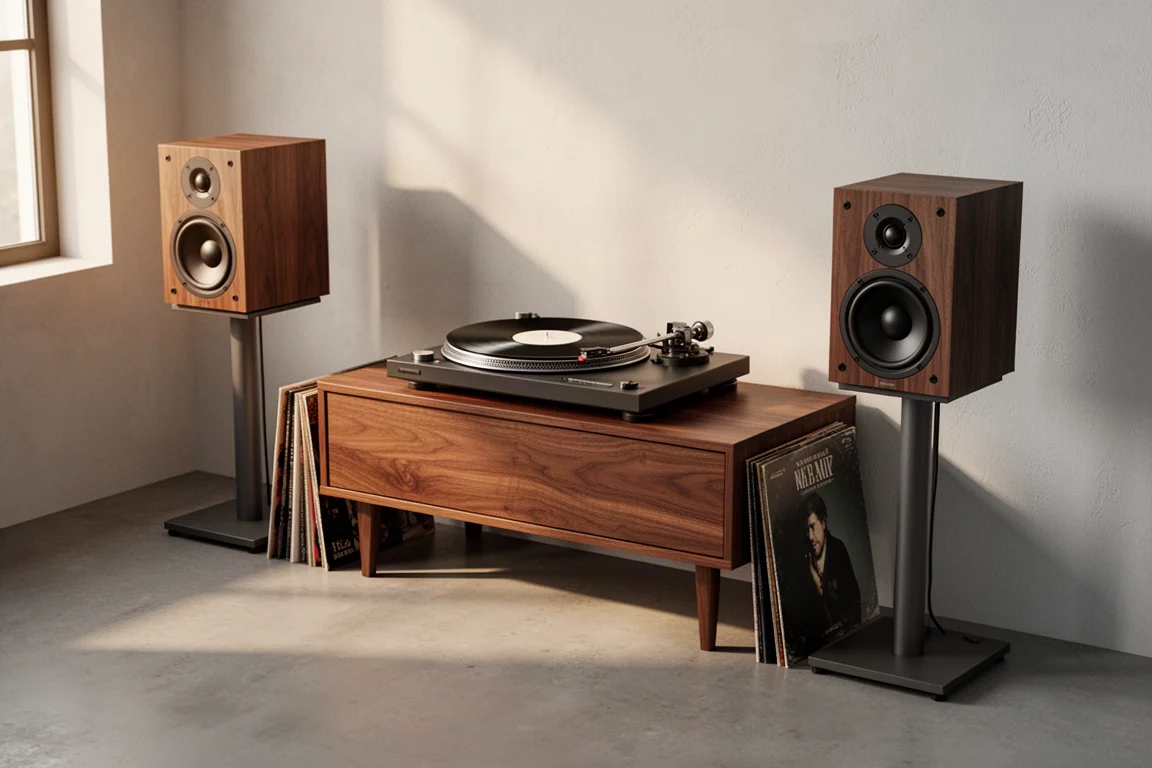
Vinyl keeps proving its staying power. US album sales have grown for 17 consecutive years, with more than 41 million records sold, and many of those records are played on systems far simpler than the old component stacks.
Powered speakers are the reason. The amplifiers live inside the cabinets, so a turntable, a pair of speakers, and a surface to put them on is often the whole setup. Every speaker in this guide includes a built-in phono stage, which means a turntable without one can plug straight in.
Beyond that, the decision comes down to space, budget, and flexibility. Some listeners need something compact for a desk or a small apartment. Others want a pair that can carry a living room and double as a TV sound system. The six options below cover those needs, and each brings a different balance of size, inputs, and output.
How to Choose Powered Speakers for a Turntable
Start with space. Where the speakers will sit decides how large they can be, and a desk setup has very different limits than a living room. Budget matters next: you do not need to spend a fortune to get good sound, but the budget you set will shape the rest of the system. Flexibility is the third factor. A pair that only plays records is fine, but many listeners also want to connect a television or stream wirelessly from a phone, and the inputs on the back of the speaker determine how easy that is.
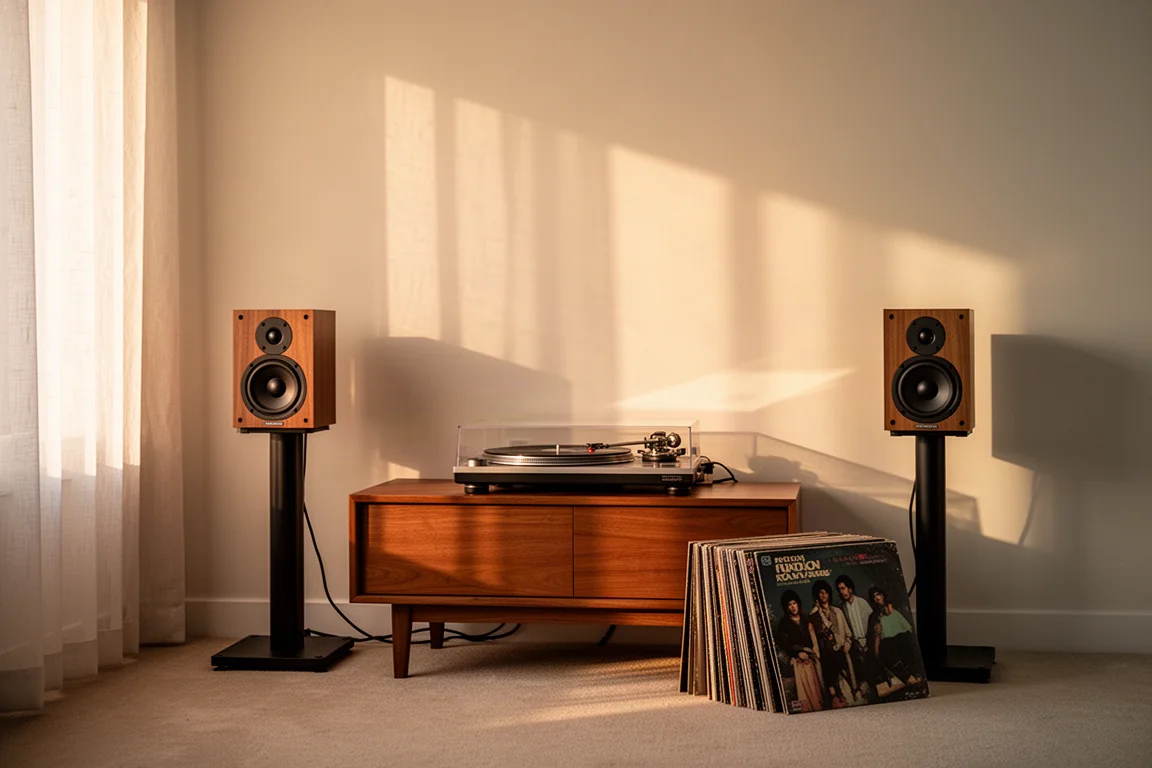
The phono stage is the detail that trips people up most. Less expensive turntables usually include one; many higher-end turntables leave it out, because manufacturers put their budget into sound quality instead of features. All of the speakers here have a phono stage built in, so your turntable does not need one. If your turntable has one anyway, that is not a problem. Simply bypass it on either the turntable or the speaker when you connect the two.
Andover Audio SpinBase
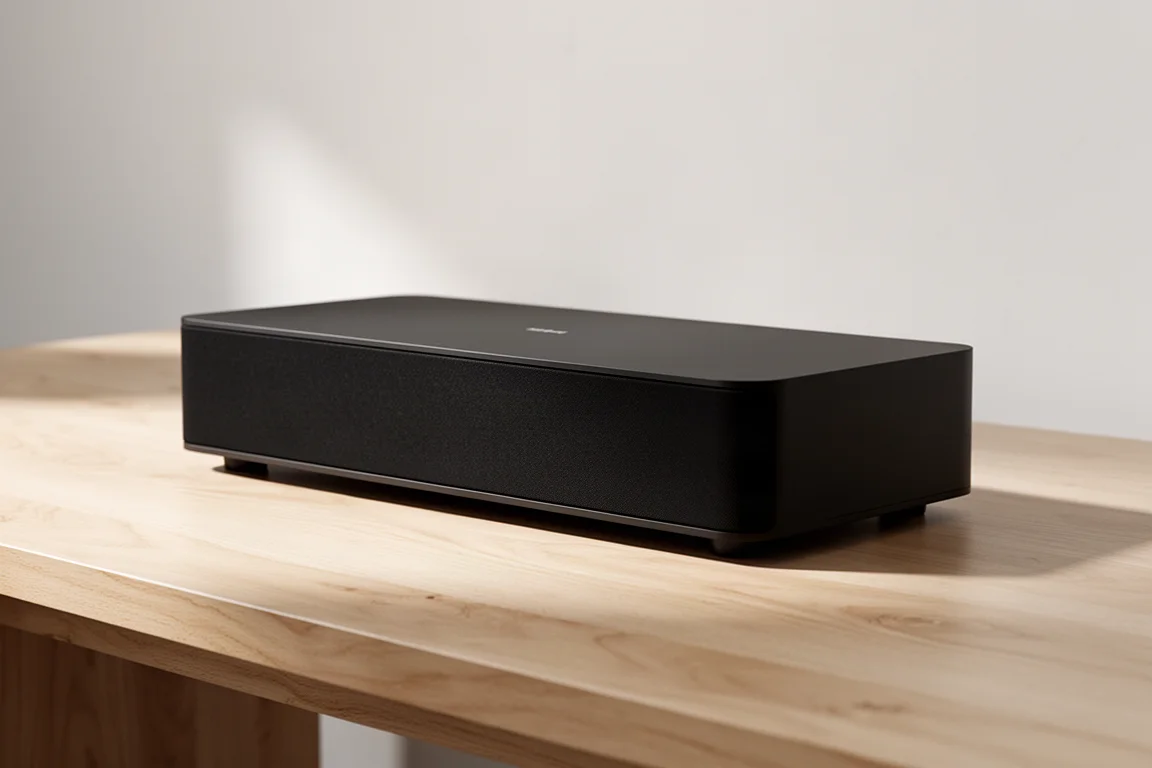
The SpinBase is the most compact solution here, and it works differently from everything else on the list. At 18 inches wide, 13.5 inches deep, and 3.25 inches tall, it is an all-in-one system that occupies roughly the same footprint as a turntable, and the turntable sits directly on top of it. There are no stands to place and no left and right speakers to position.
The sound is built around a 270-degree field that fills a room, with each driver powered by its own dedicated amplifier. The cabinet has enough internal space for bass that gives the SpinBase a warm character, and it keeps that warmth at low volumes. Bass and treble controls, a mini headphone jack, and Bluetooth 5.0 round out the practical side, and the input can be switched from phono to a line-level analog connection for a CD player, DAC, or cassette deck. At $300, it is a strong fit for a small apartment, and because the phono stage is built in, a turntable without one will work.
Peachtree M24
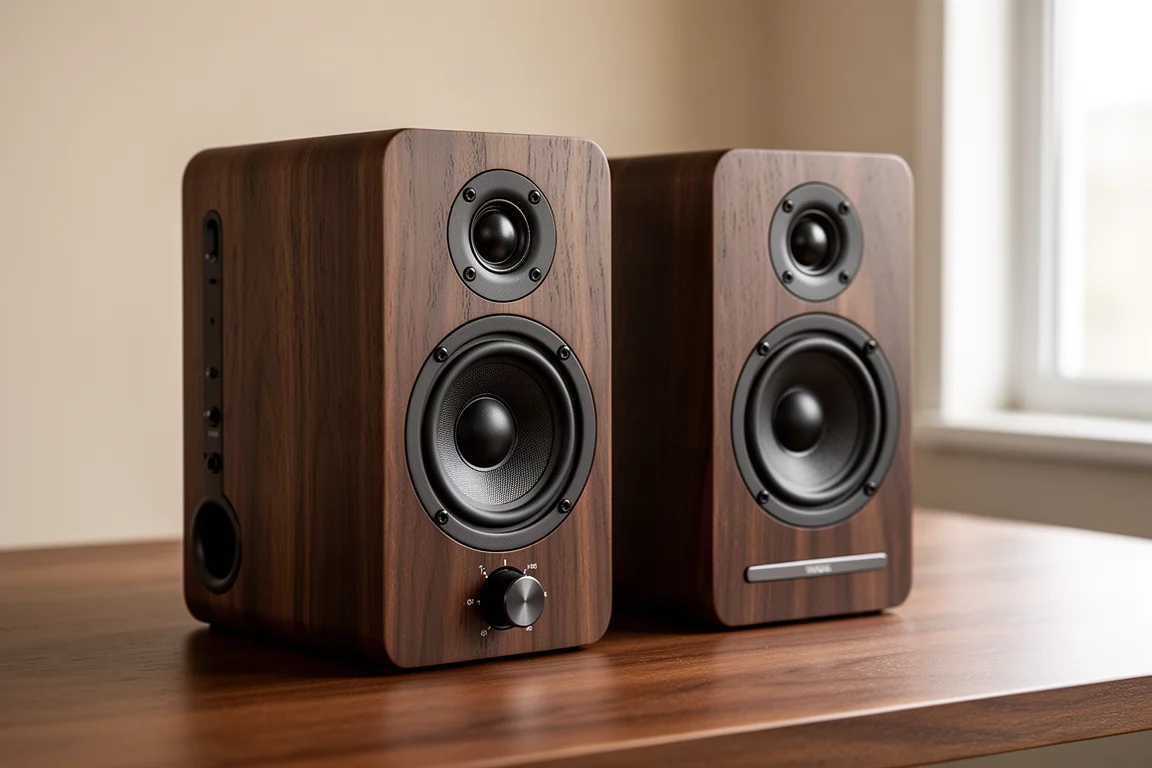
The M24 sounds like a much larger speaker than it is. The presentation is smooth but detailed, and the bass is tight and fast with no boom, with more impact than the modest cabinet suggests. The connection set is generous: a high-resolution USB input for computer audio, a phono preamp for moving-magnet cartridges, Bluetooth, and a Toslink input for a television. The phono input can be switched to an AUX input for a CD player, and a subwoofer output makes it easy to add low end later. Cabinets come in real bamboo or gloss black.
Its size is what makes it the natural pick for a desktop, where a larger pair would take over the space.
Peachtree M25
The M25 keeps the M24’s smooth, detailed character and adds scale: deeper bass, more impact, and more detail, which suits a living room better than a desk.
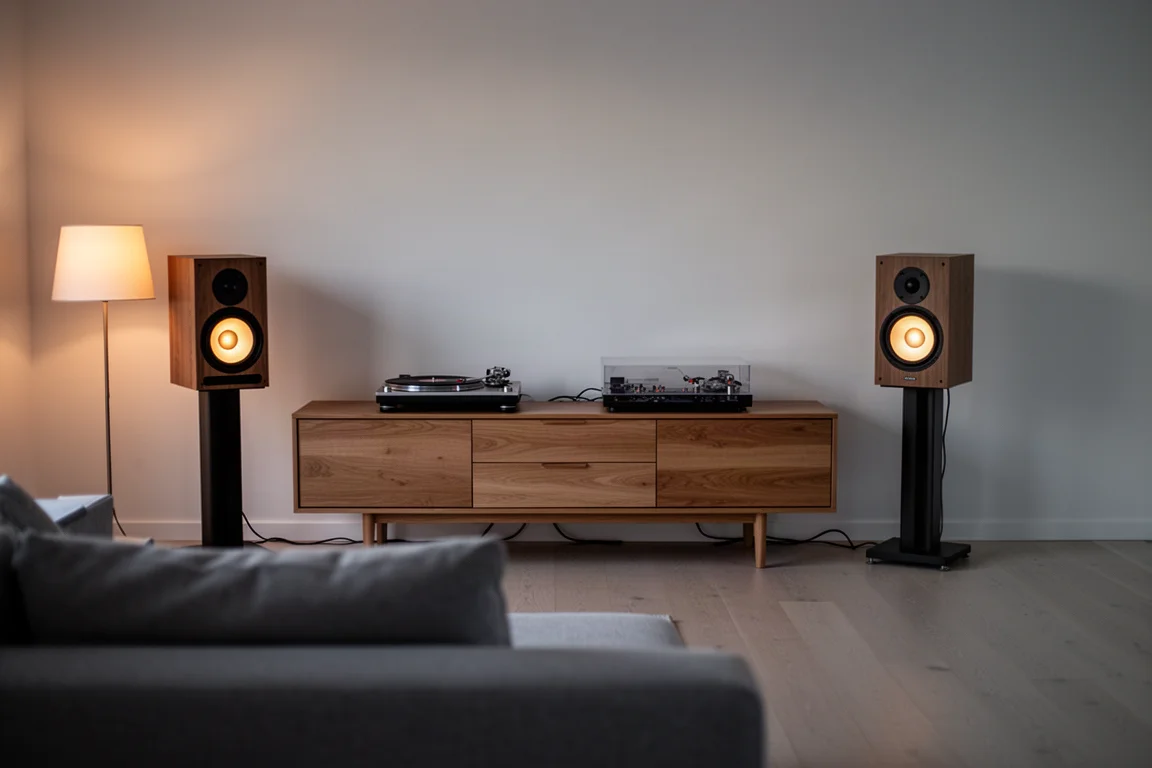
Both Peachtree models share the same connection set and the same bamboo or gloss black finish options, so the choice between them is mostly about the size of the room. Either one pairs with a good turntable to make a sleek, complete vinyl playback system.
Kanto YU6
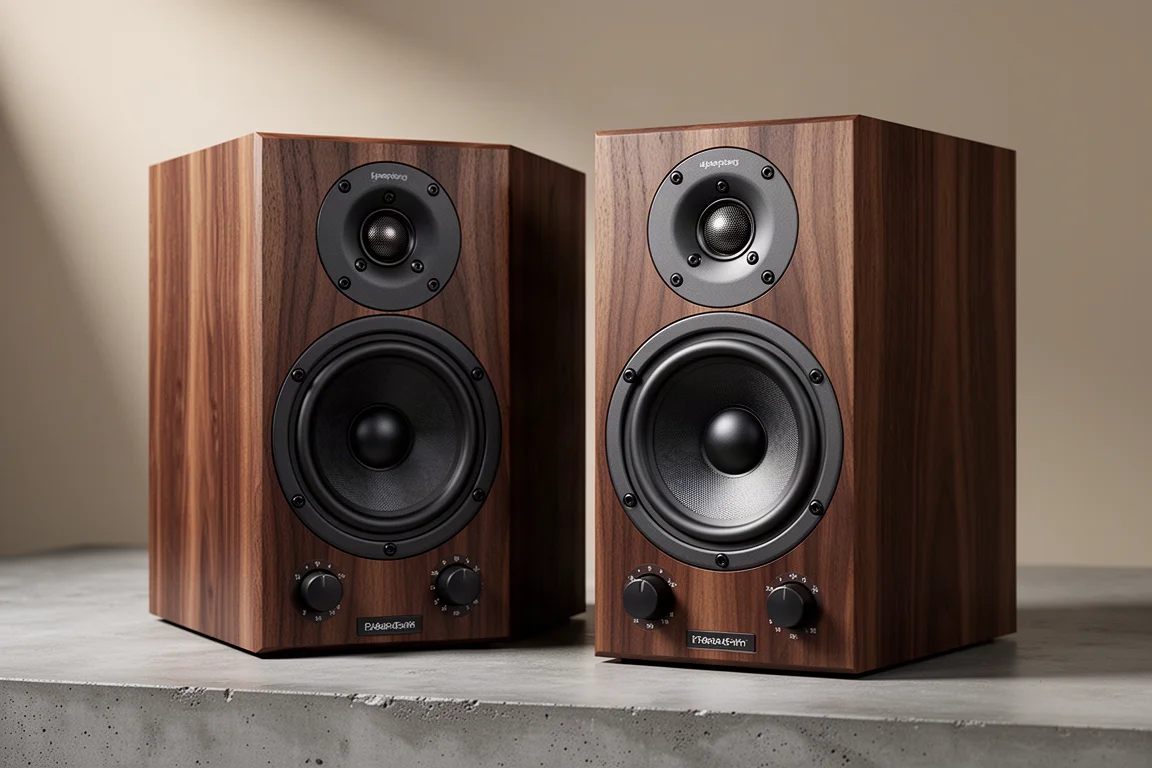
The YU6 plays loud, with a full sound that fills a room. It runs 200 watts of peak output through a 5-inch Kevlar driver and a 1-inch silk dome tweeter, and it comes in a wide range of colors and finishes, which makes it one of the easier speakers to match to a room.
The back panel is unusually well equipped: dual Toslink optical inputs, RCA inputs with a phono switch, a subwoofer output, a 3.5mm AUX input, a USB Type-A charging port, gold-plated binding posts for the left and right speakers, and Bluetooth 4.0. That spread of inputs lets a single pair serve a turntable, a television, and a computer. Dialogue comes through more clearly than it does from a TV’s built-in speakers, and the clarity holds up even at high volume.
Klipsch The Sevens
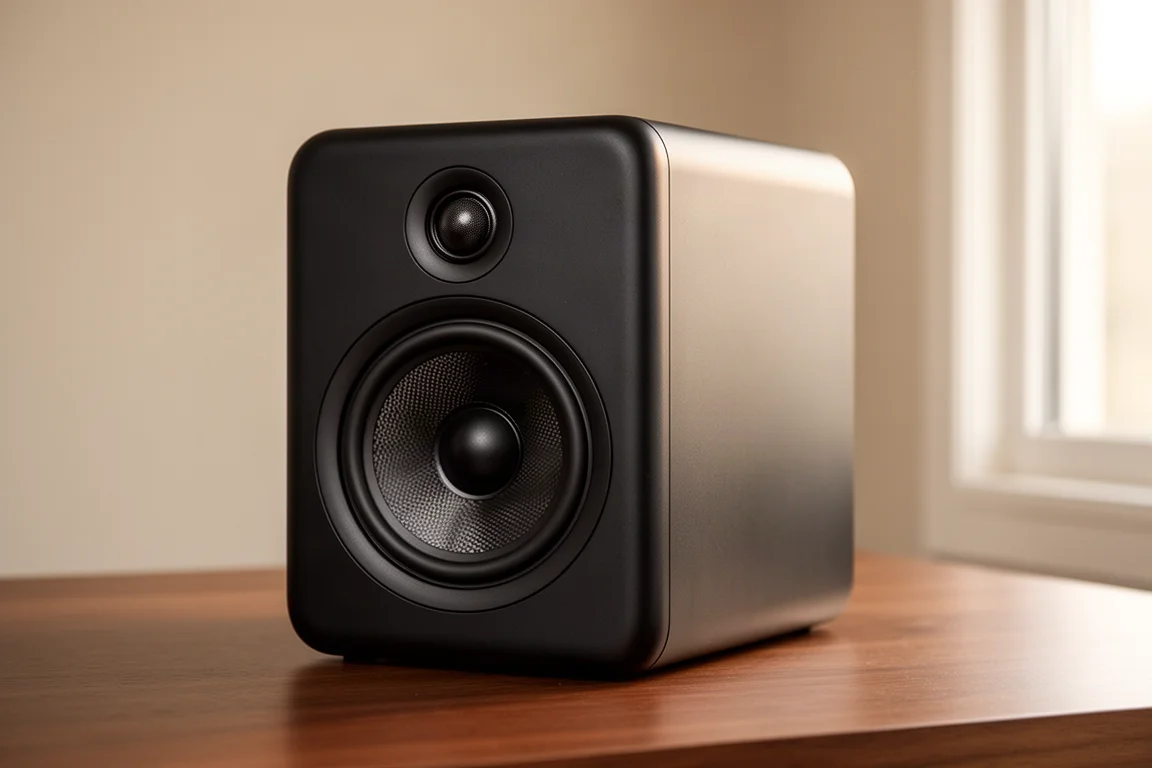
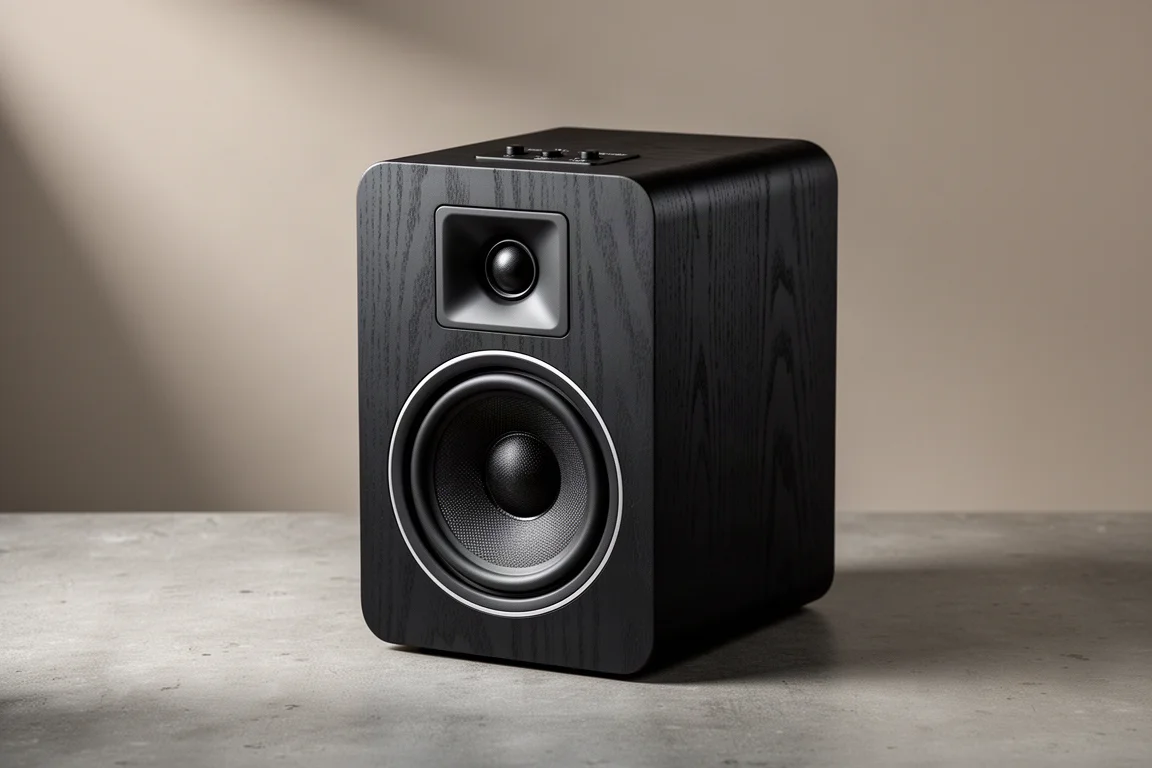
The Sevens use horn-loaded drivers: edge-to-edge 90-degree by 90-degree Tractrix horns paired with low-frequency, high-excursion fiber composite woofers. The result is a clear, room-filling sound that arrives with ease, an expansive soundstage, and better-than-average instrument separation, which is what makes records come alive.
The rest of the feature set is just as complete. HDMI ARC connects to a television, the phono stage is built in, and a subwoofer output is available for extra low end. HDMI ARC also allows volume control from the TV remote, so there is no juggling between remotes. For streaming from a phone, the speakers decode up to 192 kHz at 24-bit.
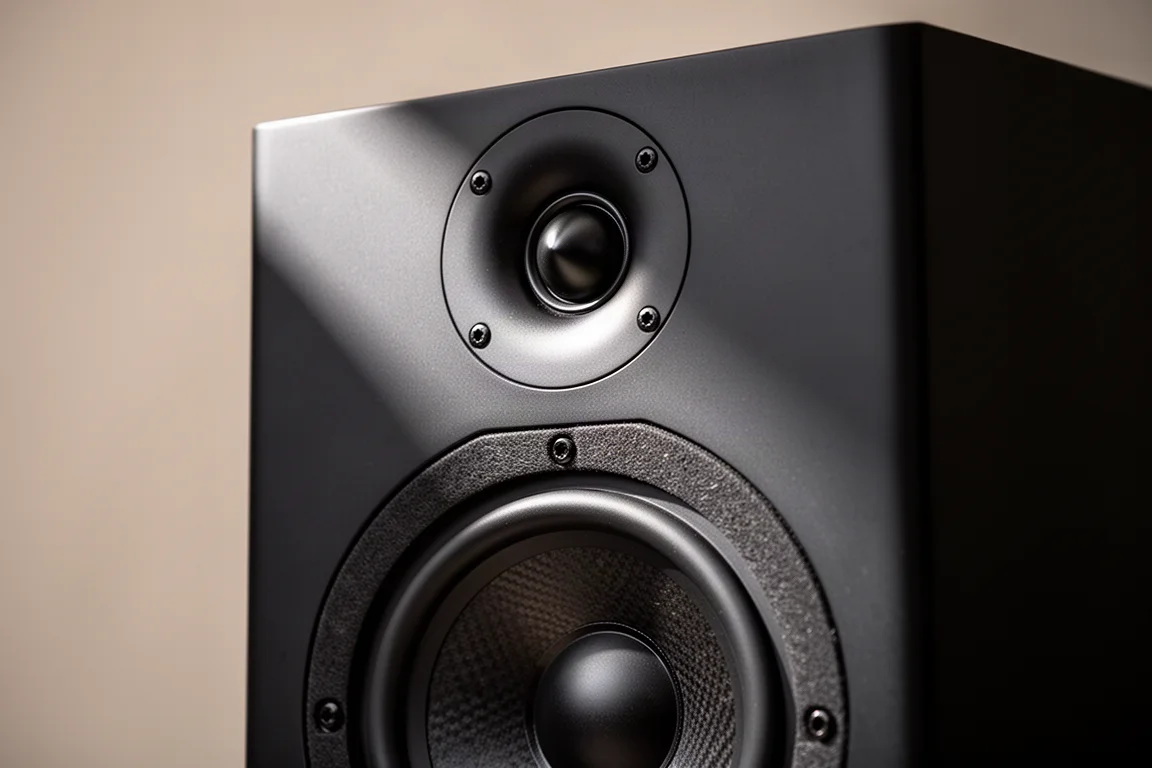
If one pair has to handle records and television in the same room, this is the most complete option here.
Klipsch The Nines
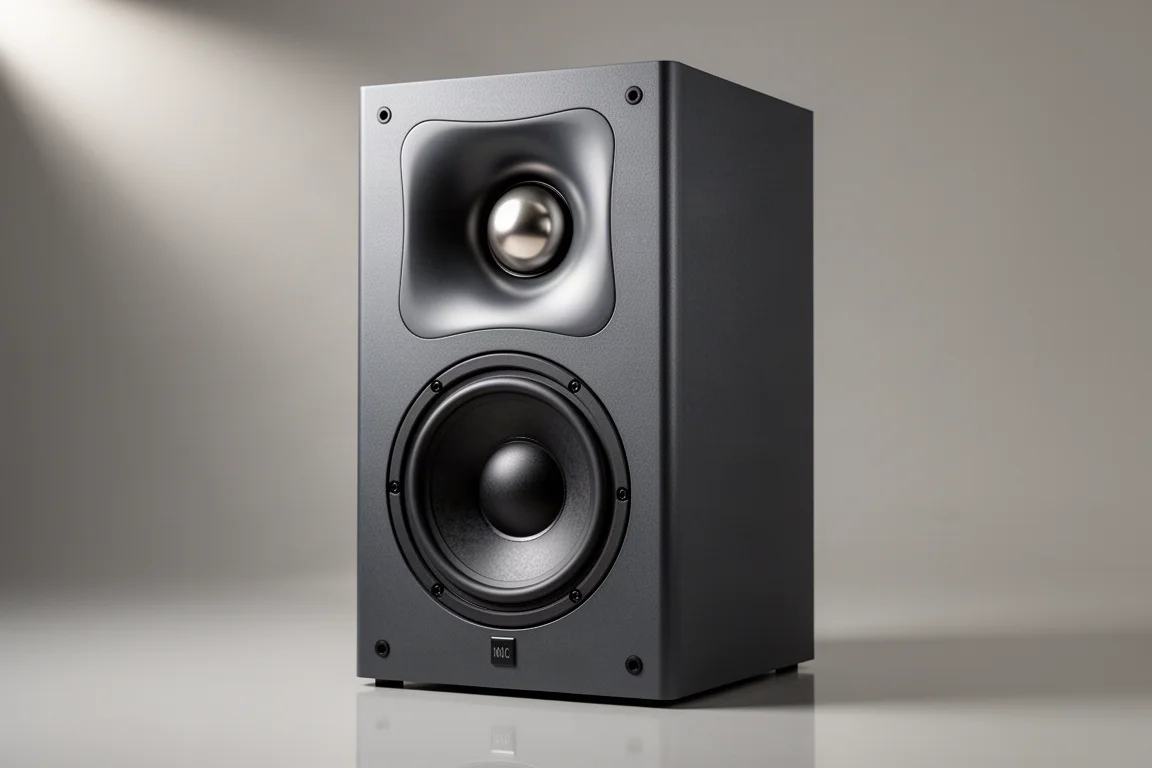
The Nines carry the same feature set as The Sevens in a larger cabinet with more power. The trade-off is size, and they make the most sense in a room where that extra output has somewhere to go.
Buying Advice
Match the speaker to the room first. A desk or a small apartment is best served by the M24 or the SpinBase, both of which stay compact without giving up a built-in phono stage. A living room can support the M25, the YU6, or either Klipsch model, where the larger cabinets translate into deeper bass and more headroom.
If the speakers will also handle television audio, look closely at the inputs. HDMI ARC on the Klipsch models makes that job simple, and the YU6’s dual optical inputs cover sources with optical outputs. Whichever pair you choose, remember that every speaker here has a phono stage built in, so a turntable without one connects directly, and a turntable with one can simply have it bypassed.
Conclusion
Six speakers, and three sensible paths through them. The SpinBase is the compact all-in-one for tight spaces. The Peachtree M24 and M25 offer a clean, detailed system that scales from a desk to a living room. The Kanto YU6 and the two Klipsch models are for listeners who want more output, more inputs, and a pair that can carry both records and television. All of them include the phono stage, so the turntable side of the setup stays simple.
Further reading
Related Reviews
Powered Speakers
AbramTek X50 Review: Powered Speakers With Real Bass and a Full Feature Set
The AbramTek X50 pairs a phono preamp, HDMI ARC, optical, and Bluetooth with genuinely capable sound. Here is what it does well and what to check before buying.
Powered Speakers
Amazon Basics Powered Speaker Review: Useful Features, Compromised Sound
A practical look at the Amazon Basics Powered Speaker: a handy remote and an optical input, held back by shouty upper mids, minimal bass, and erratic pricing.
Powered Speakers
Aperion Audio Alaire Review: Compact Powered Speakers With Serious Bass
A compact two-way powered speaker with genuine low-end punch, excellent imaging, and a control scheme that depends entirely on its remote.