Home Gym Audio
Best Powered Speakers for Peloton and Home Gym Setups: Five Systems Compared
A practical guide to five wireless powered speaker systems for Peloton and home gym workouts, from a portable pair at around $299 each to a premium hi-fi installation.
Introduction
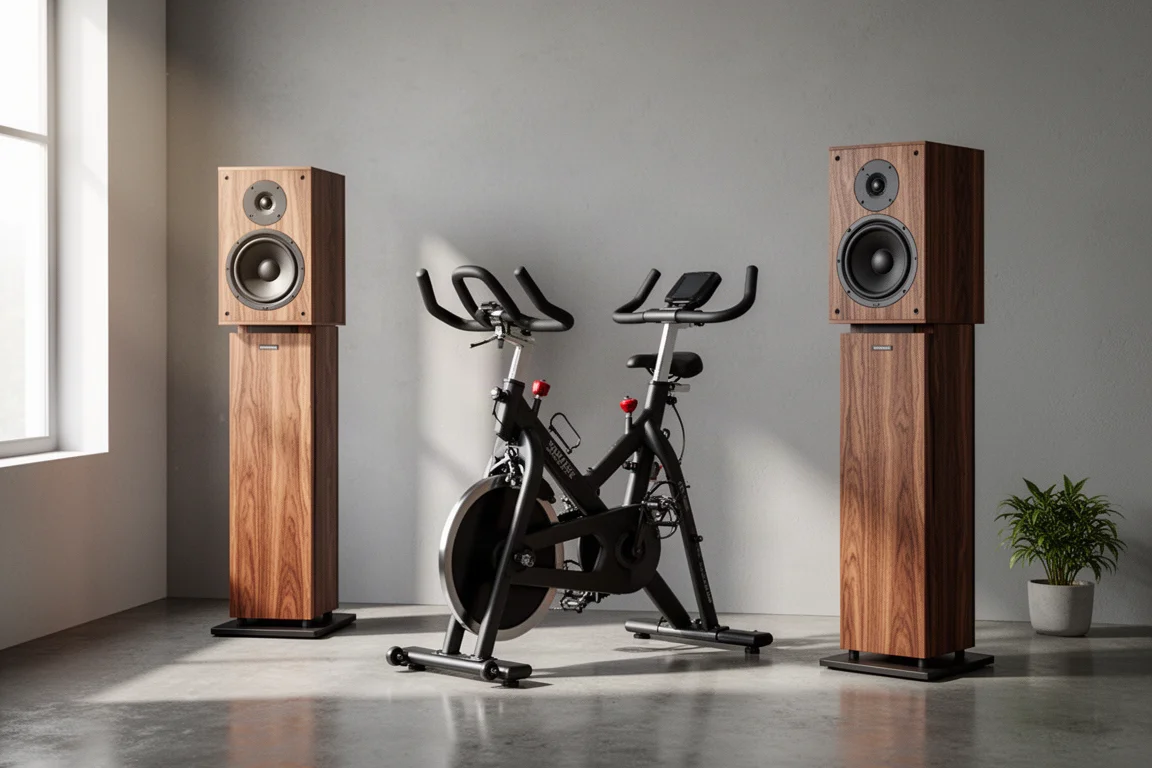
Most people enjoy music while they work out, and the major equipment makers have worked out how to blend music and instructor audio into a single engaging stream. The weak link is usually the hardware. The built-in audio on most bikes, treadmills and rowers is modest compared with what a dedicated pair of wireless powered speakers can produce, and a studio session with high-performance speakers is a noticeably more enjoyable experience than listening through small built-in drivers. The aim here is to get closer to that experience at home, for workouts and for everyday listening.
Every system in this guide is a wireless powered speaker, which means the amplifiers live inside the cabinets and the connection to your equipment is made over Bluetooth rather than with a cable. Technically a 3.5mm plug will connect most powered speakers to a bike or treadmill, but most people want the speakers further away and do not want a cord running across the room, so only wireless options with Bluetooth 5 or higher are included here. Bluetooth 5 has low enough latency that there is no substantial lip sync gap between what you see on screen and what you hear.
What to Look For in a Home Gym Speaker System
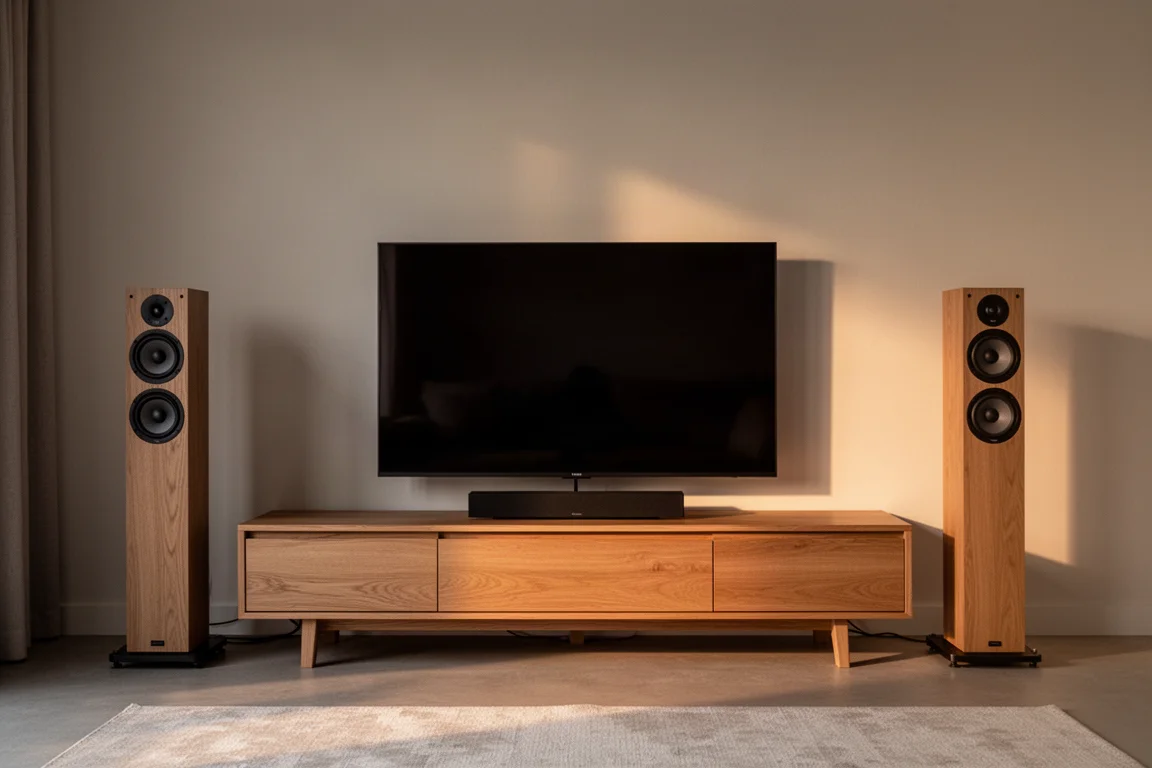
Three things matter most. First, Bluetooth 5 or higher, for the latency reason above. Second, a genuine left and right pair, so you hear everything in stereo rather than a single summed channel. Third, height. Speakers sound best when nothing blocks the path from the driver to your ears, and in a gym that means stands that place the speakers roughly 34 inches from the floor, which lines them up whether you are on a bike, on a treadmill, standing, or on a bench.
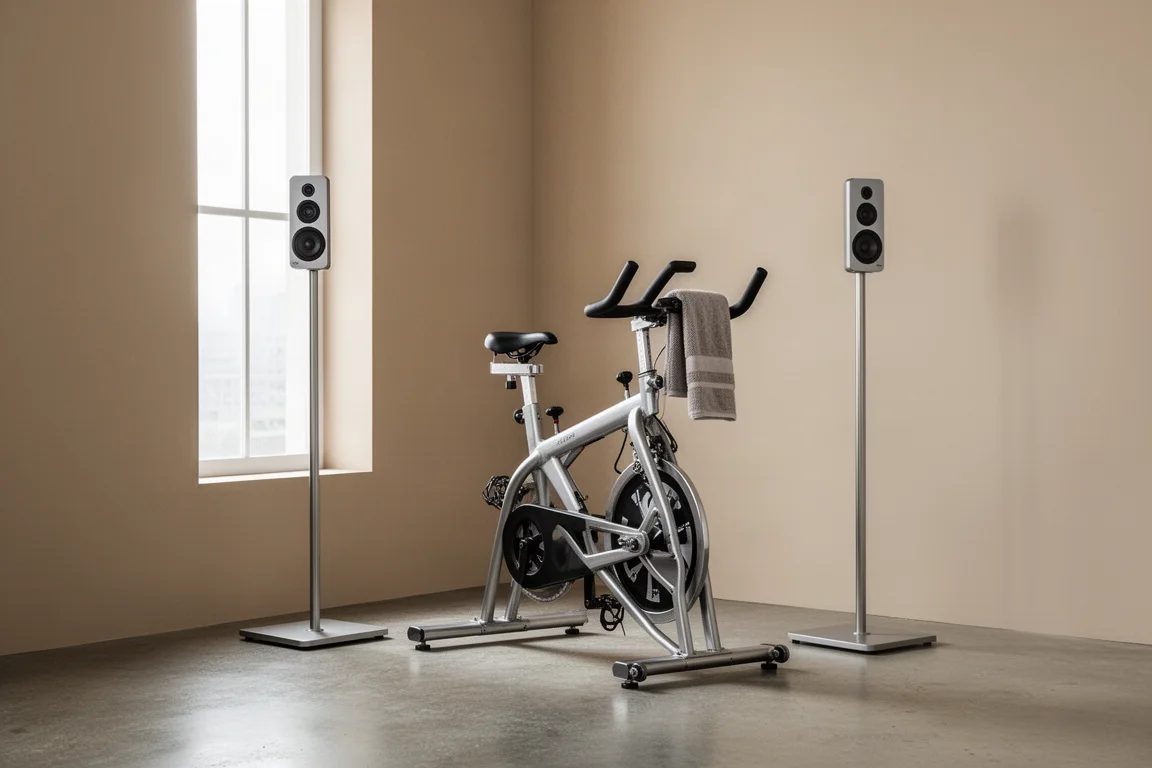
Height is the detail most people skip, and it is the one that changes the result most. A speaker sitting on the floor fires into your shins; the same speaker on a stand at ear height opens up the stereo image and makes the instructor’s voice seem to come from the screen rather than from somewhere near the carpet. Matching stands are available for every system below, and the largest model has a dedicated stand of its own.
Best Budget Option: JBL PartyBox Encore Essential
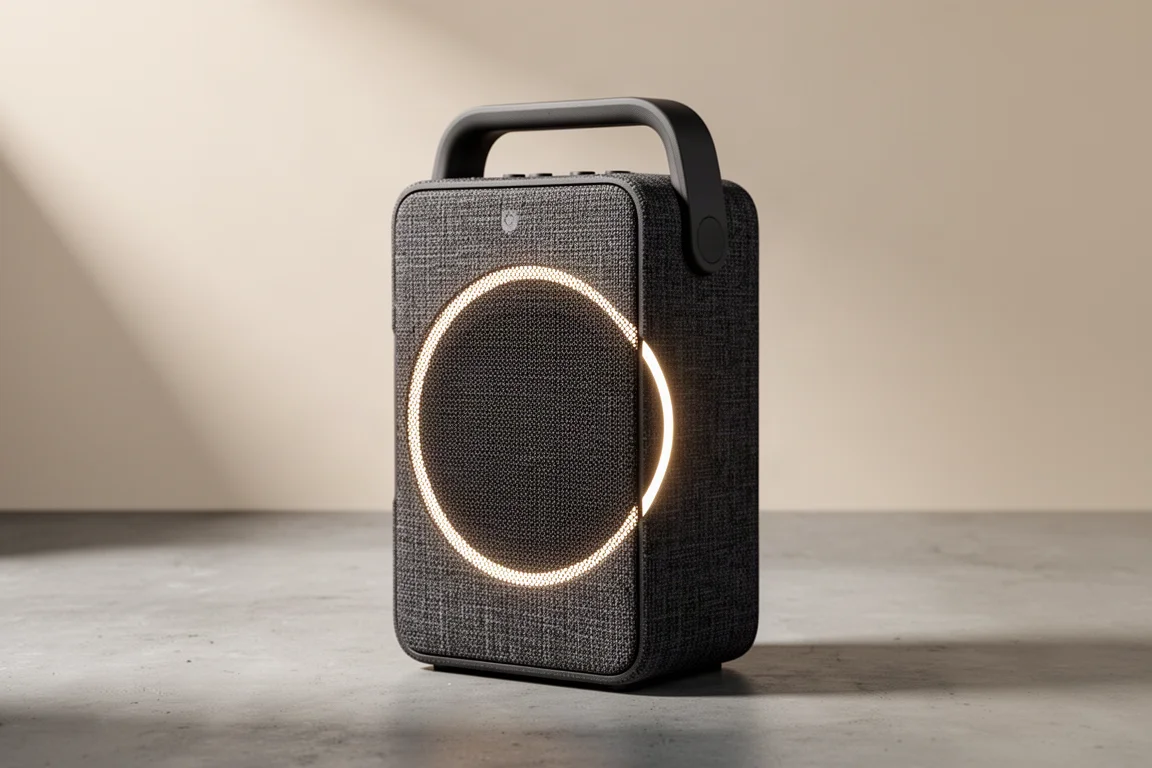
The JBL PartyBox Encore Essential is a portable speaker, and JBL makes pairing two of them into a stereo set unusually simple: two button presses and you have a left and a right. From there you connect to your equipment over Bluetooth. The design is aimed at parties and gatherings, which is why multi-colored LED lighting is built in and can be set to different colors to create an atmosphere while you ride or listen. Battery life is six hours and the cabinet is splash resistant, so a pair can go on a trip or out to the pool without worry. Two of them will project well over whatever your equipment is putting out, with enough bass to fill a small exercise room. List price is around $299 each, so a stereo pair runs about $600 before stands.
Best Hi-Fi Value: Klipsch The Sevens
The Sevens move from a party speaker to a more traditional hi-fi approach. Each cabinet pairs a one-inch titanium tweeter with a Tractrix horn and a 6.5-inch woofer, and as with most powered systems the right speaker carries all the electronics, inputs and amplifiers. Alongside Bluetooth you get HDMI ARC, optical, USB and analog RCA inputs, plus a phono stage, so a turntable can be plugged straight in without buying a separate phono preamp.
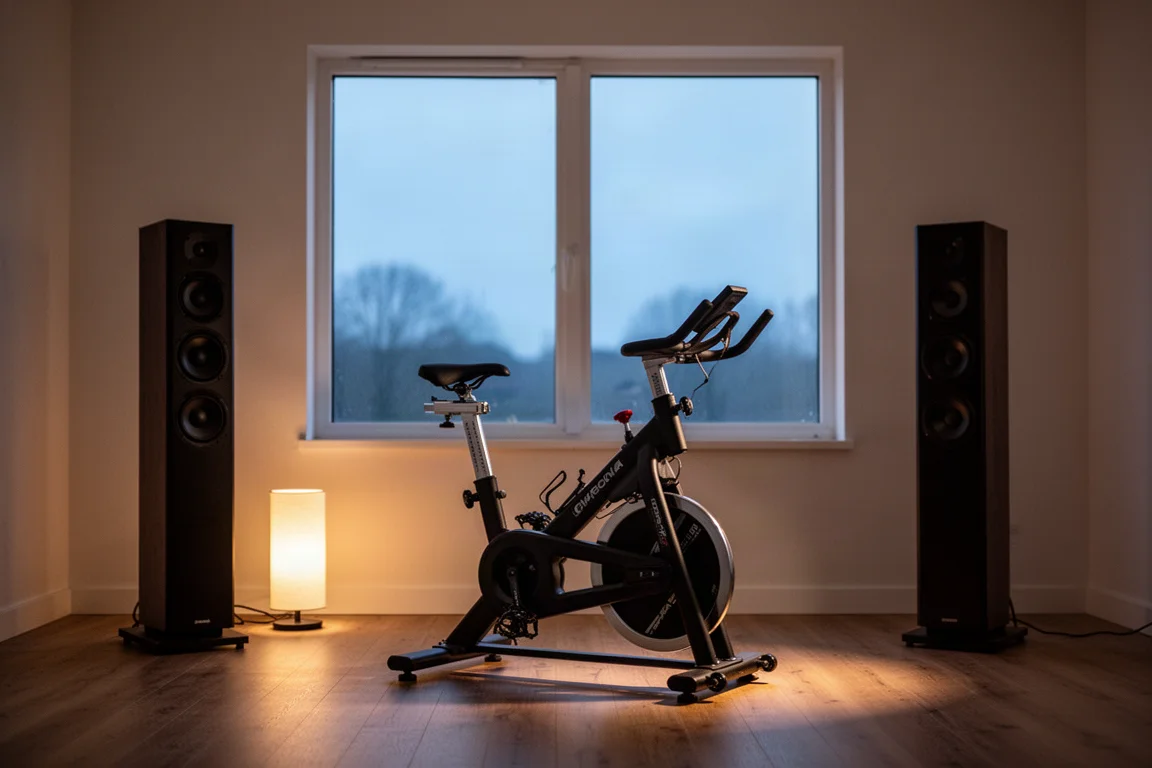
One real advantage of high-performance powered speakers like these is the active electronic crossover, which means each driver receives only the exact frequencies it is designed to handle. The Sevens support high-res audio at 24-bit/192kHz, and a switch lets you choose which speaker acts as the primary, handy when your equipment sits closer to one side than the other. Expect them to play deeper and better than almost any soundbar, and because they accept HDMI ARC, a television in the exercise room can control the volume with its own remote. Two caveats: there is no Chromecast or AirPlay 2 support, and volume is set on the speaker or its remote, so bouncing between inputs may mean turning up both the source and the speakers. Black and walnut finishes match the Klipsch Heritage look, and a subwoofer output makes it easy to add a matching sub in a larger room. Expect around $1,299.
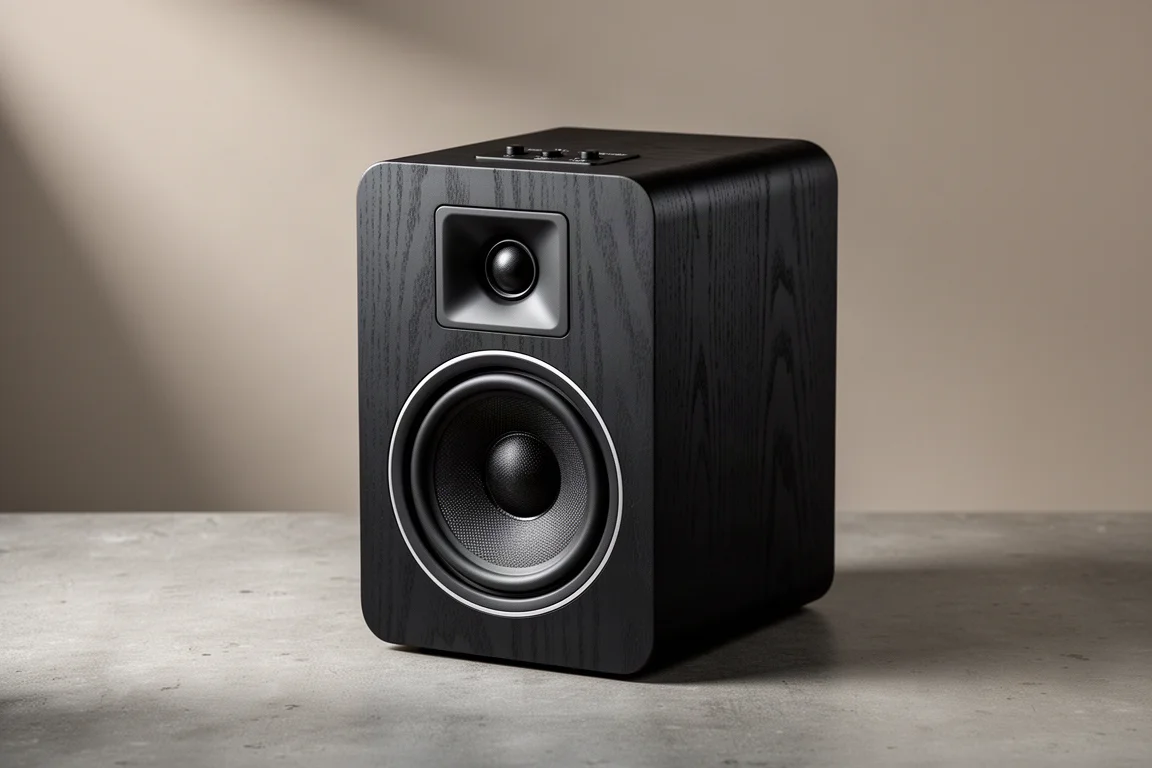
More Output: Klipsch The Nines
The Nines are essentially the same speaker as the Sevens but bigger, stepping up to an eight-inch woofer for more bass output. If the Sevens have the styling and the connectivity you want but you need more headroom, this is the natural upgrade. They share the same finishes and Heritage styling, and they also include a subwoofer output for adding a matching subwoofer in a larger room. Expect around $1,499.
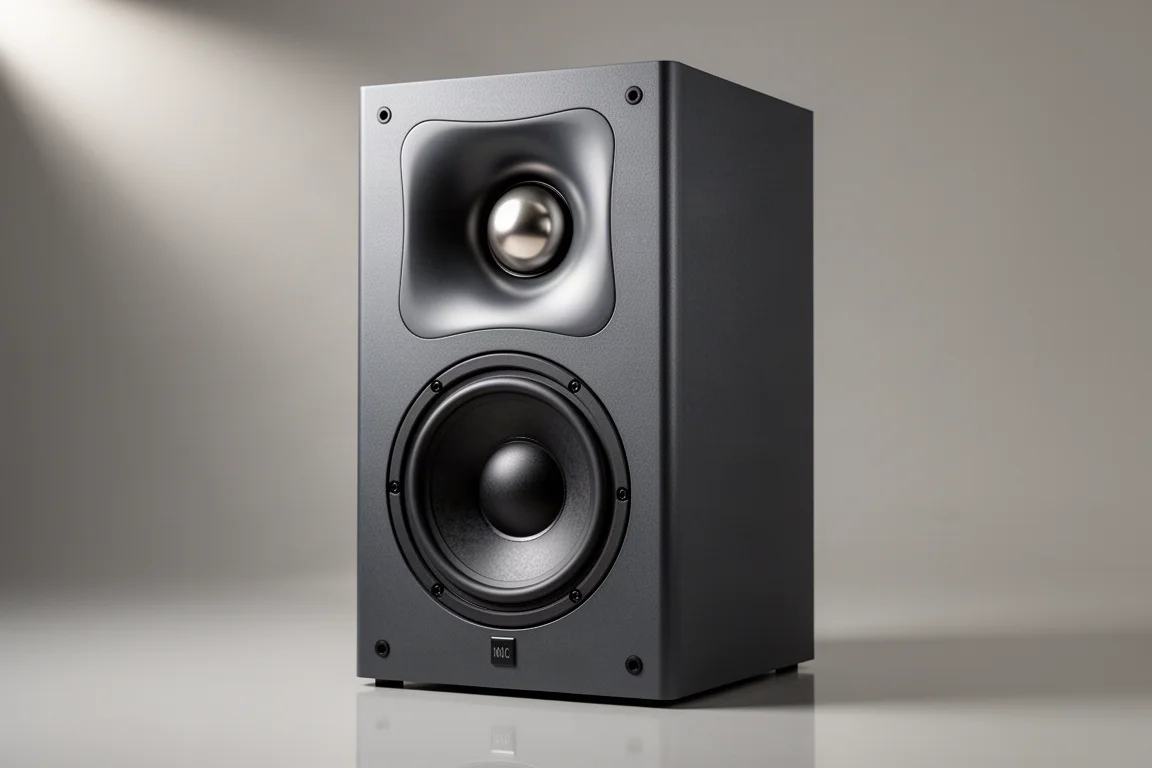
Best for Streaming: JBL 4305P
The JBL 4305P packs the components of an audiophile-grade hi-fi system into the speakers themselves, with a one-inch compression driver on a High Definition Imaging horn and a 5.25-inch pure pulp black paper cone woofer on a cast frame. Inside are audiophile-grade 24-bit/192kHz digital-to-analog converters. The input selection is unusually generous: a pair of pro-level balanced XLR inputs, quarter-inch phono plugs, a 3.5mm analog input, a Toslink digital input, asynchronous USB for a computer, and Bluetooth 5.1 for your equipment. What sets these apart from the other powered speakers here is network streaming. They can play lossless CD quality or higher-resolution music over your network using Apple AirPlay 2 or Google Chromecast from a phone, tablet or computer, which sounds dramatically better than a Bluetooth stream from a bike.
Unlike the Klipsch models, the 4305P speakers do not need a wire between them; they communicate wirelessly, which is what most home gym setups will do. An ethernet cable is included, and connecting the two speakers with it raises resolution from 24-bit/96kHz to 24-bit/192kHz, though for the vast majority of content, including full CD quality, the wireless link is enough. A remote is included, and inputs and volume can also be reached from the front of the primary speaker. The trade-off is the lack of an HDMI connection, so television volume has to be adjusted with the JBL remote or on the speaker itself rather than with a TV remote, although optical will still carry TV audio. Black and walnut finishes are available. The 4305P runs about $2,200.
Best Overall Performance: JBL 4329P
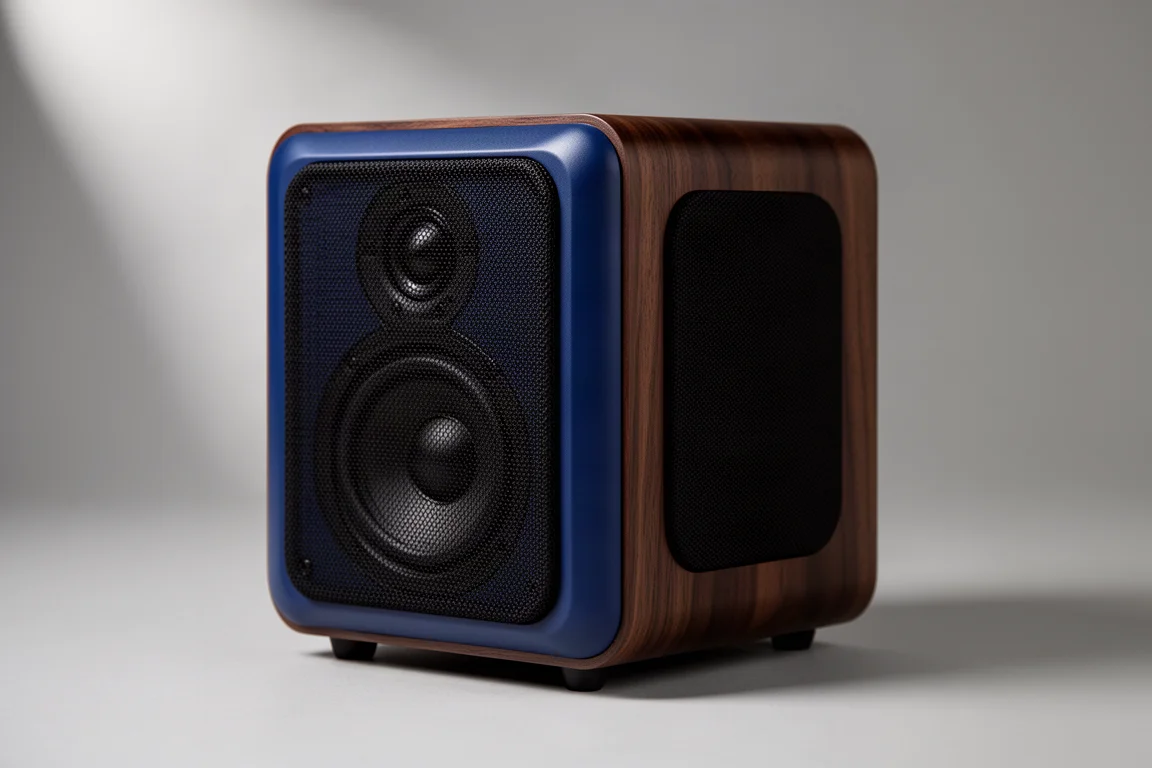
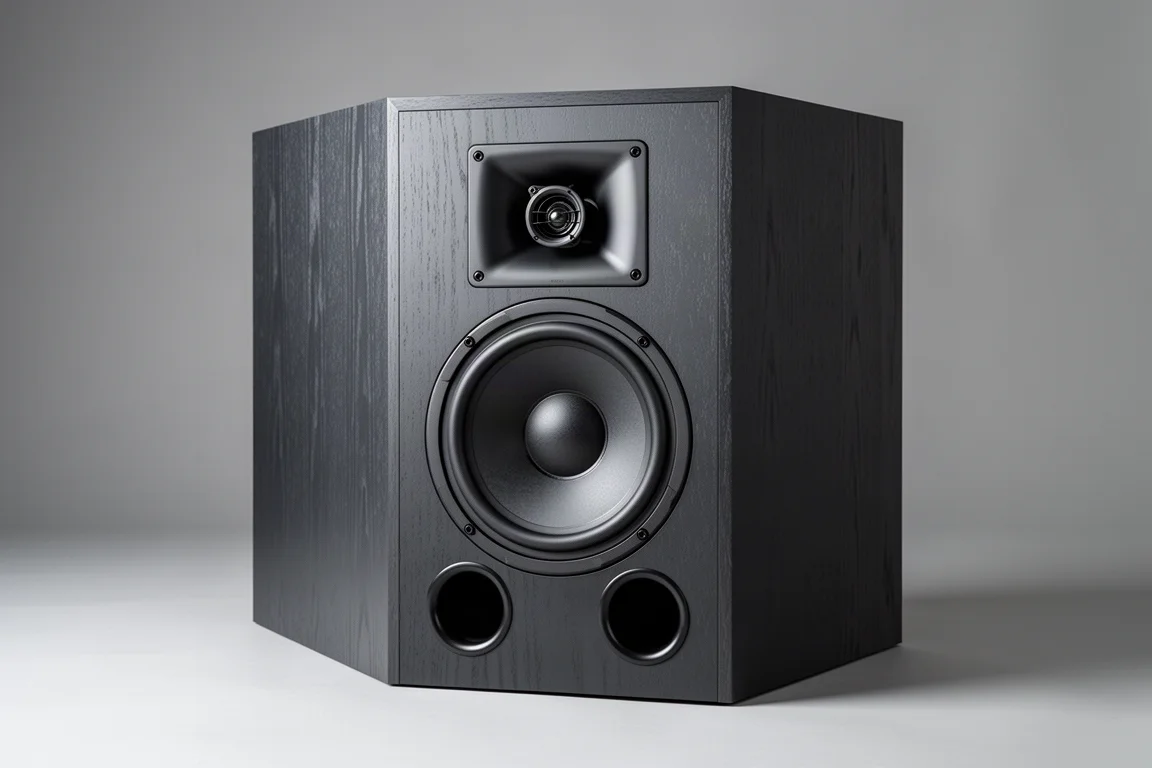
The JBL 4329P uses the same inputs and electronics as the 4305P but is larger, with bigger amplifiers and drivers. It steps up to a slightly better one-inch compression driver and an eight-inch woofer with dual front ports, reaching down to 28Hz. The result is enormous slam and bass, with a flat frequency response across the spectrum, a neutral character, and massive but fully controlled power. Dispersion is strong enough that the pair can be placed narrow or extremely wide; set as wide as the room allows and firing straight ahead, they still produced a perfectly centered voice that seemed to come from the screen itself. A custom stand places the 4329P closer to the floor and aims it upward at the correct angle. As with the 4305P, there is no HDMI connection. Black and walnut finishes are offered. Expect around $4,500.
Placement and Setup Tips
Position matters as much as the speaker you choose. Keep the path between each speaker and your ears clear, and set the speakers about 34 inches from the floor so the drivers line up whether you are riding, running, standing or on a bench. If you want the instructor’s voice to appear to come from the center of the screen, place your bike or treadmill equidistant from the two speakers. The JBL models tolerate wide spacing especially well, but a centered, symmetrical setup is the safest starting point in any room.
Buying Advice
Work backwards from the room and the budget. The PartyBox Encore Essential pair is the lowest-cost route and the only one that travels, which makes it a good fit for a small space or a setup that doubles as outdoor audio. The Sevens bring a proper hi-fi feature set, including HDMI ARC control from a television, at a mid-tier price, and the Nines add bass output for a little more money. The JBL 4305P is the pick if network streaming over AirPlay 2 or Chromecast and pro-level inputs matter to you, while the 4329P is the no-compromise option for a larger room where deep bass and headroom are the priority. In every case, budget for stands as well as speakers, since height is what makes the stereo image work in a gym.
One more practical note: if you plan to switch between inputs regularly, check how each system handles volume. The Klipsch models set volume on the speaker or its remote, while the JBL models add a remote and front-panel controls of their own. None of these differences are dealbreakers, but knowing them in advance saves a few minutes of confusion during the first workout.
Conclusion
Better sound genuinely changes how often a home gym gets used, and the five systems here cover the range from a portable speaker pair at around $299 each to a full hi-fi installation. Start with the room size, decide whether television control or network streaming matters more, and let the budget settle the rest.
Further reading
Related Reviews

Backpacking Gear
Building a 10 lb Base Weight: An Ultralight Backpacking Gear List
A practical walkthrough of the ultralight pieces behind a 10 lb base weight, from a 765 g pack and a roomy one-person tent to a full camp chair and a dependable water filter.

Road Bikes
10 New Road Bikes Worth Watching: Aero, Titanium, Steel and Endurance Standouts
A practical roundup of 10 new road bikes, from aero flagships chasing single-watt gains to titanium, steel and endurance platforms built for real roads.
Bikepacking Gear
11 Bikepacking Essentials for Long-Distance Cycling
Eleven bikepacking essentials for long-distance cycling, from a steel gravel frame and a two-person tent to helmet lights, packable gloves, and a frame bag that puts weight in the right place.