Desktop Speakers
Best Powered Desktop Speakers Compared: Vanatoo, Klipsch, Kanto, and Kali
Four powered desktop speakers compared on midrange linearity, bass extension, cabinet size, and value, with practical guidance on which one suits a desk, a television, or a larger room.
Introduction
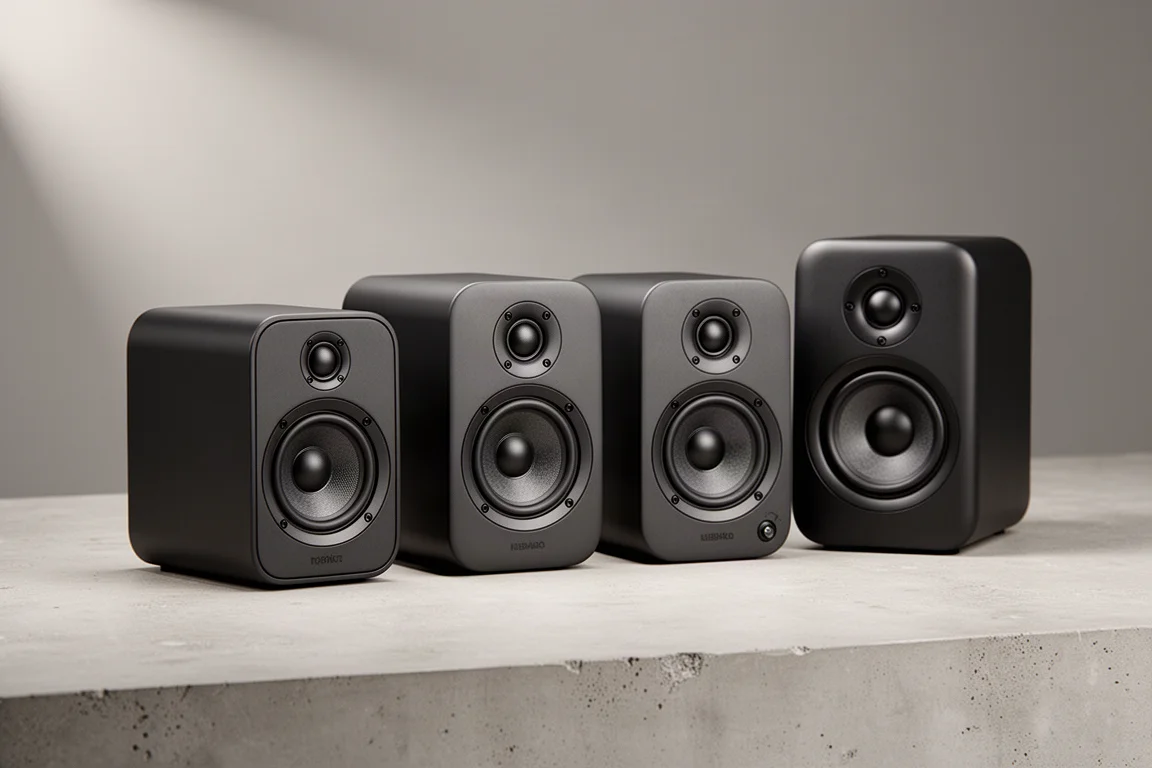
Powered desktop speakers have become one of the simplest ways to build a compact audio system. They connect directly to a computer, a television, or a streaming source, and they need no separate amplifier. The four models that come up most often in this price bracket, the Vanatoo Transparent One Encore Plus, Klipsch The Fives, Kanto YU6, and Kali Audio LP-6 V2, sit within a few hundred dollars of one another, but they are not the same size and they are not tuned the same way.
That matters because the trade-offs run in different directions. One model is the smallest and the most linear through the midrange. Another costs less and delivers more bass, with a tuning compromise attached. The largest option measures best of the group but takes up far more room than most desks allow.
This guide walks through the criteria that actually shape day-to-day listening, then looks at each speaker on its own terms.
What to Look For in a Desktop Speaker
The first thing to understand is that a flat, smooth on-axis response is easier to live with than a dramatic one. Many speakers in this size class use a V-shaped tuning with a pronounced mid-bass and lifted highs. That lift is often described as detail, but over longer sessions it tends to cause listener fatigue. Sibilance in the lower treble, roughly between 4 and 6 kHz, is a related issue and is one of the most common complaints with compact speakers.
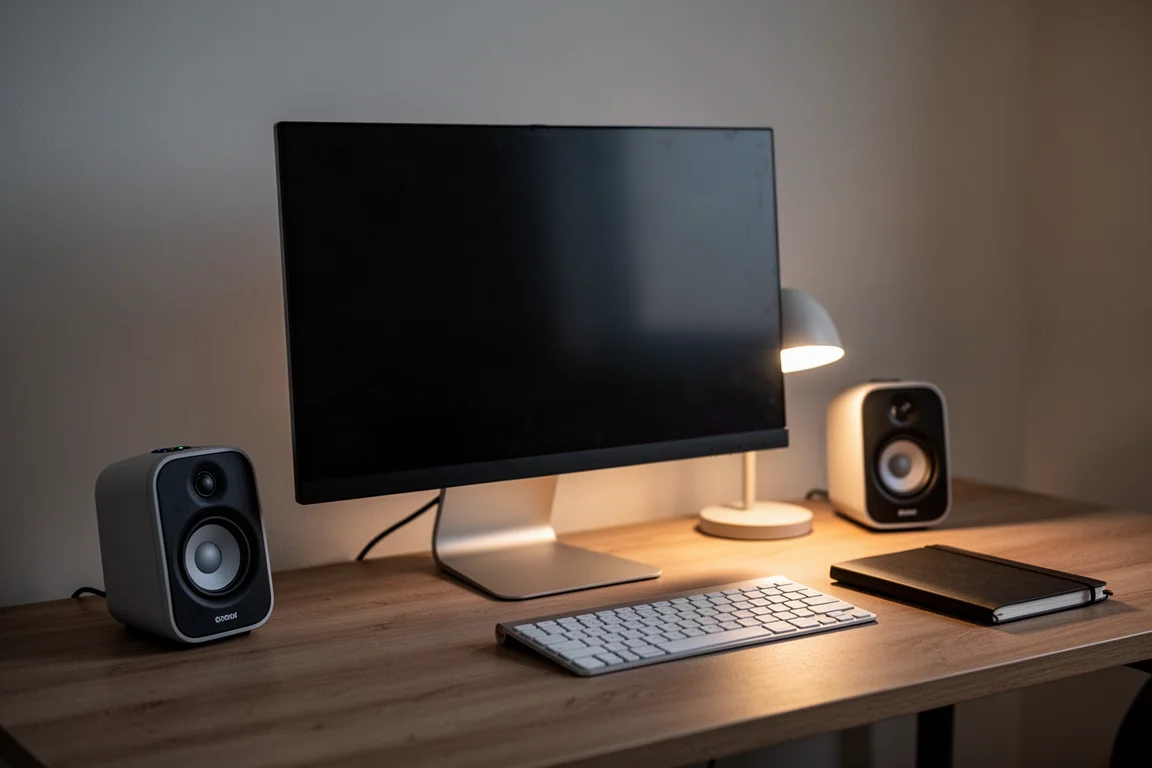
Vertical directivity matters just as much on a desk. The cleanest result comes from sitting with the tweeter at ear height. Move too far above or below that line and two-way designs can lose energy through the crossover region, producing uneven response and lobing as the woofer and tweeter stop behaving as a single coherent source. A speaker that holds together roughly 20 degrees above and below the tweeter axis is far easier to place, especially on a desk where perfect aiming is rarely possible.
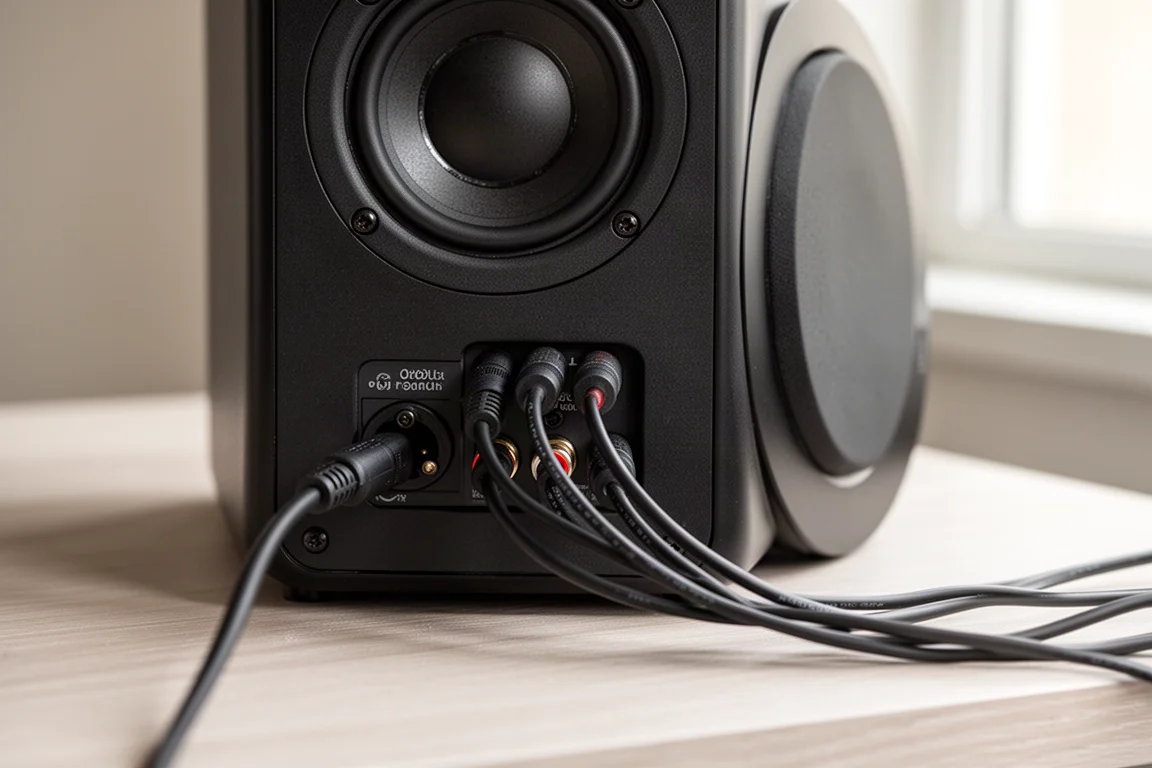
A subwoofer output is another practical feature. When a subwoofer is connected, some speakers apply an automatic crossover, which takes low-frequency load off the main drivers and lets them play louder before protection circuits step in. That matters in a medium living room where the speakers are asked to fill a larger space.
Finally, consider inputs and output capability. USB, optical, coaxial, analog, and Bluetooth are common at this price. HDMI is rare. In the farfield, compact speakers will eventually compress and limit bass output to protect the woofer, which is exactly the situation a subwoofer resolves.
Vanatoo Transparent One Encore Plus: The Most Linear of the Group
The Transparent One Encore Plus is a two-way powered desktop speaker that also works in the farfield, so it can be used with a television in a small or medium living room, where a subwoofer becomes necessary. The driver complement is a 5.25-inch midwoofer with a large ferrite motor, an aluminum cone, and a rubber surround, a 1-inch tweeter mounted in a waveguide with a phase plug, and a 5.25-inch passive radiator on the rear. Total power is 240 W. Inputs cover USB, optical, coaxial, analog, and Bluetooth, and there is a subwoofer output that automatically inserts an 80 Hz or 125 Hz crossover depending on which DSP setting is active. The pair sells for $649 and ships with cables, grills, and a remote that handles volume, source selection, treble trim, and midwoofer trim.
Measured on-axis, the response stays within plus or minus 2 dB, which is excellent for the category. F3 is 42 Hz and F10 is 34 Hz, so the speaker reaches down to roughly 40 Hz in a room without much trouble. Horizontal radiation holds to about plus or minus 60 degrees before the tweeter begins to beam.
Subjectively, the neutral on-axis character carries over to nearfield listening, where the listener sits close enough that the room contributes less. There is a slight loss of edge and clarity in the midrange between about 1 and 2 kHz, and sibilance in the lower treble stands out on some material. A single band of parametric EQ cut by about 2 dB takes care of it. Vertical consistency is good to about 20 degrees above or below the tweeter line, which is generous for a two-way design and forgiving on a desk.
Output is the main limitation. At 87 dB at one meter a single speaker is comfortable, and a pair in a room reaches roughly 93 dB. Push beyond that, particularly at 85 dB and above in the mid to farfield, and compression limits low-frequency output to protect the woofer. A subwoofer removes that constraint. Multitone distortion stays well under the 3 percent threshold even at the highest tested output of 96 dB. The one missing connection is HDMI, which would have been useful in a living room setup.
Klipsch The Fives: Bigger Cabinets for Bigger Rooms
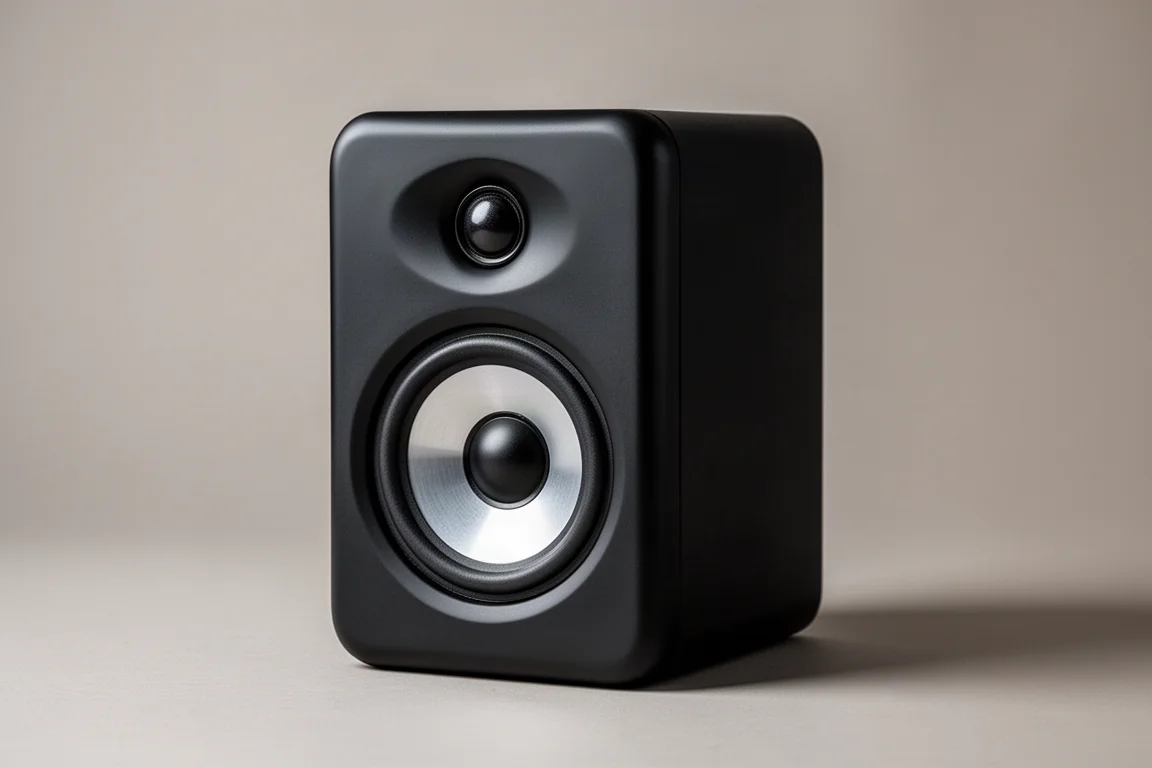
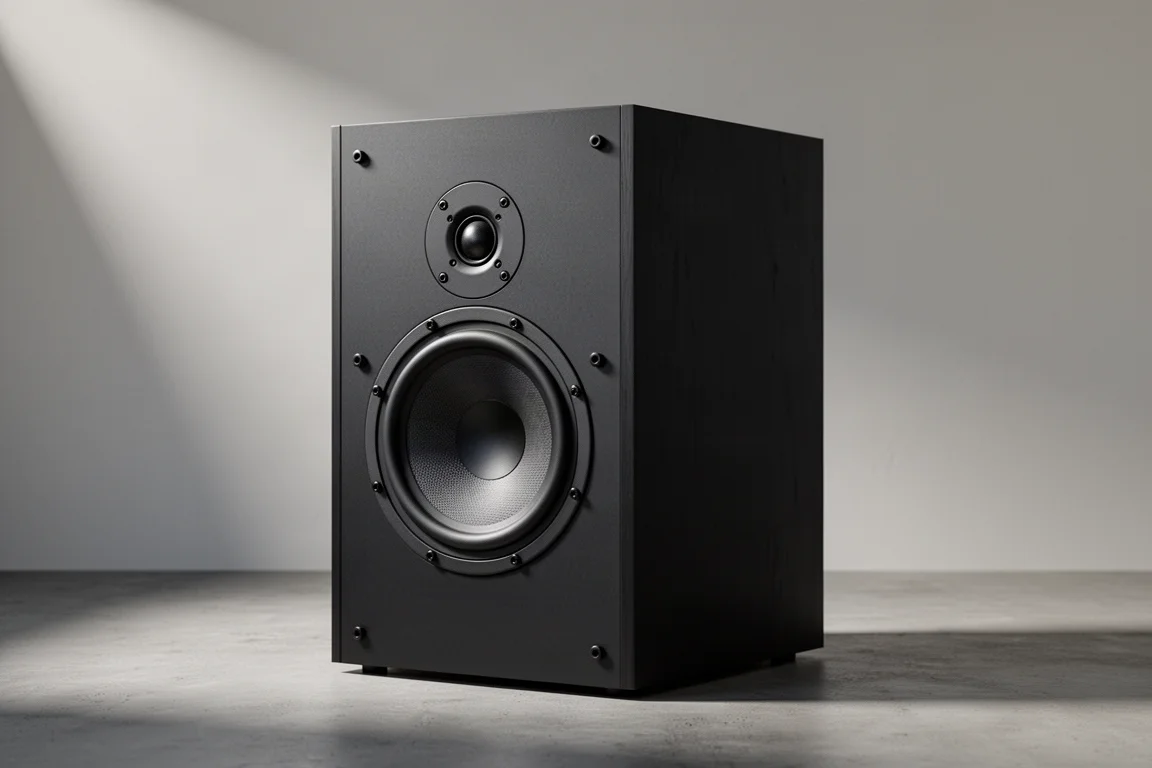
Klipsch The Fives is the larger alternative at a $700 MSRP. It is a strong performer, but the cabinet is noticeably bigger than the Vanatoo’s, and that is the deciding factor for most buyers: it needs more shelf, desk, or stand space. Once a subwoofer is part of the system, its preference ranking lands around the same level as the Vanatoo rather than clearly ahead of it. For listeners who have the room and accept the higher price, that is a reasonable trade. For anyone working with a tight desk, it is not.
Kanto YU6: More Bass at a Lower Price
The Kanto YU6 undercuts the Vanatoo at $480 and uses a slightly larger cabinet. Its estimated in-room response extends lower, with a mild mid-bass lift between roughly 100 and 200 Hz. The trade-off is a resonance around 800 Hz, which is difficult to correct without equalization, plus a slight scoop in the midrange.
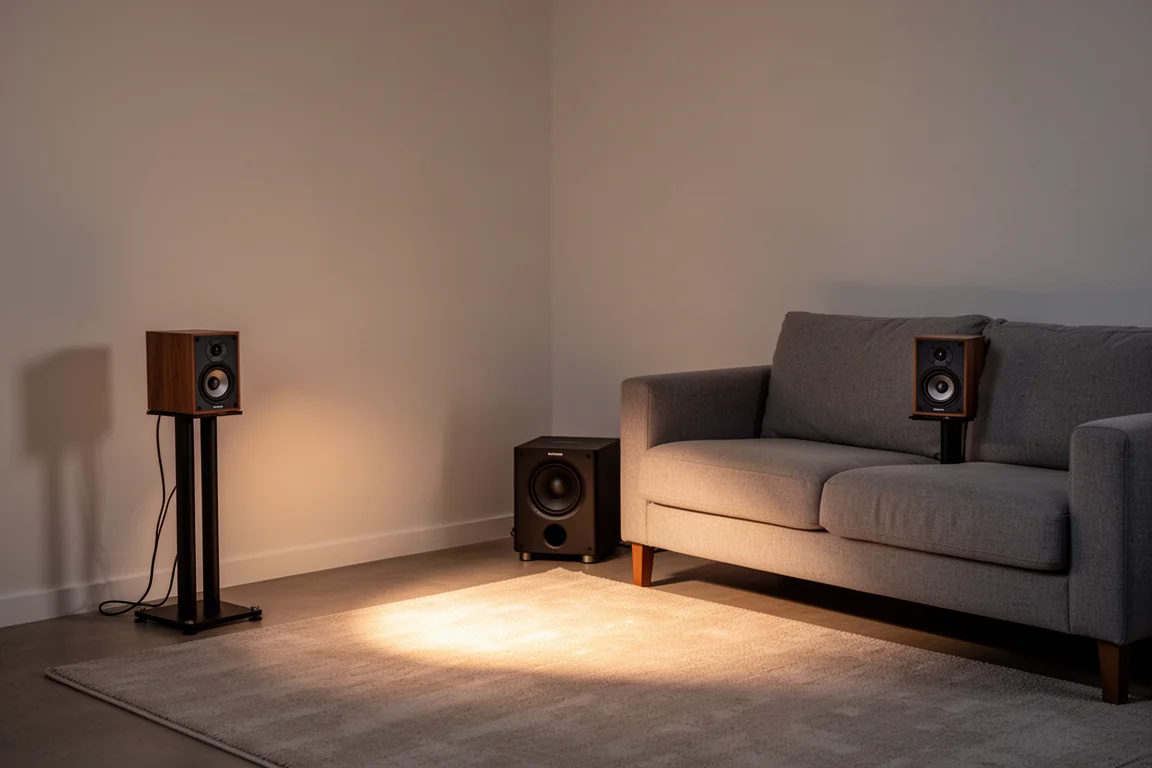
That midrange scoop is the more consequential issue for television and dialogue listening, where presence in the midrange is exactly what you want. On a desk, where EQ is easy to apply, it is much less of a problem. Buyers who want more low-end from the main speakers and a lower entry price will find the YU6 the value option here, provided they can address the 800 Hz resonance or simply do not notice it.
Kali Audio LP-6 V2: The Largest Option
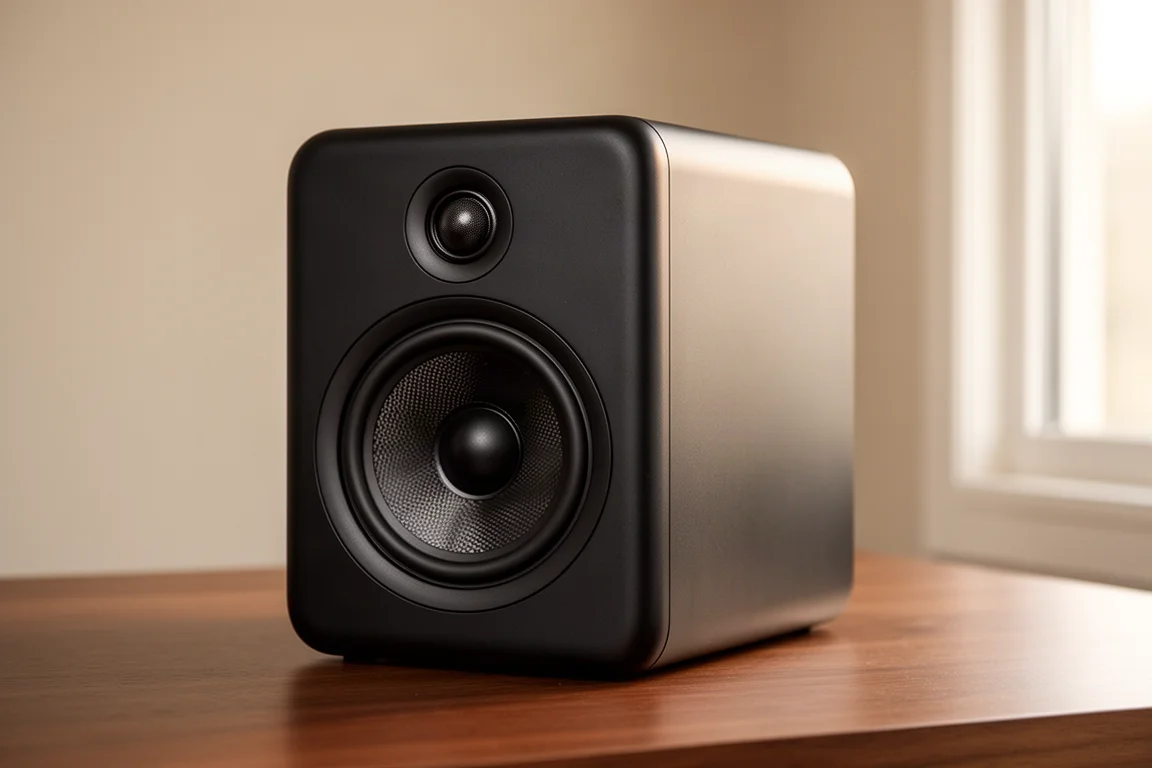
The Kali Audio LP-6 V2 costs between $400 and $500 per pair depending on where and when you buy, and it is by far the largest speaker in this group. It also measures the best of the four. The obstacle is physical: it takes up substantially more space than the others, which rules it out for most desktop setups and makes it a sensible choice only where there is room to spare.
Buying Advice: Matching a Speaker to the Room
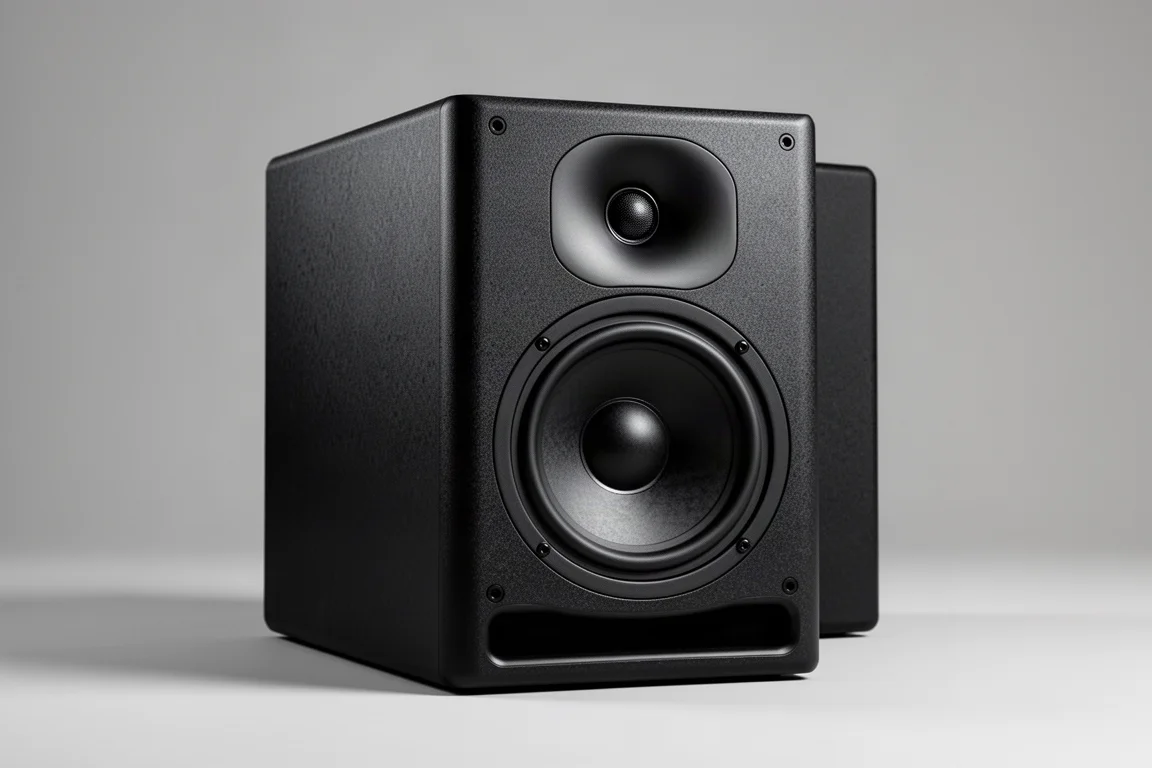
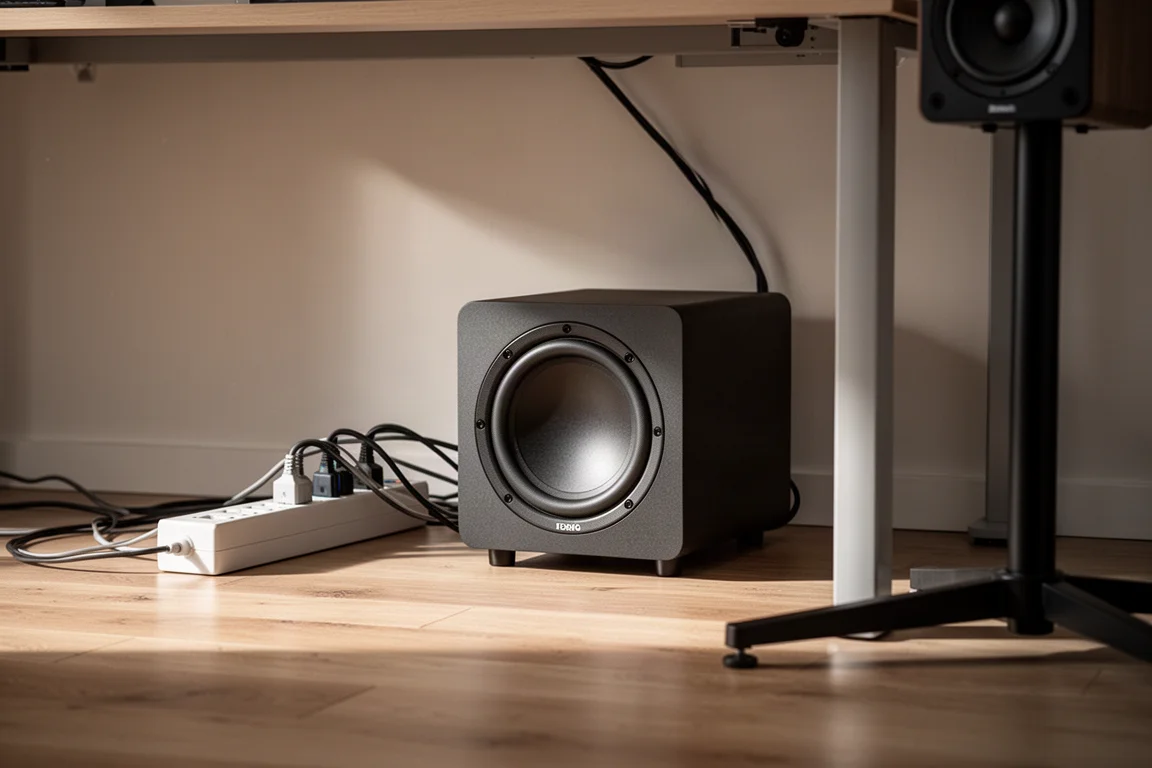
Plan for a subwoofer whichever of these speakers you choose. It takes the low-frequency load off the main drivers, allows higher playback levels before compression sets in, and compact powered subwoofers that suit a desk or a small living room are affordable. With the Vanatoo, connecting a subwoofer also activates an automatic 80 Hz or 125 Hz crossover depending on the DSP setting, so integration is largely handled for you.
Midrange linearity is the characteristic that matters most for everyday listening. The Vanatoo Transparent One Encore Plus is the most linear through the midrange in this group, and its sibilance in the lower treble is the one caveat worth weighing. The Kanto YU6 costs less and delivers more bass, but it carries an 800 Hz resonance and a slight midrange scoop that no amount of driver quality can hide without EQ. The Kali Audio LP-6 V2 is the strongest measured performer, but its size makes it a different kind of purchase.
Size and use case should drive the final decision. If the speakers will sit beside a television, midrange presence is worth prioritizing, which favours the Vanatoo. If they will sit on a desk with a computer as the source, EQ is available and the tuning differences become far easier to manage. And if HDMI switching is a requirement, note that the Vanatoo does not include an HDMI input.
Conclusion
Each of these four speakers makes sense for a different listener. The Vanatoo Transparent One Encore Plus at $649 per pair is the smallest and the most linear through the midrange, with a useful subwoofer output and a remote that covers tone trims, though its lower-treble sibilance and lack of HDMI are real limitations. The Kanto YU6 at $480 gives up some midrange neutrality in exchange for more bass and a lower price. Klipsch The Fives at $700 MSRP is the larger cabinet for larger rooms, and the Kali Audio LP-6 V2 between $400 and $500 measures best of all but needs the most space.
Match the speaker to the room and to the source first, add a subwoofer when the room allows, and the rest of the decision becomes straightforward.
Further reading
Related Reviews
Desktop Speakers
Audio Smile Little British Monitor Review: A Compact Desktop Speaker With Measured Neutrality
A small European powered desktop speaker with a waveguide tweeter, an aluminum cone woofer, and an unusually flat measured response for its size.
Desktop Speakers
Audioengine A2+ Review: A Small Desktop Speaker That Knows Its Place
The Audioengine A2+ is a compact powered desktop speaker pair with Bluetooth, a tidy footprint, and a sound profile tuned for life on a desk rather than a listening room.
Desktop Speakers
Five Desktop Speakers Compared: Edifier, Kanto, Adam Audio, and Kali
Five compact desktop speakers from roughly $170 to $349 per pair, compared on accuracy, listening window stability, output capability, and desk footprint.