Portable Power
9 Portable Power Stations Compared: Budget to Premium, Tested Head to Head
Nine lithium iron phosphate power stations from Segway to Jackery, compared on surge performance, capacity, charging speed, UPS behavior, and standby drain.
Introduction
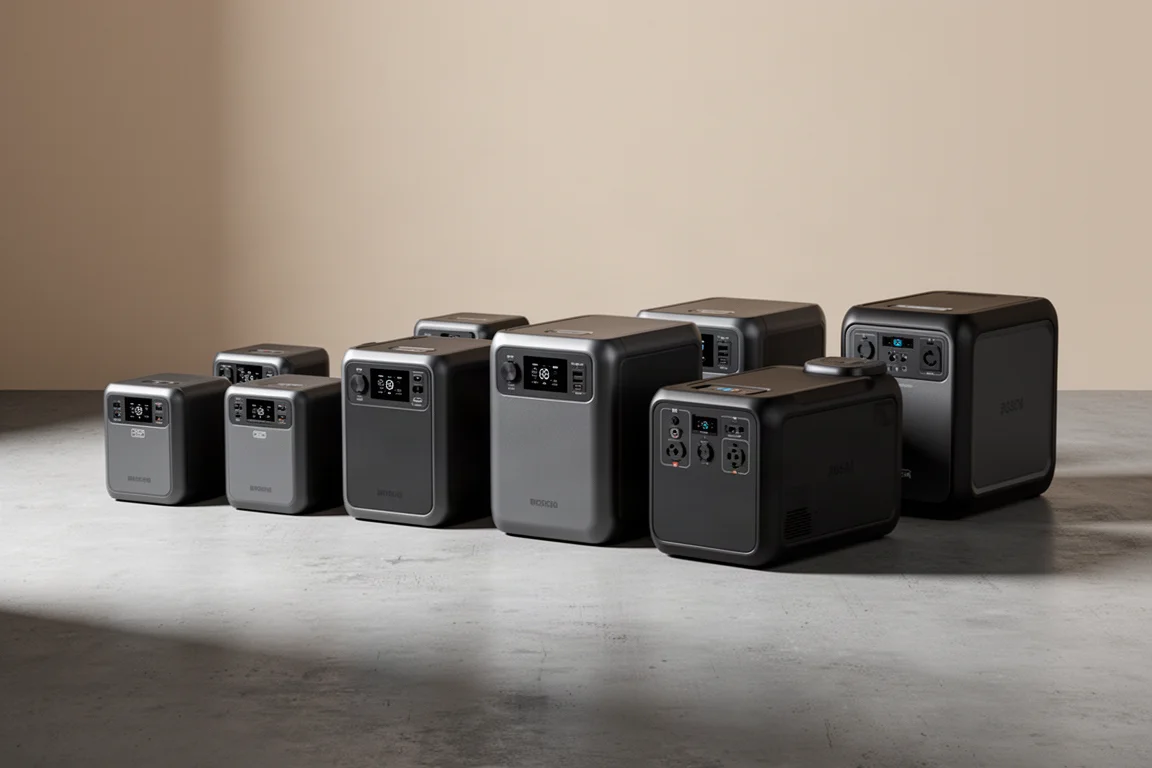
Portable power stations have quietly become one of the most practical home and travel purchases you can make, but prices range wildly. This comparison looks at nine models, all built around lithium iron phosphate batteries and all aiming at roughly the 2,000-watt class, to answer a simple question: is a $500 unit really worse than a $1,500 one?
The lineup spans Segway, Oupes, Dabbsson, EcoFlow, Bluetti, DJI, Anker, Grestle, and Jackery, with prices from $499 to $1,499. Every unit was bought and tested side by side against the same set of challenges: pure sine wave output, surge performance, usable capacity, recharge speed, UPS behavior, and idle power draw.
How the Nine Were Tested
The tests were deliberately demanding. Each power station had to power three halogen work lights at once, equivalent to running more than 150 LED bulbs simultaneously. They were then pushed against a 33-gallon air compressor already at 90 PSI, a task that not every unit could handle, followed by a maximum-output test using a fan speed controller and a space heater ramped until each unit overloaded.
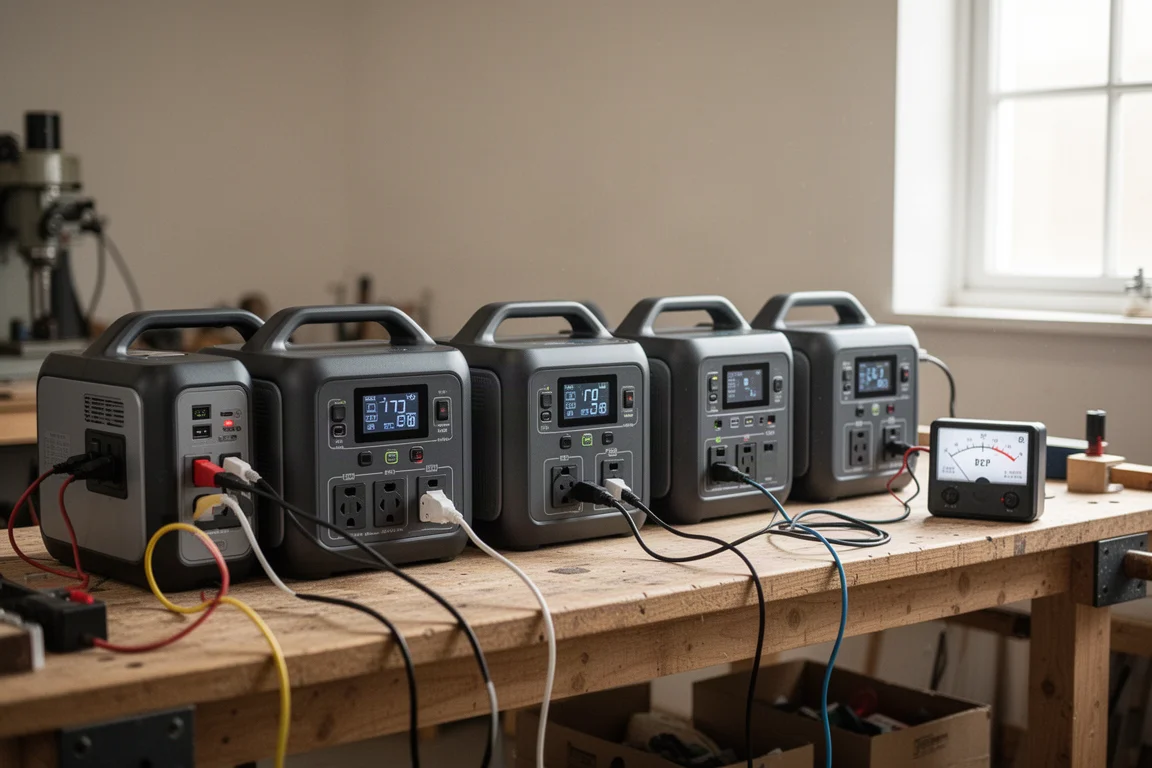
Beyond raw power, the comparison measured real capacity with an energy use meter, full recharge times, uninterruptible power supply behavior with a computer and light connected, and standby drain over 15 idle hours. USB-C ports were also verified against their advertised output ratings.
Segway: The Budget Entry
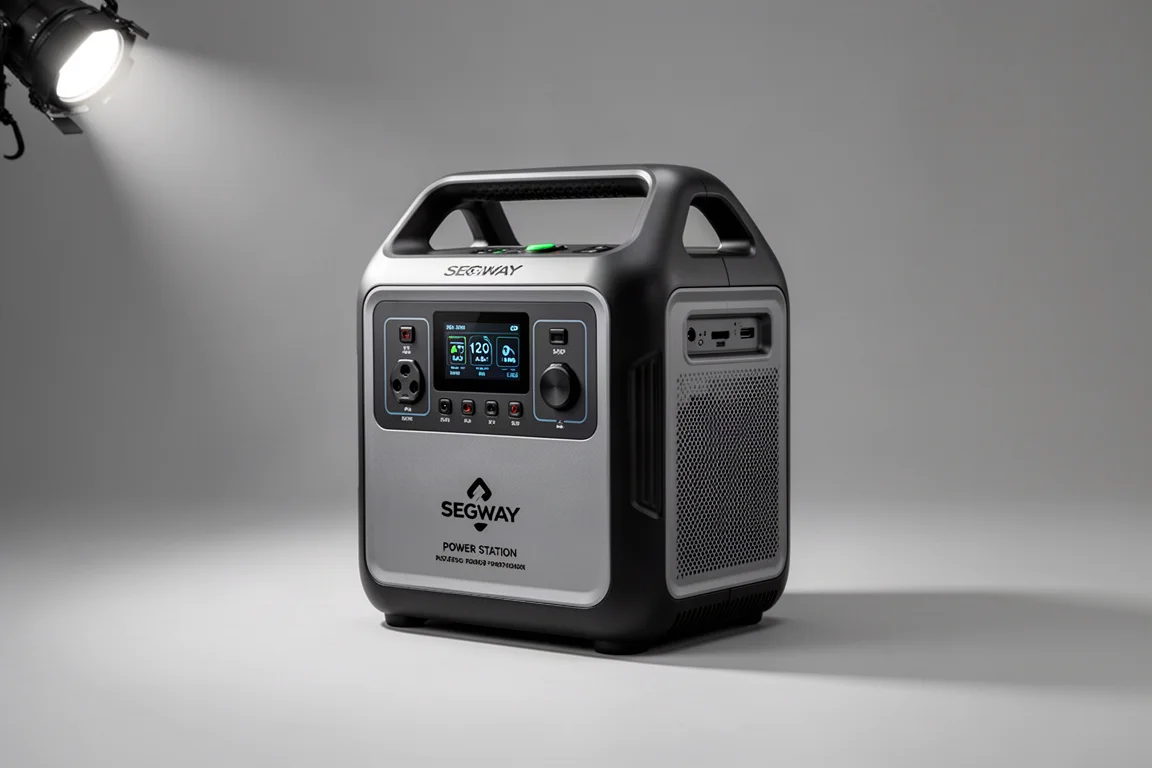
At $499, the Segway is the least expensive unit here, yet it is rated for 2,200 watts with a 1,024 watt-hour battery, claimed 97% efficiency, quick recharging in about 1.2 hours, and over 4,000 cycles. It ships with an AC charging cord and a 12-volt car charging cord.
In testing it held voltage well at just over 120 volts under load, and its watt meter read within one watt of the reference meter. The main trade-offs: at 35.91 pounds it is one of the heaviest here, the cooling fan measured a fairly noisy 58.9 dB, and some noise appeared on the waveform when powering a drill. It made easy work of the air compressor, even alongside two halogen lights, though voltage dropped to 109.35 under that combined load. On standby it fell from 100% to 73% over 15 hours.
Oupes: Fast Claims, Mixed Results
The Oupes costs $549 and is rated for 2,000 watts with surge up to 4,500, 1,024 watt hours of capacity, pure sine wave output, and a claimed 0 to 80% charge in 36 minutes, or 26 minutes when combining AC with solar. The battery is rated for 3,500-plus cycles and the claimed power transfer time during an outage is under 20 milliseconds.
It is notably lighter than the Segway at 27.8 pounds and delivered close to 120.48 volts and 60 Hz without load. However, the cooling fan was the loudest measured at 67.4 dB, and in the compressor test the unit failed: with two lights running, voltage dropped to 94 volts before the AC outlets shut down. Standby drain was also the worst of the group, dropping to 55% after 15 hours.
Dabbsson: Big Capacity, Strong Efficiency
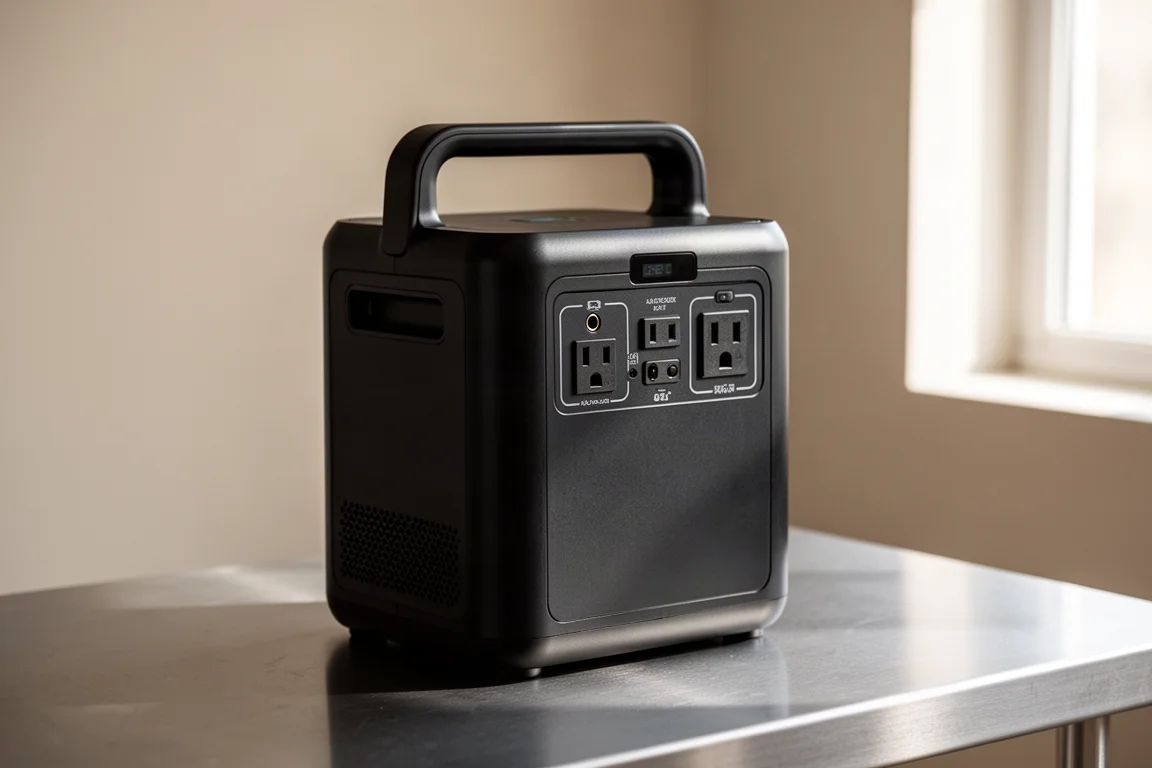
The Dabbsson costs $599 and stands out immediately on paper: 2,200 watts of AC output with a power boost up to 3,300 watts and a 2,408 watt-hour battery, roughly twice the capacity of most units here. It supports up to 12 devices simultaneously with intelligent current management, claims ultra-quiet operation, sub-15-millisecond EPS switching, over 4,000 cycles, and an 80% recharge in 1.5 hours.
In practice it delivered the best capacity efficiency of the group at 91.8%, producing 1,880 watt hours, and it aced the compressor test, kickstarting it with one or two lights running at 119.5 volts. At around 40 pounds it is heavy, and a full recharge took about 114 minutes, but it also posted the second-best standby result at 85% after 15 hours and delivered a flawless UPS performance with no light flicker at all.
EcoFlow: The Quiet Budget All-Rounder
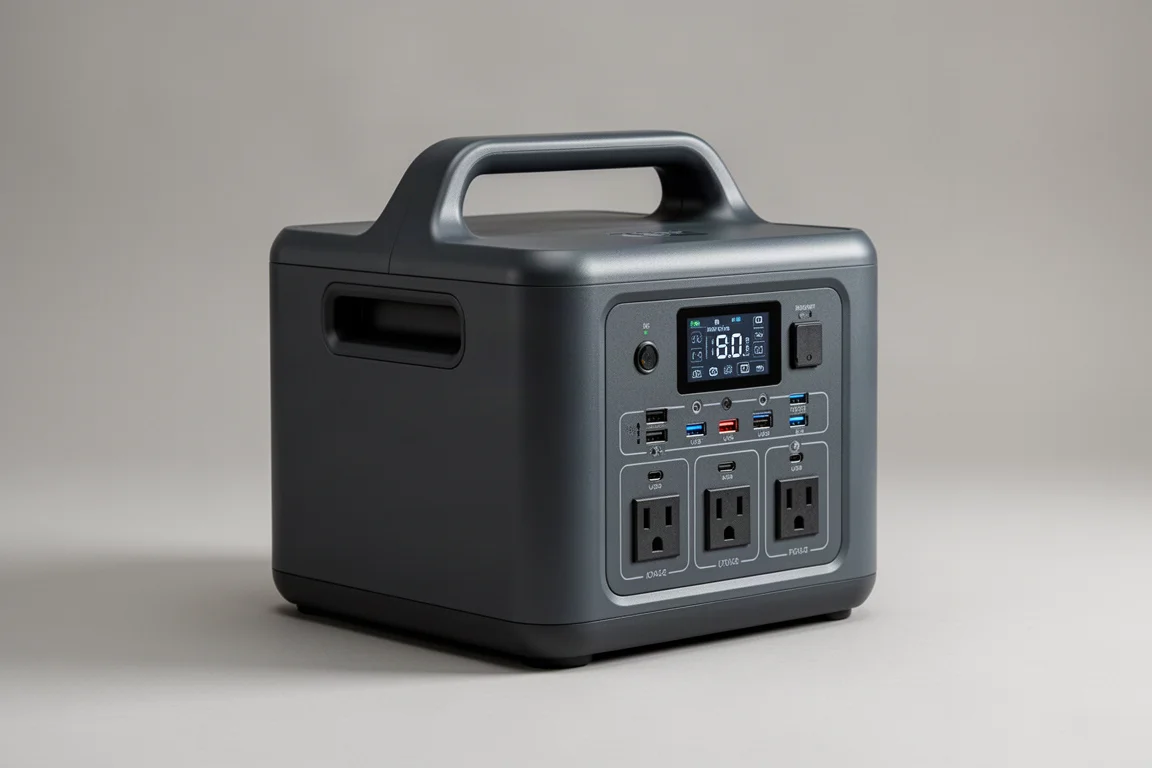
At $699, the EcoFlow is rated for 1,800 watts with 1,024 watt hours, claimed seven-times-faster charging with 0 to 80% in 50 minutes and a full charge in 80 minutes, up to 500 watts of solar input, and over 3,000 cycles. At about 26 pounds, it is among the lightest here.
It was by far the quietest unit tested at 37.8 dB, and it finished second in capacity efficiency at 87.9%, delivering just over 900 watt hours. One quirk appeared during the light test: the AC outlet powered itself down initially and needed to be switched on again. In the compressor test it managed the kickstart, but voltage sagged below 100 volts, which is uncomfortably low. Standby was excellent at 82% after 15 hours.
Bluetti: Compact and Light
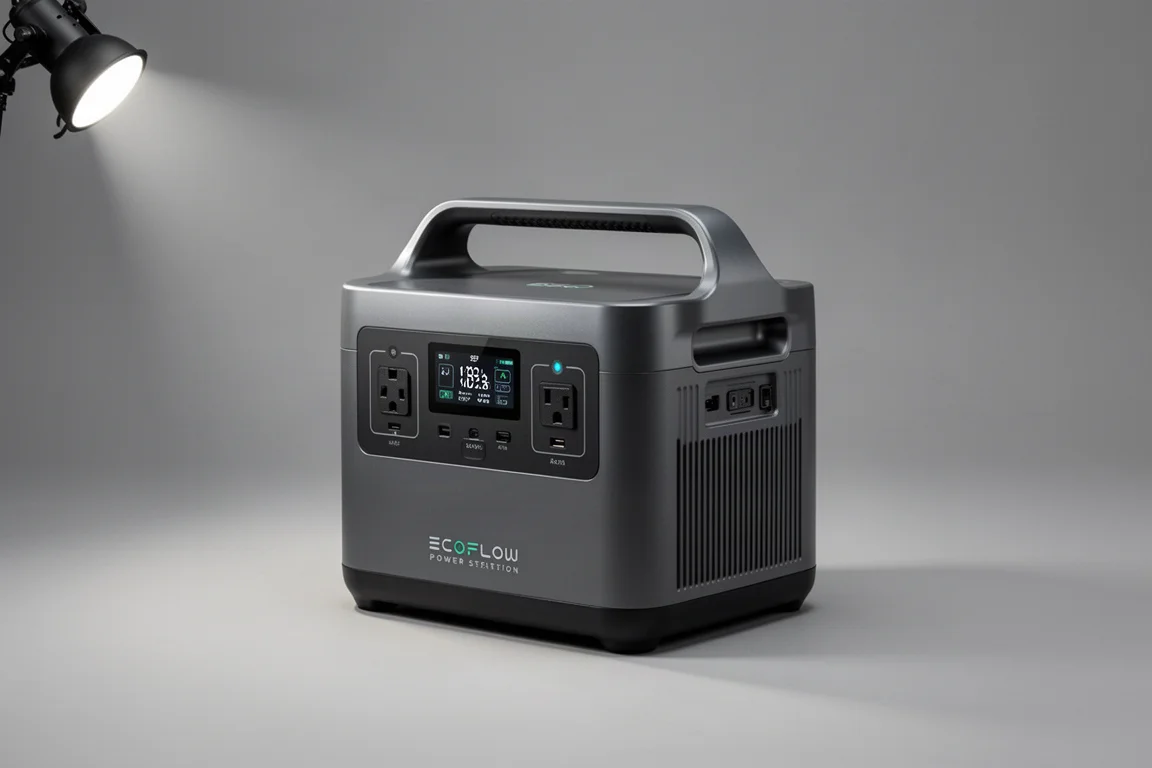
The Bluetti costs $799 and is rated for 1,800 watts with a 3,600-watt surge and 1,024 watt hours (listed at 1,152 Wh in the capacity test). It claims a smaller 17-liter body, a full charge in 70 minutes, and up to 11 devices powered at once, all at just under 25 pounds, the lightest of the nine.
It ran close to 60 Hz and just over 120 volts under load, held noise to a quiet 48.1 dB, and passed the UPS test with no visible light flicker. Standby was the second best at 84%. The disappointing result was the compressor: it could not kickstart the compressor even with no additional light load, giving up on repeated attempts. In the capacity test it produced 850 watt hours and shut down just before the 36-minute mark.
DJI: Best Continuous Output
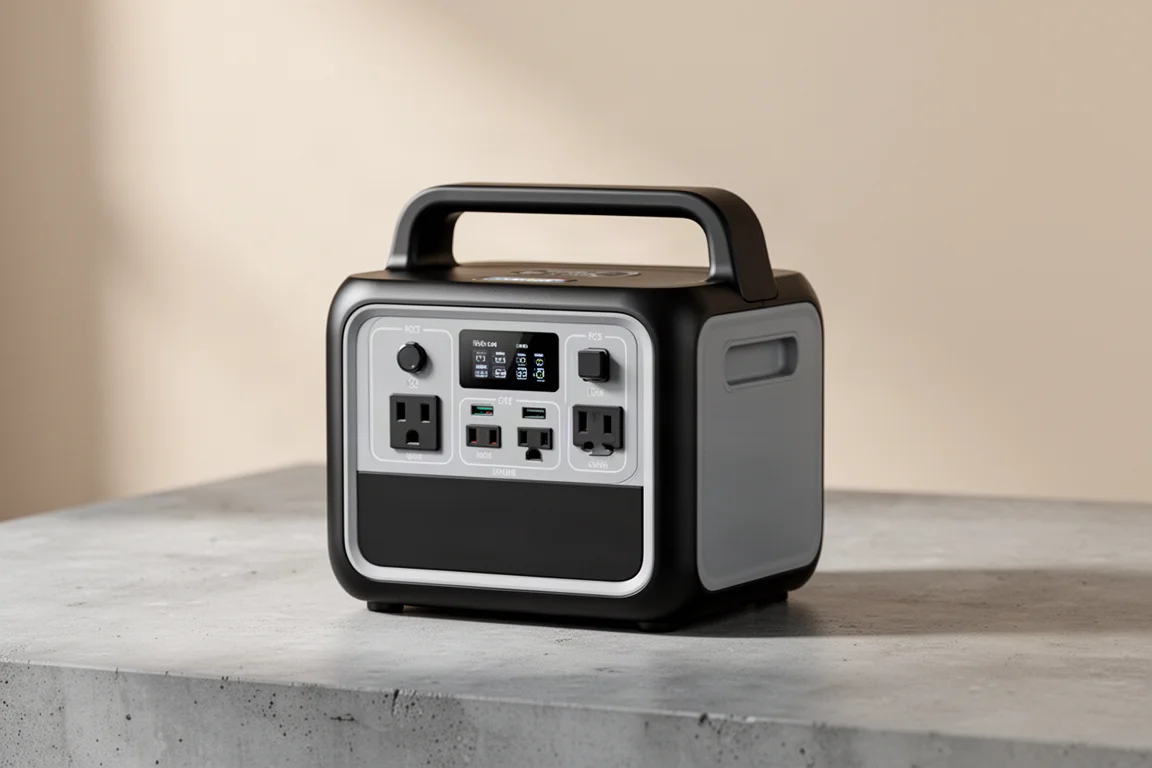
Also $799, the DJI has 1,024 watt hours and claims up to 2,600 watts of output, 0 to 80% recharge in 37 minutes, a very quiet 26 dB during charging, dual 140-watt USB-C ports, and UPS capability with a 10-millisecond switch time. It weighs 31.24 pounds.
Its headline achievement came in the maximum-output test, where it sustained around 2,641 watts, the highest continuous output of the group. It powered the lights within one watt of the reference meter and handled the compressor with one light easily, though it shut down after 8 seconds with two lights attached. Noise under load was a moderate 55.7 dB, a brief light flicker appeared during the UPS test, and standby drain was on the high side at 69% after 15 hours.
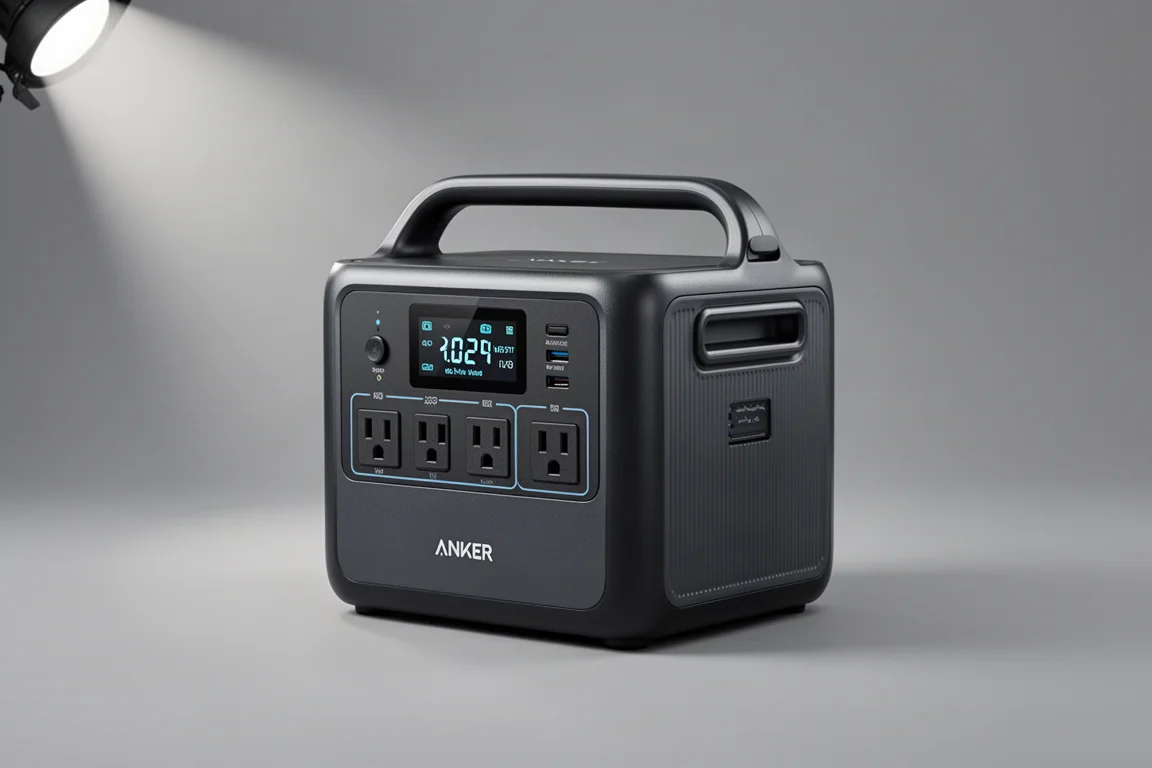
Anker: Fast Charging, Conservative Reserves
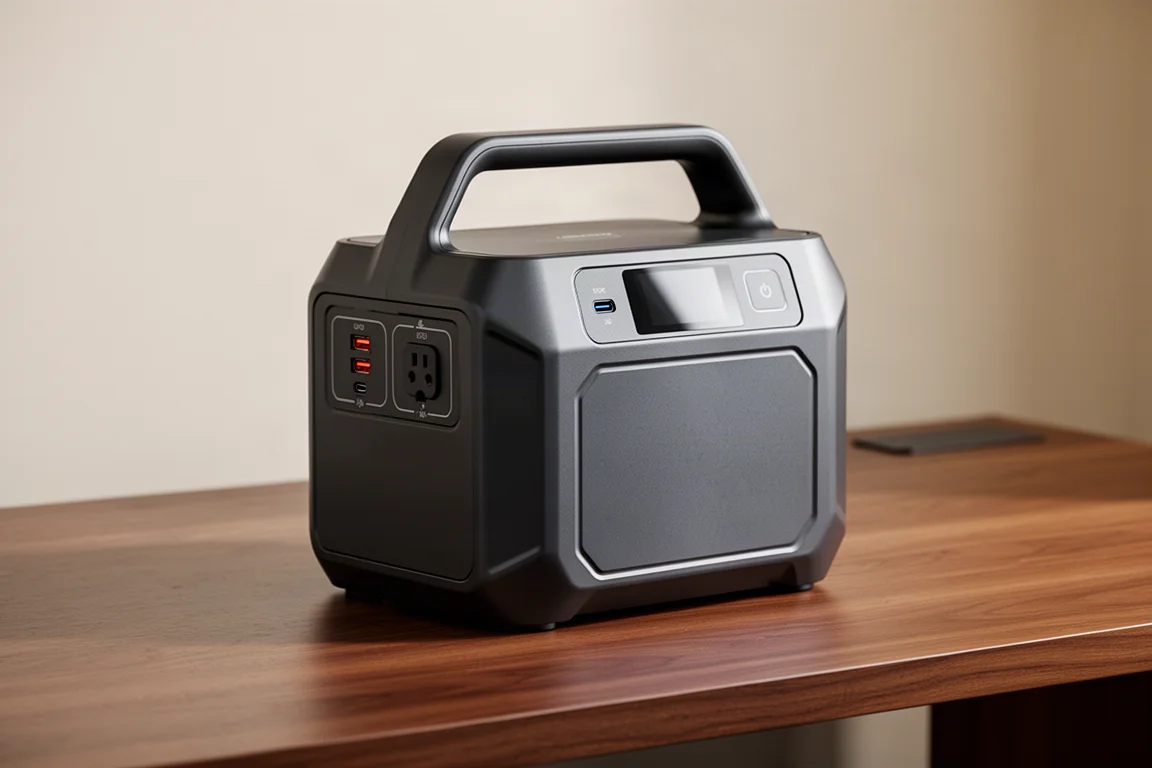
The Anker costs $799 and is rated for 2,000 watts with a 3,000-watt surge, 1,024 watt hours, claimed 49-minute ultra-fast recharging, and a battery that should retain at least 80% capacity after 4,000 cycles. It is also claimed to be 14% smaller and 11% lighter than similar models, and at just under 25 pounds it showed.
It posted the fastest standard recharge of the mid-group at just under 49 minutes, though it consumed 1,180 watt hours to get there. Voltage held near 120 volts unloaded, but under heavy load it drifted the most of the group, around 31 watts off the reference. In the compressor test, two lights pushed it into overload shutdown after a few seconds. UPS behavior was excellent with almost no flicker, and standby was better than average at 79%.
Grestle: The Surge Champion
At $800, the Grestle is rated for 2,200 watts with a 4,800-watt peak, 1,126 watt hours, a full charge in 1.25 hours, 13 ports total, 3,500 cycles, and a 20-millisecond outage switch time. It weighs 34.86 pounds.
It produced the single best surge result of the entire comparison: it was the only unit to kickstart the air compressor while running three halogen lights, pushing nearly 2,600 watts. It also sustained its full 2,200-watt rating continuously. The trade-offs showed elsewhere: voltage ran low at around 110.8 volts, noise hit 63.4 dB, the unit would not drain below 12% charge (capping capacity at 830 watt hours), and its USB-C ports underperformed badly, delivering 53 watts and 1 watt where 100 and 18 watts were advertised. It was also the only unit to fail the UPS test, with the computer powering down.
Jackery: The Premium Benchmark
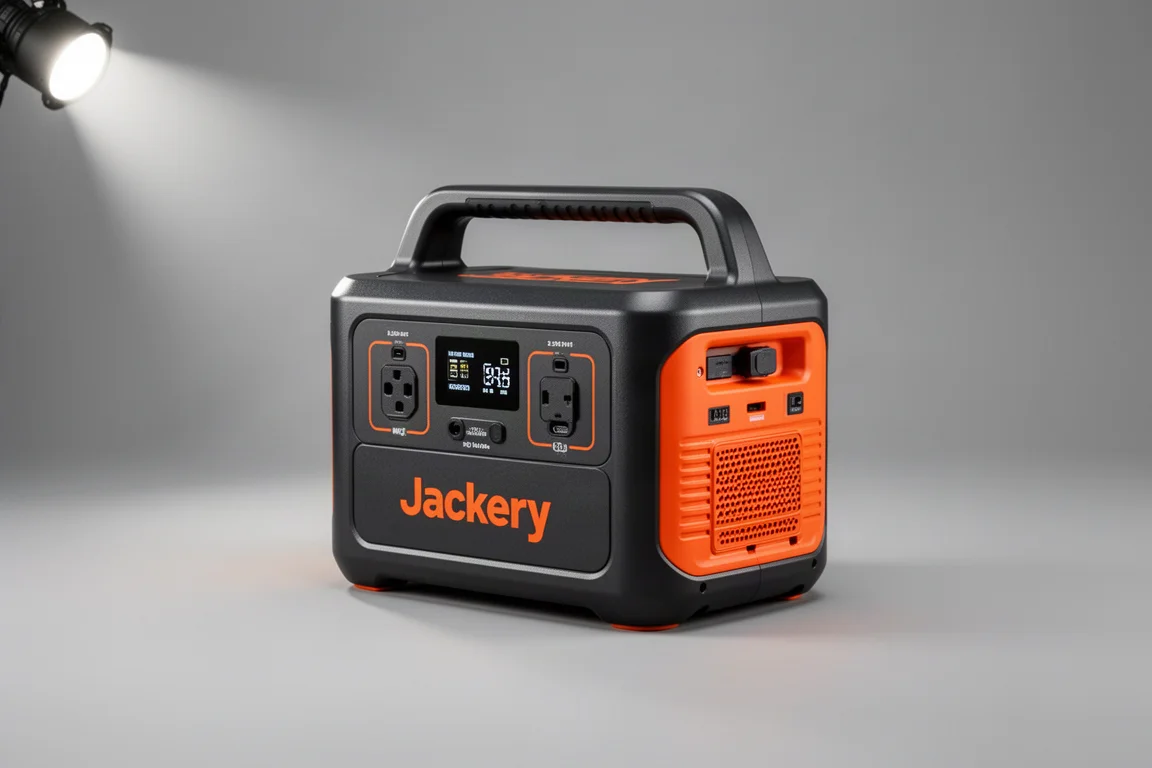
At $1,499, the Jackery is the most expensive unit here, and its numbers explain why. It is rated for 2,200 watts with a 4,400-watt peak and carries 2,042 watt hours of capacity, claimed to be 41% lighter and 34% smaller than a typical 2-kilowatt unit. Charging claims include 0 to 80% in 66 minutes and a full charge in 102 minutes, with charging noise of only 30 peak dB. It weighs 39.13 pounds.
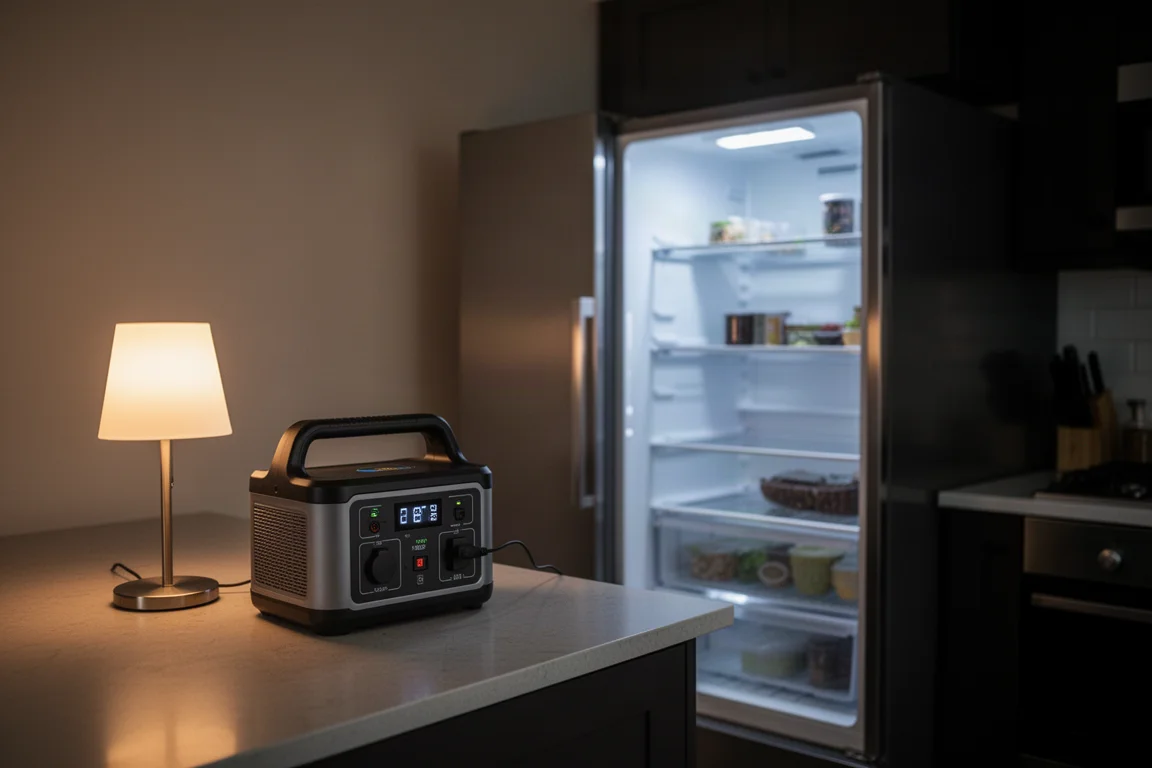
It ran at 119.74 volts with about a 9-watt meter difference, hit 45.4 dB under load, and delivered the highest estimated appliance runtimes once standby drain was factored in, including roughly 29.2 hours for a full-size refrigerator. It led charging efficiency with 22.3 watt hours of usable energy produced per minute of charge, took second place in continuous output at around 2,410 watts, and had the best standby of all at 89% after 15 hours. In the compressor test it handled one light easily but quit early with two.
Capacity and Efficiency Results
Discharged into three halogen lights, the Dabbsson lasted 78 minutes 40 seconds and produced 1,880 watt hours, the most energy delivered and the best efficiency at 91.8% of its rating. The Jackery followed at 1,780 watt hours and 87.2% efficiency, and the EcoFlow placed third at just over 900 watt hours with 87.9% efficiency.
For context, the Segway produced 790 watt hours in about 33.5 minutes, the Oupes 820 watt hours, the Bluetti 850, and the DJI and Anker 870 each. Real-world capacity always falls short of the spec sheet because energy is lost through cooling fans, transistors, and internal resistance.
Charging Speed Results
Charging efficiency, meaning usable watt hours gained per minute plugged in, crowned the Jackery the winner at 22.3 watt hours per minute, with the Anker second at 17.8 and the Dabbsson third at 16.4.
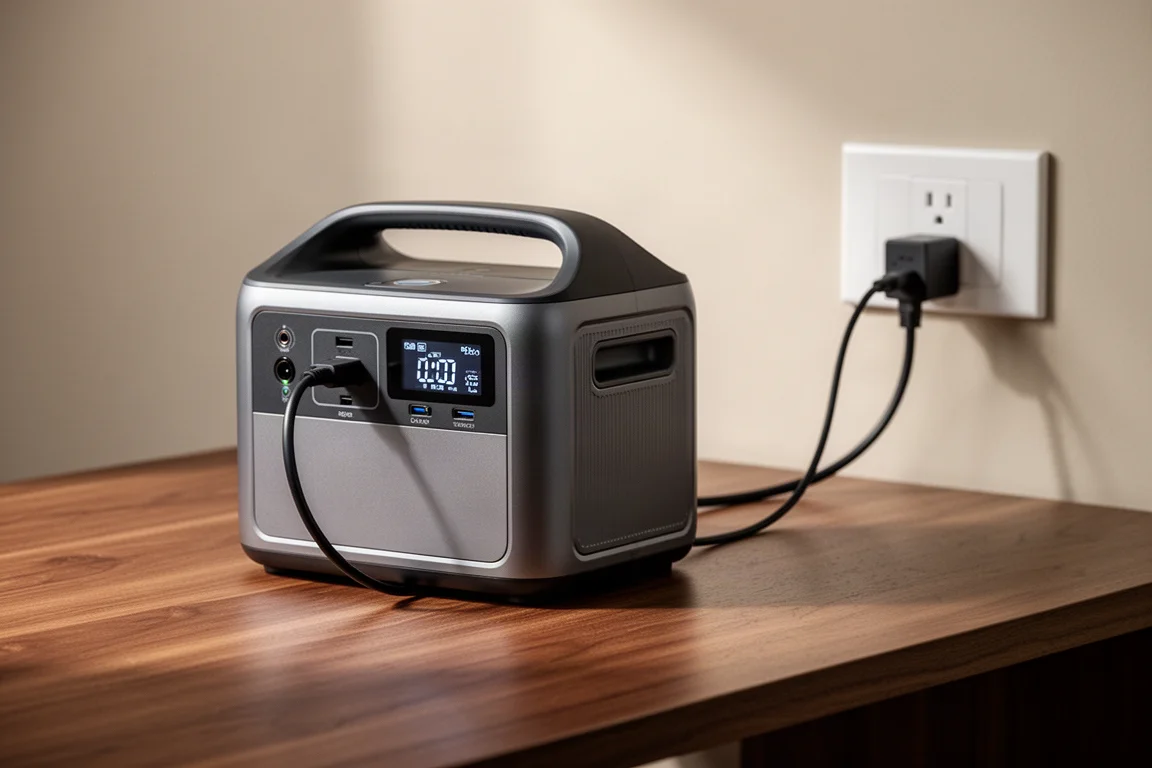
Raw recharge times varied widely. The Anker finished in just under 49 minutes, the Oupes in 52 minutes 18 seconds, the DJI in 53 minutes 17 seconds, the EcoFlow in 57 minutes 20 seconds, the Segway just over an hour, the Grestle near 64 minutes, the Bluetti in an hour and 8 minutes, the Jackery in an hour and 20 minutes (impressive for its size), and the Dabbsson in around 114 minutes. All nine can be used while charging.
UPS and Standby Behavior
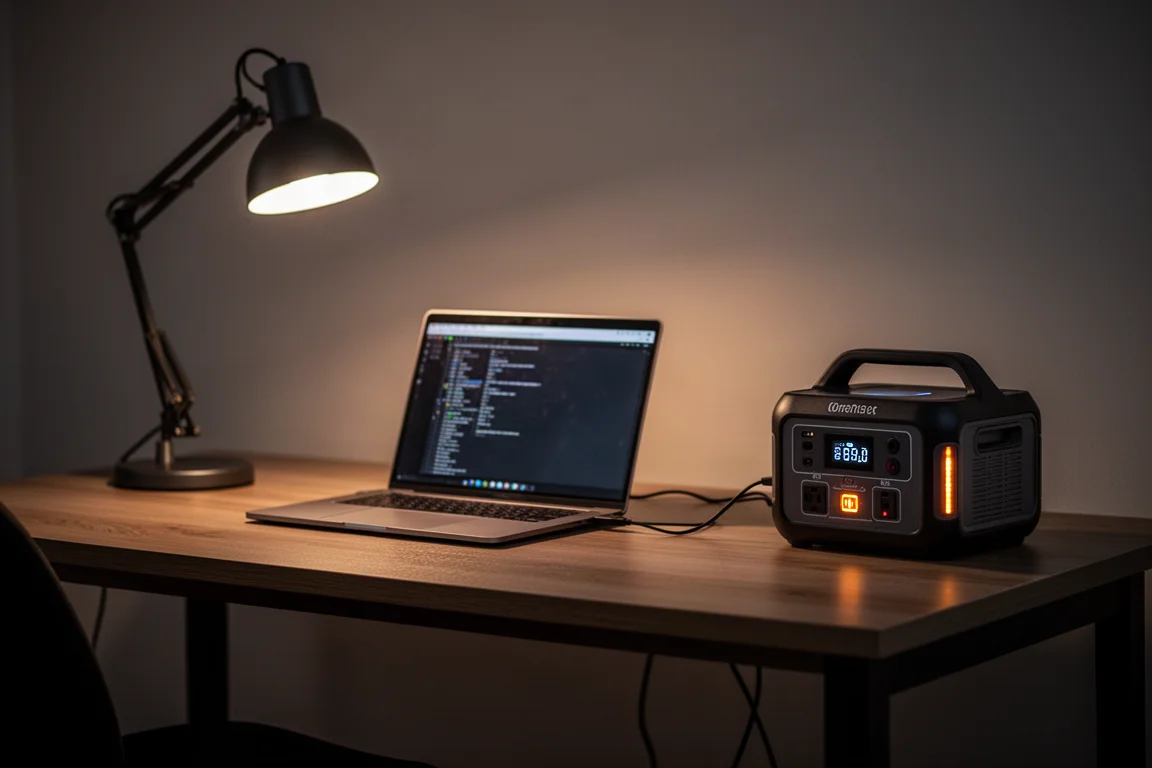
For backup use, the Dabbsson was flawless: no light flicker and no interruption when wall power was cut. The Bluetti matched that with no visible flicker. The Segway, Oupes, EcoFlow, DJI, Anker, and Jackery all kept a computer running with only a very brief light flicker. The Grestle failed, powering down both the computer and the light for about half a second.
Standby drain over 15 idle hours separated the field sharply. The Jackery held 89%, the Dabbsson 85%, the Bluetti 84%, the EcoFlow 82%, the Grestle 81%, the Anker 79%, the DJI 69%, the Segway 73%, and the Oupes a poor 55%. If you plan to leave a unit ready to back up a refrigerator or sump pump, this number matters as much as capacity.
Which Power Station Should You Buy?
If budget comes first, the EcoFlow is the standout all-rounder in this price band: quiet, efficient, and strong across the board. The Segway is the cheapest entry and handled most tasks well if you can live with the weight and fan noise.
For the best overall value in raw capability, the Dabbsson is compelling: double the capacity, the best efficiency, and a perfect UPS result at a mid-tier price. If you need maximum surge power, the Grestle is unmatched in this group, but check its USB-C output and UPS behavior before relying on it for sensitive electronics. The DJI suits users who want the highest continuous output, and the Anker suits those who want the fastest recharge in a compact body. The Jackery is the premium pick with the largest battery, best standby, and best appliance runtimes, but it costs nearly twice as much as most of the field.
Conclusion
Across nine units, price did not perfectly predict performance. The budget EcoFlow matched the premium Jackery’s grade in most categories, the Dabbsson outperformed units costing twice as much, and only the Grestle and Bluetti showed meaningful weaknesses in core tasks. Match the unit to your priority, whether that is capacity, surge power, charging speed, or price, and any of the top performers here will serve you well.
Further reading
Related Reviews
Portable Power
Best Portable Power for Camping and Remote Work: Six Power Banks and Solar Panels Compared
A practical comparison of six portable power options, from a 500W solar generator for car camping to a one pound solar power bank built for backpacking.
Portable Power
Best Portable Power Stations 2026: Nine Models Compared for Real-World Use
We compared nine portable power stations across output, capacity, charging speed, noise, and UPS performance to find the best value and the best overall pick.
Portable Power
Best Portable Power Stations and Power Banks for Blackouts and Travel
Five portable power solutions compared: two EcoFlow power stations, a flight-friendly Zendure power bank, a see-through Shargeek, and the feature-packed Omni 20c+.