Camping Tents
Best Pop-Up Tents 2026: 7 Fast-Pitching Tents Compared
Seven pop-up tents compared on setup speed, space, ventilation, rain and wind protection, quality, and portability, with clear picks for different campers.
Introduction
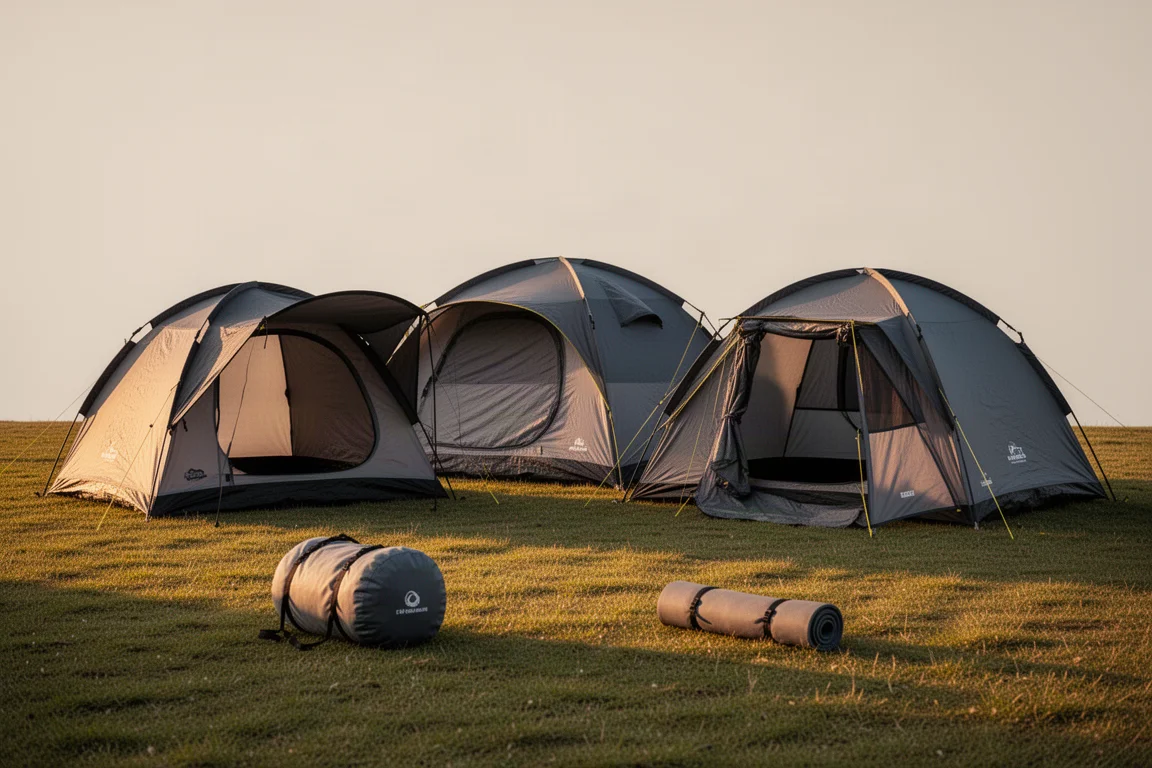
Pop-up tents trade a little packed weight and some interior refinement for pitch times measured in seconds, and the real differences between models only appear once the poles snap into place. Across the seven tents covered here, standing the tent up takes anywhere from 15 seconds to about 2 minutes, and those figures include everything from opening the carry bag to a fully popped shell.
The tents fall into three families: the Coleman Pop Up series, the Quechua 2 Seconds series in both regular and Fresh & Black versions, and the Teton Sports Vista Quick Tents. Each was pitched, staked out, slept in overnight, rained on, and packed away, then judged on setup and take down time, space, comfort and features, ventilation, weather protection, quality, and portability. The recommendations at the end match each tent to the camping it suits best.
How These Pop-Up Tents Were Evaluated
Setup time was recorded from the moment the carry bag opened to the moment the tent stood free, then measured again with every stake and guyline in place. Take down was timed the same way, including clearing the stakes and getting the tent back into its bag. Skipping the stakes and guylines saves roughly 30 to 45 seconds on pack up, which is worth knowing if you mostly camp in calm, dry weather.
Spaciousness was judged on peak height, usable base area, and vestibule space. Comfort and features covered door size and count, interior pockets and gear lofts, and dark room fabric. Ventilation was assessed on hot days, in rain, and overnight for condensation. Weather protection came from sustained rain and wind testing. Quality looked at fabric denier, stitching, zippers, mesh type, and pole thickness, while portability came down to packed weight and packed size.
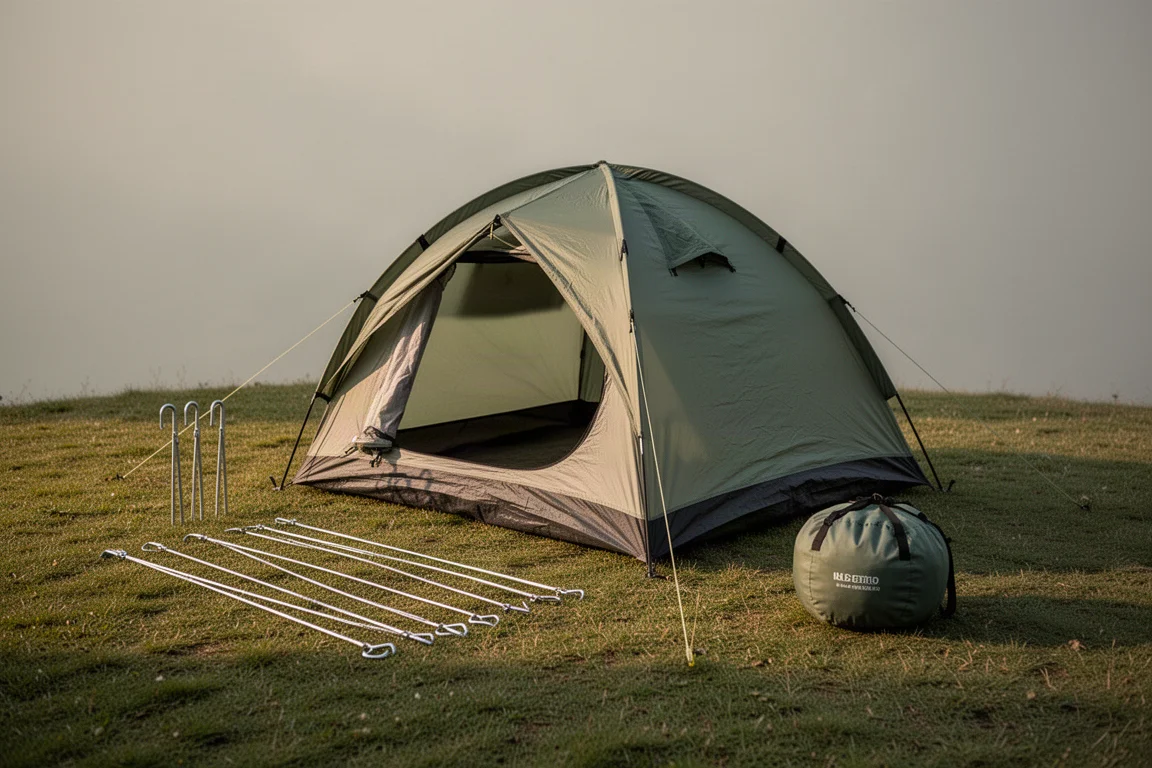
Those measurements matter most when they line up with how a tent will actually be used. A tent that pitches in 15 seconds is a genuine advantage on a wet evening, but only if it also keeps the rain out, which is why the notes below call out who each model suits rather than just how it performed.
Coleman 2-Person Pop Up Tent: The Fastest Pitch
The Coleman 2-Person Pop Up Tent is the quickest tent here to get standing. Take it out of the carry bag, remove the black strap, and it pops open in about 15 seconds. Staking it down and guying it out adds roughly a minute and 15 seconds, for a total of about one and a half minutes. That speed comes from a deliberately simple anchor setup: two guylines, one on each side, and six loops at the base, three per side.
Interior space is the trade-off. Peak height is about 33 inches, the lowest in this group along with the Teton Sports 1-Person Vista Quick Tent, so sleeping pads thicker than about two inches are a tight fit. A four-inch pad will physically go inside, but your head will very nearly touch the roof. A full size mattress does not fit at all and ends up squashed against the walls.
Storage is minimal: one pocket split into two, and no lantern loops, though the window and door fabric ties can hold a small lantern. The single front door is small, and the rainfly can only be swept back from the ceiling mesh rather than removed, because it is attached at the rear. There are no vents at all.
Rain is the clearest limitation. The tent soaked through after about 15 minutes of heavy rain, and in light rain water began seeping through the fabric and the floor seam after roughly the same time. Wind stability is modest with only two guylines. The 68D polyester shell and fiberglass poles are serviceable, but some stitching is uneven, loose threads appear in places, and water worked through the seam tape after a few minutes of heavy rain. Overnight there was no condensation with the rainfly in place and the door closed. Pack up takes about 45 seconds to clear the stakes and guylines, plus roughly a minute to fold and bag the tent.
Coleman 4-Person Pop Up Tent: More Room at the Same Speed
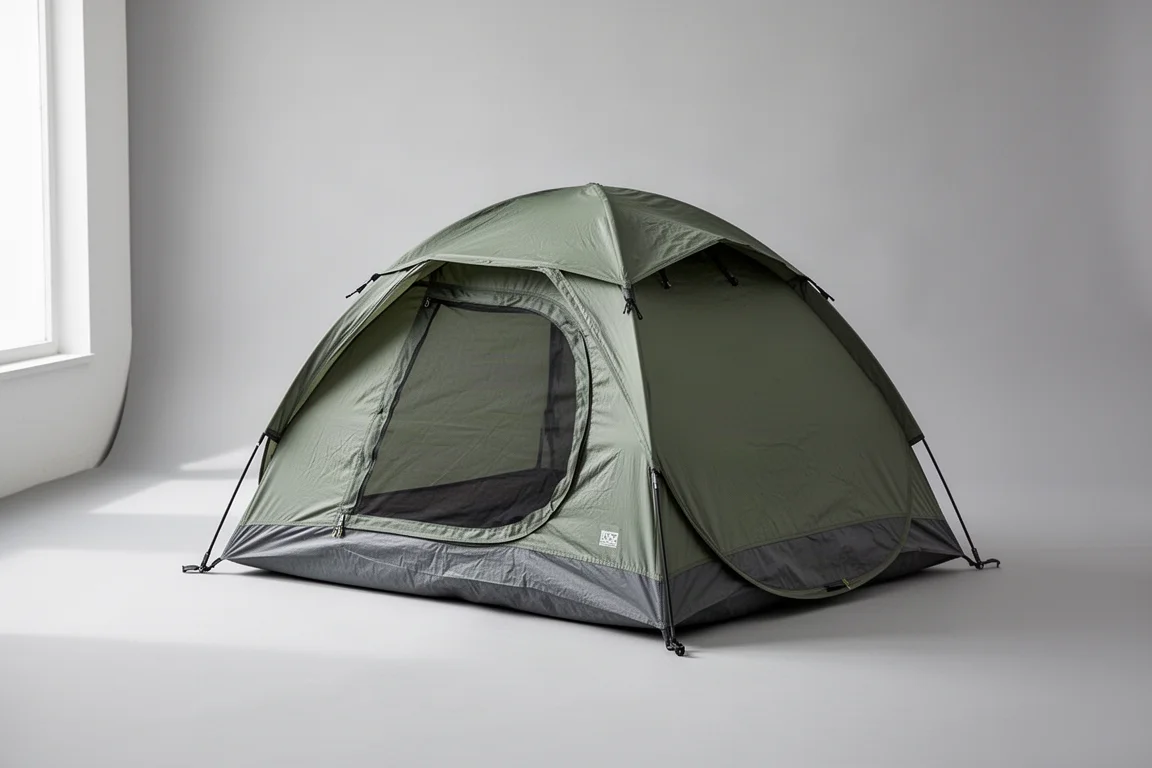
The four-person version pops open in the same 15 seconds and stakes out in about the same time, for a total of roughly one and a half minutes. Pack up is slightly slower, around 2 minutes, mostly because the larger shell is harder to grip when folding.
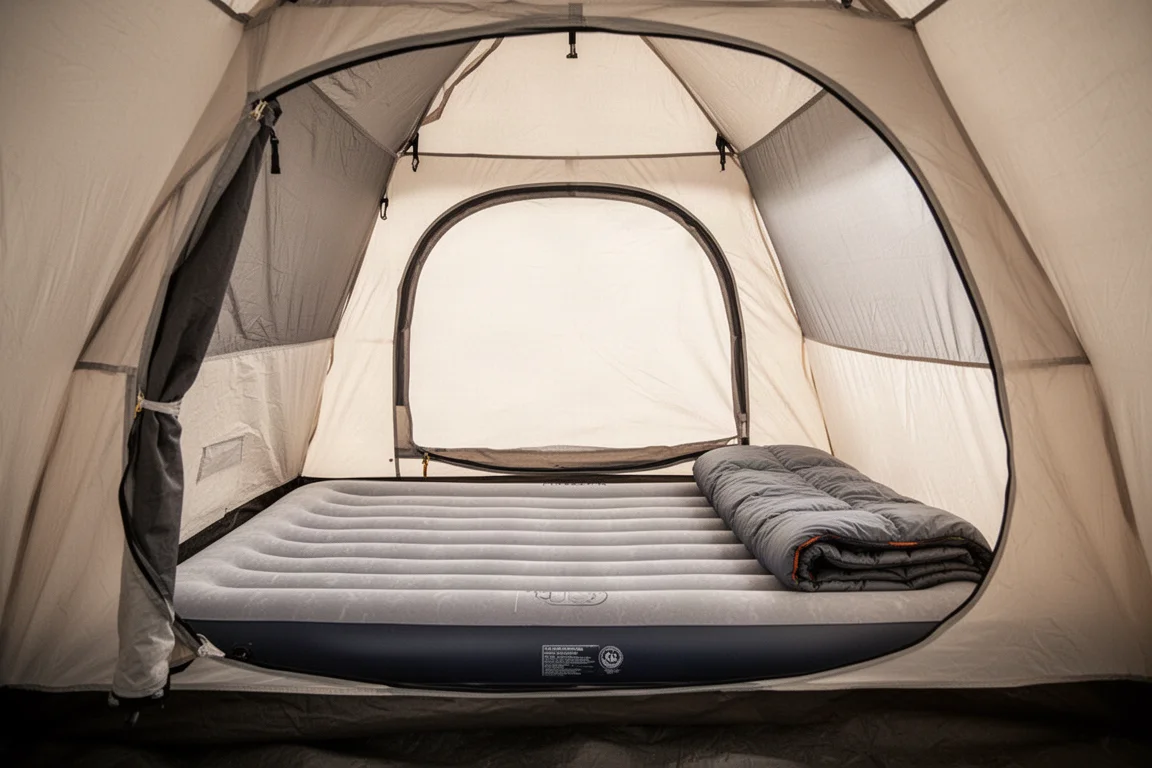
The payoff is space. Peak height is about six inches more than the two-person model, which means a queen sized mattress fits inside with plenty of room left over for gear. It is the biggest tent in this group by a comfortable margin.
It is not, however, a true four-person tent. The base is oval rather than rectangular, so the side space is limited: two adults sleep very comfortably, three adults fit shoulder to shoulder, and two adults with two children works, but four adults do not. The single door is small, and it is narrower than the doors on the two-person Teton Sports and Quechua tents. That door design is also poor in rain, since water tends to find its way inside even when the flap is kept clear of the interior.
The weather picture matches the two-person model: soaked through after about 15 minutes of heavy rain, with light rain beginning to seep in after roughly the same period. Buyers who want the extra interior volume, and who camp in reliably dry conditions, get the same fast pitch and pack away as the smaller Coleman.
Quechua 2 Seconds 2-Person Tent: Rain and Wind Protection
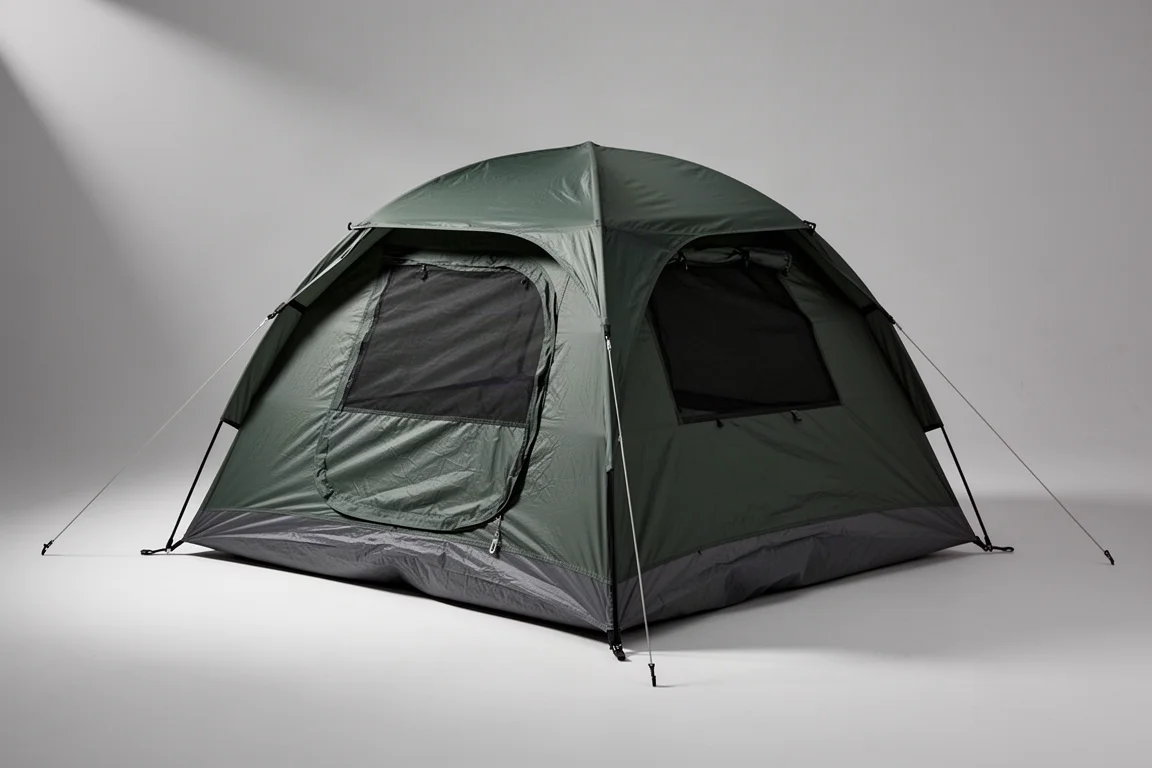
The Quechua 2 Seconds 2-Person Tent takes about 30 seconds to pitch. After removing the yellow strap, the tent pops open into a larger circle, then the red buckles and yellow buckles are undone and the tent is unfolded. Staking it out is where the time goes: four loops at the base, two at the front and two at the back, plus seven guylines in total, four at the front and three at the back. That seven-point anchor system is what makes this tent the most stable of the group in wind, and it shrugged off vigorous shaking once fully guyed out.
Peak height sits in the 38 to 40 inch band shared by most tents here. An eight-inch mattress made the interior feel claustrophobic, so a pad of six inches or less is the sensible limit. Base area is about one square foot larger than the Fresh & Black two-person version. A double-width pad fits perfectly, but a full size mattress bulges out the side because the tent is too narrow.
There is one door at the front width, and it is larger than the Coleman doors. Storage runs to two pockets near the front, one on each side, plus a lantern loop at the back. Ventilation is the weakest area: one rear vent that has to be guyed out, two openings in the rainfly, and a rainfly that cannot be removed.
That same full coverage rainfly is what makes it such a strong performer in bad weather. Over three days of heavy afternoon thunderstorms, with roughly three hours of rain a day, the interior stayed remarkably dry, with only a few drops entering through a rear corner seam. Wind protection is the best here. Quality is close behind the Teton Sports tents, with a polyester rainfly and body, a polyethylene floor that is thicker and more rugged than the Teton floor, consistent double stitching, and snag-free zippers, though the zippers are less smooth, the fiberglass poles are thinner, and the mesh is not no-see-um. Condensation was limited to a few drops on the roof, and the interior felt stuffy with the door and window closed. Take down takes about two and a half minutes in total.
Quechua Fresh & Black 2 Seconds 2-Person Tent: Blackout Fabric and Vents
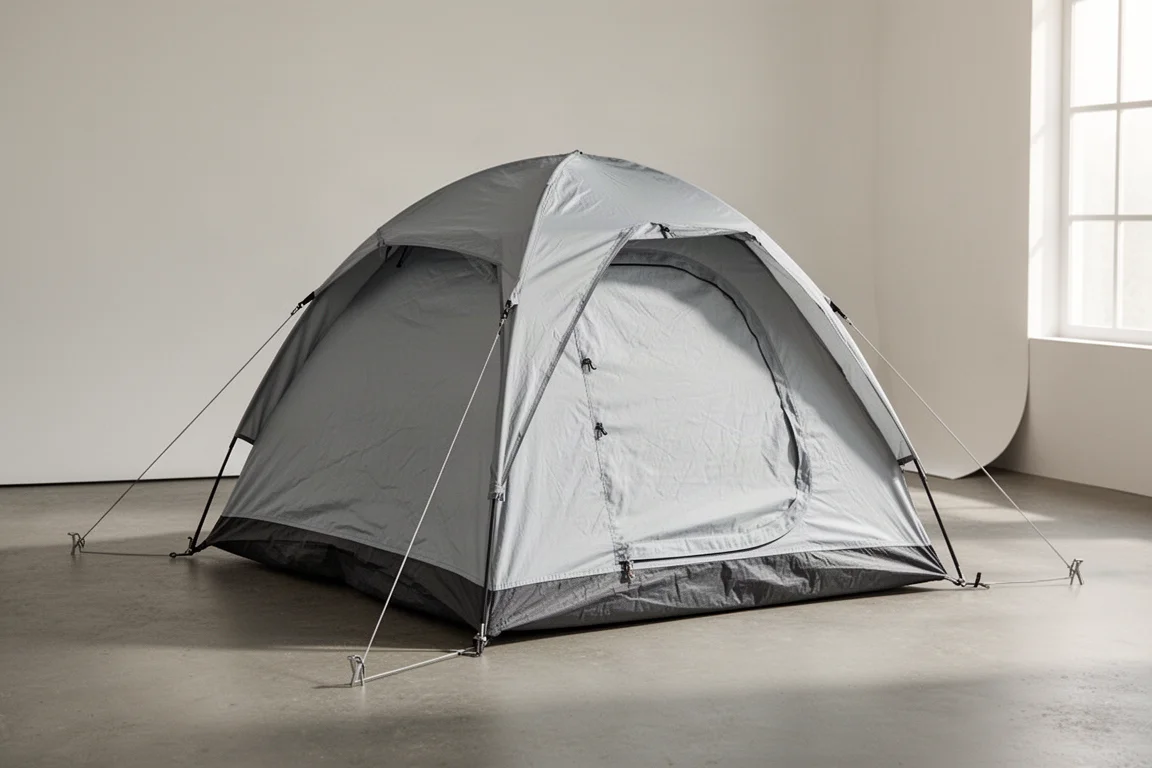
This tent follows the same pitching sequence as the regular Quechua, with one addition: staking out the two vents adds about 30 seconds, bringing setup to roughly one minute. Take down is also slightly slower, since those vents have to be un-staked.
It has the smallest base area of all the two-person pop-up tents, though a double-width pad still fits perfectly. Ventilation is a different story. Two large vents, one at each length, can be opened fully or propped partially open using the s-hooks and guylines, and there is a small rear vent plus a zip at the bottom of the back. The rainfly can be unbuckled and lifted off the ground by pulling the blue cord. On rainy days this is the best ventilated tent here, and the vents stayed watertight even in heavy rain when left partially open.
The headline feature is the Fresh & Black fabric, the only dark room construction in this group. It blocks a significant amount of daylight and carries UV protection rated at SPF 50, which helps on bright mornings and hot afternoons. Overnight, with the outer white door and black inner window closed and the two ground vents open, the interior stayed cool and completely free of condensation.
Two things to weigh before buying. It is the heaviest two-person tent here and packs to the largest size. And the blackout coating has a long-term durability question: after several years of use in a humid climate, the fabric began flaking onto hands and entire strips came loose. The tent remained functional, but the shedding is unpleasant. Storage is generous, with two pockets that are each split into two, plus a lantern loop at the back.
Quechua Fresh & Black 3-Person Tent: The Roomier Quechua
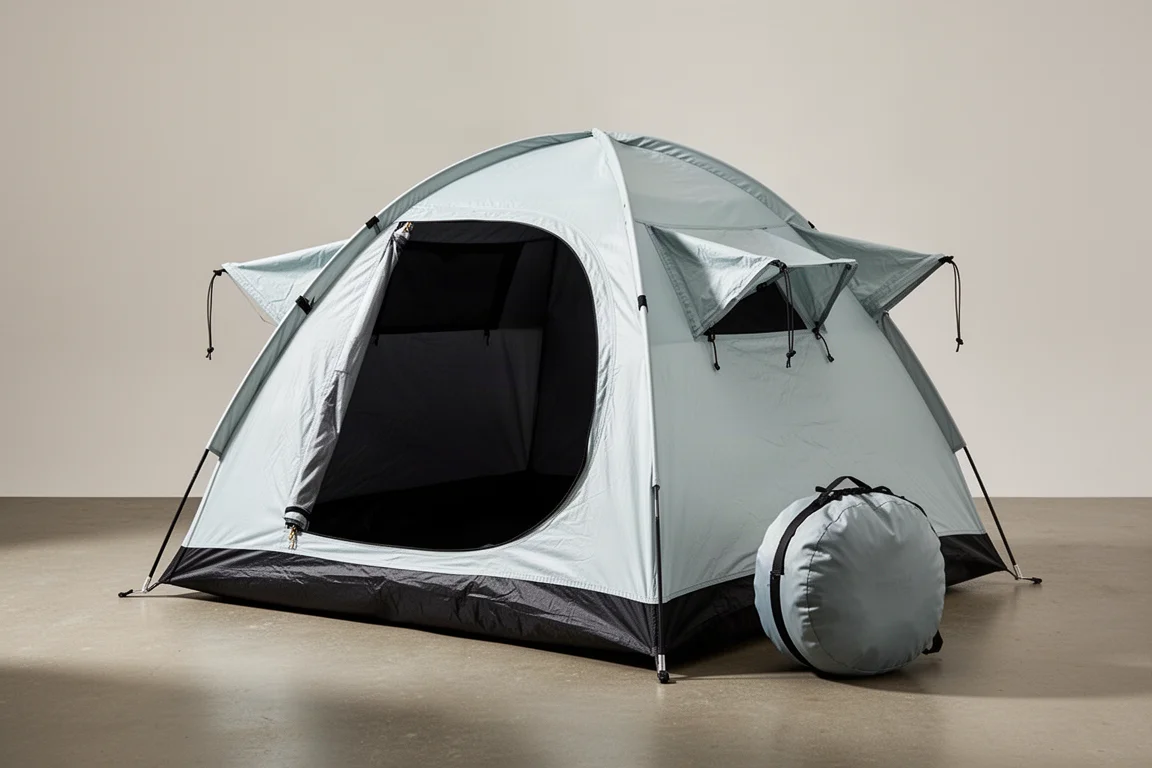
The three-person Fresh & Black pitches with the same process as the two-person version, and the door is larger than both the Fresh & Black two-person door and the regular Quechua door. Peak height falls in the 38 to 40 inch range, so with a six-inch mattress your head touches the top mesh when sitting upright.
Space is the reason to choose it. A queen sized camping mattress fits along the length with a little room left at the side, enough for a bit of gear but not for another full pad. Three regular pads fit perfectly, and so does a double pad plus a single pad. Compared with the two-person Fresh & Black, it costs not a whole lot more, weighs about 1.6 pounds more, adds a couple of inches of height, and can sleep three people or one queen mattress with gear.
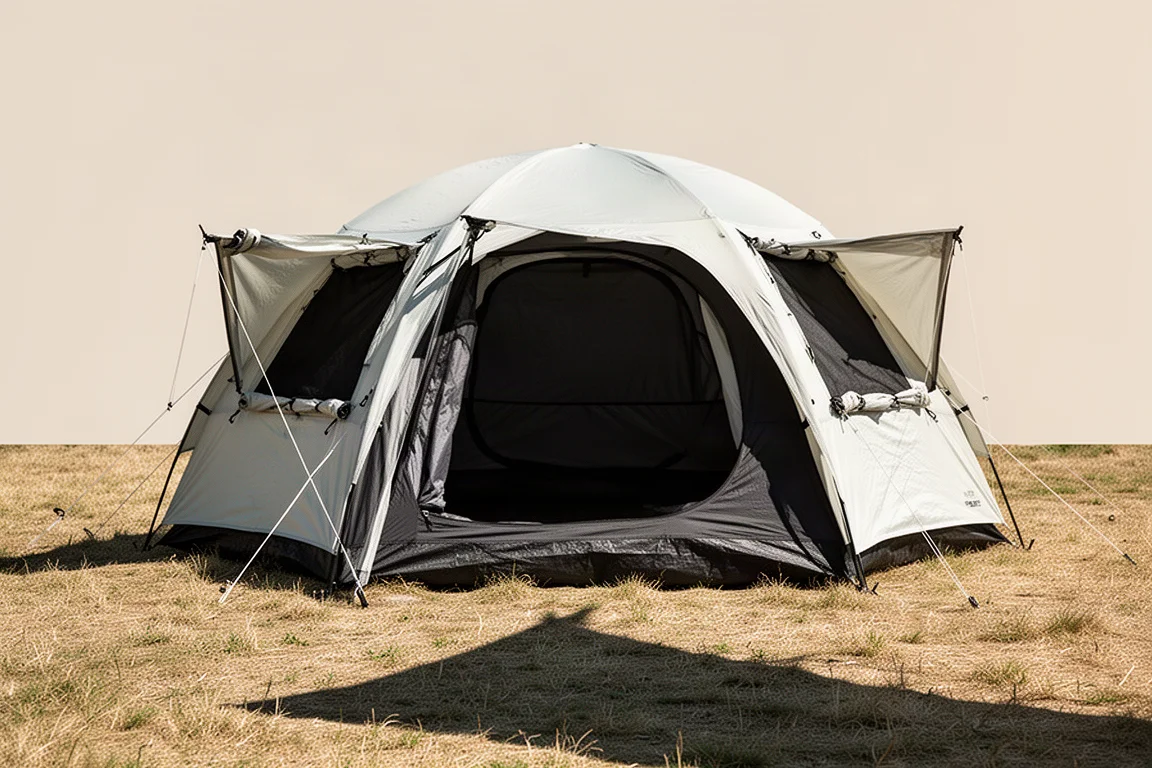
For couples who want a proper mattress and a little breathing room, this is the more comfortable Quechua. It keeps the same blackout fabric, the same two large side vents, and the same rain and wind strengths as the rest of the 2 Seconds line, so the extra cost buys interior volume rather than a different weather character.
Teton Sports 1-Person Vista Quick Tent: Light and Airy Solo Shelter
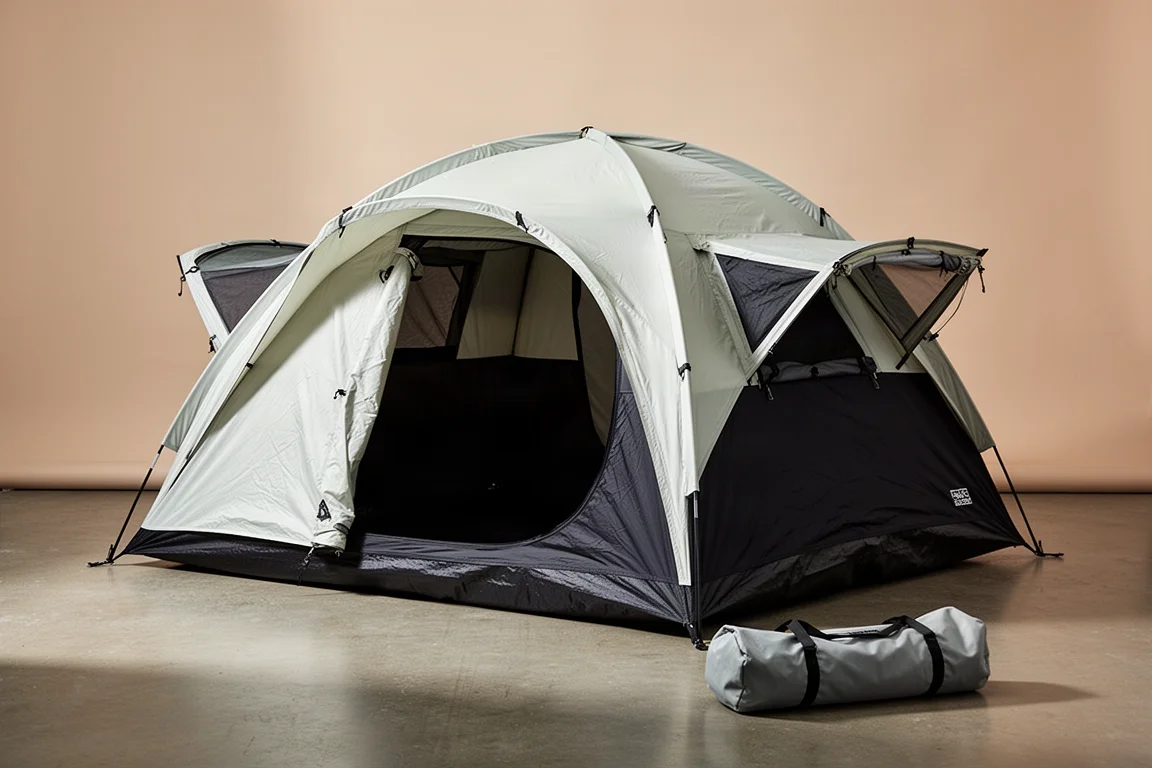
The one-person Vista Quick Tent takes about 45 seconds to remove from the bag, unfold, and pop up, then another 30 seconds to buckle the rainfly and stake the single vestibule, for roughly one minute and 15 seconds in total. The rainfly is not pre-attached, which is the main reason for the extra step, and the tent uses four stakes for the body plus four pre-attached guylines.
The single vestibule measures 12 inches at its longest width and adds about 3.3 square feet of covered storage. There is one door, slightly smaller than each door on the two-person version. Peak height is about 33 inches, matching the smallest tent here, but the base area is generous for a solo tent: a full length pad leaves plenty of space left over for gear.
Ventilation is the best in this group. The rainfly comes off entirely and roughly two thirds of the tent is mesh, so warm nights are comfortable and stargazing is genuinely good. In weather, an hour of nonstop heavy rain left the interior completely dry, though the rainfly was starting to feel damp by that point, so one to two hours of continuous heavy rain is the realistic ceiling. There was no condensation overnight even with the rainfly buckled, the vestibule zipped, and the mesh door closed. Light to moderate wind is handled easily, though it is not as planted as the Quechua tents.
Quality is a strong point: 75D Taffeta for the floor, body, and rainfly, consistent stitching with no loose threads, no-see-um mesh, smooth zippers with no snags, and slightly thicker poles than the other tents here. The floor could be thicker, so a ground sheet is a sensible addition. Pack up takes about a minute to clear the stakes, guylines, and rainfly, plus roughly a minute and a half to fold and bag everything.
Teton Sports 2-Person Vista Quick Tent: Best Overall
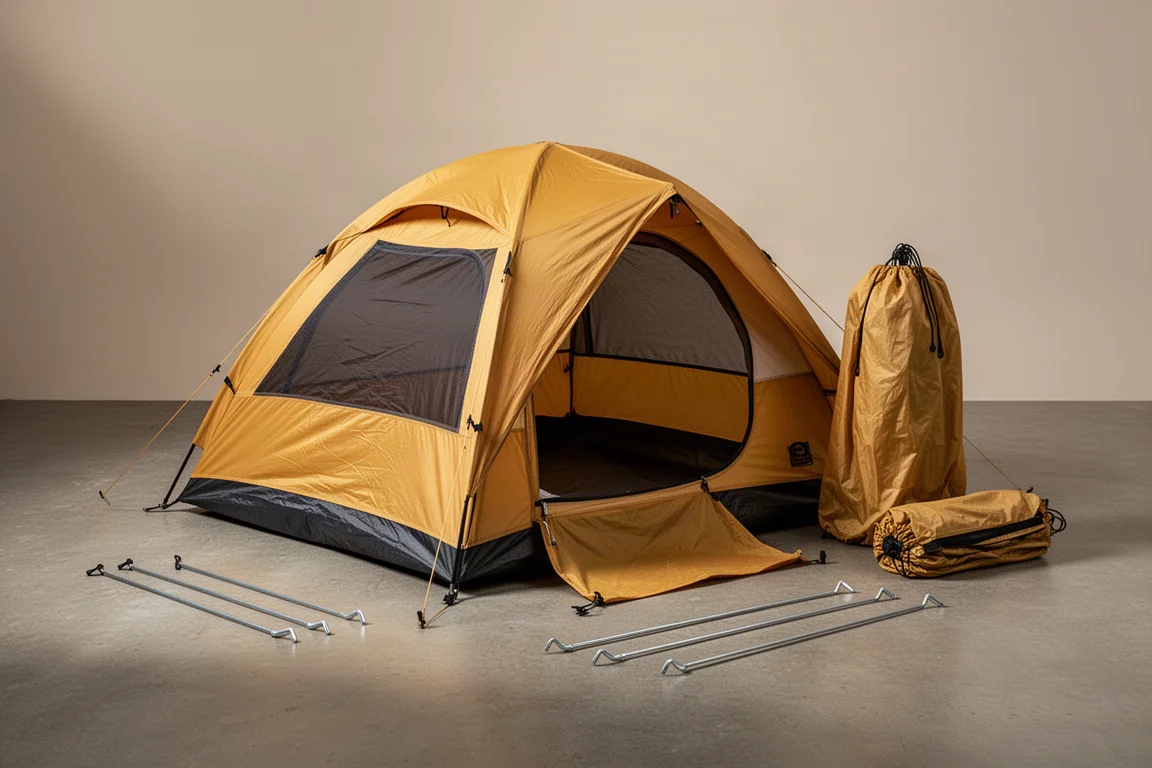
The two-person Vista Quick Tent takes about 2 minutes to set up, a little longer than the solo version because it is harder to pop open, the rainfly is bigger, and there is an extra vestibule to stake. Peak height is 40 inches, the highest here, and with a six-inch mattress there is room to lie down and sit up comfortably with a few inches of headroom to spare. Base area is 44 square feet, the largest of the two-person pop-up tents, and it is the only one that fits a full size mattress, including a queen.
It is also the most feature-rich tent in the group. Two doors, one on each length, are the most generously sized doors tested, and they provide cross ventilation even with the rainfly left on. A gear loft hooks to the roof with four s-hooks, and the four circular loops around it can each hold a small lantern. Two pockets sit on each width. The two vestibules are identical, measure 15 inches at their longest width, and add about 8.6 square feet of exterior storage, which is ideal for boots and wet gear.
In rain, the seam joining the bathtub floor to the tent body was not taped and a small amount of water worked in; sealing that seam makes the tent fully dry. As with the solo version, one to two hours of continuous heavy rain is the practical limit. Overnight with the rainfly and vestibule closed there was no condensation at all, and light to moderate wind was handled easily.
Quality is the best here: 75D Taffeta throughout, consistent stitching, no-see-um mesh, smooth snag-free zippers, and thicker poles. The floor could be thicker, so a ground sheet is recommended. Packed size is the smallest of the two-person pop-up tents. Against the one-person version it costs about $30 more and adds three inches of length, seven inches of headroom, an extra door and vestibule, larger doors, and cross ventilation, while packing only about 20 percent longer.
Buying Advice: Matching a Pop-Up Tent to Your Camping Style
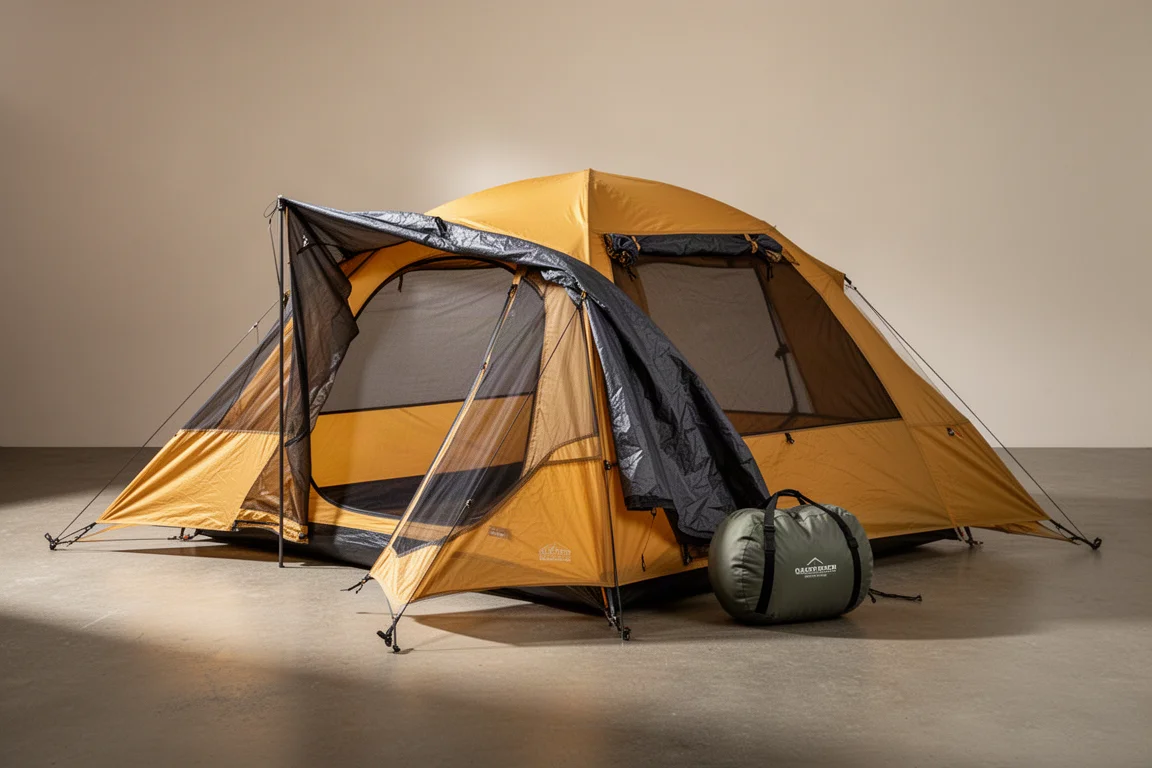
Rain is the deciding factor for most buyers. The Quechua 2 Seconds tents took three days of heavy afternoon thunderstorms with only a few drops entering through a rear corner seam, and their seven guylines make them the most stable option in wind. Within that family, the regular 2 Seconds tent is the lighter, faster choice at about 30 seconds to pitch, but ventilation is limited once the door is closed. The Fresh & Black version costs more, weighs more, and adds about 30 seconds to setup and take down, in exchange for two large vents, blackout fabric, and SPF 50 UV protection. Campers who want to sleep three or fit a queen mattress with gear space should step up to the three-person Fresh & Black, which adds only about 1.6 pounds.
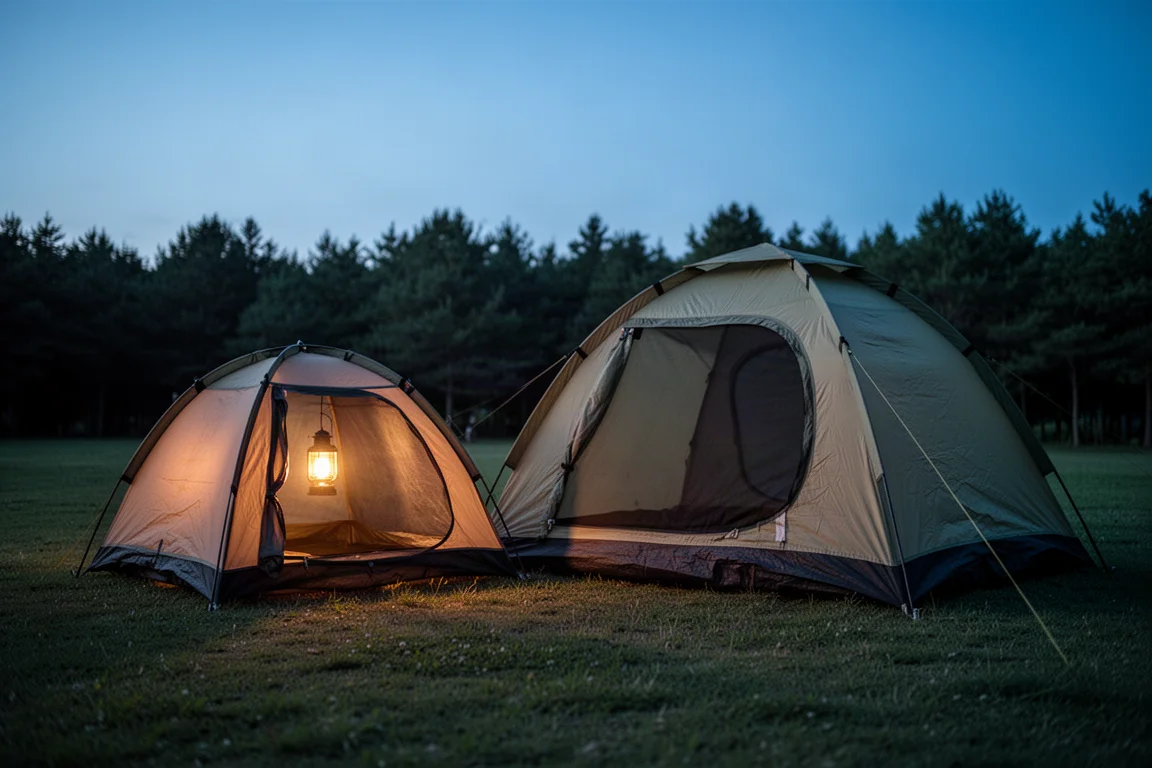
If interior space and airflow matter more than maximum rain protection, the Teton Sports 2-Person Vista Quick Tent is the strongest all-rounder. It has the highest peak height at 40 inches, the largest base area at 44 square feet, two big doors, two vestibules, a gear loft, and the best materials and zippers in this comparison, along with the smallest packed size of the two-person tents. The trade is time: about 2 minutes to pitch and about a minute more to pack than the fastest tents here, because the rainfly is not pre-attached and the vestibules need staking. That same removable rainfly is what delivers the outstanding ventilation and clear night views, so the extra minute is usually worth spending. Solo campers who want the same quality in a smaller package can save about $30 with the one-person version.
If budget is the priority and rain is unlikely, the Coleman Pop Up Tents are the value play. Both pitch in 15 seconds and pack away in under 2 minutes, and the four-person model is the better buy of the two, since it fits a queen mattress and adds about six inches of headroom for the same setup effort. Just plan around the weather: 10 to 15 minutes of light to moderate rain is enough to start water seeping through the fabric and floor seam, and heavy rain soaks them through in about 15 minutes.
Conclusion
The fastest tents and the most capable tents in this group are not the same tents, and that is the main thing to take away. Coleman wins on pure speed and price, but only makes sense for dry, predictable conditions. Quechua wins on rain and wind, with the Fresh & Black versions adding blackout fabric and serious ventilation at the cost of weight, packed size, and about 30 extra seconds. Teton Sports wins on space, comfort, features, and build quality, and gives up a minute or two of setup time in return for a removable rainfly and real vestibules.
For most campers who want one tent to cover the widest range of trips, the Teton Sports 2-Person Vista Quick Tent is the most complete package. Riders of fair weather only, and buyers watching the budget, will be perfectly happy with a Coleman. Anyone who camps where rain is a regular feature should start with a Quechua 2 Seconds tent and work outwards from there.
Further reading
Related Reviews
Camping Tents
3F UL Gear Taiji Two-Person Tent Review: Field Waterproofing Results and Buying Advice
The Taiji pairs an attached fly with a removable inner, but sustained rain exposed untaped vent seams that need sealing before this shelter can be trusted.
Camping Tents
3FUL Gear Lanshan 2 Pro 4-Season Review: A Sub-$200 Single-Wall Trekking Pole Tent
An early look at the 3FUL Gear Lanshan 2 Pro 4-Season, covering its straightforward pitch, generous interior space, and the condensation and seam-sealing questions that come with any single-wall shelter.
Camping Tents
Alps Mountaineering Lynx 1-Person Tent Review: Big Value in a Small Budget Tent
A close look at the Alps Mountaineering Lynx 1-Person Tent, covering real interior dimensions, materials, setup time, ventilation limits, and who should buy it.