Automotive
Best Oil Stop Leak Products: 13 Formulas Put Through Real Tests
Thirteen oil stop leak additives tested for seal repair, lubricity impact, and cold-weather behavior, with clear winners and a few to avoid.
Introduction
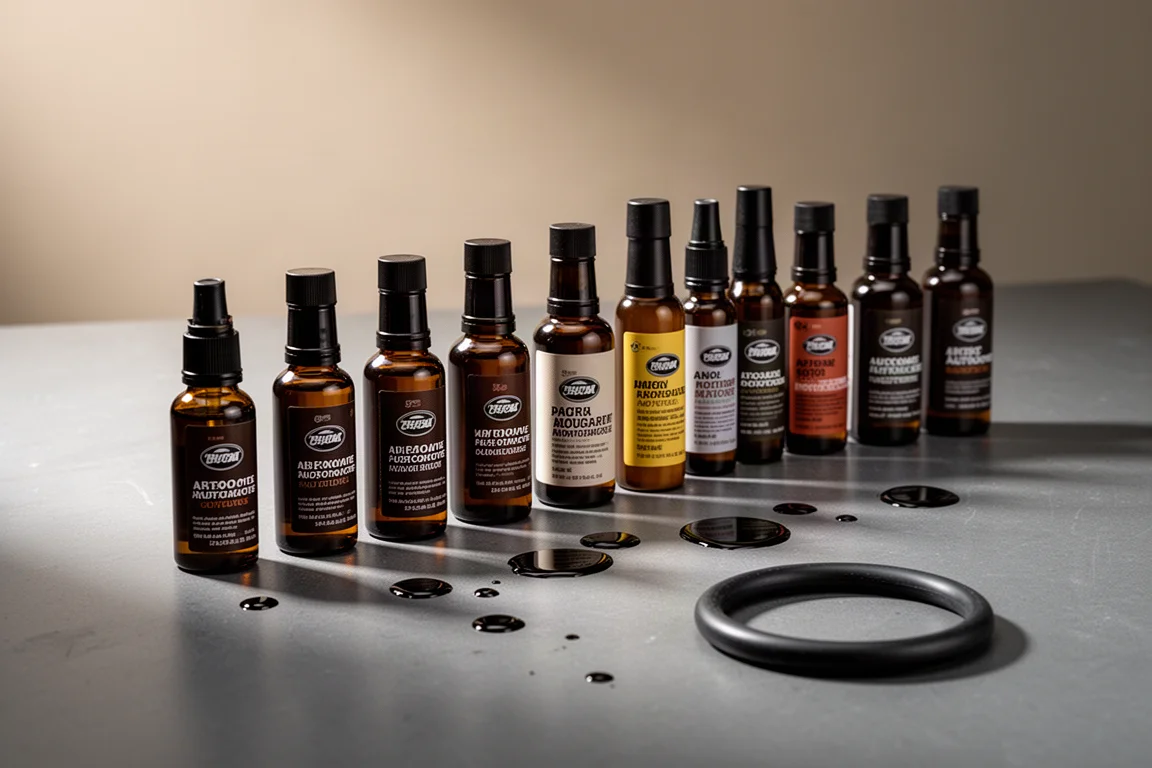
An oil leak can cost hundreds or even thousands of dollars to repair properly, so stop leak additives hold obvious appeal. The catch is that not all of them live up to their claims. Thirteen popular products went through a series of hands-on tests: how well each softened hardened O-rings, how much each affected oil viscosity, whether any harmed new rubber components, and how each changed the anti-wear performance of motor oil.
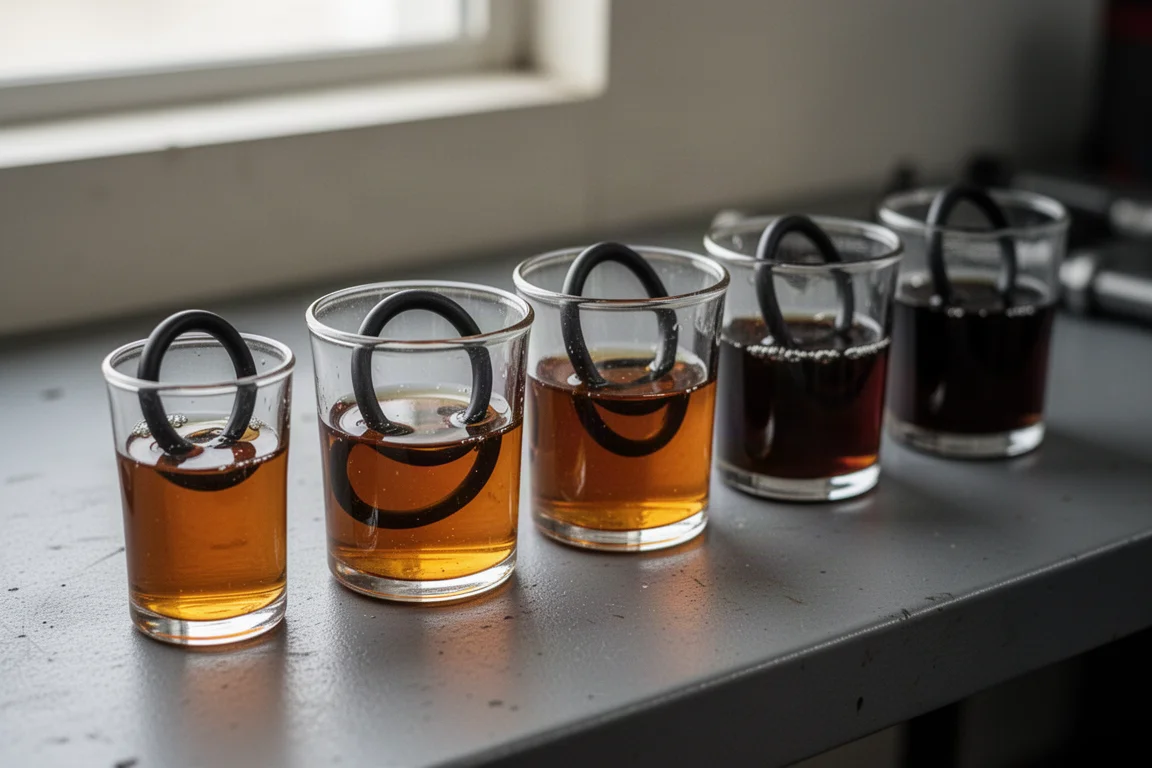
The results split cleanly into a small group of products that genuinely helped damaged seals and a larger group that actually made motor oil worse. Here is how each one performed.
How the Lubricity Test Worked
Before testing the additives, a baseline was established by running straight motor oil through a friction and wear test, measuring the resulting wear scar on a test pin with a microscope. Straight motor oil scored a solid 7.05 mm. Each product was then mixed 50/50 with motor oil and tested under the same conditions to see whether it helped or hurt the oil’s protective film.
Product-by-Product Results
Bar’s Leaks Heavy Duty Oil Stop Leak
At $8 for a 16.9 oz bottle treating 4 to 6 quarts, Bar’s Leaks claims to stop all oil leaks, including timing seal cover, cam seal, and rear main leaks. It is made in the USA. In the lubricity test it increased the wear scar to 7.52 mm, hurting the oil’s anti-wear performance, and it did essentially nothing to soften a hardened O-ring or gasket. A budget option with underwhelming results.
Liqui Moly Oil Saver
Liqui Moly’s Oil Saver costs $14, is made in Germany, and relies on ethylene glycol to maintain and regenerate rubber and plastic seals. It mixed cleanly with motor oil without separating and, notably, outperformed straight motor oil in the wear test with a scar of only 6.85 mm. It softened the hardened O-ring only slightly, from 89.5 to 88, but its biggest problem appeared in the cold test: it froze up badly at minus 40°F, thickening like an egg yolk. Good lubricity, poor cold flow.
Lubegard Seal Fix
Lubegard Seal Fix costs $16 and is made in the USA. It is designed for engines, power steering systems, automatic and manual transmissions, and differentials. The blend went cloudy and settled out of the oil, and the wear test was poor at 8.07 mm. Where it shone was seal restoration: the O-ring recovered to 0.2015 in and returned to its original hardness of 75, and it scored an excellent 528 g on the gasket softening test. Its heavy evaporative loss of 1.83 g was the worst recorded, and it swelled a new O-ring in the fresh-seal test, which is a mild risk.
CD-2 Oil Stop Leak
Also $16 and made in the USA, CD-2 claims to be the number one selling oil stop leak and offers anti-wear protection. The mix stayed together, but the friction test told a different story: the wear scar hit 9.33 mm, the worst of any product at that point. It left new O-rings mostly unharmed but did little to restore hardened ones. The anti-wear claim does not hold up in testing.
Bardahl No Smoke Stop Leak
Bardahl’s $18 formula is made in the USA, with dosage based on engine cylinder count. Its very high viscosity worked in its favor: the wear scar came in at 6.52 mm, better than straight motor oil and the best of the entire lineup. On the downside, it barely helped the hardened O-ring and severely restricted cold oil flow in the freezer test alongside Lucas. A strong performer where lubricity matters, a weak one where seal restoration matters.
Lucas Engine Oil Stop Leak
At $18 and made in the USA, Lucas calls for one part of additive to 4 quarts of oil. It has a very high viscosity, stayed mixed with the oil, and delivered a good wear scar of 6.9 mm, again beating straight motor oil. Like Bardahl, it did little for the hardened O-ring, and both products dragged heavily on cold-temperature oil flow. It left fresh O-rings completely unchanged, which counts in its favor.
XADO AtomX Stop Leak
XADO’s $20 bottle is made in Ukraine and claims special components that restore gasket elasticity and rebuild tight gasket-to-metal contact. It has a very low viscosity and, in testing, produced heavy friction with the energy meter spiking over 570 W and a poor wear scar of 8.8 mm. It did not harm new O-rings, but its seal restoration results were average at best.
AT-205 Re-Seal
At $20 and made in the USA, AT-205 claims to stop leaks fast in engines, transmissions, power steering, differentials, and hydraulic systems. The blend separated and settled, and its friction performance was poor. But in the seal tests it dominated: the hardened O-ring swelled to 0.2055 in, nearly its original 0.206 in size, and became softer than new at a hardness of 65.5. It also produced the best gasket softening result at 430 g. Factoring in both wear and evaporative loss, it finished with the best overall average of 3.6.
Justice Brothers Engine Stop Leak
Justice Brothers costs $22, is made in the USA, and claims to stop and prevent seal leaks while reconditioning dry rubber seals without harming internal parts. During the heated test the blend was literally boiling at around 200°F and lost the most volume of any product at 8.78 g. Its wear scar tied CD-2 for the worst at 9.33 mm. Still, its seal softening was strong: the O-ring softened to 74 and the gasket test came in at 542 g, third place.
BlueDevil Oil Stop Leak
BlueDevil’s $22 formula is made in the USA and claims to be number one in the country and to make a permanent repair. The mix went cloudy, separated from the oil, and produced grinding sounds and visible vapor during the wear test, scoring 8.53 mm. Its seal results were respectable: the O-ring improved to 0.199 in and softened to 80, and the gasket test scored a strong 526 g. A mixed bag overall.
Wynn’s Engine Stop Leak
Wynn’s costs $24, is made in Belgium, and claims to revitalize rubber and neoprene seals and O-rings. It mixed and stayed blended with the oil, but the friction test produced the largest wear scar of the entire field at 9.35 mm. Its seal results were modest, with slight O-ring improvement and a gasket score of 686. The lubricity result is hard to overlook.
Hapco Tri-Seal
Hapco Tri-Seal costs $35, is made in the USA, and claims to make a permanent seal and prevent future leaks. The blend was cloudy but stayed mixed. The wear scar was average at 8.42 mm, the O-ring improved slightly to 0.197 in with softer rubber at 81.5, and the gasket test came in at a strong 492 g. Decent seal performance but a high price for a mid-pack formula.
SealLube Seal Expander
SealLube is the most expensive product tested at $35, made in the USA, and claims to positively stop rubber seal leaks in any fluid system. It went cloudy, separated from the oil, and its wear test was poor at 8.91 mm. But the name is accurate: it expanded the O-ring to 0.2025 in, softened it to 73, and finished second on the gasket test at 446 g. As a pure seal restorer it works; as a motor oil companion it is a liability.
The Snake Oil Control Test
For perspective, actual snake oil was mixed with motor oil and run through the same tests. It blended fine and lost only 0.1 g to evaporation, but it did nothing for the hardened O-ring, which stayed hard at 89.5, and its wear scar reached 9.22 mm. It beat several of the real products on lubricity, which says a lot about how inconsistent this product category can be.
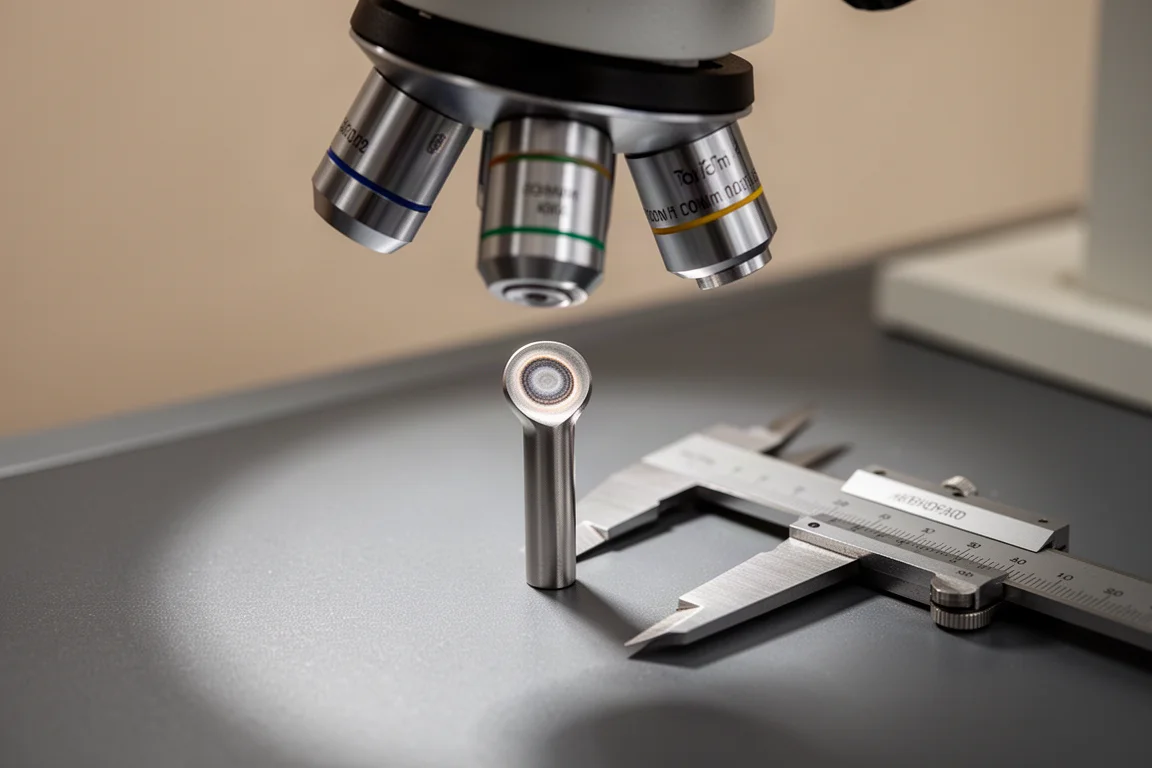
Summing Up the Lubricity Results
Only three products improved on straight motor oil’s 7.05 mm baseline: Bardahl at 6.52 mm, Liqui Moly at 6.85 mm, and Lucas at 6.9 mm. Every other product, including the snake oil, made the oil’s anti-wear performance measurably worse. Several of the worst offenders produced hot test pins, visible vapor, and heavy friction during testing.
Seal Restoration Results
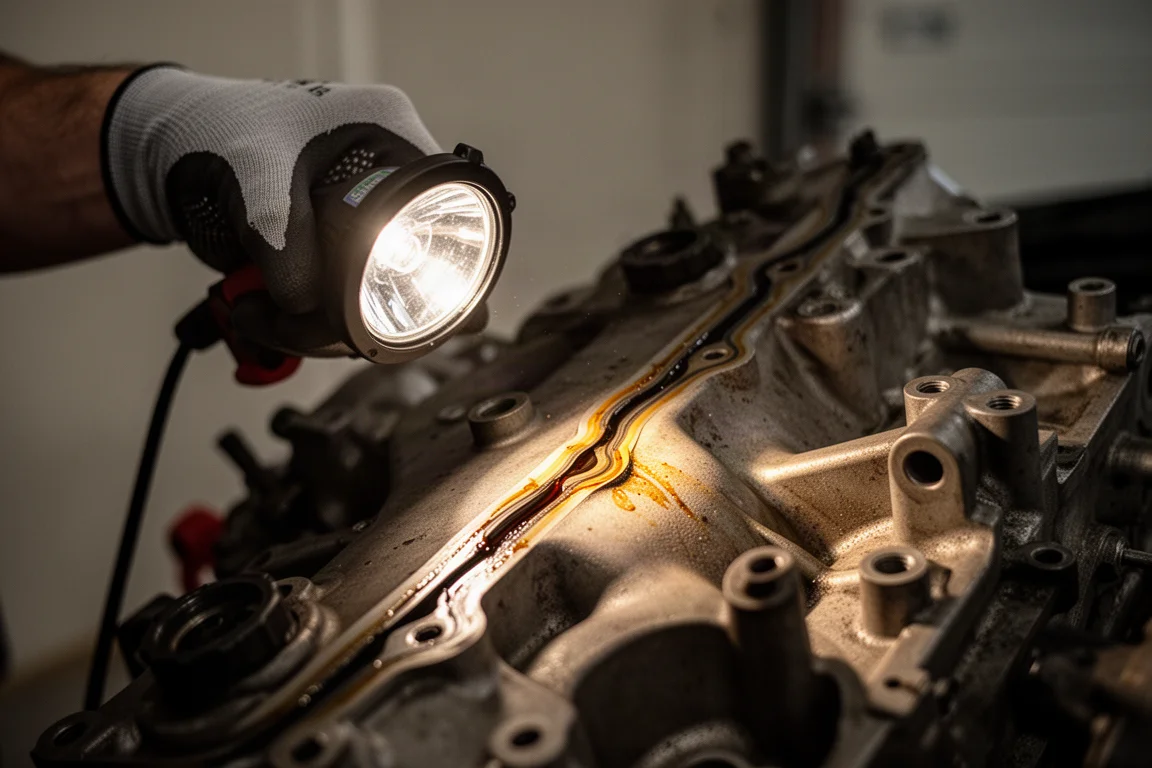
To simulate an aging engine, new O-rings and gaskets were cooked in 350°F oil until they hardened to 89.5 on the Shore A durometer and lost about 6% of their thickness. Each product then had two hours at around 200°F in a 50/50 blend to try to reverse that damage.
AT-205 was the clear standout, restoring the O-ring to 0.2055 in and softening it below its original hardness. SealLube (0.2025 in, hardness 73) and Lubegard (0.2015 in, hardness 75) also delivered real recovery. Justice Brothers and BlueDevil expanded the O-ring to 0.199 in with good softening, while Bar’s Leaks, CD-2, Bardahl, Lucas, and XADO produced almost no recovery. On the thinner rubber fiber gasket puncture test, AT-205 again won at 430 g, followed by SealLube at 446 g, Hapco at 492 g, and Lubegard at 528 g.
Cold-Temperature Viscosity Test
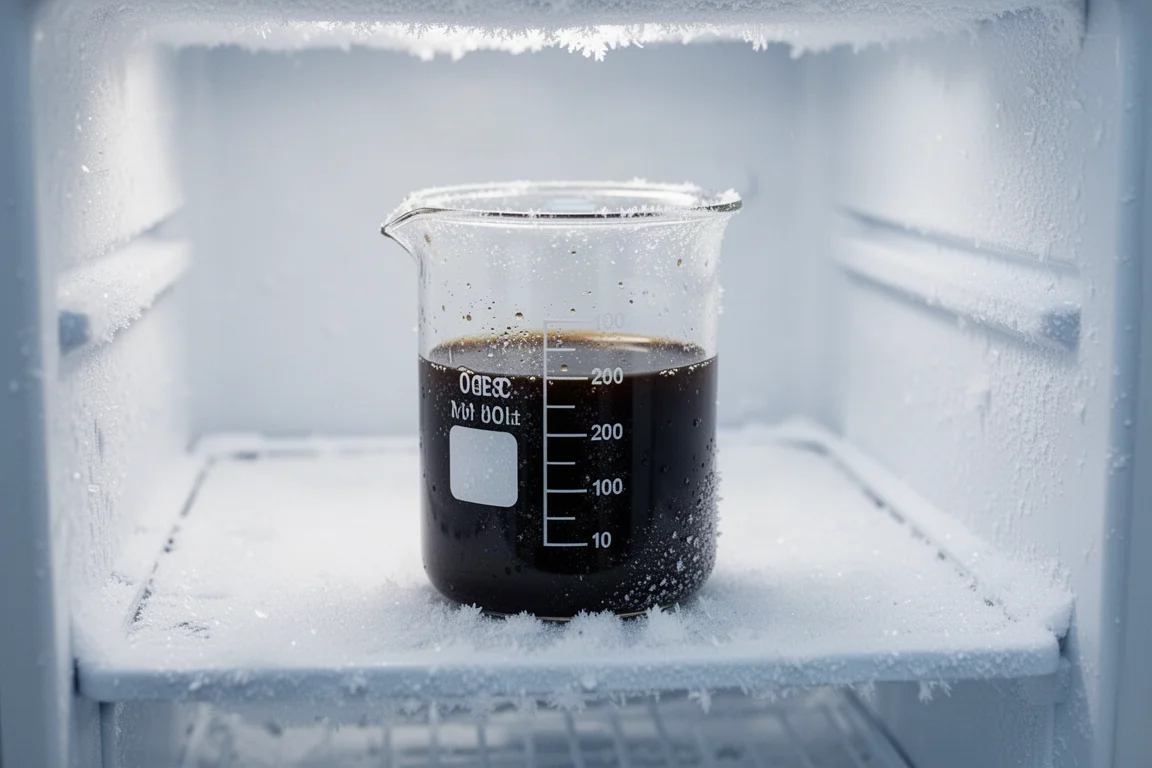
After 24 hours at minus 40°F, every single product had some impact on cold oil flow. Bardahl and Lucas restricted flow badly, and Liqui Moly froze solid. Lubegard, AT-205, BlueDevil, and SealLube separated from the oil and ran down the slide far too quickly, a sign of instability at low temperatures. CD-2, XADO, Justice Brothers, Wynn’s, and Hapco flowed acceptably close to the motor oil baseline.
Effect on New Seals
Fresh O-rings soaked in each product for 48 hours revealed another risk category. Lubegard, AT-205, Justice Brothers, BlueDevil, Hapco, and SealLube all caused new O-rings to swell, and most also softened them. Bar’s Leaks, Liqui Moly, Lucas, and XADO left new seals completely unharmed. If your engine still has healthy seals, the swelling products carry a small but real downside.
Buying Advice: Which One Should You Pick?
If the goal is purely stopping an active leak and restoring hardened seals, AT-205 Re-Seal is the standout, winning the overall ranking and both seal restoration tests. SealLube and Lubegard are strong alternatives when seal expansion matters most. If you are more concerned about protecting the oil’s anti-wear performance, Bardahl, Liqui Moly, and Lucas are the only three that actually improved on plain motor oil, with Bardahl posting the best wear result overall.
A few honest caveats. Stop leak products carry real risks, and none of them belong in an engine without an active leak. On a newer vehicle, a proper repair beats any additive. And one practical note from long-term use: a stop leak product applied to a serious rack and pinion leak held up for roughly five years with only one fluid top-up, so the category is not pure snake oil, it just demands the right product for the right situation.
Conclusion
Thirteen products, thirteen very different outcomes. AT-205 Re-Seal earned the overall win for seal restoration, SealLube and Lubegard followed closely on that front, and Bardahl, Liqui Moly, and Lucas stood out for preserving or improving oil lubricity. Bar’s Leaks, CD-2, Wynn’s, and XADO consistently underperformed and are the easiest to cross off the list. Match the product to your actual problem, and stop leak additives can be a legitimate stopgap rather than a gamble.
Further reading
Related Reviews
Automotive
Best Brake Parts Cleaner 2026: 14 Brands Tested for Speed, Cleaning Power, and Residue
We tested 14 brake parts cleaners for evaporation speed, grease removal, sludge breakdown, and residue to find the best value for your garage.
Automotive
Escort ZR6 Laser Jammers: A Hands-On Look at Features and Performance
The Escort ZR6 laser jammers offer compact heads and flexible integration, but the interface leaves room for improvement.
Automotive
LiPower Solid-State Car Battery Review: A Lighter, Longer-Lasting Upgrade
A practical look at the LiPower solid-state car battery, covering its specs, real-world performance, and how it compares to a traditional AGM battery.