Hi-Fi Audio
Best Music Streaming Sources for Hi-Fi: TVs, Streamers and Wireless Speakers
A practical roundup of televisions, streaming devices, an integrated amplifier and wireless speakers, judged on gapless playback, sample rate handling and everyday usability.
Introduction
Streaming is now the default way to listen, but the box or screen you stream through shapes the experience more than most people expect. A device that plays continuously mixed albums without gaps, passes audio through at a sensible sample rate and responds quickly to the remote is far easier to live with than one that pauses between tracks or quietly alters everything it receives.
Two issues come up again and again with televisions and streamers. The first is gapless playback. Live albums and DJ mixes are meant to run as one continuous piece, and some apps handle that properly while others insert a pause or clip the opening of a track. The second is sample rate handling, because several smart TV platforms resample all incoming audio to 48 kHz no matter what the source file actually is.
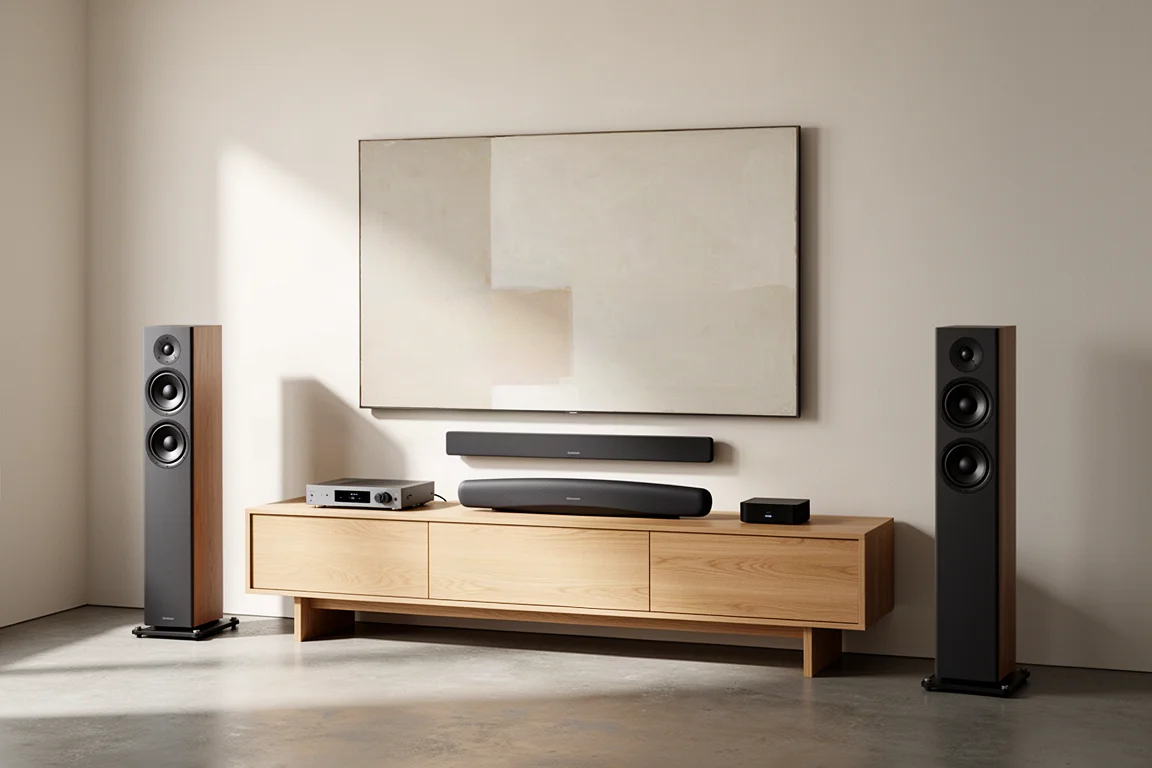
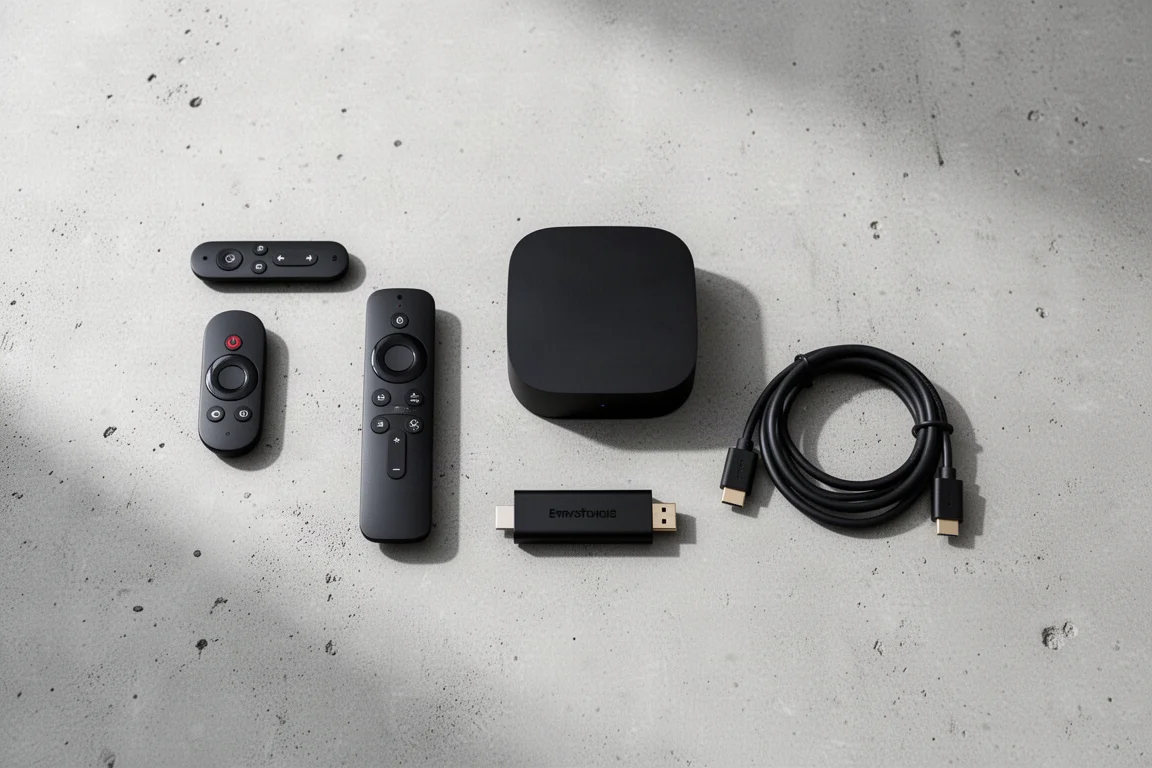
The products below cover the main ways of getting music into a hi-fi system: a dedicated streaming box, two smart televisions, two budget streamers, a pair of active wireless speakers, an integrated amplifier and a soundbar. Each entry notes what it does well, where it falls short and who it suits.
What to Look For in a Streaming Music Source
Gapless playback is the single most important behaviour for anyone who listens to live recordings, DJ mixes or classical works that run without a break. Native Spotify apps handle it well on every platform covered here, and Plex and Tidal both play gaplessly on tvOS. On Tizen OS, and on the third-party streamers, Tidal and Plex do not play gaplessly.
Sample rate handling matters just as much. The Apple TV 4K supports sample rates up to 48 kHz, so higher resolution files are not passed through untouched. Tizen OS goes further and resamples everything to 48 kHz, which means 44.1 kHz content is upsampled while 96 kHz and 192 kHz content is downsampled.
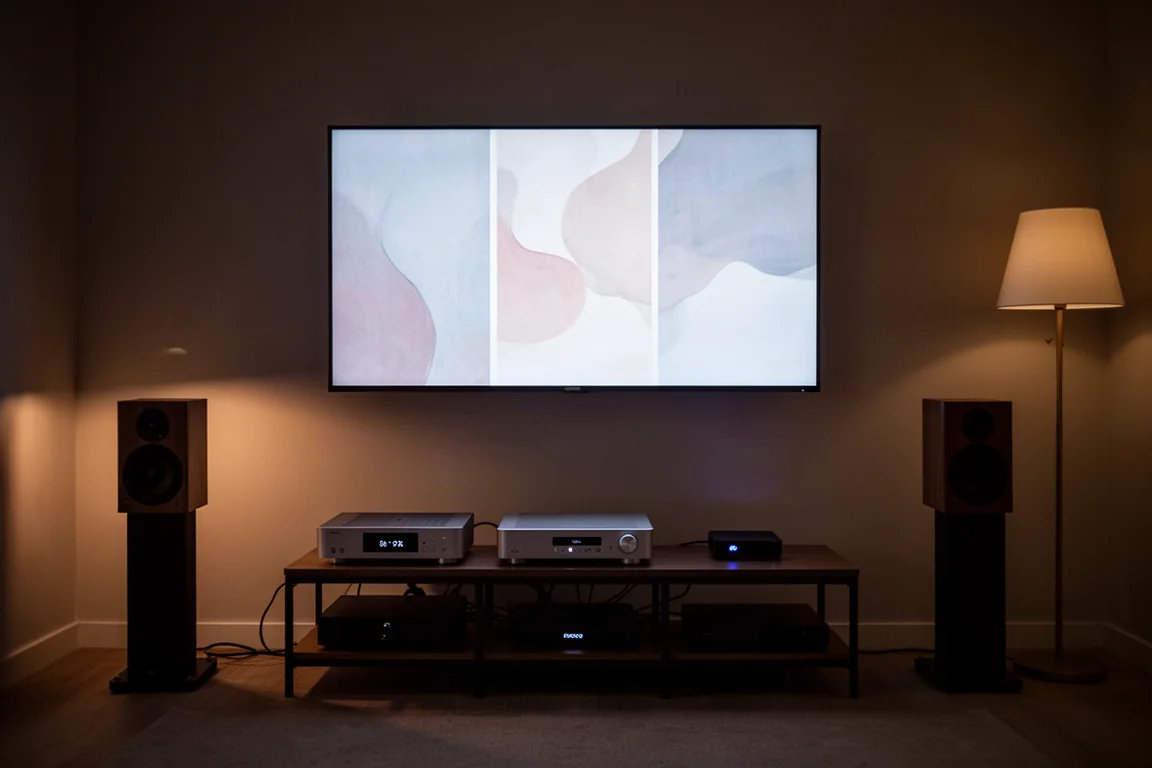
Interface and control deserve more attention than they usually get. A clean, uncluttered home screen and a remote that supports both clicking and swiping make daily use noticeably more pleasant, and an interface that feels sluggish can undermine an otherwise good streaming device.
Now playing screens are worth planning for. Some devices can display a now playing screen on the television while the audio itself goes elsewhere, which gives a streaming system something to look at while music plays.
Spatial audio needs its own caveat. Dolby Atmos and spatial audio playback do not always behave like stereo, and on some hardware gapless playback breaks down entirely, with tracks cut short at the start.
Apple TV 4K: The Most Complete Streaming Hub
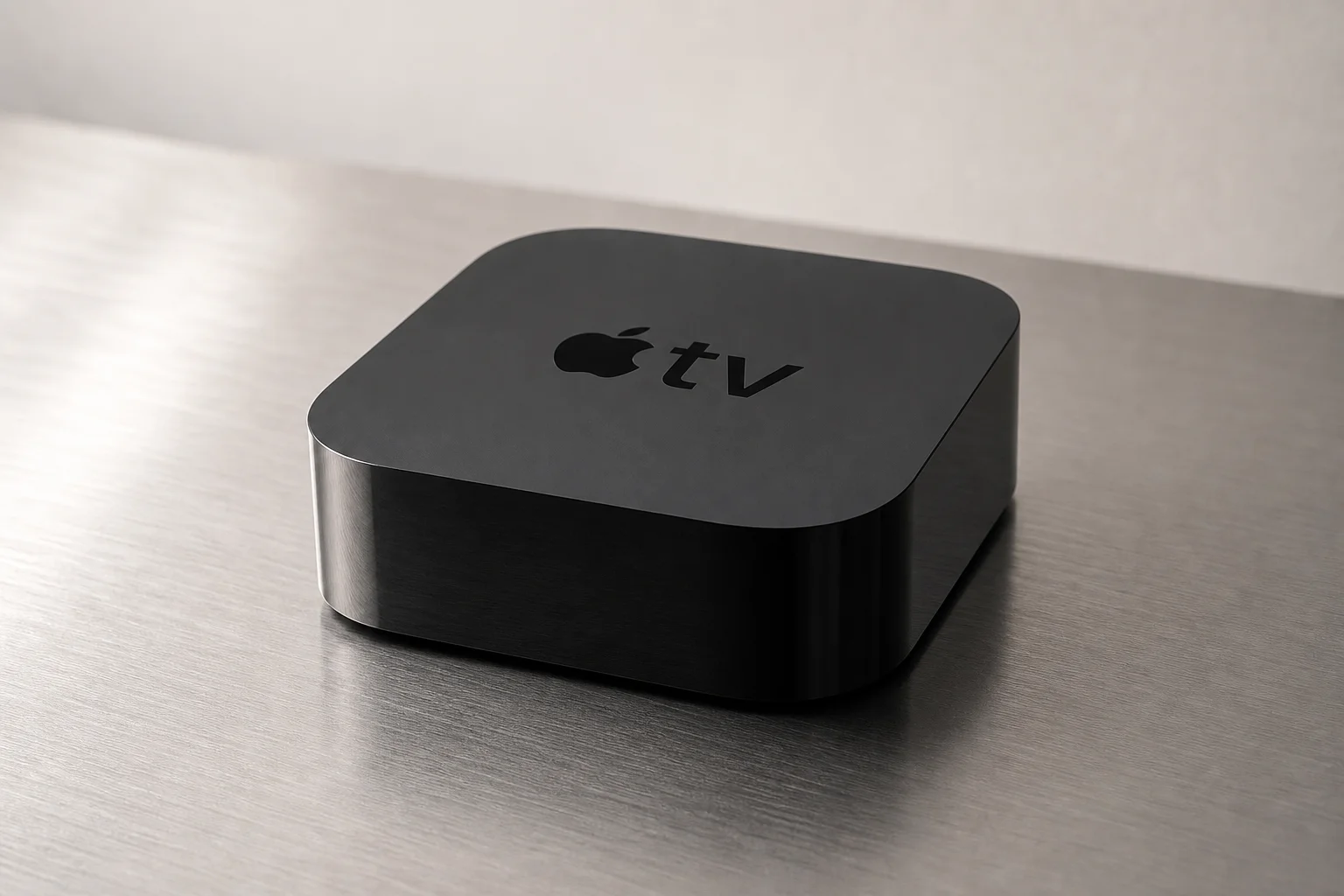
The Apple TV 4K runs tvOS and has its own app store, so the major music services can be installed directly on the device. The remote is a genuine highlight: it supports clicking through menus and swiping, and once you are used to swiping it is hard to go back to a directional pad. The interface is clean and uncluttered, with apps arranged on the home page and a single top bar that recommends content from Apple Music.
Navigation is noticeably more responsive than the Tizen interface on Samsung televisions, which makes the whole system feel quicker in daily use. Audio output is capped at 48 kHz, so high resolution material is not delivered untouched, but the practical result is stronger than that specification suggests.
Plex and Tidal both play gaplessly here, including continuously mixed live albums, and the native Apple Music app streams at CD quality with gapless stereo playback. Qobuz is not available for tvOS. It is also worth knowing that Dolby Atmos and spatial audio do not behave the same way, because gapless playback breaks down and the start of a track can be truncated.
The Apple TV 4K can additionally be used as a Roon endpoint over AirPlay, and a separate Roon TV Remote app lets the box display Roon’s now playing screen while audio plays to a different zone. The app also handles zone selection, volume and the play queue, and it has to be enabled in the Extensions panel of Roon’s settings before it will work. Browsing a very large library through the app can feel slow, but it is a genuinely useful addition.
Samsung Frame TV (2022): Art on the Wall, With Audio Compromises
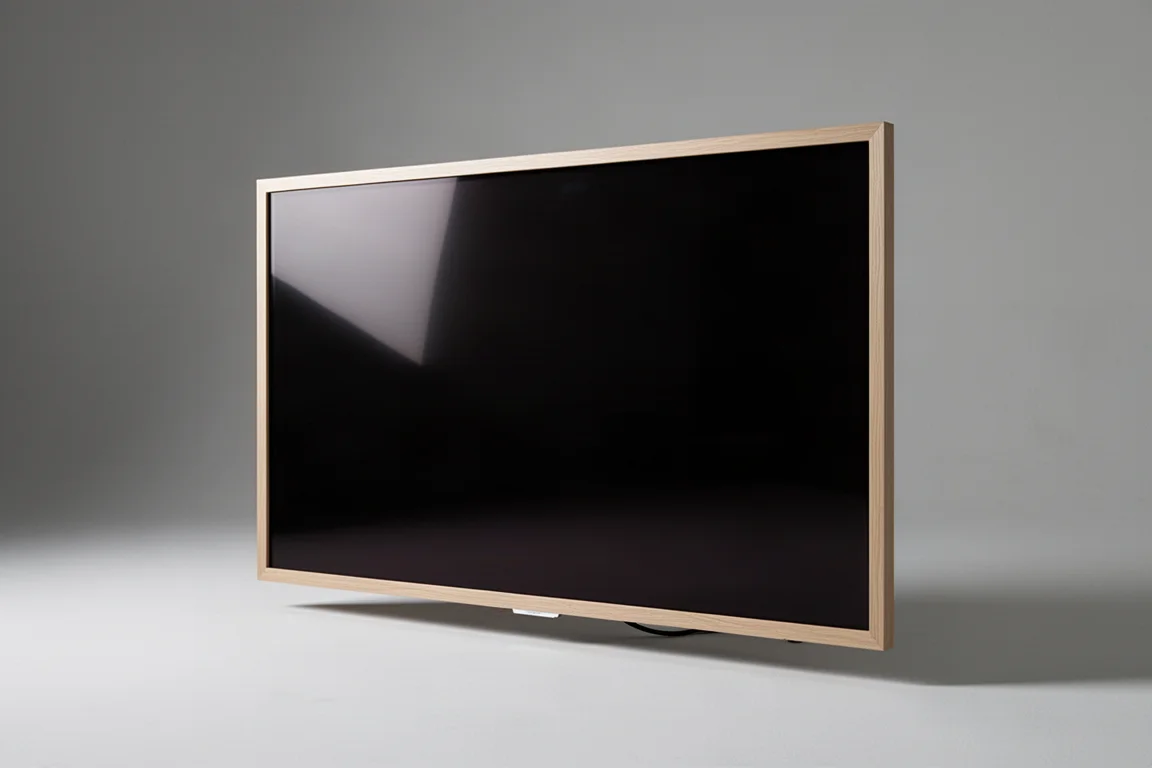
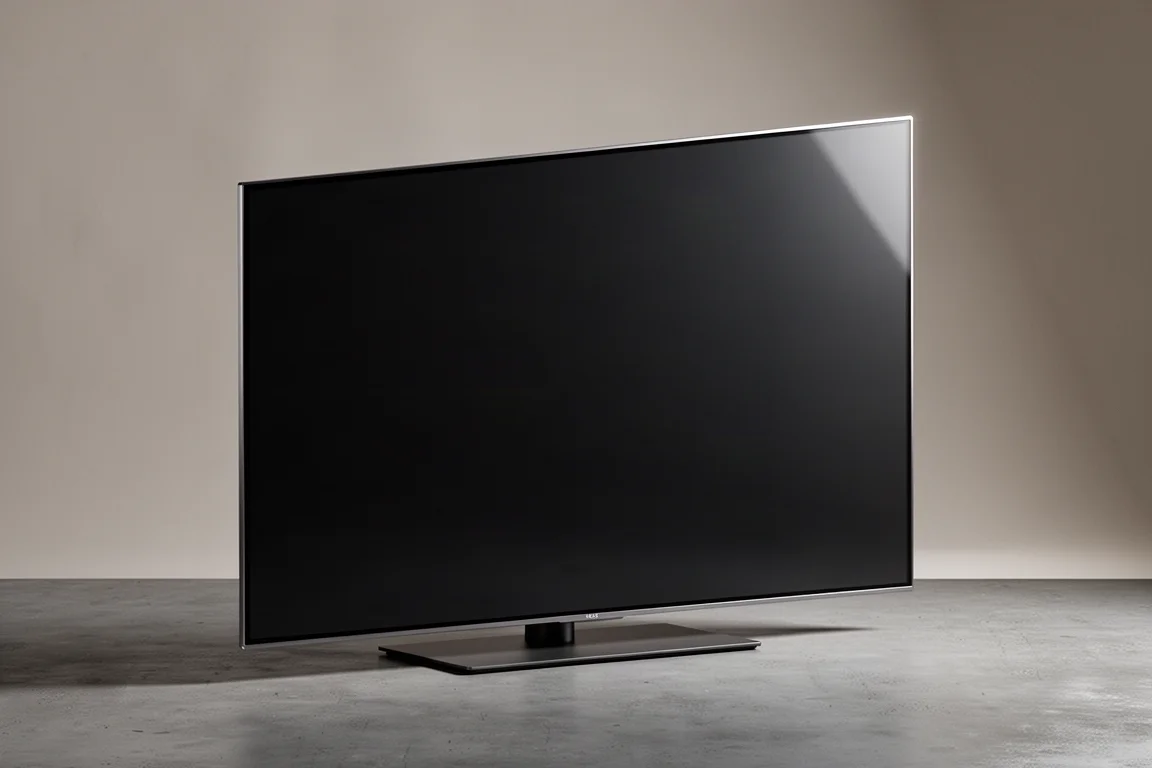
The Frame TV is built for rooms where a black rectangle is not acceptable. In standby it displays classic and contemporary artwork, so the screen never turns into a dark mirror. Most of the electronics live in an outboard box, which means only one cable runs down the wall beneath a wall-mounted set and the cabling stays discreet.
Those benefits come with picture trade-offs. Blacks are not as deep as on the QLED models, and there is visible dirty screen effect, including blotchiness on dark scenes. The Tizen interface is also sluggish, and slower than the interface on the previous generation of Samsung sets.
As a music source, the Frame behaves like other Tizen televisions: Tidal and Plex do not play gaplessly, the native Spotify app does, and all audio is resampled to 48 kHz before it leaves the set.
Samsung QN90A QLED TV: Where the Resampling Shows Up
The QN90A is the clearest illustration of what Tizen OS does to audio. Everything is resampled to 48 kHz, so 44.1 kHz content is upsampled while 96 kHz and 192 kHz content is downsampled. That behaviour has been confirmed in two ways: first with an external DAC connected over Toslink showing 48 kHz, and then over HDMI ARC using an integrated amplifier whose companion app reports the incoming sample rate.
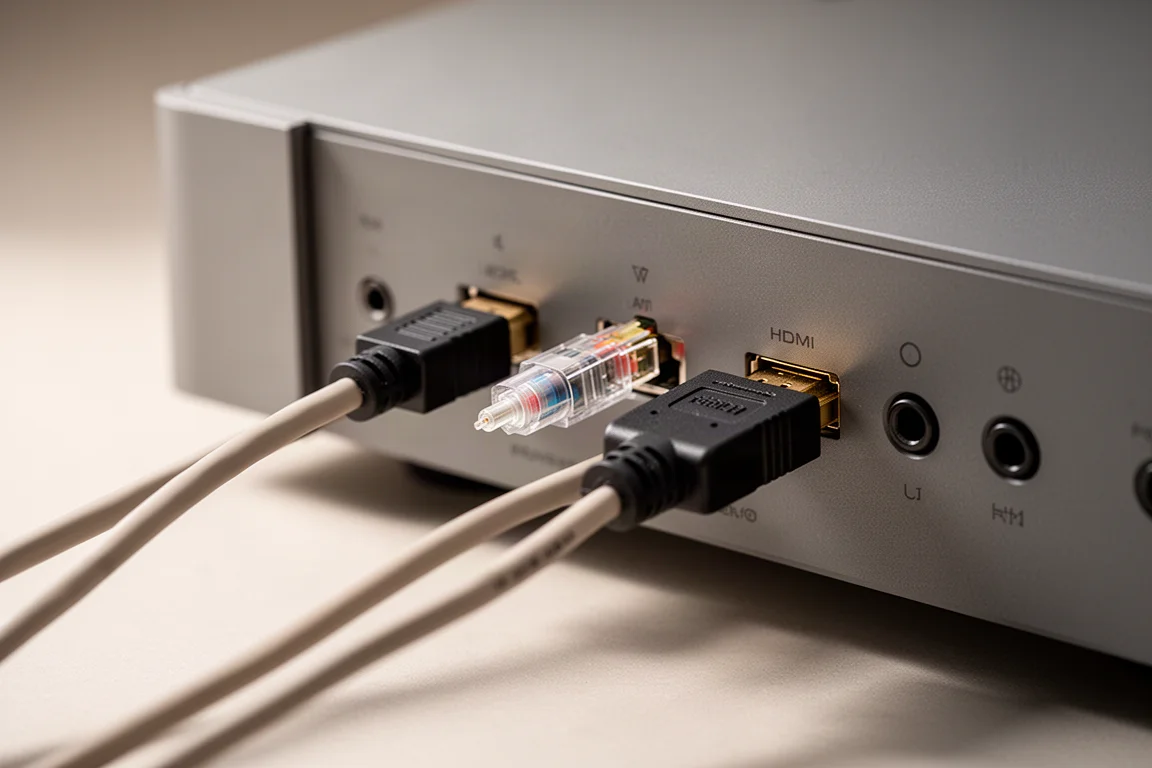
For anyone with a library of high resolution files, that resampling is a real limitation, and there is no way around it from inside the television. Gapless playback is inconsistent as well: Tidal and Plex both insert gaps, while the native Spotify app plays continuously mixed material without interruption.
Google Chromecast with Google TV: A Low-Cost Streaming Option
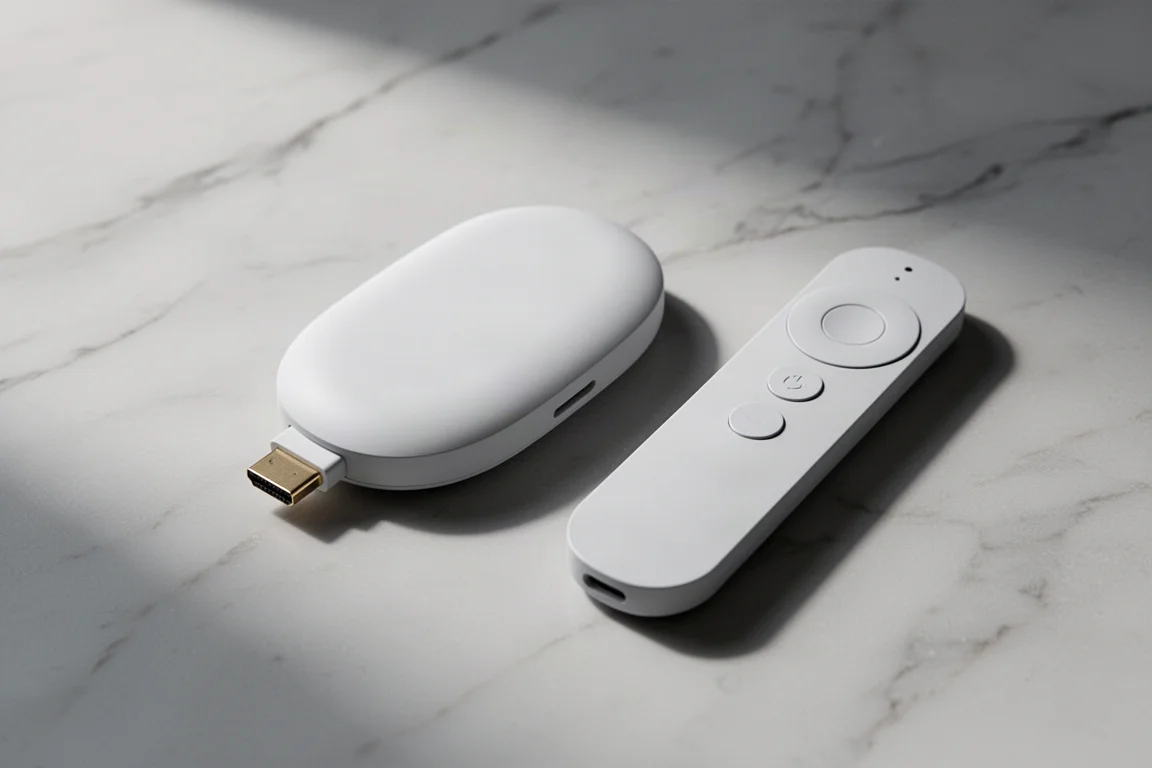
The Chromecast with Google TV is a compact way to add streaming apps to a television that does not have them. Its app behaviour is the same as other third-party streamers: Tidal and Plex do not play gaplessly, while Spotify does. Routed through a television’s outboard electronics box, the audio path still ends up resampled to 48 kHz.
One notable strength is its ability to display a now playing screen pushed from Roon, which makes it a useful companion if you want artwork on screen while the audio plays to a different device.
Xiaomi Mi Box S: Budget Streaming With the Same App Caveats
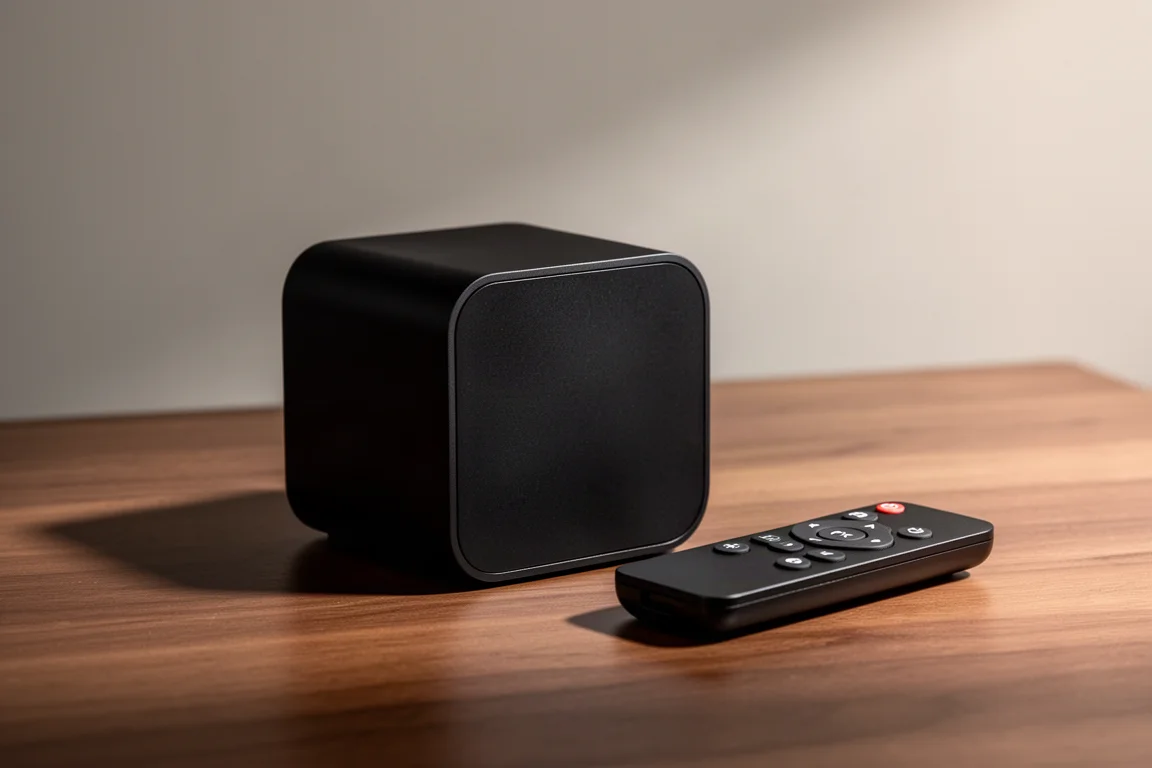
The Mi Box S is another low-cost route to getting streaming apps onto a television. The app-level picture is identical to the Chromecast: Tidal and Plex do not play gaplessly on it, and Spotify does. If continuously mixed albums are part of your listening, that limitation is the one to weigh before buying.
KEF LS60 Wireless: Active Speakers Waiting on Roon Ready Certification
The LS60 Wireless is a pair of active wireless speakers, and at the time of writing the Roon Ready certification process is still ongoing, so they cannot yet be used as Roon Ready endpoints. That is one reason a television or a streaming box still makes sense as the source in a system built around them.
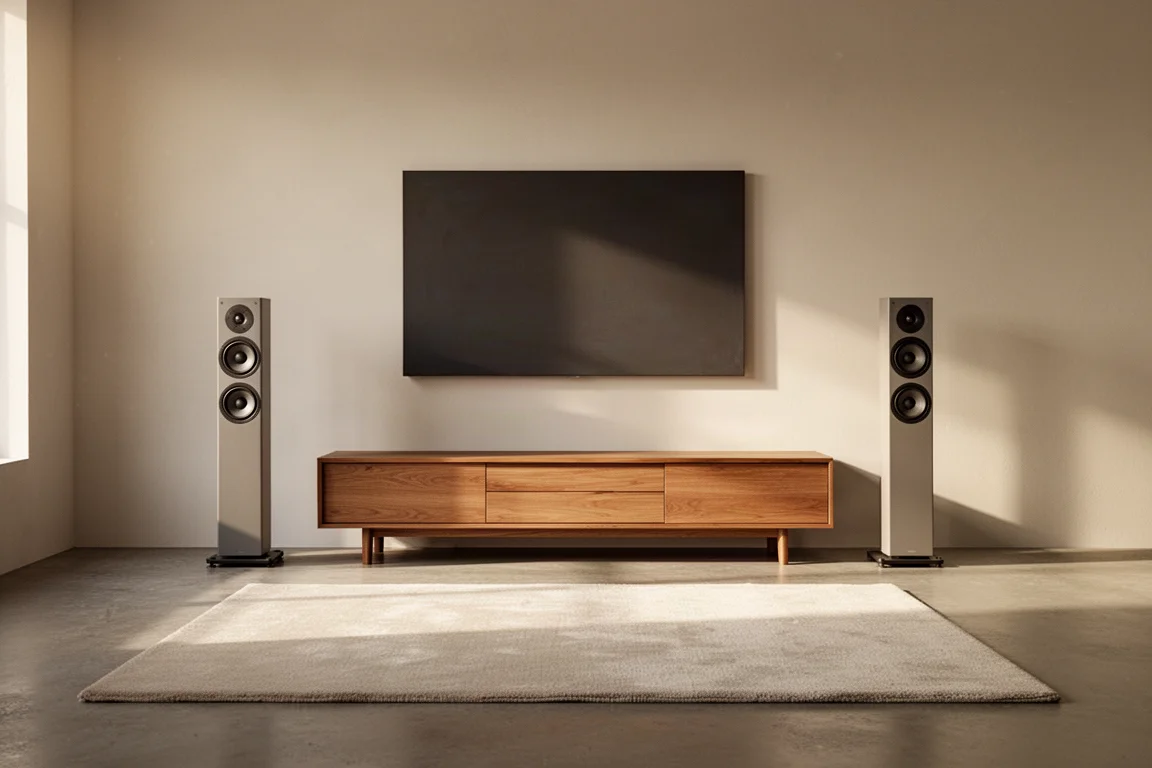
Connected over HDMI ARC to a television’s outboard electronics box, with an Apple TV 4K feeding that same box, everything is sampled to 48 kHz. Even so, playback stays gapless no matter which app is used, including Plex, Tidal, Apple Music and Spotify.
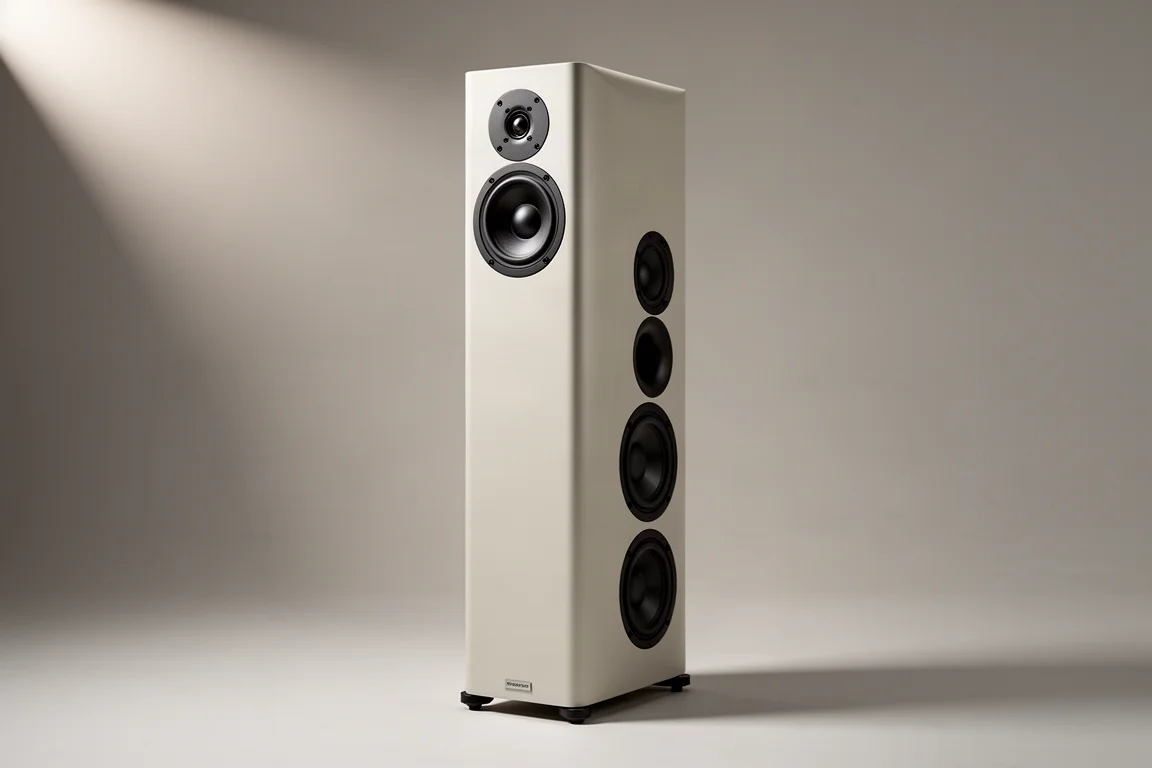
Lyngdorf TDAI-1120: An Amplifier That Reports What It Receives
The TDAI-1120 is an integrated amplifier whose companion app reports the sample rate of the signal arriving over HDMI. That readout is how the 48 kHz ceiling imposed by the Samsung televisions was confirmed over HDMI ARC, and it makes the amplifier a useful tool for anyone who wants to know exactly what their television is sending into the rest of the system.
For music streaming, it is best understood as the hub rather than the source, since the apps and the streaming hardware sit upstream of it. It cannot compensate for a source that resamples audio before it arrives.
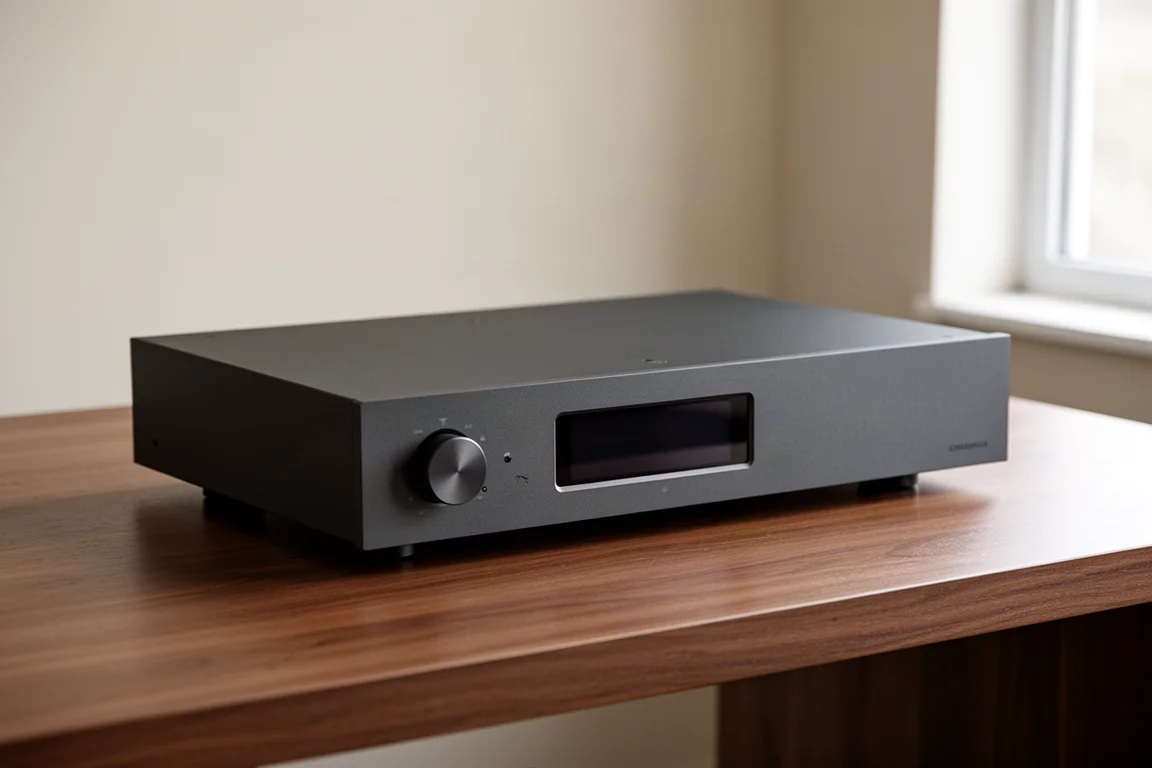
Sonos Arc: Spatial Audio Undermines Gapless Playback
The Arc is a soundbar that handles Dolby Atmos and spatial audio content. In that mode playback is not gapless, and the start of each song can be truncated, which is a deal breaker for anyone who listens to continuously mixed albums. Stereo playback is the safer choice when gapless performance matters.
Buying Advice
Which one to choose depends on what you actually listen to. If gapless playback is the priority, the Apple TV 4K is the strongest option here. It plays gaplessly with Plex, Tidal and Apple Music in stereo, its interface is the most responsive of the group, and the Roon TV Remote app adds a now playing screen with basic zone control. The trade-off is the 48 kHz output ceiling.
If the television has to look good on the wall, the Frame TV is the obvious candidate, as long as you accept the picture compromises and the Tizen limitations: no gapless Tidal or Plex, and everything resampled to 48 kHz. The QN90A shows the same resampling behaviour, and there is no way to bypass it from within the set.
On a budget, the Chromecast with Google TV and the Mi Box S both get streaming apps onto a television, but neither plays Tidal or Plex gaplessly, so Spotify is the safer service on those devices.
For speakers and amplification, the KEF LS60 Wireless delivers gapless playback across all the apps tested once it is fed over HDMI ARC, even though everything arrives at 48 kHz, and the Lyngdorf TDAI-1120 is worth considering if you want visibility into what your source is sending. The Sonos Arc is best kept to stereo if continuous mixes matter to you.
Conclusion
The hardware you stream through shapes the experience as much as the service you subscribe to. Gapless playback, honest sample rate handling and a responsive interface are the three things that separate a system which is pleasant to use from one that is quietly irritating.
Among the options here, the Apple TV 4K is the most complete streaming source for a hi-fi system, the Frame TV is the most attractive way to put a screen in the room, the LS60 Wireless delivers gapless playback once it is fed over HDMI ARC, and the TDAI-1120 gives you a clear view of what is arriving at the amplifier. Budget streamers will get you started, with the caveat that Tidal and Plex will not play gaplessly on them.
Further reading
Related Reviews
Hi-Fi Audio
Accuphase C-57 vs Allnic H-7000V: Two High-End Phono Stages Compared
A fully balanced solid-state phono stage with a pitch-black noise floor meets a tube design built for well-loved records. Here is how to choose between them.
Hi-Fi Audio
Active vs Passive Hi-Fi: Five Components for a Modern System
Five components that define modern active and passive hi-fi systems, with the strengths, trade-offs and setup details worth weighing before you buy.
Hi-Fi Audio
Advance Paris A10 Apex Review: A Hybrid Integrated Amplifier That Covers a Lot of Ground
A French hybrid integrated amplifier with a class A tube preamp stage, analogue power meters, and an internal DAC and phono stage good enough to make extra boxes unnecessary.