Mountain Bikes
Best Mullet Mountain Bikes 2026: Five Mixed-Wheel Bikes Worth Considering
Five mixed-wheel mountain bikes that can be run as mullets, with the conversion effort, geometry and pricing differences that matter before you buy.
Introduction
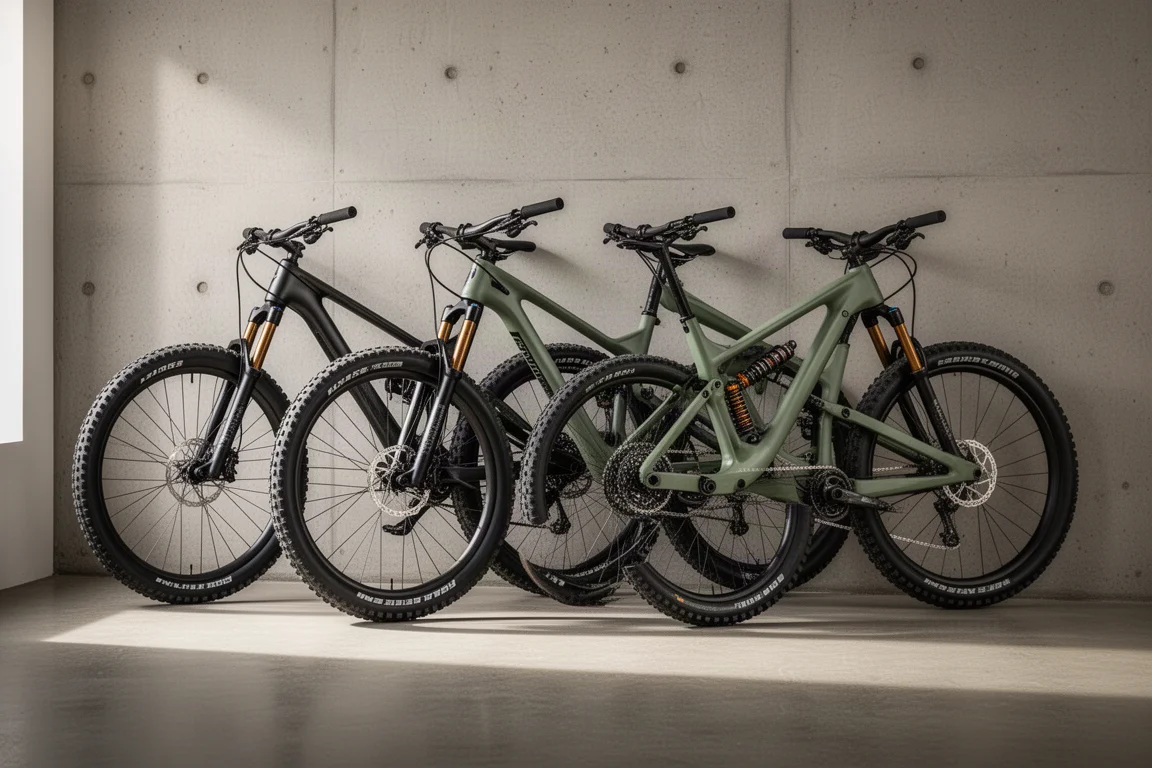
Mullet mountain bikes pair a larger 29 inch front wheel with a smaller 27.5 inch rear wheel. The nickname comes from the haircut, but the reasoning behind it is practical: a bigger front hoop rolls over roots and rocks with more composure, while a smaller rear wheel keeps the back of the bike lower and easier to move around.
What used to be a niche workaround is now mainstream. Plenty of modern bikes let riders choose between a full 29er setup and a smaller wheel out back, and mixed wheel sizes have been permitted in UCI competition since a 2019 rule change.
The five bikes below all support that mixed-wheel approach, but they get there in very different ways. Some ship as mullets, some need a wheel swap and a chip flipped, and one needs a new rear triangle entirely. Those differences are what separate a satisfying purchase from a frustrating one.
What Makes a Mullet Bike Different
The appeal of a mullet setup sits in its split personality. Up front, the 29 inch wheel carries momentum, sits higher over obstacles and holds a line through rough ground. Out back, the 27.5 inch wheel shortens the effective rear end, gives the rider more room to move and lets the bike rotate into corners more easily.
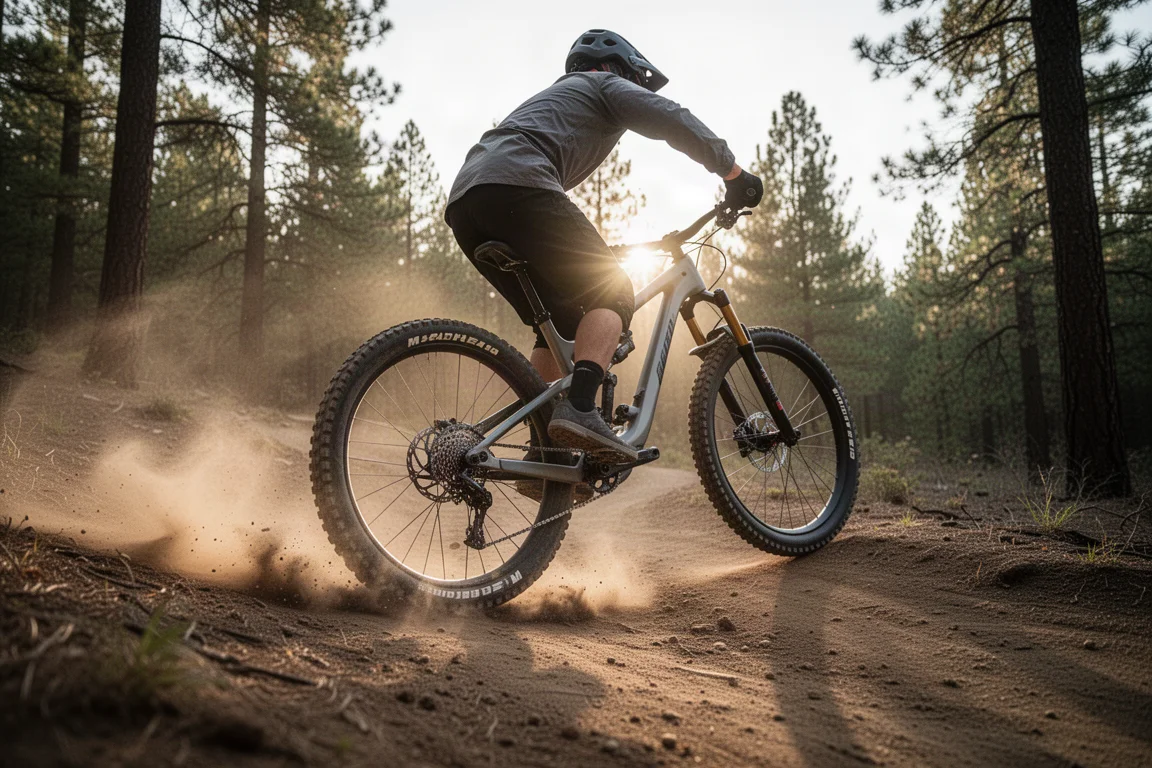
The trade-off is that mixing wheel sizes changes geometry, so a bike has to be designed for it or corrected afterwards. That correction is where the five bikes here diverge: some use a flip chip, some use a dedicated linkage, and some use a different rear triangle altogether.
Versatility is the other selling point. Many modern bikes give riders the choice between a full 29er and a smaller rear wheel without needing a second frame, which means one bike can cover more ground than its wheel size suggests.
Forbidden Druid V2
The original Druid was one of the first modern trail bikes that could officially take a mullet wheel setup, and it managed that with the Ziggy link, a part that replaced a section of the suspension linkage and corrected the geometry when the smaller wheel was fitted.
The Druid V2 keeps the mulleting option but takes a different route. The Ziggy link is gone, and swapping wheel sizes now means changing the bike’s chainstays, which makes the switch a little more involved. Forbidden does offer the Druid with a stock mullet wheel option, so riders who already know they want the mixed setup can order it that way from the start.
Suspension follows a high pivot design with an inverted Horst linkage, where the pivot sits on the rear triangle and the linkage drives the shock from an upside-down position. Geometry is current for a trail bike, with a 64.5 degree head angle in mullet configuration and a 475mm reach on a size S3.
Forbidden’s One Ride philosophy aims to deliver similar ride characteristics regardless of rider size or stature, and it does that by varying rear centre length across the size range. The smallest S1 size runs a 423mm rear centre, while the largest S4 stretches that to 466mm.
The Druid is available as a frameset from £3,599 or $3,799, and as three complete builds starting at £6,299 or $6,199 for the GX AXS RS model, topping out at £8,999 or $8,899 for the all-SRAM XO AXS build.
Hope HB916
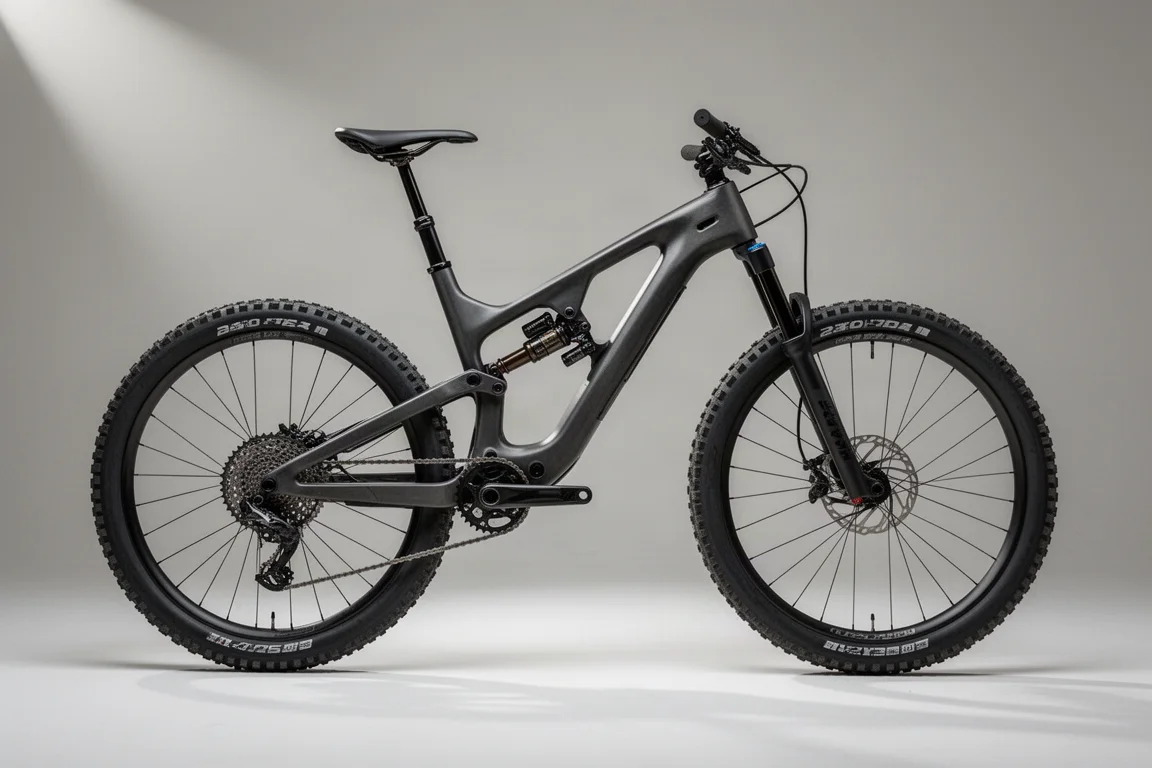
The HB916 is Hope’s latest bike and was designed from the ground up for enduro racing, with the emphasis on being efficient, balanced, predictable and easy to ride so riders can save seconds and energy on the toughest trails.
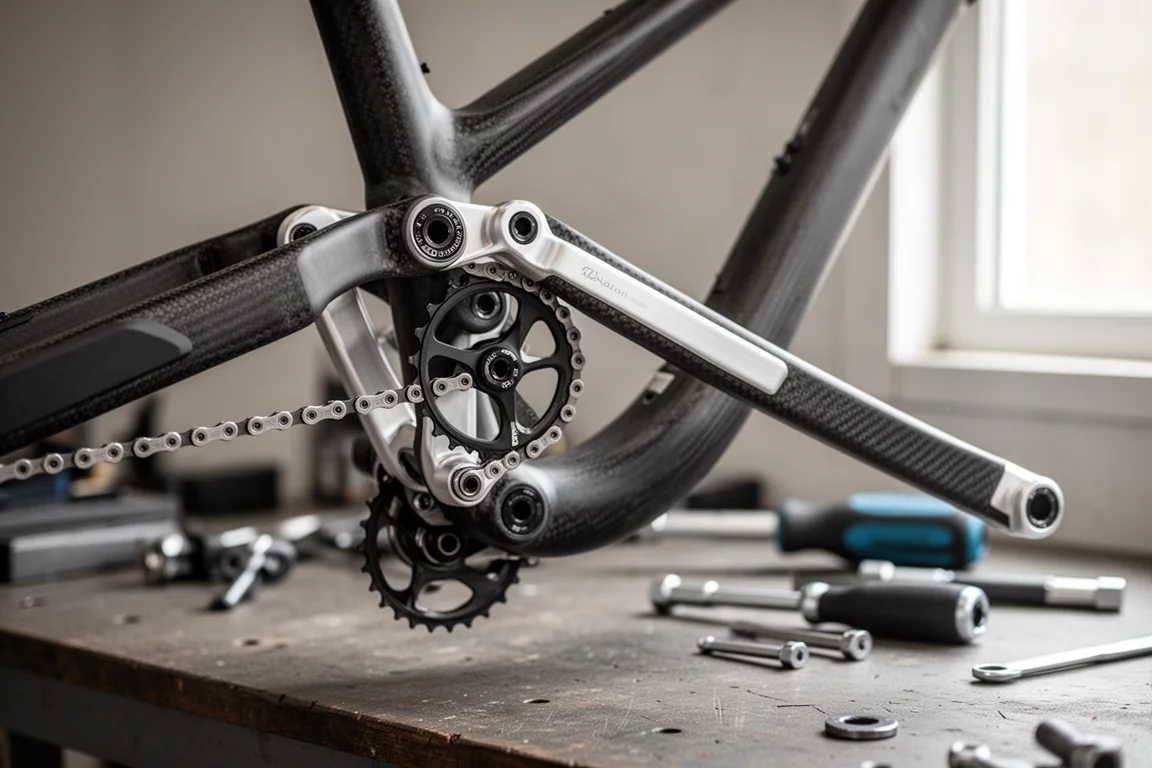
Like the Druid it uses a high pivot and idler suspension design, here delivering 160mm of rear travel. A chip in the seat stays lets riders fit the smaller 27.5 inch rear wheel for a mullet setup.
The frame is made in the UK, with a front triangle moulded in one piece and chain and seat stays built from a hybrid of aluminium and carbon. There is internal cable routing, rubber frame protection and down tube storage, which Hope calls the body box and which will happily take a sandwich, burrito or wrap. The lid doubles as a bottle cage mount, and Hope claims a full-size bottle still fits inside the front triangle.
The bike comes in four sizes, H1 to H4, mirroring small through extra large. The headset is adjustable between 64 and 63.2 degrees, and complete bikes are built with Hope components and a choice of Öhlins or Fox suspension. Three frame colours are offered: bare carbon, a classy black and neutral, or a chameleon option.
Two SRAM builds start from £6,745 or €8,500 for the GX build, and a frame with shock is £3,750 or €4,700 for riders who already have a drivetrain.
For enduro racers, the combination of a UK-made frame, 160mm of high pivot travel and a genuinely usable storage compartment makes the HB916 an easy bike to justify.
Propain Giga 297
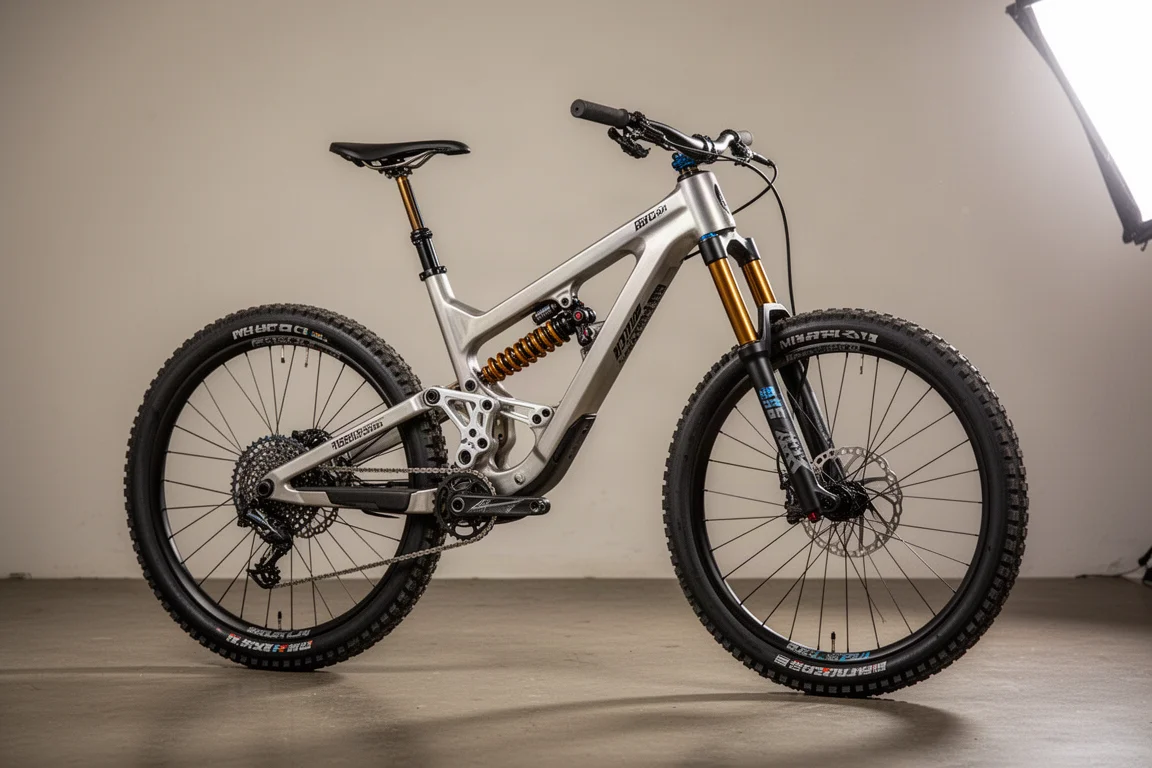
The Giga builds on the long-running success of Propain’s race-winning Mega, and it is a big travel enduro race rig for riders who simply need more bike. The range covers a full 29 inch model and a 27.5 inch frameset, but the 297 mullet version is the most interesting of the three.
It packs 180mm of travel front and rear with some of the most aggressive geometry around, and it is built to monster the toughest enduro races. Instead of a flip chip to alter suspension progressivity, the Giga uses a two-position eccentric main pivot that offers 25.5 or 29 progression, making it well suited to either coil or air shocks. Combine that with strong small bump sensitivity and a lot of travel, and the capability is clear before geometry even enters the conversation.
The numbers back it up. A 63.5 degree head angle and a 475mm reach on a size large put the big front wheel well out in front for stability, while 435mm chainstays tuck the smaller 27.5 inch rear wheel close to the bottom bracket shell to keep the bike lively in corners.
Versatility is a big part of the appeal. The Giga 297 is a dedicated mullet model, but the full 29er Giga 290 can be converted with a separately sold linkage kit that keeps the geometry largely the same while using longer 445mm chainstays for extra stability. Owners of a Giga 290 can also buy the shorter 297 rear triangle, effectively giving them two bikes in one.
A frame with a Fox Float X2 shock starts at £2,599 or $3,099, with other shocks available from Fast, EXT or Push. Complete bikes start at £3,699 or $4,899 for the Giga 297 Comp and top out at £6,299 or $7,899 for the range-topping RS model.
Merida One-Sixty
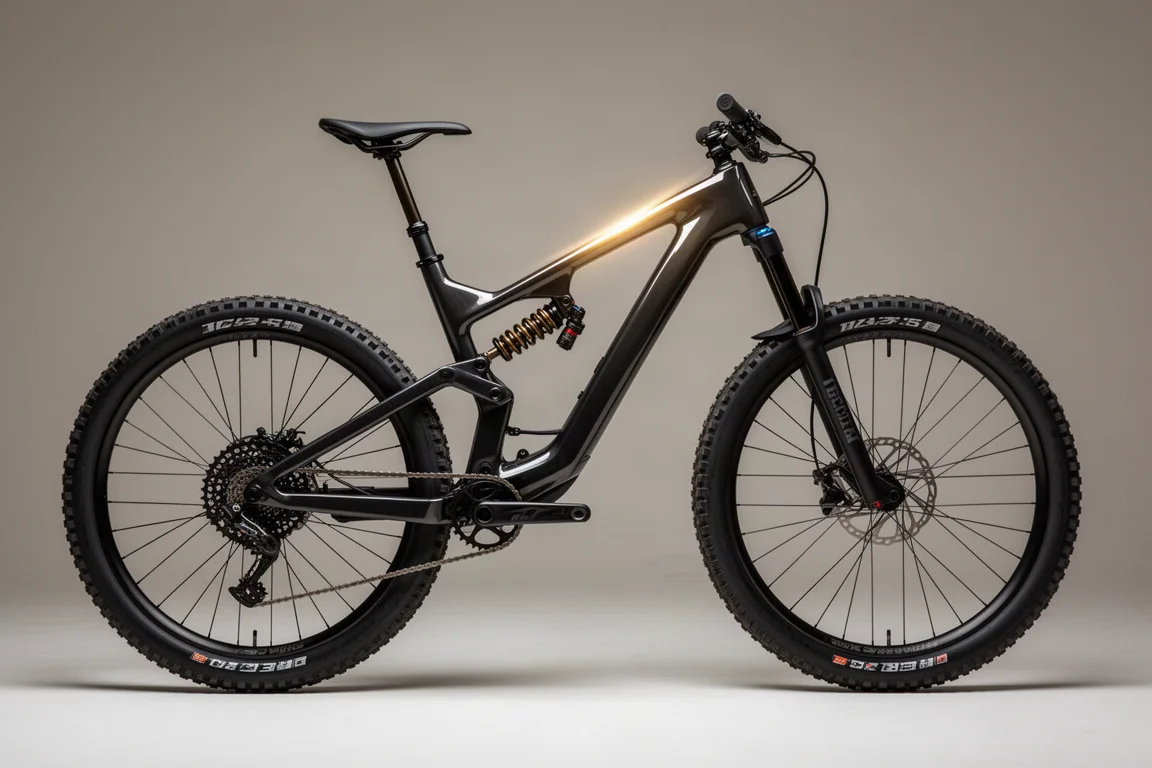
The One-Sixty took the enduro bike of the year title in 2023, and while Merida may not be the first brand that comes to mind for hard-hitting mullet bikes, the numbers here are worth a closer look.
The standout figure is a 79 degree seat tube angle, which is remarkably steep. It puts the rider’s hips over the bottom bracket for an upright seated position that works well for winching up long transfers between enduro stages, though it can put a little more strain through the wrists on flatter sections.
Up front, a 170mm travel fork keeps the head angle at 64 degrees, and reach on the mid-size is 470mm, which is long compared with other medium bikes in the category.

Sizing is worth paying attention to. Only the three smaller sizes come set up as a mullet as standard. Riders who want a long or extra long frame will need to swap out the larger 29 inch rear wheel and move the flip chip to the mullet setting.
Rear wheel travel is 171mm in the mixed wheel setup, and the rear triangle uses flex stays rather than a pivot at the seat and chainstay junction. Merida calls this P-Flex and claims that using the compliance of carbon along with specific tube shaping removes those pivot points, saving weight, reducing maintenance and improving overall stiffness.
Trek Fuel EXe
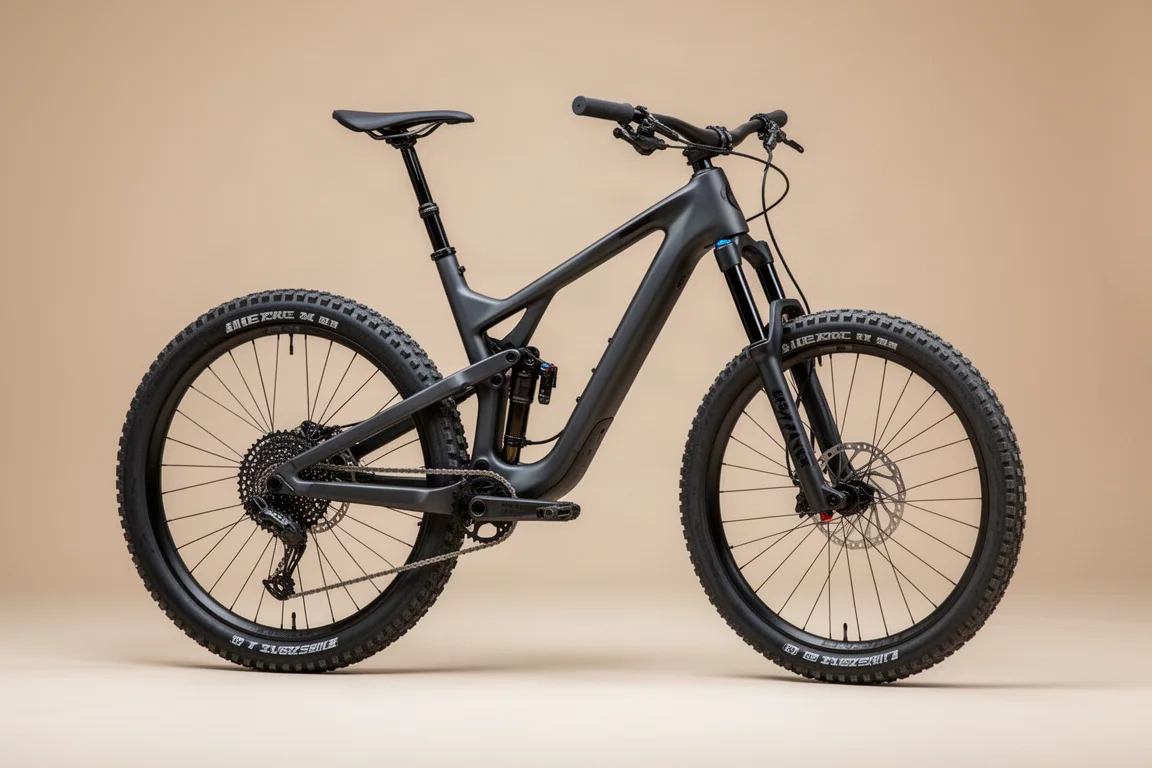
This one is a deliberate curveball. The Fuel EXe is Trek’s lightweight electric mountain bike, a much slimmer proposition than the full power Rail, and it shaves a serious amount of weight from its motor and battery.
The TQ HPR 50 motor takes its name from its harmonic pin ring design and produces 50 newton metres of torque with a peak power output of 300 watts. Assistance ranges from 25 to 200 depending on the mode. It is not only compact but light, with a claimed weight of 1,850 grams, which is roughly a thousand grams lighter than Shimano’s EP8 and Bosch’s Performance Line CX motors.
It is also seriously quiet, and with its sleek looks it is hard to tell from a distance that it is an e-bike at all. The three modes, dubbed Eco, Mid and High, are controlled by a small two-button controller on the handlebar, and an app handles motor and battery monitoring along with tuning settings such as maximum power in each mode.
Mullet fans should note that the Fuel EXe can be run as a mullet bike, but unlike the other bikes here it cannot be bought that way off the shelf. It is a full 29er only, so riders will need to add a spare 27.5 inch rear wheel, and the range-topping model costs £13,500 or $14,000 before that extra purchase. Once the smaller wheel is on hand, the conversion is simple: fit the wheel, flip the frame’s geometry link to the high setting, and ride.
Buying Advice: Matching the Bike to Your Riding
The most useful question is not which of these bikes is fastest, but how much effort the mullet conversion takes and whether the riding you actually do justifies it.
If you want the mixed setup from day one, the Druid V2 and the Giga 297 are the most straightforward answers, since both can be ordered as mullets. The Druid V2 asks for a chainstay change if you decide to switch later, while the Giga 297 keeps a full 29er conversion path open through a separately sold linkage kit.
If a UK-made frame with on-bike storage and a clear enduro race focus appeals, the HB916 delivers 160mm of high pivot travel and an adjustable headset. If climbing comfort on long transfers matters more than race pace, the One-Sixty’s 79 degree seat tube angle is the detail to weigh up, along with the fact that only the three smaller sizes ship as mullets.
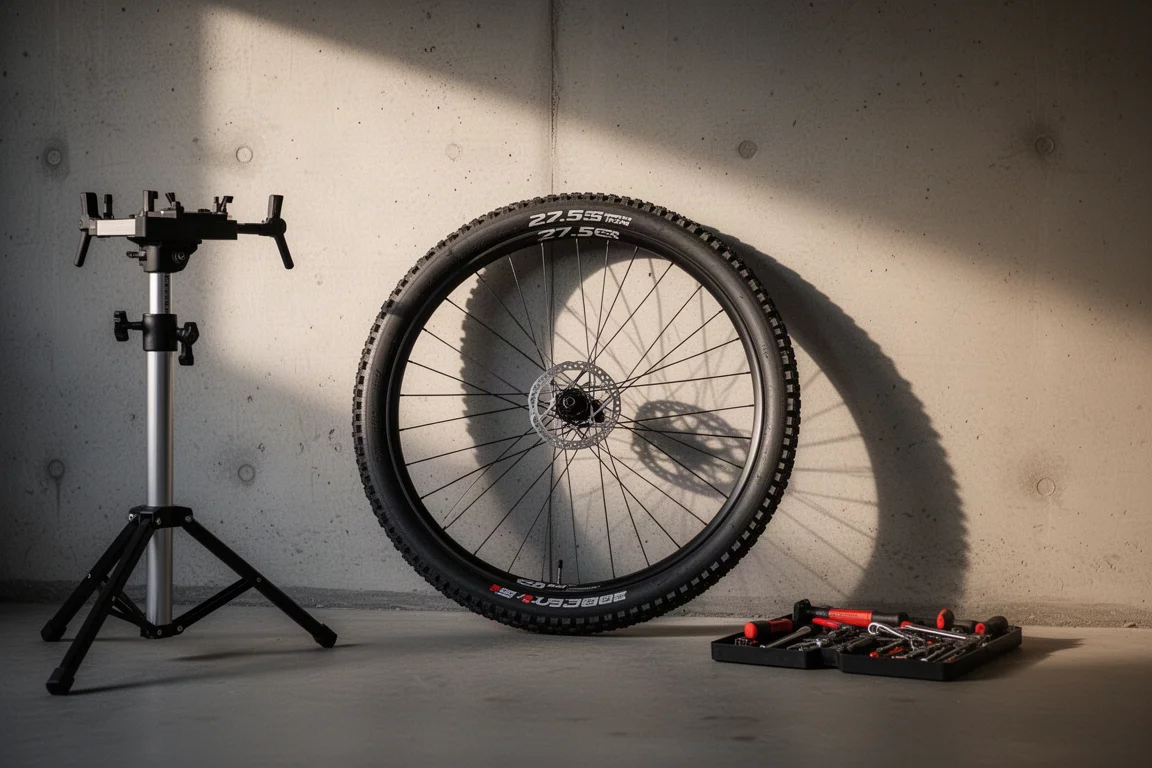
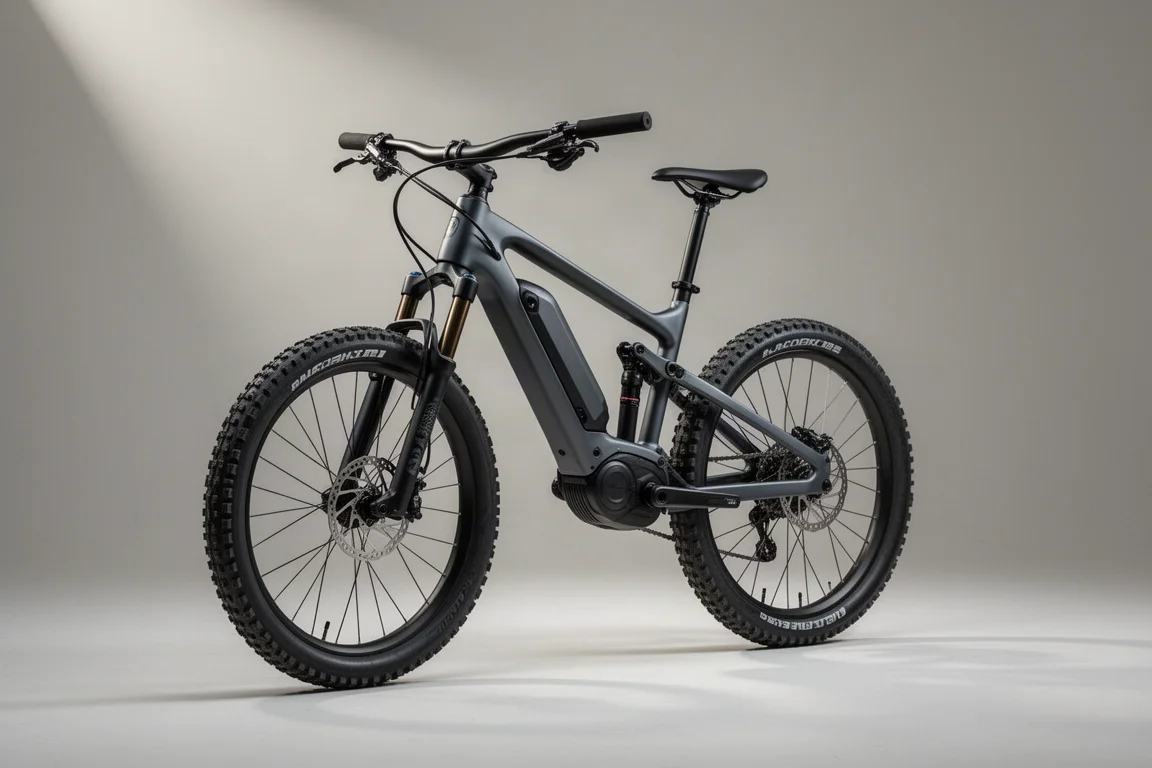
For riders who want electric assistance, the Fuel EXe is the light and quiet option, but the budget needs to stretch to a spare rear wheel as well as the bike itself.
It also pays to decide early whether you want a frameset or a complete build. The Druid V2, HB916 and Giga 297 can all be bought as a frame or a frame with shock, which suits riders who already own components, while complete builds take the guesswork out of matching suspension to the frame.
Conclusion
Mullet mountain bikes make the most sense when the mixed wheel format is designed into the bike rather than bolted on afterwards. All five of these bikes can be run that way, but they ask for different amounts of effort: the Druid V2 and Giga 297 can be ordered as mullets, the HB916 and One-Sixty rely on chips and, in Merida’s case, size-dependent setups, and the Fuel EXe needs a second wheel before the party can start.
Match the conversion effort and the price band to your own riding, and a mullet setup stops being a novelty and starts being a genuinely useful choice.
Further reading
Related Reviews
Mountain Bikes
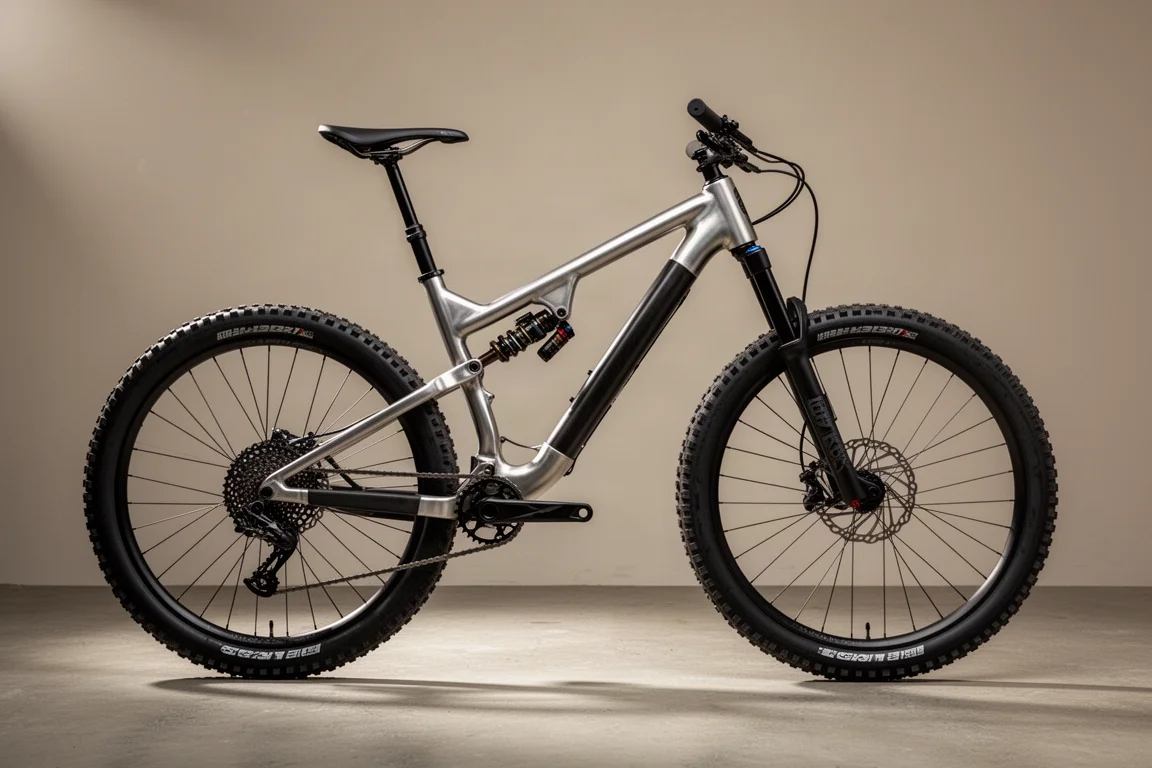
Atherton AM.130 Review: 3D-Printed Titanium Lugs and a 130mm Trail Bike That Descends Like a Bigger Machine
The Atherton AM.130 pairs 3D-printed titanium lugs with carbon tubes and a DW6 suspension platform. Here is how it rides, what the build delivers, and who it suits.
Mountain Bikes
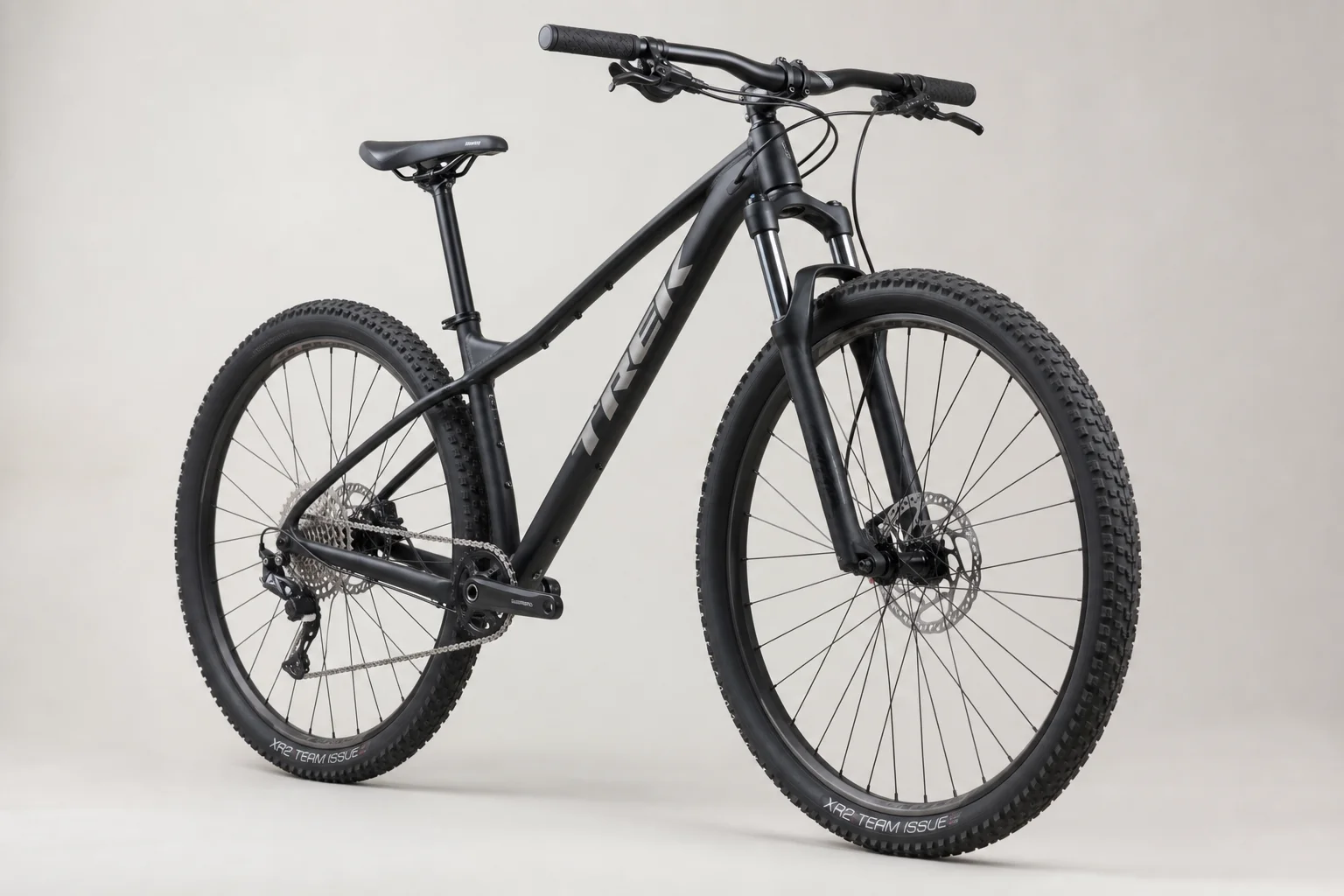
Beginner Mountain Bike Buying Guide: What to Look For in a Trailworthy Hardtail
A practical framework for evaluating beginner mountain bikes, whether new or used, by examining key components that indicate real trail capability.
Mountain Bikes
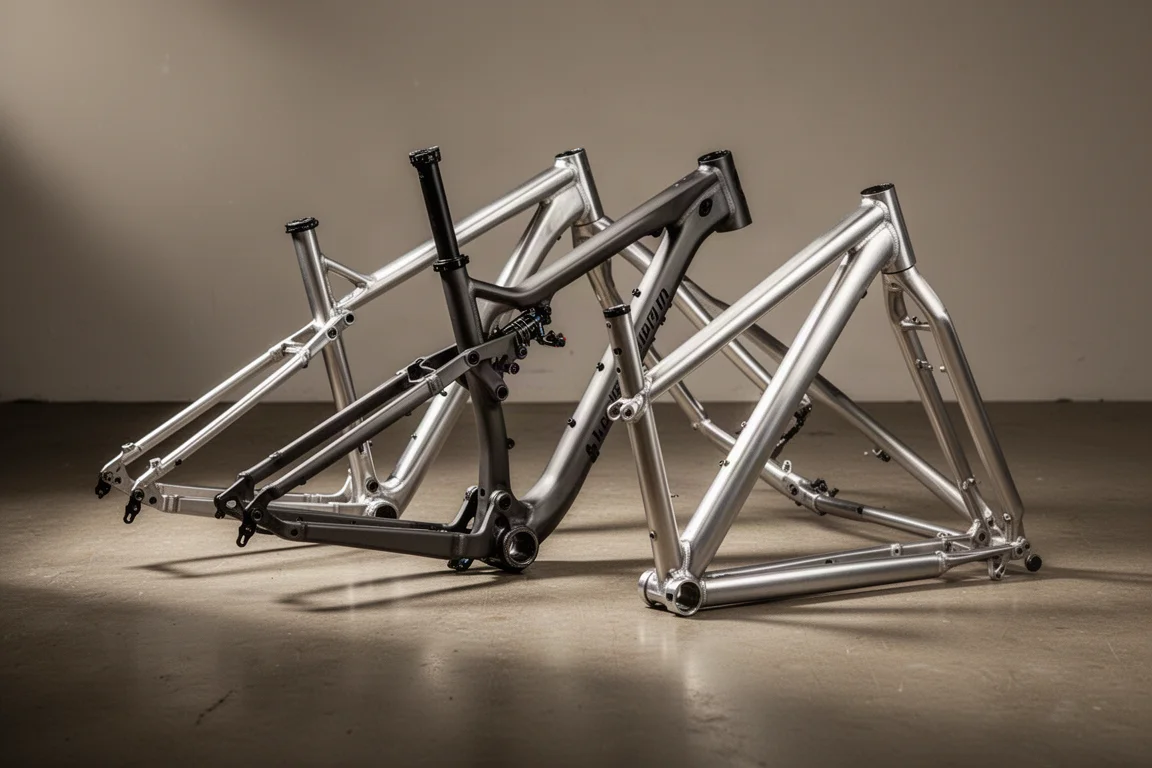
Best Aluminum Mountain Bikes 2026: Five Alloy Bikes Worth Your Attention
Five aluminum mountain bikes that show how far alloy has come, from a 120mm trail bike and a versatile machined frame to a 180mm freeride machine.