Lawn Care Tools
Best Lawn Mower Blade Sharpeners Tested: From Hand File to Pro-Grade Machines
Six sharpening systems put through speed, angle accuracy, and mulching blade tests, from an $8 hand file to a $1,200 bench machine.
Introduction
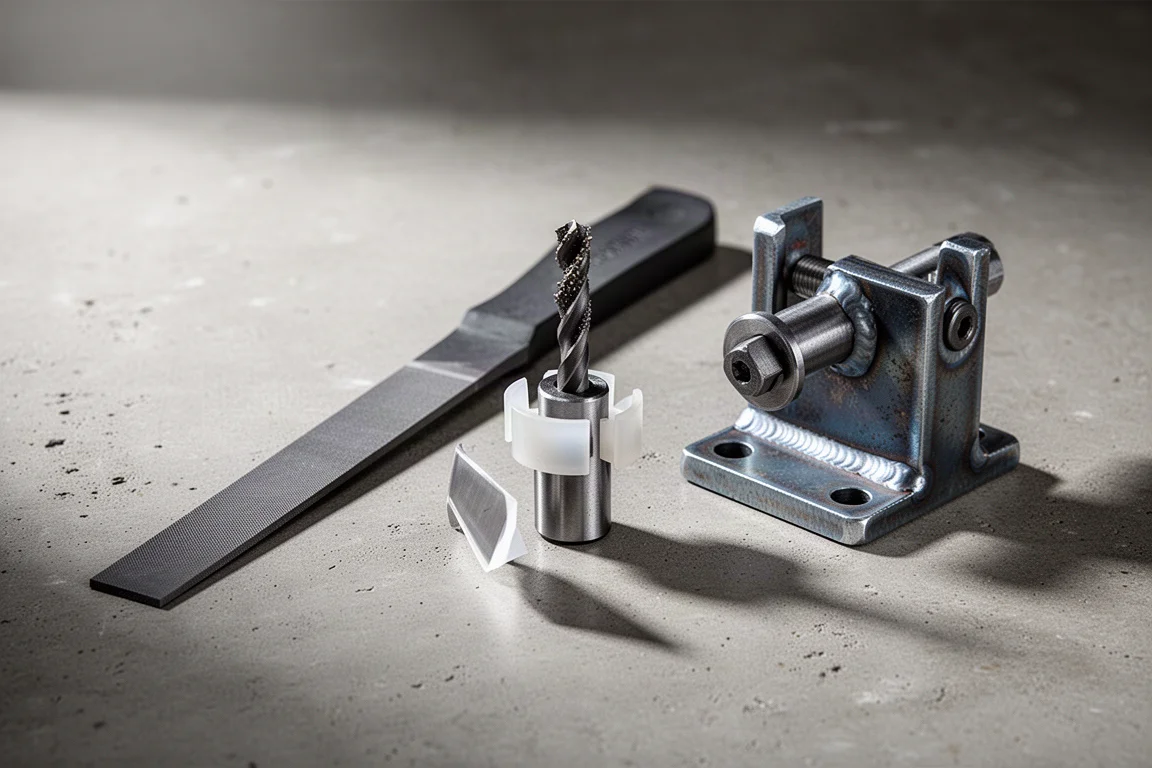
When your mower starts bogging down and the grass looks torn rather than cut, a dull blade is usually the culprit. The obvious fix is a bench grinder or a hand file, but there is a surprising range of dedicated sharpening tools that promise a faster and more accurate edge. We compared six systems across three practical questions: how fast each sharpens a dull blade, how close each gets to the ideal 30 degree cutting angle, and how well each handles mulching blades with contoured edges.
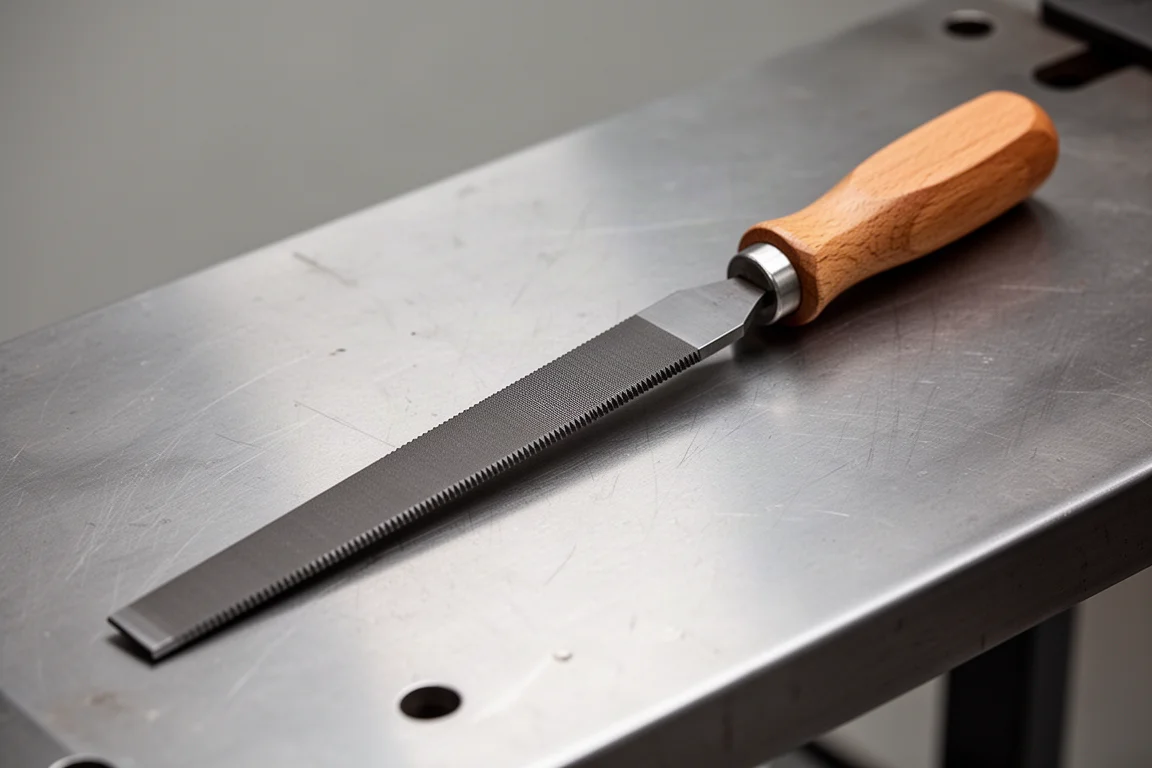
Mercer 10-Inch File
For around $8, it is hard to argue against a file. The Mercer 10 inch file has coarse, double cut teeth on both sides for rapid stock removal. It ships without a handle, so budget for one separately. On a brand new factory edge that measured 27.6 degrees, filing 150 passes took about 2 and a half minutes and landed at 29.6 degrees, which is very close to the 30 degree target. Freehand results will vary between users, but the edge came out clean and sharp.
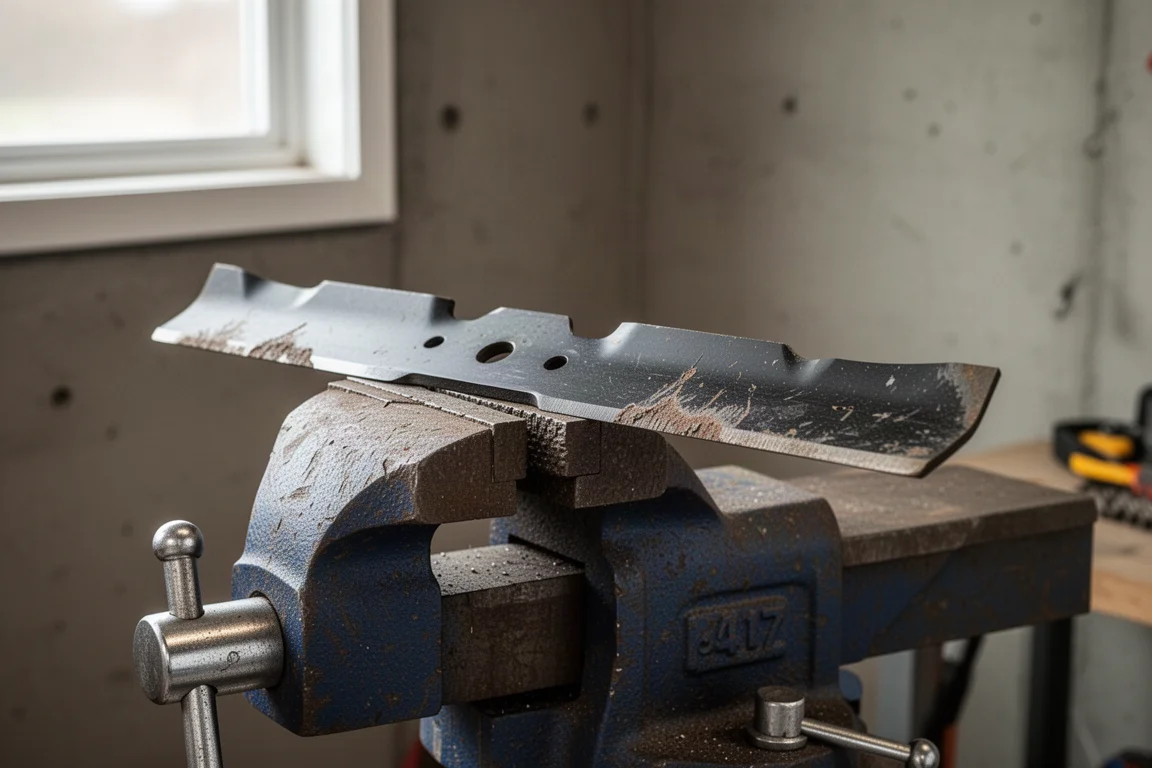
On a badly dulled blade with rock chips and a flattened edge, the file did a genuinely good job of restoring a flat, consistent edge, but it took close to 7 minutes and far more physical effort. It also left a lot of metal filings behind. With many riding mowers running three blades, that workload doubles or triples quickly.
Arnold Blade Sharpening and Balancing Kit
If you own a drill, the Arnold kit costs around $13 and promises a sharp edge in minutes. The small grinding wheel mounts in any electric drill, with a nylon guide that rides against the flat underside of the blade. It is designed for mower, tractor, and zero turn blades. In practice it was the slowest system: 3 and a half minutes on a new blade, about 9 minutes on a badly dulled one, and 32.5 and 38.3 degree angles respectively, so angle control is its weak point.
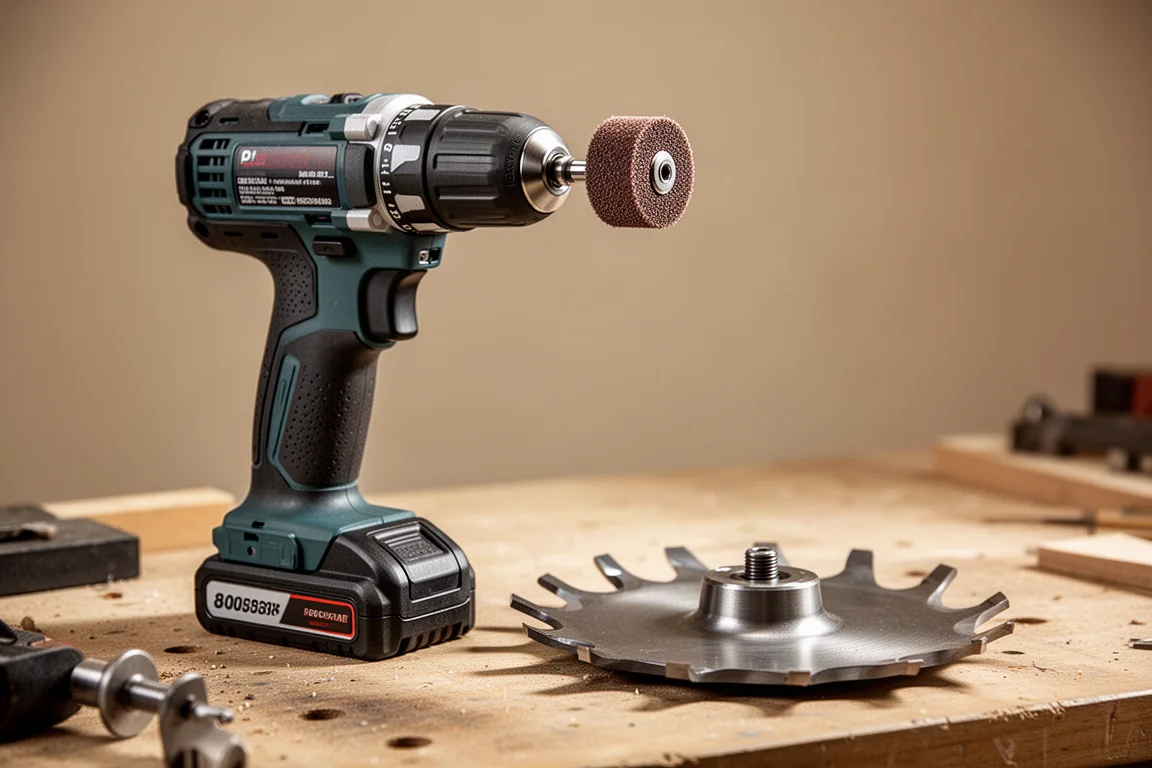
The grinding stone’s small diameter means it is not built for heavy material removal, and the plastic guard can grab the contoured edge of a mulching blade. With patience it can handle a mulching blade, but it is fiddly work.
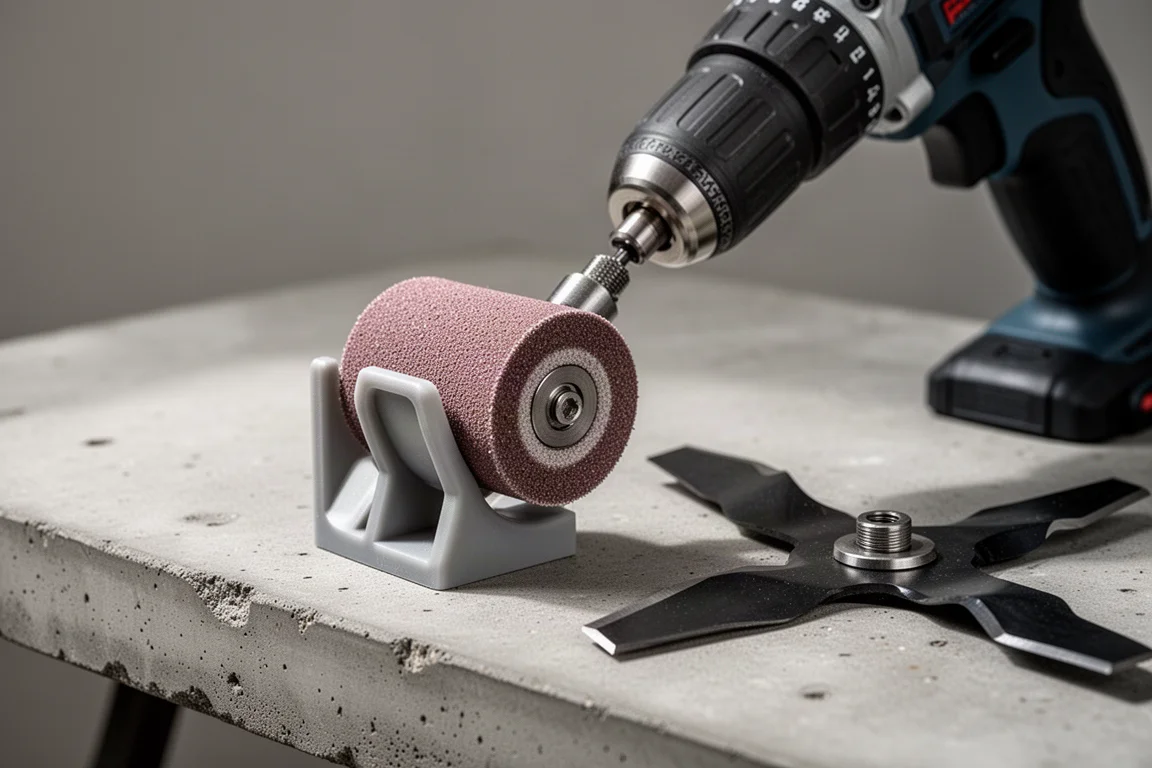
Taytools Bench Grinder Sharpening Jig
At $47, this jig works with any 6 inch bench grinder (an 8 inch grinder was used here). The tool rest moves forward and back 3 inches, raises and lowers 2 inches, and rotates 170 degrees, and it comes with a tool holder and a removable base. Paired with a grinder, it was more than twice as fast as the file, finishing a new blade in 53 seconds. It also helps form a consistent sharpening angle, though it takes some practice to keep the wheel from grabbing the edge.
On the dulled blade test it completed the job in 3 minutes 30 seconds and removed 5 grams of metal. The angle came out at 25 degrees here and 23.5 degrees earlier, so expect to spend time calibrating the jig before you trust its output.
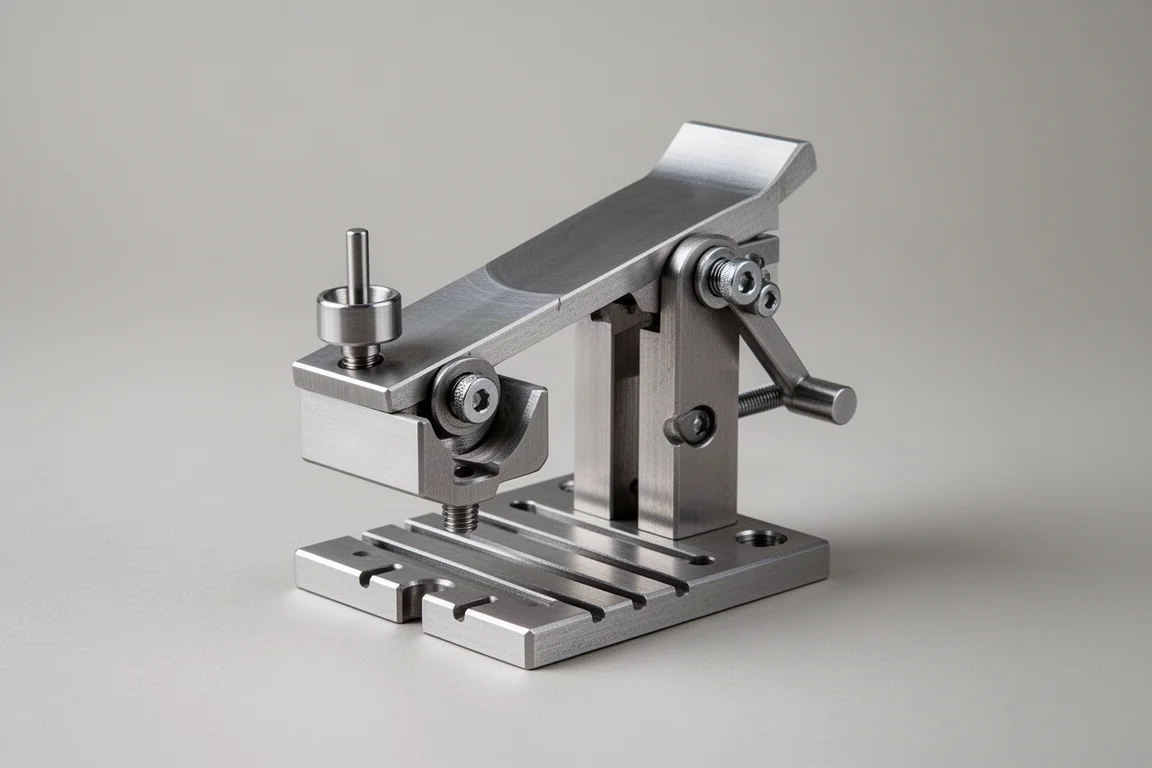
Yellow Hornet Mower Blade Sharpener
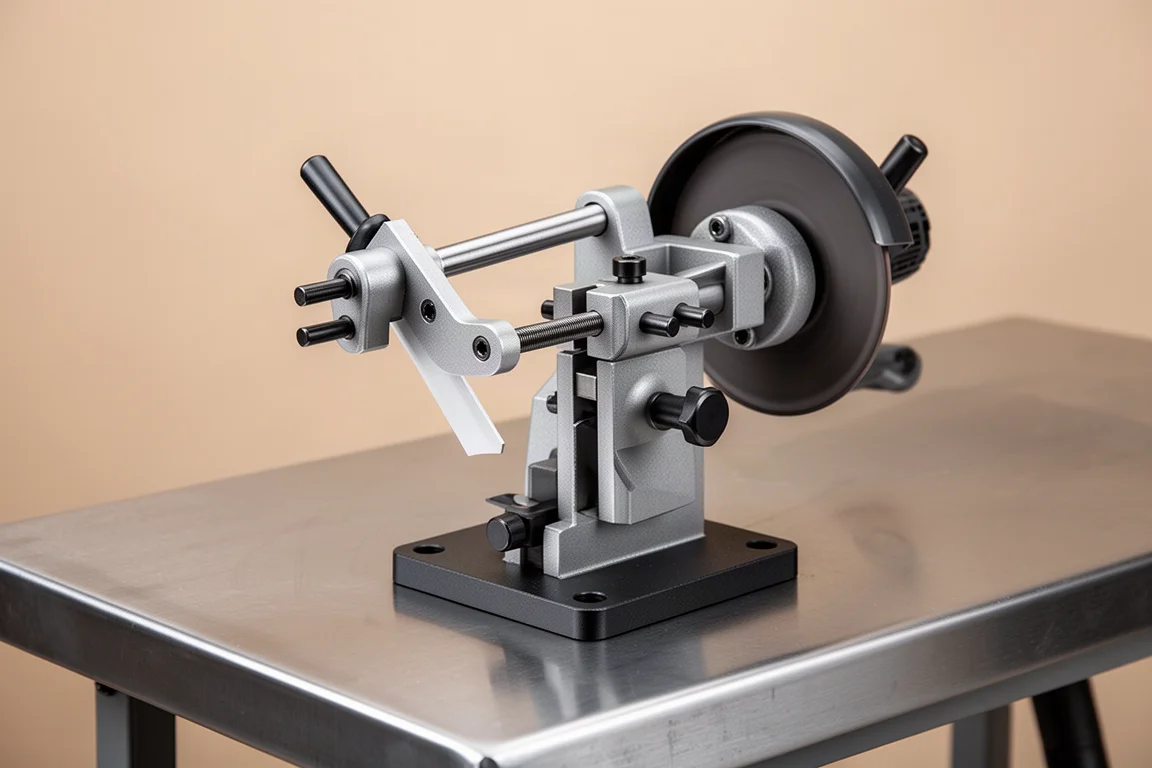
The Yellow Hornet costs $159 and is built from 1/4 inch plate steel with welded joints, made in the USA, and includes a blade balancer. Note that the angle grinder is not included. The blade rest is fixed in place, so grinder compatibility matters: two of three grinders tested were too large to set the proper angle, while an affordable compact grinder fit well. Setup calls for the disc about 1/2 to 3/4 inch above the blade rest, with slightly less gap at the rear.
With light passes on a flat disc, the Yellow Hornet sharpened a new blade in about 20 seconds at 29.6 degrees, and a badly dulled blade in just over 2 minutes at 29.3 degrees. Both are excellent results. Use less force than feels natural, because a heavy hand can pull the blade into the sharpener.
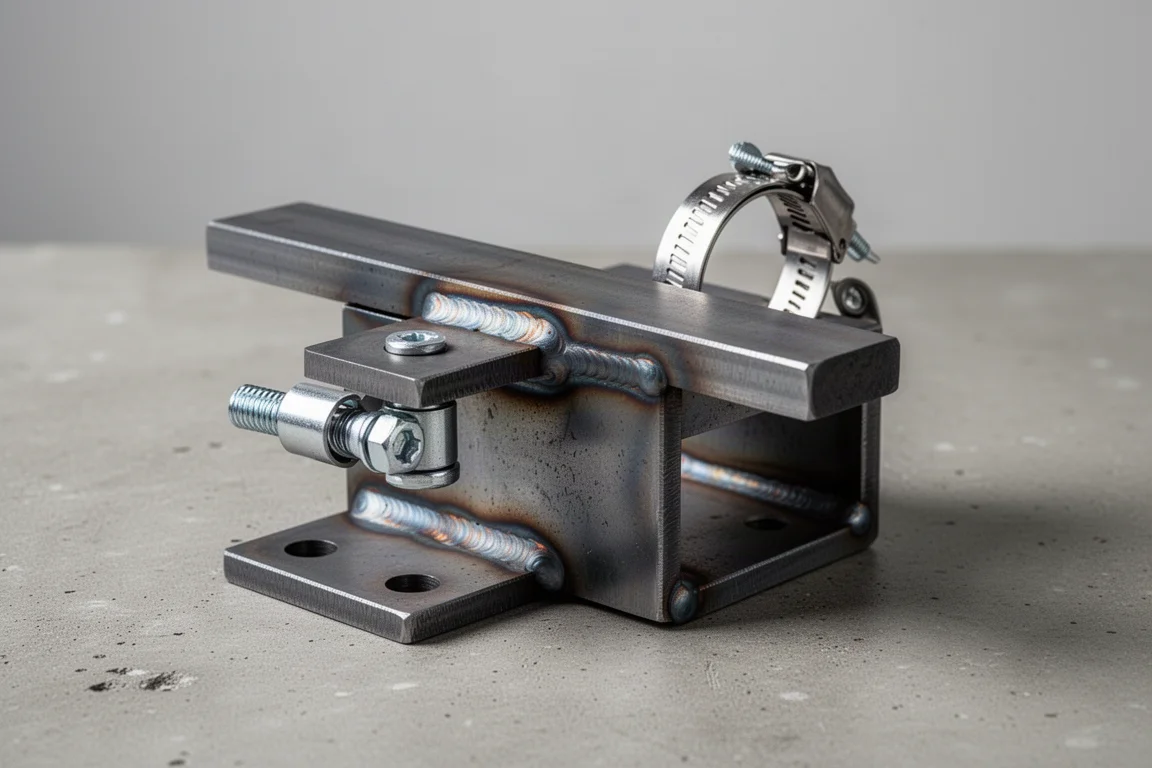
All American Sharpener Model 5005 Generation 2
At $285, the Model 5005 Generation 2 is the standout for speed and ease of use. It adjusts from 15 to 45 degrees, includes four adapter pins to fit most grinders, and can be mounted vertically or horizontally. Like the Yellow Hornet, the grinder is not included; a 36 or 60 grit flap wheel is recommended, since a hard disk gouges blades easily. The blade clamps into the fixture with four pins, and you take light, consistent cuts from front to back.
The results speak for themselves: 8 seconds on a new blade, about 30 seconds on a dulled blade, and edge angles within a degree of 30 both times. It also removed grooves very well and felt like the easiest system to use overall. On unedged flat steel it shaped a working edge in under a minute with the highest metal removal rate of the group.
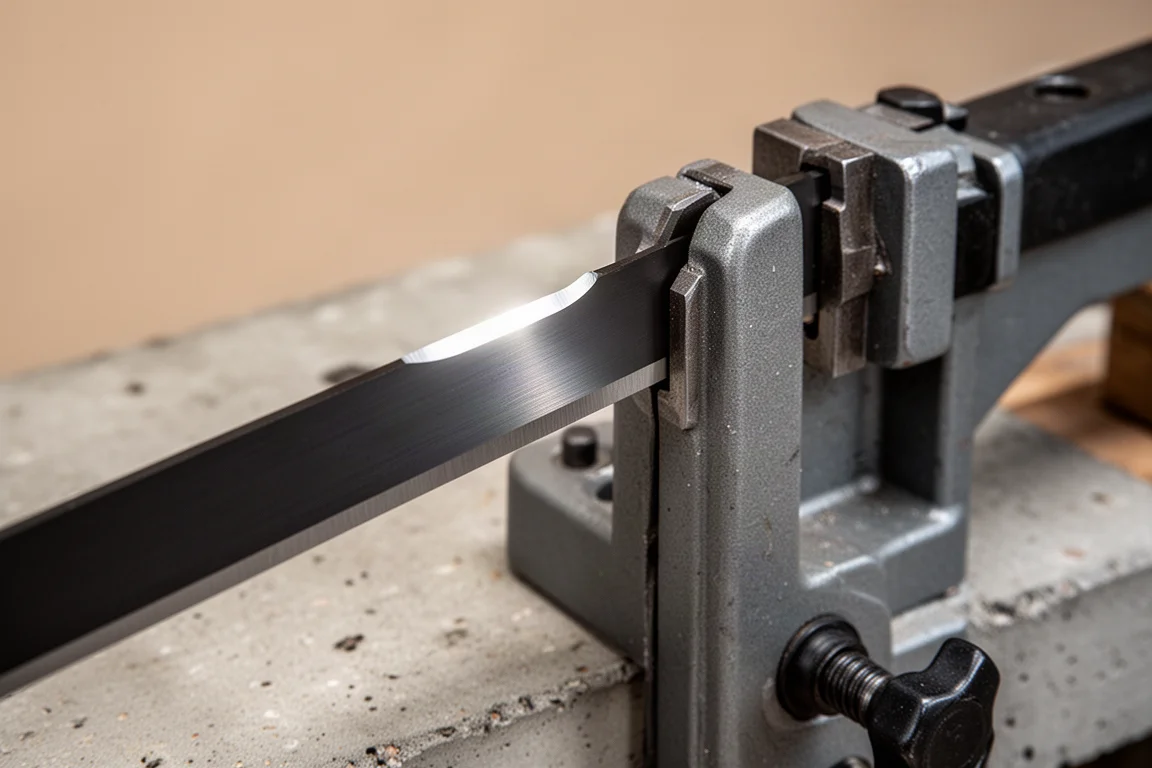
RGB 950 Blade Sharpener
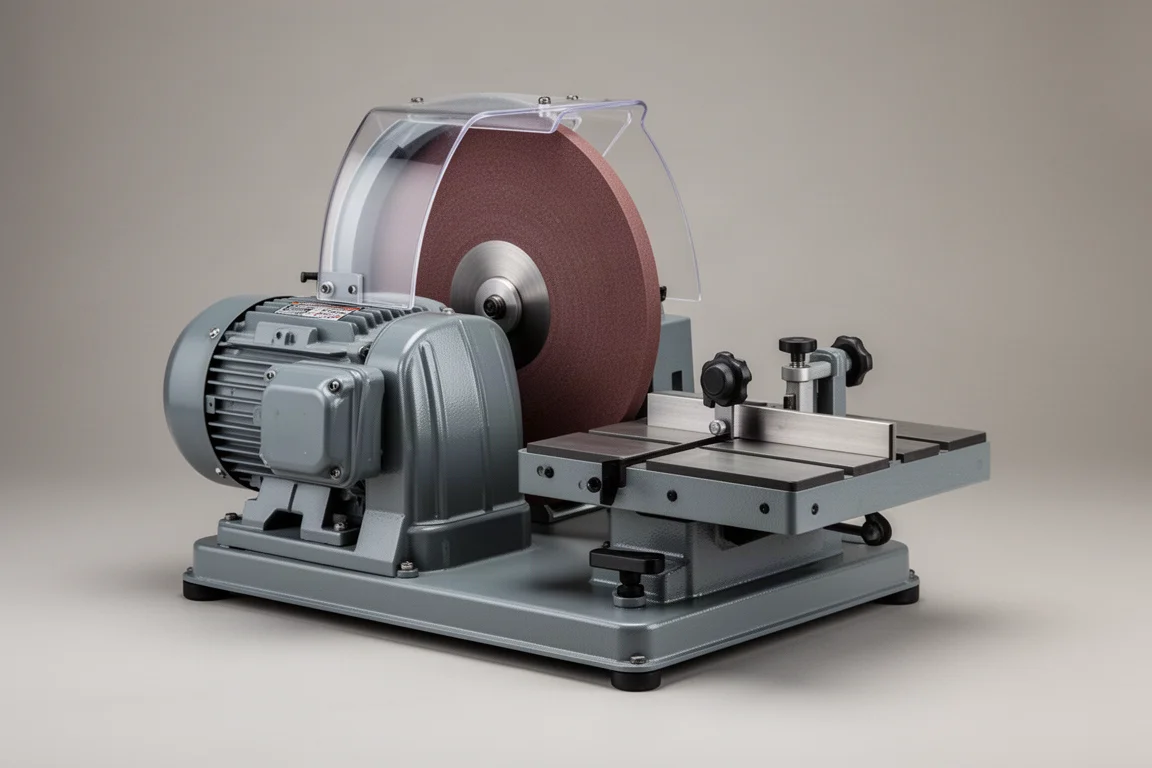
At nearly $1,200, the RGB 950 is the premium option, and it is designed to sharpen mulching blades. It runs a 3/4 horsepower continuous duty motor and includes a 9 inch fast grind wheel plus a 7 inch flap wheel, all made in the USA. The preset blade guides make it approachable, though there is a learning curve. It sharpened a new blade in about 17 seconds at 29.2 degrees and a badly dulled blade in roughly 1 minute 15 seconds at 30.3 degrees, the most accurate angle of the group.
The grind wheel produces a perfectly flat edge, which the flap disc options cannot match, and the blade face stays visible throughout. On a mulching blade the outer portion must be finished freehand with the flap disc, but the process is easy to work with. It is also large, which is a real consideration for home garages.
Which One Should You Buy?
For speed and accuracy, the All American Model 5005 is the clear winner, finishing in 8 to 30 seconds with edges consistently within 1 degree of the 30 degree target, and it is compact. The RGB 950 is slightly more precise and equally capable, but the price and footprint are hard to justify for most homeowners. The Yellow Hornet is an excellent middle ground, though a movable blade rest would make it compatible with more grinders. If you only sharpen once a season and enjoy the work, the $8 file is honest value, just budget far more time and effort. The Arnold kit is the cheapest drill powered entry point but the slowest and least accurate of the six.
Don’t Forget: Balance the Blade
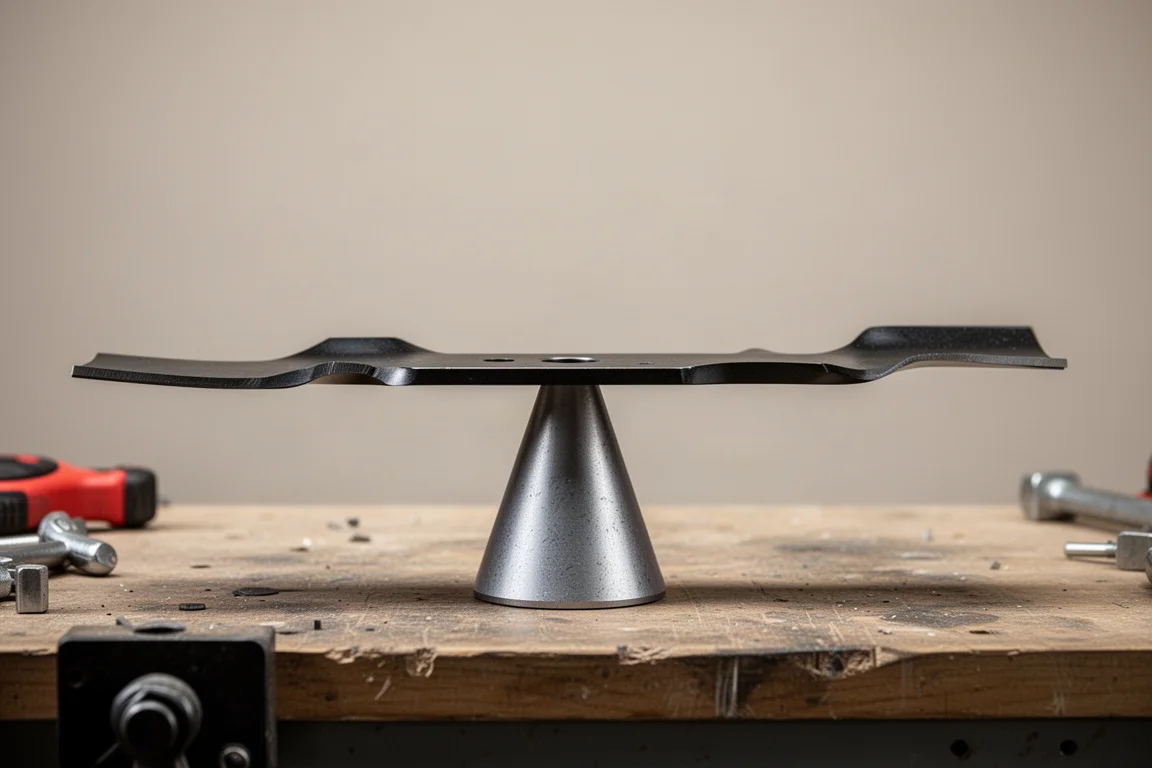
Sharpening is only half the job. A blade balancer costs just a few dollars: rest the blade centered on the balancer and check that it sits level. If one side dips, that side is heavy and needs material removed. Balancing reduces vibration and protects the mower’s bearings over time.
Conclusion
Six sharpening systems, one clear picture: dedicated fixtures dramatically beat freehand methods on both speed and angle accuracy. The All American Sharpener Model 5005 Generation 2 offers the best blend of speed, ease of use, and compact size for serious users. The Yellow Hornet is a strong alternative at a lower price, the RGB 950 is the premium precision choice, and the hand file remains a legitimate low budget fallback if you can accept the effort. Whichever you choose, sharpen to roughly 30 degrees and balance the blade before reinstalling it.
Further reading
Related Reviews

Backpacking Gear
Building a 10 lb Base Weight: An Ultralight Backpacking Gear List
A practical walkthrough of the ultralight pieces behind a 10 lb base weight, from a 765 g pack and a roomy one-person tent to a full camp chair and a dependable water filter.
Road Bikes
10 New Road Bikes Worth Watching: Aero, Titanium, Steel and Endurance Standouts
A practical roundup of 10 new road bikes, from aero flagships chasing single-watt gains to titanium, steel and endurance platforms built for real roads.
Bikepacking Gear
11 Bikepacking Essentials for Long-Distance Cycling
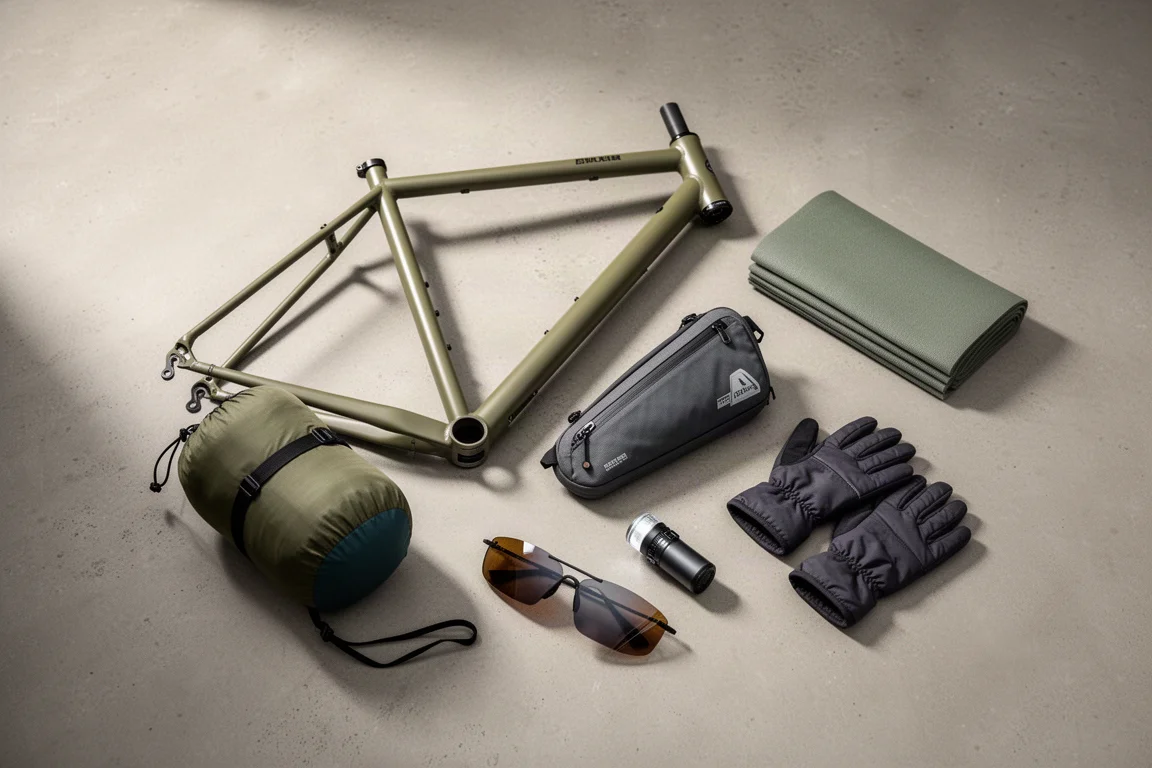
Eleven bikepacking essentials for long-distance cycling, from a steel gravel frame and a two-person tent to helmet lights, packable gloves, and a frame bag that puts weight in the right place.