Off-Road Recovery
Best Kinetic Recovery Ropes Tested: 7 Ropes, 25 Pulls, One Clear Favorite
Seven kinetic recovery ropes tested for stretch, durability, and real-world pulling power, from a $50 budget option to a $242 premium rope.
Introduction
Kinetic recovery ropes have become the go-to tool for getting stuck vehicles moving again. Unlike a chain or a flat tow strap, a kinetic rope stretches under load, storing energy that helps the tow vehicle build momentum without the violent shock load that can damage both vehicles. But with prices ranging from around $50 to over $240, does a more expensive rope actually buy you more performance?
To find out, seven popular kinetic recovery ropes were put through a structured comparison: a controlled stretch test at 7,000 lb of force, a torture test of 25 hard pulls with each rope, a real-world rescue attempt, and finally a cut-open inspection of each rope’s internal construction. All ropes tested were 30 ft in length, in either 7/8 or 1 in diameter, and all carry a working load of at least 7,000 lb.
The Contenders
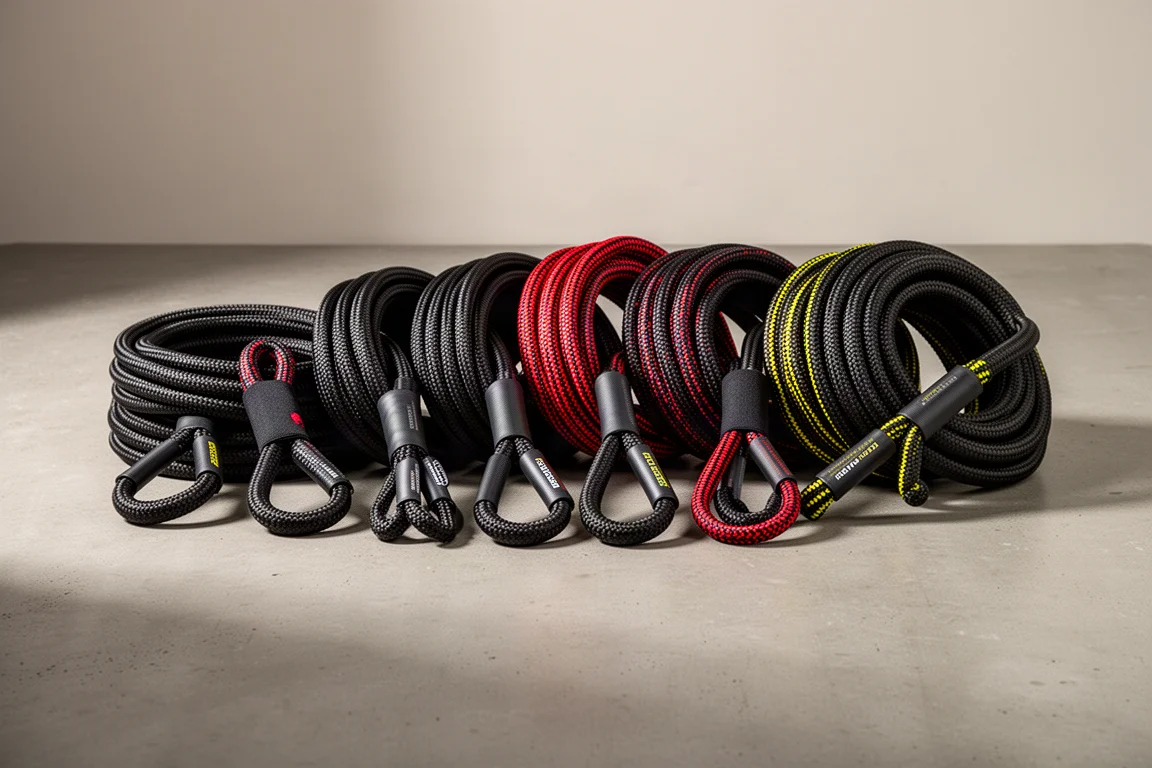
The lineup covers a wide price spread. At $50, the Sargent Nuts rope is the least expensive, claiming up to 30,000 lb of tensile strength. The In Clake costs $80 and claims up to 30% stretch under load. The Fiery Red at $123 includes two soft shackles rated for 43,000 lb. Rhino USA asks $150 for a 1 in rope rated at 34,370 lb. Smittybilt’s $169 entry is also 1 in in diameter with a claimed 30,000 lb breaking strength. The Bubba Rope Power Stretch at $233 claims 30 to 35% elongation, and at $242 the Yank’em Rope is the most expensive rope in the test.
Most of the ropes are made in China, while the Bubba Rope and Yank’em Rope are made in the USA. Weight varied from 6.98 lb for the Fiery Red up to 10.65 lb for the 1 in Rhino USA.
How We Tested
Before any rope touched a vehicle, a baseline was established with a tow chain. A parked vehicle simulating a stuck RV resisted a light-duty tow vehicle completely: the chain pull topped out at just over 4,000 lb of force with spinning tires, roughly 2,000 lb short of what a tractor needed (5,826 lb) to move the load. That set the stage for whether kinetic stretch could close the gap.
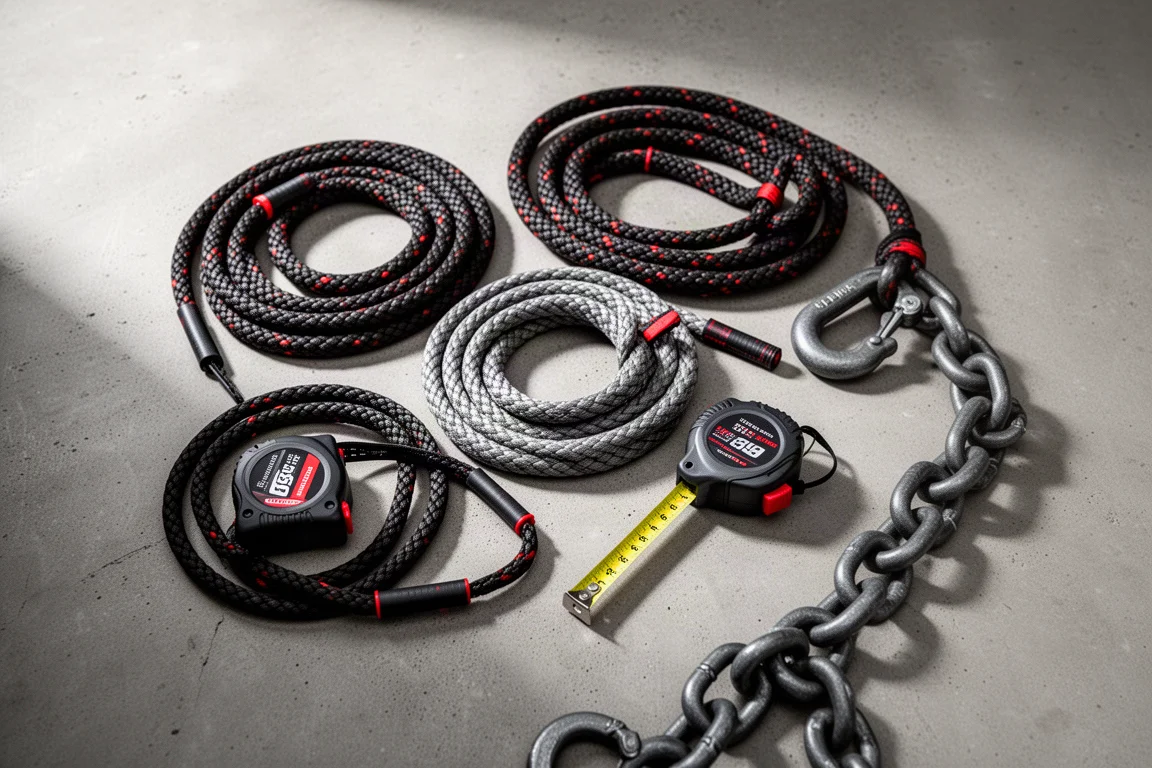
Each rope was then straightened with about 150 lb of force and measured. Lengths varied more than expected: the In Clake measured just 29 ft 2 in despite being sold as a 30 ft rope, while the Fiery Red came in long at 30 ft 9 in.
Stretch Test at 7,000 lb
The first scored test measured how much each rope stretched before hitting 7,000 lb of force. More stretch means more stored kinetic energy and a gentler, more effective pull.
The results told a clear story. The Bubba Rope was by far the stretchiest, first reaching 7,000 lb at a full 6 ft of stretch. The Sargent Nuts was second at 5 ft, roughly 17% stretch. The In Clake reached 7,000 lb at 54 in, the Fiery Red at 51 in, and the Rhino USA at 48 in. The stiffer 1 in ropes trailed behind: both the Smittybilt and Yank’em hit 7,000 lb at just 41 in, over a foot and a half less stretch than the Sargent Nuts.
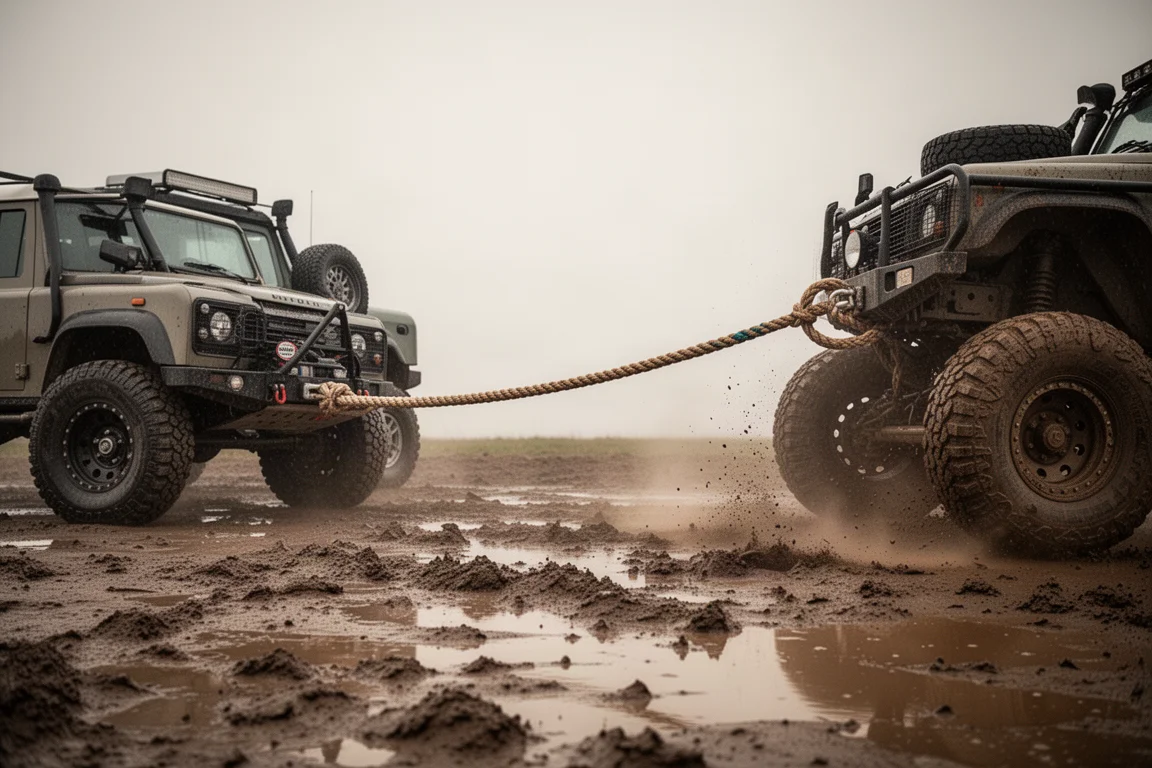
The difference is not just academic. A stretchier rope lets the tow vehicle build speed and momentum gradually, converting that energy into a smooth pulling surge. Stiffer ropes deliver more of a jerk, which is exactly what kinetic ropes are supposed to avoid.
Durability After 25 Pulls
Stretch means nothing if the rope degrades quickly, so each rope endured 25 hard pulls from a standing start. Length was re-measured afterward to see how much permanent stretch each rope gained.
Permanen stretch after 25 pulls:
- Smittybilt: 8.75 in (least)
- Fiery Red and Yank’em: 9 in each
- Rhino USA: 10 in
- Sargent Nuts: 11.5 in
- In Clake: 14.5 in (3 in more than the Sargent Nuts)
- Bubba Rope: 17 in (most)
When re-tested at 7,000 lb, the picture sharpened. Measured as a percentage of stretch lost relative to original rope length, the Fiery Red performed best, losing only 9.8% of its elasticity. The Rhino USA followed at 11.5%, with the Smittybilt and Yank’em tied at 12.2%. The Bubba Rope remained the stretchiest rope even after the torture test, still reaching 56 in of stretch at 7,000 lb.

The Real-World Rescue
Theory met practice when a heavy RV-style vehicle became stuck in a pond, with the front wheels sinking into the water. The Bubba Rope and a two-wheel-drive tow vehicle were called into action, with about 7 ft of slack in the line for a rolling start.
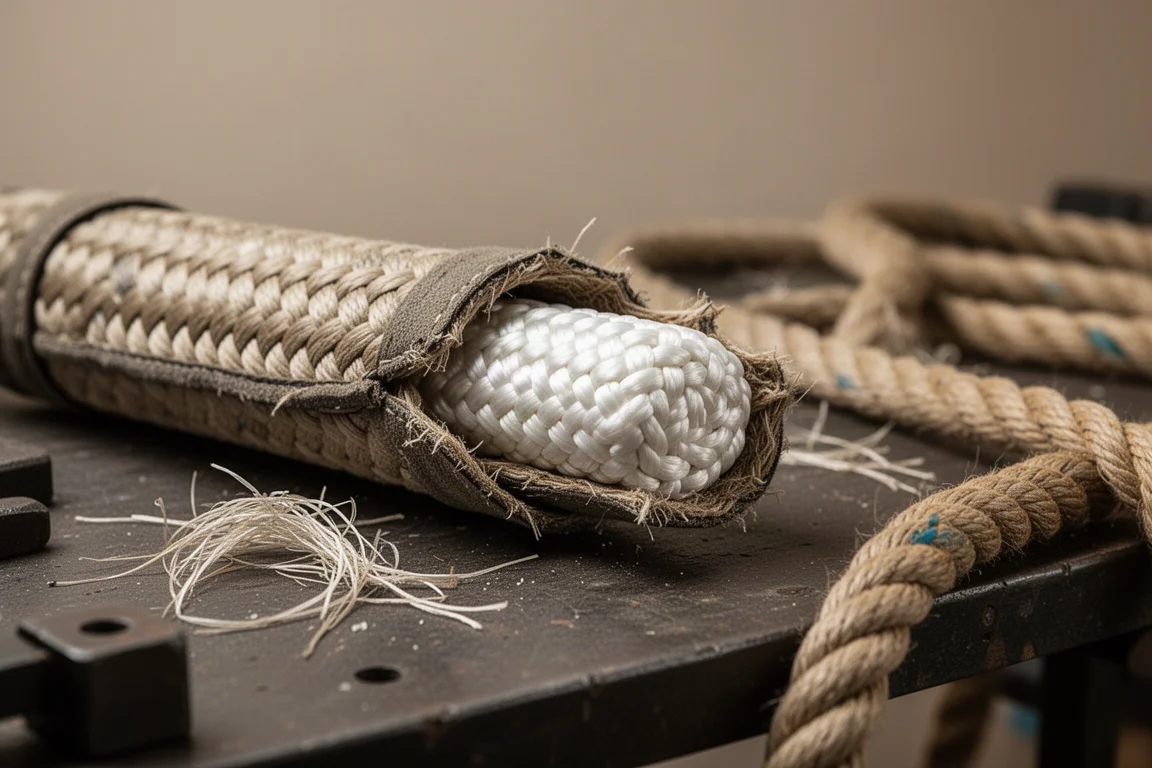
A short rolling start moved the stuck vehicle about 2 ft immediately, confirming that slack-and-surge technique works as advertised. Given that the stuck vehicle weighed at least twice as much as the tow vehicle, the gentle energy transfer of a kinetic rope made a pull possible that a chain simply could not deliver, as the earlier chain baseline demonstrated.
Which Rope Is Best?
There is no single winner; it depends on how you plan to use the rope.
If you expect to use a recovery rope frequently, several times each week, the Fiery Red, Smittybilt, and Yank’em ropes held their elasticity best over repeated hard pulls. The Fiery Red has the added value of included soft shackles rated at 43,000 lb.
For buyers who prioritize feel, the Bubba Rope earned a strong personal preference for its more gradual windup and wind-down compared to every other rope tested, even though it stretched the most overall. And for pure budget value, the $50 Sargent Nuts delivered surprisingly respectable 17% stretch when new, second only to the far pricier Bubba Rope.
Durability of the Rope Ends
The cut-open inspection added a sobering note. Inside the Sargent Nuts rope’s outer jacket sits another woven rope, but the inner rope showed signs of heating, with the outer jacket appearing to have melted onto the inner rope. That is worth taking seriously if you plan frequent, heavy use.
Rope-end coatings fared differently across the lineup. The rubberized coating on the Sargent Nuts showed noticeable wear but remained serviceable. The Fiery Red and Yank’em coatings both showed a fair amount of wear. The fabric sleeves on the In Clake and Rhino USA did an excellent job of protecting the rope ends. The Smittybilt’s rubberized coating held up by far the best of the coated ends, and the Bubba Rope’s end was in the best overall shape with very little wear.
Conclusion
After 177 pulls across seven brands, a few conclusions stand out. For frequent heavy use, the Fiery Red offers the best combination of elasticity retention and included soft shackles at a mid-range price. The Smittybilt impressed with the least permanent stretch and the most durable coating among the coated ropes. The Bubba Rope delivers the most gradual, forgiving pull feel of any rope tested, and the Sargent Nuts proves a budget rope can still perform. Whichever you choose, the biggest takeaway is simple: a kinetic rope’s stretch is what gets stuck vehicles moving when a chain cannot, and how well that stretch survives repeated pulls is what separates the best from the rest.
Product link
View more details for Sargent Nuts Kinetic Recovery Rope
This product is mentioned in the review. Check the specifications, options, and compatibility before buying.
View more details for Sargent Nuts Kinetic Recovery RopeFurther reading
Related Reviews

Backpacking Gear
Building a 10 lb Base Weight: An Ultralight Backpacking Gear List
A practical walkthrough of the ultralight pieces behind a 10 lb base weight, from a 765 g pack and a roomy one-person tent to a full camp chair and a dependable water filter.

Road Bikes
10 New Road Bikes Worth Watching: Aero, Titanium, Steel and Endurance Standouts
A practical roundup of 10 new road bikes, from aero flagships chasing single-watt gains to titanium, steel and endurance platforms built for real roads.
Bikepacking Gear
11 Bikepacking Essentials for Long-Distance Cycling
Eleven bikepacking essentials for long-distance cycling, from a steel gravel frame and a two-person tent to helmet lights, packable gloves, and a frame bag that puts weight in the right place.