Hi-Fi Audio
Best Integrated Amplifiers: Five Standout Picks Across Budgets
Five integrated amplifiers that stood out for different reasons, from a roughly $120 tube hybrid to a $900 desktop design, with the trade-offs to know before buying.
Introduction
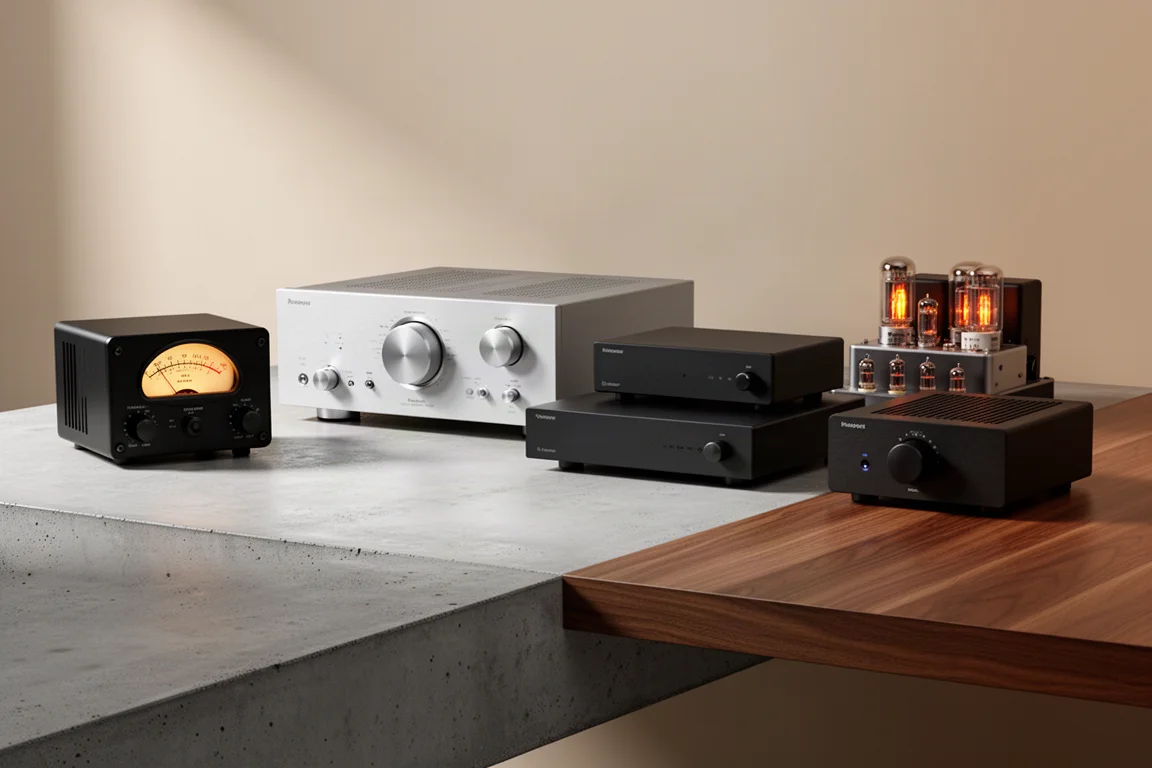
Amplifiers are one of the harder categories to compare directly, because they are not built to the same template. Some are power amplifiers with no controls at all. Others add a volume knob, a handful of inputs, a DAC, a phono stage, Bluetooth, or a tuner. That variety means the right choice depends less on a single ranking and more on which features and which sound character fit the system you already own.
This roundup covers five integrated amplifiers that stood out for different reasons, from a roughly $120 tube hybrid up to a $900 desktop design. Each entry below explains what the amplifier does well, what it asks you to accept, and which listener it suits best.
What to Look For in an Integrated Amplifier
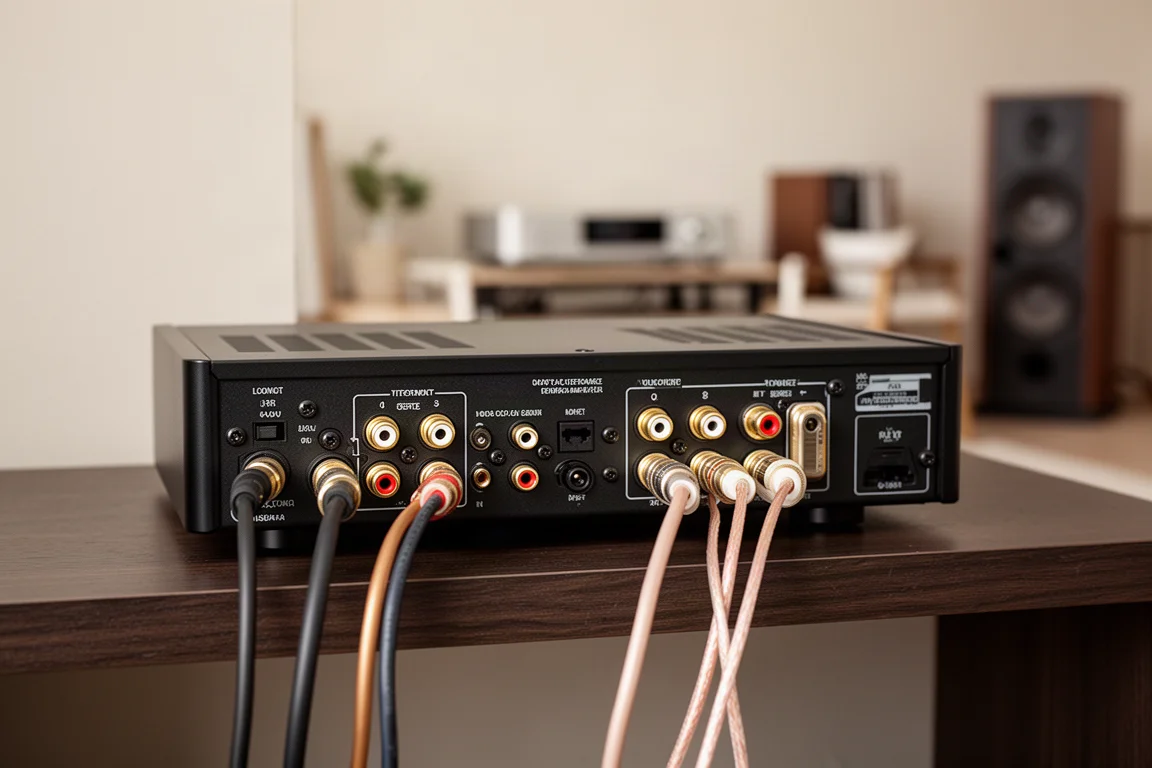
Start with inputs and outputs, because they decide how much of your system the amplifier can absorb. A built-in DAC lets you connect a streamer or a computer directly. A phono stage lets you plug in a turntable without adding a separate box. Bluetooth, a tuner, or a subwoofer output each remove one more component from the rack.
Power supply quality matters as much as the power figure printed on the box. An amplifier built around a modest chipset can still drive demanding speakers confidently when it is paired with a substantial supply, while a larger claimed output can fall flat if the supply behind it is small.
Tone controls and loudness compensation are worth weighing as well. They are not a substitute for a good speaker and room match, but on affordable amplifiers they let you shape a sound that is slightly thin or slightly forward into something you can happily live with for years. A remote control is easy to overlook until you find yourself adjusting volume several times an evening.
Be realistic about your speakers, too. Most modern bookshelf and floorstanding designs are reasonably efficient, but low-sensitivity speakers in a large room will reward an amplifier with more headroom.
AIYIMA T9: A Budget Tube Hybrid With a Built-In DAC
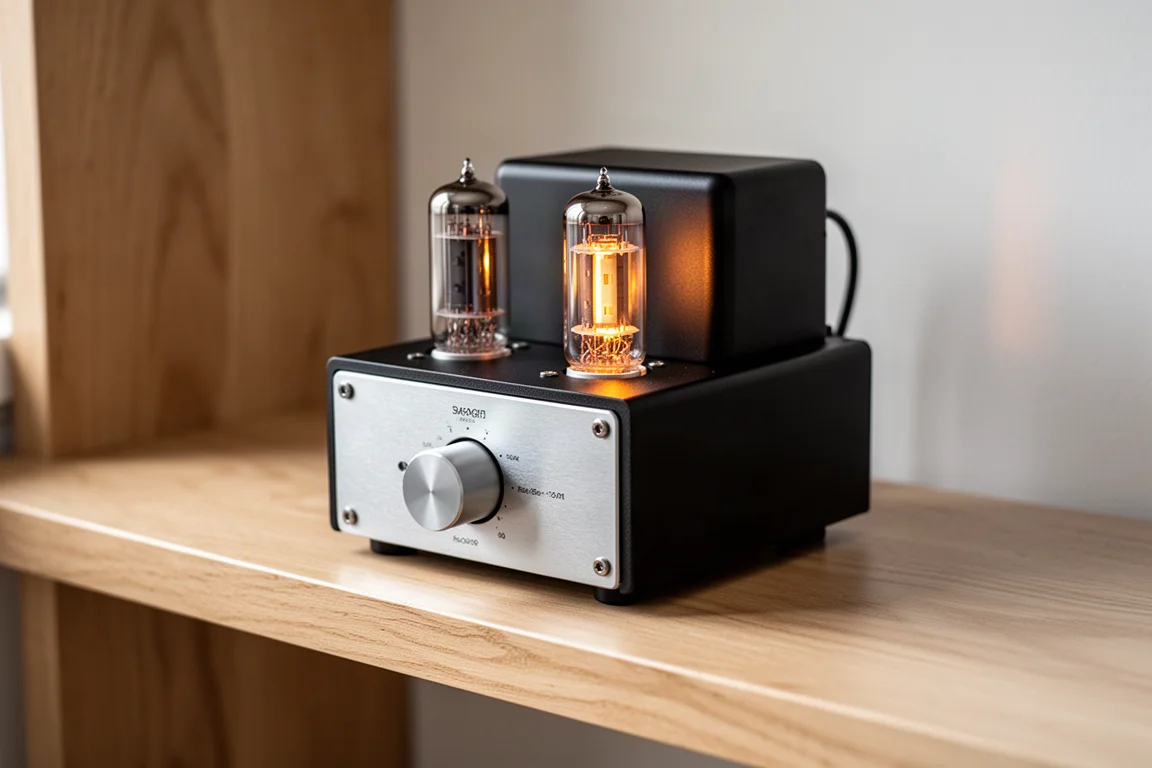
The AIYIMA T9 is an integrated amplifier with tubes and a built-in DAC for around $120. That is a lot of functionality for the money, and it earns an honorable mention here rather than a top slot for one practical reason.
With digital inputs, it behaved consistently. With an analog RCA input fed from an external preamp, it could shut down when it stopped detecting a signal, cutting out between tracks or when changing songs. Later revisions may have addressed that behaviour, so it is worth confirming that you are buying a current version.
If you mainly run digital sources, the T9 remains an appealing entry point into tube-flavoured sound with DAC convenience built in. Go in aware of the signal-sensing quirk and it is easy to enjoy.
Yamaha A-S301: Traditional Build With Tone and Loudness Controls
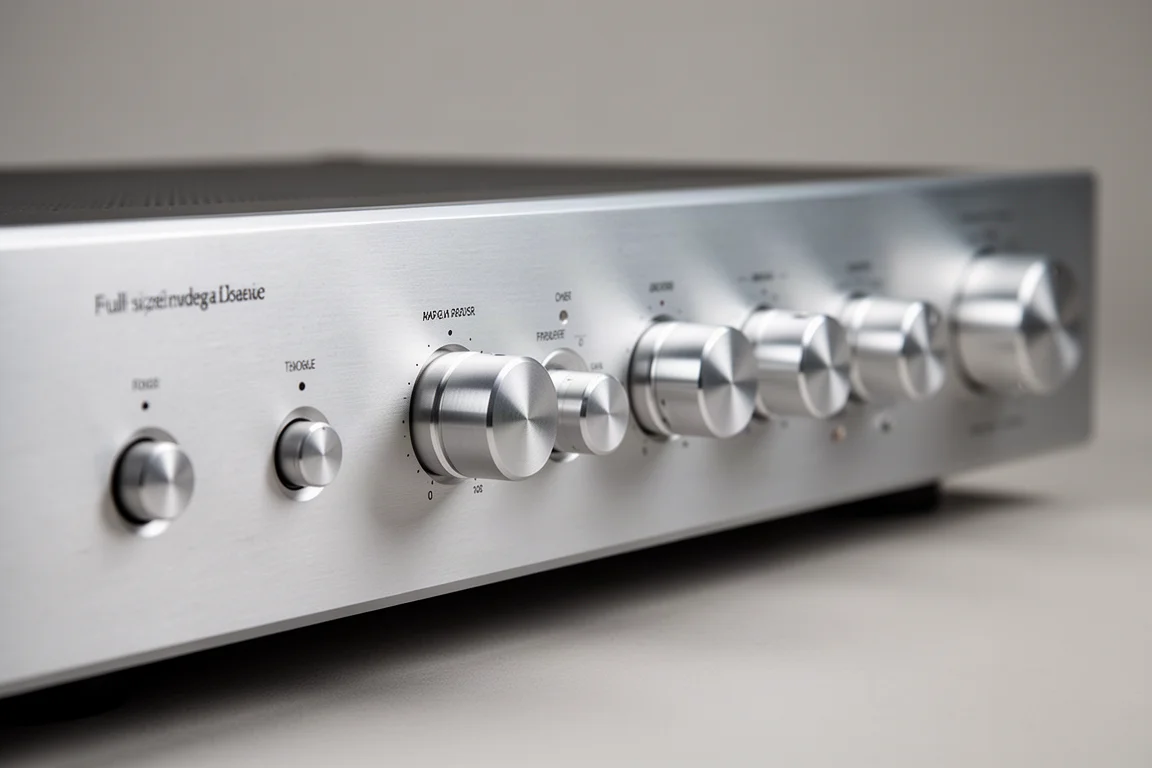
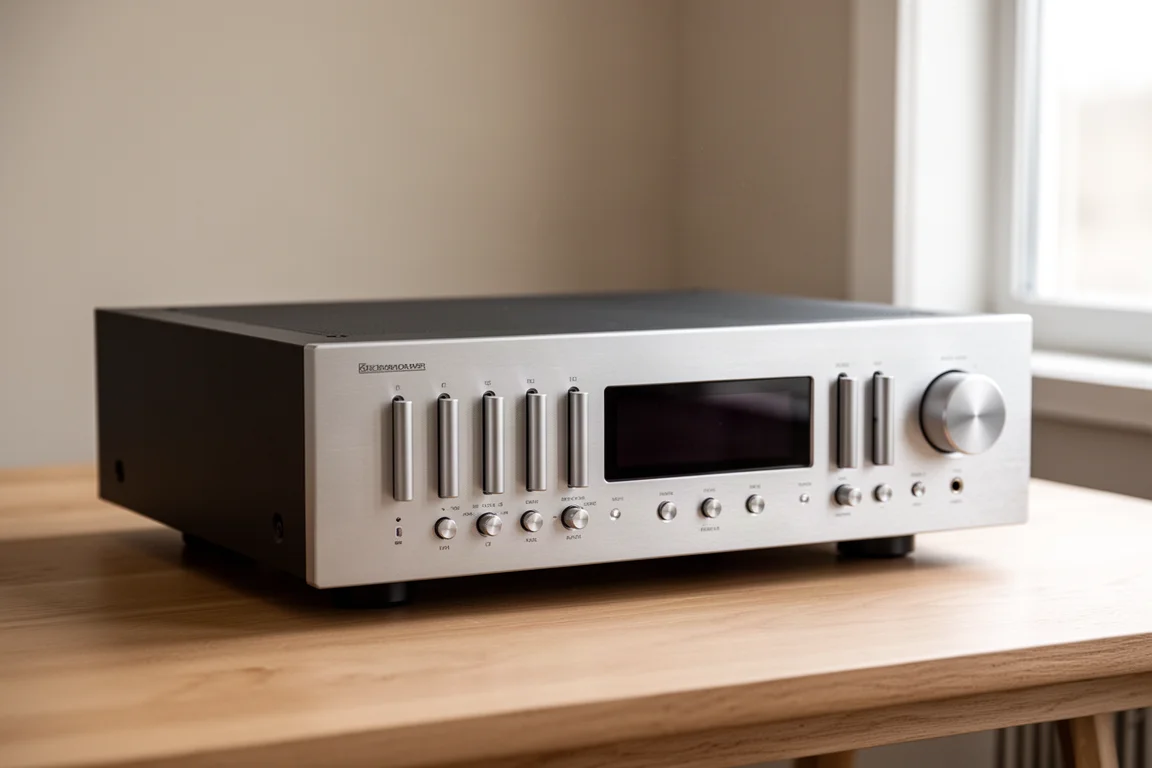
The Yamaha A-S301 is a conventional full-width integrated amplifier at around $350, and it covers the essentials well: a built-in DAC, a phono stage, tone controls, and a variable loudness control. It also ships with a remote that can operate a matching Yamaha CD player.
Out of the box its signature leans slightly thin. That is exactly where the controls earn their place. With the tone and loudness adjustments, you can tune the amplifier toward a fuller, warmer balance that suits your speakers and your room, and the build quality reflects a manufacturer that has been making this kind of component for a very long time.
The A-S301 sits inside a broader family of integrated amplifiers, spanning the A-S301, A-S501, A-S701, and A-S801, so there is a step-up option if you want more from the same formula. At this price the value proposition is difficult to argue with.
Topping LA90: Refined Sound at a Premium Price
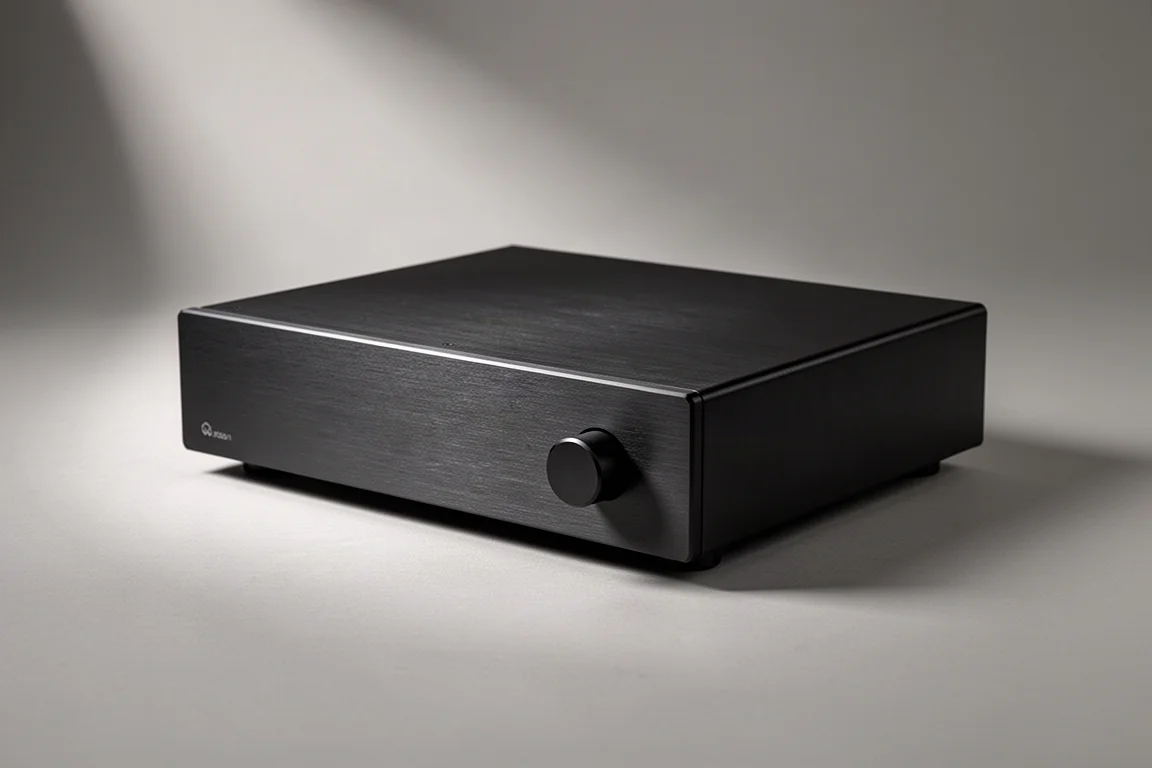
The Topping LA90 does not take the top spot here, but it deserves a mention because it sounds genuinely excellent. Its presentation is clean and refined in a way that is easy to appreciate on a capable system.
Two things hold it back from a stronger recommendation. The connection layout is unconventional for the way most people assemble a system, and at around $900 it does not deliver a great deal of power for the money. Anyone comparing it against cheaper integrated amplifiers with more generous feature sets will notice the gap in value.
If sound quality sits above flexibility on your list of priorities and your speakers are reasonably efficient, the LA90 is worth an audition. Otherwise the other amplifiers here offer more for less.
Emotiva TA1: The Runner-Up With Everything On Board
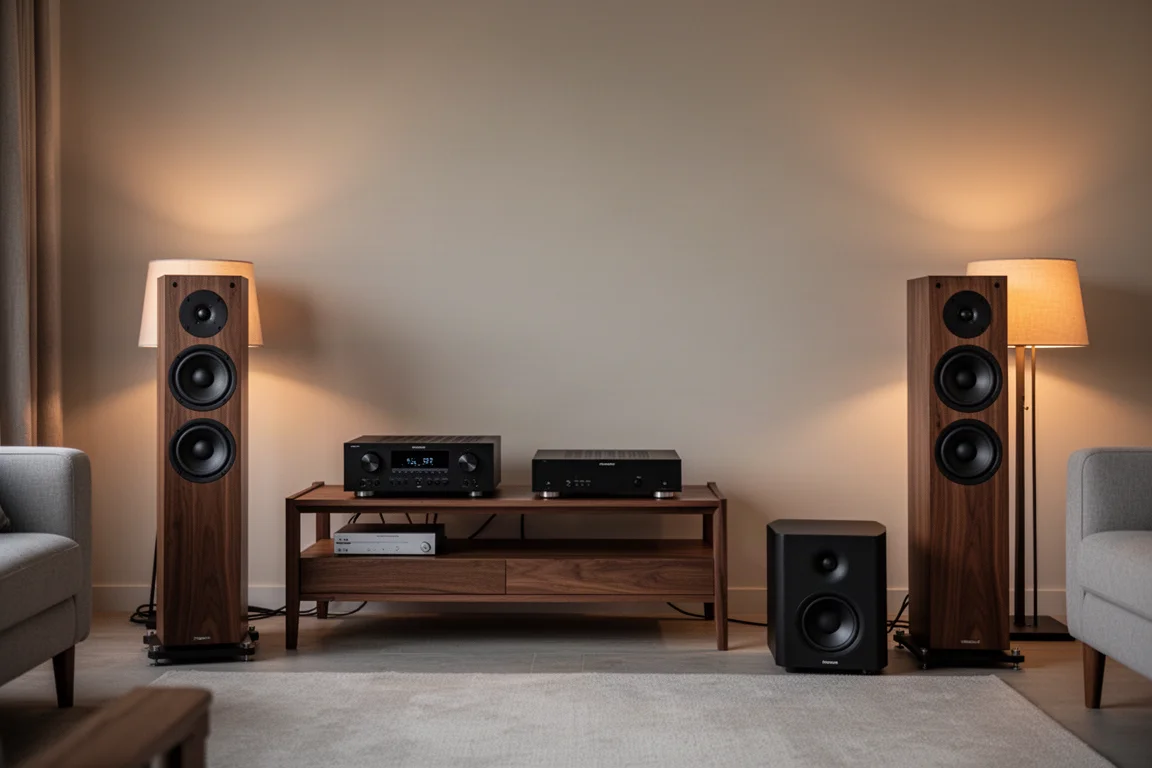
The Emotiva TA1 is the runner-up in this roundup and the most feature-complete amplifier in the group. For around $600 it includes a phono stage, a DAC, Bluetooth, an FM tuner, and several analog inputs. It ships with a remote, offers tone controls, and can double as a preamp if you later add a separate power amplifier.
It also includes bass management with a fixed high-pass filter, which is a meaningful addition if you plan to run a subwoofer. Power is rated at 60 watts per channel into 8 ohms and 100 watts into 4 ohms with both channels driven, enough for most speakers short of very inefficient designs.
Pricing has moved around over time and has sat closer to $550 in the past, but the value on offer is still strong. If you want one box that can grow with your system, this is the most flexible option in this group.
AIYIMA A08 Pro: The Best Value Pick
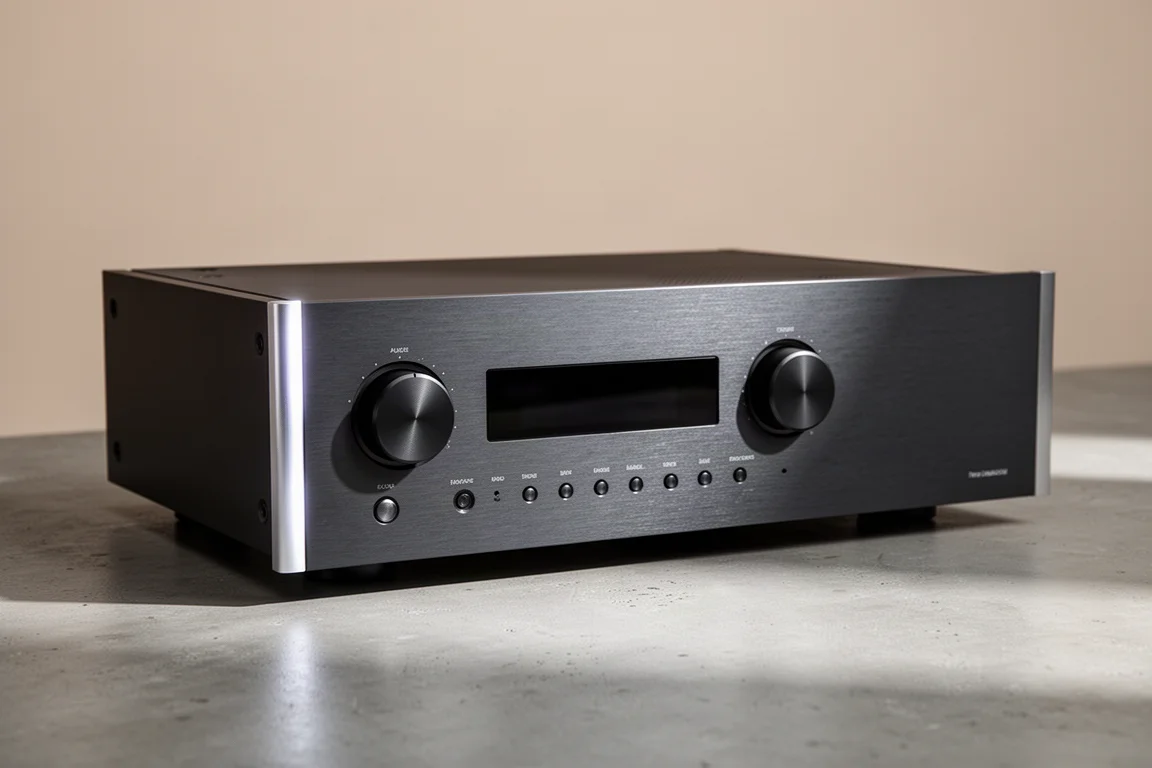
The AIYIMA A08 Pro takes the top spot at around $139, and it is regularly discounted below that. It is a deliberately simple piece of equipment: no remote control, Bluetooth on board, a VU meter and tone controls on the front panel, and power that comes on when you turn the volume up.
What sets it apart is the pairing of a Texas Instruments 3255 amplifier chipset with a 36 volt, 5 amp power supply, which is substantially larger than the supply bundled with the AIYIMA A07. That extra headroom lets it drive a very wide range of speakers, and the supply is good enough that it can be used when testing other components.
The sound quality is the real story. In blind A/B comparisons against an amplifier costing well over $500, the two were not consistently distinguishable. Add the aux output for a powered subwoofer and you have a remarkably capable amplifier for the money.
There are limits worth knowing. Without a remote, volume changes mean walking over to the amplifier, although a separate DAC with a remote can be added, and a compatible model fits the same slot. Adding an external DAC also opens the door to running an equalizer between the two. For most listeners with reasonably efficient speakers, none of that gets in the way of the value on offer.
Buying Advice: Matching an Amplifier to Your Speakers and Room
Work backwards from your speakers and your sources. If your speakers are efficient and your room is moderate in size, an affordable amplifier with a strong power supply will cover you. If you run a turntable, a phono stage saves a box. If you stream, a built-in DAC is the simplest path to a tidy system.
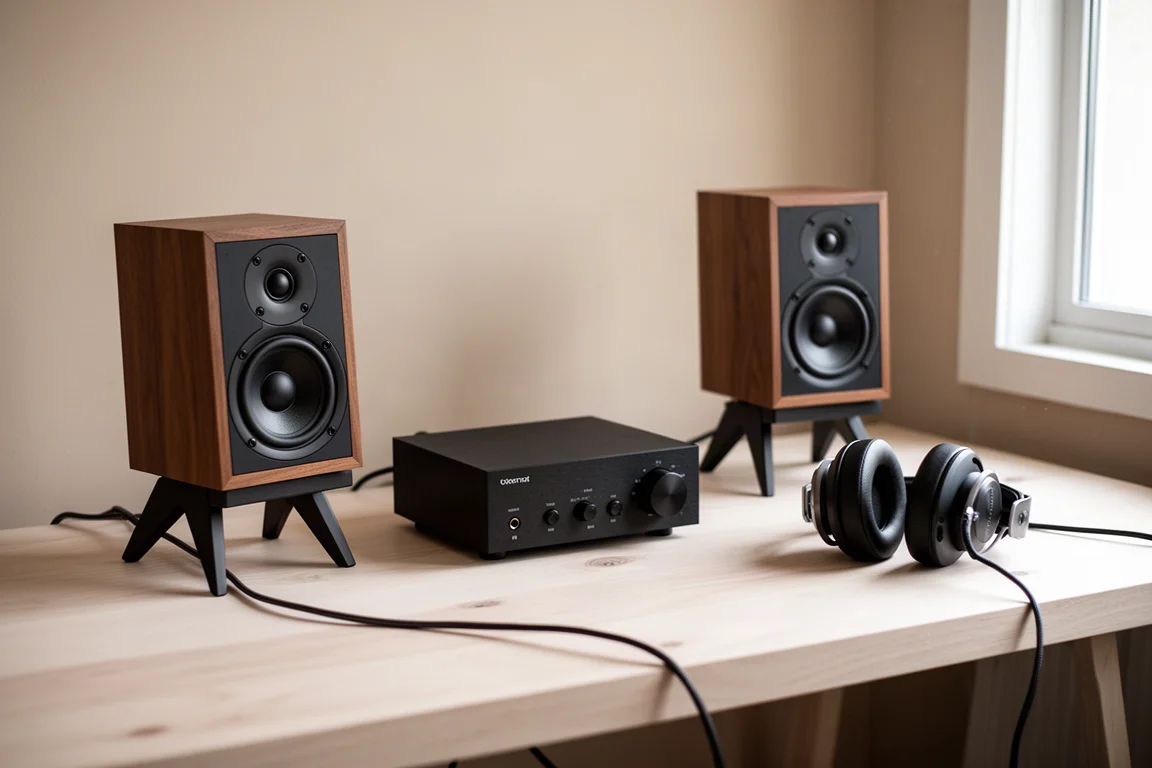
Feature lists matter, but they are not the whole decision. Think about how you actually listen: whether you adjust volume from across the room, whether you might add a subwoofer later, and whether you prefer to shape the sound with tone controls or leave the signal untouched. The amplifiers here differ most in exactly those areas.
Growth potential is worth weighing as well. An amplifier that can act as a preamp, or that includes bass management, can stay in a system through several speaker upgrades. A simpler amplifier that nails the fundamentals may suit you just as well if you tend to set things up once and leave them alone.
Conclusion
The AIYIMA A08 Pro is the best value of the group, offering capable sound and genuine drive for around $139. The Emotiva TA1 is the most flexible, and the Yamaha A-S301 is the safest traditional choice for a first serious hi-fi system. The AIYIMA T9 is a tempting budget entry if you mainly use digital sources, while the Topping LA90 remains compelling for listeners who put sound quality first and accept a higher price and a simpler connection layout.
Further reading
Related Reviews
Hi-Fi Audio
Accuphase C-57 vs Allnic H-7000V: Two High-End Phono Stages Compared
A fully balanced solid-state phono stage with a pitch-black noise floor meets a tube design built for well-loved records. Here is how to choose between them.
Hi-Fi Audio
Active vs Passive Hi-Fi: Five Components for a Modern System
Five components that define modern active and passive hi-fi systems, with the strengths, trade-offs and setup details worth weighing before you buy.
Hi-Fi Audio
Advance Paris A10 Apex Review: A Hybrid Integrated Amplifier That Covers a Lot of Ground
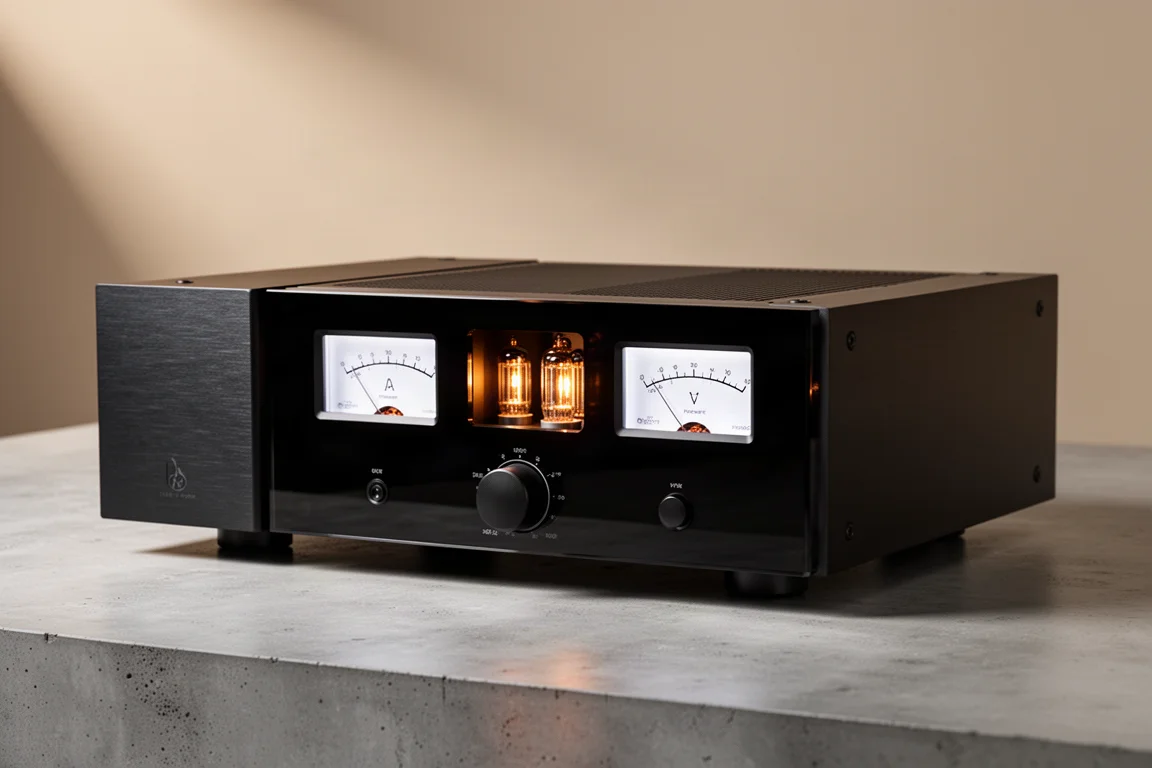
A French hybrid integrated amplifier with a class A tube preamp stage, analogue power meters, and an internal DAC and phono stage good enough to make extra boxes unnecessary.