Hi-Fi Amplifiers
Best Integrated Amplifiers Under $600: Six Stereo Picks Compared
Six integrated amplifiers under $600 compared by sound, features, and long-term ownership, from a feature-loaded class leader to a compact streaming outlier.
Introduction
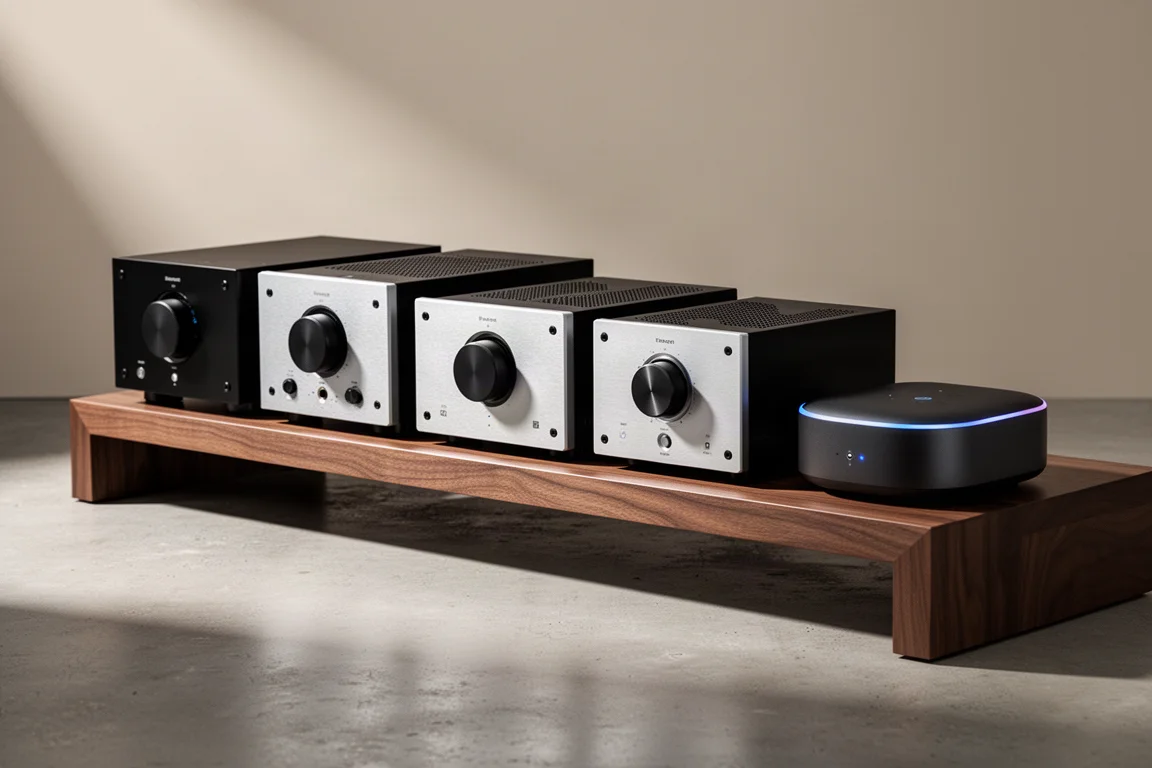
Six integrated amplifiers under $600, and each one earns its place for a different reason. Most are traditional rack-width components built around linear power supplies and toroidal transformers. One is a compact Class D design that trades the analog-first layout for streaming, HDMI, and software-based room correction. Every one of them includes a remote control and at least one analog input, and each brings a distinct tonal character to the system it anchors.
That variety matters, because the amplifier shapes how everything downstream behaves. A warm amplifier can smooth the edge off a bright pair of speakers. A neutral one reveals exactly what the source is doing. A feature-dense one can replace a DAC, a streamer, and a phono preamp all at once, which keeps the rest of the budget free for speakers.
What follows is a walk through each amplifier’s strengths, the trade-offs worth knowing before you buy, and which one makes sense in which situation.
What to Look For in a Budget Integrated Amplifier
Power ratings deserve a careful read. A number quoted into 8 ohms says very little on its own, and what happens into 4 ohms matters just as much if your speakers dip low in impedance. Two amplifiers with similar 8-ohm figures can behave very differently when a demanding speaker asks for current.
Inputs decide how much of your system the amplifier can absorb. A USB digital input lets you connect a computer directly, while optical and coaxial inputs cover televisions and disc players. A phono stage means a turntable plugs straight in without a separate box. Preamp outputs matter if you ever want to add a more powerful amplifier later, and a subwoofer output makes it far easier to add bass reinforcement.
Tone controls and loudness compensation are worth thinking about honestly. Some listeners never touch them, while others rely on them to tame a bright recording or fill in bass at low volumes. Build quality is the last piece. A tidy internal layout with a toroidal transformer and discrete boards is not just about pride of ownership. It also means a technician has a realistic chance of repairing the amplifier years from now.
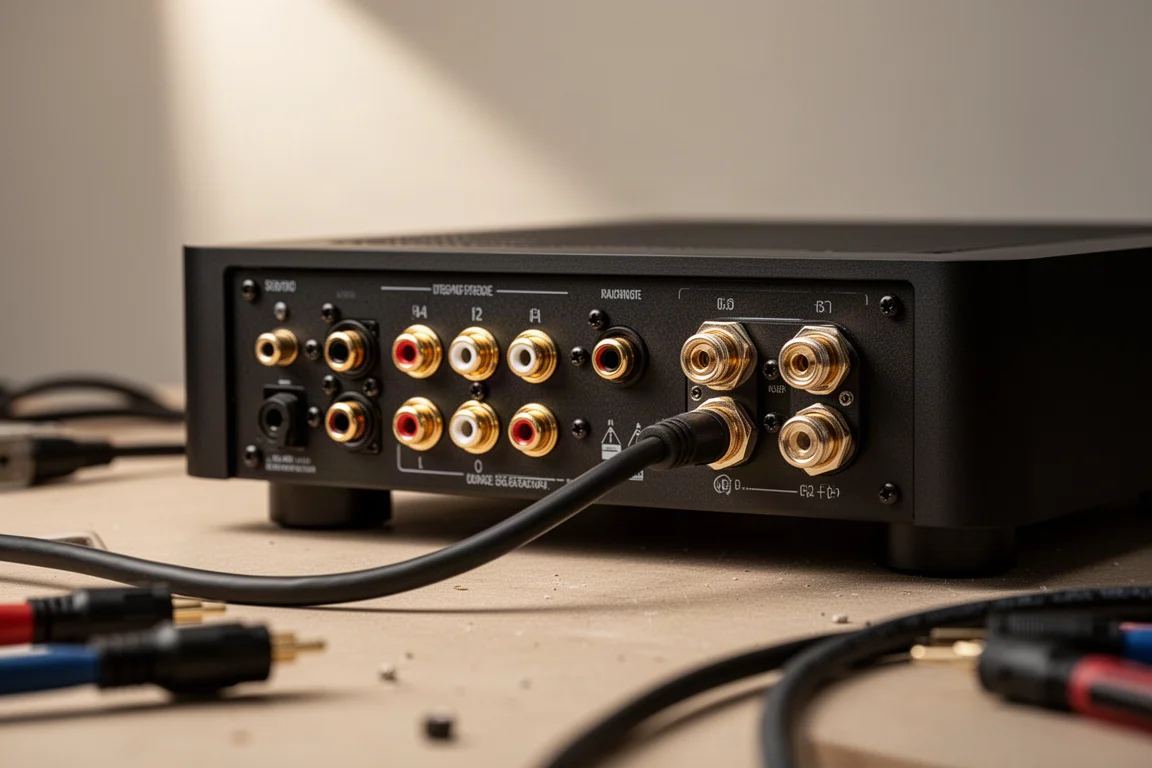
One more practical note: a fixed high-pass filter, or a software high-pass in a streaming design, lets you send low frequencies away from the main speakers and toward a subwoofer. That single feature can change how much clean output a modest amplifier appears to deliver.
Emotiva TA1: The Feature Leader
The TA1 is the most feature-dense amplifier in this group. It carries a USB input alongside optical and coaxial digital inputs, and the digital section uses an Analog Devices DAC chip of the same type found in the brand’s considerably more expensive integrated amplifiers. It also includes preamp outputs, a moving magnet and moving coil phono stage, and a fixed high-pass filter at 90 Hz that lets you route bass away from the main speakers.
Power output sits at roughly 50 watts into 8 ohms and around 90 watts into 4 ohms. Sonically it is dynamic and energetic, with a punchy bottom end and a little sparkle at the top, while the midrange sits slightly recessed. That combination gives it the lively, forward character many listeners associate with classic early-1980s amplification.
Build quality is arguably the best here. Inside you find three separate circuit boards, a toroidal transformer, and components that look like they came from a serious audio product rather than a parts bin. The front panel is clean, with a single central volume knob, and Bluetooth plus an FM tuner mean the amplifier can serve as a source on its own.
The one genuine friction point is the menu system. Balance, fader, bass, and treble adjustments live behind a layered menu rather than on the front panel, and it takes a handful of uses before the navigation feels natural. The current promotional pricing makes the feature list hard to argue with.
Yamaha A-S301: Big Bass, Analytical Midrange
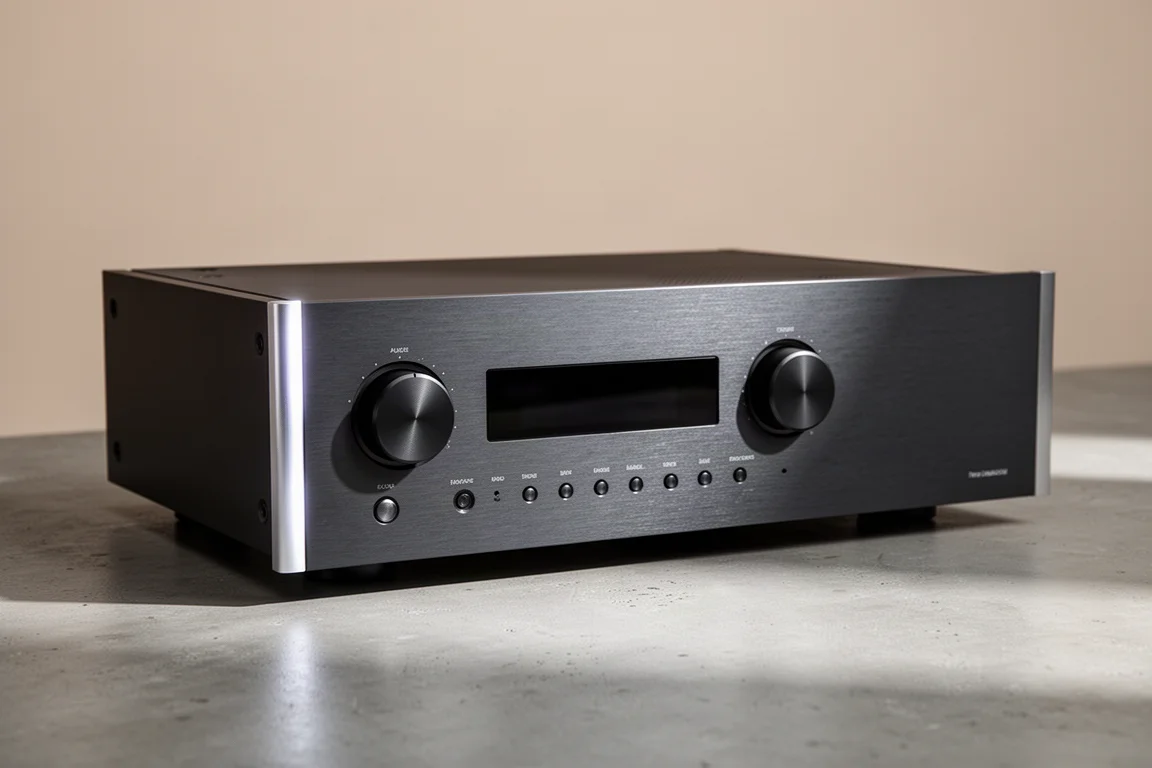
At around $350, the A-S301 is the least expensive amplifier here. It is rated at 60 watts into 8 ohms and is stable into 4-ohm loads, and it looks like a vintage component from across the room, with a neat row of vertical knobs lined up along the front panel. A variable loudness control is a genuinely useful inclusion, and there is a subwoofer output on the back.
Where it shines is current delivery. Driven hard, it holds bass punch with a grip that flatters far more expensive amplifiers, maintaining composure at loud levels where rivals lose their footing. If your priority is low-frequency authority on a small budget, this is the one that delivers it.
The trade-offs are tonal and tactile. The midrange leans analytical and the top end is fairly flat, so the amplifier never feels especially musical or expressive above the bass region. It offers optical and coaxial digital inputs but no USB input, and there are no preamp outputs. The knobs themselves feel inexpensive in the hand, even though the chassis and enclosure are perfectly solid. A step-up model in the same family sits at $599 if you want more of the same approach.
Cambridge Audio AXA35: Warm and Engaging
On paper the AXA35 is the least powerful amplifier in this roundup at a rated 35 watts into 8 ohms, with no published 4-ohm figure. In practice it behaves like a considerably more powerful design, delivering roughly the equivalent of 50 to 55 watts into 4 ohms, and it never once sounded short of drive at normal listening levels, even at genuinely loud volumes.
Its real appeal is tonal. This is not a neutral amplifier. The midrange is full, lush, and engaging, and the overall presentation is warm rather than clinical. That makes it an excellent match for speakers that lean bright in the treble or forward in the midrange, where a more analytical amplifier would quickly become fatiguing.
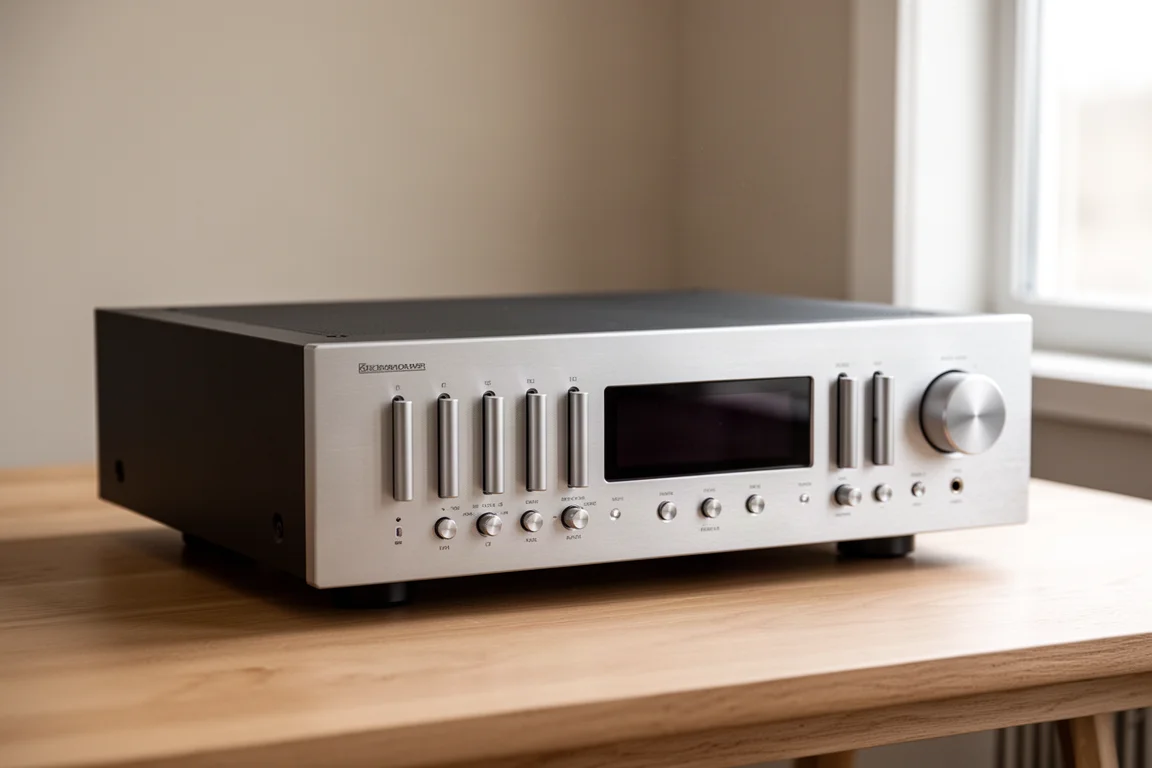
The feature set is deliberately simple. There is a phono stage and push-button input selection on the front panel, a toroidal transformer inside, and no DAC, no subwoofer output, no preamp outputs, and no tone controls. At $399 you are buying character and build rather than connectivity, and it rewards anyone who already owns a digital front end they like.
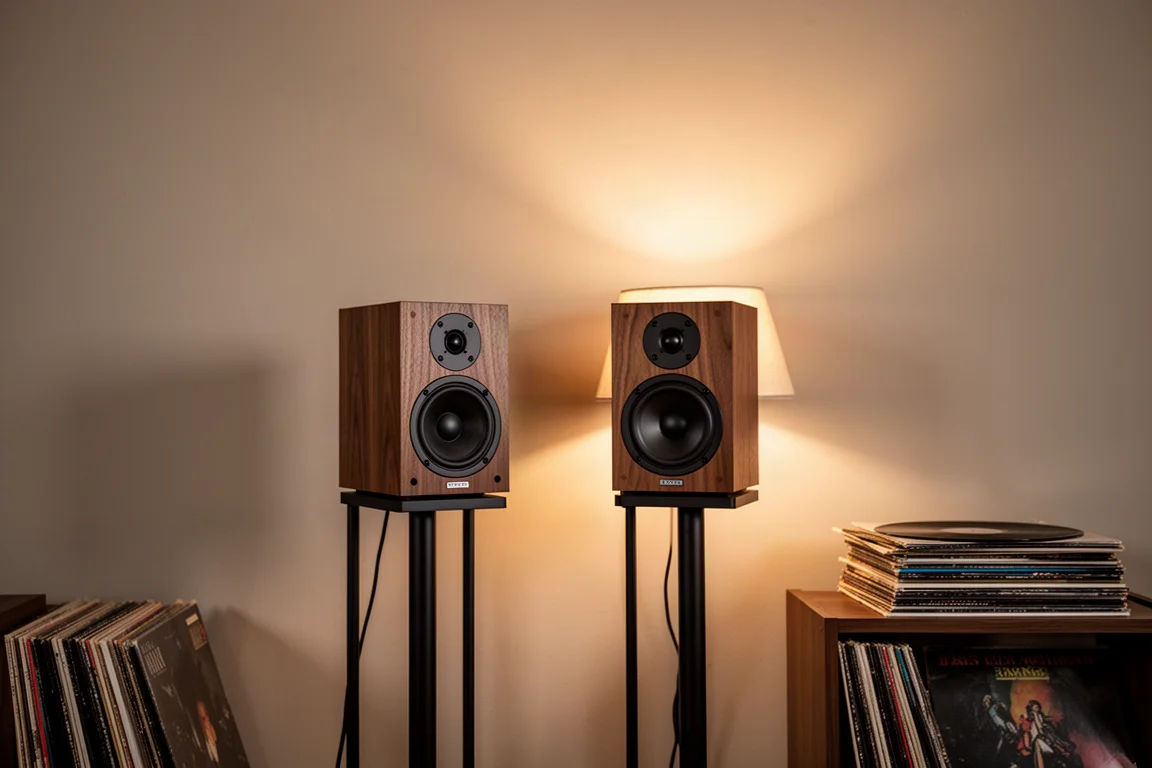
What makes the AXA35 memorable is how dynamic it sounds for its rating. The amplifier has a personality rather than a specification sheet, and that personality is the reason to choose it over more flexible alternatives at the same price.
Rotel A10 Mark 2: Clean and Neutral
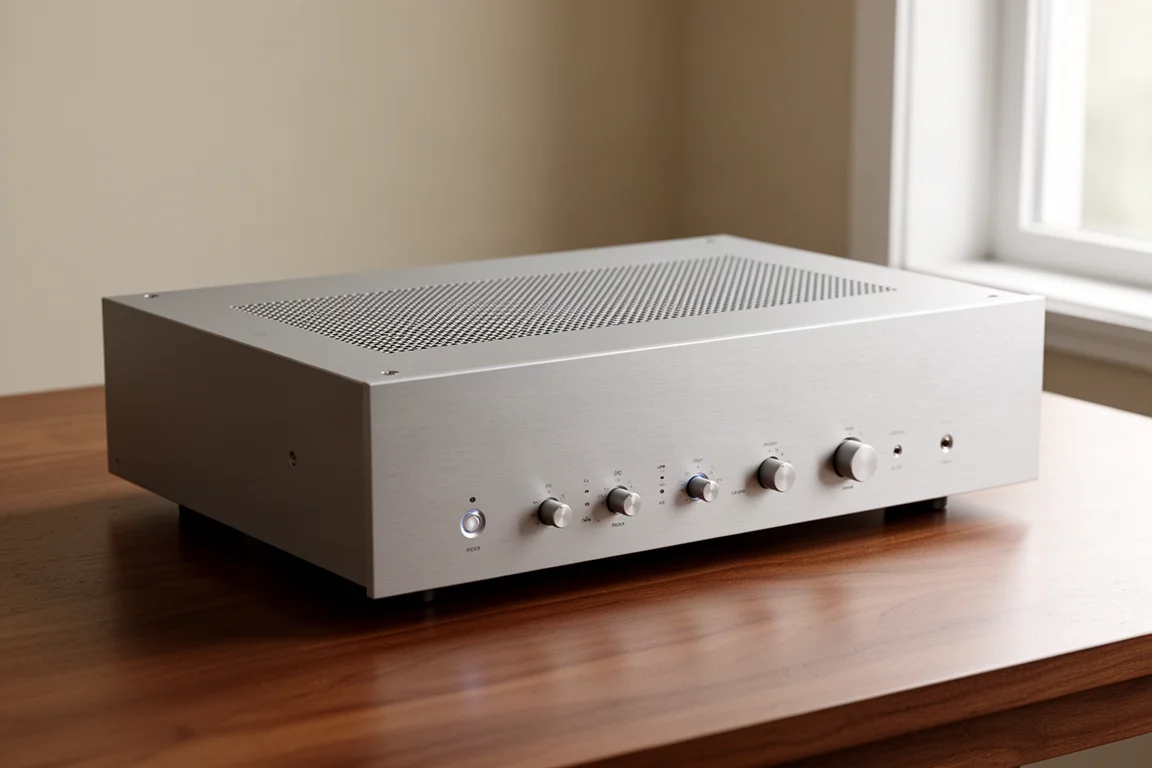
The A10 Mark 2 sits at the opposite end of the spectrum from the Cambridge. It is not warm and not lush. It is clean, precise, and exceptionally quiet, with a noise floor that simply disappears, letting fine detail come through without any haze behind it. It is the most neutral amplifier in this group, and its neutrality is effectively its personality.
Power output is rated at 50 watts into 8 ohms, and the top end is genuinely excellent, open and refined in a way that is unusual at this price. Build quality is very good as well, with a notably thin chassis and tangible tone controls on the front panel that give you real adjustment without a menu.
In substance, this is the amplifier and phono stage section of the A11 Mark 1 without the digital board, which explains why it sounds so composed. The cost of that focus is connectivity. There is no DAC and no subwoofer output, so adding a subwoofer means choosing one with high-level or speaker-level inputs. If you already own a DAC you like, that omission is easy to live with.
WiiM Amp Pro: The Streaming Outlier
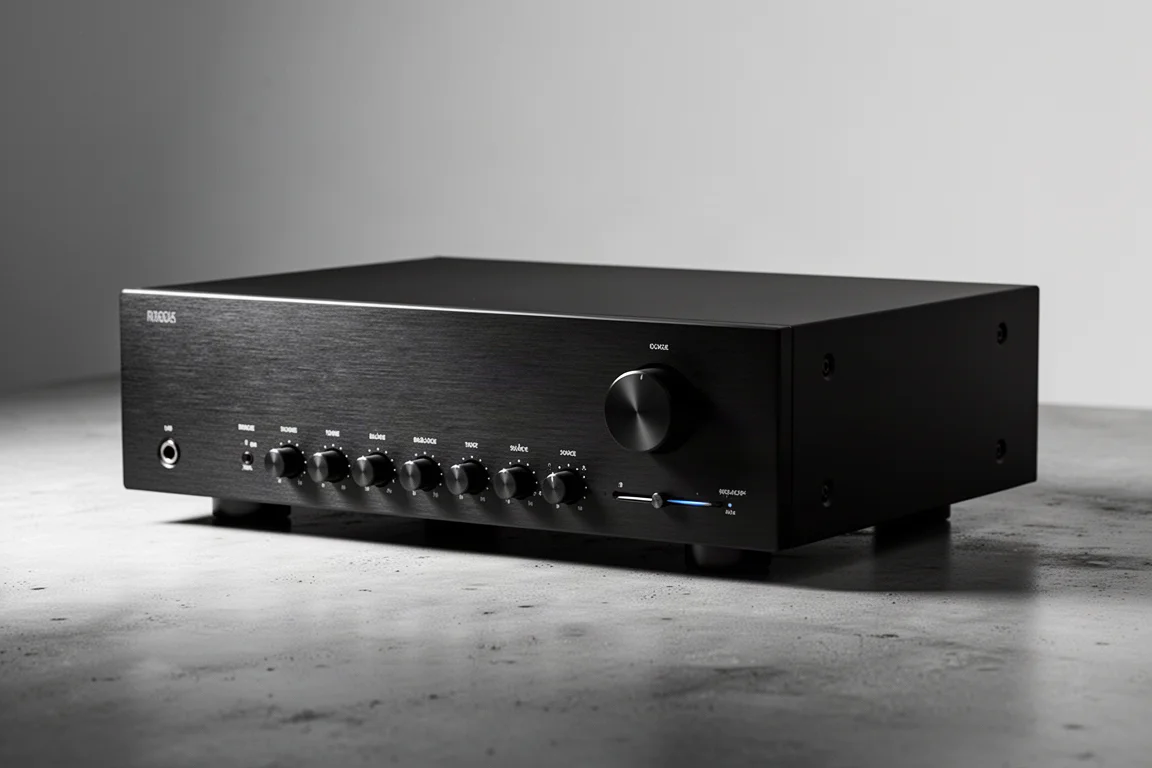
The WiiM Amp Pro is the only Class D design here and the only one that is not a traditional rack-width component. It uses a Texas Instruments TPA3255 amplifier chipset paired with a post-filter feedback loop, a design that helps maintain output as speaker impedance drops, addressing one of the main criticisms of the earlier version of this amplifier.
The feature list reads more like a digital hub than an amplifier. Streaming is built in, and there is an HDMI input, an optical input, one analog input, and a subwoofer output. Software adds room correction, a 10-band parametric equalizer, and both high-pass and low-pass filtering, all controlled from an app or the included remote.
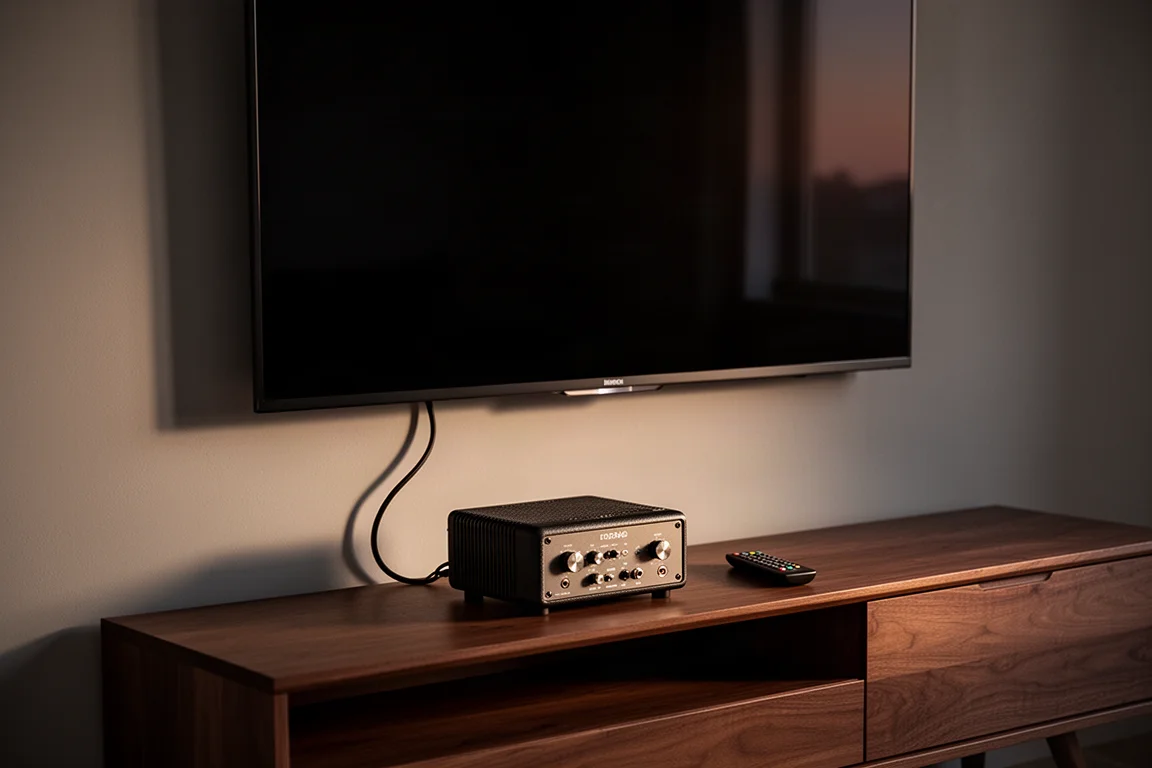
Two omissions keep it from being a complete solution. There is no phono stage, so a turntable needs its own preamp, and there are no preamp outputs, which means the amplifier cannot serve as a front end for a larger power amplifier later. There is also just one analog input, which is limiting for anyone with several legacy sources.
Everything else is strong. Styling and build quality are good, the tonality leans only slightly warm, and the amplifier sounds genuinely enjoyable rather than merely competent. At $379, it covers streaming, room correction, television connectivity, and amplification in a single box.
Denon PMA-600NE: Velvety and Feature-Rich
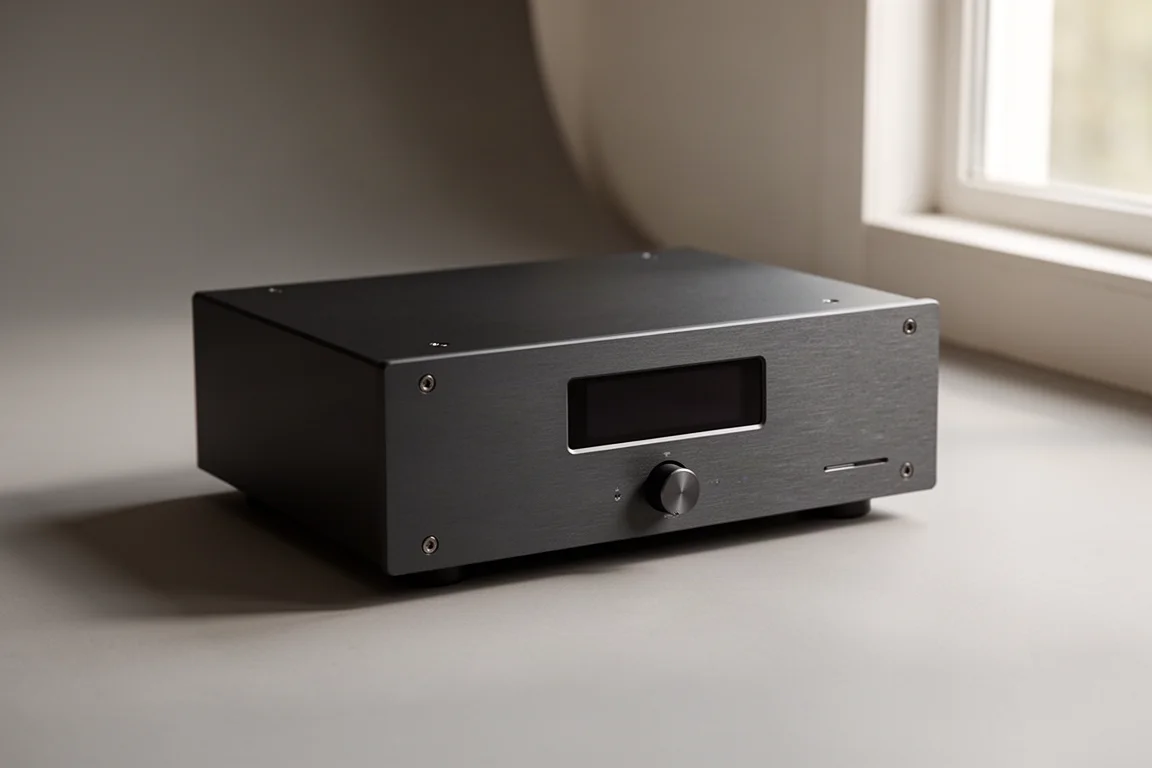
The PMA-600NE is a long-running design that is still in production, and it remains one of the better-looking amplifiers in this price bracket. It includes a Burr-Brown DAC with optical and coaxial inputs, though there is no USB input, and there is a phono stage on the back for a turntable. Preamp outputs are not part of the package.
Sonically it is close in spirit to the Cambridge. It is warm and dynamic, with real weight at the bottom end, and it sacrifices some clarity in the upper midrange and treble to get there. The result is a velvety, caramel-smooth presentation that sands off harsh edges in bright speakers and rough recordings alike. It is a genuinely fun amplifier to listen to for long stretches.
The one thing worth knowing before you buy is what you will find under the lid. The internal layout is untidy compared with the orderly boards and toroidal transformers in the Emotiva, Rotel, and Cambridge designs, which does not affect sound quality at all but does make future service and repair less straightforward.
Overall Buying Advice
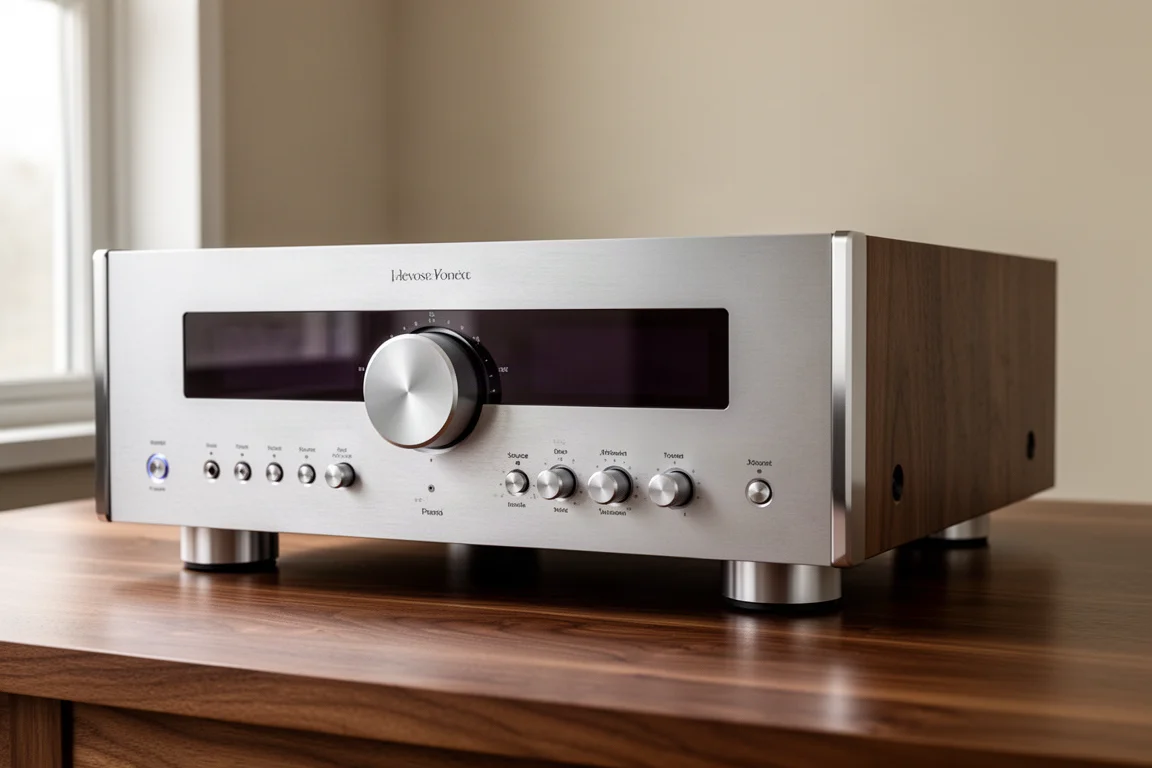
Judged purely on how they sound, the order runs Emotiva first, then Cambridge, Rotel, WiiM, Denon, and Yamaha. The Emotiva earns the top spot because it combines the liveliest tonal character here with the widest feature set and the most substantial internal build. The Cambridge follows on the strength of its warm, addictive midrange, with the Rotel close behind for listeners who want clarity and silence instead of color.
Judged on functionality, the WiiM Amp Pro leads clearly. Streaming, HDMI, room correction, and a parametric equalizer in one compact chassis are difficult to match at any price, and the Emotiva and Denon follow with strong feature counts of their own. The Cambridge and Rotel sit last here simply because they omit digital inputs and subwoofer outputs, which is a deliberate choice rather than an oversight.
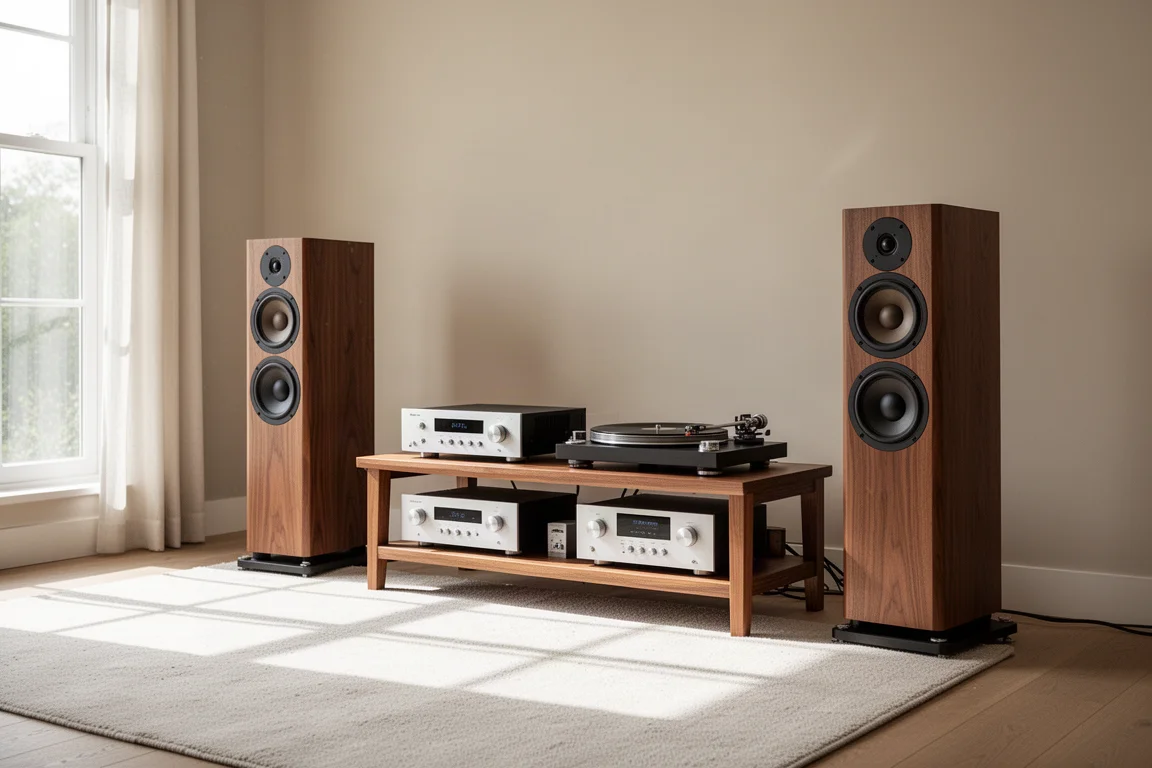
Pairing is where the decision usually settles itself. Bright or forward speakers suit the Cambridge and the Denon, whose warmth compensates. Neutral speakers reward the Rotel, and demanding speakers that need current are best served by the Yamaha. If the amplifier has to handle television audio and streaming as well as music, the WiiM Amp Pro removes several boxes from the rack at once.
There is also a longer-term consideration. The Emotiva, Cambridge, Rotel, and Yamaha all use traditional layouts with discrete boards and toroidal transformers, which means a technician has something to work with years from now, or a replacement board can be sourced for the section that fails. The Denon and the WiiM are less serviceable in that sense, which is worth weighing if you plan to keep the amplifier for a decade or more.
Conclusion
All six of these amplifiers are worth owning, and the right one depends entirely on the system around it. Choose the Emotiva TA1 for the broadest feature set and the most engaging sound, the WiiM Amp Pro for a compact streaming hub that handles everything, the Cambridge AXA35 or Denon PMA-600NE for warmth and character, the Rotel A10 Mark 2 for clean neutrality, or the Yamaha A-S301 if bass grip and low cost matter most. Any of them can serve as a two-channel amplifier for years to come, which is remarkable value in a category where $600 no longer buys what it once did.
Further reading
Related Reviews
Hi-Fi Amplifiers
Accuphase E-280 Review: Entry-Level Accuphase With Flagship Attention to Detail
A close look at the Accuphase E-280 integrated amplifier, covering its champagne build, AAVA volume control, sound quality, and the speakers and sources that suit it best.
Hi-Fi Amplifiers
Advance Paris A10 Classic vs Yamaha A-S301: Two Integrated Amplifiers Compared
A practical comparison of a $350 integrated amplifier and a $2,500 reference model, covering the differences that matter and the ones that do not.
Hi-Fi Amplifiers
Affordable Chinese Amplifiers Worth Buying: Five Budget Hi-Fi Amps Compared
A practical look at five affordable amplifiers, what each one does well, and the trade-offs to weigh before you buy.