Integrated Amplifiers
Best Integrated Amplifiers Under $1,500: Six Options for Stereo Music
A practical guide to six integrated amplifiers under $1,500, covering inputs, power, phono stages, and what each one does best.
Introduction
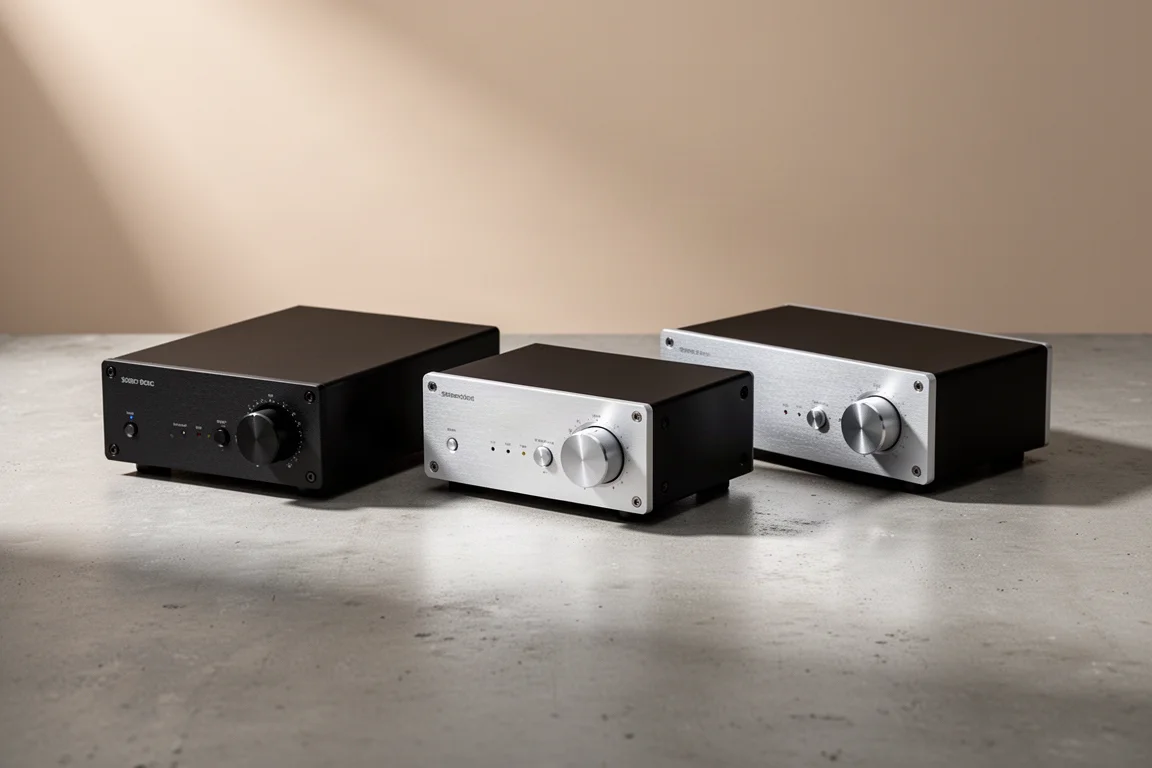
Integrated amplifiers, often simply called amps in the UK, have gone through a real resurgence over the past few years as more people spend time listening to music. Whether your library is vinyl, streaming, or a shelf of CDs, an integrated amplifier is a strong foundation for a two-channel system.
For anyone new to home audio, an integrated amp combines two pieces of gear into one chassis: a stereo preamplifier and a stereo power amplifier. The preamp switches between your sources and adjusts volume before passing the signal along, handling all of the low-level source signals. The power amp supplies the current that actually drives your speakers.
Preamps vary in the number and type of inputs they offer. Some include a phono input, some add digital inputs with a built-in digital-to-analog converter, and a few have a Bluetooth receiver built in.
Many music lovers prefer integrated amps to home theater receivers because they tend to have a more musical sound. Companies that build integrated amplifiers usually come from a high-performance audio background, and they put more emphasis on sound and simple circuitry than on packing in features. That simplicity is also why a well-made integrated amplifier can serve you for decades.
The six models below all sit under $1,500, and each one solves a slightly different problem.
How to Choose an Integrated Amplifier
Start with your sources. If you plan to connect a turntable, look for an integrated amp with a phono input. If the amp you like does not have one, you can buy a separate phono preamp, often a better one, and connect it to an auxiliary input. Most integrated amps include several analog auxiliary inputs for phono preamps, CD players, cassette decks, and similar gear, and some add digital inputs for a TV connection.
Power deserves a closer look than the spec sheet suggests. Many of these amplifiers do not carry what looks like a high power rating, but they deliver a lot of current, which is what really determines how well an amplifier drives a pair of speakers. Even so, it is worth avoiding a low-powered amp paired with low-sensitivity speakers in a large room. Anything below 88 dB is generally considered on the low side for speaker sensitivity.
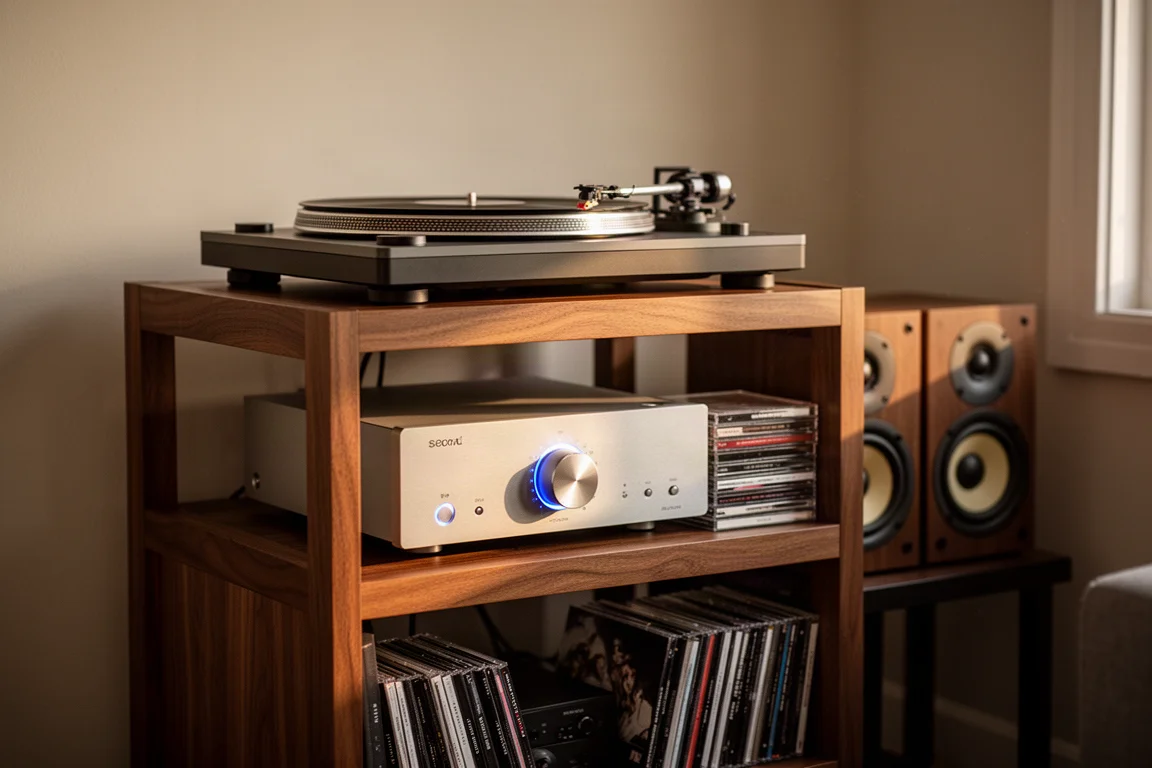
It also helps to think about where the system will live. A small room with efficient bookshelf speakers asks far less of an amplifier than a large open living space with floorstanders, and that difference often matters more than a few watts on paper.
Matching the amplifier to the speakers you own, or plan to own, is the single most useful decision you can make before buying.
Best Overall Value: NAD C 316BEE V2
NAD has been building integrated amplifiers since the late 1970s, when the 3020 earned a reputation for extraordinary value. The C 316BEE V2 continues that thinking in an updated design that has collected awards along the way.
You get four analog inputs on the rear plus a mini plug on the front. The moving magnet phono preamp is not an afterthought: it is drawn from NAD’s more expensive models, runs very quietly, and includes an infrasonic filter to reject ultra-low-frequency noise. The rear inputs are gold plated, and the speaker terminals are more serious than the price suggests.
The retro front panel echoes the original 3020, with a discrete button for each source, tone controls with a defeat option, and a full-size headphone jack. Inside, NAD’s PowerDrive circuitry uses computer intelligence to optimize power supply settings for music playback, and the 50 watts per channel sound far larger and more robust than the rating implies. A large toroidal power transformer, heavy-duty discrete output transistors, and generous smoothing capacitors round out the package.
Best Feature Set: Rotel A11 MKII
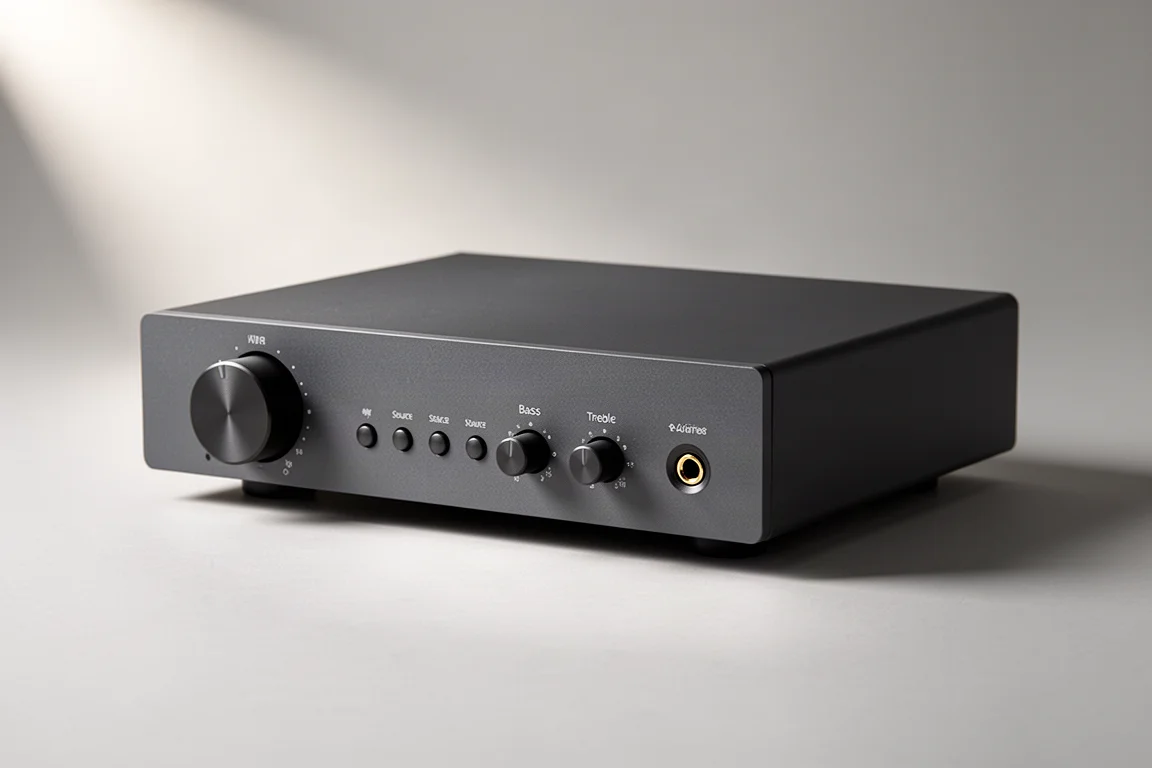
Rotel has been making outstanding value audio gear for decades, and its integrated amplifiers have been favorites since the mid-1980s. The A11 MKII is the model for listeners who want excellent sound but also a feature set built for contemporary systems.
Three analog inputs and a moving magnet phono input cover the analog side. On top of that you get Bluetooth with aptX, plus optical and coaxial digital inputs, and the optical input is genuinely useful for a TV. The built-in DAC uses premium TI chips and handles up to 32-bit/384 kHz.
The front panel is simple and handsome, with bass, treble, and balance controls and a headphone jack. Inside, the layout is clean: a large power supply with a toroidal transformer occupies one side, the low-level circuitry sits on the other, and large heat sinks serve the discrete Class AB power amp, rated conservatively at 50 watts per channel. The sound is notably smooth, and sweet is the word that best describes it.
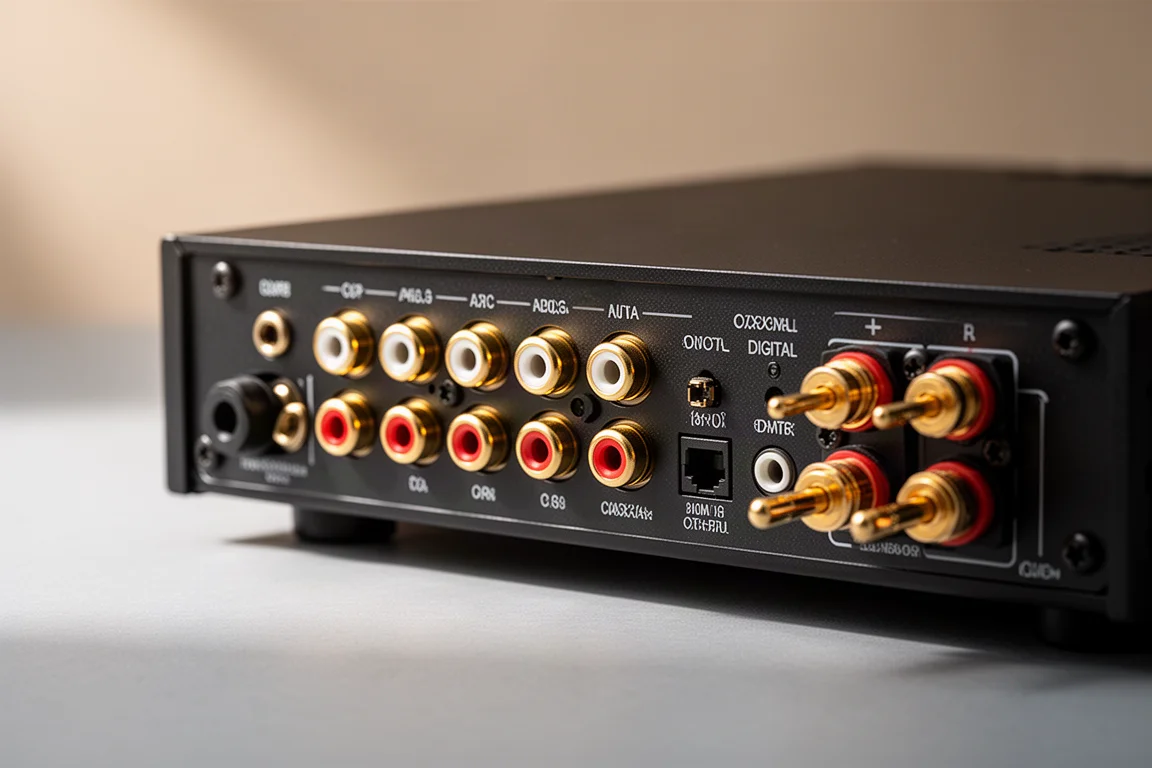
That combination of features and easy-going voicing makes the A11 MKII a natural fit for a system that has to serve both music and a television without asking the listener to compromise on either.
Best for Mixed Audio and Video: Marantz Stereo 70s
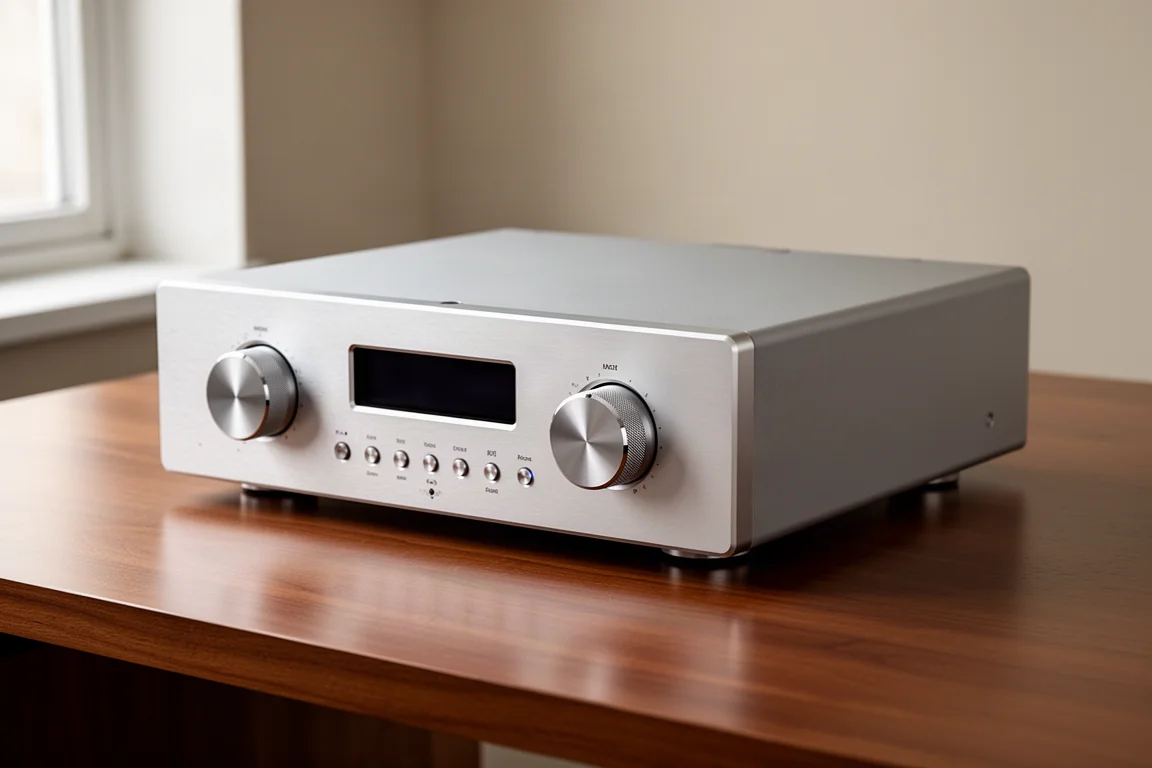
Strictly speaking, the Stereo 70s is not an integrated amplifier, because it includes an AM/FM radio and therefore qualifies as a stereo receiver. It earns a place here because it packs so many useful capabilities alongside Marantz’s warm sound.
This is the choice for someone who wants great two-channel sound but also has video sources to accommodate. There are six HDMI inputs and one output for a TV, with audio return channel support on compatible displays. On the audio side you get three analog inputs, coaxial and optical digital inputs, a USB-A host input, and a very good moving magnet phono input. HEOS music streaming and Bluetooth are built in.
Two sets of speaker outputs, two mono subwoofer outputs, and preamp outputs for adding more power later are all present. It can even play one source while you watch another. The internal DACs handle hi-res audio up to 24-bit/192 kHz and DSD up to 5.6 MHz, and the fully discrete Class AB power section is rated at 75 watts per channel, closely related to the amplification in Marantz’s more expensive audio-only models. The HDAM modules, first developed in 1992 and built from hand-selected discrete components, give the preamp stage an almost completely silent background, which lets small details in the music come forward.
Best Pure Analog: Rega Brio
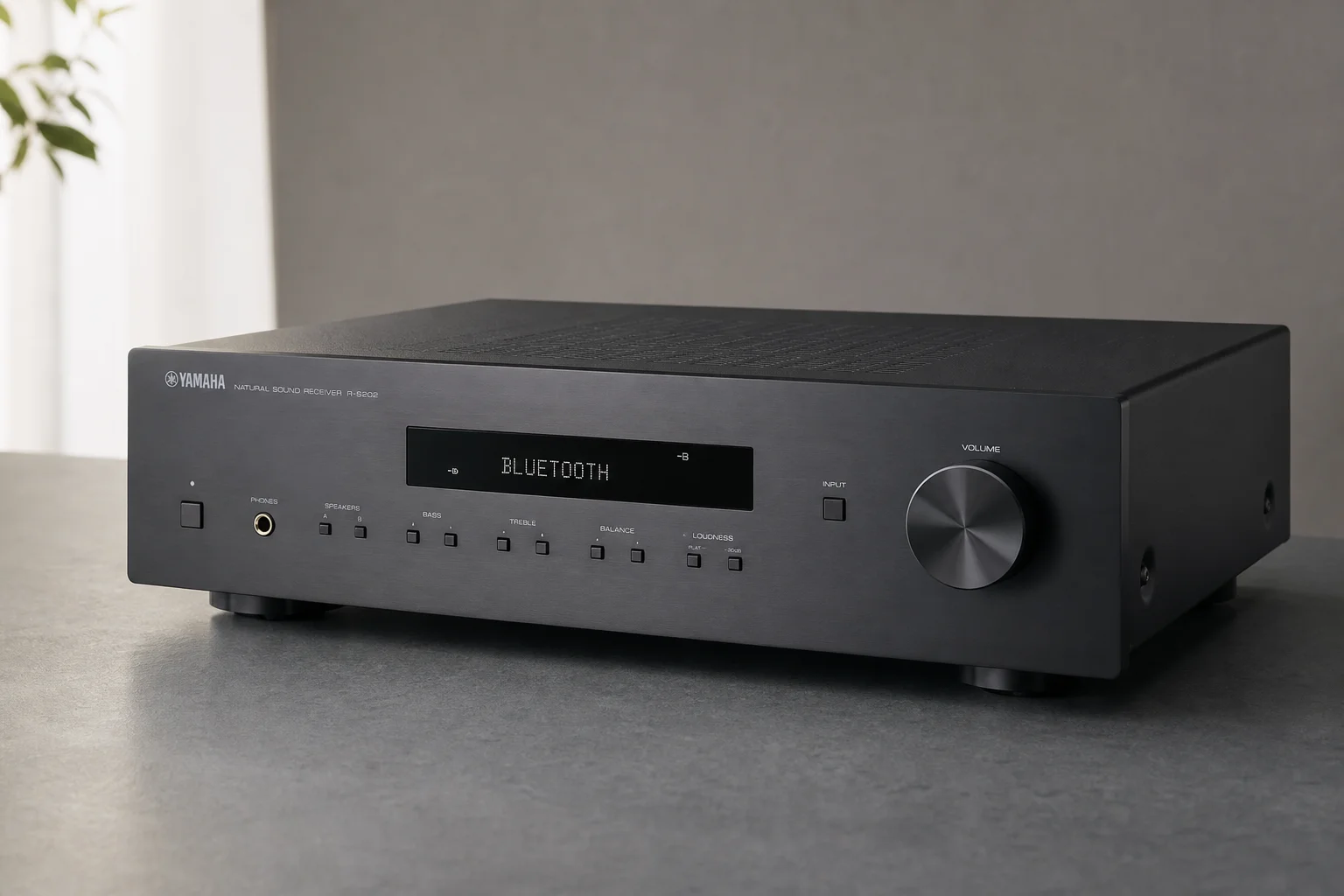
The Brio pairs old-school analog thinking with modern solid-state design to deliver an engaging British sound, all in a small, unassuming retro case that only reveals itself once you press play.
Inputs include an excellent moving magnet phono stage, four more analog inputs, and a record output for making cassette or reel-to-reel mixtapes. There is a single set of solid speaker binding posts on the rear, and all switching happens at the back panel to keep the signal path as short as possible. Up front sits a full-size headphone jack fed by a headphone amplifier that rivals many standalone units.
A toroidal power transformer and a Class AB amplifier design do the heavy lifting, while a secondary power supply keeps the preamp section fully isolated. The volume knob feels a little jerky when you use the remote, though it is super linear in use, and it is clear where the money went. This amplifier will surprise you with how well it drives speakers well beyond its price class.
Best Budget Analog: Rega io
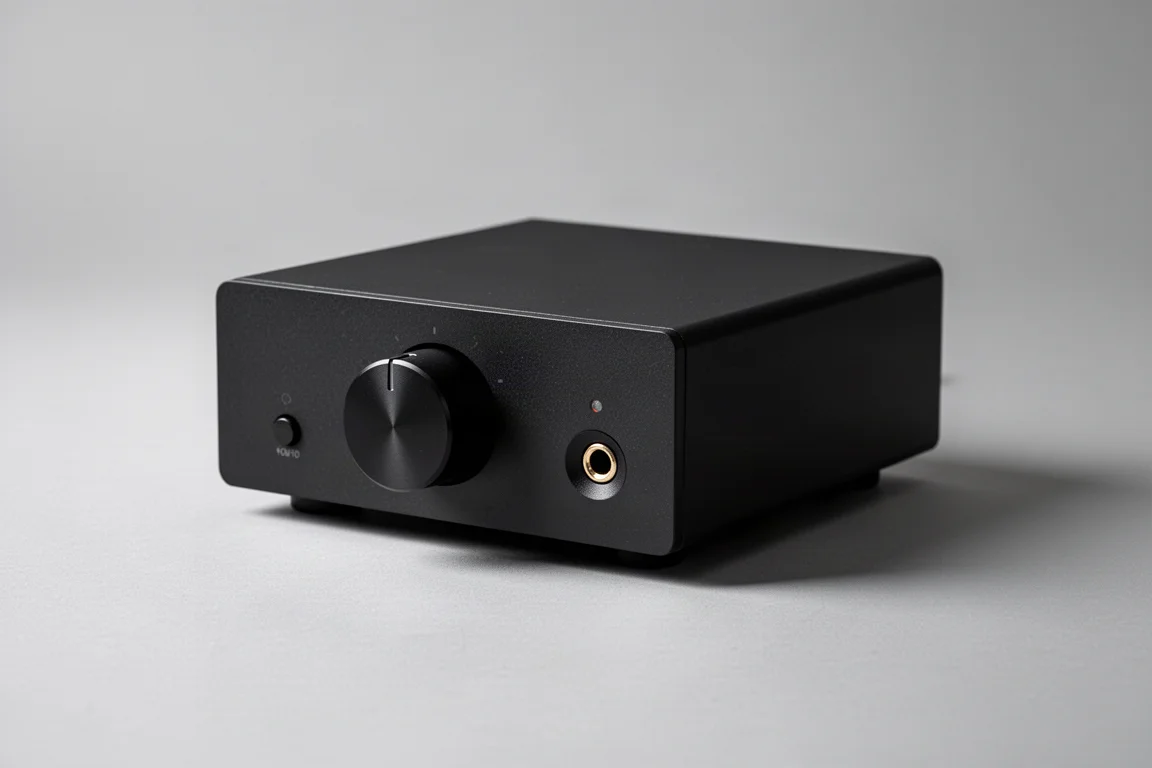
If the Brio appeals but you do not need as much power, the io is essentially a scaled-down version that saves money without giving up the character. It offers two auxiliary inputs, a moving magnet phono stage, and a headphone jack.
Both the Brio and the io are built in Rega’s own factory in the UK, and the io carries the same sweet sound as its larger sibling. For the money, it sounds considerably better than its simple specification suggests.
Best for Difficult Speakers: Arcam Radia A25
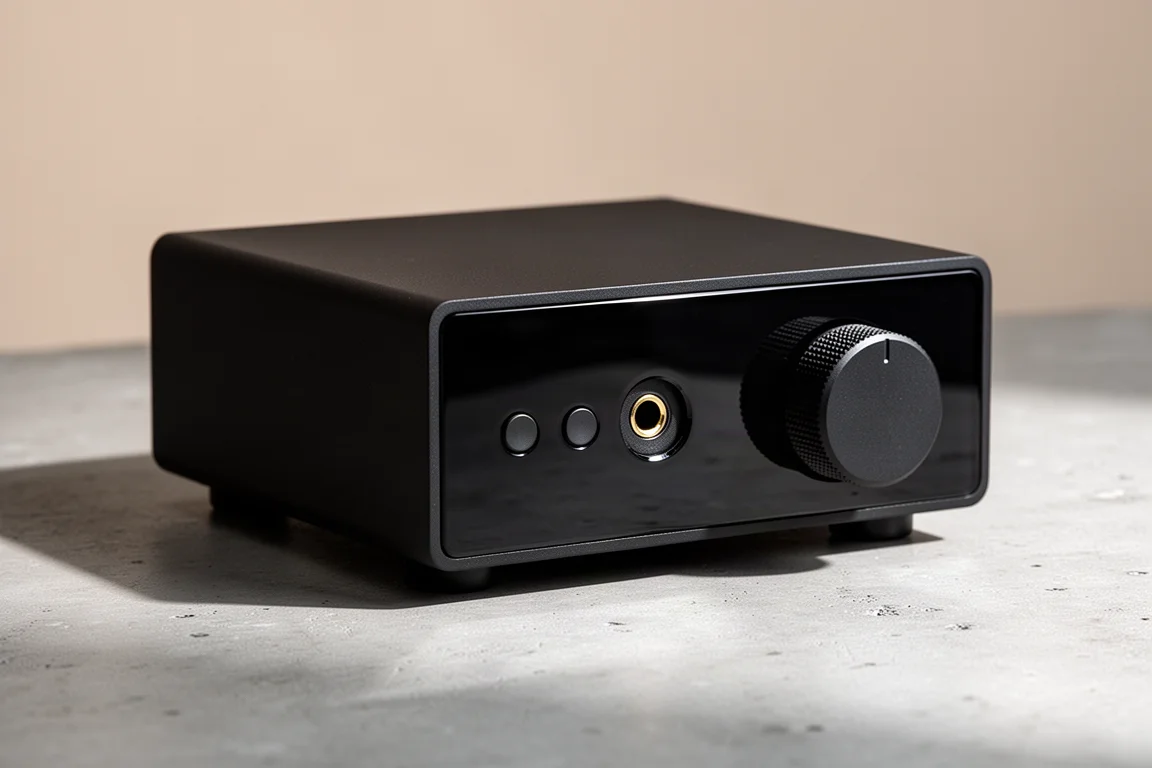
The A25 is the top model in Arcam’s new Radia series and the most expensive amplifier in this roundup, from a company that has been building good-value products for decades.
Connectivity is generous: an optical input, two coaxial digital inputs, three analog RCA inputs, a great moving magnet phono preamp, preamp outputs, Bluetooth, and two pairs of speaker terminals. A USB-C port lets you connect an iPhone, laptop, or tablet directly and make use of the built-in ESS Pro DAC.
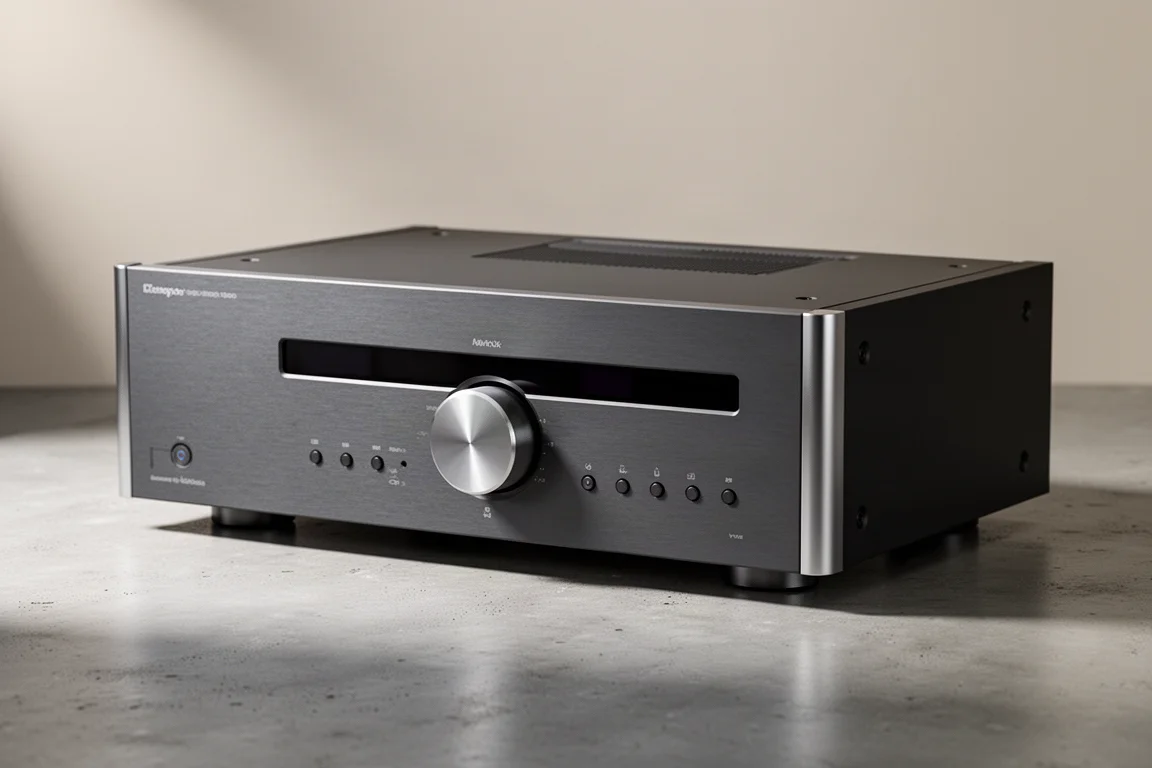
The amplifier section is the real story. The A25 is rated at 100 watts per channel and uses Class G amplification, which delivers remarkable dynamics and clarity. Class G runs as pure Class A up to 15 watts with zero crossover distortion, then transitions to Class AB when more power is required. That makes the design efficient, because the extra power is only drawn when needed, and the switch happens instantly with virtually no lag. Arcam has been refining Class G for years, and this is the fifth and newest generation of that work.
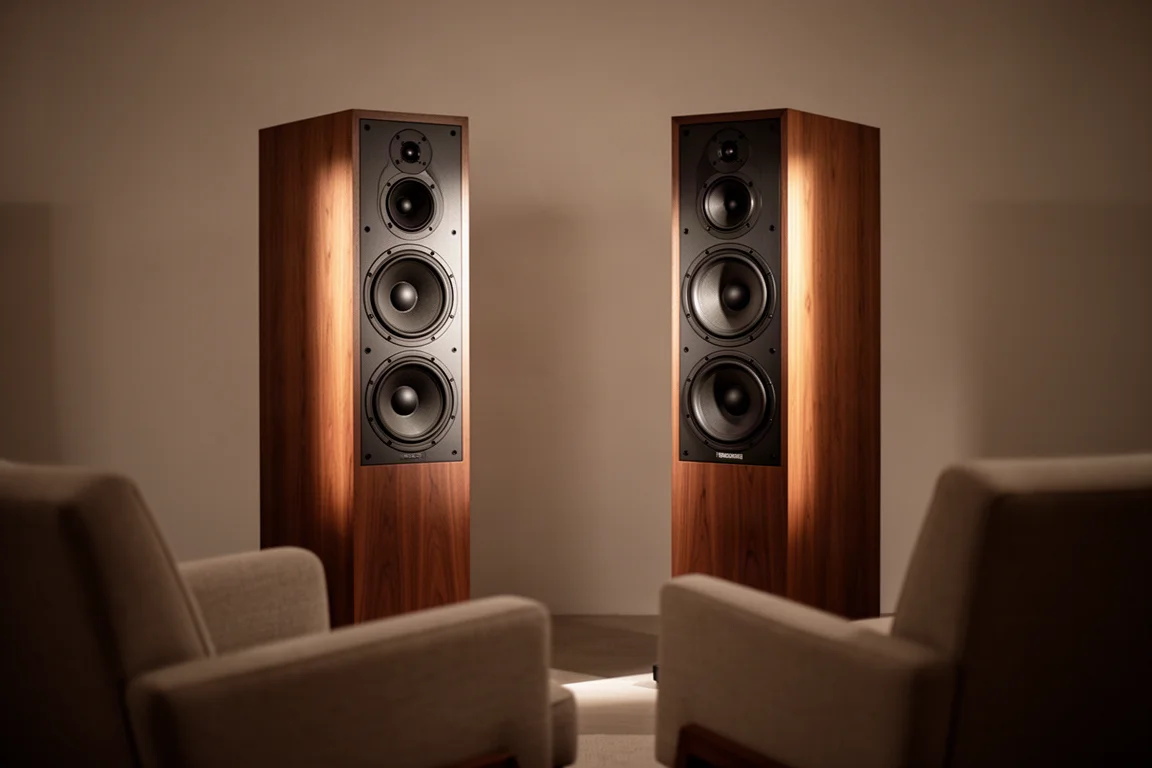
If your speakers are a little hard to drive, the A25 is the model here most likely to wake them up and reveal low-level detail that lesser setups gloss over.
Buying Advice
The right amplifier depends far more on your sources and speakers than on the length of a feature list. If you are building a simple analog system around a turntable, the NAD C 316BEE V2 and the Rega models cover that ground with strong phono stages and uncomplicated signal paths. If you want digital inputs, Bluetooth, and a DAC for a television, the Rotel A11 MKII is the more flexible pick. If video sources are central to your setup, the Marantz Stereo 70s solves that problem in a single box. And if your speakers are demanding, the Arcam Radia A25 brings the most power and the most advanced output stage of the group.
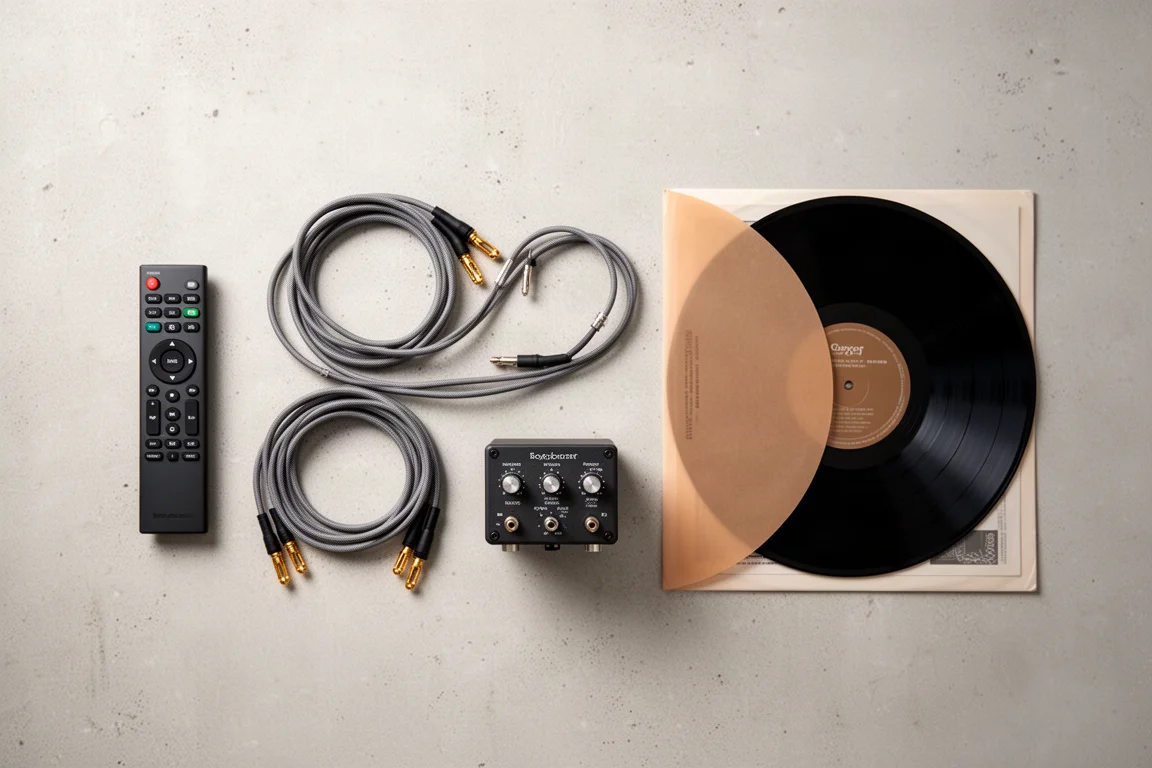
Whichever way you go, plan the inputs before you buy and be honest about how much power your room and your speakers actually need. An amplifier that matches your system will keep rewarding you for years, which is exactly why this category has become popular again.
Conclusion
There is no single best integrated amplifier under $1,500, but there is a best one for your sources and your speakers. The NAD C 316BEE V2 remains the value benchmark, the Rotel A11 MKII balances features with a smooth, sweet sound, the Marantz Stereo 70s covers video and streaming in one chassis, the Rega Brio and Rega io deliver classic British analog character at two different levels of power and outlay, and the Arcam Radia A25 brings the most power and the most sophisticated amplification to the group. Match the amp to the system you are actually building, and any of these six will serve you well.
Further reading
Related Reviews
Integrated Amplifiers
Advance Paris A10 Classic Review: Vintage Looks and a Lively, Punchy Sound
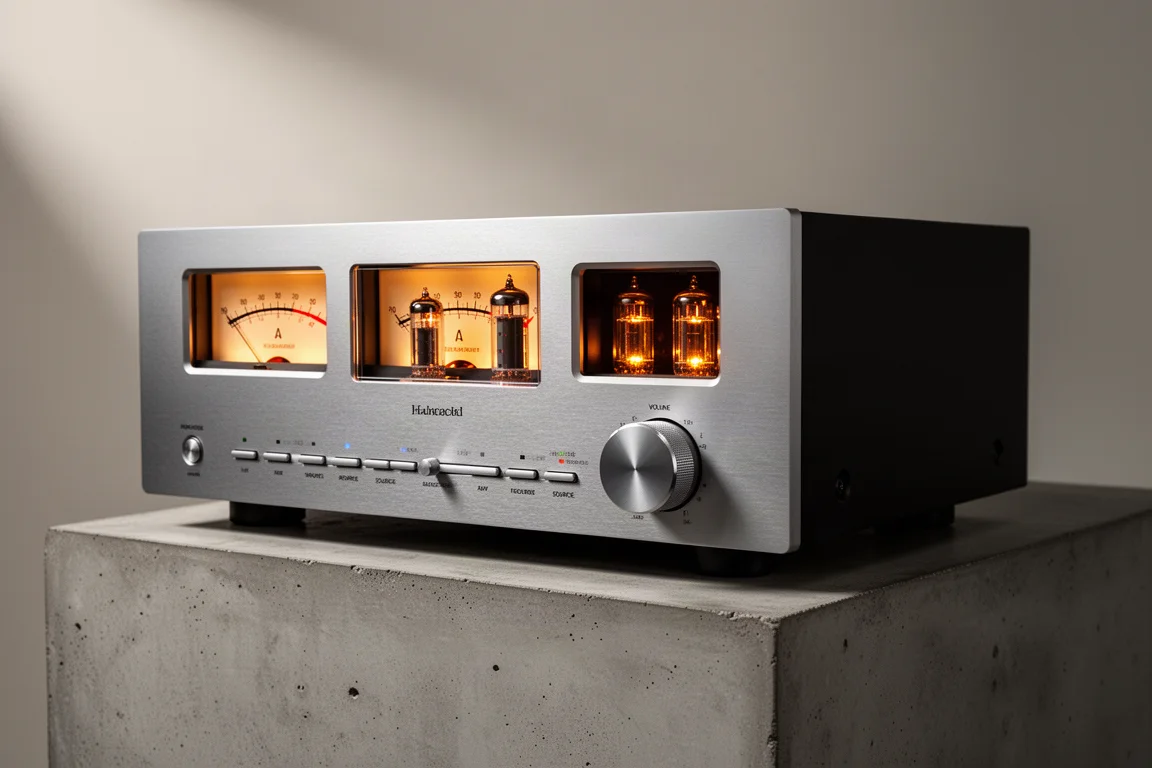
The Advance Paris A10 Classic pairs glowing blue VU meters and a tube stage with one of the widest input sets on any integrated amplifier. Here is what it does well and what to weigh before spending $2,500.
Integrated Amplifiers
Advance Paris A12 Apex Review: A Modern Integrated Amplifier With Vintage Character
A dual mono integrated amplifier with 180 watts per channel, a tube front end, VU meters, and a connectivity list that covers turntables, televisions, computers, and headphones.
Integrated Amplifiers
Advance Paris Nova Range Review: AI130, AI190 and Modular Upgrades
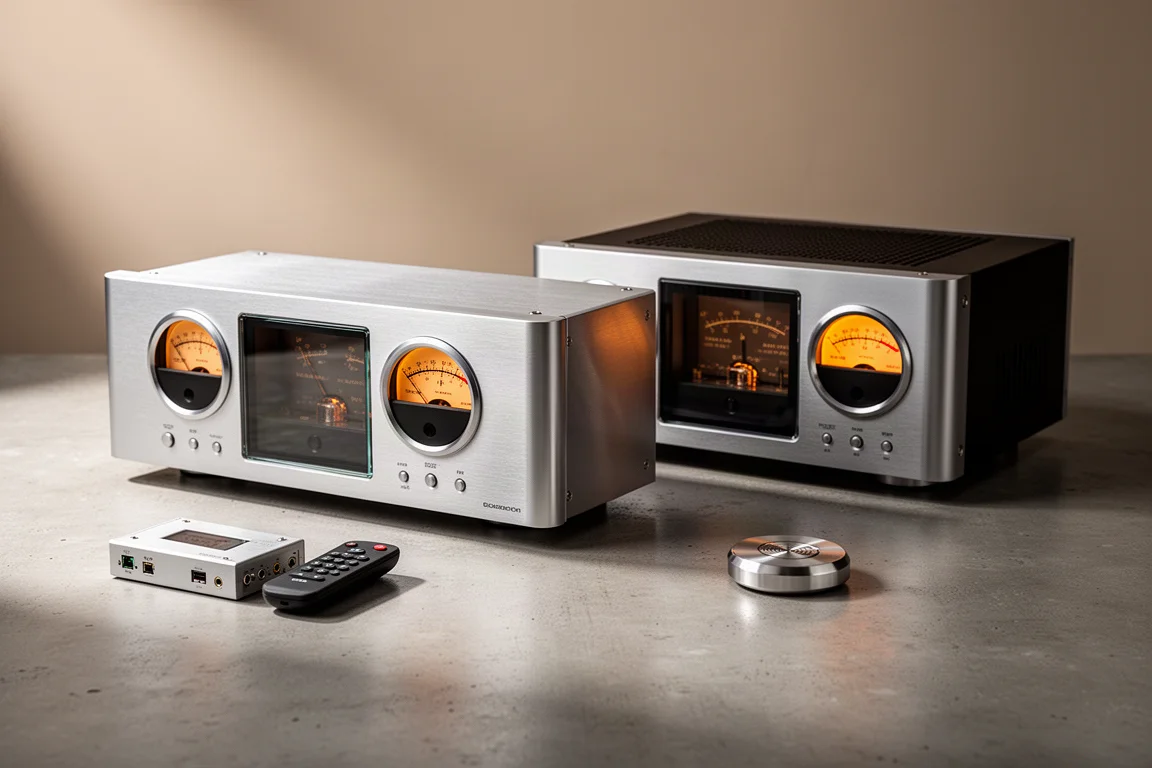
A practical look at the Advance Paris Nova range, including the AI130 and AI190 integrated amplifiers and the modular streaming, Bluetooth and remote accessories that expand them.