Hi-Fi Amplifiers
Best Integrated Amplifiers Under £1,000: Five Contenders Compared
Five integrated amplifiers under £1,000, compared by architecture, features, and the kind of listener each one suits best.
Introduction
Choosing an amplifier is less about chasing a single best product and more about matching a design to your room, your speakers, and the music you actually play. Room acoustics, system setup, component synergy, recording quality, and personal taste all shape what you hear at the listening seat, so the same amplifier can impress in one system and disappoint in another.
With a ceiling of £1,000, the field narrows to a handful of genuinely interesting designs. Five amplifiers stand out in that bracket: the Cambridge Audio CXA81 Mark II, the Atoll IN80 Signature, the Rega Brio Mark 7, the Musical Fidelity B1 XI, and the Audiolab 6000A Mark II. Each takes a different route to the same budget, and each suits a slightly different listener.
What to Consider in This Price Category
Four things separate the contenders here.
The first is the power supply and amplifier architecture. A generous transformer and a well-built output stage matter more to long-term satisfaction than a long feature list. The Cambridge Audio CXA81 Mark II, for example, uses dual mono power amplifier modules, an architecture that usually appears on amplifiers costing two or three times as much.
The second is the digital section. Several of these amplifiers include a built-in DAC, but the chip and its implementation vary. A newer design will generally be more capable than an older one, and a good external DAC can be added later if the internal one falls short.
The third is the phono stage. Vinyl listeners need to know whether a moving magnet stage is built in, whether moving coil is supported, and whether an external stage will be required. The Rega Brio Mark 7 and the Musical Fidelity B1 XI include one; the Cambridge Audio CXA81 Mark II does not, so a separate phono stage such as Cambridge Audio’s Alva Solo at £169 or Alva Duo at £249 would need to be budgeted for.
The fourth is connectivity and availability. HDMI ARC is becoming more conspicuous in this segment, and distribution varies widely between brands. Some of these amplifiers are easy to find in most markets, and others are not.
Cambridge Audio CXA81 Mark II: Dual Mono Design and a Cavernous Sound Stage
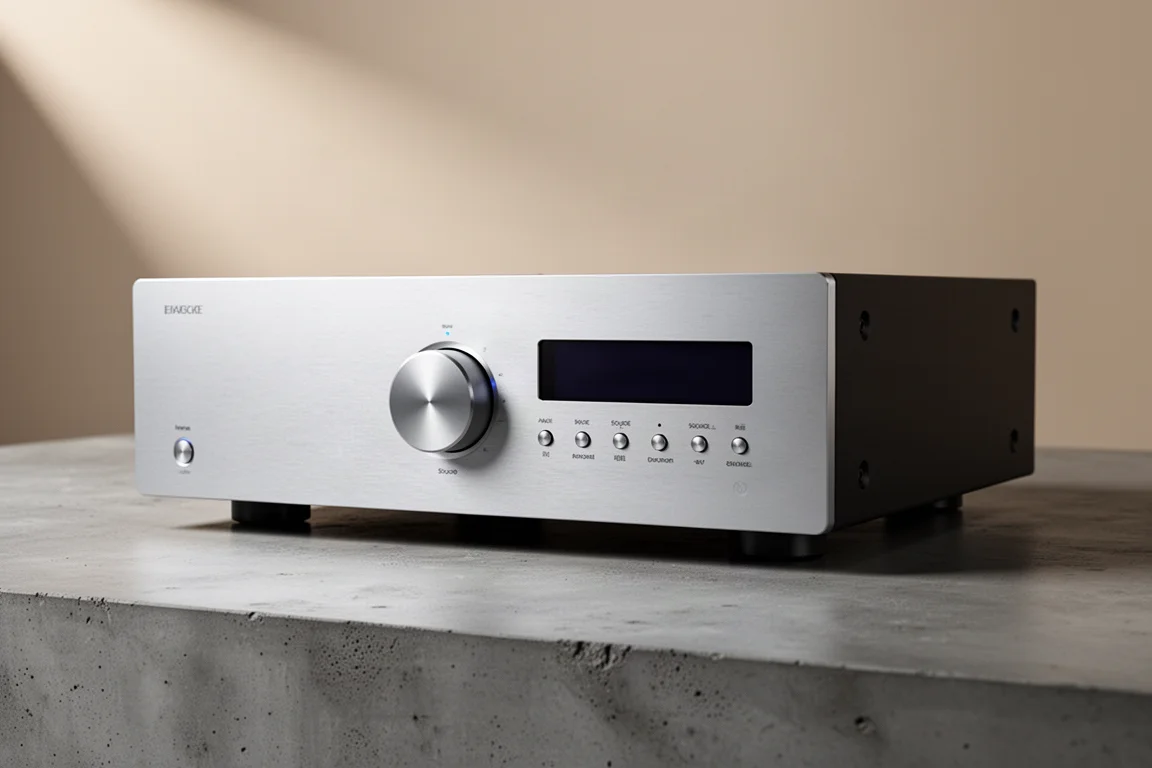
Priced at £999, the CXA81 Mark II sits between Cambridge Audio’s AXA35 and AXA100 in the range. It is a standard rack-width unit measuring 115 mm (4.5 in) high and weighing 8.7 kg (19 lb), with a standby button, a headphone jack, and a volume dial on the fascia, plus direct access to every input. The input buttons are arranged in a way many listeners will find unintuitive, and the LEDs that backlight them read almost like a display without being one. A full-function remote control is included.
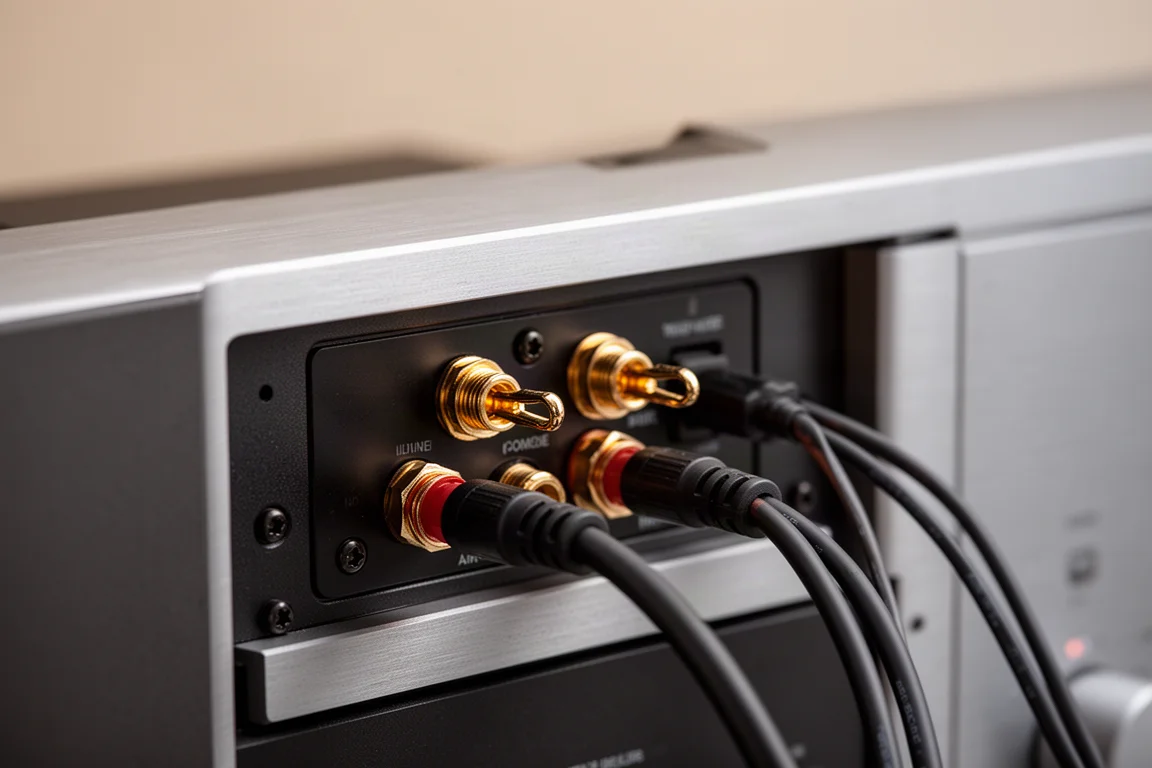
Around the back you get A and B speaker terminals, a subwoofer output, one set of pre-outs, and four single-ended RCA inputs, one of which doubles as a balanced XLR connection. Digital inputs cover two optical TOSLINK sockets, one coaxial, USB, and Bluetooth. HDMI ARC is absent, which is worth noting if the amplifier will also serve a television system.
Inside, the power supply is built around a large toroidal transformer that appears more generous than the units found in several rivals. Filter capacitance is on the lighter side at 27,200 microfarads in total, where around 40,000 would be more typical at this price. The power amplifier modules are the highlight: dual mono construction, large heat sinks suggesting a healthy amount of class A bias, Sanken output transistors, and all through-hole discrete components, which handle heat better than surface mount parts in this role. An XMOS controller handles the USB interface, and the DAC section uses an ESS 9018K2M chip, a design that is now well past its prime.
That architecture shapes the sound. Channel separation is excellent, the sound stage is wide and deep, and instruments are cleanly delineated. Tonality is warmer than neutral, with added emphasis in the bass and lower midrange and a relaxed upper midrange that softens the leading edge of notes. Bass is a little looser and overall resolution sits slightly behind the very best available below £1,000, though the gap is small.
Atoll IN80 Signature: Hand-Assembled MOSFET Value
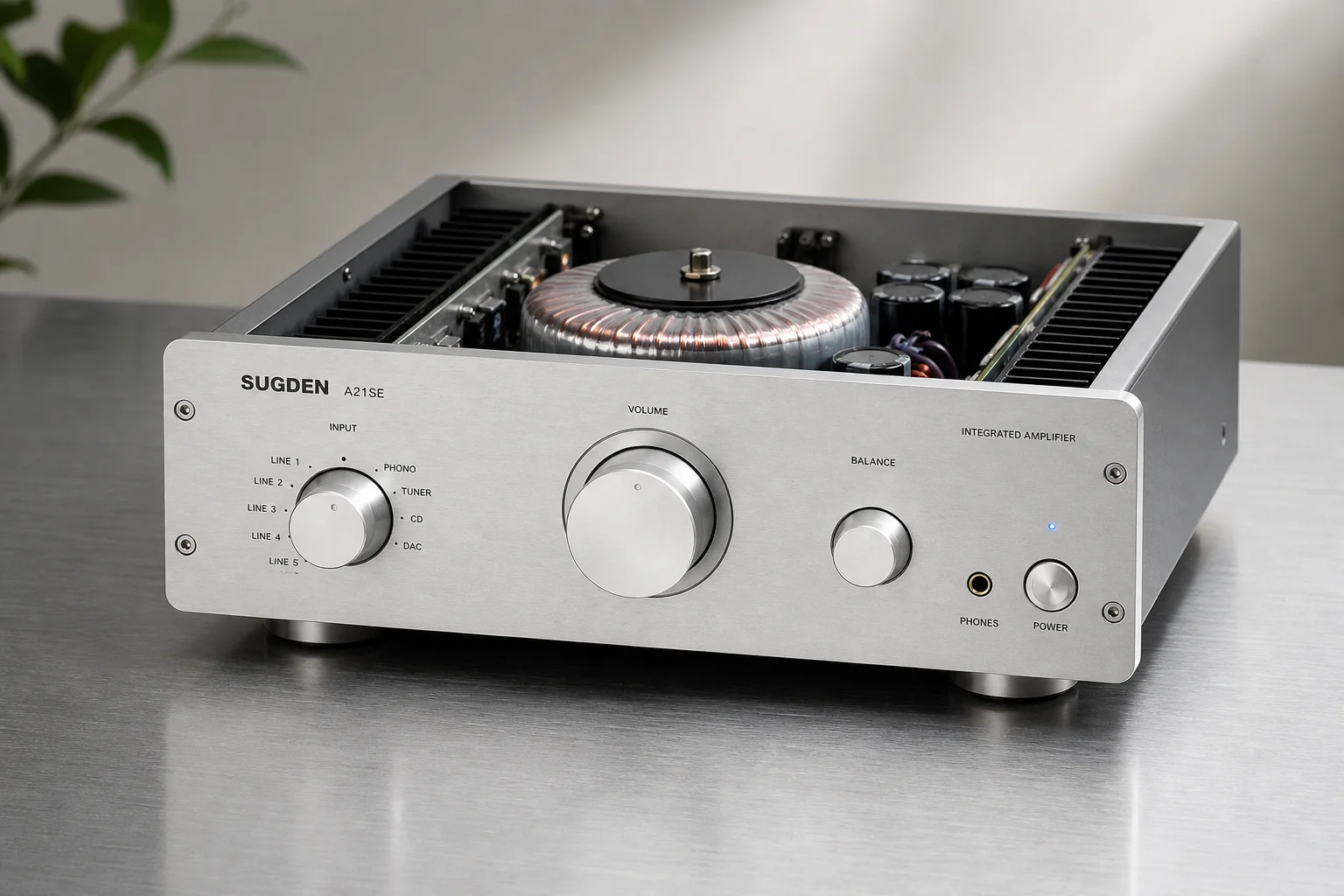
The IN80 Signature is a fully discrete MOSFET design, hand-assembled in Normandy, France, with the vast majority of parts sourced within a 40 km radius. Without the optional DAC and phono stage modules it creeps in just under a £1,000 budget, which makes the build story remarkable at the price.
Adding an AKM 4493 DAC module increases the cost by £350. Two phono options are available: moving magnet for £100, or moving magnet with moving coil for £150. Those modules push the total above the £1,000 ceiling, so buyers need to decide up front whether they want a bare amplifier or a fully equipped one.
Sonically it shares a family resemblance with the Cambridge Audio CXA81 Mark II: a large canvas, emphasis in the bass and lower midrange, and a relaxed upper midrange. The two are close enough in performance that a decision between them may come down to features and availability. Cambridge Audio has very wide distribution, and Atoll does not.
Rega Brio Mark 7: Energy and Forward Presence
The Brio is now in its seventh generation, and for the first time the Southend-on-Sea company has included a built-in DAC alongside a moving magnet phono stage. At £799 it is a complete package for a simple vinyl and streaming setup, and it should not be overlooked.
Its character is the opposite of laid-back. Resolution is class-leading, there is enough acoustic mass in the midrange to avoid sounding lean, and the enthusiastic upper midrange pushes vocals and lead instruments further forward than any of the other amplifiers here. The presentation is genuinely divisive: some listeners find that forwardness seductive, close to the energy of a live performance, while others will prefer the more relaxed character of the Cambridge Audio or the Atoll. The Brio also has the narrowest sound stage of this group.

For anyone building a small system around an intimate, immediate sound, the Brio Mark 7 is the obvious place to start. Those who want a wider, more spacious presentation should look elsewhere in this list.
Musical Fidelity B1 XI: Amplifier First, Features Second
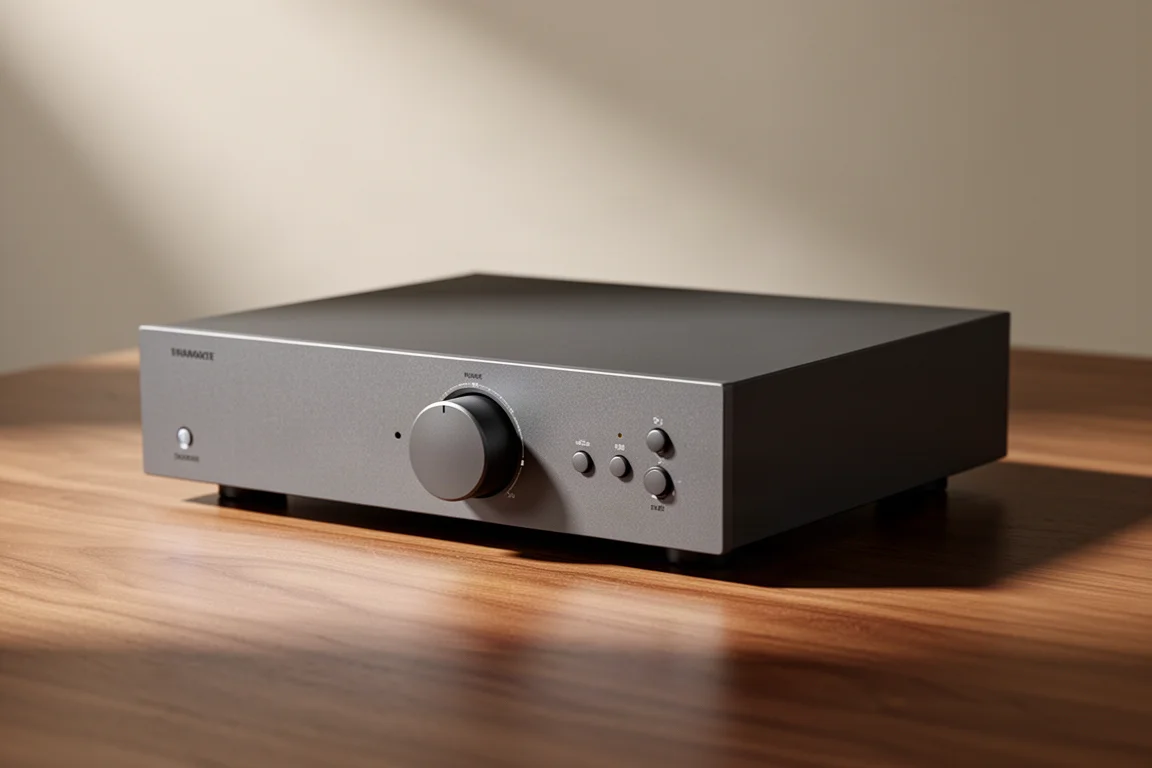
At £699, the B1 XI undercuts the Rega by £100 while also including a built-in DAC and a phono stage. The amplifier section is the real story. It matches the Brio for midrange fidelity, pace, rhythm, and timing, while adding better bass control and a sense of scale and instrument separation that equals the Cambridge Audio CXA81 Mark II.
Tonally it sits a touch warmer than the neutral Audiolab 6000A Mark II, which will suit listeners who find strict neutrality a little cool. The internal DAC is not as capable as the one inside the Audiolab, and the phono stage was not part of the assessment, so vinyl listeners should treat that section as an open question.
If what you want is an amplifier to be an amplifier and nothing else, the B1 XI is the front runner in this group. The others are not far behind, and in some systems they will be the better choice.
Audiolab 6000A Mark II: The Neutral Reference
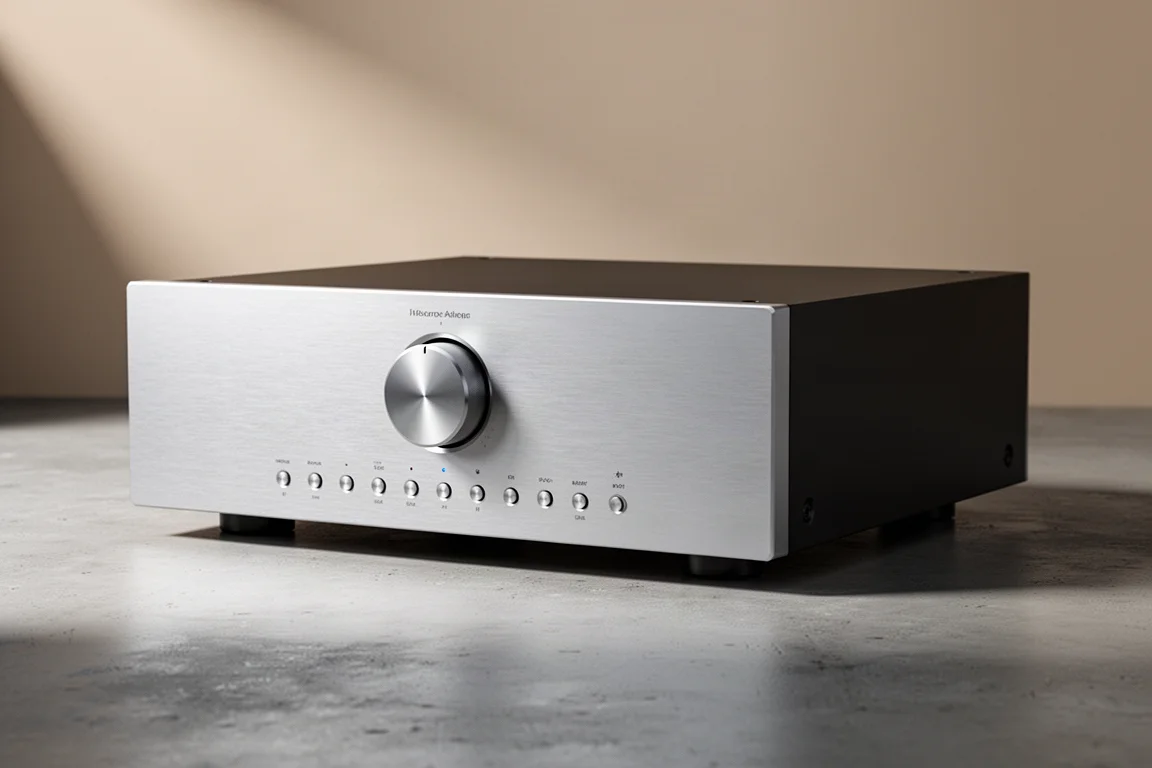
The 6000A Mark II is the reference point in this price category, and it earns that position as a package rather than as a pure sound quality champion. It is not the best sounding amplifier here in every respect, but the quality of its internal DAC and its phono stage, combined with its neutrality, is hard to beat.
Its bass is tighter and its midrange transients crisper than the Cambridge Audio CXA81 Mark II, and it resolves a similar amount of detail with a very different tonal balance. Its sound stage is smaller than the Cambridge’s. Internally it is unusually generous with around 60,000 microfarads of filter capacitance, well above the 27,200 microfarads of the CXA81 Mark II.
That combination makes the 6000A Mark II a natural recommendation for listeners who crave neutrality, or who have not yet settled on the kind of sound they are chasing. It is also the most sensible starting point for anyone who wants one box to handle digital and vinyl sources well.
System Matching and Setup Notes
The CXA81 Mark II is close to plug and play, and it works well with a range of price-appropriate sources. Three turntables pair comfortably with it: the Dual CS518 with an Ortofon 2M Red cartridge, which is the budget-friendly option at £699 in standard finish and £100 more in walnut, with a capable built-in phono stage; the Rega P3 with an upgraded ND5 cartridge; and the Project Debut 10 Reference with a Pick It Up Pro cartridge. The latter two retail just under £1,000 and have no built-in phono stage, so they need an external stage such as the Rothwell Rialto at £450 to show what they can do.
On the digital side, the Bluesound Node Nano at £299 is a strong streamer whose internal DAC is better than the one inside the CXA81 Mark II. Adding a FiiO K13 R2R ladder DAC at £279 opens up the sound stage further and plays to the amplifier’s warm strengths.
Speaker matching matters just as much. The Triangle BRO4 at £499 a pair helps retain the amplifier’s warm tonality, while the recently revised Monitor Audio Bronze 50 at the same price pulls it back toward neutrality. The Monitor Audio Silver 100 7G is a reference below £1,000, and its typical leanness in the midrange is neatly offset by the CXA81 Mark II. The £1,500 Dali Menuet SE reveals even more midrange detail, though a subwoofer would be sensible for anything beyond near-field listening. Like the other four amplifiers here, the CXA81 Mark II will not properly drive current-hungry speakers such as the Quadral Aurum 1 or the ProAc Response 1 SC.
Buying Advice: Which Amplifier Suits Whom
The honest answer is that the choice depends on the sound you want and the sources you own.
Choose the Cambridge Audio CXA81 Mark II if you want a warm, large-scale presentation, superb instrument separation, and a sound stage that fills the room. It is a well-engineered amplifier with dual mono power amplifier modules that rivals at this price rarely offer. Budget for an external phono stage if you play vinyl, and be aware that the internal DAC is dated and HDMI ARC is missing.
Choose the Atoll IN80 Signature if the hand-assembled, largely locally sourced build appeals and you are happy to pay extra for DAC and phono modules. Choose the Rega Brio Mark 7 for an intimate, energetic presentation with vinyl and digital covered in one box. Choose the Musical Fidelity B1 XI if the amplifier section matters more than the feature set. Choose the Audiolab 6000A Mark II if you want neutrality, a strong internal DAC, and a decent phono stage in a single package.
Whichever you pick, the practical priorities are the same: match the amplifier to your speakers, decide early whether you need a phono stage and a modern DAC, and check that the model is actually available where you live.
Conclusion
All five of these amplifiers are credible choices under £1,000, and none of them is a compromise in the way budget hi-fi sometimes is. The Cambridge Audio CXA81 Mark II stands out for its dual mono architecture, its wide and deep sound stage, and its richer tonality, with the caveats of a dated DAC chip, no phono stage, and no HDMI ARC. The Atoll, the Rega, the Musical Fidelity, and the Audiolab each answer a slightly different question, and the right one is the one that matches your room, your speakers, and the way you listen.
Further reading
Related Reviews
Hi-Fi Amplifiers
Accuphase E-280 Review: Entry-Level Accuphase With Flagship Attention to Detail
A close look at the Accuphase E-280 integrated amplifier, covering its champagne build, AAVA volume control, sound quality, and the speakers and sources that suit it best.
Hi-Fi Amplifiers
Advance Paris A10 Classic vs Yamaha A-S301: Two Integrated Amplifiers Compared
A practical comparison of a $350 integrated amplifier and a $2,500 reference model, covering the differences that matter and the ones that do not.
Hi-Fi Amplifiers
Affordable Chinese Amplifiers Worth Buying: Five Budget Hi-Fi Amps Compared
A practical look at five affordable amplifiers, what each one does well, and the trade-offs to weigh before you buy.