Hi-Fi Amplifiers
Best Integrated Amplifiers for a First Hi-Fi System: Three Strong Options
Three integrated amplifiers for listeners building a first stereo, from a budget class D desktop amp to a flexible model with preamp outputs and bass management.
Introduction
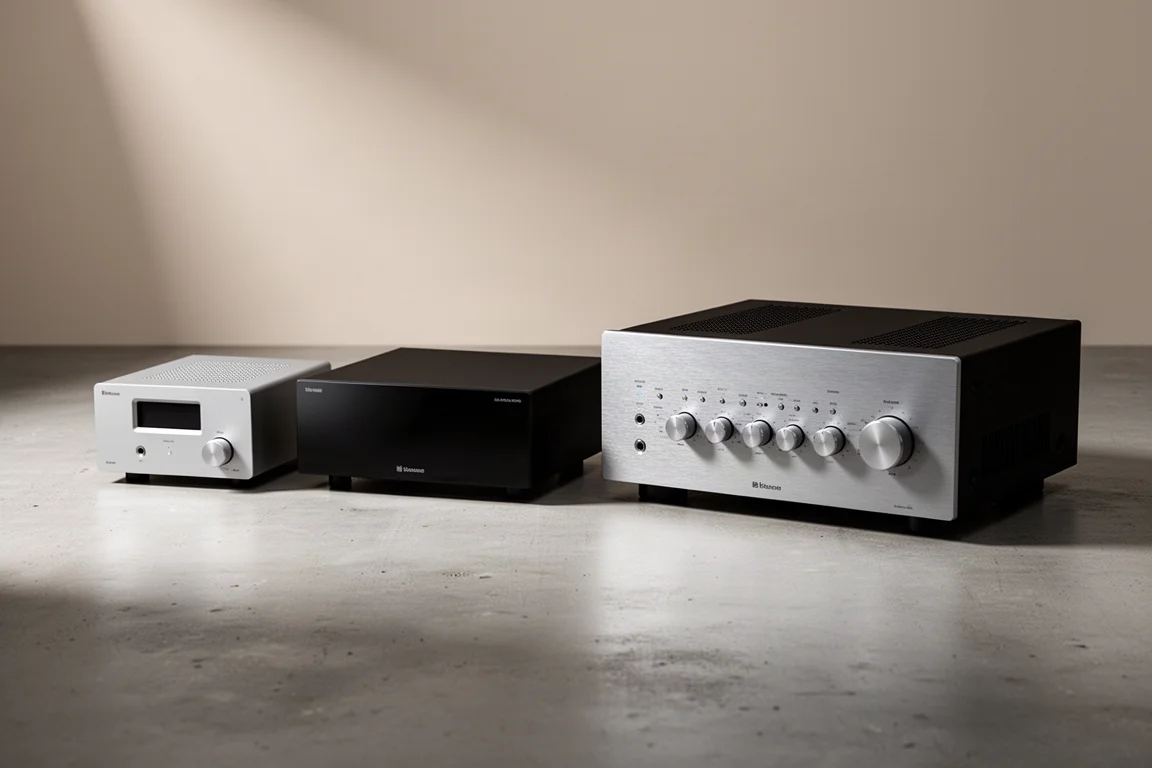
An integrated amplifier puts volume control, input switching and at least one built-in source into a single box. That source might be Bluetooth, a digital-to-analog converter, a phono preamp or a network streamer. For anyone assembling a first stereo, that combination removes a large share of the usual friction.
The alternative is separates: a dedicated box for the preamp, another for the power amplifier, another for the DAC, another for the phono stage. That route rewards patience, but it also means a lot of cables and a lot of decisions before the first song plays.
Why an Integrated Amplifier Is a Smart Starting Point
Most people getting into hi-fi do not yet know what kind of sound they are chasing. A well-balanced all-in-one amplifier gives them a working system first, then room to experiment later.
Wiring is the other practical argument. Everything inside an integrated amplifier is already connected, so there is no stack of interconnects to route and re-route behind a shelf. Fewer cables also means fewer places for something to come loose.
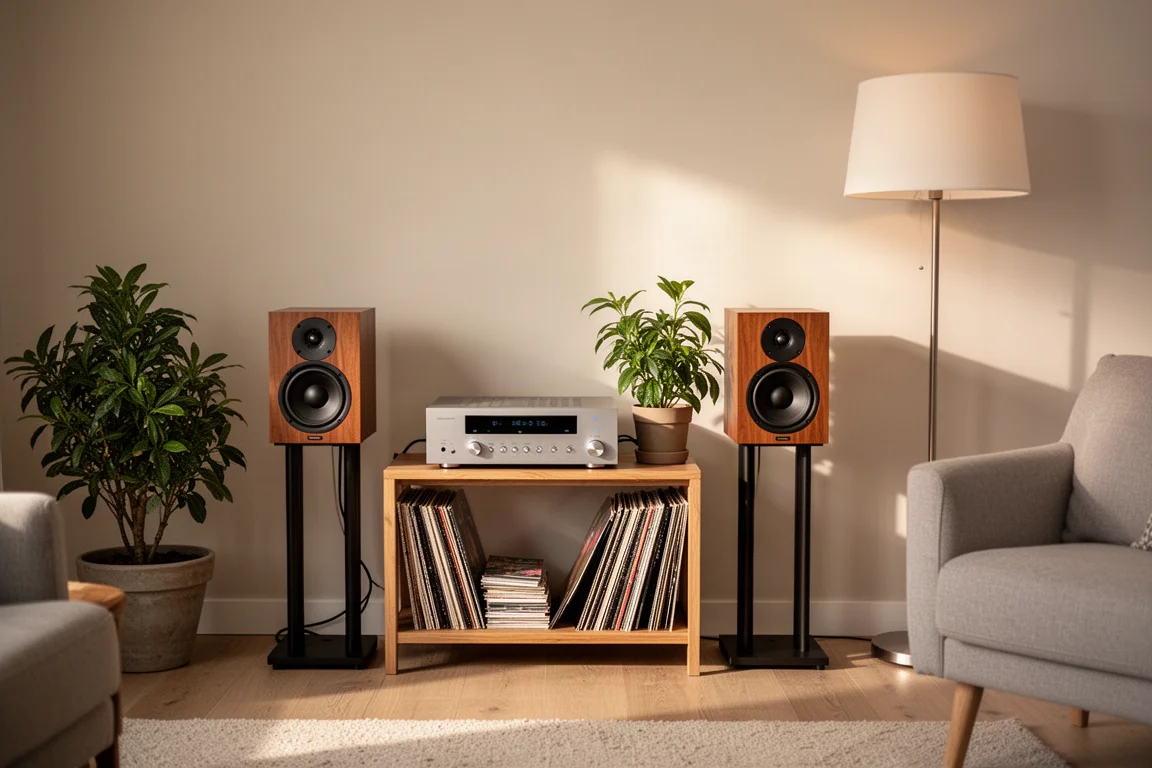
There are compromises in either direction. Separates offer more scope for fine-tuning, while integrated designs trade some of that flexibility for simplicity. For a first system, that trade usually works in the listener’s favour.
It is also worth noting that plenty of experienced listeners stay with all-in-one amplifiers by choice rather than necessity. Convenience is not only a beginner’s concern.
Aiyima D03 for Budget-Minded Beginners
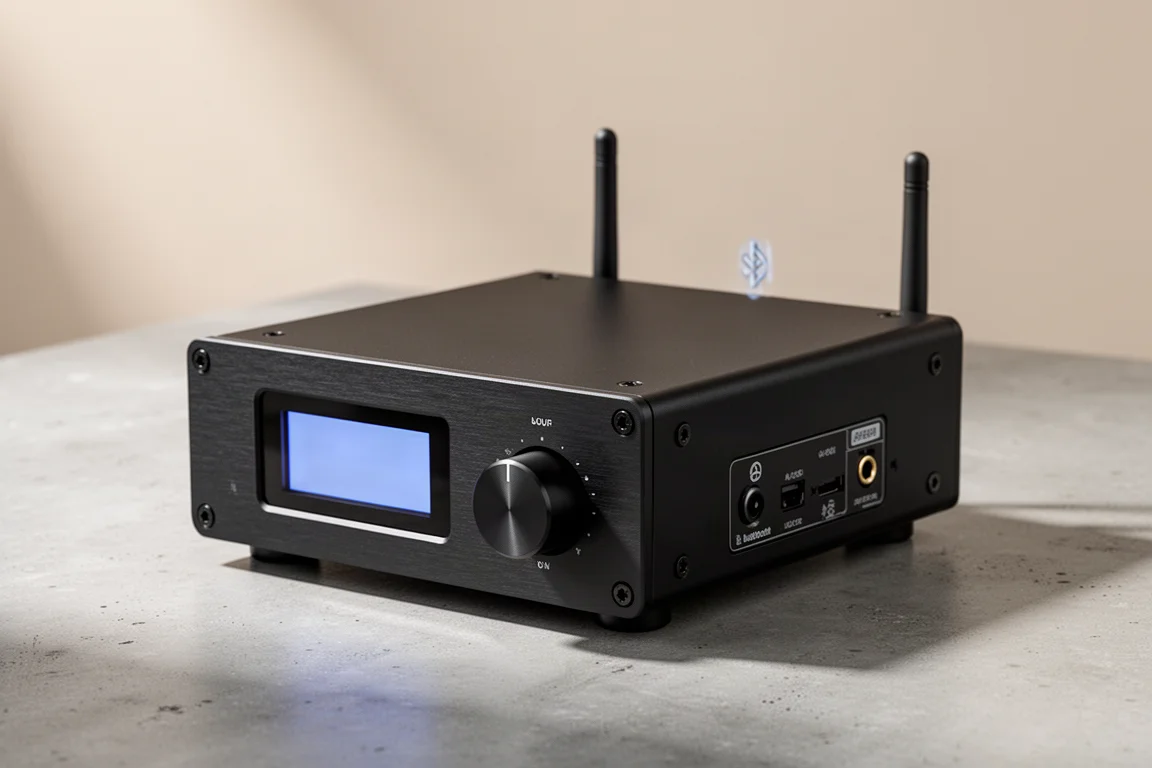
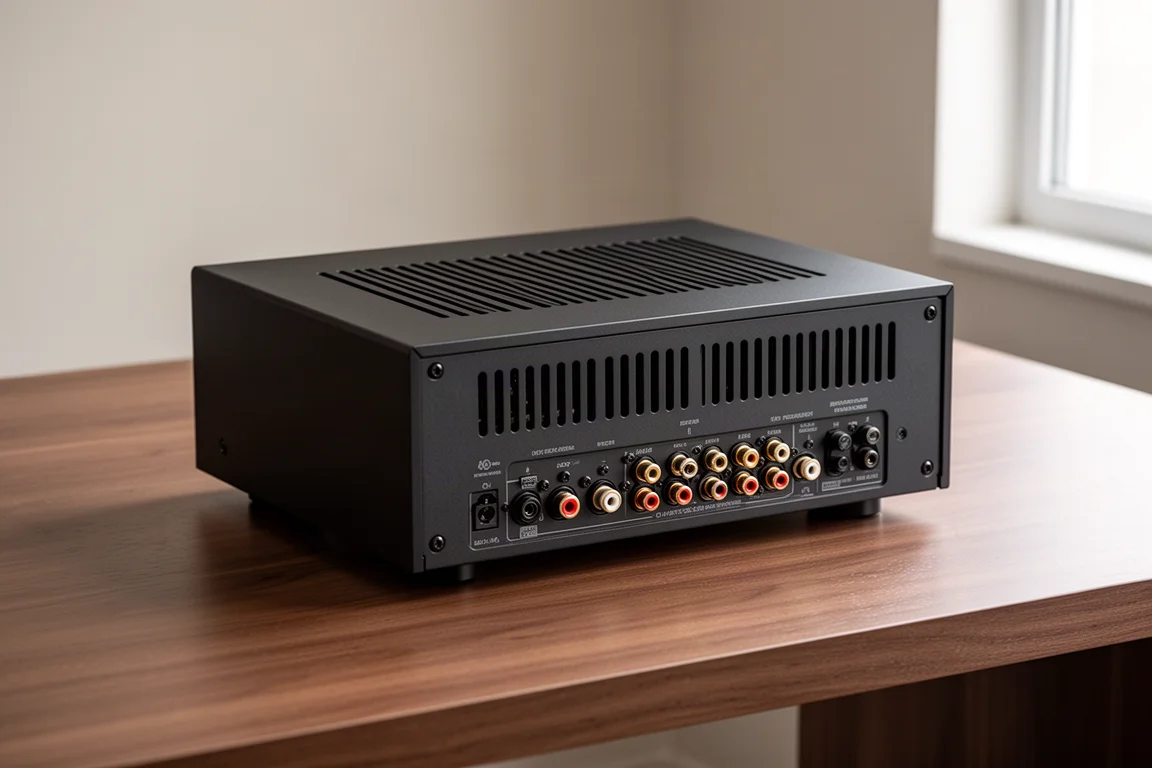
The Aiyima D03 is a class D integrated amplifier with a small front display, a volume control and a power switch. On the back it offers a digital-to-analog converter fed by a full-size USB input, plus optical and coaxial digital inputs, an analog input and a subwoofer output. Bluetooth is built in, and there are tone controls and a remote in the box.
The USB input means a computer can be connected directly. The optical input is the natural home for a television, a games console or a disc player.
There is no phono preamp inside, so a turntable needs either its own built-in phono stage or a separate phono preamp connected to the analog input.
Where the D03 earns its place is in how it sounds for the money. Some inexpensive class D amplifiers come across as harsh and thin, which pushes listeners toward heavy use of tone controls. This one keeps body in the music and stays balanced. At around $170, it covers most of what a digital-first listener needs.
SVS SoundBase for Power and Built-In Streaming
The SVS SoundBase steps up in size, power and price at around $500. It is another class D design, but a far more powerful one, and it has no trouble driving a wide range of speakers.
Its distinguishing feature is a built-in streamer, based on the Play-Fi platform. It brings in services such as Amazon Music HD, Tidal and Spotify. Around the back there is an analog input, an optical input, a 3.5 mm analog input and a subwoofer output, along with network connectivity and Wi-Fi, plus Bluetooth.
Like the D03, it has no internal phono preamp, so vinyl playback requires a turntable with a built-in stage or an external phono preamp. It also has no USB input, which rules out a direct computer connection unless the computer has an optical output.
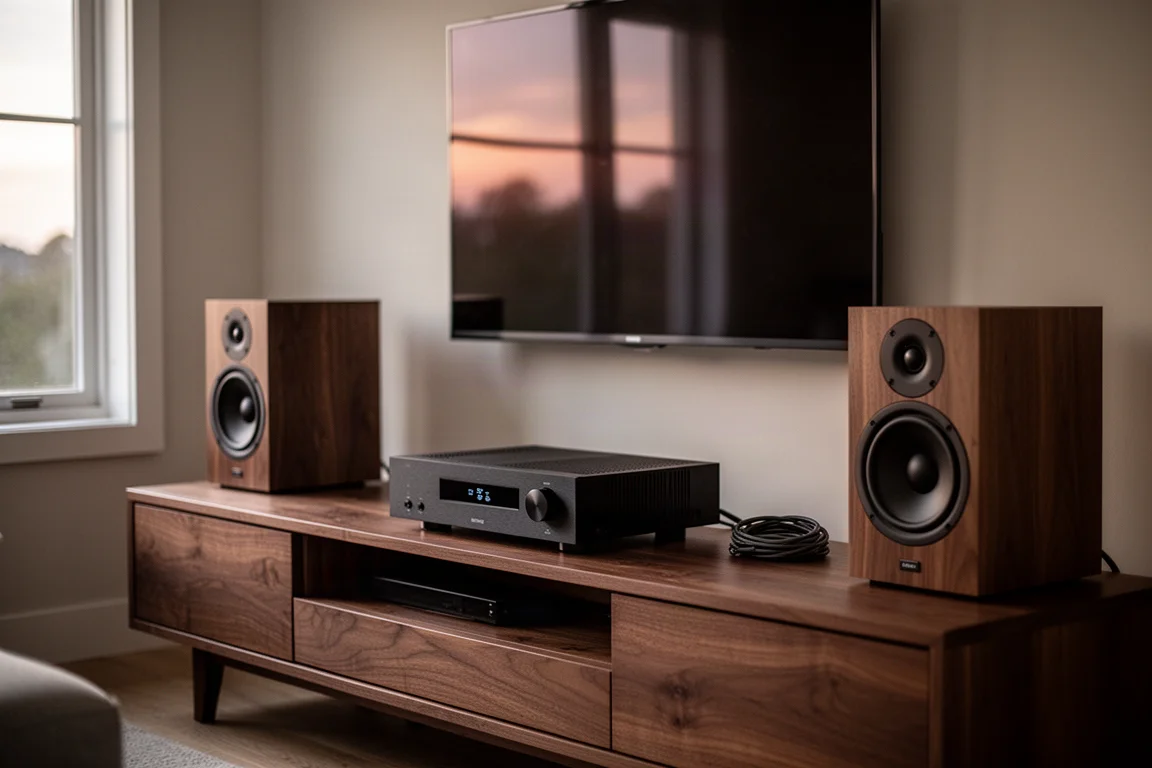
The one real drawback is the missing remote. Input switching is automatic, so the amplifier will usually follow whatever source is powered on, but there is no handset and no tone controls. Given how good it sounds, a remote would make it a very hard amplifier to beat at this price.
Emotiva TA1 for Long-Term Flexibility
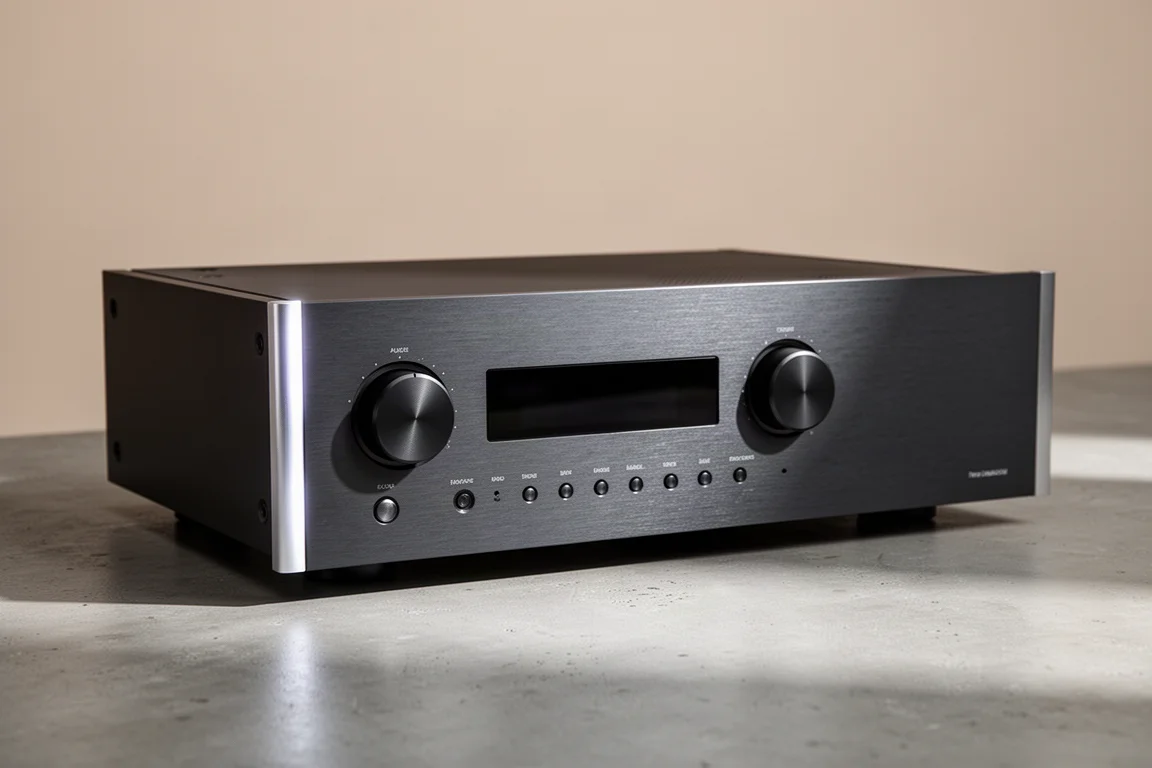
The Emotiva TA1 is the most traditional of the three. It is a full-width stereo component, roughly 16 to 17 inches across, with Bluetooth, a remote control and tone controls. Its integrated digital-to-analog converter handles USB, optical and coaxial sources, so a computer, television and disc player can all connect at once.
At around $550 it also includes a phono preamp, which means a turntable can plug straight in. Alongside the phono input there are analog inputs for adding an external DAC or phono stage later.
The more interesting part is what sits on the output side. The TA1 has preamp outputs, so a dedicated power amplifier can be added later, turning the TA1 into a preamplifier at the centre of a separates system. One of those outputs carries a high-pass filter, which provides bass management: low frequencies are sent to the subwoofer while the main speakers handle the rest. That is unusual to find at this price, and it takes strain off smaller bookshelf speakers.
The sound leans slightly warm, with a little extra bass and treble. That is a presentation most listeners find easy to live with.
Power, Sound and Feature Differences
Looked at side by side, the three amplifiers separate along a few clear lines. The Aiyima D03 and Emotiva TA1 both accept USB from a computer; the SVS SoundBase does not. Tone controls and a remote are present on the D03 and the TA1, and absent on the SoundBase. A phono preamp is built into the TA1 only.
Streaming is the SoundBase’s own territory, although a separate streamer can be added to either of the other two and fed into their digital inputs.
Power output and price move together here. The compact D03 is the least powerful and the least expensive, the SoundBase and the TA1 cost roughly the same as each other, and the SoundBase is the one with the most muscle for demanding speakers. None of these amplifiers is a last word in detail retrieval, and none of them is priced like it. They are foundations to build on.
Setup Notes and Upgrade Paths
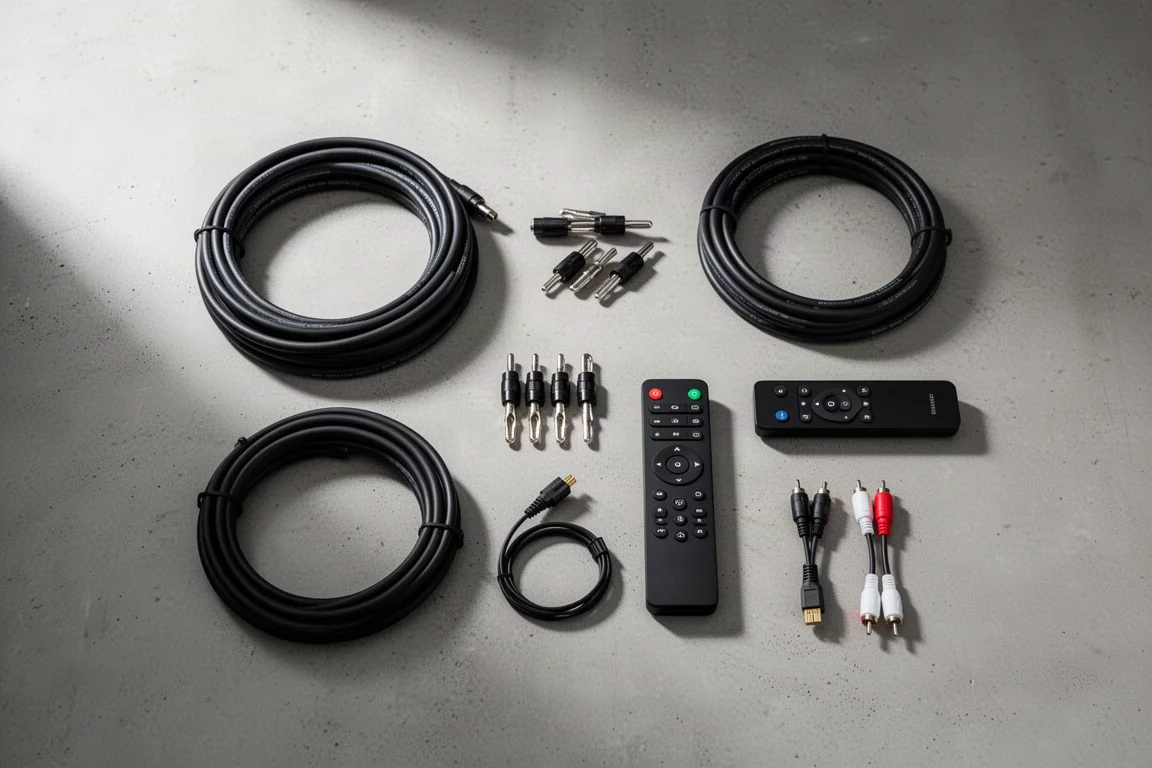
None of these amplifiers includes speakers, so a pair of speakers and some speaker cable are the first purchase alongside the amplifier. The D03 and the TA1 both have a single set of speaker outputs, and a subwoofer output is available on all three.
From there, each one grows differently. The D03 and the SoundBase can take an external phono preamp for vinyl, or a streamer for network playback. The TA1 can take an external DAC, a phono stage, an equalizer between its preamp outputs and a power amplifier, and its bass management makes a subwoofer easy to integrate. In practice, that gives the TA1 the longest useful life if you expect to keep upgrading.
Buying Advice and Final Recommendations
If most of your listening happens through a computer, a television, Bluetooth or discs, and the budget is the priority, the Aiyima D03 does the job for around $170. It sounds balanced, includes tone controls and a remote, and may well be the last amplifier a casual listener needs.
If power and built-in streaming matter more than a remote control, the SVS SoundBase is the stronger choice at around $500. It is the most capable of the three at driving speakers, and the built-in streaming removes a separate box from the shelf.
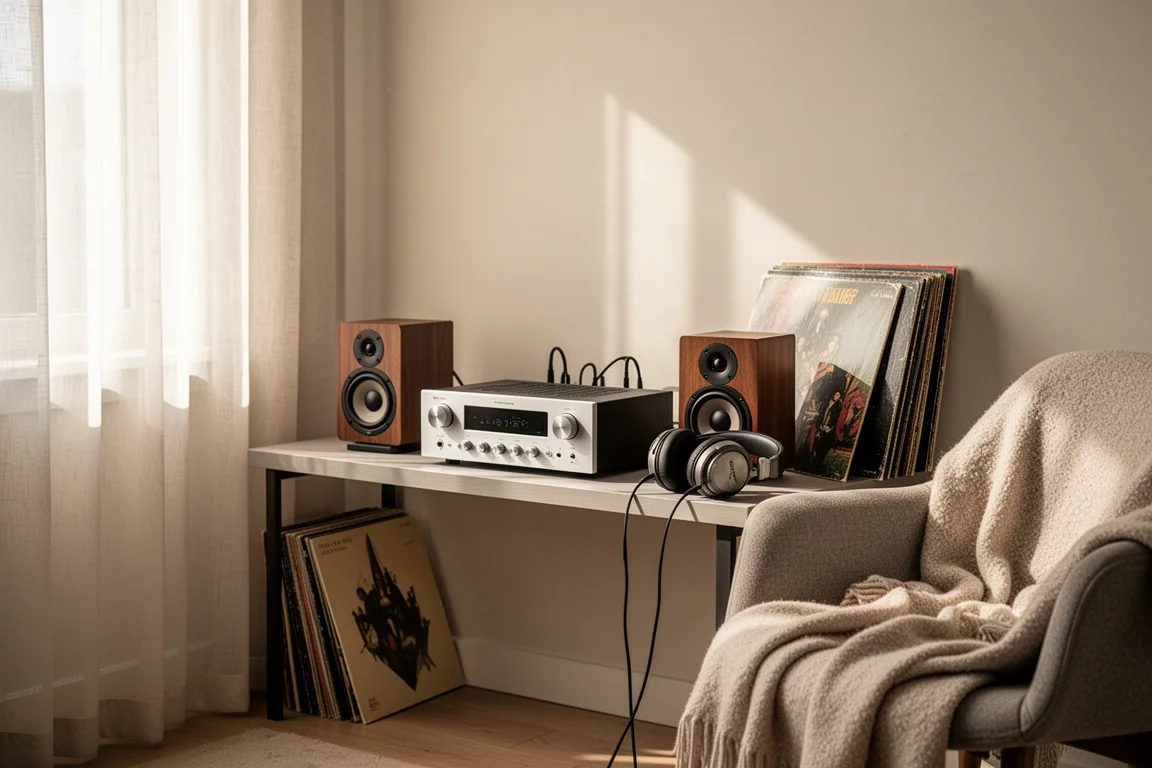
If you want the widest range of inputs, a phono stage out of the box and a clear upgrade path, the Emotiva TA1 is the most flexible at around $550. Its preamp outputs and bass management are the features that keep it relevant as a system grows.
Conclusion
An integrated amplifier is a sensible first step because it gets music playing without demanding a decision about every component. Each of these three covers the basics well and leaves room to explore later, whether that means a new cartridge, a better DAC, a dedicated power amplifier or an equalizer. The right one is simply the one whose inputs, power and price match how you listen today.
Further reading
Related Reviews
Hi-Fi Amplifiers
Accuphase E-280 Review: Entry-Level Accuphase With Flagship Attention to Detail
A close look at the Accuphase E-280 integrated amplifier, covering its champagne build, AAVA volume control, sound quality, and the speakers and sources that suit it best.
Hi-Fi Amplifiers
Advance Paris A10 Classic vs Yamaha A-S301: Two Integrated Amplifiers Compared
A practical comparison of a $350 integrated amplifier and a $2,500 reference model, covering the differences that matter and the ones that do not.
Hi-Fi Amplifiers
Affordable Chinese Amplifiers Worth Buying: Five Budget Hi-Fi Amps Compared
A practical look at five affordable amplifiers, what each one does well, and the trade-offs to weigh before you buy.