Camping Tents
Best Instant Tents 2026: Seven Instant Cabin Tents Compared
Seven instant cabin tents compared on setup speed, pack-away, headroom, weather protection, ventilation, and build quality, with clear picks for families and budget shoppers.
Introduction
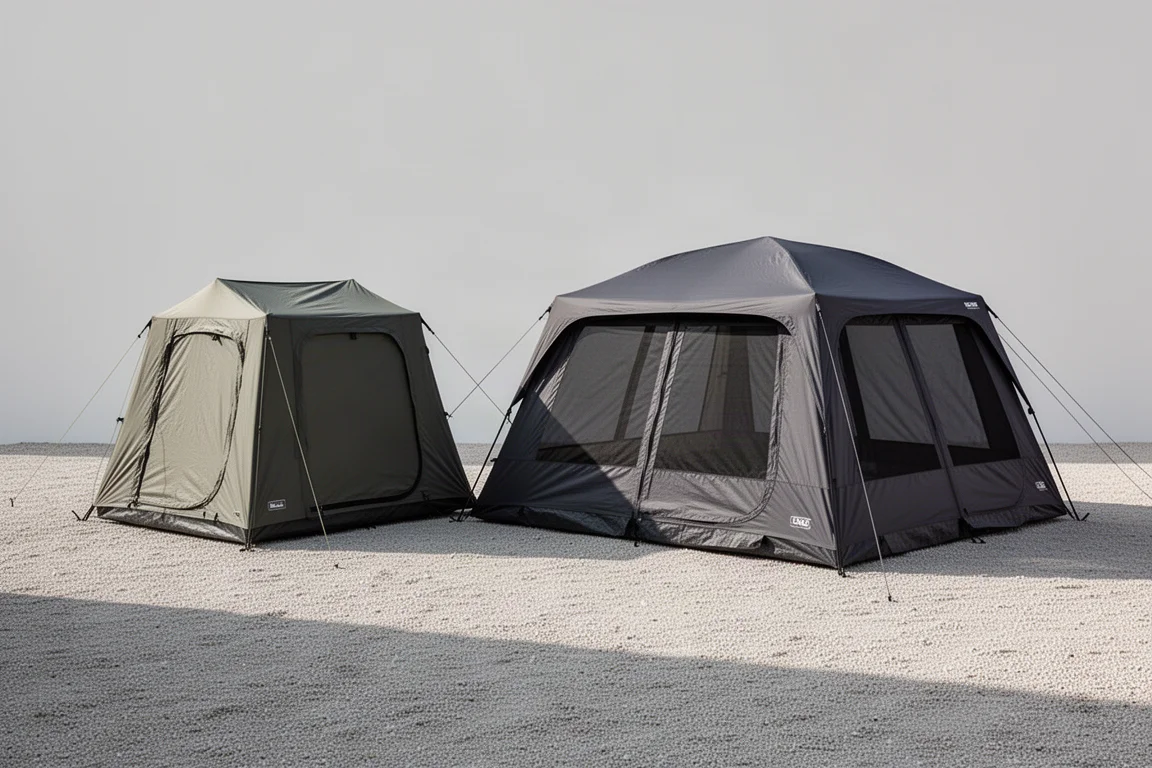
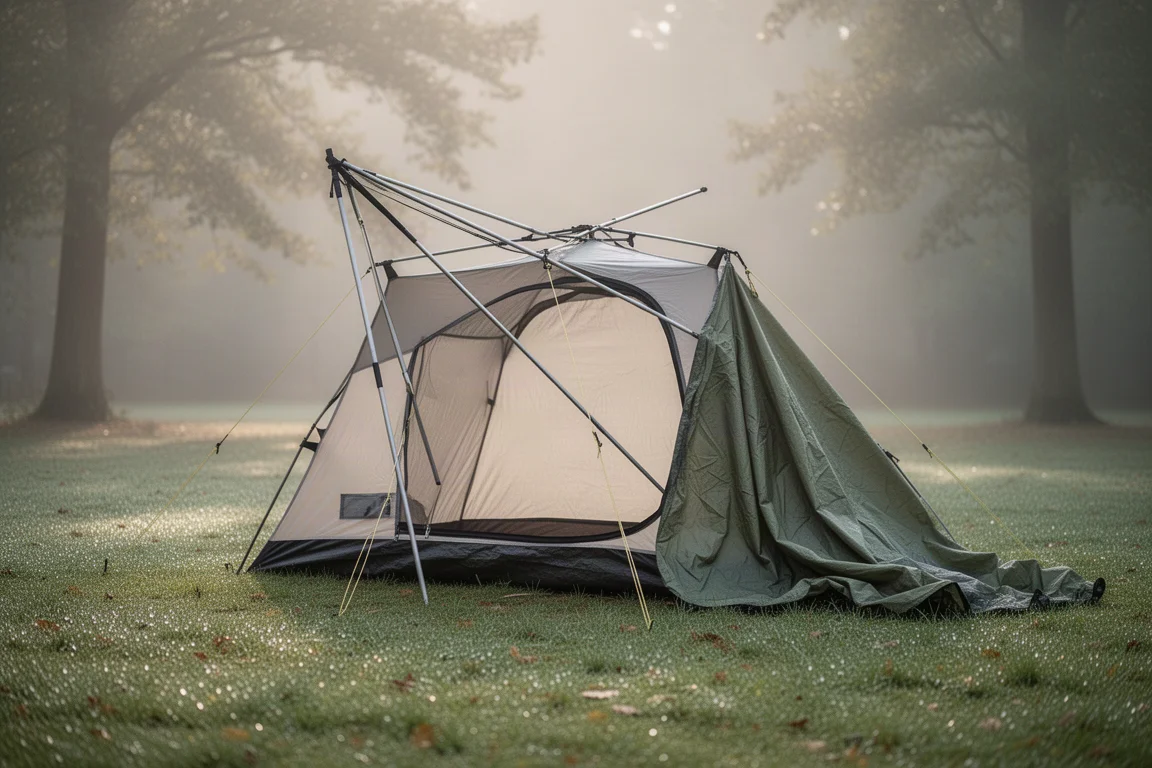
Instant cabin tents are built around a pre-assembled frame. You unfold the tent on the ground, lift the elbow joints or hubs, and extend each pole until the locking buttons click into place, then stake the tent down and guy it out. That shortcut is genuine: against a conventional cabin tent of the same capacity, setup time drops by more than 30%, and in the best cases by up to 55%.
Pack-away savings are smaller and shrink as tents get bigger, falling from around 50% on the smallest models to barely over 20% on the largest. Feature-rich designs give some of that time back as well. A longer rainfly means more fumbling during setup, and a hinged door adds a step of its own.
This guide covers seven instant tents, from compact four-person models to large 10-person family tents. Most are easy to recommend for the right buyer. One is hard to justify at any price.
What Matters Most in an Instant Tent
Setup and pack-away speed come first, but they are not the whole story. Instant tents are quick, yet the gap between them and conventional cabin tents narrows as capacity grows. The 9- and 10-person models save far less time than the four- and six-person ones, and the largest designs can be frustrating to break down in a hurry.
Cleaning matters more than most buyers expect. Tents that fold flat on the ground are simple to wipe down and dry. Tents that cannot be folded flat leave a tangle of fabric and poles that is much harder to deal with, and most instant tents fall into that second group.
Headroom is the next consideration, and peak height alone does not tell the story. What matters is the angle of the sidewalls. A tent with vertical walls gives you the full peak height across the whole floor, while steeply sloped walls take that space away the moment you step off centre. One tent in this group has completely vertical walls at zero degrees of slope, while another slants at roughly 30 degrees.
Weather protection is where instant cabin tents are weakest. Their rainflies are short, so any seam not covered stays exposed, and heavy rain can blow under the fly and through the ceiling mesh panels. Wind is the other weak point: the elbow joints that make setup easy also bend and buckle more readily than a hub-based frame.
Ventilation, materials, and packed size round out the picture. Window area per person, ceiling mesh, and vents you can adjust from the inside all affect how a tent feels on a warm night, and instant tents pack long, often about double the length of a regular tent of the same capacity.
Gazelle T4: Best Overall Instant Tent
The Gazelle T4 is the strongest tent in this group, and it is not especially close. It is a four-person tent, yet it has the highest peak height of everything compared here, matching the 10-person Outdoor Products model, and its walls are completely vertical. In practice that means you can stand anywhere inside, right up against the sides, and the lowest point of the interior still measures 67 inches. The sidewalls on the other tents all slant inward to some degree, so their usable space shrinks as soon as you move away from the middle.
Its frame is the reason. Instead of elbow joints, the Gazelle uses hubs: five of them, four on the walls and one at the top. That extra tension makes the tent noticeably more resistant to wind. Where a floppy design shudders in a light breeze, this one stays solid even under a firm push. The trade-off is that the poles are fibreglass rather than steel, though they feel sturdier than the material suggests, and the fabric is the thickest here across the floor, the body, and the rainfly.
Everyday use is where it separates further. The floor is removable, so air escapes easily when you pack the tent away, and cleaning takes about a minute: strip the floor, lay it flat, and hose or wipe it down. It has six pockets and two doors, which is generous for a four-person tent. In a one-hour heavy rain test it leaked only a few drops, though its windows were soaked like the rest of the group.
The costs are weight and bulk. This four-person tent weighs more than the 10-person model in this guide, and it packs to almost triple the length of a regular four-person cabin tent. If you drive to your campsite rather than carry your gear, that is an acceptable trade for the space and stability you get back.
Caddis Rapid 6: Best Value All-Rounder
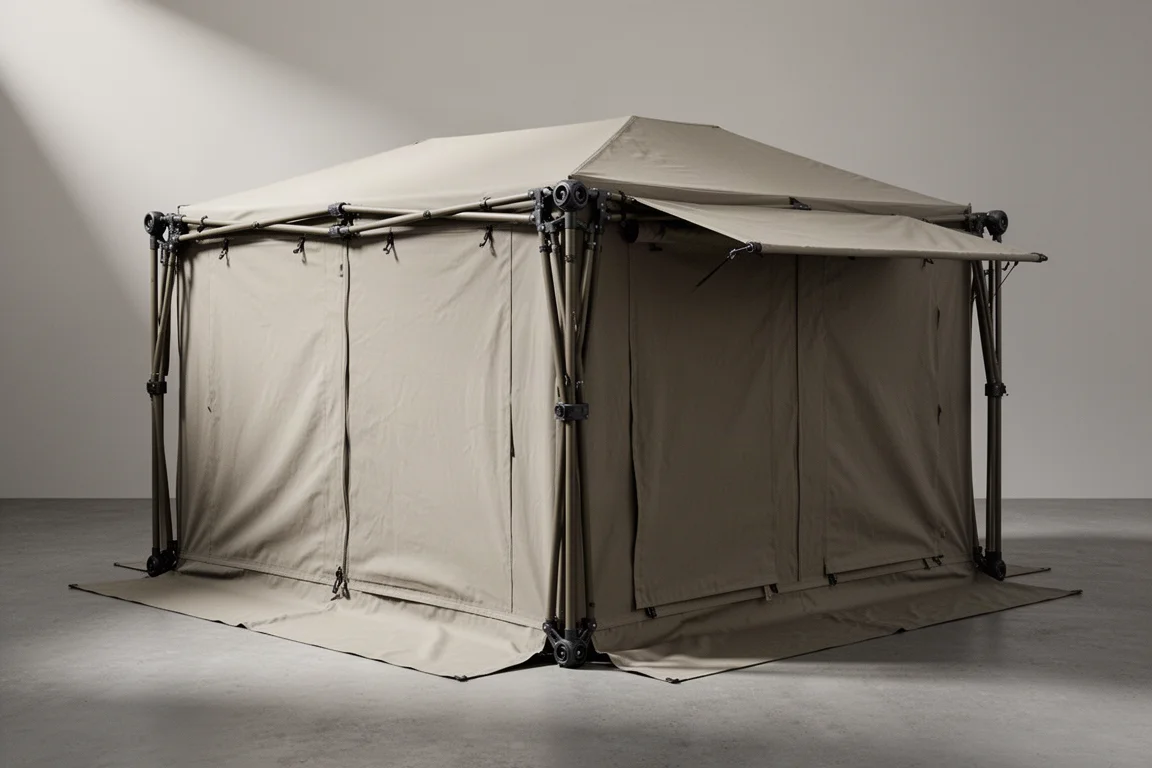
The Caddis Rapid 6 finishes a close second and avoids every weak score in this comparison. It costs roughly 25% less than the Gazelle T4, and the gap in materials is smaller than the price difference suggests: the flooring and tent body are only slightly thinner, and its steel poles are thicker and beefier than the fibreglass set on the top pick. It uses micro mesh rather than standard mosquito netting, which keeps out the smallest insects, and the centre hub is large and sturdy compared with the small hubs on most instant tents.
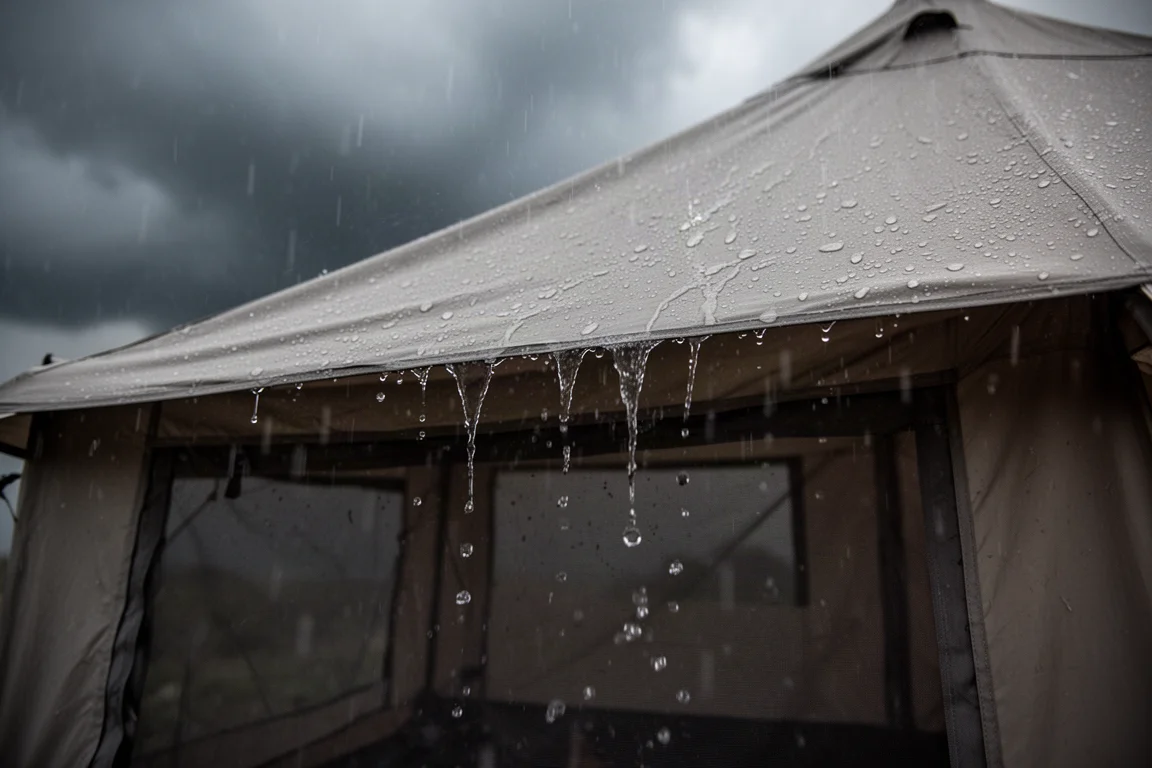
Rain performance is its strongest card. It leaked only a few drops in the heavy rain test, all of them at the front, because the front rainfly is short; a tarp over that side solves the problem. The other three sides have the longest rainfly coverage here, with no leaking at all, and because the windows stayed protected, its three large windows could be left open during heavy rain. No other tent in this group allowed that.
Its walls slant at about 17 degrees, so it is less vertical than the Gazelle, and the long rainfly adds some fumbling time during setup. Neither is a dealbreaker.
If the Gazelle is out of budget, this is the tent to buy, and it is the better choice for anyone who camps in wet weather often.
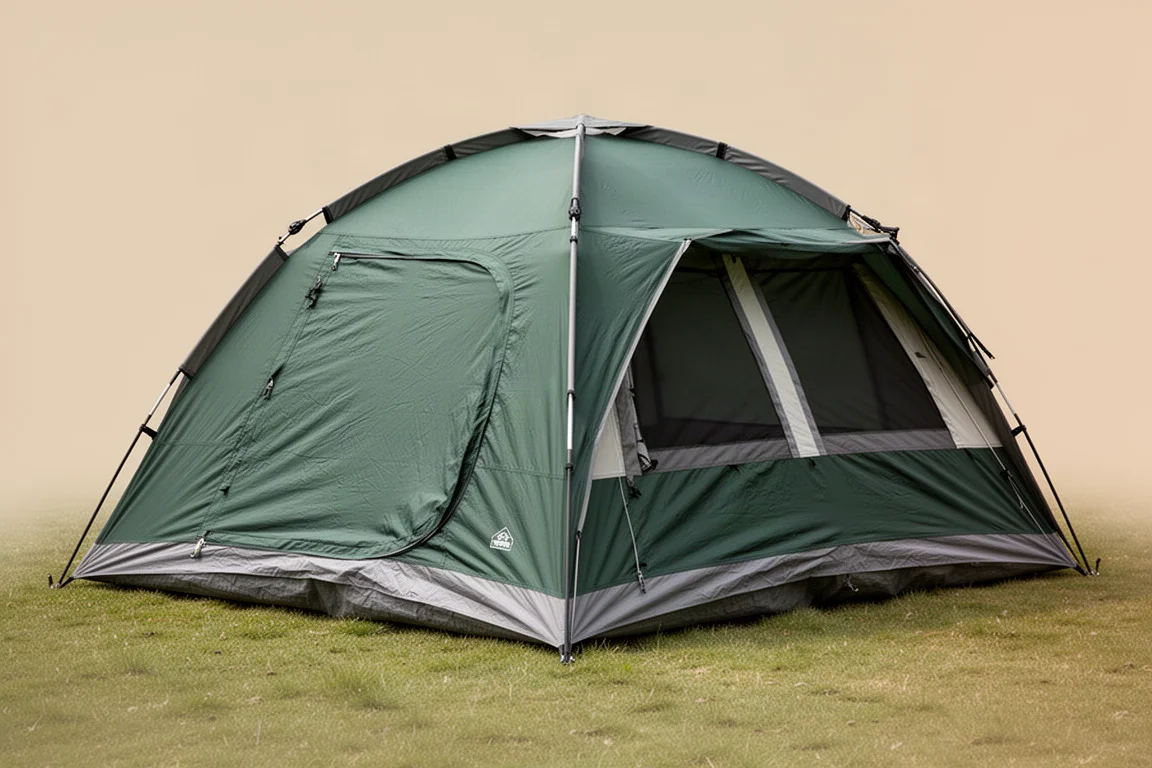
Core 9-Person Instant Tent: Best Large Family Pick
Among the 9- and 10-person tents, the Core is the one to get. It costs around $200, while the other large models here run more than $300 each, and it packs away more easily thanks to a larger carry bag. Ventilation is the other reason: it has the best hot-day airflow of the big tents, roughly double the window ventilation per person of the Outdoor Products model, and two large vents that can be opened and closed from the inside. It is the only tent in this guide that offers that.
The compromises are minor but real. There are only two storage pockets, which is thin for a tent this size, and the room divider is see-through enough to be of limited use. In the rain tests the fabric ended up slightly damp, and light rain protection tops out at an hour or two. For a family that wants space without paying a premium, it remains the sensible pick.
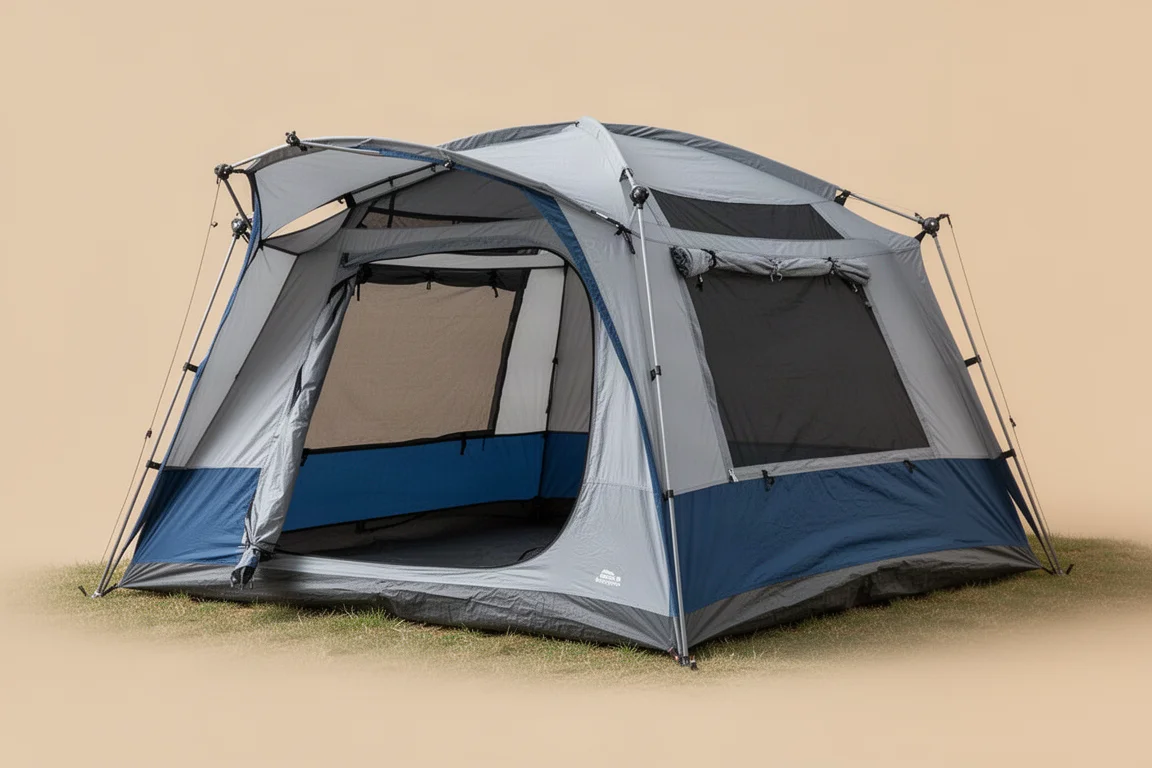
Outdoor Products 10-Person Instant Tent: Best Big-Tent Layout
If you need more room than the Core provides, the Outdoor Products 10-Person is the natural step up. It is slightly larger and fits four queen beds instead of two, it adds an extra door, and its room divider runs the full length of the tent and is not very see-through, which makes it the most useful divider here. It shares its instant mechanism with the Core: the poles are identical and the three top hubs match.
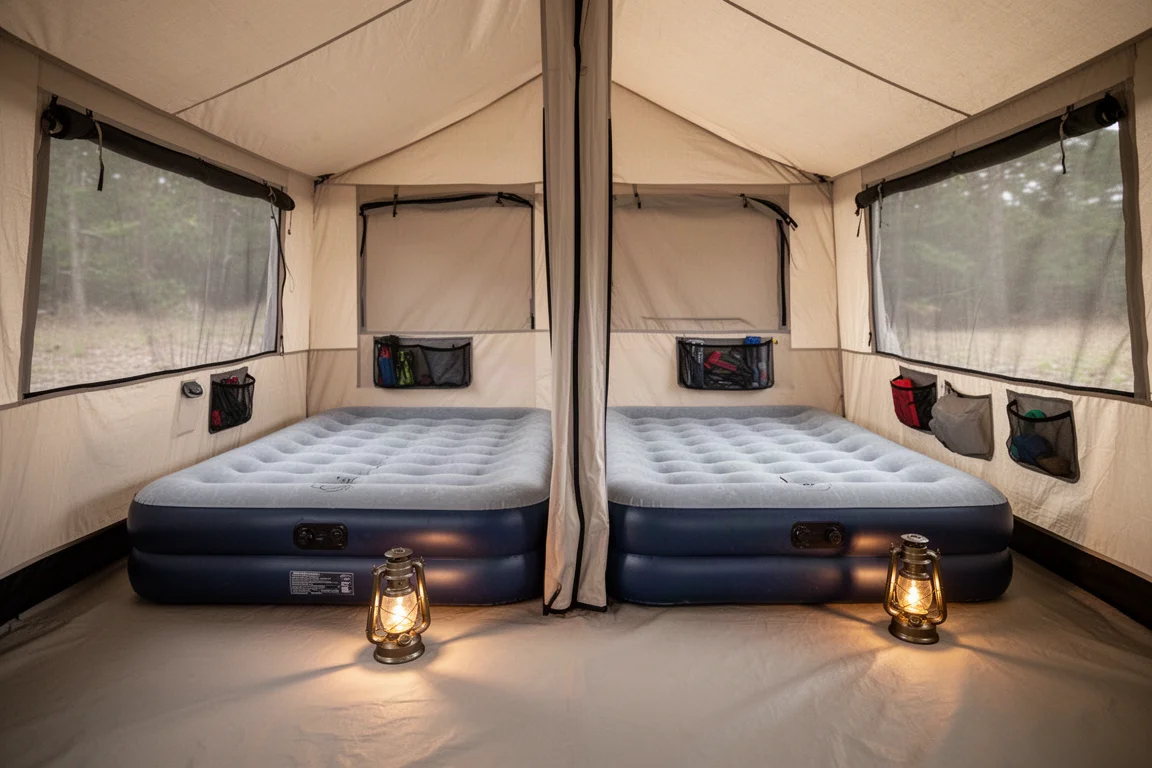
Ventilation is where it gives ground. It has a single vent, smaller than the Core’s pair, and its window ventilation per person is among the lowest in this group. Four large windows along one wall help, but the three windows on the opposite wall could be larger. Storage is limited to two pockets, and it costs more than $300. If the Core fits your family, it delivers nearly the same frame for considerably less.
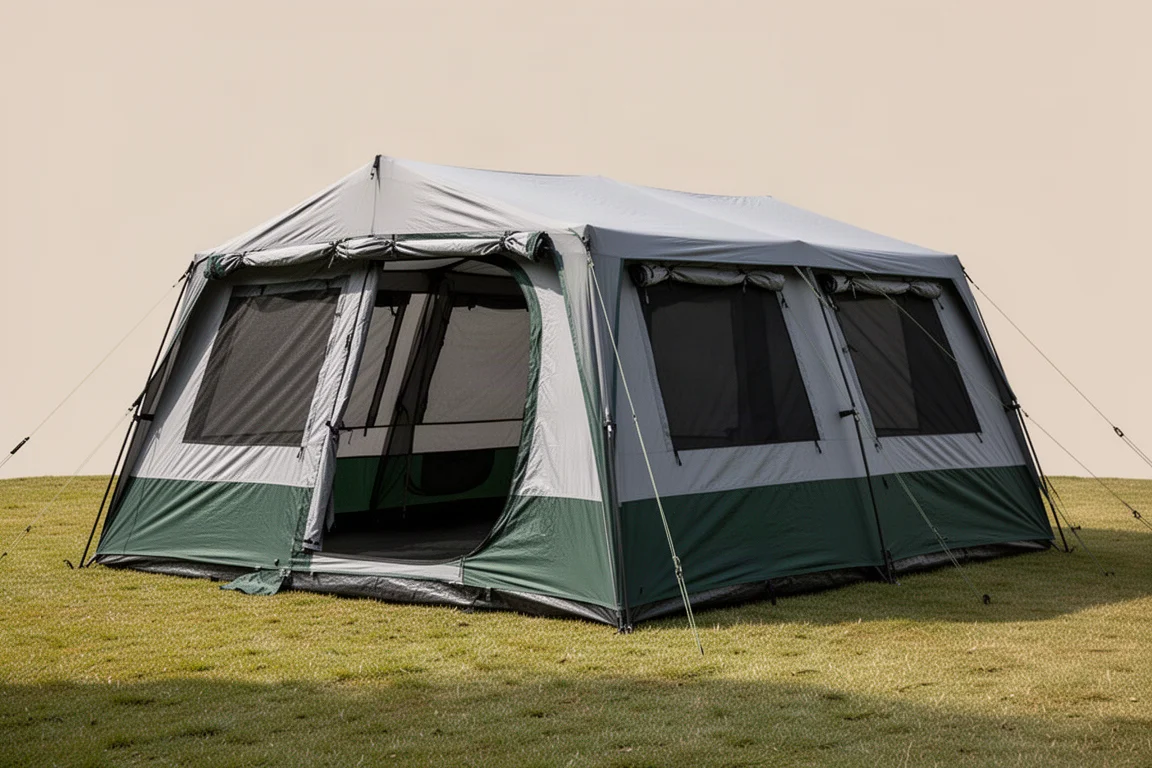
Coleman 10-Person Instant Tent: Best Blackout Option
Only two tents in this group use blackout fabric, and the Coleman does it far better. During the day, a little light seeps in through the gap between the roof and the rainfly and through the light-coloured flooring, but at night the interior is essentially pitch black. If you sleep late or need to rest during the day, that is a meaningful advantage.
The features list is where it earns its place. It tops the features comparison, largely on the strength of that blackout fabric, and it is the only tent here with a hinged door that you pull open and that closes behind you. That door does add a couple of minutes to setup, though.
Elsewhere it struggles. A tent this large has a single hub, so the body droops and caves inward, cutting into the space you can actually use, and it feels floppy in wind. The fabric was damp after heavy rain, light rain protection is limited to an hour or two, the room divider is very see-through, and there are only two pockets. Buy it for the darkness, not for the weather.
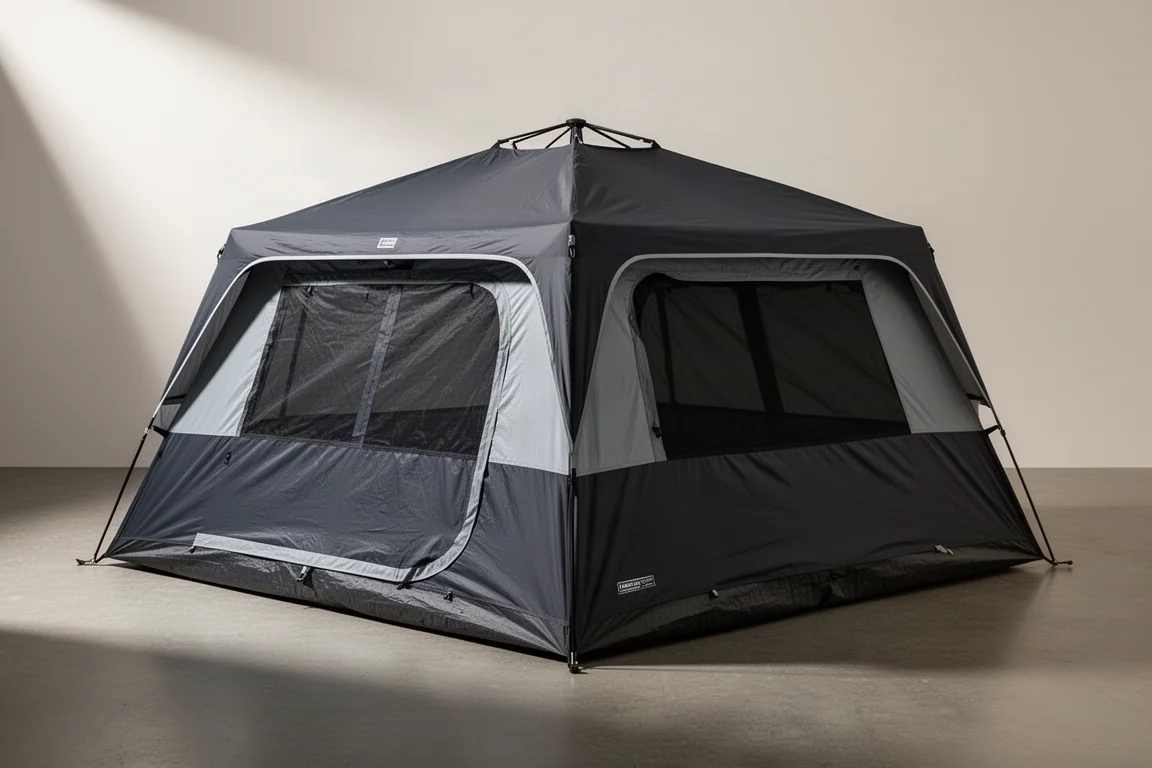
Coleman 4-Person Instant Tent: Best Budget Pick
The smaller Coleman instant tents are the cheapest route into this format. The four-person version is the model covered here, and it sets up and packs away simply, with a 50D polyester body that is respectable for a budget brand.
Two limits stand out. There is no ceiling mesh, only a small vent at the top that the rainfly covers on wet days, so it does little for airflow. The tent is also too low to stand up in, and there is no window on the rear wall. The six-person version of the same design fixes both: it adds around 10 inches of peak height and a window on that last wall for better ventilation. Unless the four-person size is exactly what you need, the six-person is the better buy.
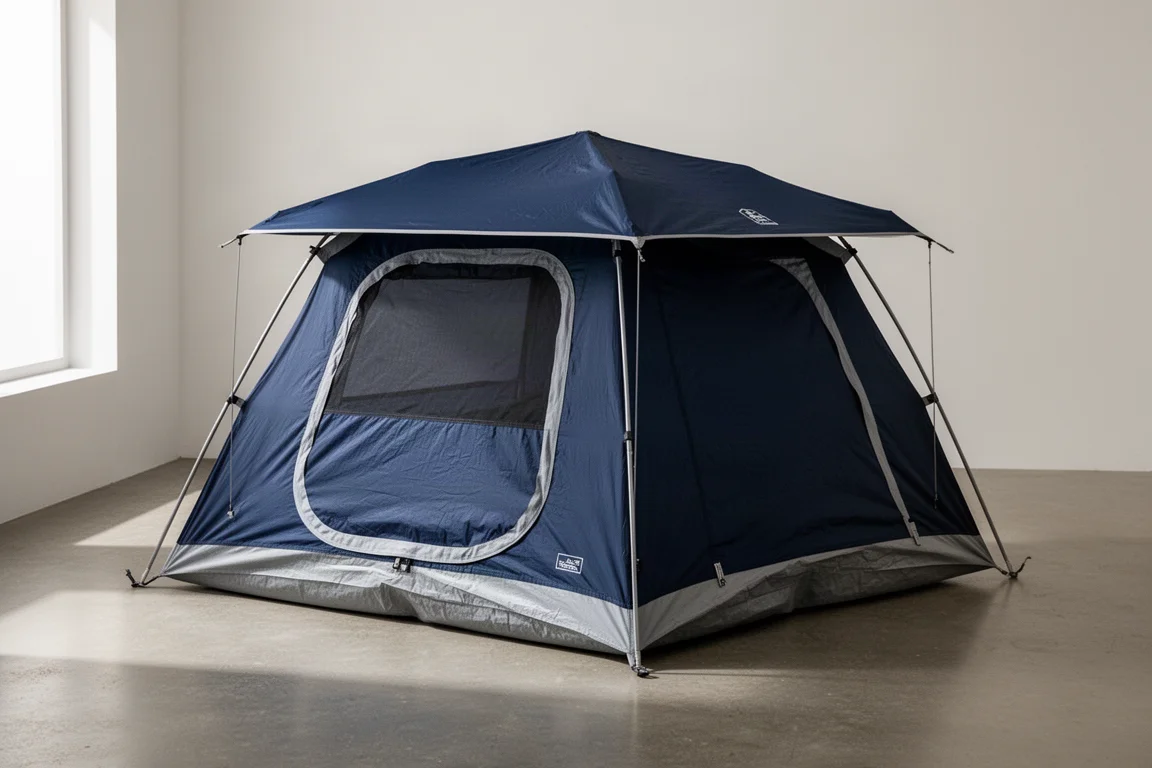
Ozark Trail 6-Person Instant Tent: Where It Falls Short
The Ozark Trail is the tent to think twice about. It sets up and packs away in decent time, and it folds flat on the ground, which makes cleaning easier than most. Its blackout fabric is also the reason it appears in this comparison at all. Everything else works against it.
Headroom is the first problem. For a six-person tent the peak height is remarkably low, and the walls slope at around 30 degrees, so the interior behaves more like a dome tent than a cabin tent. Step away from the centre and your head meets the ceiling. Weather performance is the second: it starts leaking after roughly 15 minutes of light rain, and in the heavy rain test the fabric was practically soaked. Ventilation is the third: three small windows, one entire wall of solid fabric, and only a tiny ground vent at the back.
Durability is the last straw. After less than two years in storage, the blackout fabric began peeling and left a sticky residue on anything that touched it. Coleman blackout tents have held up for around four years without that problem. If blackout fabric is what you want, spend the money on the Coleman instead.
Buying Advice
Match the tent to the trip. For the best overall instant tent and the most comfortable interior, the Gazelle T4 is the pick, provided you can live with the weight and the long packed length. If you want most of that quality for less, the Caddis Rapid 6 is the value choice, and a tarp across its short front rainfly makes it a genuinely solid wet-weather tent.
For large families, the Core 9-Person offers the best combination of price, easier pack-away, and ventilation, while the Outdoor Products 10-Person is worth the extra if you need four queen beds, a proper divider, and a second door. If blackout fabric is essential, the Coleman 10-Person is the only one of the two blackout tents worth buying.
On a tight budget, choose the six-person Coleman instant tent over the four-person model for the extra headroom and the rear window.
Two expectations are worth setting before you buy any instant tent. First, none of these tents stays completely dry in heavy rain, because their rainflies are too short to cover every seam, and most windows cannot be left open when the weather turns. Second, instant tents are not the right choice for exposed, windy sites: the elbow joints that make them quick to pitch also make them the least stable option in a strong gust.
Conclusion
Instant tents earn their place when speed matters, pitching and striking camp in a fraction of the time a conventional cabin tent takes, especially at four- and six-person sizes. The Gazelle T4 is the best of the group thanks to its vertical walls, high peak height, and removable floor, and the Caddis Rapid 6 comes close for less money with better wet-weather ventilation. Families get the best value from the Core 9-Person, blackout sleepers should look at the Coleman 10-Person, and budget shoppers should skip straight to the six-person Coleman. The Ozark Trail 6-Person is the one to leave on the shelf.
Further reading
Related Reviews
Camping Tents
3F UL Gear Taiji Two-Person Tent Review: Field Waterproofing Results and Buying Advice
The Taiji pairs an attached fly with a removable inner, but sustained rain exposed untaped vent seams that need sealing before this shelter can be trusted.
Camping Tents
3FUL Gear Lanshan 2 Pro 4-Season Review: A Sub-$200 Single-Wall Trekking Pole Tent
An early look at the 3FUL Gear Lanshan 2 Pro 4-Season, covering its straightforward pitch, generous interior space, and the condensation and seam-sealing questions that come with any single-wall shelter.
Camping Tents
Alps Mountaineering Lynx 1-Person Tent Review: Big Value in a Small Budget Tent
A close look at the Alps Mountaineering Lynx 1-Person Tent, covering real interior dimensions, materials, setup time, ventilation limits, and who should buy it.